 Skip to content


Creating buyer personas is all about doing your homework—researching your audience, spotting patterns in how they act and what they're trying to achieve, and then building a detailed profile of your perfect customer. This is how you shift your marketing from a shot in the dark to a focused, data-driven strategy.
Moving Beyond Generic Marketing With Personas

Let's be honest—one-size-fits-all marketing is a great way to waste your budget and ensure your messages get ignored. When you try to speak to everyone, you end up connecting with no one. This is exactly where building detailed buyer personas changes the game. It moves your strategy from shouting into the void to having a meaningful, one-on-one conversation.
A buyer persona isn't some abstract marketing concept. It's a realistic, semi-fictional profile of your ideal customer, pieced together from real data and smart insights. It gives a name, a face, and a backstory to the very people you want to reach.
Why Personas Are Non-Negotiable
Getting to know your customer on a deeper level is the absolute bedrock of effective marketing. Personas make this happen by boiling down complex data into a format that’s easy to relate to. Instead of just seeing website clicks or sales figures, you start to see "Marketing Mary," a manager who struggles with proving ROI and desperately needs easy-to-read reports.
This kind of clarity has a direct impact on your bottom line. In fact, research shows that over 60% of companies that updated their personas within the last six months blew past their lead and revenue goals. The message is crystal clear: current, data-informed personas drive serious results.
A well-crafted buyer persona ensures that everyone on your team—from marketing and sales to product development—shares the same deep understanding of your customer. This alignment is what creates a truly consistent and compelling customer experience.
From Guesswork to Genuine Connection
The real work involves digging into the data you already have, finding meaningful patterns, and then building a narrative around those insights. That story becomes the north star for every decision you make.
For a deeper dive, this comprehensive guide on how to create buyer personas offers an excellent starting point.
Ultimately, this whole process is central to any successful marketing effort, especially when it comes to tailoring your message. Our guide on https://reach-influencers.com/personalization-in-marketing/ shows just how powerful this targeted approach can be. It's worth a read to get the complete picture before we dive into the specifics of building your own.
Finding the Real Story in Your Customer Data

Great personas aren't built on guesswork. They're built on truth. This is where you roll up your sleeves and dig into the data to find the raw materials that will bring your ideal customers to life. Instead of assuming what motivates them, you’re about to uncover the real stories hidden in their behavior.
The best approach is to blend the hard numbers (quantitative data) with the human stories (qualitative data). This mix is what turns a flat profile into a powerful, three-dimensional tool. The numbers tell you what people are doing, while the stories tell you why. This is the core of creating a persona that feels real because it is real.
Digging into Your Existing Data Goldmine
Before you even think about launching a new survey, take a good, long look at the information you already have. Your current business tools are probably overflowing with insights just waiting to be discovered.
Start by exploring these key areas:
- Your CRM: This is a goldmine. Look for trends in how leads found you. Are there common job titles, industries, or company sizes that keep popping up? Make a note of the pain points or specific questions your sales team has logged.
- Google Analytics: Go way beyond page views. Dive into the user demographics and geographic reports. More importantly, check out the Behavior Flow report. It literally shows you the paths people take through your site, revealing what they’re interested in and where they might be getting stuck.
- Social Media Analytics: Your social channels are a direct line to what your audience actually cares about. See which posts get the most likes, comments, and shares. What questions are people asking? A good social media analytics dashboard can pull all this together for you, making patterns much easier to spot.
Sifting through this existing data first is the most efficient way to start building a fact-based foundation for your personas.
Talking to Real People
While analytics tell you what is happening, you need to talk to people to understand why. This is where qualitative data comes in, and it's absolutely invaluable. A quick 15-minute chat with one of your best customers can provide insights you’d never, ever find in a spreadsheet.
For B2B buyer personas, professional networks are a huge help. You can learn a lot by scraping LinkedIn profiles to gather intel on job titles, years of experience, and career paths. This adds that crucial professional context that makes a B2B persona truly useful.
When you get people on the phone or a video call, your goal is to get them talking. Avoid simple yes/no questions and instead use open-ended prompts that encourage storytelling.
Pro Tip: Don't just talk to your biggest fans. Some of the most valuable insights I've ever gotten came from interviewing people who chose a competitor or churned. Understanding their objections and frustrations is critical for building a complete, honest picture of your audience.
Focus your questions on understanding their world. Ask about their day-to-day responsibilities, the biggest challenges they face at work, and what a "win" looks like for them. These conversations are where your persona starts to feel like a real person with believable motivations, transforming a list of data points into a character your team can actually connect with.
To help you organize this process, it's useful to think about the different types of data you can collect and where to find them.
Data Sources for Building Robust Buyer Personas
This table breaks down some of the most effective sources for persona data, separating them into quantitative (the 'what') and qualitative (the 'why').
| Data Source | Data Type | Key Information to Collect |
|---|---|---|
| Google Analytics | Quantitative | Demographics (age, gender), geographic location, top traffic sources, user behavior flow, most popular content. |
| CRM System | Quantitative | Lead source, job titles, industry, company size, common objections noted by sales, purchase history. |
| Customer Surveys | Quantitative & Qualitative | Demographic info, satisfaction scores (NPS), goals and challenges, preferred communication channels, open-ended feedback. |
| Social Media Analytics | Quantitative & Qualitative | Follower demographics, engagement rates by post type, common questions, sentiment analysis, user-generated content themes. |
| Customer Interviews | Qualitative | Daily routines, pain points, motivations, success metrics, watering holes (where they get info), quotes and direct language. |
| Sales Team Feedback | Qualitative | Most common questions from prospects, biggest purchase barriers, reasons for winning/losing deals, competitor mentions. |
By pulling information from a mix of these sources, you ensure your personas are well-rounded and deeply rooted in reality, not just office assumptions. This balanced approach is the secret to creating personas that actually work.
From Raw Data to Meaningful Customer Segments
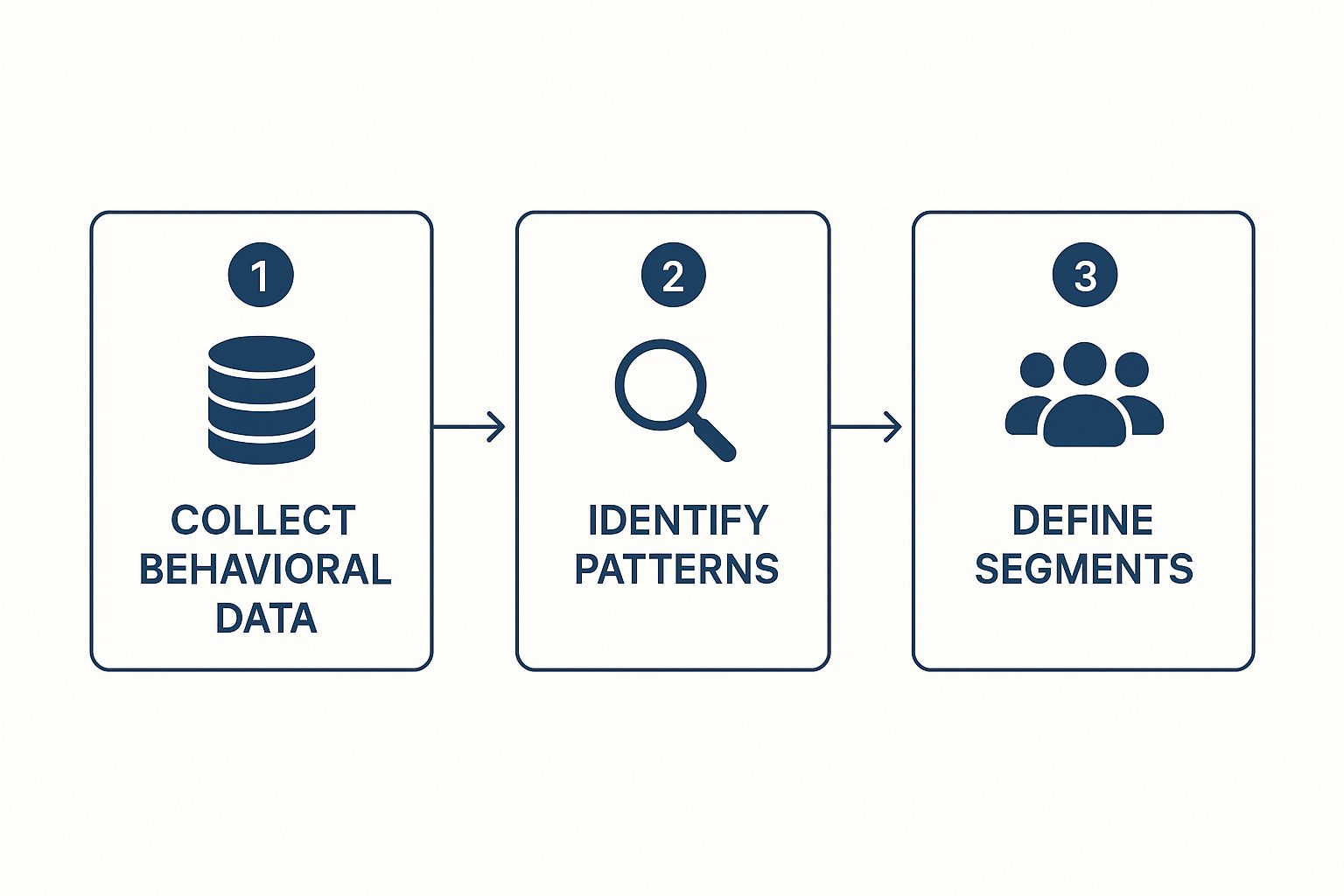
Alright, you’ve done the hard work. You've waded through surveys, interviews, and analytics, and now you're sitting on a mountain of raw data. The next step is where the magic really happens—turning that messy pile of information into something useful.
This is all about finding the patterns. You're looking for the clear dividing lines that separate one type of customer from another. Think of yourself as a detective, piecing together clues from different sources to build a coherent picture of who your customers are and what they need.
Finding Your Core Customer Groups
I always like to start with the qualitative data—the interview transcripts and open-ended survey answers. This is where the human element shines through. Are you seeing the same phrases pop up again and again when people describe their biggest frustrations? That's your first major clue.
For instance, you might notice one cluster of customers repeatedly mentioning "tight budgets" while another group is more concerned with "integrating new tools into our existing workflow." Boom. You’ve just uncovered the seeds of two potentially distinct customer segments.
Now, take those budding ideas and see if the numbers back them up. Check your CRM or analytics. Does that "budget-conscious" group tend to come from smaller companies, maybe with fewer than 50 employees? Does your "integration-focused" group spend most of their time on your developer documentation pages?
When you find that a qualitative theme aligns perfectly with a quantitative behavior, you know you're on the right track. You're building a segment based on solid evidence, not just a gut feeling.
Some of the most common and effective ways to slice up your audience are based on:
- Their Goals: What is their primary objective? Are they trying to "generate more leads" or just "build brand awareness"?
- Their Roadblocks: What’s preventing them from reaching that goal? Is it a "lack of technical skill" or simply "not enough hours in the day"?
- Their Behavior: How do they engage with you? Are they "avid blog readers" or do they "only watch your video tutorials"?
Moving From Hunches to Data-Backed Segments
This isn't just guesswork; it's a proven methodology. The concept of creating personas has been around since the 1990s, starting in the software world where developers used interviews and observation to understand their users.
Today, we've blended that old-school approach with modern data analysis. We don't just observe; we use hard data to validate our assumptions and build segments that are statistically sound.
Let's look at a real-world example. Imagine a SaaS company digging into its customer data. They might start to see two very different groups emerge:
- The Scrappy Startup Founder: This person is all about affordability and getting up and running fast. Website analytics show they spend a lot of time on the pricing page and view the "Getting Started" tutorials.
- The Enterprise Team Lead: Their priorities are security, compliance, and scalability. They’re the ones downloading technical whitepapers and their sales inquiries are always about custom integrations.
These two personas are defined by completely different needs and behaviors. To sharpen these profiles even further, you could layer in demographic data. For example, knowing the key social media platform demographics can tell you where the "Startup Founder" hangs out online versus the "Enterprise Lead."
The whole point of segmentation isn't just to split your audience into buckets. It's to understand the deep-seated reasons why each group chooses to do business with you. If a segment isn't different enough to need its own unique message, it probably isn’t a true segment.
How to Build a Persona Profile That Breathes

Alright, you've waded through the data and pulled out your key customer segments. Now for the fun part: turning those abstract groups into real, breathing characters your whole team can get behind.
A truly great buyer persona is so much more than a list of demographics on a slide. It’s a story. It’s about building empathy. The end goal is to create a profile so vivid that when your team brainstorms a new feature or drafts an email, they instinctively ask, "What would Sarah think of this?" That’s how you shift from targeting a vague segment to connecting with an actual person.
The first move is simple but powerful: give them a name. I've found that an alliterative name like "Sustainable Sarah" or "Data-Driven Dan" really sticks. It's catchy and instantly anchors the persona's core identity in everyone's mind. Pair that name with a stock photo that feels right, and suddenly, the persona starts to feel real.
Crafting the Persona Narrative
With a name and a face in place, it’s time to build their story. This isn't creative writing; it's about weaving your research into a human context. You're translating data points into the real-world drivers behind their daily decisions.
Start with their primary goals. What is the single most important thing they're trying to accomplish that relates to what you offer? For example, "Data-Driven Dan" isn't just trying to "use marketing software." His real goal is "to prove the ROI of his campaigns to the leadership team." That level of specificity is what makes a persona useful.
From there, dig into the challenges standing in his way. What are the frustrations that keep him up at night? Dan probably struggles with clunky analytics tools and spends hours manually stitching together reports. That specific pain point is what sends him searching for a solution like yours in the first place.
A killer persona always balances professional goals with personal motivations. Think about what drives them as a human being. For "Sustainable Sarah," her motivation might be a deeply held belief in ethical consumerism, a value that influences every single brand she decides to support.
This is where you really start to see how these profiles drive smart decisions. The narrative gives you the "why" behind their behavior.
Adding Depth and Detail
To make your persona truly come alive, you need to add the little details that make them three-dimensional. A simple "Day in the Life" sketch is one of the most effective tools I've used. Just walk through their typical day. What’s the first thing they do when they get to their desk? What meetings do they dread? What tools are always open on their computer?
This exercise helps your team picture the persona in their natural habitat, making it crystal clear when and how your product actually fits into their world. It uncovers their communication preferences, the blogs and podcasts they trust, and their overall comfort level with technology.
So, let's break down the essential components that bring it all together.
Essential Components of a Buyer Persona Profile
I've put together a table that outlines the non-negotiable elements for any persona document. It explains what each piece is and, more importantly, why it’s critical for guiding your strategy.
| Component | What It Is | Why It Matters |
|---|---|---|
| Name & Photo | A relatable name and a representative stock image. | It makes the persona memorable and instantly recognizable to your team. |
| Demographics | Key details like age, role, company size, and location. | This provides a quick, factual snapshot of who they are and where they fit in the market. |
| Goals | Their primary professional and personal objectives. | This explains their core motivations and what a "win" looks like for them. |
| Challenges | The specific pain points and obstacles they face daily. | It pinpoints the exact problems your product or service is built to solve. |
| Motivations | What drives their behavior (e.g., success, values, efficiency). | This helps you craft messaging that resonates on an emotional and psychological level. |
| "Day in the Life" | A short narrative of their typical day. | This builds empathy and provides context for how they interact with the world and your brand. |
| Direct Quotes | Real quotes from customer interviews or surveys. | It adds a layer of authenticity and keeps the persona grounded in the actual voice of your customer. |
When you build out each of these sections, you're creating a robust, actionable tool—not just another document. Instead of a flat caricature, you get a well-rounded character who feels like someone you know. This is the secret to building a persona that doesn’t just gather dust in a folder but actively shapes and improves your entire business strategy.
Putting Your Personas to Work Across Your Business
https://www.youtube.com/embed/v6EWN4EjHM0
So you've done the work and built out these beautiful, detailed persona profiles. That's a huge step, but the job's not done. A persona document that just gathers digital dust in a shared drive is completely useless. Its real value comes alive when it’s put into action daily, shifting from a static research project into a dynamic tool that steers your entire business.
The magic happens when your teams start using these profiles to make smarter, more empathetic decisions. Think about it. When your marketing team is brainstorming, they can look at 'Data-Driven Dan' and know instantly that their next blog post needs to be packed with statistics and case studies, not fluffy anecdotes. That simple check ensures every piece of content speaks directly to a real person's needs.
This isn't just a marketing gimmick, either. When your sales team understands that 'Sustainable Sarah' deeply values ethical practices, they can stop reciting a generic script. Instead, they can open the conversation by highlighting your company's eco-friendly packaging or transparent supply chain. That's how you build a genuine connection.
Integrating Personas into Key Business Functions
To see a real return on your research, you have to embed these personas into the core processes of your most important departments. This means making them visible and accessible, not just a file someone saw once in a new-hire presentation.
Here’s a practical look at how different teams can put them to work:
- Content Marketing: Use your personas as a sounding board. For every blog topic, webinar idea, or social post, ask, "Would Dan actually find this useful?" This helps you create content that solves their specific problems instead of just adding to the noise.
- Paid Advertising: Stop wasting your ad budget. Build your audiences around your persona demographics, interests, and online behaviors to sharpen your targeting. You'll reach the people most likely to convert and get more bang for your buck.
- Email Marketing: Segment your email lists by persona. There's no reason 'Sustainable Sarah' should be getting the same technical deep-dive emails as 'Data-Driven Dan'. Tailoring your campaigns makes your audience feel seen and understood.
- Product Development: Let your personas settle debates about your product roadmap. When deciding what feature to build next, the team can ask which one solves the biggest problem for your primary persona. It brings incredible clarity to prioritization.
A persona isn't just a marketing asset; it's a company-wide compass. When everyone from product to sales is aligned on who the customer is, you create a seamless and consistent experience that builds trust and loyalty.
Keeping Your Personas Relevant and Actionable
For your personas to stay useful, they have to be living documents. Don't just file them away. Share them widely and make them a recurring topic in team meetings and project kickoffs. I've seen some of the most successful companies print out their personas and hang them on the wall. It’s a powerful, constant reminder of who everyone is working for.
Ultimately, the goal is to weave these customer profiles into your company's DNA. When someone suggests a new idea, the immediate follow-up question in the room should be, "How does this help our persona?" That simple shift is what separates companies that just have personas from those that truly use them to drive real growth.
A Few Common Questions About Buyer Personas
Even with a great plan, a few questions always seem to surface when teams start building out their buyer personas for the first time. Let's get these sorted out now so you can sidestep some common hurdles and make sure all that hard work pays off.
So, How Many Personas Do I Actually Need?
This is probably the most common question I hear. While there's no single magic number, a good sweet spot for most companies is somewhere between 3 and 5 personas. This range usually covers your primary customer groups without spreading your team too thin.
If you're brand new to this, don't try to boil the ocean. Start small. Focus on creating just one or two personas for your most important and clear-cut customer types.
The real key here is quality, not quantity. Every persona you create should be distinct enough to justify a different marketing strategy. If you find two of your personas share almost the same goals, challenges, and motivations, that’s a good sign you can probably combine them into one, more powerful profile.
What’s the Real Difference Between a Buyer Persona and a Target Audience?
It’s easy to get these two mixed up, but the difference is critical. Think of it as a broad sketch versus a detailed, lifelike portrait.
- A target audience is defined by broad, demographic data. It’s a description like, "men, ages 25-40, living in the Midwest, interested in outdoor activities." It tells you who you're generally aiming for.
- A buyer persona breathes life into that data. It gives someone in that audience a name, a job title, a backstory, and specific motivations. It moves beyond simple demographics to tell you why they make certain choices and how you can truly connect with them.
A persona gives you the rich, human context that a target audience just can't provide.
Your target audience tells you where to find your customers. Your buyer persona tells you what to say when you get there. It’s the difference between knowing someone’s zip code and knowing what keeps them up at night.
How Often Should I Update These Personas?
Your buyer personas shouldn't be carved in stone. They're living, breathing documents that need to adapt as your customers and the market evolve. Customer needs shift, new technologies pop up, and your own business will change.
As a rule of thumb, it’s a smart move to formally review and refresh your personas at least once a year.
You’ll also want to give them a check-up anytime there's a major change, like a new product launch, a pivot in your company's strategy, or if you start noticing new patterns in customer behavior. The best way to keep your personas sharp and relevant is to have a steady stream of customer feedback coming in.
Ready to connect with influencers who perfectly match your new buyer personas? REACH simplifies influencer discovery, campaign management, and performance tracking. Stop guessing and start building data-driven partnerships that deliver real results. Find your perfect influencer match with REACH.