 Skip to content


Struggling to move beyond theory and find a powerful influencer marketing example that truly resonates with your brand's goals? You're not alone. The digital landscape is filled with vague success stories, but actionable, replicable strategies are often hard to find. A successful influencer marketing campaign requires more than just finding a popular creator; it demands a strategic approach to drive measurable outcomes. This is where a dedicated platform like REACH Influencers becomes invaluable, providing the tools to discover, manage, and measure campaigns with precision.
This guide breaks down the theory. We're dissecting 10 distinct and powerful influencer marketing campaign types, complete with strategic analysis, tactical takeaways, and insights into why they succeeded. We will explore everything from grassroots nano-influencer campaigns and affiliate partnerships to high-stakes product co-creation and long-term brand ambassadorships, demonstrating how each influencer marketing example can be adapted for your business.
Each breakdown offers a blueprint you can adapt for your own brand. To execute these strategies with precision and scale, a robust platform is essential. Tools like REACH Influencers streamline the entire process, from discovering the perfect creators with granular filters to managing contracts, approvals, and payments. To truly understand the impact of these examples and ensure your efforts are worthwhile, you must first learn how to effectively measure social media ROI.
This ensures your next campaign is not just inspired but also flawlessly executed and measurable. Let's dive into the examples that will shape your strategy.
Table of Contents
- 1. Micro-Influencer Product Seeding Campaigns
- 2. Affiliate Commission-Based Influencer Partnerships
- 3. Branded Content & Sponsored Posts Campaigns
- 4. Brand Ambassador & Long-Term Creator Programs
- 5. User-Generated Content (UGC) Campaigns
- 6. Nano-Influencer Grassroots Campaigns
- 7. Co-Creation & Collaborative Product Development
- 8. Influencer Takeover Content Campaigns
- 9. Influencer-Hosted Webinars & Educational Content
- 10. Crisis Response & Authentic Advocacy Influencer Campaigns
- 10 Influencer Marketing Campaigns Comparison
- Turn Inspiration into Action with the Right Platform
1. Micro-Influencer Product Seeding Campaigns: An Authentic Influencer Marketing Example
Product seeding is a powerful influencer marketing example where brands send free products to a curated list of creators, hoping they will feature them organically. This strategy is especially effective with micro-influencers, who have smaller but highly engaged and trusting audiences.
Unlike heavily scripted campaigns, product seeding thrives on authenticity. Brands like Glossier and Gymshark built their empires by sending products to creators who genuinely fit their brand ethos. The goal isn’t a guaranteed post but to build a real connection and generate authentic user-generated content (UGC). This approach leverages the high trust that followers place in micro-influencers, making their recommendations feel more like a tip from a friend than a paid ad.
Why It Works
This method taps into the core strength of micro-influencers: authenticity and high engagement. A post from a micro-influencer often feels more genuine, driving higher-quality engagement and conversions. It’s a cost-effective way to generate social proof and reach niche communities that larger campaigns might miss. If you're new to this concept, you can learn more about what a micro-influencer is and why their impact is so significant.
Key Takeaway: Prioritize genuine brand alignment over follower count. The right 20 micro-influencers who love your product will outperform one mega-influencer who doesn't.
How to Replicate This Campaign
- Find Your Niche: Use REACH's discovery filters to identify creators by engagement rate, audience demographics, and specific content keywords.
- Personalize Outreach: Send a genuine message explaining why you believe their personal brand aligns with your product.
- Grant Creative Freedom: Provide basic brand guidelines but let the creator’s authentic voice lead the content.
- Track Performance: Use unique discount codes or affiliate links to measure direct impact on sales.
2. Affiliate Commission-Based Influencer Partnerships
Affiliate partnerships are a powerful performance-driven influencer marketing example where creators earn a commission on sales they generate. Instead of a flat fee, influencers are compensated based on trackable results, aligning their incentives directly with the brand’s ROI goals. This model transforms creators into genuine sales partners motivated to drive conversions.
Brands like Amazon Associates and Fashion Nova have perfected this strategy, providing influencers with unique tracking links or discount codes. When a follower makes a purchase through that link, the creator receives a percentage of the sale. This approach creates a scalable and cost-effective way to drive revenue, as payment is directly tied to performance. It’s a win-win system that rewards high-performing creators and ensures brands only pay for tangible results.
Why It Works
This method is built on a foundation of shared incentives and trackable performance. By tying compensation directly to sales, brands mitigate risk and ensure their marketing budget is spent effectively. It empowers creators to act as true business partners, motivating them to produce content that not only engages but also converts. This model is highly scalable and provides clear, measurable data on which influencers are driving the most value for your business.
Key Takeaway: Treat affiliate influencers as long-term sales partners. Providing them with competitive commissions, performance bonuses, and transparent data will motivate them to invest more effort into promoting your products.
How to Replicate This Campaign
- Set Competitive Rates: Offer an attractive commission percentage that stands out in your industry to attract top-tier creators.
- Provide Unique Trackers: Equip each influencer with a unique affiliate link or custom discount code to accurately measure their impact.
- Automate Payments: Use REACH's integrated payment system to automatically track commissions and distribute payouts, simplifying the entire process.
- Establish Clear Terms: Define the content requirements, payout schedules, and performance expectations in a clear agreement to avoid misunderstandings.
3. Branded Content & Sponsored Posts: A Classic Influencer Marketing Example
Branded content and sponsored posts are a classic influencer marketing example where brands directly pay creators a fixed fee for dedicated content. In this model, influencers integrate brand messaging into their regular programming, creating posts that feature a product or service while maintaining their unique style.
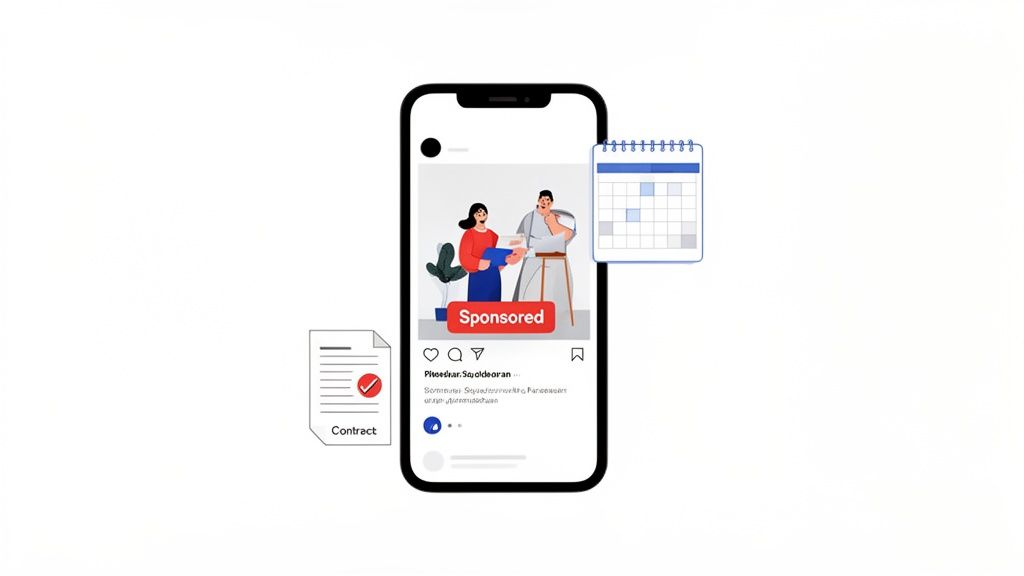
Unlike organic seeding, these collaborations are transactional but still demand authenticity to succeed. Iconic brands like Daniel Wellington and Kylie Cosmetics scaled rapidly by partnering with influencers for sponsored posts that felt native to their feeds. The key is to provide a clear brief but allow creators the freedom to present the message in a way that resonates with their audience, ensuring it feels like a genuine recommendation.
Why It Works
This strategy offers predictability and control. Brands can guarantee placement, dictate key messaging, and align content with specific campaign timelines. For influencers, it provides a direct and reliable income stream. When executed well with proper FTC disclosures (#ad, #sponsored), sponsored content allows brands to tap into an influencer’s established trust and creative storytelling to drive awareness, consideration, and sales. For a deeper dive, check out this guide on influencer marketing from HubSpot.
Key Takeaway: A flexible creative brief is crucial. Trust the creator to speak to their audience authentically; their unique voice is what you are paying for.
How to Replicate This Campaign
- Define Clear Goals: Establish specific KPIs, whether it's brand awareness, website clicks, or direct sales.
- Streamline Management: Use a platform like REACH to manage contracts, content approvals, and payments all in one place.
- Provide a Solid Brief: Outline mandatory talking points, hashtags, and FTC guidelines but give the creator room for creativity.
- Measure Everything: Track performance using UTM parameters, unique promo codes, or affiliate links to measure ROI accurately.
4. Brand Ambassador & Long-Term Creator Programs
Brand ambassador programs are a powerful influencer marketing example that shifts from one-off sponsored posts to ongoing, long-term partnerships. In this model, creators represent a brand over months or even years, deeply integrating its products into their lifestyle and content. This fosters a sustained, authentic narrative that builds stronger brand association and loyalty.
Unlike short-term campaigns, this strategy turns creators into genuine advocates. Think of Hailey Bieber's relationship with Adidas or Serena Williams' multi-year deals with brands like Nike. The creator becomes synonymous with the brand, making their endorsements feel less like an ad and more like a core part of their identity. This recurring presence keeps the brand top-of-mind with a highly engaged audience.
Why It Works
This method excels at building deep brand trust and long-term customer loyalty. When followers see a creator consistently use and promote a product over time, the endorsement becomes more credible and memorable. This continuous exposure is far more effective at driving consideration and purchase decisions than a single sponsored post. If you are looking to set up your own program, you can learn how to create a brand ambassador program that delivers consistent results.
Key Takeaway: Move beyond transactional relationships. Investing in long-term ambassador programs transforms influencers into true brand partners, generating compounding returns on trust and authenticity.
How to Replicate This Campaign
- Identify True Fans: Use REACH's platform to find creators who already mention your brand organically, ensuring genuine affinity from the start.
- Start with a Pilot: Offer a 3-6 month pilot contract to test the partnership's effectiveness before committing to a longer-term agreement.
- Provide Exclusivity: Give ambassadors early access to new products, exclusive event invitations, and marketing support to make them feel valued.
- Centralize Communication: Use a shared dashboard to manage content approvals, track performance, and maintain clear communication throughout the partnership.
5. User-Generated Content (UGC) Campaigns
User-Generated Content (UGC) campaigns are a prime influencer marketing example where the brand’s community becomes the creator. Instead of paying specific influencers, brands incentivize their entire audience to create and share content featuring their products, often using a branded hashtag. This strategy turns loyal customers into brand ambassadors, fostering authentic advocacy at a massive scale.
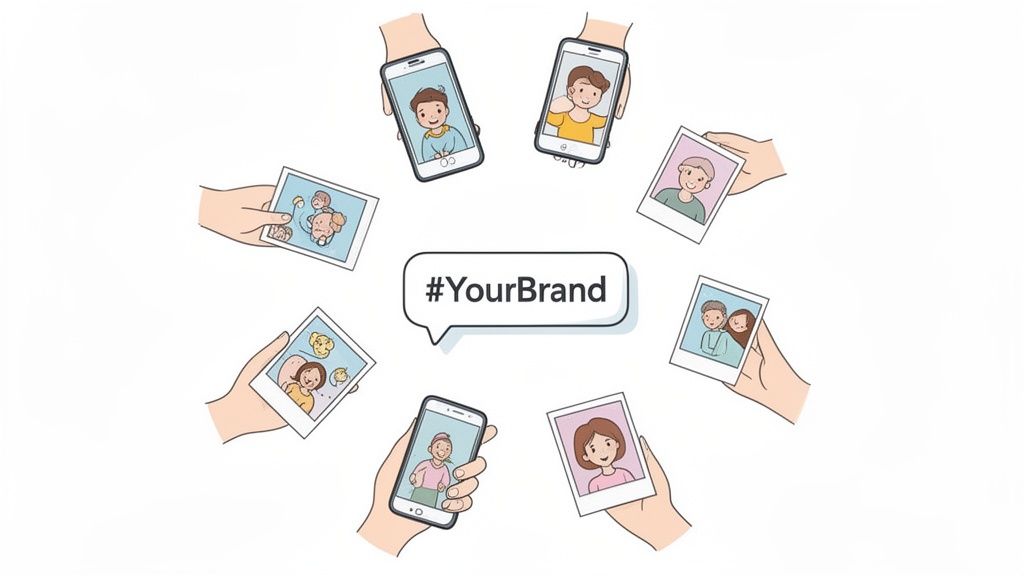
Campaigns like Coca-Cola's #ShareACoke and GoPro's user-submitted video awards demonstrate the power of this approach. Brands collect a wealth of authentic content they can repurpose across their own channels, creating a powerful loop of social proof and community engagement. The key is to make participation simple, fun, and rewarding.
Why It Works
This method thrives on authenticity and community. Content from real customers is often perceived as more trustworthy than polished brand creative. It builds a sense of community ownership and allows brands to source diverse, relatable content at a fraction of the cost of a traditional production shoot. For deeper insights into leveraging community creativity, consider these powerful user generated content strategies.
Key Takeaway: Empower your community to tell your brand's story. The most compelling content often comes from the people who genuinely love and use your products every day.
How to Replicate This Campaign
- Create a Shareable Hashtag: Develop a simple, memorable, and unique hashtag for your campaign.
- Incentivize Participation: Offer prizes, discounts, or the chance to be featured on your brand’s official channels.
- Set Clear Guidelines: Establish clear terms for content rights and submission rules to ensure brand safety. You can develop a complete UGC strategy to formalize this process.
- Aggregate and Showcase: Use REACH's platform to track your hashtag, collect submissions, and easily feature the best UGC across your social media profiles.
6. Nano-Influencer Grassroots Campaigns: A Hyper-Local Influencer Marketing Example
Nano-influencer grassroots campaigns focus on hyper-local or ultra-niche marketing by partnering with creators who have between 1,000 and 10,000 followers. These influencers possess incredibly high engagement rates and deep, personal connections within their small communities. This strategy is perfect for local businesses, regional brand launches, or any company aiming to build authentic, ground-level awareness.
This influencer marketing example is about trading massive reach for maximum trust. A local fitness studio might collaborate with a handful of neighborhood fitness enthusiasts, or a new restaurant could work with food bloggers exclusively in their city. The content feels less like an advertisement and more like a genuine recommendation from a trusted neighbor, which is highly effective for driving local foot traffic and sales.
Why It Works
This approach leverages the unparalleled trust and community that nano-influencers command. Their followers see them as peers, making their endorsements incredibly powerful and authentic. For businesses, this is a cost-effective way to dominate a specific geographic area or niche interest group, building a loyal customer base from the ground up and generating powerful social proof within a tight-knit community.
Key Takeaway: For local impact, engagement rate and community connection are far more valuable than follower count. A network of 50 local nano-influencers can create a stronger local buzz than a single macro-influencer.
How to Replicate This Campaign
- Pinpoint Local Talent: Use REACH’s location filters to discover nano-influencers by city or region who are already creating content relevant to your brand.
- Focus on Engagement: Prioritize creators with high engagement rates and a proven connection to their local audience over those with slightly larger followings.
- Offer Value, Not Just Cash: Start by offering free products, services, or exclusive experiences. Many nano-influencers are motivated by genuine brand partnerships.
- Scale Your Outreach: Use a streamlined workflow to manage communication and track collaborations with dozens of nano-influencers simultaneously.
7. Co-Creation & Collaborative Product Development
This advanced influencer marketing example involves partnering with creators not just to promote products, but to co-design and develop them from the ground up. Brands leverage an influencer's creative vision and deep audience insights to build new offerings that are guaranteed to resonate. This strategy transforms a creator from a promoter into a true business partner.
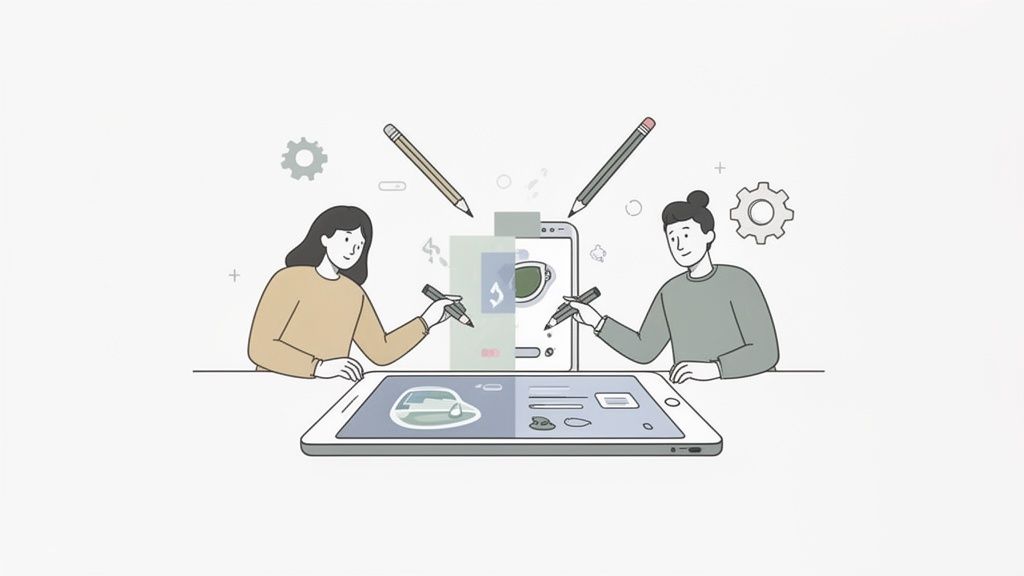
Iconic examples include Kylie Jenner's Kylie Cosmetics and Hailey Bieber's Rhode Beauty, where the creator's personal brand is the foundation of the entire product line. This deep integration ensures the final product is a perfect extension of the influencer, making the launch feel incredibly authentic and driving massive initial demand. The collaboration becomes the core marketing story itself, generating organic buzz long before the product is available.
Why It Works
This method builds a powerful sense of ownership and authenticity that a simple promotional post can never achieve. The influencer is financially and creatively invested, leading to more passionate and consistent promotion. Their audience sees the product as a genuine creation from someone they trust, not just another sponsorship, which builds immense credibility and drives sales.
Key Takeaway: Involve creators in the entire product lifecycle, from concept to launch. Their built-in audience provides a ready-made focus group and an eager customer base.
How to Replicate This Campaign
- Select a True Partner: Use discovery tools to find creators whose brand, aesthetic, and audience perfectly align with your product vision.
- Define the Partnership: Establish clear IP rights, royalty structures, and creative responsibilities using REACH's contract management features.
- Collaborate on Development: Involve the influencer in key decisions like design, naming, and pricing to ensure genuine alignment.
- Build the Narrative: Create a content roadmap that documents the co-creation journey, building anticipation for the launch.
8. Influencer Takeover Content Campaigns
An influencer takeover is a collaborative influencer marketing example where a creator temporarily manages a brand’s social media account, like Instagram Stories. This approach gives the brand's audience a fresh perspective and provides behind-the-scenes access, humanizing the brand and merging two communities.
Brands like ASOS have mastered this by letting fashion influencers take over their Stories to share styling tips or cover events. The content feels unscripted and direct, creating an "insider" experience for the audience. This strategy leverages the influencer's unique voice and creative style to produce content that is both authentic and aligned with the brand's image, effectively cross-pollinating followers and boosting engagement on both accounts.
Why It Works
This method thrives on novelty and shared authority. Handing over the keys, even temporarily, signals immense trust in an influencer, which resonates powerfully with their audience. It breaks the monotony of typical brand-led content, introducing a new personality and energy. This fresh voice can re-engage a dormant audience and attract new followers from the influencer’s community who are curious to see their favorite creator in a new context. For more data, Influencer Marketing Hub offers statistics on campaign performance.
Key Takeaway: Granting creative control for a limited time builds powerful social proof and authenticity. A successful takeover feels like a special event, not a planned advertisement.
How to Replicate This Campaign
- Vet Thoroughly: Use a platform to analyze an influencer’s past content and engagement to ensure they are a brand-safe and reliable partner.
- Set Clear Boundaries: Provide a clear brief outlining brand voice, content pillars, and any off-limit topics, but allow room for their personality to shine.
- Promote in Advance: Announce the takeover on both your and the influencer’s channels a few days beforehand to build anticipation.
- Engage in Real-Time: Use interactive features like Q&As, polls, and quizzes during the takeover to maximize audience participation.
9. Influencer-Hosted Webinars & Educational Content
This powerful influencer marketing example involves brands partnering with credible influencers to host educational webinars, tutorials, or live workshops. Instead of a direct sales pitch, this strategy provides genuine value to the audience, positioning both the brand and the influencer as trusted experts in their field.
Companies like HubSpot and Skillshare have excelled by collaborating with industry leaders to create content that educates first and sells second. A financial services brand might partner with an economics educator for a webinar on budgeting, or a fitness app could team up with a certified coach for a live training session. The product is featured naturally as a tool that helps solve the audience's problems, generating highly qualified leads through educational engagement.
Why It Works
This strategy builds authority and trust by shifting the focus from promotion to education. When an influencer provides tangible value and knowledge, their audience is more receptive to the brand integrated into the lesson. It’s a sophisticated method for lead generation, as attendees who sign up for a webinar are already demonstrating a strong interest in the topic and are likely a good fit for the product.
Key Takeaway: Lead with value, not a sales pitch. An audience that feels educated and empowered is far more likely to convert into a loyal customer.
How to Replicate This Campaign
- Identify True Experts: Use discovery tools to find influencers with proven expertise and credibility in your niche, not just a large following.
- Co-Create Valuable Content: Work with the influencer to develop a topic that addresses a genuine pain point for your target audience.
- Integrate Products Naturally: Feature your product as an essential part of the solution within the educational content.
- Capture and Nurture Leads: Use webinar sign-ups to build an email list and create follow-up sequences that continue to provide value and guide prospects toward a purchase.
10. Crisis Response & Authentic Advocacy Influencer Campaigns
Brands can partner with influencers to authentically address social issues, respond to cultural moments, or promote important causes. This influencer marketing example goes beyond performative activism by featuring creators whose genuine advocacy aligns with core brand values, focusing on real-world impact over simple brand mentions.
These campaigns are built on shared principles and long-term commitment. Brands like Patagonia have masterfully integrated environmental advocacy into their marketing by partnering with outdoor influencers who are legitimate activists. The goal is to amplify crucial messages and support meaningful change, leveraging the creator's credibility to foster a deeper, value-based connection with the audience. This strategy transforms marketing into a vehicle for social good.
Why It Works
This approach builds profound brand loyalty by demonstrating a company's values in action. When done authentically, it positions the brand as a genuine participant in important conversations, not just an opportunistic advertiser. This strategy leverages the deep trust creators have built around specific causes, allowing a brand’s message to resonate powerfully and authentically with communities that care deeply about these issues.
Key Takeaway: Authentic alignment is non-negotiable. Partner with creators who have a proven, long-standing commitment to the cause to ensure your campaign is perceived as genuine support, not just marketing.
How to Replicate This Campaign
- Vet for Authenticity: Use REACH's platform to analyze an influencer's past content and audience conversations to verify their genuine alignment with a cause.
- Co-Create the Message: Work collaboratively with the influencer to craft a message that is both true to their voice and your brand’s mission.
- Commit to Real Impact: Go beyond awareness. Structure the campaign around a measurable goal, like fundraising targets or petition signatures.
- Empower the Creator: Trust your chosen advocates to lead the conversation. Their authentic passion is your campaign’s greatest asset.
10 Influencer Marketing Campaigns Comparison
| Campaign | 🔄 Implementation Complexity | ⚡ Resource Requirements | 📊 Expected Outcomes (⭐) | Best For | 💡 Key Tips |
|---|---|---|---|---|---|
| Micro-Influencer Product Seeding Campaigns | Medium — manage multiple creators and outreach | Low–Medium — product samples, coordination time | High engagement, niche reach ⭐⭐⭐ — strong ROI but slower mass reach | D2C, SMBs, niche consumer products | Prioritize engagement over follower count; personalize outreach |
| Affiliate Commission-Based Influencer Partnerships | Medium — needs tracking & payment workflows 🔄 | Low upfront, Medium ongoing — tracking infrastructure & payouts ⚡ | Measurable conversions, scalable ⭐⭐⭐ — pay-for-performance 📊 | E‑commerce, SaaS, ROI-focused brands | Use unique links/codes; set competitive commissions and tiers |
| Branded Content & Sponsored Posts Campaigns | Low–Medium — contracts and approvals | Medium–High — fixed fees per post | Predictable reach and timing ⭐⭐ — controlled messaging, variable authenticity 📊 | Established brands, product launches, seasonal campaigns | Negotiate usage rights; require FTC disclosures and flexible briefs |
| Brand Ambassador & Long-Term Creator Programs | High — long-term contracts and relationship management 🔄 | High — recurring compensation, exclusivity perks | Deep brand affinity and consistent messaging ⭐⭐⭐ — stronger long-term ROI 📊 | Premium/luxury brands, long-term brand building | Start with 3–6 month pilots; define KPIs and regular check‑ins |
| User-Generated Content (UGC) Campaigns | Low–Medium — moderation and curation | Low — incentives, campaign management ⚡ | High authenticity and volume, variable quality ⭐⭐ — community growth 📊 | Community-focused brands, budget-conscious companies | Use simple hashtags, clear rights agreements, and feature top submissions |
| Nano-Influencer Grassroots Campaigns | Medium — coordinate many hyperlocal creators | Low — sampling or small fees ⚡ | Extremely high engagement per creator ⭐⭐⭐⭐ but limited reach per post 📊 | Regional launches, local businesses, market tests | Batch outreach (20–50), focus on location & engagement rates |
| Co-Creation & Collaborative Product Development | Very High — product design, legal & IP negotiations 🔄 | Very High — R&D, manufacturing, revenue‑sharing | High differentiation and launch buzz ⭐⭐⭐⭐ — justifies premium pricing 📊 | Beauty, consumer goods, premium product lines | Define IP/royalty terms early; use milestone timelines and central approvals |
| Influencer Takeover Content Campaigns | Low–Medium — access control and vetting | Low — short-term access and content creation ⚡ | Short-term engagement spikes and novelty ⭐⭐ — cross-exposure 📊 | Fashion, events, tech launches, entertainment | Provide clear content boundaries; monitor live for brand safety |
| Influencer-Hosted Webinars & Educational Content | Medium–High — content prep, platform setup 🔄 | Medium — production, promotion, tech support | High-quality leads and authority-building ⭐⭐⭐ — long-term content value 📊 | B2B, high-ticket services, education platforms | Capture emails, partner with subject-matter influencers, offer replays |
| Crisis Response & Authentic Advocacy Influencer Campaigns | High — sensitive coordination, long-term commitments 🔄 | Medium–High — programmatic support and impact tracking | Deep purpose alignment and reputation benefits ⭐⭐⭐ — ROI is indirect 📊 | Mission-driven, sustainability, nonprofits, values-led brands | Choose genuinely aligned causes; commit to measurable impact and transparency |
Turn Inspiration into Action with the Right Platform
Throughout this guide, we've explored a diverse landscape of impactful influencer marketing examples. From the grassroots authenticity of nano-influencer campaigns to the deep, long-term loyalty built by brand ambassador programs, a clear pattern emerges: success isn't accidental. It’s the result of meticulous strategy, authentic partnerships, and precise execution.
Each influencer marketing example, whether a dynamic influencer takeover or a high-converting affiliate partnership, demonstrates the power of aligning the right creator with the right message for the right audience. The most successful brands don't just find popular accounts; they build genuine relationships based on shared values and creative freedom. They understand that modern marketing is about connection, not just conversion.
From Blueprint to Reality: Executing Your Strategy
Turning these inspiring examples into your own campaign requires more than just a good idea. It demands a robust operational framework to manage the entire lifecycle of an influencer partnership. Think about the strategic depth required for co-creating a product or the agility needed for a crisis response campaign. These aren't simple, one-off tasks.
The key takeaways from every influencer marketing example we analyzed boil down to a few core principles:
- Strategic Discovery: Finding creators whose audience and values perfectly match your brand is non-negotiable. This goes beyond follower counts to analyze engagement, audience demographics, and content quality.
- Streamlined Workflow: Managing communication, content approvals, and contracts across multiple creators can quickly become overwhelming. An organized system is essential for scaling your efforts without sacrificing quality.
- Data-Driven Decisions: The ability to track performance, measure ROI, and understand what resonates with your audience is critical. Without clear KPIs and robust analytics, you're navigating without a map.
The Right Tools for a Winning Campaign
This is where a dedicated platform becomes indispensable. Manually juggling spreadsheets for discovery, email threads for communication, and separate payment systems creates inefficiencies and increases the risk of errors. It slows down your campaign velocity and makes it nearly impossible to prove the value of your marketing spend.
An integrated influencer marketing platform like REACH Influencers centralizes these complex processes. Imagine finding the perfect micro-influencers for a product seeding campaign using advanced filters, managing all your contracts and content approvals in one place, and pulling comprehensive performance reports with a few clicks. This level of efficiency empowers you to move from inspiration to action quickly and confidently. By automating the operational heavy lifting, you can focus on what truly matters: building authentic relationships and creating campaigns that resonate.
Ready to build your own standout influencer marketing example? The REACH Influencers platform provides the end-to-end tools you need to discover the perfect creators, manage campaigns at scale, and measure your ROI with precision. Schedule a demo today and see how our powerful features can turn your strategic vision into measurable success.