 Skip to content

Influencer marketing in the B2B tech world isn't about paying for a shoutout. It's about partnering with credible industry experts to build trust and authority with a highly technical audience. Instead of flashy consumer-style campaigns, the focus here is on authentic, expert-driven content that genuinely helps potential buyers. This guide provides a practical framework for building a powerful influencer marketing for B2B tech strategy that drives real business results.
Table of Contents
- Why Influencer Marketing for B2B Tech Is Essential
- How to Find the Right Tech Influencers
- Creating B2B Tech Content That Actually Connects
- Getting Your Foot in the Door: Influencer Outreach and Negotiation
- Measuring the Real ROI of Your Campaigns
- Answering Your Top Questions About B2B Tech Influencer Marketing
Why Influencer Marketing for B2B Tech Is Essential
Let's get one thing straight: influencer marketing is no longer just for fashion and lifestyle brands. In the complex landscape of B2B technology, buyers rely on the opinions of trusted experts, not just brand promises.
Decision-makers—from a CTO evaluating a new SaaS platform to an engineer exploring an API—are actively ignoring generic ads. They're seeking out unbiased insights from credible voices they already follow. This is precisely why a smart influencer marketing for B2B tech strategy is no longer a "nice-to-have" but a core part of any serious marketing plan.
Think of it less as a trend and more as a fundamental shift in how trust is built. A well-run influencer campaign delivers the social proof and technical validation you need to cut through the noise, navigate long sales cycles, and win over a skeptical, well-informed audience.
Building Authentic Credibility in a Skeptical Market
The modern B2B buyer is incredibly discerning. They can spot a sales pitch from a mile away and have built up a strong resistance to traditional marketing tactics. This is where peer recommendations and expert validation become your most powerful tools.
When a respected cybersecurity analyst breaks down your security platform's architecture on a podcast, it carries far more weight than a glossy branded whitepaper ever could.
This isn't just a hunch; the numbers back it up. In 2024, a massive 85% of B2B marketers in the U.S. confirmed they're using influencer marketing as a key part of their strategy. Even more telling, 87% of B2B buyers say they trust content from industry influencers more than materials produced directly by a brand.
The old ways of establishing trust are fading. The B2B world is now driven by authenticity and peer validation, a change clearly illustrated below.
The Shift in B2B Buyer Trust Signals
| Marketing Tactic | Traditional Trust Level | Influencer-Driven Trust Level | Impact on B2B Tech Buyers |
|---|---|---|---|
| Whitepapers & Ebooks | Moderate | High | A whitepaper gains immense credibility when co-authored or reviewed by a respected expert. |
| Product Demos | Low-Moderate | Very High | Buyers are more receptive to a hands-on, unbiased tutorial from a creator they trust than a polished sales demo. |
| Paid Ads | Low | Moderate | Ads featuring an influencer's testimonial or content perform better, feeling more like a recommendation. |
| Webinars | Moderate | Very High | A webinar co-hosted with an industry leader attracts a more engaged and qualified audience. |
This table shows a clear pattern: influencers act as a powerful trust accelerator for nearly every B2B marketing channel.
Navigating Complex Purchase Decisions
B2B tech purchases are almost never made by one person. They involve a whole committee of stakeholders, from the end-user developer to the C-level executive who signs the check. Each of them has different questions and priorities.
Influencers are uniquely positioned to create targeted content that speaks to the specific needs of each person on that buying committee.
A developer might follow a creator for their deep-dive code tutorials, while a CTO follows that same person for their sharp analysis of industry trends. A single influencer can help you connect with multiple decision-makers at once, each on their own terms.
This approach helps shorten the sales cycle by answering questions and overcoming objections before a sales rep ever enters the picture. It’s all about educating the entire buying committee through a voice they already know and respect.
Platforms like REACH Influencers are built to solve this exact problem. As a top-tier influencer marketing platform, it makes finding these multifaceted creators simple by letting you filter for specific technical expertise and audience demographics, ensuring you connect with the right voices. To see how this works in the real world, check out this powerful influencer marketing case study with Phyllo.
By working with these trusted voices, you're not just buying reach; you're borrowing credibility. This approach transforms your marketing from a brand monologue into a trusted conversation—and in the competitive B2B tech space, that's how you win.
How to Find the Right Tech Influencers for B2B Marketing
Finding the right person to partner with for a B2B tech campaign is nothing like finding a typical consumer influencer. Forget follower count. A small, deeply engaged audience of 500 CTOs is worth more than 50,000 general followers.
The real goal isn't just reach; it's about finding resonance and credibility within a very specific technical world. You need to stop asking "who's popular?" and start asking "who does my ideal customer actually trust?" That means looking for influencers with genuine, hands-on authority in niches like enterprise AI, cloud infrastructure, or cybersecurity.
Create Your Ideal Influencer Profile
Before you even open LinkedIn or Twitter, you need a blueprint. Think of it as your Ideal Influencer Profile (IIP). This isn't just a nice-to-have; it's a strategic filter that saves you from wasting time on bad fits.
Your IIP should be specific. What are the non-negotiables?
- Real-World Expertise: Do they actually work in your field? You’re looking for practitioners—the engineers, data scientists, and IT leaders who share what they learn on the job, not just high-level commentary. A cybersecurity company, for example, should be looking for someone who publishes research on new threats or contributes to open-source security projects.
- Audience Match: Who is listening to them? You need to know if their followers are the VPs of Engineering or Solutions Architects you’re trying to reach. Their audience should be a mirror image of your ideal customer.
- Content That Goes Deep: Look at what they’ve posted recently. Is it just surface-level hot takes? Or are they creating in-depth tutorials, detailed product teardowns, or sharp analysis of industry trends? The good ones go deep.
Ultimately, you're building a chain of trust that flows from your buyer to the influencer, and then back to your brand.
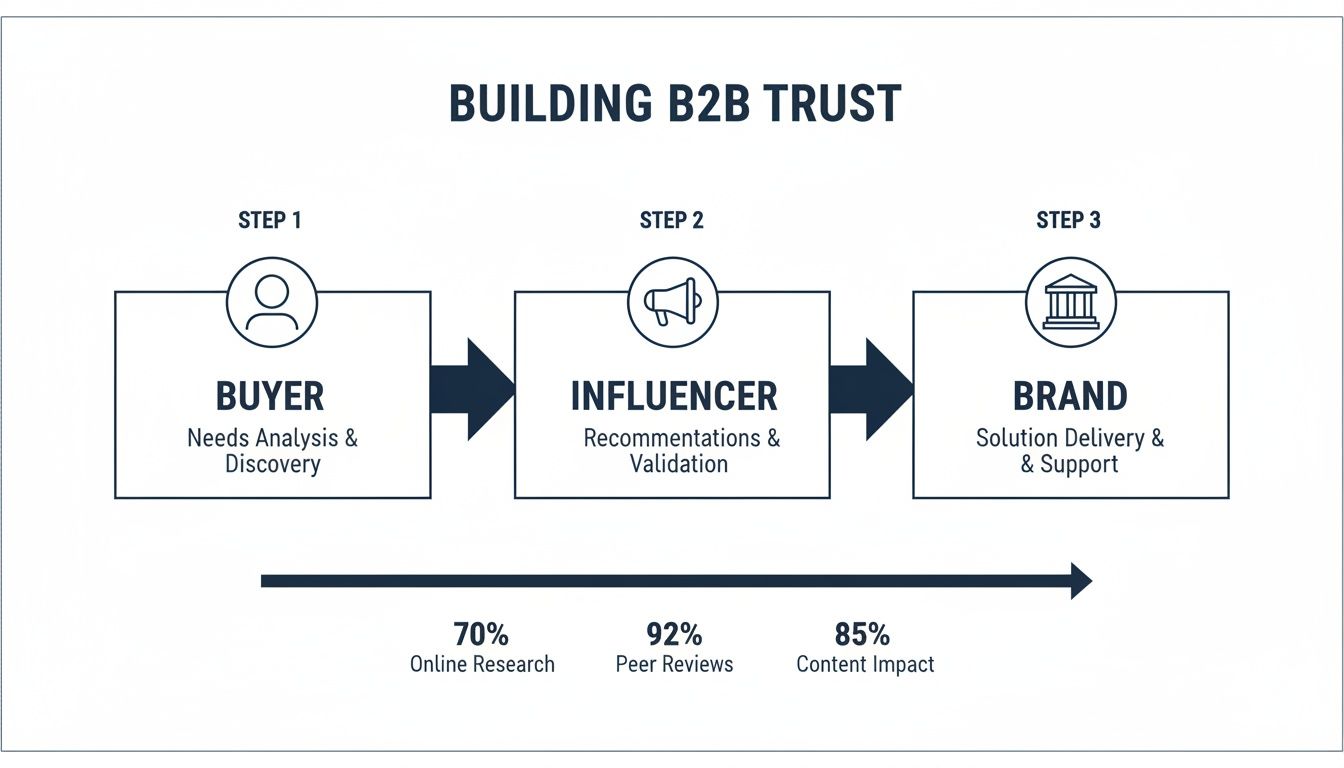
As you can see, these tech experts are the critical bridge, giving your solution the validation that discerning B2B buyers demand.
Vetting Potential Partners and Spotting Red Flags
Once you have a shortlist based on your IIP, the real work begins. This is where you separate the true experts from the pretenders, and it takes a careful eye.
Start by looking at the quality of their engagement, not just the numbers. Are people in the comments asking smart, technical questions? Or is it just a wall of "Great post!"? When other known experts show up in the comments to debate or add their own thoughts, that’s a huge green flag.
The biggest red flag in B2B tech is a mismatch between claimed expertise and actual content. If someone calls themselves an AI expert but only shares links to news articles without adding any unique analysis, they probably don't have the authority you need.
Also, check out their past brand partnerships. Have they worked with your direct competitors? More importantly, did those collaborations feel authentic? Or did they just look like a transactional, paid-for ad? The best B2B influencers are incredibly selective about who they work with because their credibility is their most valuable asset.
Using Platforms to Accelerate Discovery
Let's be honest: manually searching for and vetting B2B tech influencers can take weeks, even months. It’s a grind. This is where a dedicated platform can be a game-changer, turning a painfully slow task into a quick, data-driven process.
Platforms like REACH Influencers were built for this exact problem. Instead of just typing "cybersecurity" into a search bar and hoping for the best, you can get incredibly specific. Imagine filtering for influencers who list "CISSP certification" in their bio, have an audience made up of "CISOs," and maintain an engagement rate above 3%.
That kind of targeted search is next to impossible to do manually.
Using a specialized influencer discovery tool lets you find a curated list of pre-vetted experts who are a perfect match for your IIP. This frees up your team to do what really matters: building the strong, long-term relationships that make influencer marketing for B2B tech so powerful.
Creating B2B Tech Content That Actually Connects
When you're marketing to a B2B tech audience, a generic sponsored post is just throwing money away. Your audience—engineers, developers, and C-level execs—is highly technical and has zero tolerance for fluff. They're looking for substance, not a simple shout-out.
The real magic happens when you move beyond basic brand mentions. You need to co-create content with your influencers that genuinely educates, solves tough problems, and builds trust. Forget the B2C playbook; success here means using an influencer's credibility to break down complex ideas and show how your solution works in the real world.
Think Bigger Than a Sponsored Post
To really grab the attention of a technical crowd, your content needs to deliver serious value. A quick mention on LinkedIn simply isn't going to move the needle. Instead, your best bet is to focus on collaborative formats that put expertise front and center.
These kinds of collaborations do more than just build awareness. They establish authority and help guide potential customers through their decision-making process. The influencer becomes a true educational partner.
- Co-Hosted Webinars: Picture this: a well-respected API developer hosts a live webinar where they actually demo your new API. It's a powerful, unbiased tutorial that blows a standard sales demo out of the water. Just look at Lenovo's "Late Night I.T." series, which turned complex IT topics into engaging discussions and pulled in 300 million impressions.
- In-Depth Whitepapers: Team up with a cybersecurity expert to co-author a detailed whitepaper on an emerging threat. Their name and insights give the content instant credibility, turning a marketing asset into a must-read piece of industry analysis.
- LinkedIn Live Q&A Sessions: Get a well-known industry analyst to join you for a live Q&A. This format lets you tackle real-time questions from your target audience, with the analyst serving as a trusted third-party voice for your solution.
By focusing on educational formats, you change the game. It’s no longer a paid promotion; it’s a valuable industry resource. That’s the core of great B2B tech influencer marketing—add value first.
Finding the Balance: Creative Freedom vs. Brand Messaging
This is one of the trickiest parts of any B2B influencer campaign. How do you make sure your key brand messages get across without suffocating the influencer's authentic voice? An overly scripted post screams "advertisement," and a savvy tech audience will tune it out immediately.
The answer is to provide a clear brief, not a rigid script.
Your brief should lay out the campaign goals, the key features you want to highlight, and any essential "do's and don'ts." From there, you have to trust the influencer to translate those points into their own style. They know their audience and what works better than you do.
This collaborative approach is what makes the content feel genuine while still hitting your marketing goals. For more on this, Forbes has some excellent advice on fostering authentic influencer relationships that serve both parties.
High-Impact Content Formats for Tech Buyers
The right content format really depends on where your buyer is in their journey. Are you aiming for top-of-funnel awareness, mid-funnel education, or bottom-funnel decision-making?
The table below gives you a quick breakdown of some of the most effective formats and when to use them.
Effective Content Formats for B2B Tech Influencer Campaigns
| Content Format | Primary Goal | Key Metrics to Track | Example Use Case |
|---|---|---|---|
| Co-hosted Webinar | Lead Generation & Education | Registrations, Attendee Rate, MQLs | A DevOps influencer demonstrates how to use your platform to automate a complex CI/CD pipeline. |
| Technical Blog Post | Thought Leadership & SEO | Organic Traffic, Time on Page, Backlinks | An AI expert writes a guest post for your blog, detailing how they used your machine learning tools for a specific project. |
| Podcast Interview | Brand Awareness & Credibility | Downloads, Listener Retention | Your Head of Product is interviewed by a popular tech podcast host to discuss industry trends and your company's vision. |
| Product Teardown Video | Consideration & Validation | Watch Time, Click-Through Rate | An influencer creates a detailed video reviewing your software, highlighting its key features and comparing it to competitors. |
By matching the format to your campaign goals, you can build a much sharper and more measurable influencer marketing for B2B tech strategy.
A platform like REACH Influencers can really help here. Its campaign management tools let you collaborate on briefs, manage approvals, and track the performance of every piece of content. It provides the structure you need to turn creative ideas into real business results.
Getting Your Foot in the Door: Influencer Outreach and Negotiation
How you first reach out to a B2B tech influencer speaks volumes about your brand. A generic, copy-pasted message is a one-way ticket to the trash folder. But a thoughtful, personalized pitch? That shows you’ve done your homework and you genuinely respect their expertise. This first touchpoint really sets the tone for everything that follows.
Great outreach isn’t about just blasting a template out to a list. It's about starting a real conversation. You have to prove you understand their work, their audience, and how working together could create something valuable for everyone. Think of it as building a long-term, mutually beneficial relationship, not just a one-off transaction.
How to Write a Pitch That Actually Gets a Response
Let's be real: B2B tech influencers are busy professionals who get dozens of pitches every week. To stand out, your outreach has to be sharp, personal, and show its value from the very first sentence. Ditch the mass email approach and focus on quality over quantity.
Before you even draft that email, make sure you're on their radar. Engage with their content authentically. Leave insightful comments on their LinkedIn posts or share their articles with your own take. That way, when you finally slide into their inbox, your name might already ring a bell.
Here are the key ingredients for a pitch that won't get ignored:
- A Specific Compliment: Mention a recent article, podcast, or project of theirs that you genuinely found interesting. Prove you're a real follower, not just a bot scraping profiles. For example, "Your recent whitepaper on AI-driven threat detection was brilliant—especially the point about…"
- The Clear "Why": Connect the dots for them. Explain exactly why you believe their specific expertise is the perfect fit for your brand and this particular campaign. What about their perspective makes them the ideal partner?
- The Value Proposition: What's in it for them? Go beyond just money. Highlight the chance to co-create unique content, get access to proprietary data, or connect with a new, highly relevant audience.
- A Simple, Clear Ask: Don't overwhelm them with a wall of text. End with a straightforward next step, like, "Are you open to a quick 15-minute chat next week to explore this?"
Talking Money: Compensation and Payment Models
Once you've got an influencer's interest, the conversation will naturally turn to money. It's critical to be ready for this discussion and to approach it openly and fairly. In the influencer marketing for B2B tech space, payment models can be more complex than in B2C, often reflecting the deep subject matter expertise involved.
The right model really depends on your campaign goals, the influencer's track record, and the scope of work.
Don't try to lowball credible experts. Their authority and the trust they've built with a niche audience are incredibly valuable. Fair compensation shows you respect their contribution and are serious about building a real partnership.
Here are a few common structures we see work well:
- Flat Fee: This is the most straightforward option. You agree on a fixed price for a specific set of deliverables, like a webinar appearance, three LinkedIn posts, or a technical blog. It's perfect for campaigns with a clearly defined scope and budget.
- Performance-Based Incentives: This model ties their payment directly to results, like the number of qualified leads, demo requests, or webinar sign-ups they generate through a unique tracking link. This can be super effective but requires solid tracking on your end.
- Long-Term Retainers: For ongoing brand ambassadorships, a monthly or quarterly retainer is the way to go. This secures the influencer’s time for various activities over a longer period, which helps build a much deeper, more integrated partnership.
Making It Official With a Clear Contract
A handshake deal isn't going to cut it. A formal contract protects both you and the influencer by clearly laying out all expectations, deliverables, and responsibilities. A good contract prevents misunderstandings down the road and ensures the collaboration runs smoothly.
This is an area where a managed platform like REACH can be a huge help. It streamlines the whole process by handling contract generation and payment processing automatically, ensuring everyone is compliant and protected.
No matter how you handle it, your contract should always include these key clauses:
- Scope of Work: Detail every single deliverable. Specify the number of posts, content formats (video, text, carousel), and platforms.
- Content Ownership & Usage Rights: Get specific about who owns the final content and how your brand can use or repurpose it in the future. Can you use it in paid ads? For how long?
- Timeline and Deadlines: Lay out all the key dates for content drafts, revisions, and the final go-live posts.
- Compensation Details: Outline the exact payment amount, the structure you agreed on, and the payment schedule (e.g., 50% upfront, 50% on completion).
- FTC Disclosure Requirements: This is a big one. You must require the influencer to clearly and conspicuously disclose the paid partnership in all content, sticking to FTC guidelines to maintain transparency and trust.
By getting these outreach and negotiation steps right, you can move beyond simple transactions and start building the kind of authentic, lasting partnerships that truly move the needle.
Measuring the Real ROI of Your Influencer Marketing for B2B Tech
Likes and shares are nice, but they don’t pay the bills. In the world of influencer marketing for B2B tech, success isn't about vanity metrics. It’s about proving tangible, bottom-line impact.
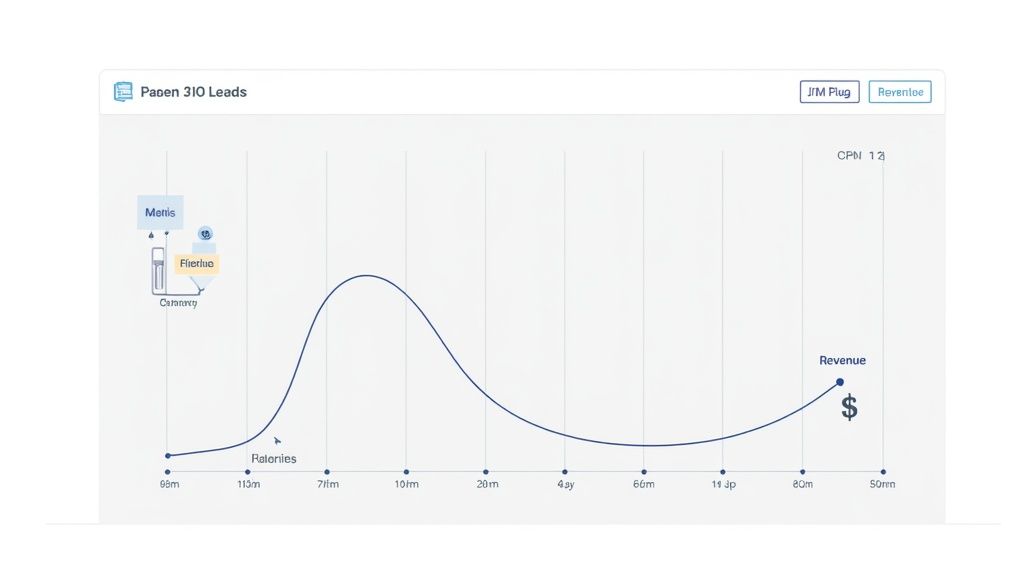
The real goal here is to draw a straight line from every dollar you spend on an influencer to the qualified leads, pipeline growth, and closed deals that follow. That means shifting your focus from surface-level engagement to a rock-solid system that tracks real business outcomes.
Moving Beyond Vanity Metrics
The first thing we need to do is stop obsessing over follower counts, likes, and raw impressions. Sure, they might give you a fuzzy sense of reach, but they tell you nothing about whether you're reaching the right people—or if those people are taking meaningful action.
Instead, B2B tech marketers have to zero in on metrics that tie directly back to business goals. These are the numbers that prove your influencer strategy isn't just making noise but is actively feeding the sales funnel.
The most important mindset shift is moving from measuring audience size to measuring audience quality and action. One demo request from a target CTO is infinitely more valuable than 10,000 likes from a random audience.
Setting Up a Bulletproof Tracking System
To actually measure ROI, you need the right tools and processes in place from the very beginning. This isn't something you can just tack on after a campaign is live. A solid tracking framework really comes down to a few key pieces.
- UTM Parameters: These are your best friend. By giving each influencer a unique UTM link, you can see exactly who is sending what traffic and which clicks turn into conversions. It’s non-negotiable for attribution.
- Dedicated Landing Pages: Don't just send traffic to your homepage. Create a specific landing page for each campaign or influencer. It makes for a much smoother user experience and, more importantly, makes it dead simple to isolate and measure the results from that one partnership.
- CRM Integration: This is where it all comes together. When you connect your tracking to your CRM (think Salesforce or HubSpot), you can follow a lead from the moment they click an influencer's post all the way until the deal closes. This gives you a crystal-clear view of the revenue you generated.
This kind of setup is what takes you from guessing to making smart, data-backed decisions about which partnerships are actually worth the investment.
Key Performance Indicators That Matter in B2B Tech
Once your tracking is humming along, you can focus on the KPIs that your leadership team actually cares about. While the specifics might change based on your campaign goals, a few metrics are universally crucial for proving the value of influencer marketing for B2B tech.
Here are the numbers that will get you a seat at the table:
- Marketing Qualified Leads (MQLs): How many potential customers who fit your ideal profile came from an influencer's content? This is a direct measure of lead quality, not just quantity.
- Pipeline Contribution: What's the total dollar value of sales opportunities that were sourced or influenced by the campaign? This ties your marketing work directly to potential revenue.
- Cost Per Lead (CPL): Simple but powerful. Divide the total campaign cost by the number of leads generated. This tells you how efficient your influencer efforts are compared to other channels, like paid search.
- Brand Sentiment and Share of Voice: This one is a bit softer, but it’s a critical long-term indicator. Are more industry experts talking about you in a positive light? Are you being mentioned in more key conversations? That's a huge win.
Focusing on these metrics helps you build a compelling story about how your influencer program is driving real growth. For a much deeper look, check out our complete guide on how to measure influencer marketing ROI.
This whole process is exactly what platforms like REACH Influencers are built for. The reporting dashboards give you a single, real-time view of all your campaign metrics, so you can stop cobbling together spreadsheets. You get an instant, clear picture of what’s working, allowing you to tweak things on the fly and report your results with confidence.
Answering Your Top Questions About B2B Tech Influencer Marketing
Jumping into influencer marketing always brings up a few questions, especially in a specialized field like B2B tech. Let's walk through some of the most common things people ask. Getting these cleared up will help you move forward with confidence.
What's the Real Cost of a B2B Tech Influencer Campaign?
This is always the first question, and the truthful answer is, "it depends." There's no standard rate card. A one-off project with a rising star in a niche like DevOps might run you a few thousand dollars. On the other hand, a year-long partnership with a well-known industry analyst could easily be a six-figure investment.
It all boils down to a few key variables:
- Who are they? An established expert with a direct line to thousands of CTOs is going to cost more than someone who is just starting to build their audience. You're paying for their authority and the trust they've built.
- What are you asking them to do? A single in-depth blog post is a much smaller lift (and cost) than having them co-host a multi-part webinar series or develop a comprehensive whitepaper.
- How will you use the content? If you plan to use their face and content in your paid ad campaigns or on your website for a year, that's a different conversation. Broader usage rights mean a higher fee.
How Long Before We Actually See Results?
Patience is key here. This isn't like flipping a switch on a Google Ad and seeing clicks roll in. B2B influencer marketing is about building trust and credibility, and that doesn't happen overnight.
You'll probably notice early signs of life—a bump in social media engagement or more traffic from new sources—within the first month. But the real impact takes a bit longer to surface.
Look for leading indicators like better brand sentiment and a higher caliber of inbound leads within the first 3-6 months. Attributing closed deals and direct pipeline influence? That often takes 6-12 months, simply because the B2B sales cycle is so much longer.
Can We Pull This Off with a Small Team?
Yes, you absolutely can. You don’t need to hire a whole department to make this work. In fact, many successful influencer programs are run by a single savvy marketing manager or a small, focused team.
The secret to doing it with limited resources is being incredibly efficient. This is precisely why platforms like REACH Influencers exist. They take the most tedious, time-sucking tasks off your plate—finding the right people, managing outreach, handling contracts, and tracking results. By automating the grunt work, a small team can run a program that punches way above its weight.
Ready to build a powerful, scalable influencer program without the manual overhead? REACH Influencers gives you the tools to discover the right tech experts, manage campaigns effortlessly, and prove your ROI with data-driven reports. By leveraging a dedicated platform, you can optimize every aspect of your influencer marketing for B2B tech and achieve measurable results. Learn more about how REACH can transform your influencer marketing strategy today.
Meta Description
A comprehensive guide to influencer marketing for B2B tech. Learn how to find the right influencers, create impactful content, and measure ROI to drive real business growth.
Schema Markup
{
  "@context": "https://schema.org",
  "@type": "BlogPosting",
  "mainEntityOfPage": {
    "@type": "WebPage",
    "@id": "https://reach-influencers.com/influencer-marketing-for-b2b-tech-guide/"
  },
  "headline": "A Practical Guide to Influencer Marketing for B2B Tech",
  "description": "Learn how to build a powerful influencer marketing strategy for your B2B tech company. This guide covers finding influencers, creating content, and measuring real ROI.",
  "image": "https://cdn.outrank.so/64cdc0e0-2a54-4cd9-a45d-c4196c5e1d4e/d6f4380f-58ac-4d7c-b546-025c6b7876af/influencer-marketing-for-b2b-tech-b2b-trust.jpg",
  "author": {
    "@type": "Organization",
    "name": "REACH Influencers"
  },
  "publisher": {
    "@type": "Organization",
    "name": "REACH Influencers",
    "logo": {
      "@type": "ImageObject",
      "url": "https://reach-influencers.com/logo.png"
    }
  },
  "datePublished": "2024-05-21",
  "dateModified": "2024-05-21"
}