 Skip to content


So, what exactly is a UGC content creator? Think of them as everyday people who get paid to create authentic, real-life photos and videos for brands.
Unlike traditional influencers, their value isn't measured by their follower count. It’s all about their creative spark and their ability to connect with an audience on a human level. Brands then take this content and use it everywhere—from their social media ads to banners on their website.
The Rise of the Everyday Creator

Take a quick scroll through your favorite social media app. You'll probably notice a big change happening. The super-polished, celebrity-style ads are making way for content that just feels more… real. That's the magic of the User-Generated Content (UGC) creator at work.
At its heart, a UGC creator is basically a customer who becomes a creative partner. They're real people showing how products fit into their actual, everyday lives. This authenticity is their superpower.
The Power of Relatability
Brands are flocking to these creators for one simple reason: trust. When a potential customer sees someone who could be their friend or neighbor using a product, it creates an instant connection that a slick, studio-produced ad just can't match.
This shift isn’t just a trend; it’s a massive economic movement.
The creator economy, which is fueled by UGC creators, is expected to balloon to a staggering $480 billion industry by 2027. This really underlines a huge change in how we make and watch content today.
This boom shows that the most convincing voice in marketing isn't a corporation anymore—it's the average person. The creator economy has absolutely exploded, with over 165 million new creators jumping onto social platforms since 2020 alone. If you're curious, you can find out more about the growth of the creator economy and see just how big this has become.
UGC Creator vs. Influencer: A Critical Distinction
It’s easy to get UGC creators and influencers mixed up. They both create content, right? While that’s true, their roles in a marketing plan are actually worlds apart. Getting this distinction right is the key to tapping into the modern creator economy effectively.
Think of it like this: an influencer is a broadcaster. A brand pays them to get a message out to their built-in audience on their own social media channels. Their power comes from their reach and the trust they’ve worked hard to build with their followers.
A UGC creator, on the other hand, is a content producer. A brand pays them to create authentic, relatable photos and videos. The brand then owns these assets and can use them across its own marketing channels—think social media ads, website banners, or email campaigns. Their value isn't their follower count; it's their knack for creating genuine content.
The Core Mission: Content vs. Audience
The biggest difference boils down to the end goal. Brands hire influencers for distribution. They hire UGC creators for assets.
An influencer's job is to share a message with their audience. A UGC creator's job is to provide the brand with high-quality, authentic content assets to use in its own marketing campaigns.
This one distinction changes everything, from the style of the content to how people get paid. Influencer content is usually polished and styled to fit their personal brand. UGC is designed to look and feel completely organic, like something a friend would post.
While their roles are distinct, they can work powerfully together. You can dive deeper into how brands combine these strategies in the role of User-Generated Content in influencer marketing.
UGC Creator vs Influencer Key Differences
To really see the difference, it helps to put them side-by-side. This table breaks down what makes each role unique in the marketing world.
| Attribute | UGC Content Creator | Traditional Influencer |
|---|---|---|
| Primary Goal | To create authentic content assets for the brand to own and use. | To promote a product to their own established audience. |
| Value Proposition | Creative skills and ability to produce relatable content. | Audience size, reach, and engagement rates. |
| Content Ownership | The brand typically owns the full usage rights to the content. | The influencer owns the content; the brand pays for a license to post. |
| Compensation | Paid for content deliverables (e.g., per video, per photo). | Paid for audience access, content creation, and distribution. |
At the end of the day, both creators play a vital part. Influencers build buzz and awareness, while UGC creators supply the authentic, high-performing creative that fuels a brand's own marketing engine.
Why Brands Are All-In on UGC Creators
The explosion in brands working with User-Generated Content creators isn't just another marketing fad. It’s a direct response to how people buy things now. Today's consumers are just plain tired of slick, over-produced ads. They want real, and that’s exactly what a UGC creator provides.
This kind of content builds trust in a way that a corporate ad never could. Think about it: when you see a real person genuinely using and liking a product, it feels like a recommendation from a friend, not a sales pitch. It’s powerful social proof that speaks directly to potential customers.
The Content Machine Brands Desperately Need
Beyond building trust, UGC creators solve two huge problems for marketing teams: the constant demand for more content and the sky-high cost of making it. A single professional photoshoot can eat up thousands of dollars and leaves you with a handful of perfect-looking photos that start to feel stale after a week on social media.
Now, imagine working with a few UGC creators instead. You get a steady flow of different, relatable, and much more affordable photos and videos. This authentic content is perfect for filling up your social media calendar, running paid ad campaigns that actually connect with people, and even adding some real-world flavor to your product pages. It keeps your marketing fresh without breaking the bank.
This infographic nails the difference between UGC creators and influencers—one is about creating the assets, the other is about broadcasting to an audience.
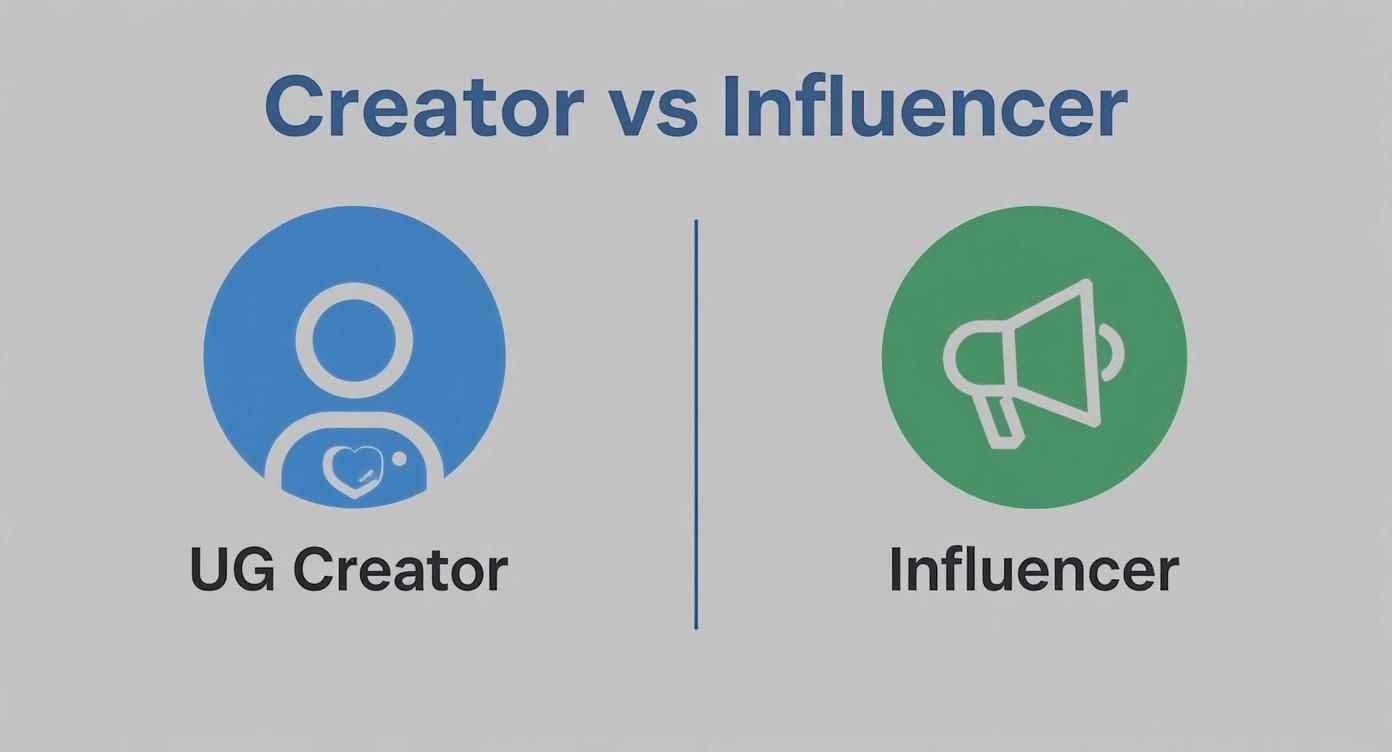
Simply put, creators give you the raw materials for your campaigns, while influencers help shout your message from the rooftops.
It All Comes Down to Real-World Results
At the end of the day, brands rely on UGC creators because it just works. The numbers don't lie.
A massive 93% of marketers report that content from real customers performs better than the glossy, branded stuff they create in-house. This isn't just about good vibes; it hits the bottom line.
- Brands using UGC see web conversions jump by an average of 29%.
- A staggering 79% of shoppers say UGC plays a big role in their decision to buy something.
By turning customer stories into marketing gold, brands create a brilliant cycle. Authentic content drives sales, which creates more happy customers—who can then become your next batch of creators.
To learn how to build this for your own brand, take a look at our complete guide to creating a winning user-generated content strategy.
What a UGC Creator Actually Does

So, what does a day in the life of a UGC creator actually look like? It’s far less about fancy studios and more about genuine, real-world storytelling. Think of them as a one-person creative agency, blending freelance production with an authentic brand partnership.
The process usually kicks off when a brand sends over a project. The creator receives the product and a creative brief—basically a game plan that explains the goals, key messages, and the overall feel the brand wants.
But this isn't a traditional ad shoot. Instead of complex storyboards, the creator starts thinking about how to weave the product into an everyday, relatable situation. How can they show it off in a way that feels natural and trustworthy?
From Idea to Final Video
Once they’ve landed on a concept, it’s time to bring it to life. This is where the real magic happens. Forget expensive gear; the goal here is authenticity, and the toolkit is refreshingly simple.
- A Smartphone: This is their camera of choice. It’s what captures that native, "shot-by-a-friend" look that performs so well.
- Good Lighting: Often, this is just natural light from a window or an affordable ring light to keep things bright.
- Basic Editing Apps: Tools like CapCut or InShot are perfect for making quick, clean edits that feel right for social media.
After filming, the creator edits the footage, maybe adding captions or trending audio to match the brief. A huge part of the job is making content that just works for brands, and it's a valuable skill to learn how to create compelling product videos.
The core job of a UGC creator is to deliver raw or lightly edited video files directly to the brand. They create the assets; they don't post them on their own social media channels.
Finally, they bundle up the finished videos and send them over to the brand. The brand can then use this content anywhere—in paid ads, on their website, or across their social media. For the creator, it’s then on to the next project, often juggling several brand collaborations at once.
How to Start Your Journey as a UGC Creator

Ready to dive into the world of User-Generated Content? The best part is, you don't need a huge following or a professional camera crew to make your mark. Success as a UGC creator isn't about follower count—it's about authenticity, creativity, and having a smart game plan.
Your journey starts with a simple, clear plan. It’s all about building a foundation that shows brands your unique voice and what you bring to the table. If you nail a few key steps, you can turn a creative hobby into a fulfilling side hustle or even a full-time career.
Define Your Niche and Style
First things first, figure out what you genuinely love creating content about. Are you obsessed with skincare, the latest tech, or maybe sustainable fashion? Your niche is your playground, and it will help you connect with the right brands, so pick something you're truly passionate about.
Next, what’s your personal brand? Think about what makes your content yours. Is it your witty, deadpan humor? Your knack for beautiful, minimalist visuals? Or maybe you're great at breaking down complex topics in a simple tutorial. Your style is your signature, and it's the very thing that will make a brand choose you over someone else.
Build Your Portfolio with Spec Work
You don’t need to wait for a paid deal to start building your portfolio. The secret is "spec work"—creating sample content for products you already have and love. It’s the perfect, no-pressure way to show brands what you’re capable of.
- Pick 3-5 products you already use, ideally from a few different areas within your niche.
- Create different kinds of content for them. Think unboxing videos, honest testimonials, or quick "how-to" tutorials.
- Show off your skills! The goal is to produce authentic, high-quality content that feels completely at home on any social media feed.
This collection of work essentially becomes your visual resume. When you start reaching out to brands, a killer portfolio will always speak louder than a high follower count.
Your portfolio is your most powerful tool. It’s the tangible proof that you can create content that not only looks great but also aligns with a brand's marketing goals and drives results.
Pitching and Finding Opportunities
Once your portfolio is looking sharp, it's time to find those opportunities. A great first step is to create a dedicated social media profile on a platform like TikTok or Instagram to feature your best work. You should also put together a professional digital resume—we have a guide on building a powerful content creator media kit that can help.
From there, you can start pitching brands you admire directly through email or social DMs. Joining creator marketplaces is also a fantastic way to connect with companies that are actively looking for UGC creators. Just remember to get familiar with how these platforms work, including any potential UGC marketplace fees so you can plan accordingly.
Got Questions About UGC Creators? We've Got Answers.
As you dive into the world of user-generated content, a few practical questions are bound to pop up. It's totally normal. Let's clear the air and tackle some of the most common things people wonder about when they first hear about becoming a UGC creator.
Here are the straightforward, no-fluff answers you need.
Do I Need a Ton of Followers to Get Started?
Nope, not at all. This is probably the biggest misconception out there and the main thing that separates a UGC creator from a traditional influencer. Brands aren't paying you to post for your audience; they're paying for your creative content itself.
Your real value is in creating videos and photos that feel genuine and connect with people. In fact, some of the most successful UGC creators have small, private social media accounts. It really proves that your creative skill is what matters, not your follower count.
Okay, But How Much Do UGC Creators Actually Make?
The pay can really swing depending on your experience, what the brand is asking for, and their budget. A single video could net you anywhere from $50 to over $500.
Most creators put together packages—say, three videos and five photos for a flat rate. As you build a solid portfolio and get better at what you do, you can start charging more for your work.
The key thing to remember is that you're getting paid for the content and giving the brand the rights to use it. You are not being paid to post on your own channels.
What Kind of Content Are Brands Really Looking For?
Brands are hungry for content that feels real, not like a slick, polished ad. They want to capture that raw authenticity that makes people stop scrolling and actually builds trust.
Some of the most popular formats brands love are:
- Unboxing videos: Who doesn't love capturing that "just got it" excitement?
- Product demos: Just showing how something works in a normal, everyday situation.
- "How-to" videos: Genuinely helpful tutorials that give viewers real value.
- Honest testimonials: Sharing your actual experience with a product.
How Do I Find Brands to Work With?
A great place to start is by reaching out directly to brands you already use and admire. A well-crafted email or a thoughtful social media DM, paired with a link to your portfolio, can work wonders.
Another fantastic route is to join creator marketplaces. These platforms are basically hubs where brands go when they're actively looking for creators. Think of sites like Upwork, Fiverr, or other platforms designed specifically for UGC work—they're packed with opportunities.
Finding the right brands and juggling all the moving parts of a campaign can be a grind. REACH makes it all much simpler by connecting talented creators with amazing brands on one easy-to-use platform. Discover your next partnership with REACH.