 Skip to content


Affiliate marketing remains one of the most powerful channels for driving revenue, whether you're a brand seeking new customers or a publisher monetizing your content. But the landscape is vast, and selecting the right platform is critical. An ill-fitting network can lead to wasted effort and missed opportunities, while the perfect match can unlock exponential growth. This guide cuts through the noise to deliver a detailed breakdown of the 12 best affiliate marketing platforms available today.
This is not just a simple list. We move beyond surface-level features to analyze the ideal use cases, operational nuances, and potential limitations of each network. Our goal is to provide a comprehensive resource that helps you make a strategic decision based on your specific needs, whether you're a global retail brand, a niche B2B software company, or an independent content creator. Understanding which network fits your model is the first step, but it's also helpful for publishers to get a clear picture of how companies structure their offers; a well-designed partnership is key to success on both sides. For more on this, it's worth understanding the structure of an affiliate program from the brand's perspective.
Each review in this guide includes a direct link to the platform, screenshots of the user interface, and an honest assessment of its pros and cons. We've structured the information for quick scanning, so you can easily compare options and identify the one that aligns perfectly with your strategic goals. Use this resource to find the growth engine that will power your affiliate marketing success.
1. Awin
Awin stands as one of the best affiliate marketing platforms due to its global reach and a unique, accessible entry point for smaller businesses. It boasts a massive network of over 270,000 active affiliate partners and 30,000 advertisers, making it a powerhouse for brands seeking to scale their partner marketing programs across nearly every retail vertical. The platform’s forthcoming full integration with ShareASale will further solidify its market position, especially in North America.

What truly sets Awin apart is its Awin Access plan. This self-serve option is specifically designed for startups and small to medium-sized businesses, breaking down the typically high barriers to entry found in other major networks. The transparent pricing, starting with a low monthly fee after the first month free, is a refreshing change in an often opaque industry. This plan provides an accessible gateway for emerging brands to tap into a vast publisher network without committing to a costly enterprise-level contract.
Key Features & User Experience
Awin's interface is generally intuitive, offering robust reporting tools that allow advertisers to track performance metrics effectively. Publishers appreciate the low $1 verification deposit (which is refunded) to maintain network quality.
- Best For: Small to medium-sized e-commerce brands and global enterprises.
- Pricing: Awin Access has a low monthly fee plus a tracking fee on commissions. Enterprise plans are custom-priced.
- Pros: Excellent entry-level plan (Awin Access), vast merchant and publisher selection, transparent pricing for its small business tier.
- Cons: The tracking fee adds to the overall cost for advertisers, and the publisher vetting process can sometimes be slow.
Website: https://www.awin.com
2. CJ (formerly Commission Junction)
CJ is a titan in the affiliate marketing space, renowned for its extensive network of premier brands and sophisticated technology. As one of the best affiliate marketing platforms, it has been a cornerstone of the industry for over two decades, connecting thousands of advertisers with a high-caliber pool of publishers. Its strength lies in its mature infrastructure, offering robust tracking, reliable payments, and in-depth analytics that empower data-driven partnership decisions.
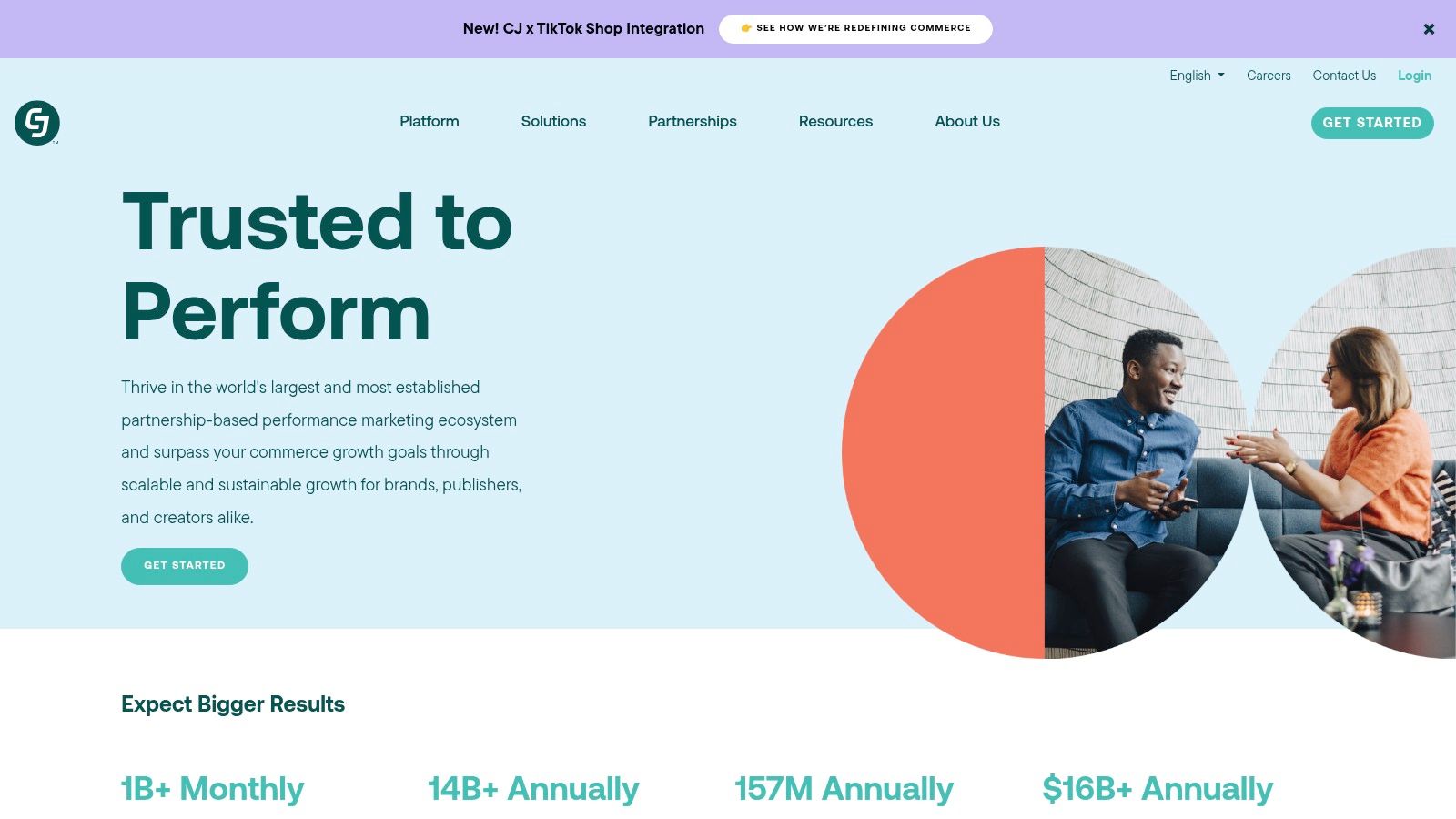
What makes CJ a top choice, particularly for established publishers and large-scale advertisers, is its focus on premium partnerships. The network is home to many of the world's most recognized retail and service brands, providing publishers with lucrative opportunities. For advertisers, CJ offers advanced tools like cookieless tracking and a comprehensive API, ensuring program resilience and deep integration capabilities. This commitment to quality and technology facilitates long-term, profitable relationships.
Key Features & User Experience
CJ's platform is feature-rich, providing powerful reporting and partnership discovery tools. However, the interface can present a steep learning curve for those new to affiliate marketing due to its complexity and depth. Publishers can sign up for free, but must apply to individual advertiser programs.
- Best For: Experienced affiliate marketers and large-scale advertisers seeking premium brand partnerships.
- Pricing: Free for publishers. Advertiser pricing is custom and requires consultation with their sales team.
- Pros: Extensive roster of top-tier retail brands, mature and reliable tracking system, robust reporting and API capabilities.
- Cons: The user interface can be complex for beginners, and advertiser pricing is not publicly listed.
Website: https://www.cj.com
3. impact.com
Impact.com positions itself as a comprehensive partnership management platform, moving beyond traditional affiliate marketing to encompass influencers, content publishers, and B2B partnerships. It is a preferred choice for large US brands and enterprise-level publishers, offering a robust suite of tools to manage the entire partnership lifecycle from discovery to payment. The platform's focus on automation and sophisticated tracking makes it one of the best affiliate marketing platforms for businesses looking to scale diverse partner programs under one roof.
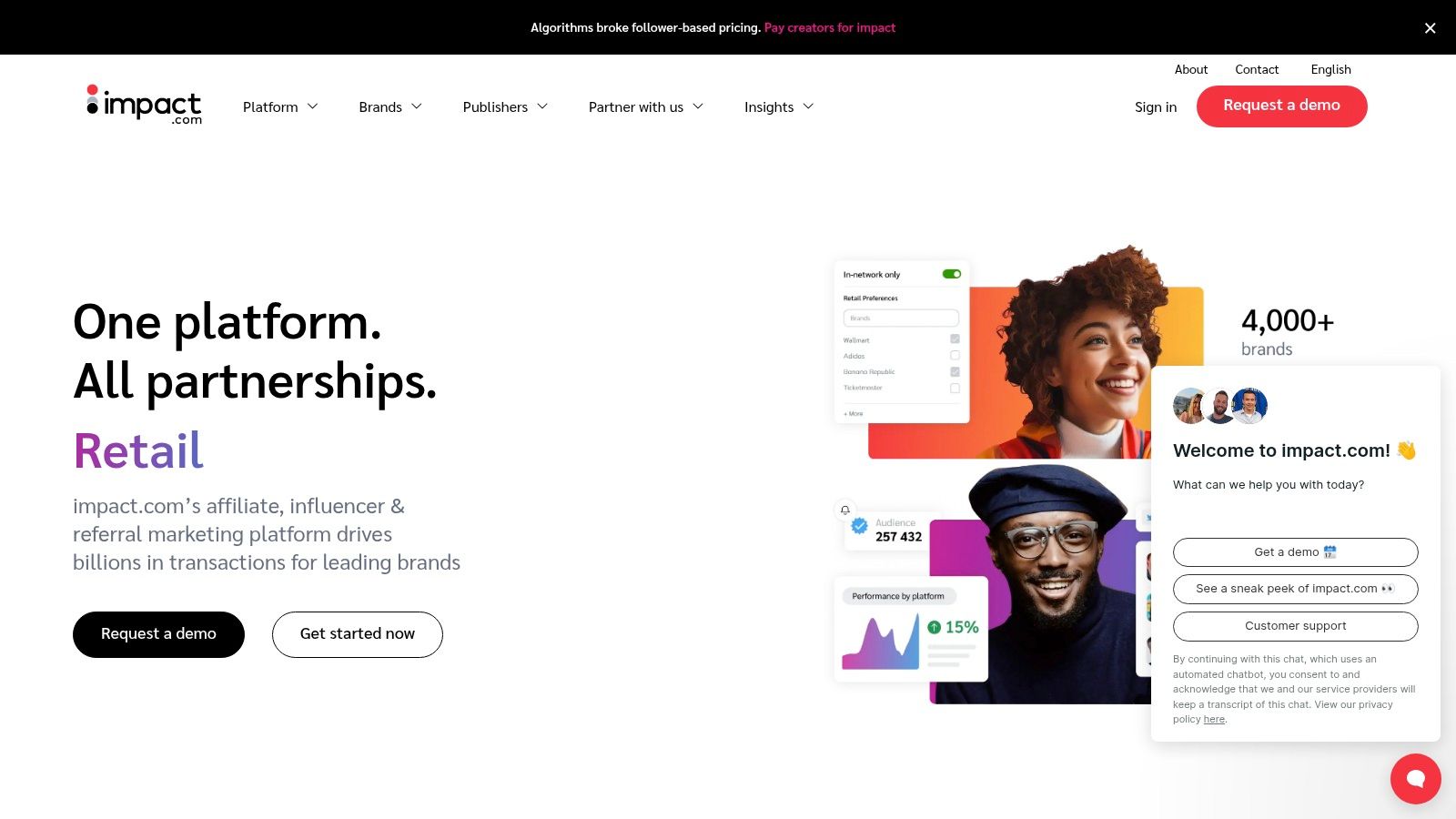
What makes impact.com unique is its Partnership Cloud, an integrated end-to-end solution that automates every stage of the partnership process. Advertisers can discover new partners in a vast marketplace, negotiate contracts, track detailed customer journeys, and process payments globally, all within the platform. This unified approach simplifies management and provides deeper insights into how different types of partnerships, such as those in an influencer marketing campaign, contribute to overall growth, which is a significant advantage over more siloed networks.
Key Features & User Experience
The impact.com interface is powerful and feature-rich, which can present a learning curve for newcomers but offers unparalleled control for experienced managers. Its advanced tracking and reporting capabilities provide granular data on partner performance.
- Best For: Enterprise brands, large media publishers, and businesses managing multiple partner types (affiliate, influencer, B2B).
- Pricing: Custom pricing based on needs. Advertisers must contact the sales team for a quote.
- Pros: Excellent for managing diverse partnership types, powerful automation and tracking tools, strong marketplace for large US brands.
- Cons: Pricing is not transparent and can be costly for smaller businesses; the publisher approval process can be stringent.
Website: https://impact.com
4. Rakuten Advertising (Affiliate Network)
Rakuten Advertising is a titan in the affiliate world, recognized for its longstanding presence and deep-rooted relationships with premier retail brands. It has built a reputation as one of the best affiliate marketing platforms by offering a curated network of household-name merchants and providing robust, dedicated support. This makes it an attractive choice for established publishers and influencers who want to partner with globally recognized companies.

What distinguishes Rakuten is its focus on quality and established partnerships. Unlike some networks that prioritize quantity, Rakuten emphasizes strong, lasting connections between advertisers and publishers. The platform is known for its industry events and networking opportunities, fostering a community feel. For advertisers, this translates to access to a pre-vetted pool of high-performing publishers, while publishers gain direct access to coveted brand programs that might be harder to join elsewhere.
Key Features & User Experience
Rakuten’s dashboard provides solid reporting and link creation tools, and its continuous screening process maintains network integrity. The interface is professional, though it may feel slightly more traditional compared to newer platforms.
- Best For: Established content creators, bloggers, and media publishers looking to partner with major retail brands.
- Pricing: Free for publishers to join. Advertiser pricing is custom and typically involves setup fees, monthly fees, and commissions.
- Pros: Access to well-known retail and household-name merchants, stable platform with dedicated US support, strong focus on quality partnerships.
- Cons: Some advertisers have longer payment cycles, and the approval process for specific advertiser programs can be highly selective.
Website: https://rakutenadvertising.com
5. PartnerStack
PartnerStack carves out a unique and powerful niche among the best affiliate marketing platforms by focusing almost exclusively on the B2B SaaS industry. It's not just a network; it's a comprehensive partner relationship management (PRM) platform designed to manage affiliate, referral, and reseller channels all in one place. This B2B focus means the entire ecosystem, from the merchants to the partners, is geared toward promoting software and tech services, creating a highly specialized and effective environment for SaaS companies.
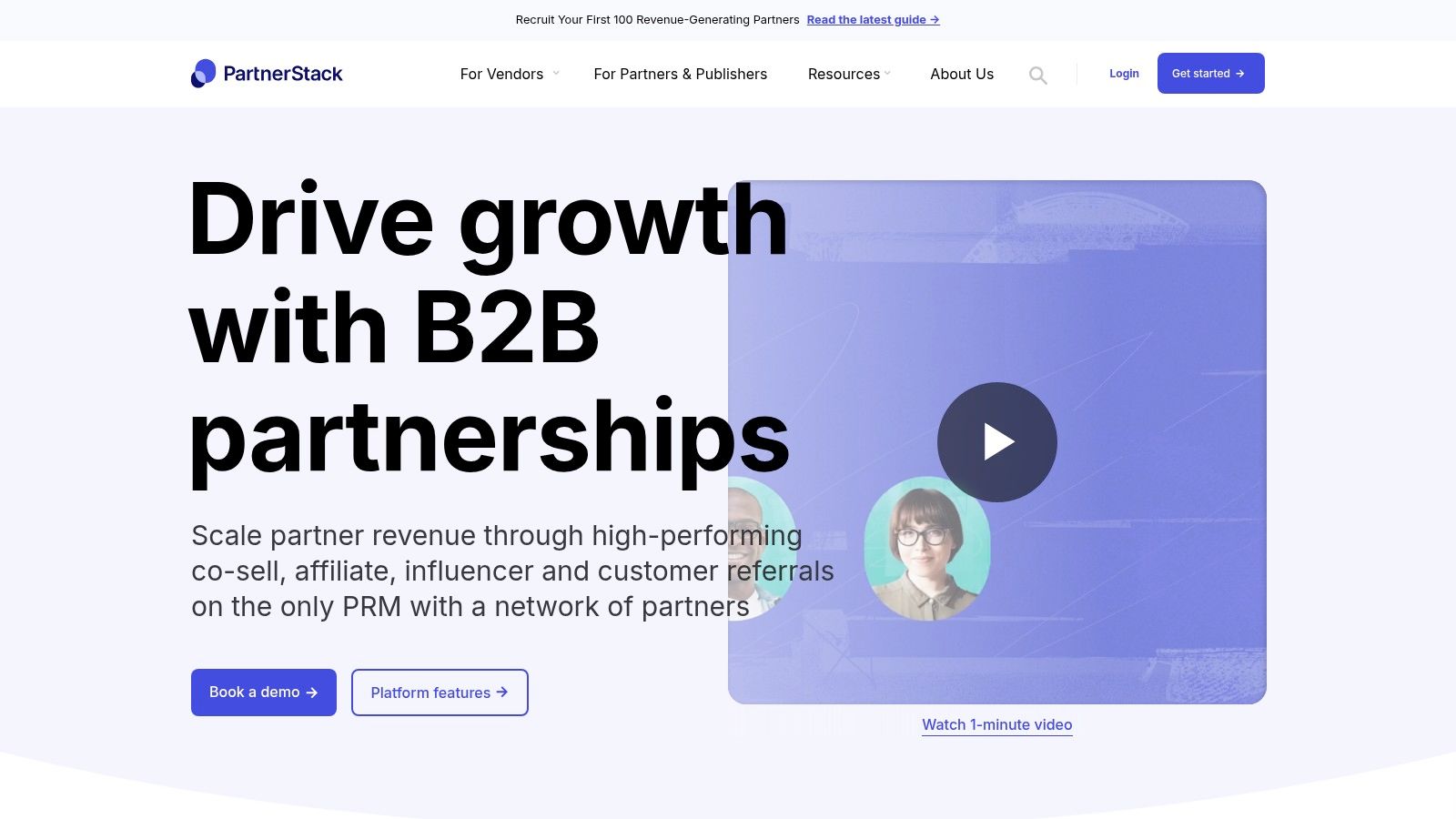
The platform’s core strength lies in its automation and scalability for SaaS partnerships. For vendors, PartnerStack automates critical tasks like partner onboarding, link tracking, and crucially, monthly commission payouts. This is particularly valuable for SaaS programs with recurring revenue models, as the platform handles the complexity of ongoing payments without manual intervention. For partners, it provides a centralized dashboard to manage relationships with multiple SaaS brands and receive a single, consolidated monthly payment.
Key Features & User Experience
PartnerStack’s interface is clean and centered around performance data, allowing program managers to easily track multiple partner types and their contributions. The platform’s marketplace features over 100,000 active B2B-focused partners, giving SaaS companies immediate access to a relevant and engaged audience.
- Best For: B2B SaaS companies looking to scale their affiliate, referral, and reseller programs.
- Pricing: Custom pricing based on business needs and scale; generally positioned for established SaaS vendors rather than early-stage startups.
- Pros: Excellent for recurring commission models typical of SaaS, strong automation features reduce administrative work, highly specialized B2B partner network.
- Cons: Custom pricing can be a significant investment, making it less suitable for small or pre-revenue startups. It is not designed for B2C or physical product affiliate programs.
Website: https://partnerstack.com
6. ClickBank
ClickBank has cemented its place as one of the best affiliate marketing platforms, particularly for those focused on digital products and info-products. It operates as a vast global marketplace where creators of courses, ebooks, and software connect with affiliates eager to promote them. This focus on digital goods often translates to exceptionally high commission rates, making it a lucrative option for niche content creators.
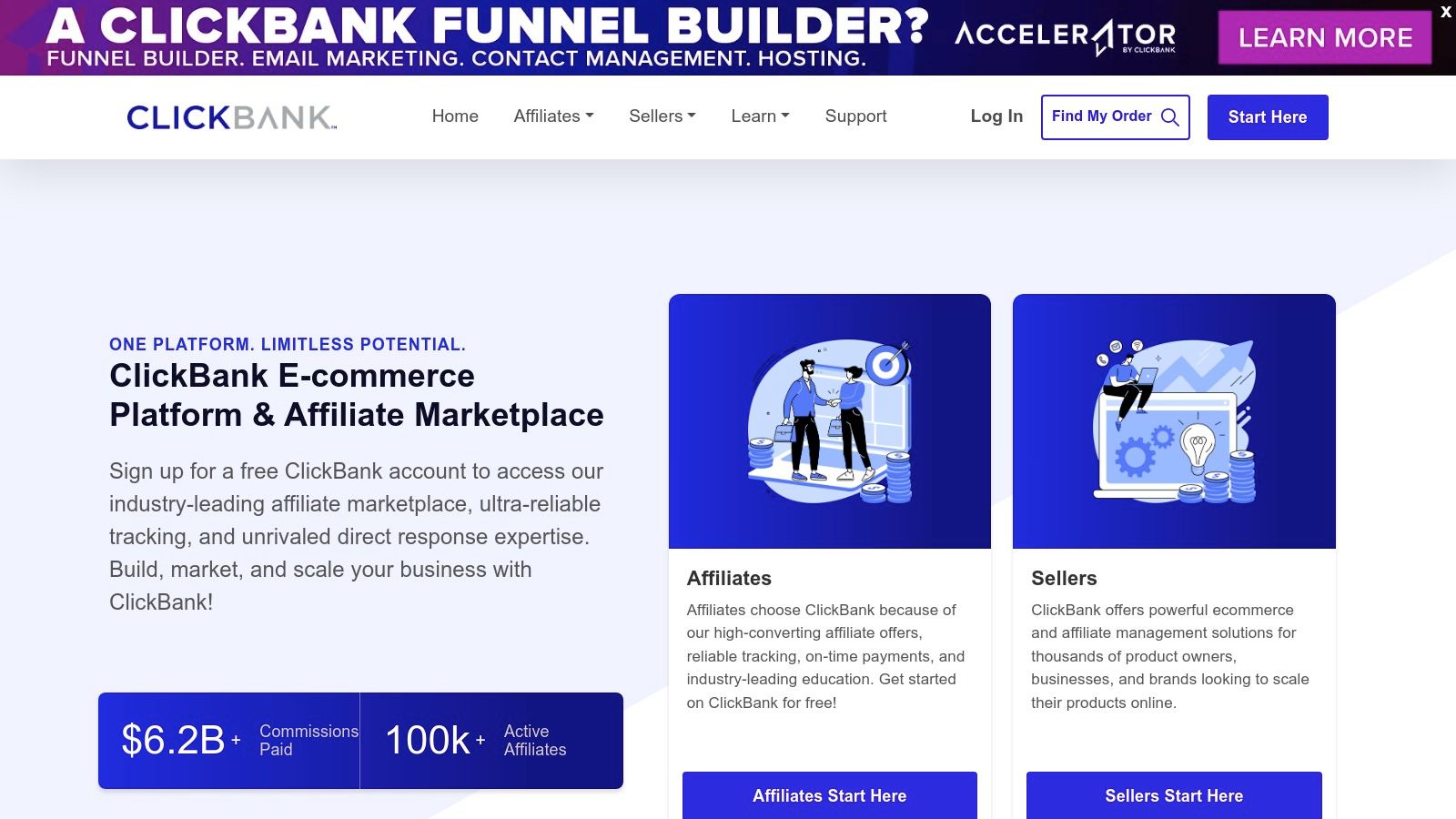
What truly distinguishes ClickBank is its accessibility and ease of entry. Unlike many networks that require individual applications for each advertiser, ClickBank allows affiliates to get started almost instantly. Affiliates can find a product in the open marketplace, generate a unique "HopLink," and begin promoting it immediately. This frictionless process is ideal for newcomers who want to learn the ropes of affiliate marketing and monetize their content without navigating complex approval queues.
Key Features & User Experience
The ClickBank marketplace is straightforward, with a powerful search function and a unique "Gravity Score" metric that helps affiliates identify popular and high-converting offers. The platform also provides extensive educational resources, including webinars and tutorials, to help both new and experienced marketers succeed.
- Best For: Affiliates in niche markets (health, wellness, self-help) and creators of digital products.
- Pricing: Free for affiliates to join. Vendors pay a one-time activation fee and a percentage of sales. Affiliates may incur small payout processing fees.
- Pros: Extremely beginner-friendly with instant promotion for most offers, very high commission rates on digital products, reliable and consistent payouts.
- Cons: The quality of products can vary significantly, requiring careful vetting by affiliates. The interface, while functional, feels somewhat dated compared to newer platforms.
Website: https://www.clickbank.com
7. FlexOffers
FlexOffers has carved out a significant space among the best affiliate marketing platforms by offering a vast and diverse selection of over 12,000 advertiser programs. It is a particularly strong network for publishers focused on deals, coupons, and content, featuring a mix of mid-market and major enterprise brands. The platform is known for consistently adding new advertiser programs, providing fresh opportunities for affiliates to monetize their traffic.

What makes FlexOffers stand out is its publisher-friendly approach, characterized by a straightforward signup process and relatively quick approvals for many programs. This accessibility allows new and established affiliates to get started promptly. For advertisers, the platform operates on a clear fee structure and an escrow model, ensuring funds are in place for publisher payouts, which builds trust within the network. Combining its program variety with robust support makes it a reliable choice for performance-based marketing strategies. For those looking to streamline their campaigns, understanding marketing automation best practices can be highly beneficial.
Key Features & User Experience
FlexOffers provides publishers with a functional dashboard to find offers and track performance, though some parts of the interface can feel a bit dated compared to more modern platforms. Publishers benefit from multiple payment options and a dedicated support team.
- Best For: Content, deal, coupon, and rebate-focused publishers looking for a wide variety of offers.
- Pricing: Free for publishers to join. Advertisers pay network fees and commissions, often using an escrow system.
- Pros: Massive selection of advertiser campaigns, frequent addition of new offers, strong support for various publisher models.
- Cons: The user interface could be more modern, and the advertiser fee structure might seem complex initially.
Website: https://www.flexoffers.com
8. Partnerize (formerly Performance Horizon)
Partnerize positions itself as a premium, enterprise-level partnership automation platform, catering to major global brands, particularly in the retail and travel sectors. It distinguishes itself from other affiliate marketing platforms by focusing on the full partnership lifecycle, from discovery and recruitment to optimization and payment, all powered by sophisticated AI. This technology-first approach provides brands with powerful tools to manage diverse partner types beyond traditional affiliates, including influencers, brand-to-brand partnerships, and loyalty programs.

What makes Partnerize stand out is its commitment to accelerated and global partner payments. The platform facilitates payments every other business day in over 60 currencies, a significant advantage for publishers who often wait 30-60 days for payouts on other networks. For advertisers, its AI-driven discovery tools and fraud intelligence offer a data-rich environment to build and protect their programs, ensuring high-quality, scalable growth. The flexible commission structures allow for granular control over partner compensation, rewarding specific actions within the customer journey.
Key Features & User Experience
Partnerize's interface is robust and data-heavy, designed for experienced marketing teams that require deep analytics and customization. The platform offers a steep learning curve but unlocks powerful capabilities for those who master it.
- Best For: Large enterprise brands, particularly in retail and travel, with dedicated partnership teams.
- Pricing: Custom pricing models, including platform license fees and performance-based options. Not suitable for SMBs.
- Pros: Advanced AI for partner discovery and fraud prevention, extremely fast and frequent global payments, highly customizable commissioning tools.
- Cons: Primarily built for large advertisers and can be cost-prohibitive for smaller businesses, smaller publishers may find fewer programs available for immediate joining.
Website: https://partnerize.com
9. eBay Partner Network (EPN)
The eBay Partner Network (EPN) secures its spot as one of the best affiliate marketing platforms by giving partners direct access to one of the world's largest and most diverse marketplaces. It uniquely caters to affiliates focused on niche markets like collectibles, refurbished electronics, and motors, where product demand is consistently high. EPN provides a robust framework for seasoned marketers while also welcoming creators through a more streamlined program.
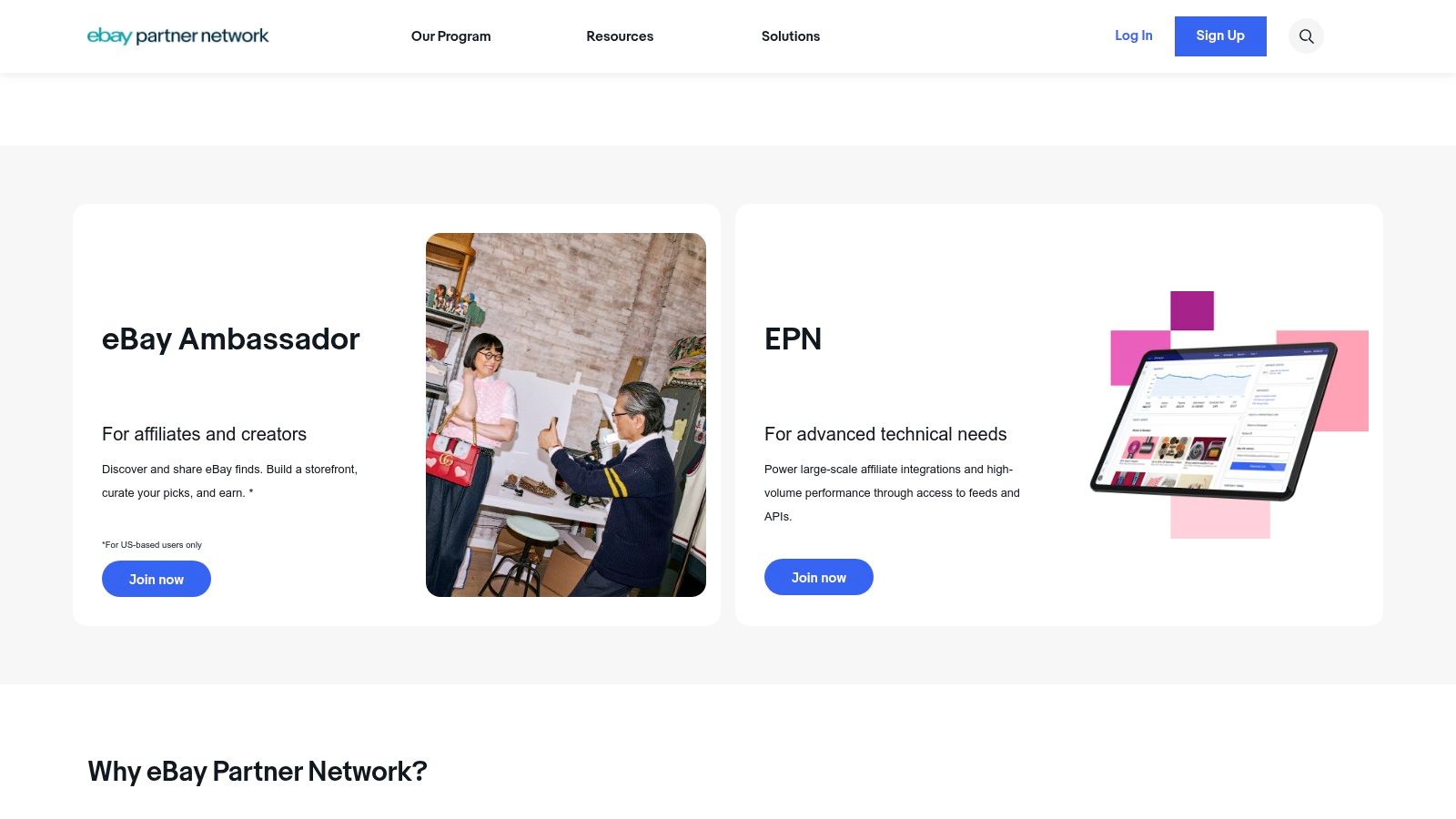
What makes EPN stand out is its two-track system designed for different user types. The standard EPN offers advanced tools like APIs and item feeds for technically proficient affiliates who want to integrate eBay listings directly into their websites or apps. In contrast, the newer eBay Ambassador program is built for US-based creators and influencers, allowing them to easily build shoppable storefronts and curated collections without technical expertise, making it highly accessible for social media-focused promotions.
Key Features & User Experience
EPN provides a comprehensive dashboard for tracking clicks, conversions, and earnings. While the standard program offers deep integration capabilities, the Ambassador portal simplifies the process of link creation and campaign management for creators. The platform's strength lies in its evergreen product inventory, from rare collectibles to everyday items, providing endless content opportunities.
- Best For: Niche content creators, deal and coupon sites, and developers building shopping comparison tools.
- Pricing: Free to join. Commissions are a percentage of eBay's revenue from the sale, varying by product category.
- Pros: Massive and diverse product inventory with constant new listings, low payout threshold ($10), straightforward tax documentation process.
- Cons: Commission rates can fluctuate and vary significantly by category, and the advanced tools like APIs have a notable learning curve for beginners.
Website: https://partnernetwork.ebay.com
10. Amazon Associates
Amazon Associates is arguably the most well-known affiliate program on the planet, making it an essential, if unique, entry on any list of the best affiliate marketing platforms. Its strength lies not in advanced network features but in the sheer, unrivaled consumer trust and conversion power of the Amazon brand. For bloggers, niche site owners, and content creators focusing on physical products, the program provides an incredibly simple entry point to monetize their traffic with a vast product catalog.
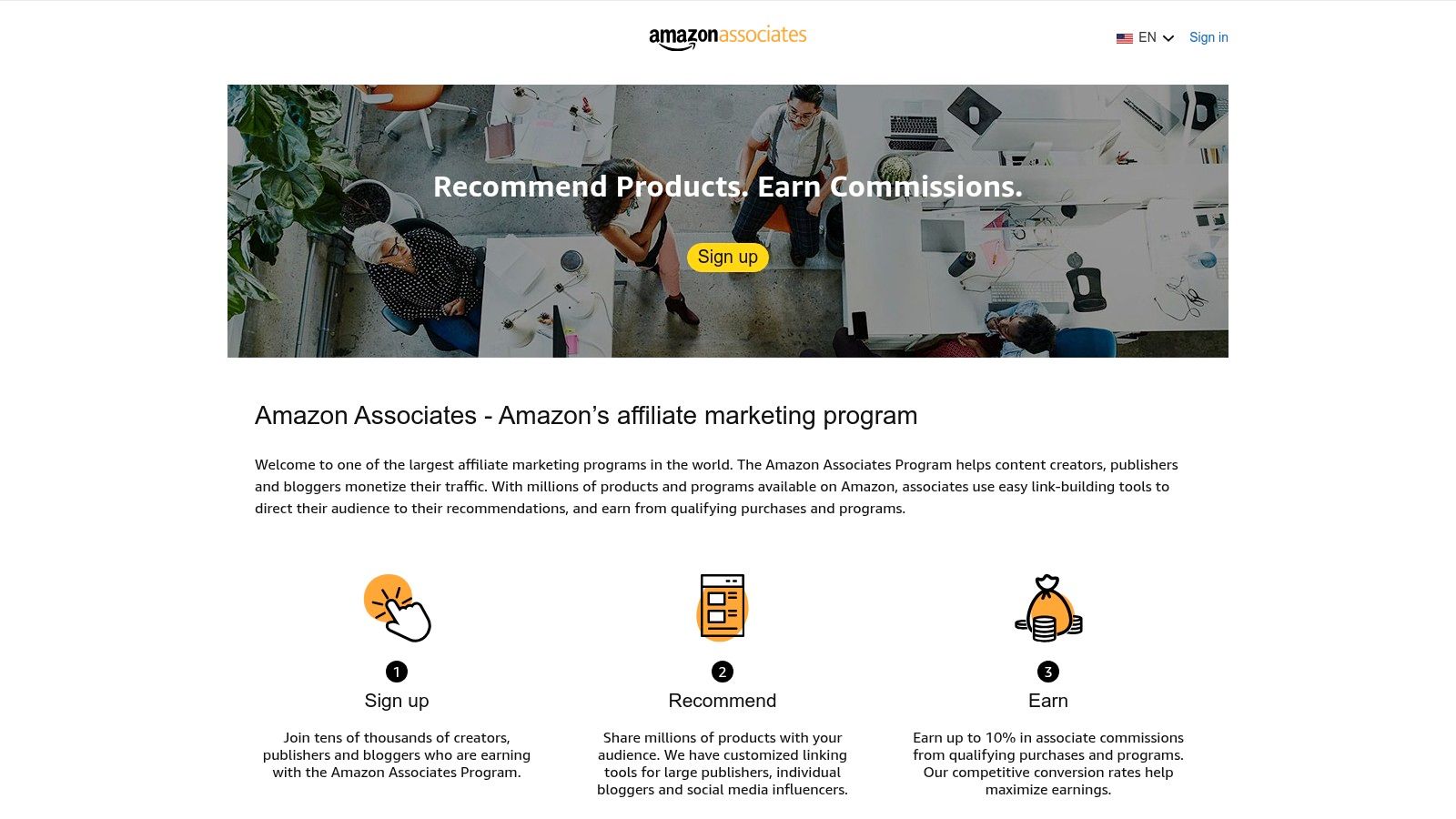
What makes Amazon Associates a consistent favorite is the universal shopping cart commission. When a visitor clicks your affiliate link, you earn a commission on nearly everything they add to their cart and purchase within the 24-hour cookie window, not just the specific product you linked to. This, combined with the high conversion potential from Amazon Prime members and the ease of creating links with the SiteStripe tool, makes it a powerful option for beginners and seasoned affiliates alike, despite its notoriously low commission rates.
Key Features & User Experience
The platform's interface is straightforward, prioritizing quick link generation over complex analytics. The SiteStripe toolbar, which appears at the top of Amazon.com for logged-in associates, allows for the instant creation of text, image, or combined links for any product page.
- Best For: Niche content creators, bloggers, and YouTubers reviewing physical products.
- Pricing: Free to join. Commissions vary by product category, typically ranging from 1% to 10%.
- Pros: Unmatched brand trust and conversion rates, massive product selection, simple onboarding and link creation tools.
- Cons: Generally low commission rates compared to direct affiliate programs, a very strict operating agreement with tight compliance rules.
Website: https://affiliate-program.amazon.com
11. Sovrn Commerce (formerly VigLink)
Sovrn Commerce carves out a unique niche among the best affiliate marketing platforms by focusing on automated link monetization for content publishers. It provides access to tens of thousands of merchant affiliate programs through a single dashboard, making it an ideal choice for bloggers and media sites that want a convenient, "set-and-forget" solution without the hassle of managing countless individual programs. Its technology automatically converts existing product links into monetized affiliate links.
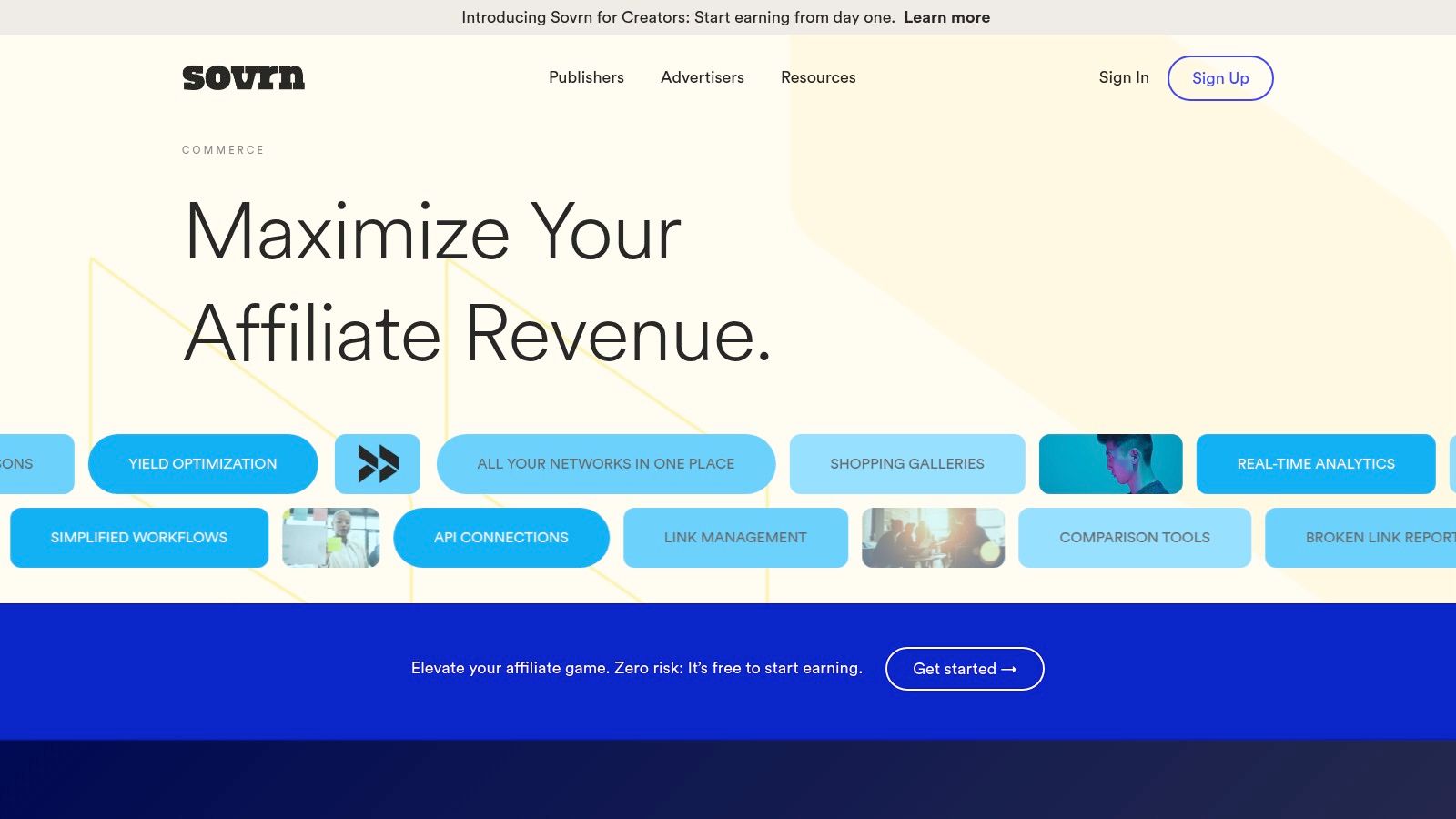
What truly distinguishes Sovrn is its effortless integration for content-heavy sites. Once a publisher installs a snippet of code, the platform scans the site's content and converts standard outbound links into revenue-generating affiliate links on the fly. This means publishers don't need to manually sign up for each merchant's program or build individual affiliate links, saving a significant amount of time and technical effort. This automated approach ensures that no monetization opportunity is missed on existing or future content.
Key Features & User Experience
Sovrn Commerce offers a straightforward dashboard with clear analytics for tracking clicks, earnings per click, and individual merchant performance. The platform maintains a high-quality network through an upfront, rigorous approval process for publishers.
- Best For: Content-heavy publishers like bloggers and news sites seeking automated monetization.
- Pricing: Free to join, operates on a revenue-share model where Sovrn takes a percentage of the commissions earned.
- Pros: “Set-and-forget” link conversion is perfect for non-technical teams, provides access to approximately 30,000 merchants through a single integration.
- Cons: The strict approval process may decline smaller or new sites, and the revenue share model reduces the net commission compared to direct programs.
Website: https://www.sovrn.com/commerce
12. Skimlinks
Skimlinks operates as a powerful content monetization platform, making it one of the best affiliate marketing platforms specifically for publishers and editorial teams. Instead of requiring creators to join dozens of individual affiliate programs, Skimlinks aggregates over 48,500 merchant programs from more than 50 different networks. This allows content creators to automatically turn regular product links in their articles into revenue-generating affiliate links, dramatically simplifying the monetization process.
What makes Skimlinks a standout choice is its publisher-first approach. The platform is engineered to work seamlessly in the background, converting existing commerce-related content into an income stream with a single piece of code. Publishers benefit from Skimlinks' scale, often gaining access to exclusive, higher commission rates negotiated by the platform on their behalf. This focus on automating and optimizing revenue for content sites makes it an indispensable tool for large-scale media companies and editorial blogs.
Key Features & User Experience
The Skimlinks Publisher Hub provides robust, real-time analytics, giving editorial teams insights into which links, merchants, and articles are driving the most revenue. The interface is clean and focused on performance data, helping publishers optimize their content strategy effectively.
- Best For: Large-scale content publishers, editorial websites, and bloggers who want to automate affiliate monetization.
- Pricing: Free to join. Skimlinks takes a 25% share of the commissions earned, meaning publishers receive 75%.
- Pros: Automates the monetization of commerce content, provides access to a huge number of merchants through one platform, often secures higher commission rates.
- Cons: The revenue share model reduces the total commission earned per sale compared to direct partnerships, and there is a manual approval process for joining.
Website: https://www.skimlinks.com
Top 12 Affiliate Platforms Comparison
| Platform | Core Features & USP ✨ | User Experience & Quality ★ | Value & Pricing 💰 | Target Audience 👥 | Unique Selling Points 🏆 |
|---|---|---|---|---|---|
| Awin | Large merchant catalog, flexible commission | Easy entry, transparent pricing | Low monthly fee after free trial | Small/medium brands, US advertisers | Shopify/WooCommerce integrations, diverse verticals |
| CJ (Commission Junction) | Extensive US retail brands, deep reporting | Mature tracking, complex UI | Hidden pricing, consult required | US brands and publishers | Premium advertisers, robust API & data feeds |
| impact.com | Multi-partnership types, contract & payment automation | Scalable platform, sales-based pricing | Custom pricing | Large US brands, publishers | Automated payments, advanced journey tracking |
| Rakuten Advertising | Well-known retailers, free signup | Stable US support, ongoing publisher screening | Standard network model | Retail merchants and publishers | Trusted by merchants, industry events |
| PartnerStack | B2B SaaS focus, automated onboarding/payments | SaaS-targeted, custom & premium pricing | Custom pricing | SaaS vendors & resellers | Automation at scale, high LTV affiliate programs |
| ClickBank | Digital products marketplace, instant approvals | Beginner-friendly, educational resources | Open marketplace, variable fees | Digital product affiliates | High commissions, recurring revenue opportunities |
| FlexOffers | 12,000+ US programs, escrow and fee clarity | Large campaign selection, interface dated | Clear fee structure | Coupon & deal publishers | Fast approval, multiple payment methods |
| Partnerize | AI partner discovery, global frequent payouts | Enterprise tools, custom pricing | Custom pricing | Large retailers & travel brands | AI-enhanced fraud detection, fast payouts |
| eBay Partner Network | APIs & ambassador program, diverse inventory | Moderate learning curve, category commission | Varied commissions | Advanced affiliates & US creators | Curated storefronts, collectibles niche demand |
| Amazon Associates | Easy link tools, high US conversions | Simple onboarding, strict compliance | Generally lower commissions | Mass-market affiliates | Native ads, Amazon Prime integration |
| Sovrn Commerce | Auto-link monetization, 30k merchants | “Set-and-forget” ease, strict approvals | Revenue share model | Content publishers, non-technical | Single integration unlocking many merchants |
| Skimlinks | Aggregates 48,500+ programs, negotiated rates | Publisher Hub analytics, manual approvals | Revenue-share commission | Editorial teams, content publishers | Exclusive commission deals, real-time reporting |
Making Your Final Platform Choice
Navigating the expansive landscape of affiliate marketing can feel overwhelming, but selecting the right platform is the single most critical decision you'll make for your program's success. As we've explored throughout this guide, the concept of a single "best" platform is a myth. The true best affiliate marketing platforms are those that align perfectly with your unique business model, target audience, and strategic goals.
We've covered a wide spectrum of options, from enterprise-level powerhouses like impact.com and Partnerize, which offer sophisticated partnership automation, to accessible networks like CJ and Awin that provide massive reach. For those in specific niches, platforms like ClickBank for digital products or PartnerStack for SaaS B2B partnerships offer specialized tools and communities that generalist networks can't match. Meanwhile, content monetization tools such as Skimlinks and Sovrn Commerce provide a hands-off approach for publishers looking to automate their affiliate revenue streams.
Key Takeaways and Strategic Synthesis
Your journey doesn't end with reading this list; it begins with strategic evaluation. Reflect on the core needs of your business. Are you a large brand requiring granular tracking and fraud detection, or a small business needing an intuitive, low-cost entry point? Are you a publisher focused on high-ticket B2B software, or a content creator monetizing lifestyle product recommendations?
Your choice should be a direct reflection of these answers. A startup might find the immediate access and diverse digital products on ClickBank ideal for rapid launch, while an established e-commerce brand would benefit more from the robust global partnerships and management tools offered by Rakuten Advertising or Awin.
A Practical Framework for Your Decision
To move from analysis to action, use this simple framework to narrow down your options and make a confident choice:
- Define Your Primary Goal: Is it mass brand awareness, high-volume sales of low-cost items, or forging deep partnerships with a few key players? Your goal dictates the platform's necessary strengths.
- Assess Your Resources: Consider your budget for network fees, your team's technical expertise for integration, and the time you can dedicate to partner management. Platforms like Amazon Associates are simple to start, while implementing a solution like impact.com requires more dedicated resources.
- Evaluate Partner Quality vs. Quantity: Do you need access to hundreds of thousands of potential affiliates, as offered by large networks like CJ? Or do you need a curated, high-quality ecosystem of specific B2B partners, like those found on PartnerStack?
- Consider Your Niche: If you sell physical goods, platforms like the eBay Partner Network or FlexOffers are strong contenders. If your business is built on software or digital services, a specialized platform will yield better results.
Ultimately, the best affiliate marketing platforms serve as a foundation for growth, not a limitation. They should empower you to build, manage, and scale meaningful relationships that drive real revenue. Choose the platform that not only meets your needs today but also provides the flexibility and features to support your vision for tomorrow. This strategic investment will pay dividends in the form of stronger partnerships, streamlined operations, and a more profitable affiliate program.
While traditional affiliate networks are powerful, the line between affiliates and influencers is blurring. If your strategy involves leveraging the authentic voice of creators, you need a tool built for modern partnerships. REACH is an influencer marketing platform that helps brands and agencies discover the perfect influencers, manage campaigns seamlessly, and measure ROI with precision. Bridge the gap between affiliate performance and influencer creativity by exploring what REACH can do for your partnership strategy.