 Skip to content

Learning how to collaborate on Instagram is about more than just a cool creative idea; it's a strategic process that drives real business growth. A successful collaboration starts with a solid foundation, boiling down to three key stages: setting clear goals, finding creators who are the right fit for your brand, and aligning on every detail before you go live. Mastering these fundamentals transforms a simple partnership into a powerful marketing engine.
This guide will walk you through the entire process, from initial strategy to measuring your final ROI. Whether you're a seasoned marketer or launching your first campaign, you'll find the actionable steps needed to create authentic, high-impact partnerships. And to streamline this process, platforms like REACH Influencers provide the tools to discover vetted creators, manage campaigns, and track results, all in one place, ensuring your collaborations are both effective and efficient.
Setting the Stage for a Winning Instagram Collaboration
A great partnership begins long before you slide into anyone's DMs. It’s all about strategic planning to make sure both your brand and the creator get real, meaningful results. Without a clear game plan, collaborations can feel like a shot in the dark, leading to wasted money and missed opportunities. The campaigns that truly kill it are always built on a bedrock of clear objectives and mutual respect.
There's a reason everyone is focused here. Instagram is the undisputed king of influencer collaborations, with a massive 87% of influencers saying they prefer it over any other platform for brand partnerships.
And the money follows that preference. By 2025, the global Instagram influencer market is projected to blow past $22.2 billion. This makes it the biggest piece of the entire influencer marketing pie, so learning how to do this right is a non-negotiable skill for modern marketers.
Define Your Campaign Goals and KPIs
Before you even start daydreaming about which creators you want to work with, you have to ask yourself one simple question: What are we actually trying to achieve here?
Vague goals like "increase brand awareness" just won't cut it. You need specific, measurable objectives that will steer your entire strategy.
For example, are you trying to:
- Boost brand visibility? If so, your Key Performance Indicators (KPIs) should be things like Impressions, Reach, and Follower Growth.
- Drive direct sales? Then you'll need to track Clicks, Conversion Rate, and the Revenue generated from unique discount codes or affiliate links.
- Generate authentic content? Here, you’d focus on the volume of User-Generated Content (UGC), content engagement rates, and the number of saves or shares.
Nailing down these goals upfront is the only way to accurately measure success and actually prove the ROI of your collaboration.
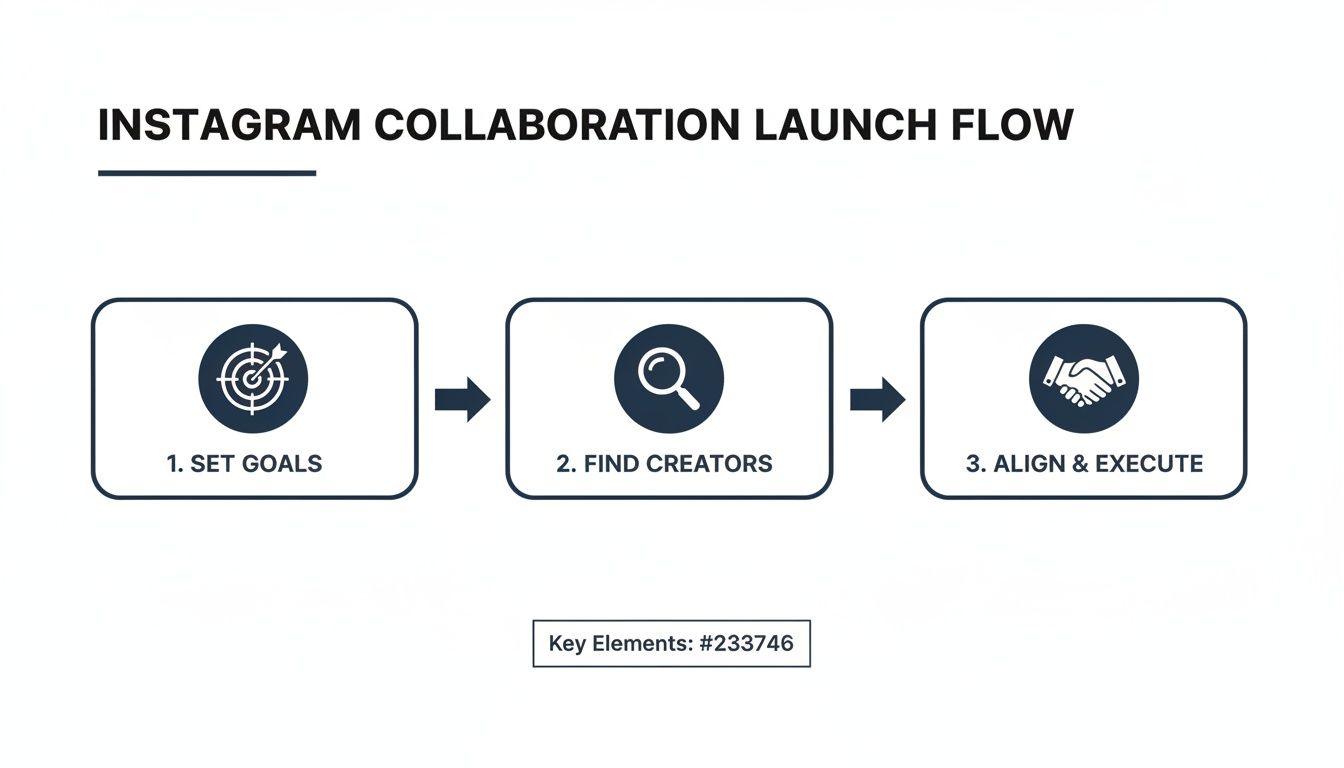
This simple flow really drives the point home: you can't find the perfect creator until you've defined what a "win" looks like for your brand.
Find the Right Creators for Your Brand
Once your goals are crystal clear, it’s time to find creators whose audience and values actually line up with your brand. Honestly, this is probably the most make-or-break part of the entire process. A mismatched partnership can do more than just deliver poor results; it can actively damage your brand's reputation.
"A brand collaboration is a conversation between you, a creator, and their audience. If the creator doesn't genuinely fit your brand, the audience will know. Authenticity is everything."
Don't get hypnotized by follower counts. You need to dig deeper. Look at a creator’s engagement rates, their audience demographics, and the quality of their content. It's often smart to work with a mix of influencer tiers—from nano-influencers with super-engaged niche communities to macro-influencers with massive reach.
Choosing the right tier depends entirely on the goals you just set. A smaller creator can often drive more sales for a specific product, while a larger one is better for broad awareness.
Matching Influencer Tiers to Your Campaign Goals
This table breaks down the different types of influencers and what they're best at, helping you align your creator search with your campaign objectives.
| Influencer Tier | Follower Range | Average Engagement Rate | Best For |
|---|---|---|---|
| Nano-Influencer | 1K – 10K | 4% – 8% | Niche audience targeting, high trust, authentic UGC, conversions |
| Micro-Influencer | 10K – 100K | 2% – 4% | Strong community engagement, targeted reach, cost-effective |
| Macro-Influencer | 100K – 1M | 1% – 2% | Broad brand awareness, high-quality content, trend-setting |
| Mega-Influencer | 1M+ | < 1% | Maximum reach, celebrity endorsement, large-scale campaigns |
Using this as a guide can help you zero in on the exact type of partner who can deliver the results you're after.
Of course, finding them is the next challenge. Platforms like REACH Influencers make this discovery process dramatically easier. You can filter through a database of thousands of vetted creators by their engagement metrics, audience location, interests, and even past brand collaborations to ensure you find a perfect match.
Finally, remember that this is a two-way street. Top-tier creators want to partner with polished brands. Take a look at our guide on how to build a killer Instagram profile to make sure you're putting your best foot forward. And don't forget the technical side—knowing the nuts and bolts of adding collaborators on Instagram Reels is just as important for a smooth execution.
Mastering Outreach and Negotiation in Instagram Collaborations
You’ve found the perfect creators to partner with. Now comes the moment of truth: reaching out. This is where so many brands get it wrong. Creators—especially the good ones—get dozens, if not hundreds, of collaboration requests every single day. A generic, copy-pasted DM is the fastest way to get ignored.
Think of it this way: your first message isn't just a pitch; it's the start of a relationship. It needs to show you’ve actually paid attention. Mention a specific Reel you loved or a recent post that resonated with you. Explain why you think their audience and your brand are a perfect match. This small touch shows you respect their work and instantly sets you apart from the crowd.
Crafting a Pitch That Actually Works
Forget rigid templates. Your outreach should feel like a genuine conversation starter. The goal is to clearly and quickly communicate why this partnership would be a win for everyone involved. A great pitch doesn't just ask for something; it offers real value in return.
Your message should touch on a few key things:
- A personal hook: "I loved your recent post on sustainable travel in Montana; it really aligns with our eco-friendly luggage line." This shows you're not just spamming.
- Who you are: A quick, one-sentence intro to your brand.
- The "why": Connect the dots for them. Why does this make sense for their followers?
- An easy next step: Keep it low-pressure. "If you're interested, I'd love to send over more details and chat about a potential partnership."
This approach respects the creator's time and frames the collaboration as a cool opportunity, not just another task on their to-do list.
Navigating the Negotiation
Once you've got their attention, the conversation naturally shifts to the nitty-gritty details. This is where you hash everything out to make sure both sides are clear on expectations. Staying professional, transparent, and a little flexible here goes a long way in building a solid relationship. The aim is to land on an agreement that feels fair and exciting for everyone.
Getting this right is more important than ever. Industry data shows a clear trend toward larger, more significant investments in influencer marketing, which means the stakes for negotiating well-structured deals are higher.
Here are the key points you'll need to lock down:
- Compensation: Will this be a flat fee, gifted product, an affiliate deal, or some combination? Be ready to talk numbers. Content creation is their job, after all.
- Content Deliverables: Get specific. How many Reels, Stories, or in-feed posts? What are the exact formats?
- Usage Rights: This is a big one. Define where you can use the content they create. Can you run it as a paid ad? Feature it on your website? And for how long?
- Exclusivity: Do you need them to agree not to work with direct competitors for a certain amount of time?
- Timelines: Set clear deadlines for drafts, any revisions, and the final go-live date.
Don't be surprised if they come back with a counter-offer—it’s a totally normal part of the process. Hear them out and be prepared to find a middle ground. For a much deeper look at this, our guide on how to negotiate with influencers has a ton of actionable strategies.
Juggling all of this—from the first DM to the final payment—can get messy, especially if you're working with several creators at once. This is exactly why platforms like REACH exist. They bring all your communication, contracts, and payments into one place, which builds trust and keeps things transparent from day one. It lets you get back to focusing on the creative side of the collaboration, knowing all the admin stuff is handled.
How to Write a Campaign Brief That Inspires Great Content
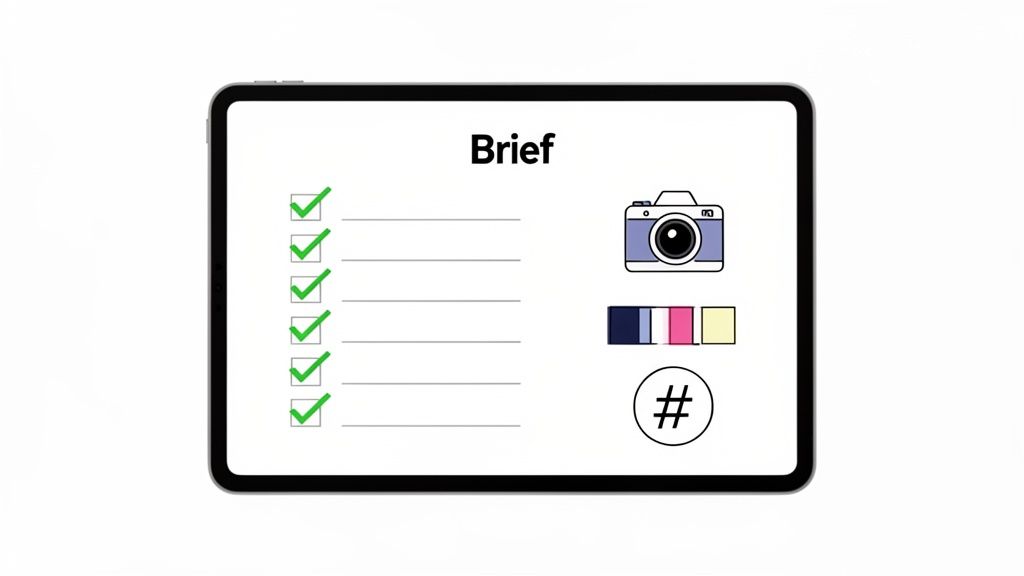
Once you and a creator have agreed to work together, the next step is absolutely crucial: writing a rock-solid campaign brief. Think of this document as the playbook for your entire collaboration. It’s not about micromanaging the creator; it’s about giving them a clear blueprint that aligns expectations, spells out the goals, and provides everything they need to create amazing content that hits the mark.
A vague or confusing brief is the number one cause of frustrating revision rounds and lackluster results. A great brief, on the other hand, acts like a guardrail, giving creators the freedom to be creative within a framework that guarantees you get what you need.
The Must-Have Components of Any Good Brief
Your brief should be a one-stop shop for everything the creator needs to know. If you leave out important details, you're forcing them to make assumptions, which can lead to content that completely misses the point. You want to empower them to be a true partner, not just a hired gun.
Here's what every comprehensive brief should include:
- Campaign Objectives: Remind them of the "why." Are you trying to drive clicks to a new product page, or is this all about boosting awareness for a launch?
- Key Messaging: What are the one or two core ideas you need them to communicate? Keep this tight and focused to avoid it sounding like a scripted ad.
- Brand Guidelines: This is where you cover your brand's personality—the tone of voice, visual dos and don'ts, and any specific colors or fonts they should know about.
- Mandatory Elements: Get specific here. List out required hashtags, @mentions, and any unique links or discount codes they need to feature.
- Content Deliverables: Be crystal clear on the number and type of posts required (e.g., one Reel and three Stories).
- Timeline and Deadlines: Lay out the key dates—when you need to see a draft and, of course, the final go-live date.
Covering these bases from the start removes any guesswork and sets the stage for a smooth, productive partnership. It's professional and shows you respect the creator's time.
Balancing Creative Freedom with Brand Safety
One of the trickiest parts of learning how to collaborate on Instagram is finding that perfect balance between giving direction and letting go. Remember, you’re hiring this person for their unique voice and the connection they have with their audience. If you hand them a super-restrictive brief, you kill the magic that made you want to work with them in the first place.
The best collaborations happen when a brand trusts the creator to speak to their audience authentically. Provide the "what" and the "why," but let them figure out the "how."
Instead of a rigid script, give them "talking points." For instance, rather than demanding, "Say our new sneaker is the most comfortable shoe ever," try something more collaborative: "We'd love for you to highlight the shoe's cushioned sole and how it feels after a long day on your feet." This gives them the core message but allows them to frame it in their own words.
It's also a great idea to make sure the brief outlines your expectations for performance. This includes things like following the latest Instagram Reels best practices to give the content the best shot at going viral.
Using Instagram’s Built-In Tools the Right Way
Your brief is the perfect place to specify how you want to use Instagram’s native features to maximize transparency and reach. These tools are designed to make partnerships clear to everyone and give you valuable data.
Make sure your brief includes instructions on using:
- The Collab Post Feature: This is a game-changer. It lets the post appear on both your profile and the creator's, sharing all the likes, comments, and views. It's an incredibly powerful way to introduce your brand to their audience and vice-versa.
- Branded Content Tools: Creators must use the "Paid partnership" label to disclose the relationship, which is a non-negotiable FTC requirement. This tag also unlocks the post's performance insights for you to view directly.
For brands juggling multiple campaigns, this whole process can become a massive headache. Keeping track of different briefs, sending feedback on drafts over email, and making sure every post is perfect is a huge administrative drain.
This is where a centralized platform like REACH really shines. Its content approval tools create a single, streamlined workflow where you can review drafts, leave feedback right on the content, and give the final green light—all in one place. No more messy email chains. Just brand-safe content that's ready for primetime.
For a deeper dive, check out our complete guide and grab a free influencer brief template to get you started.
Navigating Contracts, Payments, and Disclosures for Instagram Collaborations
Alright, you've got the creative brief locked in. Now comes the part that makes a lot of people nervous: the paperwork. But getting the legal and financial details right isn't just a formality; it's the foundation of a professional partnership.
A solid agreement protects both you and the creator. It turns a casual conversation into a clear, professional arrangement, which is exactly what you want before any content gets made. Think of it as the final checkpoint. Skipping this and relying on a handshake deal is just asking for trouble down the road.
Crafting a Contract That Protects Everyone
Don't let the word "contract" intimidate you. It doesn’t have to be a 50-page document filled with legalese. A good contract simply puts everything you’ve already agreed upon in writing, leaving no room for "I thought you meant…" later on.
Every influencer agreement, whether it's for a single post or a year-long ambassorship, needs to cover a few key areas. These are the non-negotiables.
Here’s what your agreement absolutely must include:
- Scope of Work (SOW): Get specific. This means detailing exactly what the creator will deliver. Is it one Reel and three Stories? A static post with a carousel? Spell it out.
- Content Ownership and Usage Rights: This is a big one. Who owns the content after it's created? More importantly, what can your brand do with it? Define if you can use it on your website, in email campaigns, or as a paid ad, and for how long (e.g., 90 days, one year).
- Exclusivity Clause: This is your "no cheating" clause. It prevents a creator from promoting a direct competitor right before or after your campaign. Be fair here—a 30-day window is pretty standard. Anything too restrictive will scare creators away.
- Approval and Revision Process: How will the creator submit content for you to look at? How many rounds of changes are included in their fee? Defining this upfront saves everyone from the nightmare of endless revisions.
Ensuring Timely Payments and Fair Compensation
Let's be blunt: nothing sours a great creator relationship faster than late payments. For creators, this is how they pay their bills. If you want to build a reputation as a brand people love working with, you have to pay on time. Period.
Talk about payment terms from the get-go. Are you paying 50% upon signing and the rest on completion? Or is it net-30 after the campaign ends? Whatever you agree on, honor it. This simple act of reliability is what turns a one-time collaboration into a long-term partnership.
"Kara has been a fun and great collaborator to work with. Extremely professional and with awesome content posted and timed very well. She communicated very well throughout the process. We look forward to working with Kara on collaborations in the future." – Canary
This glowing review for creator Kara from Roaming Near and Far shows what brands truly value. Professionalism and clear communication are at the top of the list, and a smooth payment process is a huge part of that professional experience.
Staying Compliant with FTC Disclosures
Finally, disclosure isn't optional—it's the law. The Federal Trade Commission (FTC) is very clear that any paid partnership must be disclosed to the audience. This isn't just about following rules; it's about being transparent and maintaining the trust of your customers.
Your contract needs to explicitly state that the creator must use Instagram’s built-in "Paid partnership" label. On top of that, they should include hashtags like #ad or #sponsored right at the beginning of the caption, not buried at the end. Ignoring this can lead to hefty fines for both of you.
Juggling contracts, chasing invoices, and making sure everyone is FTC-compliant can quickly become a full-time job. This is where a platform like REACH Influencers can be a lifesaver. It can handle the contracting, automate payments, and even manage tax forms, freeing you up to focus on the creative side of your partnerships.
Measuring Your Success and Building Lasting Partnerships
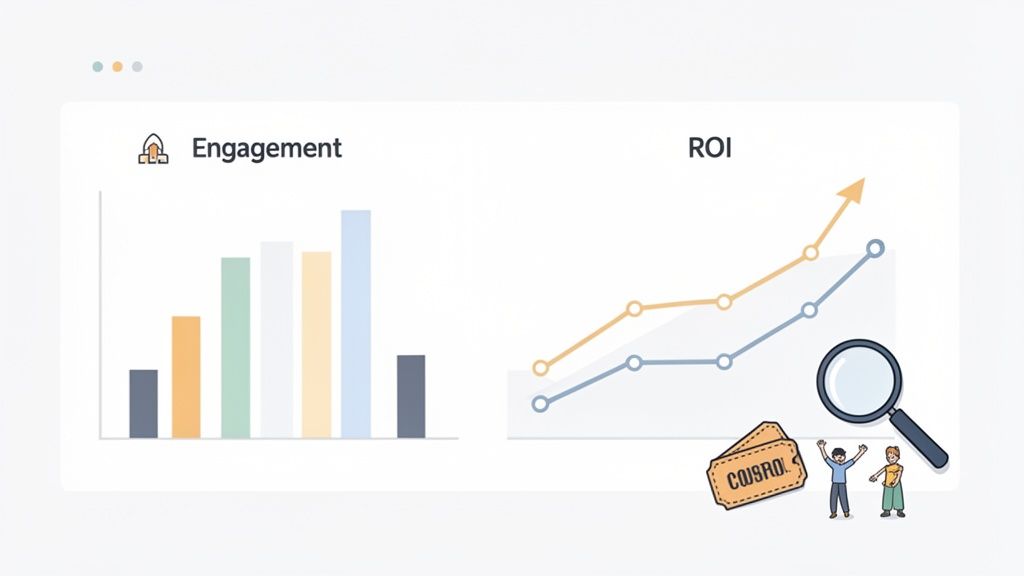
The content is live and the comments are rolling in, but your job isn't done just yet. Now comes the most important part: figuring out what actually worked. Learning how to collaborate on Instagram for real results means you have to be able to prove its value with cold, hard data. This is where you connect the dots between your initial goals and the final outcome, showing a clear return on your investment.
A great partnership does more than just generate a few nice photos—it drives real business results. Without tracking, you’re just guessing. With it, you get the insights you need to sharpen your strategy, justify your budget, and pinpoint the creators who are true growth drivers for your brand.
Tracking the Right Metrics for Your Goals
The metrics you watch have to tie directly back to the goals you set in the very beginning. If you were aiming for brand awareness, looking at sales conversions isn't going to give you the full picture. On the flip side, if your goal was driving sales, a ton of impressions with zero clicks means something went wrong. You've got to focus on the data that truly matters for your campaign.
Let's break down which KPIs to keep an eye on, depending on what you're trying to achieve.
When you're sifting through the data after a campaign, it's easy to get lost in vanity metrics. To stay focused, you need to align your analysis with your original objectives. The table below is a guide to the most important KPIs to track for different campaign goals, from simply getting your name out there to driving direct sales.
Key Metrics for Measuring Instagram Collaboration ROI
| Campaign Goal | Primary KPIs | Secondary KPIs | Tools for Tracking |
|---|---|---|---|
| Brand Awareness | Impressions, Reach, Follower Growth (on your brand's account) | Story Views, Video Views, Profile Visits | Instagram Insights, REACH Analytics Dashboard |
| Audience Engagement | Likes, Comments, Shares, Saves, Engagement Rate | Story Replies, Sticker Taps (e.g., polls, quizzes) | Instagram Insights, Third-Party Analytics Tools |
| Website Traffic | Link Clicks (from bio or Stories), Click-Through Rate (CTR) | Landing Page Views, Time on Site | UTM Parameters (Google Analytics), Bitly, REACH's Link Tracking |
| Sales & Conversions | Conversion Rate, Sales Revenue, Cost Per Acquisition (CPA) | Coupon Code Redemptions, Add to Carts, Leads Generated | E-commerce Platform Analytics, Unique Discount Codes, Affiliate Links |
Using a structured approach like this ensures you’re not just collecting numbers, but actually understanding what they mean for your business. For example, a high number of Saves on a post is a fantastic indicator that the audience found the content genuinely valuable—a powerful sign of a strong creator-brand fit.
Of course, pulling all this data together manually can be a massive headache. This is where a platform like REACH Influencers really shines. Its analytics dashboard gathers all your campaign data—from engagement metrics to sales tracking—into one clean report. It makes it so much easier to see what’s working and share those wins with your team or clients.
Building Lasting Creator Relationships
The numbers only tell one side of the story. The real magic in influencer marketing comes from building authentic, long-term partnerships. A one-off campaign can be good, but turning your best creators into true brand ambassadors is great. That's how you build a marketing channel that's both sustainable and scalable.
Once a collaboration is over, don't just send the final payment and disappear. Take a moment to nurture that relationship. A simple thank-you note that points out specific things you loved about their work can go a surprisingly long way.
A successful project is the start of a conversation, not the end of one. Fostering loyalty with creators who genuinely love your brand is one of the highest-ROI activities you can do.
Think bigger than just single campaigns. You could even create a formal brand ambassador program for your most successful partners, offering an ongoing retainer, early access to new products, or more creative freedom. For instance, a brand like Portland Leather Goods has worked with creator Kara from Roaming Near and Far multiple times. This signals a strong, ongoing partnership that benefits both of them and builds deeper trust with the creator's audience.
Here are a few simple ways to turn a successful project into a lasting partnership:
- Share Their Success: Feature their content on your own social channels (with their permission, of course) and tag them. This gives them a little extra exposure and shows you truly value their work.
- Ask for Feedback: Check in and ask them what they thought of the whole process. What went well? What could have been better? This shows you respect their professional opinion.
- Plan Ahead: If a creator absolutely knocked it out of the park, start brainstorming the next collaboration right away. Let them know you’re already thinking about the next time you can work together.
Building these relationships is the secret to moving from transactional, one-and-done collaborations to a powerful community of advocates who are truly invested in your brand. It’s a core part of mastering how to collaborate on Instagram for the long haul.
Common Questions About Instagram Collaborations
Even with a solid plan, jumping into your first Instagram collaboration can feel like you're navigating a new world. It’s natural to have questions. Getting them answered upfront is the best way to move forward confidently. Let's dig into a few of the most common things brands ask when they're just getting started.
How Do I Set a Fair Budget for a Collaboration?
This is the million-dollar question, isn't it? The truth is, there's no magic number. Rates are all over the map and depend on a creator’s follower count, their engagement rate, and exactly what you're asking them to do. A nano-influencer might be happy with free products, while a macro-influencer could easily charge thousands for just one post.
A decent place to start is the old rule of thumb: one cent per follower. So, 1,000 followers would be about $10. But treat this as just a baseline. What's more important is to factor in things like:
- Engagement Rate: A creator with a smaller, super-engaged audience is often more valuable than one with millions of passive followers. Real connection is where the value is, and higher engagement absolutely justifies higher pay.
- Content Type: A well-produced, edited Reel is a whole different beast than a few quick Stories. The effort should match the compensation.
- Usage Rights: This is a big one. If you want to use their content in your paid ads or on your website, that's extra. You're buying a license, and that needs to be factored into the price.
Always go in ready to negotiate. Remember, building a reputation for paying fairly is one of the best ways to attract top-tier creators down the road.
What Kind of Results Should I Expect from My First Campaign?
Your results are only as good as the goals you set. If you were aiming for brand awareness, then seeing tens of thousands of impressions and a nice little bump in your follower count is a clear win for a first campaign. If you were laser-focused on sales, even just a handful of purchases using a special discount code is a huge victory. It proves the partnership actually worked.
Don't get caught up in trying to go viral right away. The real goal of your first collaboration is to set a benchmark. It’s your chance to learn what clicks with a new audience and to start building a real relationship with a creator.
Keep a close eye on the metrics that actually matter for your specific goals. This initial data is gold—it tells you what worked, what fell flat, and exactly how to make your next partnership even better.
Do I Really Need a Formal Contract?
Yes. 100%. Don't even think about skipping this. Even if it’s a simple gifted collaboration with no money changing hands, a formal agreement is non-negotiable.
A contract protects everyone involved. It lays out the deliverables, deadlines, payment details, and—crucially—content usage rights in black and white. It gets rid of any "I thought you meant…" confusion and starts the partnership off on a professional footing. Trusting a verbal agreement or a few DMs is just asking for trouble over who owns the content or when payment is due. That’s a fast track to a soured relationship and a damaged brand reputation.
Ready to stop guessing and start building powerful, data-driven partnerships? REACH Influencers takes the complexity out of learning how to collaborate on Instagram. Discover the perfect partners for your brand, manage your entire workflow, and prove your ROI in one intuitive platform. Get started with REACH today