 Skip to content


Finding the right UGC creator platforms can feel overwhelming. With so many options available, each offering a slightly different set of features and pricing models, it’s difficult to know which one will deliver the best results for your brand. This guide cuts through the noise to provide a clear, comprehensive comparison of the top platforms on the market, helping you find the perfect partner to scale your content strategy. A strong UGC strategy is essential in today's market, where 92% of consumers trust peer recommendations over traditional advertising.
We've done the heavy lifting for you, evaluating each platform on its core capabilities: creator discovery, campaign management, payment processing, and analytics. From all-in-one solutions like REACH Influencers that streamline the entire process to specialized marketplaces, this list will help you identify the perfect tool. Our goal is to equip you with the information needed to scale your content creation efforts efficiently and find creators who genuinely connect with your audience. For a brand looking to boost conversions, choosing the right platform can mean the difference between a flat campaign and a 4.6% higher conversion rate that UGC often provides.
Each entry includes a detailed breakdown of features, pricing, pros, and cons, complete with screenshots and direct links to get you started faster. We'll analyze who each platform is best for, from brands needing a fully managed service to those who prefer a self-serve marketplace model. By understanding the distinct advantages and limitations of the industry's best UGC creator platforms, you can make an informed decision that aligns with your budget and marketing goals.
For those looking to build a strong foundation before diving in, understanding the strategy behind successful campaigns is crucial. A great external resource is Nielsen's study on consumer trust in advertising, which underscores the power of earned media like UGC. To help with tactical execution, our detailed guide to user generated content campaigns offers a roadmap for planning and launching your efforts for maximum impact.
1. REACH: The Top All-in-One UGC Creator Platform
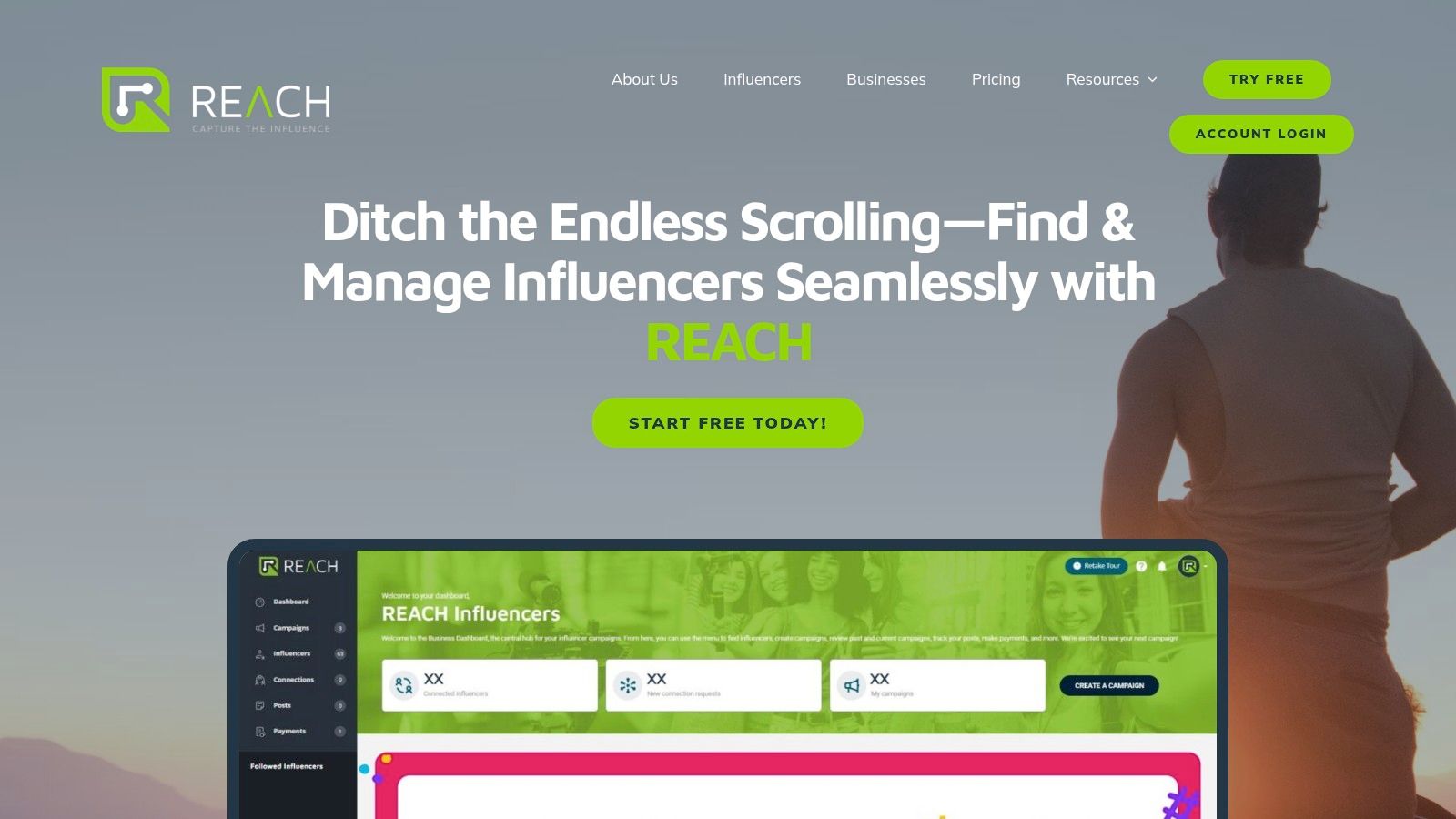
REACH establishes itself as a powerful, all-in-one solution among UGC creator platforms, engineered to eliminate manual workflows for agencies and brands. Its core strength lies in unifying every stage of a campaign, from initial talent discovery to final ROI measurement, within a single, streamlined dashboard. For example, a D2C beauty brand can use REACH to find 50 micro-influencers with high engagement in the "cruelty-free skincare" niche, manage contracts, automate product shipping, and track sales directly from a single interface, moving teams beyond spreadsheets and disconnected tools.
The platform excels at connecting brands with the right creators. Its advanced discovery engine allows for precise filtering by engagement rates, audience demographics, location, and specific niches. This ensures that whether you're searching for hyper-local micro-influencers or established macro-level talent, you can identify authentic partners whose audiences align perfectly with your brand's target customer. One client, a growing fashion accessory brand, used these filters to identify creators in specific urban areas, leading to a 25% increase in local online orders during their campaign.
Core Features & Use Cases
REACH is particularly effective for agencies and in-house marketing teams that need to demonstrate clear returns on their influencer spend. Real-time analytics and click-tracking capabilities provide immediate insight into campaign performance, making it easy to report progress to stakeholders.
- Campaign Management: A centralized hub consolidates creator outreach, content approvals, contracts, and communication.
- Agency-Focused Tools: The platform supports unlimited client campaigns and offers white-labeling, allowing agencies to present the software as their own.
- Payment & Compliance: Integrated payment processing and tax compliance tools remove financial friction. Creators benefit from guaranteed fast payouts, which fosters stronger long-term relationships.
- Performance Analytics: Live reporting and an influencer ROI calculator help teams prove the direct impact of their UGC and influencer marketing efforts.
Who is it for?
REACH is an ideal choice for marketing agencies managing multiple clients, DTC brands scaling their UGC strategy, and in-house marketing teams at SMBs seeking a data-driven approach to influencer partnerships.
Pros:
- Powerful Discovery: Find perfectly matched micro- and macro-influencers with granular filters.
- All-in-One Dashboard: Manages every step from outreach to payment, reducing manual work.
- White-Label Options: Essential for agencies wanting to provide a branded client experience.
- Streamlined Finances: Built-in payment and tax tools simplify a common campaign bottleneck.
Cons:
- Opaque Pricing: No public pricing tiers are listed; a demo or sales contact is required for full details.
- Limited Social Proof: The website lacks visible third-party reviews or detailed case studies.
Website: https://reach-influencers.com
2. Fiverr: A Top Marketplace-Style UGC Creator Platform
Fiverr is a massive freelance marketplace that has adapted to the creator economy by establishing a dedicated category for UGC videos. It operates on a gig-based model, where brands can purchase user-generated content as a one-off product rather than managing an ongoing campaign. This makes it an excellent choice for businesses needing quick, affordable assets for testing ad creative or populating a social media calendar.
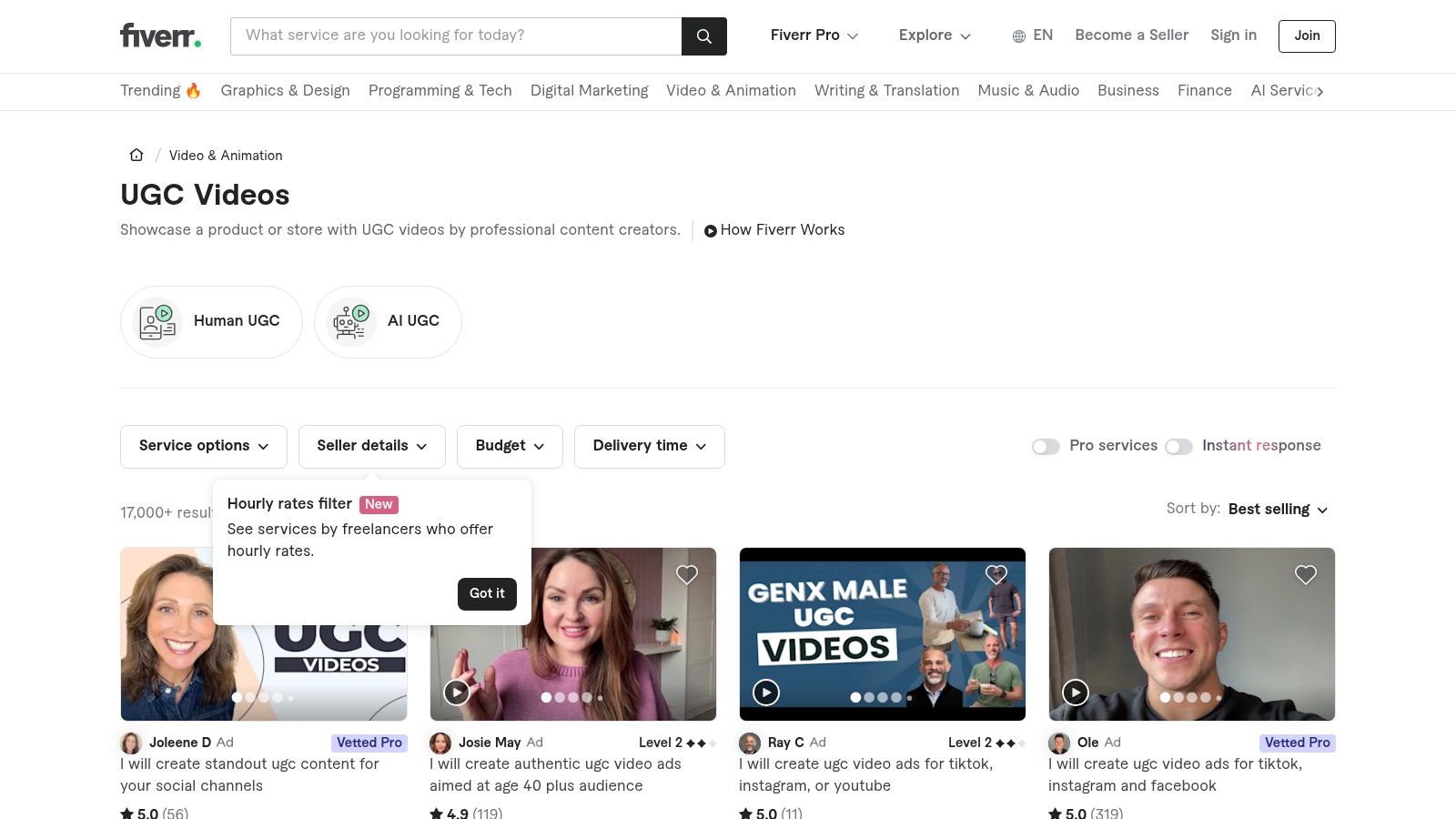
The platform’s strength lies in its vast talent pool and transparent, upfront pricing. You can easily filter creators by budget, delivery time, and seller level, with reviews and portfolios readily available to gauge quality. However, unlike dedicated UGC creator platforms, Fiverr requires more hands-on vetting. Quality can vary significantly, and usage rights must be carefully confirmed with each individual seller, as they are not standardized.
Core Platform Features
- Creator Discovery: A large, searchable marketplace with a dedicated "UGC Videos" category. Filters allow for sorting by seller level, budget, and delivery timeline.
- Campaign Management: No formal campaign tools. Communication and project management happen directly with individual sellers through the platform's messaging system.
- Payment & Tax: Secure, escrow-style payments. Funds are held by Fiverr until the brand approves the final content delivery.
- Analytics: No built-in performance analytics. Brands must track content performance on their own channels.
Ideal Use Case & Limitations
Fiverr is best suited for small businesses or marketing teams needing to source a few UGC assets quickly and affordably. It's a great starting point if you're exploring what a UGC content creator is and want to experiment without a large commitment. The primary limitation is its lack of scalability and creator management tools, making it inefficient for running larger, multi-creator campaigns.
3. Upwork
Upwork is a vast freelance marketplace that connects businesses with independent professionals, including a growing hub of UGC creators. Unlike gig-based platforms, Upwork supports more flexible hiring models, allowing brands to post jobs and receive proposals for hourly, fixed-price, or even longer-term retainer contracts. This makes it a strong contender for businesses looking to build ongoing relationships with specific creators.
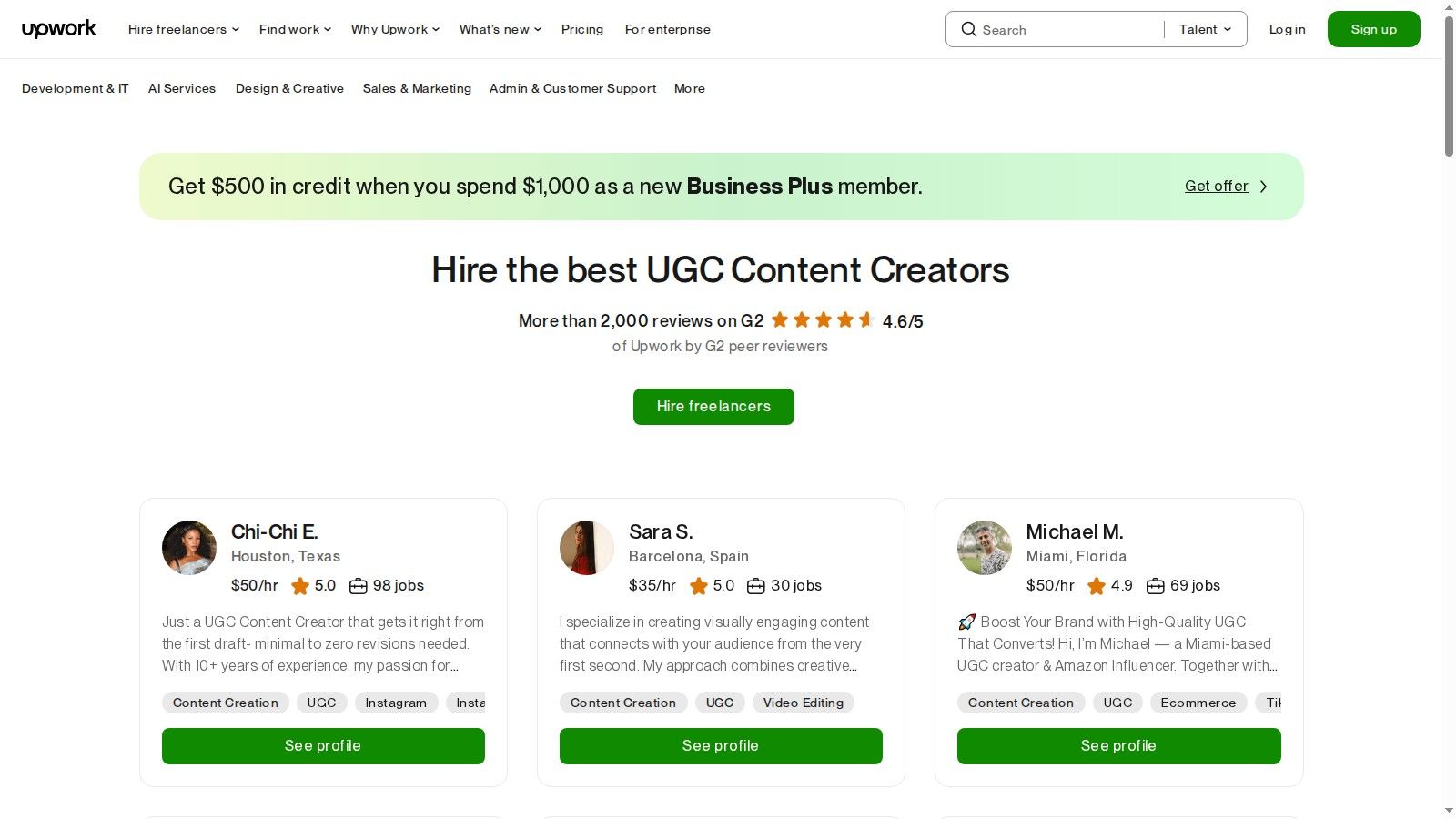
The platform's key advantage is its robust contract and payment protection system. Funds are held in escrow for fixed-price jobs, and an hourly time-tracker provides transparency for ongoing work. However, similar to Fiverr, Upwork is a generalist marketplace. Brands must invest time in vetting proposals and creators, as the quality and experience levels can vary widely. Platform fees for both clients and freelancers can also become a significant cost for frequent hiring.
Core Platform Features
- Creator Discovery: Brands can post a job and invite freelancers to apply or use the Talent Marketplace to search for creators with specific skills, rates, and "Job Success" scores.
- Campaign Management: All communication, file sharing, and feedback happens within Upwork's messaging system for each specific contract. There are no dedicated multi-creator campaign tools.
- Payment & Tax: Secure escrow for fixed-price projects and verified time-tracking for hourly work. Upwork handles payments and provides necessary tax documentation.
- Analytics: No native analytics. Brands are responsible for tracking the performance of the UGC on their own social media channels or ad platforms.
Ideal Use Case & Limitations
Upwork is ideal for businesses that want to hire a UGC creator for a specific, well-defined project or on a recurring hourly basis. It’s an excellent choice if you need the security of protected payments and clear contracts. The main limitation is the lack of specialized tools for managing UGC campaigns at scale, making it less efficient than dedicated UGC creator platforms for sourcing and managing content from multiple creators simultaneously.
4. Collabstr
Collabstr operates as a streamlined marketplace where brands can directly purchase UGC and influencer content. It is known for its transparent pricing and rapid campaign turnaround, allowing brands to either browse and buy from pre-vetted creators or post a campaign brief and receive applications quickly. This model simplifies the initial steps of sourcing content, making it accessible for teams needing to move fast.
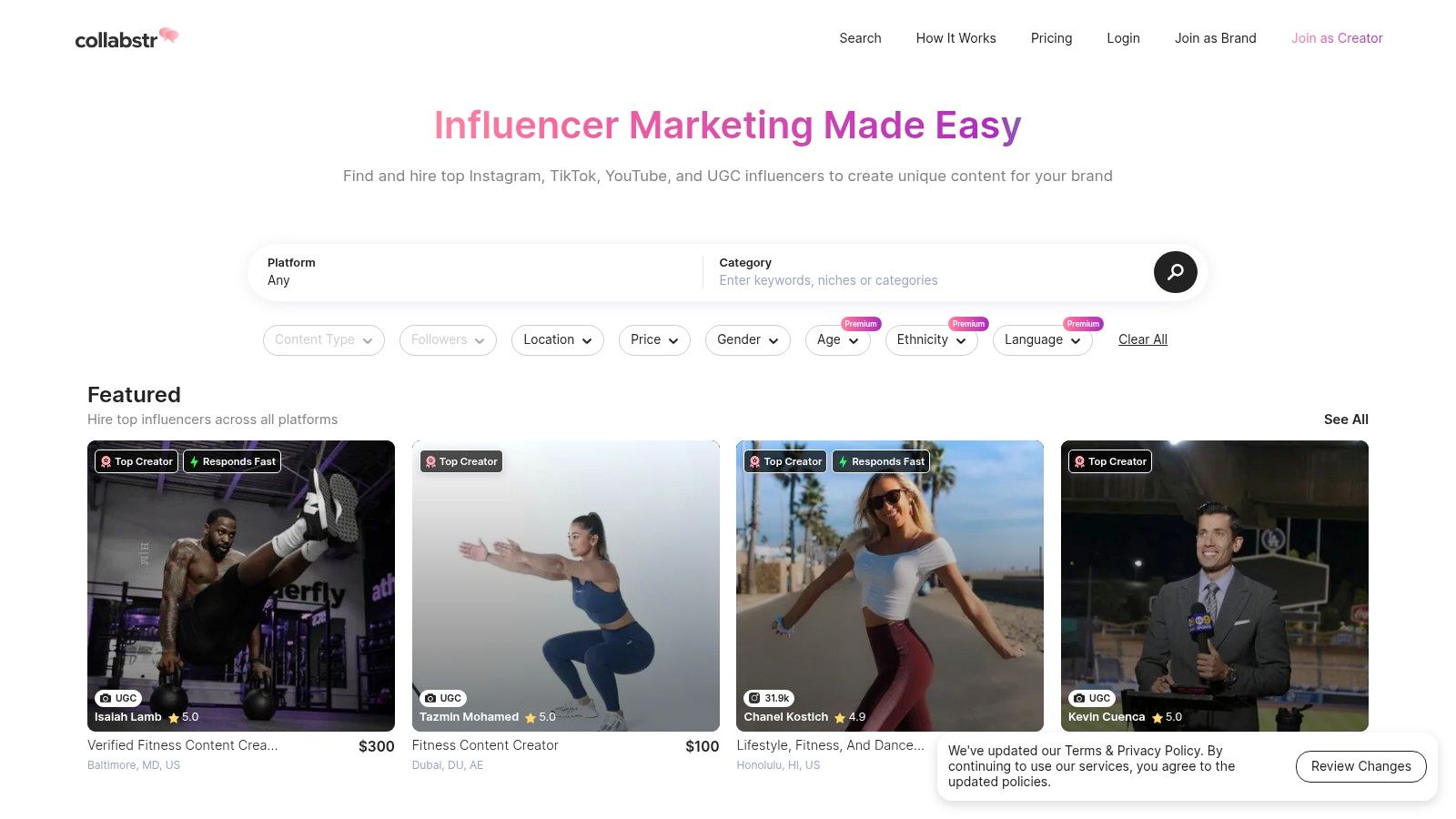
The platform’s key differentiator is its open approach to pricing. Collabstr provides a UGC rate calculator and displays public price benchmarks, giving brands valuable data to inform their budget and negotiations. While browsing is free, posting campaigns and accessing analytics requires a paid subscription. Like other marketplaces, the quality of creators can be inconsistent, so brands must still perform their own due diligence before committing.
Core Platform Features
- Creator Discovery: A public, searchable marketplace of UGC creators and influencers with transparent, listed prices for specific deliverables. Brands can also post campaign briefs for creators to apply.
- Campaign Management: In-platform chat for direct communication, content approvals, and milestone tracking. Management is done on a per-creator basis.
- Payment & Tax: Secure payment processing with funds held in escrow until content is approved by the brand. Collabstr handles payouts to creators.
- Analytics: Basic performance tracking is available, but advanced analytics are reserved for higher-tier Pro and Premium plans.
Ideal Use Case & Limitations
Collabstr is an excellent fit for DTC brands and marketers who prioritize speed and transparent pricing for one-off UGC purchases or small-scale campaigns. Its pricing tools are particularly useful for those new to the space and unsure of what to budget. The main limitation is that its advanced features and analytics are behind a paywall, and managing larger, more complex campaigns with multiple creators can become cumbersome compared to more dedicated UGC creator platforms.
- Website: https://collabstr.com/
5. JoinBrands: A Specialized UGC Creator Platform
JoinBrands is a UGC-first platform designed for brands that require a consistent flow of content. It connects businesses with a large pool of over 250,000 creators, focusing on sourcing photos and videos, and also integrates tools for managing TikTok Shop affiliates and influencers. The platform operates on a unique credit-based system, making it ideal for brands that plan to purchase UGC regularly.
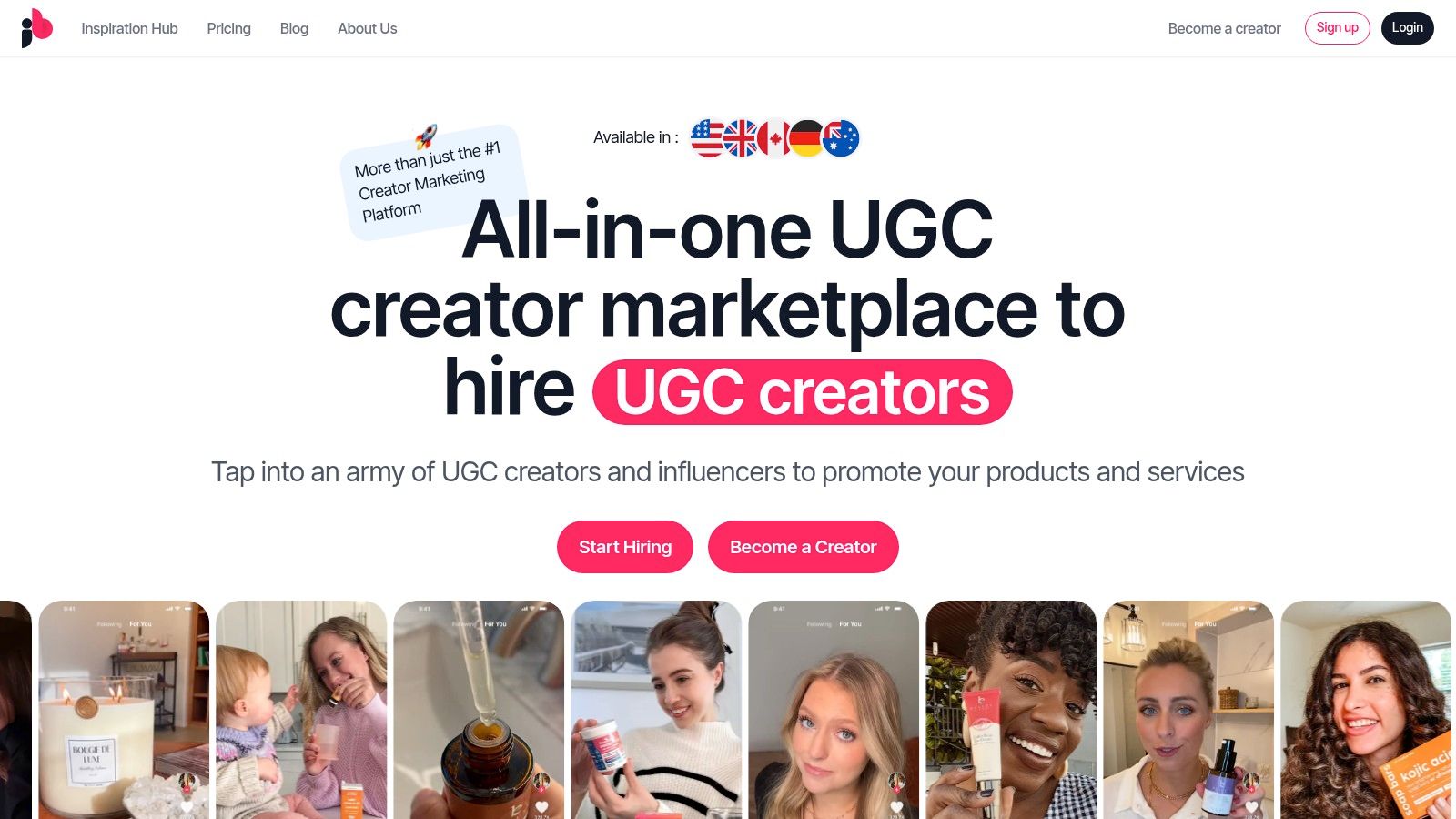
The core of JoinBrands is its "JB Coins" credit system, which is used to purchase content from creators. This model, combined with tiered monthly plans, offers predictability and potential cost savings for high-volume needs. While it streamlines the process, brands should note that platform fees range from 8% to 15% depending on the subscription tier, and individual creator pricing can still vary.
Core Platform Features
- Creator Discovery: Access to a large, US-focused talent pool of over 250,000 creators. Brands can post campaign briefs for creators to apply to.
- Campaign Management: Allows for unlimited campaigns and content requests on paid subscription tiers. Includes specialized workflows for TikTok Shop affiliates.
- Payment & Tax: Uses a credit system ("JB Coins") for content purchases. The platform handles creator payouts, which are processed quickly.
- Analytics: Basic analytics are provided within the platform to track campaign engagement, but in-depth performance tracking requires external tools.
Ideal Use Case & Limitations
JoinBrands is best for e-commerce and direct-to-consumer brands that need a steady stream of UGC for social media, ads, and TikTok Shop. The monthly plans and credit system reward repeat usage, highlighting the many benefits of user-generated content when sourced at scale. The primary limitation is that its credit model may be less cost-effective for brands needing only a few one-off assets, and its talent pool is heavily concentrated in the US.
- Website: https://joinbrands.com/
6. Insense
Insense offers a hybrid model that combines a self-serve marketplace with optional managed services, catering to brands that want flexibility in their UGC strategy. It serves as both a UGC and influencer platform, allowing businesses to launch campaigns, discover creators, and manage collaborations directly or hand the entire process off to Insense's team. This dual approach makes it an interesting option for teams that may need hands-on support for some campaigns but prefer a DIY tool for others.
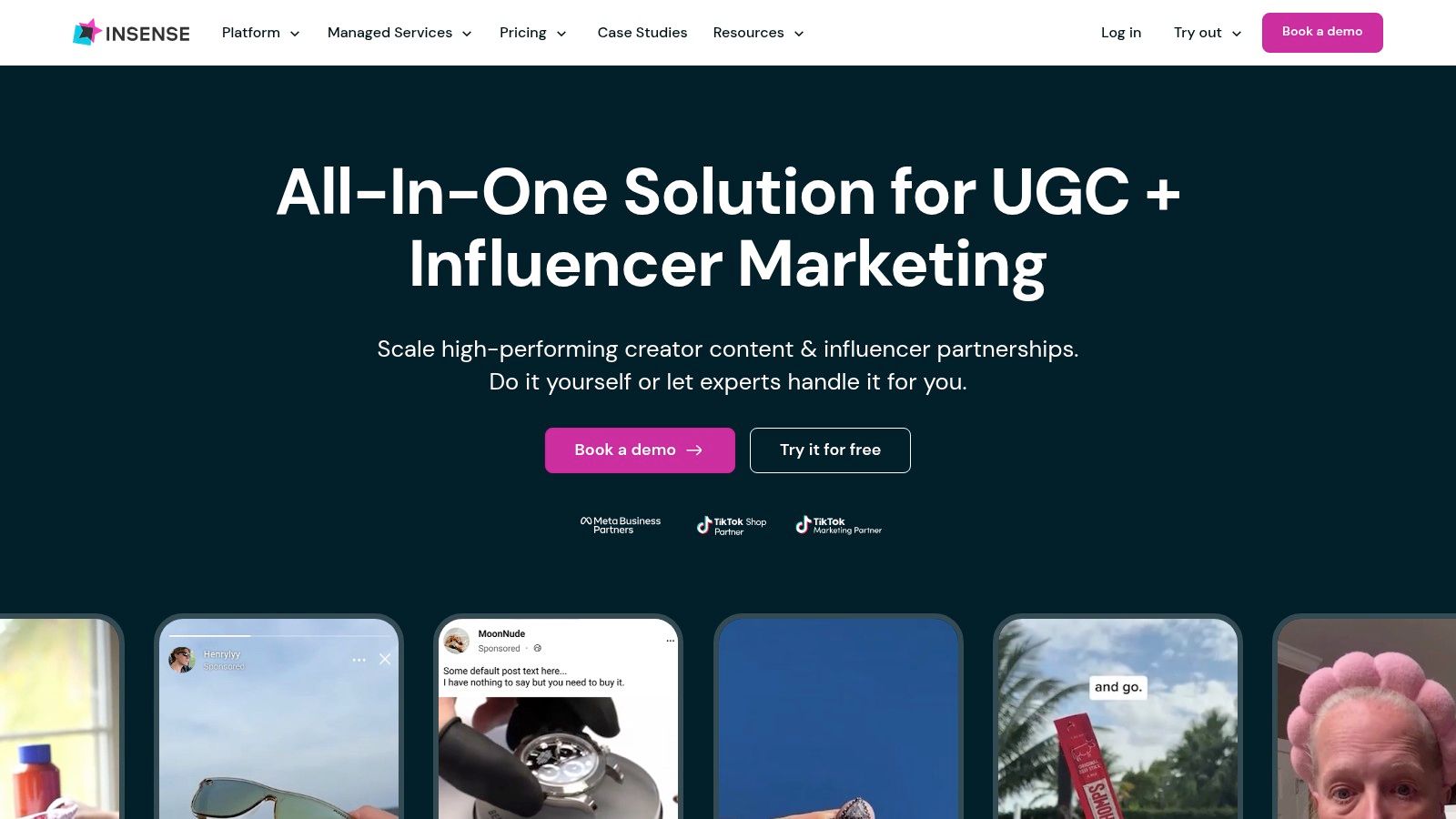
The platform stands out by integrating creator whitelisting and licensing workflows, making it particularly useful for brands planning to leverage UGC in paid advertising campaigns. However, its pricing structure can be complex. Brands pay a subscription fee for platform access, which comes with a specific marketplace fee percentage, and creator payments are a separate, additional cost. This multi-layered pricing requires careful budget consideration.
Core Platform Features
- Creator Discovery: A marketplace where brands can post campaign briefs and receive applications from interested creators.
- Campaign Management: Tools for managing briefs, communication, content approvals, and creator payments within the platform. Offers both self-serve and fully managed campaign options.
- Payment & Tax: Handles direct payments to creators through the platform. Brands fund their accounts to pay for collaborations.
- Analytics: Provides basic campaign-level reporting, with a focus on workflows for paid media amplification rather than organic performance.
Ideal Use Case & Limitations
Insense is best suited for brands and agencies that run both organic UGC campaigns and paid social ads, as its features support creator whitelisting. The flexibility to choose between self-serve and managed services is a significant advantage for teams with fluctuating bandwidth. The primary limitation is the pricing model, where subscription costs are layered with marketplace fees on top of creator payments, which can make it less cost-effective for brands on a tight budget compared to other UGC creator platforms.
- Website: https://insense.pro/
7. Trend
Trend is a US-centric UGC production marketplace designed to productize and scale content creation. It operates on a credit-based system where brands purchase packages that can be redeemed for a set number of videos or photos from a vetted network of creators. This model simplifies budgeting and eliminates the need for individual creator negotiations, making it an efficient solution for brands looking to build a large content library quickly.
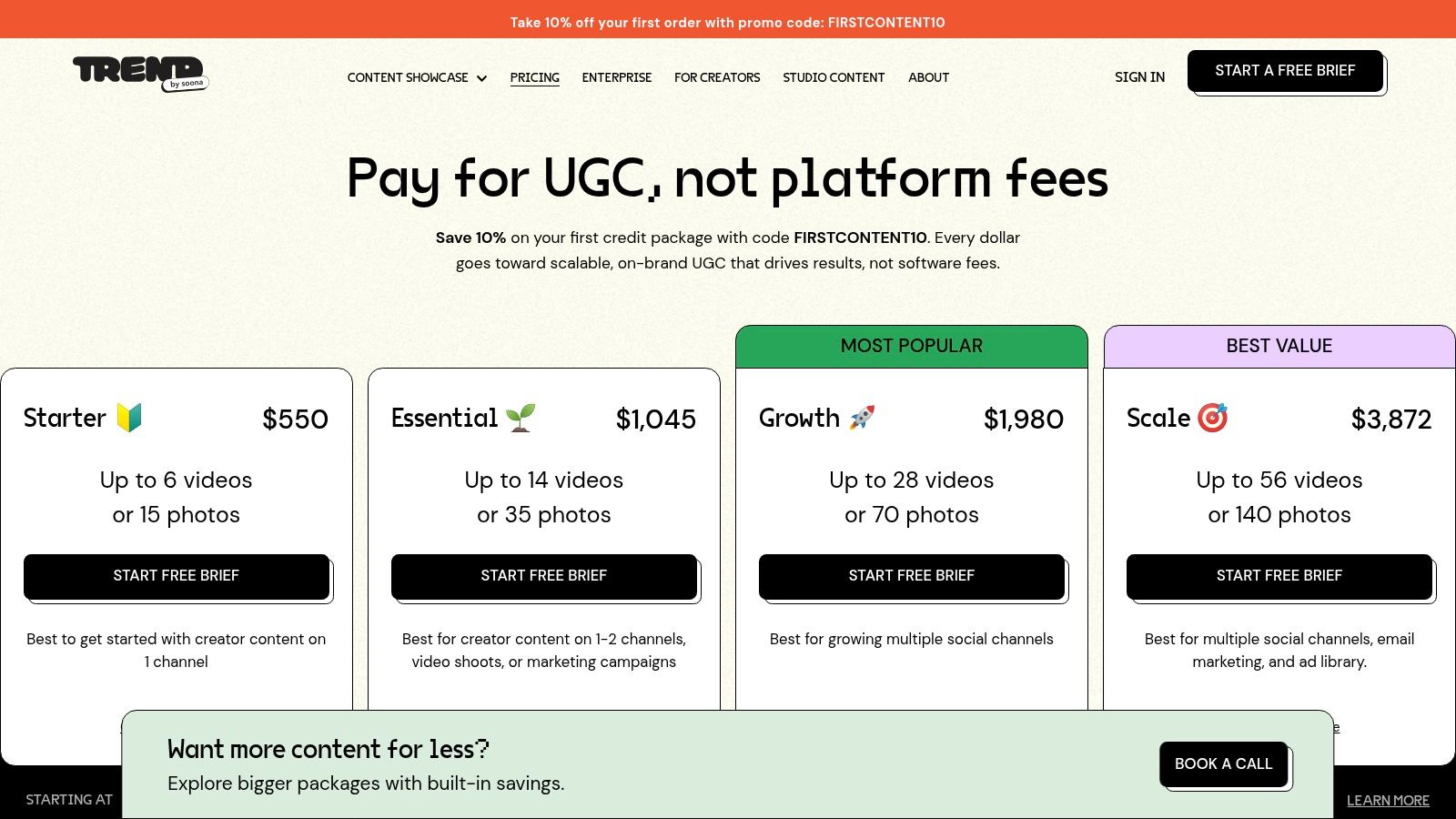
The platform’s key advantage is its streamlined, transparent approach. Every piece of content comes with full licensing and distribution rights, removing complex legal hurdles. By handling creator vetting and standardizing rates, Trend allows marketing teams to focus on their creative strategy rather than logistical management. However, this productized model offers less flexibility for bespoke creator collaborations, and the credits expire after 12 months, which may not suit brands with inconsistent content needs.
Core Platform Features
- Creator Discovery: Access to a vetted network of creators. Brands create a campaign brief, and interested creators apply, simplifying the selection process.
- Campaign Management: A streamlined dashboard to launch campaigns, ship products, and approve or request revisions on submitted content.
- Payment & Tax: A credit-based system with clear, upfront package pricing. All creator payments and logistics are handled by the platform.
- Analytics: No built-in performance analytics are provided. Brands are responsible for tracking content ROI on their own social media channels.
Ideal Use Case & Limitations
Trend is best for e-commerce and direct-to-consumer brands that need a high volume of UGC assets for social media ads and organic posts. The credit system is ideal for teams with a predictable monthly content budget who want to scale production without increasing administrative overhead. The primary limitations are the lack of flexibility in creator negotiation and the 12-month expiration on credits, making it less suitable for one-off projects or brands requiring highly customized campaign terms.
- Website: https://www.trend.io/pricing
8. Billo
Billo is a video-first marketplace designed to simplify the process of sourcing high-quality, ad-ready user-generated content. The platform operates on a straightforward per-video or credit-package pricing model, which makes it an attractive option for brands that need predictable costs for their creative assets. Billo handles the entire creator management process, from finding talent to managing payouts and content delivery.
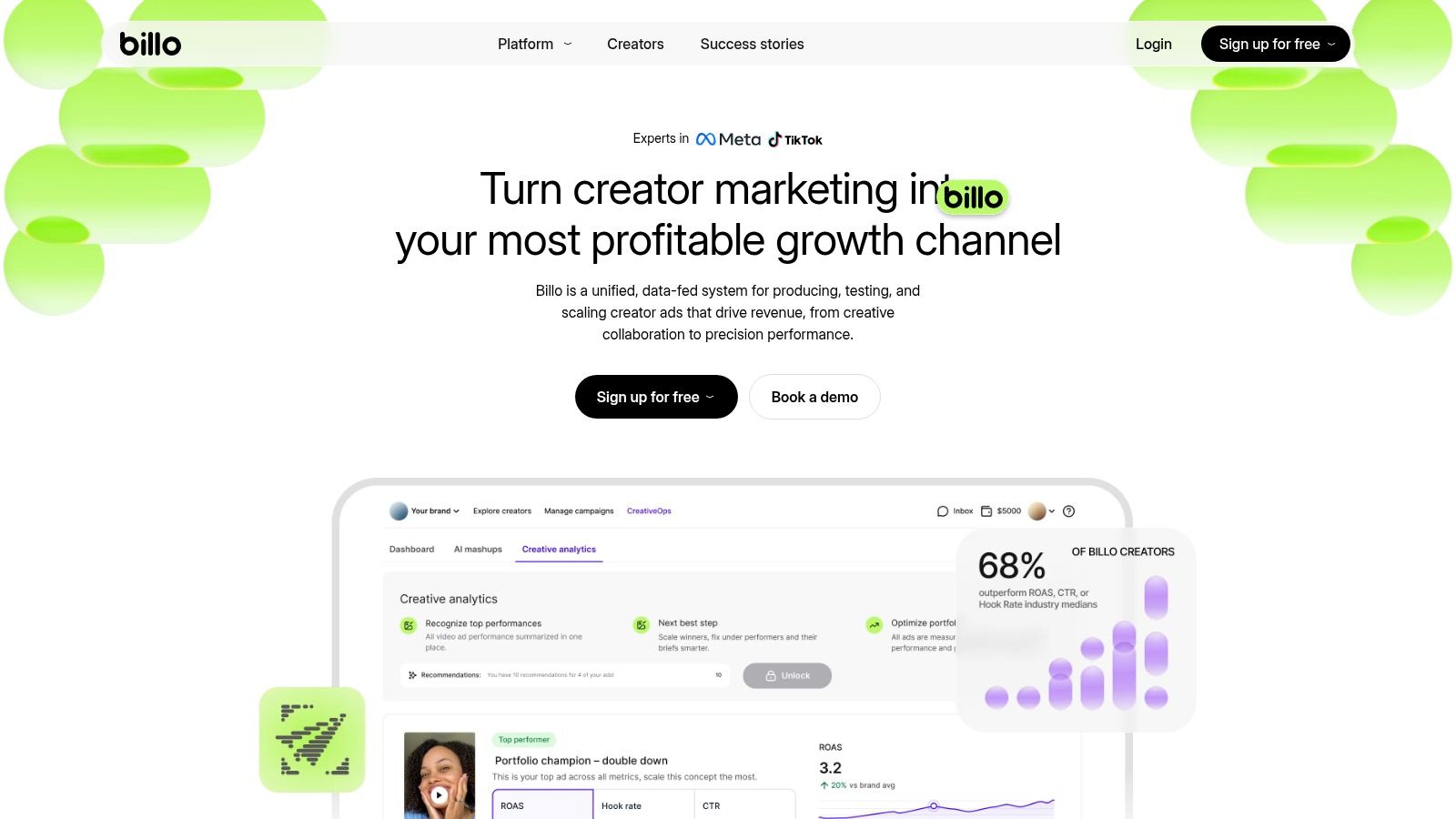
The platform’s key differentiator is its optional add-on for expert video editing, allowing brands to receive polished, campaign-ready creatives without needing in-house resources. By bundling creator fees and logistics into a single transaction, Billo significantly reduces the operational workload for marketing teams. This streamlined approach makes it one of the more accessible UGC creator platforms for direct-to-consumer brands looking to scale their video advertising efforts efficiently.
Core Platform Features
- Creator Discovery: Brands can post a task and receive applications from a pool of vetted creators or browse creator profiles to find the right fit for their products.
- Campaign Management: A managed service where brands brief Billo, ship products, and receive finished videos. The process is task-based rather than a self-service campaign dashboard.
- Payment & Tax: Upfront, all-inclusive pricing per video or via credit packages. Billo manages all creator payments, simplifying the financial process for brands.
- Analytics: Does not provide post-campaign performance analytics. Brands are responsible for tracking video performance on their own advertising and social channels.
Ideal Use Case & Limitations
Billo is ideal for e-commerce and DTC brands that need a steady stream of high-quality UGC videos for paid social ads, especially on platforms like TikTok and Instagram. The predictable pricing and optional editing service make it perfect for teams without large creative departments. However, its primary focus on video means it is less suitable for brands seeking multi-format campaigns that include static images or written reviews.
- Website: https://billo.app/
9. Cohley
Cohley is an enterprise-grade content generation platform designed for brands needing a high volume of assets at scale. It moves beyond just UGC videos to include professional photography, influencer partnerships, and text reviews, making it a comprehensive solution for large marketing teams. Its core strength is its licensing model, which grants brands perpetual usage rights for all generated content, eliminating complex and recurring rights management issues.
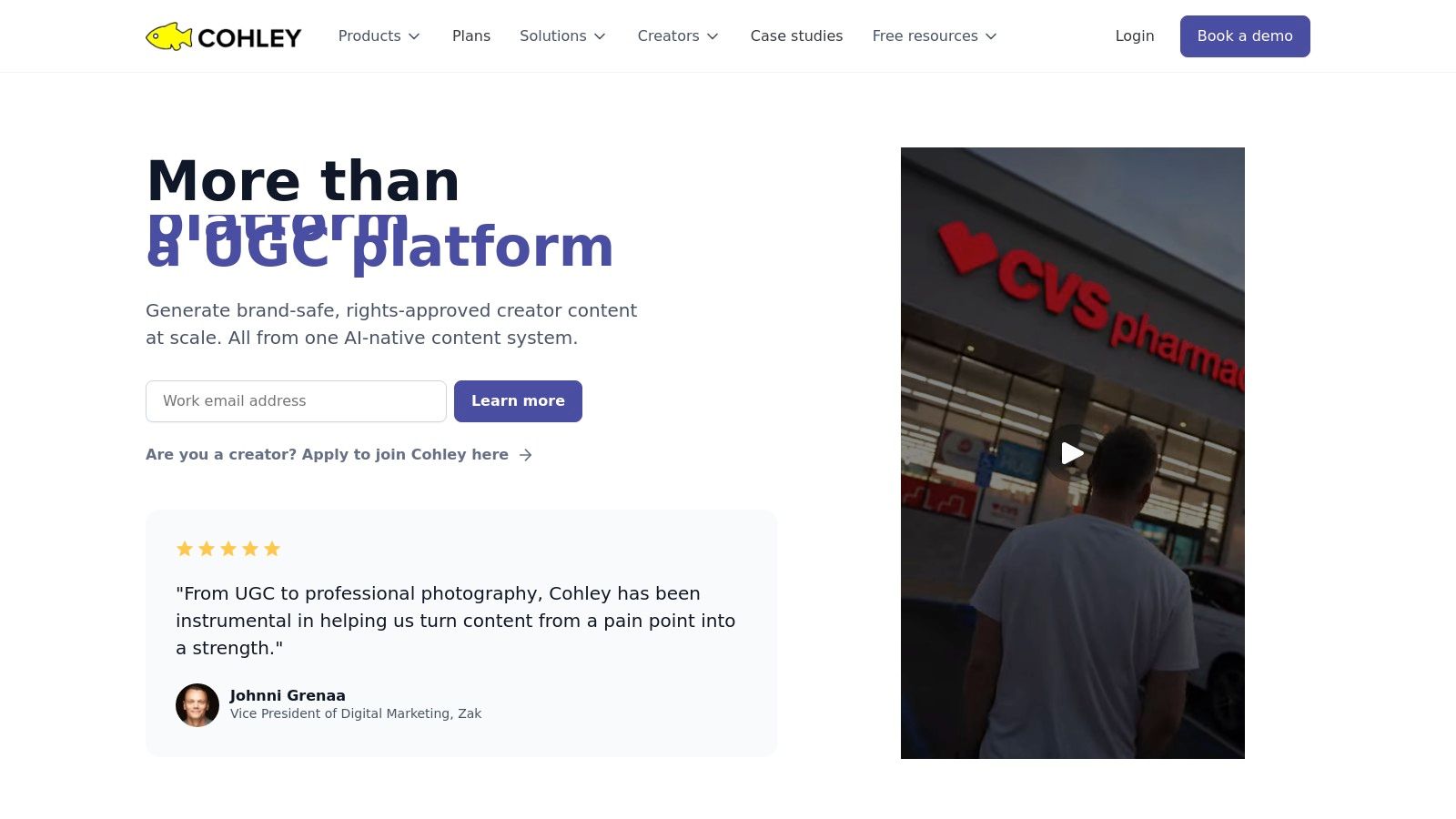
This platform is built for structured, high-output workflows. Brands can opt for fully managed services, where Cohley's team handles strategy, creator recruitment, payments, and analysis. This hands-on approach, combined with enterprise-level support, makes it one of the more robust UGC creator platforms for established companies. However, access requires a demo and onboarding, and its custom pricing model is geared toward larger budgets, often starting with a paid pilot program.
Core Platform Features
- Creator Discovery: Vetted network of creators, photographers, and influencers accessible through targeted campaign briefs.
- Campaign Management: Enterprise workflows with options for fully managed services, including strategy, recruiting, and project execution.
- Payment & Tax: All creator payments and compliance are handled directly by the platform as part of the service agreement.
- Analytics: Provides analysis and reporting on content performance and creator metrics, especially within managed service packages.
Ideal Use Case & Limitations
Cohley is best for large brands and enterprise teams that require a steady, high-volume stream of diverse, fully-licensed creative assets and value dedicated customer support. The platform's emphasis on perpetual rights and compliance is a major advantage for legal and marketing departments. Its primary limitations are the higher cost and commitment required; it's not suited for small businesses or those needing just a few quick assets, as it lacks the transactional, marketplace model of other platforms.
- Website: https://www.cohley.com/
10. Aspire (formerly AspireIQ)
Aspire is an all-in-one influencer marketing platform that excels at managing large-scale, ongoing creator programs. While not exclusively a UGC platform, its powerful suite of tools supports every stage of the creator lifecycle, from discovery and outreach to product seeding, content collaboration, and rights management. It’s designed for brands, particularly in the e-commerce and DTC space, that view creator partnerships as a core marketing channel rather than a source for one-off assets.
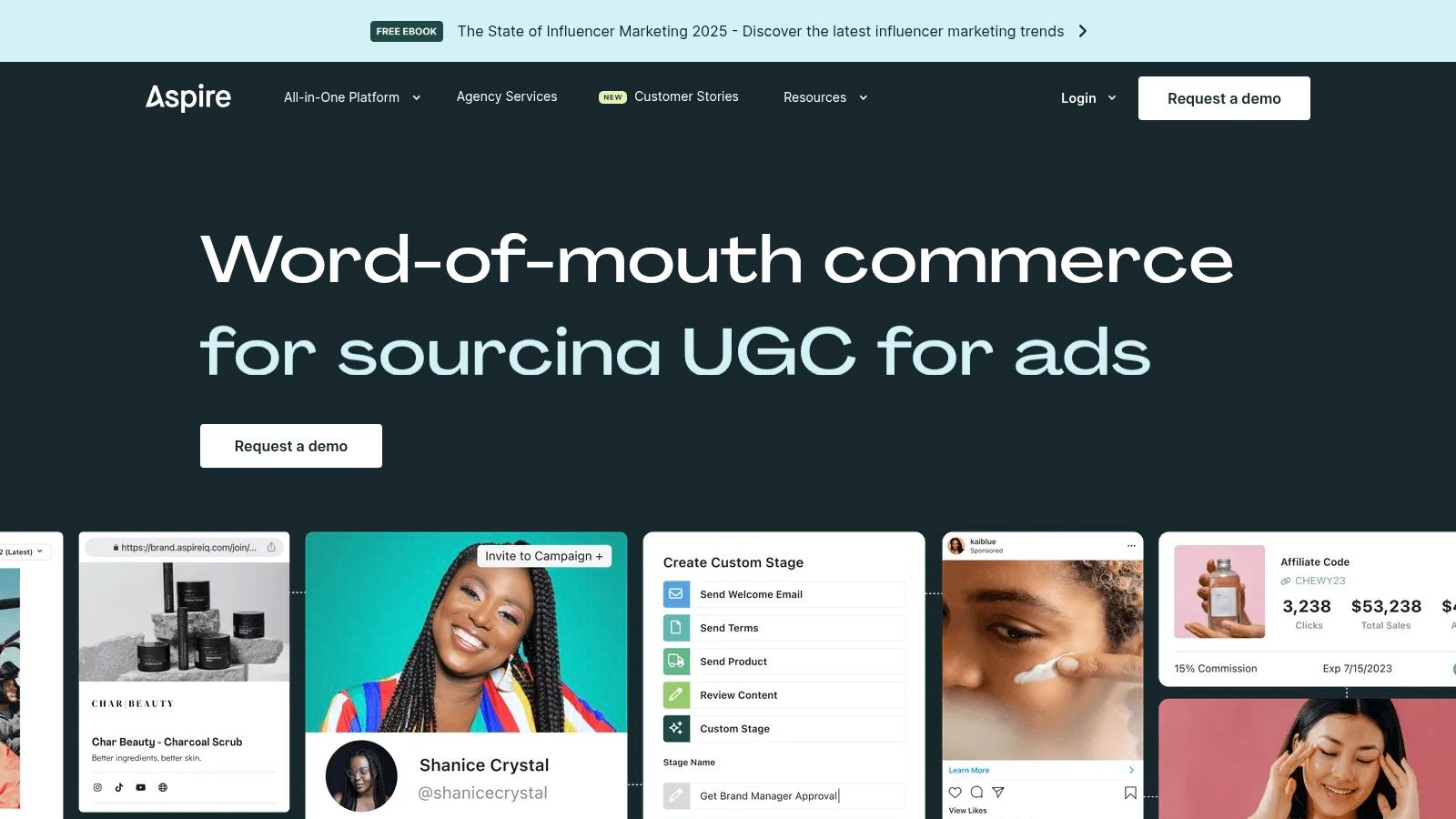
The platform’s end-to-end workflow automation is its main differentiator. Brands can build a community of creators, automate gifting campaigns, manage contracts, and house all approved UGC in a central asset library. This makes it one of the more robust UGC creator platforms for established brands looking to scale. However, its comprehensive nature comes with a higher price tag and complexity, making it overkill for businesses that only need a few pieces of content.
Core Platform Features
- Creator Discovery: A searchable database of over 20 million creators, plus tools for building inbound application funnels.
- Campaign Management: End-to-end workflow management for product seeding, affiliate programs, content approvals, and usage rights.
- Payment & Tax: Integrated payment processing and creator payment management tools.
- Analytics: Robust tracking for campaign performance, sales attribution, and content ROI. It also supports allowlisting for paid media amplification.
Ideal Use Case & Limitations
Aspire is best for mid-market and enterprise e-commerce brands running always-on influencer and creator programs. Its strength is in managing complex, multi-faceted relationships, making it easier to use UGC and influencer content together seamlessly. The main limitations are its quote-based pricing and the requirement for annual commitments, which create a high barrier to entry for smaller businesses or those with simple, short-term UGC needs.
- Website: https://www.aspire.io/
11. Pearpop
Pearpop positions itself as a creator marketing platform that bridges the gap between sourcing organic content and paid media amplification. It’s designed for brands looking to run performance-driven UGC campaigns at scale, offering a blend of a vast creator community and powerful ad-boosting tools. The platform provides full-service campaign support from an in-house team, moving beyond a simple marketplace model.
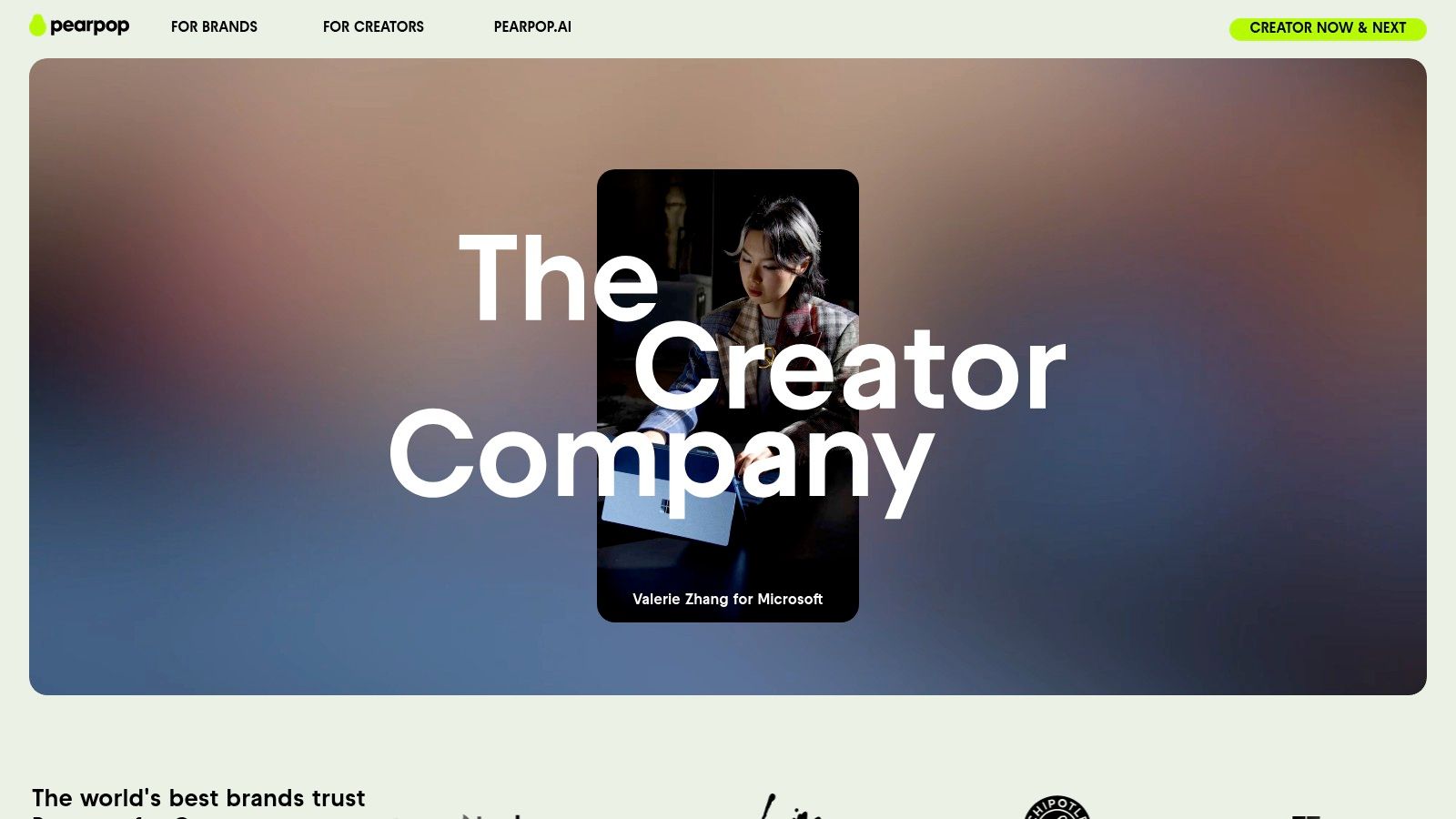
What makes Pearpop stand out is its "Boost Mode," which allows brands to turn top-performing organic creator posts directly into paid ads. This integrated approach simplifies the process of identifying winning creative and putting paid spend behind it. The platform also uses an AI vetting tool called PAIR to help assess creator and content suitability, adding a layer of data-driven selection to the process.
Core Platform Features
- Creator Discovery: Access to a large, managed creator community. Brands work with Pearpop's team to source and vet creators using their internal tools, including the PAIR AI.
- Campaign Management: A full-service model where an in-house team manages campaign strategy, execution, and reporting through a dedicated brand dashboard.
- Payment & Tax: Handled directly by the platform as part of the managed service agreement.
- Analytics: Provides full-funnel campaign support and reporting, including performance metrics for both organic and boosted content.
Ideal Use Case & Limitations
Pearpop is best for performance marketing teams and larger brands that want to integrate UGC directly into their paid social strategy and require hands-on campaign management. The ability to seamlessly boost content makes it one of the more powerful UGC creator platforms for driving conversions. The main limitations are the lack of a self-serve option and transparent pricing, as it requires sales engagement. Brands should also consider piloting a campaign, as some community feedback from the creator side is mixed.
- Website: https://pearpop.com/
12. minisocial
minisocial offers a fully managed service that connects direct-to-consumer (D2C) brands with vetted micro-influencers to produce licensed user-generated content. Instead of a self-serve marketplace, it operates on a project basis, recruiting, briefing, and managing creators to deliver a batch of ready-to-use photo and video assets. This hands-off approach is ideal for brands that want to build a UGC library without the internal overhead of campaign management.
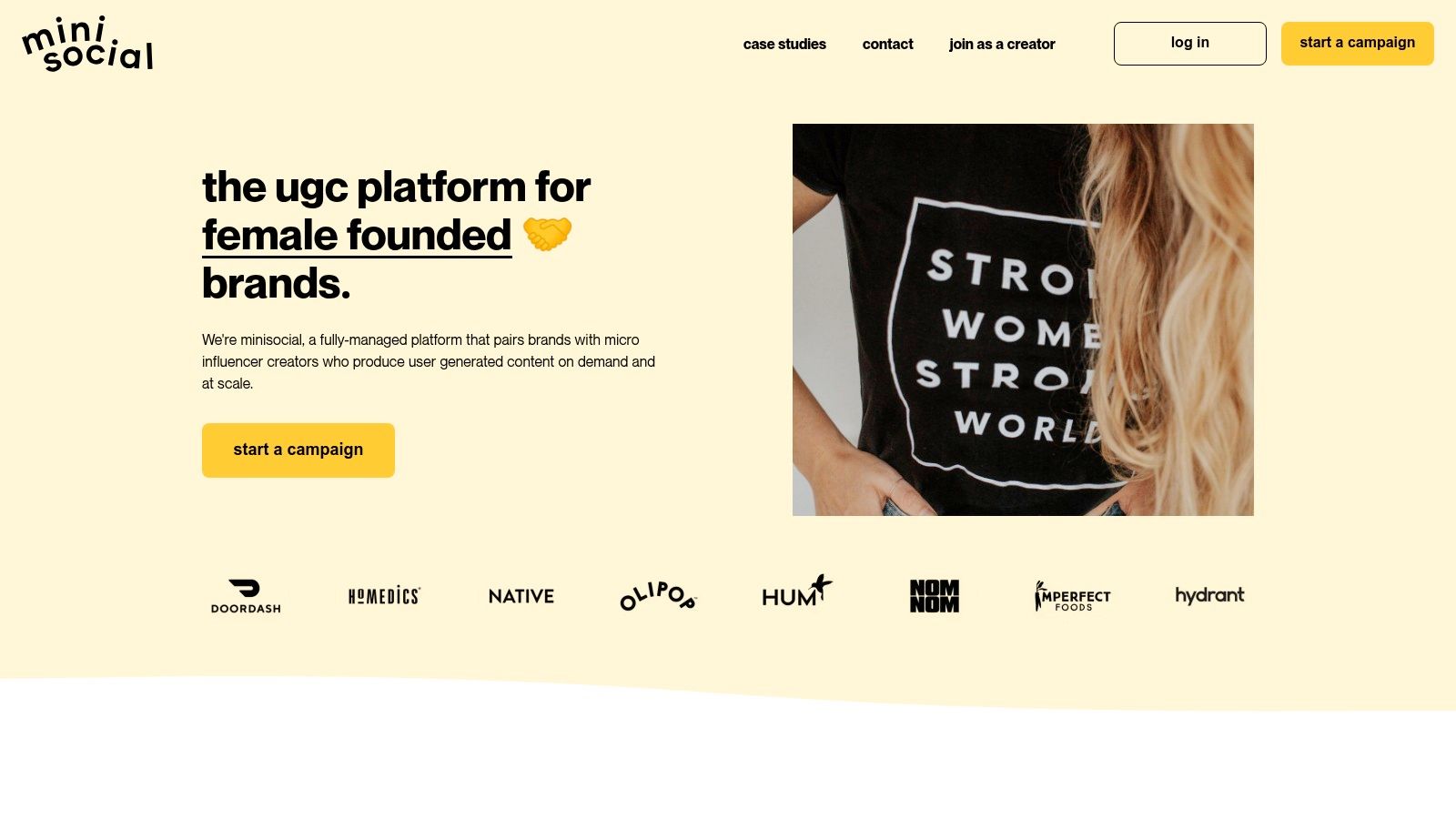
The platform’s key differentiator is its straightforward and inclusive "mini license," which covers asset usage across organic social, paid ads, web, and even print. This clarity removes the ambiguity often associated with securing usage rights. Campaigns are structured around a set number of creators (e.g., 10-25), making it one of the more predictable UGC creator platforms for content volume and budget.
Core Platform Features
- Creator Discovery: Fully managed. minisocial handles the entire recruitment and vetting process based on the brand's brief and target audience.
- Campaign Management: A completely hands-off experience. The minisocial team manages creator communication, product shipping, content collection, and final asset delivery.
- Payment & Tax: Brands pay a flat, project-based fee directly to minisocial, which then handles all creator payments and compensation.
- Analytics: No built-in analytics are provided, as the service focuses purely on asset creation and licensing rather than content performance tracking.
Ideal Use Case & Limitations
minisocial is best suited for established D2C brands that need a steady, reliable stream of high-quality, licensed UGC for marketing channels and want to outsource the entire production process. The managed service and clear licensing are major benefits. The primary limitation is the cost structure, with minimum project fees starting in the low thousands, which may be prohibitive for very small businesses or initial, small-scale tests. There is also less granular control over creator selection compared to a self-serve marketplace.
- Website: https://minisocial.com/
12 UGC Creator Platforms — Reach Comparison
| Platform | Core features | Quality / UX | Pricing / Value | Target audience | Unique selling points |
|---|---|---|---|---|---|
| REACH 🏆 | Discovery filters, centralized campaign dashboard, contracts & fast payouts | ★★★★☆ — real-time analytics | 💰 Example ~9% platform fee; custom plans | 👥 Agencies, DTC brands, creators | ✨ White-label campaigns, ROI calculator, tax compliance — 🏆Recommended |
| Fiverr | UGC gigs, filters, escrow payments, large talent pool | ★★★☆☆ — sample & rating-driven | 💰 Per-gig, low-entry pricing | 👥 SMBs, one-off tests | ✨ Fast turnaround, visible samples/ratings |
| Upwork | Job posts, proposals, contracts, hourly/fixed options | ★★★★☆ — flexible hiring UX | 💰 Hourly or fixed; platform fees apply | 👥 Brands needing flexible hires & retainers | ✨ In-platform contracts & payment protection |
| Collabstr | Marketplace, campaign posting, public price benchmarks | ★★★☆☆ — marketplace UX | 💰 Transparent benchmarks; Pro tiers | 👥 Brands/agencies wanting pricing clarity | ✨ Public UGC price benchmarks, fast applications |
| JoinBrands | Credit (JB Coins), large creator pool, monthly tiers | ★★★☆☆ — repeat-use focused | 💰 Tiered plans; platform fees 8–15% | 👥 Repeat buyers, D2C & affiliate teams | ✨ Credit model, affiliate & shipping workflows |
| Insense | Self-serve marketplace + managed services, integrations | ★★★★☆ — DIY or managed workflows | 💰 Subscription + marketplace/transaction fees | 👥 Brands wanting DIY or managed programs | ✨ Managed services, whitelisting & licensing support |
| Trend | Credit packages, full licensing, vetted creators | ★★★★☆ — productized UX | 💰 Productized credit pricing (credits → assets) | 👥 Brands scaling content libraries | ✨ Pre-negotiated rates + included licensing |
| Billo | Per-video/package purchases, payouts handled, editing add-on | ★★★★☆ — ad-ready delivery | 💰 Per-video or package pricing | 👥 Advertisers, DTC brands | ✨ Optional expert editing; bundled payouts |
| Cohley | Perpetual usage rights, managed services, enterprise workflows | ★★★★☆ — enterprise-grade | 💰 Custom enterprise pricing | 👥 Enterprise brands needing compliance | ✨ Strong rights management & customer success |
| Aspire | Discovery, gifting, asset library, allowlisting | ★★★★☆ — end-to-end for always-on | 💰 Quote-based / annual contracts | 👥 Mid-market & enterprise DTC brands | ✨ Robust tooling for ongoing creator programs |
| Pearpop | Creator roster, Boost Mode (amplify to paid), AI vetting (PAIR) | ★★★★☆ — creative + amplification | 💰 No public self-serve pricing; sales-only | 👥 Brands focused on performance & amplification | ✨ Boost Mode + AI vetting for performance UGC |
| minisocial | Managed micro-creator campaigns, licensed assets | ★★★★☆ — hands-off delivery | 💰 Project-based (starts low-thousands) | 👥 D2C brands wanting turnkey UGC | ✨ Vetted micro-influencers + mini license for multi-channel use |
Choosing the Best UGC Creator Platform for Your Needs
Navigating the landscape of UGC creator platforms can feel overwhelming, but making an informed decision is the first step toward unlocking authentic, high-impact content for your brand. We've explored a dozen powerful tools, from freelance marketplaces like Upwork to specialized platforms like Billo and all-in-one solutions like Aspire and REACH. The key takeaway is clear: there is no single "best" platform, only the one that best fits your unique needs, budget, and strategic goals.
Your choice ultimately hinges on a few critical factors. If you're a small business just starting, a platform like JoinBrands or Collabstr offers an accessible entry point. For brands focused on video ads, a service like Trend or Insense provides streamlined workflows. Agencies managing multiple clients will find the robust features of platforms like Cohley and Aspire indispensable. However, for those seeking a scalable, data-driven solution that combines powerful discovery with end-to-end management, REACH Influencers stands out as a top contender.
Making Your Final Decision
As you weigh your options, return to the core questions that define your UGC strategy.
- What is your primary goal? Are you looking for a handful of high-quality ad creatives, or do you need a continuous stream of authentic content for your organic social channels? Your objective will determine whether you need a project-based tool or a long-term relationship management platform.
- What is your budget? Be realistic about your financial commitment. Some platforms require significant upfront investment through annual subscriptions, while others operate on a more flexible pay-per-creator model. Don't forget to factor in the cost of the content itself, not just the platform fee.
- How much time can you invest? Some UGC creator platforms offer a fully managed service, taking the entire process off your plate. Others, like REACH, provide powerful self-service tools that give you complete control but require more hands-on management. Your team's bandwidth is a crucial consideration.
- What scale are you operating at? A direct-to-consumer brand needing hundreds of assets per month has vastly different needs than a startup looking for its first ten creator videos. Ensure the platform you choose can support your current volume and scale with you as your program grows.
The right platform is a strategic partner that automates tedious tasks so you can focus on building genuine community and driving results. By carefully evaluating each option against your requirements, you can confidently select one of the many UGC creator platforms available and begin building a powerful, scalable content engine that resonates with modern consumers.
Ready to take control of your UGC and influencer marketing with a platform built for efficiency and scale? REACH provides the advanced discovery, seamless campaign management, and transparent analytics you need to build a thriving creator program. Schedule a demo today to see how our all-in-one solution can help you find the perfect creators and drive measurable growth.