 Skip to content


- The Power of Combining UGC and Influencer Marketing
- Building Your Integrated Content Strategy
- Sourcing and Validating High-Impact Content
- Amplify Your Campaign Across Every Channel
- Measuring Success and Proving ROI
- Common Questions About UGC and Influencer Marketing
Having trouble really connecting with your audience and building that all-important trust? It's a common struggle. The solution isn't just one magic tactic, but two powerful ones working together seamlessly. Platforms like REACH are designed to help brands merge these strategies, providing the tools to find creators and manage campaigns that generate both polished influencer assets and authentic user content.
The best way to use UGC and influencer content together is to think of it as a cycle of trust. Influencers give your brand an aspirational boost and get the word out, while authentic user-generated content (UGC) delivers the raw, real-world proof that convinces people to buy. This blend creates a story around your brand that feels less like a sales pitch and more like a real community conversation.
The Power of Combining UGC and Influencer Marketing
The line between a regular customer snapping a photo and a professional creator is getting blurrier every day, and that's a huge opportunity for brands. You've got user-generated content on one hand—the genuine, unfiltered posts from your actual customers. On the other, you have influencer content—polished, aspirational, and created by people with loyal followers who trust their recommendations.
Each one is effective on its own, no doubt. But when you start using UGC and influencer content together, something special happens. You create a powerful engine of authenticity and reach that can seriously move the needle on your business goals. This isn't just a hunch; the numbers back it up.
Why This Combination Is So Effective
Think about this: social campaigns that weave in UGC get a 50% lift in engagement over typical branded posts. But the real magic happens when you bring customers and influencers into the mix. When people see both polished influencer content and authentic customer posts, engagement shoots up by another 28%. This strategy works because it speaks directly to the need for trust that drives today's consumers.
This approach is so effective because it meets people exactly where they are in their buying journey:
- Influencers for Discovery: They act as a megaphone, introducing your brand to new, highly-relevant audiences and building that initial spark of awareness and credibility.
- UGC for Conversion: Real customer photos, videos, and reviews provide the social proof people need to get over that final hurdle, whether it's on a product page, in an ad, or on your social feeds.
Basically, influencers start the conversation, and UGC proves the hype is real. Tools like REACH are built for this exact purpose, helping you find creators who are amazing at inspiring their communities to create and share their own content. Figuring out how to combine these two content types is a game-changer, and you can learn more about the role of user-generated content in influencer marketing to flesh out your own approach.
To get started, it's helpful to see how these two content types stack up and where their strengths really lie.
UGC vs Influencer Content: A Quick Comparison
Here’s a look at the unique strengths of each content type and why they become unstoppable when you use UGC and influencer content together.
| Attribute | User-Generated Content (UGC) | Influencer Content | Combined Strategy |
|---|---|---|---|
| Authenticity | High – seen as unbiased and genuine | Moderate – aspirational but still a paid partnership | The ultimate combo of aspirational and believable |
| Cost | Low to free (often organic or incentivized) | Varies from gifted products to high fees | A balanced, cost-effective content budget |
| Reach | Niche, but highly trusted within smaller circles | Broad, targeted reach to a large, engaged audience | Amplifies authentic stories to a massive audience |
| Conversion | Excellent for driving last-minute purchase decisions | Great for top-of-funnel awareness and consideration | Covers the entire funnel, from discovery to conversion |
| Control | Low – brands have little creative direction | High – campaigns are guided by detailed briefs | A mix of polished, on-brand assets and raw, real posts |
| Trust | High – comes from a peer-to-peer recommendation | Moderate – followers trust the influencer’s taste | Builds deep, multi-layered trust with your audience |
As you can see, they don’t compete; they complete each other. Influencer content gets people interested, and UGC seals the deal by showing them that people just like them love your product.
Building a Foundational Strategy
To really build a solid foundation, understanding how to start leveraging user-generated content for social media success is key. It all starts with recognizing that each type of content has a specific job to do. Influencers provide the megaphone, while UGC provides the authentic voice that resonates through it.
By merging the aspirational appeal of influencers with the relatable proof of UGC, brands can build a narrative that is both inspiring and believable, leading to deeper customer relationships and measurable growth.
In this guide, we'll walk you through the exact playbook for integrating these two content powerhouses across your entire campaign. From strategy and sourcing to distribution and measurement, you’ll learn how to build a content engine that practically runs itself, fueled by your most passionate creators and customers.
How to Use UGC and Influencer Content Together in an Integrated Strategy
A great campaign never happens by accident. It's the direct result of a smart, well-designed plan. So let's move past the theory and build a practical playbook for a strategy that actually merges user-generated content and influencer marketing into one powerful effort. This isn't just about getting more content—it's about building a system where every single piece works together to build trust and, ultimately, drive results.
The first move is setting goals that are crystal clear and measurable. Vague objectives like "increase engagement" just won't cut it. You need to aim for concrete outcomes that you can see and feel in your business.
A solid goal forces you to tie your content strategy directly to real business metrics. It gives every piece of content a job to do.
Define Your Campaign Goals and KPIs
Before you do anything else, you have to know what success looks like. Your goals are the North Star for every decision you’ll make, from which influencers you partner with to the kind of UGC you ask for.
Here are a few examples of strong, measurable goals to get you thinking:
- Boost Conversion Rates: Increase conversions on key product pages by 15% in Q3 by embedding authentic UGC and influencer testimonials right where people make decisions.
- Increase Brand Trust: Improve brand trust scores in post-campaign surveys by 10 points by mixing relatable customer stories with credible influencer endorsements.
- Drive Social Engagement: Increase the average engagement rate on campaign posts by 25% by getting influencers to actively encourage and re-share their followers' UGC.
Having specific targets like these gives you a clear benchmark for success. It’s how you’ll prove the ROI of your integrated efforts. Without them, you're just making noise.
This whole process is about a flow of trust. When authentic user content is amplified by a trusted influencer, it builds the consumer confidence you need to grow.
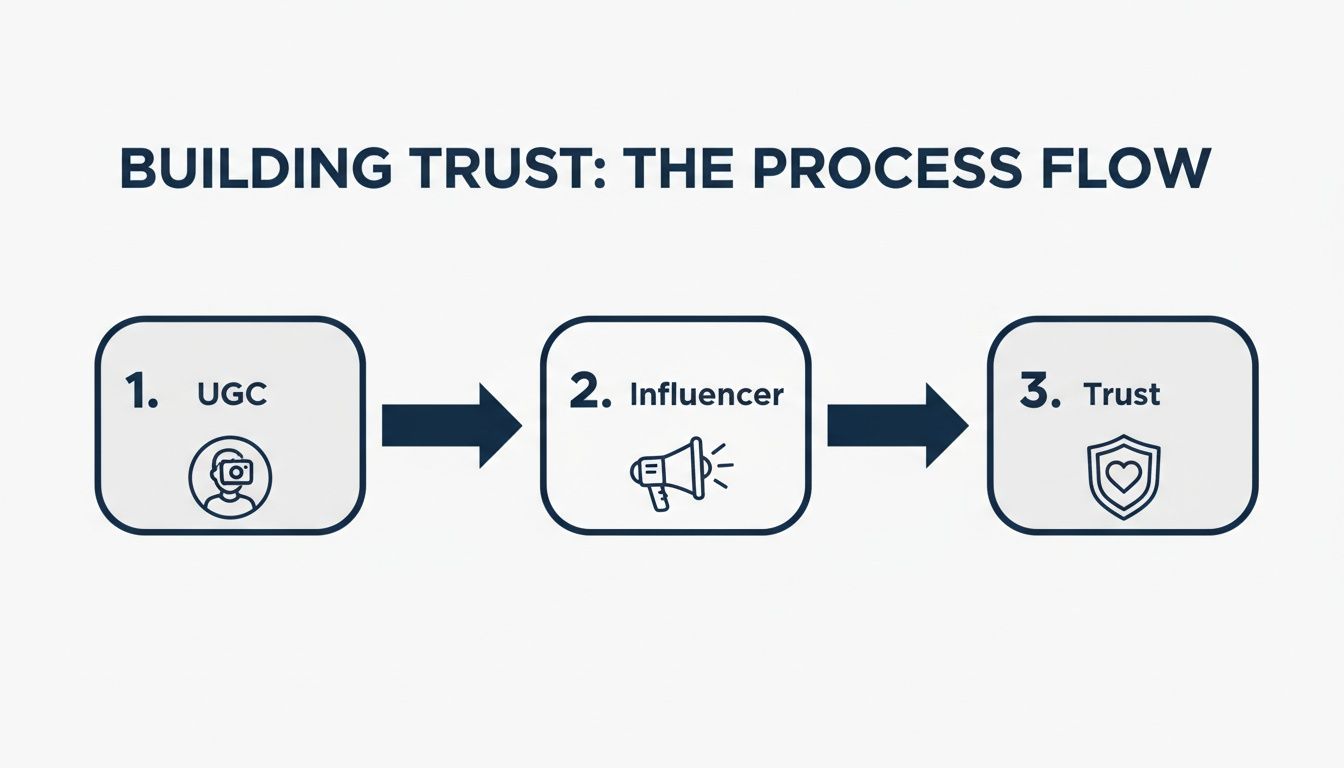
The real insight here is that neither UGC nor influencer content works in a vacuum. They create a powerful sequence that can turn a passive scroller into a confident buyer.
Develop a Compelling Campaign Theme
With your goals set, it's time to create a campaign theme that ties everything together. A strong theme acts as a creative rallying cry for both your community and your influencers, inspiring them to produce content that feels authentic while still aligning with your brand message.
Think of the theme as the creative container for your campaign. For example, a sustainable fashion brand might launch a campaign around "#WearTheChange," encouraging users to share how they style their eco-friendly pieces. This gives influencers a clear narrative to run with and customers a simple prompt for their own UGC.
The best campaign themes strike a perfect balance: they provide enough structure to keep things on-brand, but offer enough creative freedom to let authenticity shine through.
This approach ensures the content feels genuine, not scripted. If you want to go deeper on this, check out our guide on building a comprehensive user-generated content strategy that you can weave into your influencer work.
Finally, don't forget simple, clear brand guidelines. This isn't a rigid rulebook designed to stifle creativity. Instead, think of it as a helpful resource that outlines your brand’s core values, visual style, and key talking points. This ensures consistency across all the content without killing the raw, authentic vibe that makes this whole strategy work so well.
The end goal is a smooth-running machine where influencers don't just create amazing content, but also become leaders who inspire, collect, and feature UGC from their own followers, creating a self-sustaining cycle of trust and engagement.
Sourcing Content When You Use UGC and Influencer Content Together
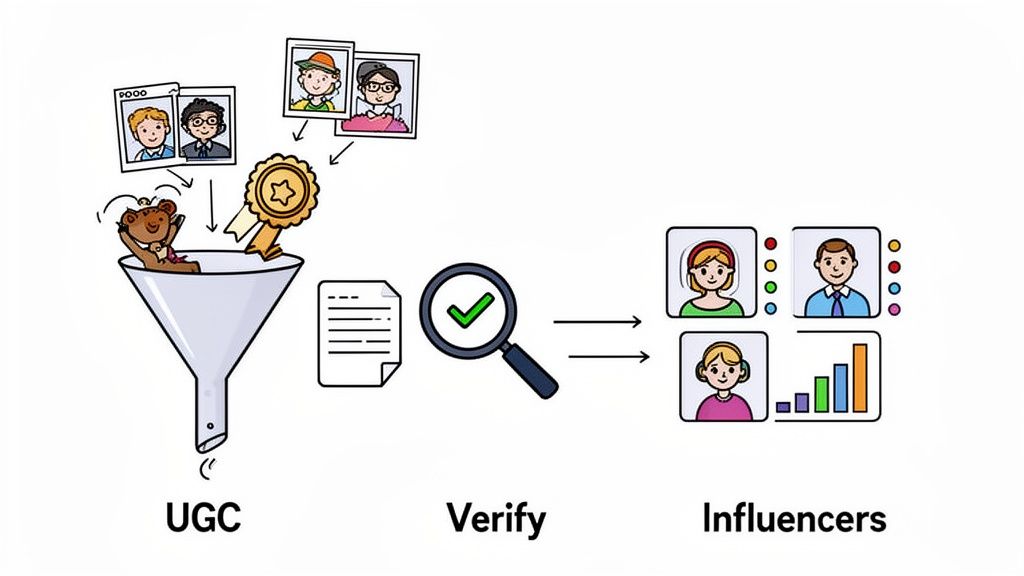
Okay, with your strategy locked in, it's time to build your content-finding machine. When you start to use UGC and influencer content together, sourcing splits into two parallel tracks. You need a way to discover all that amazing, authentic customer content, and you also need a system for finding the right influencers to work with. This is about more than just mindlessly scrolling through feeds; it's about creating a scalable, repeatable process.
The real goal here is to move from passively waiting for content to pop up and instead actively generating a steady flow of high-quality assets. Don't just park yourself on a branded hashtag and hope for the best. You need to think bigger—running creative contests, setting up dedicated submission forms on your website, or even digging into your customer support conversations for those glowing reviews.
Uncovering Authentic User-Generated Content
Finding great UGC is a lot like gold mining. Sure, you can get lucky and stumble upon a gem with a quick search, but the real payoff comes from having a reliable system. Simply hoping for brand mentions to come your way just won't cut it once your brand starts to grow.
Instead, build a few proactive channels to encourage your customers to create and share content:
- Launch a Branded Contest: Get creative and start a contest with a clear prompt and a catchy hashtag. Imagine a home goods brand running a "#MyCozyCorner" campaign, asking people to share photos of their styled spaces for a chance to win a gift card. This does more than just generate content—it builds a real community.
- Create a Submission Portal: Add a simple form to your website where customers can directly upload their photos and videos. This creates a central hub for all your UGC and makes getting usage rights squared away from the beginning a breeze.
- Monitor Customer Reviews: Keep a close eye on product reviews, support tickets, and even social media comments. A detailed, positive review can easily be turned into a powerful testimonial graphic for your social feeds.
Taking this proactive approach turns content sourcing from a tedious chore into an automated part of your marketing engine. You'll always have a library of authentic, ready-to-use assets.
Identifying the Right Influencers to Partner With
As you're building your UGC library, you also need to be on the lookout for the right creators. It's not enough to find influencers who just look like they align with your brand; you need people who are masters at starting genuine conversations within their communities. This is where a dedicated platform can be a game-changer.
An influencer discovery platform like REACH helps you look past the vanity metrics and find partners based on what actually matters:
- Audience Demographics: Does their audience line up with your ideal customer?
- Engagement Metrics: Are people actually talking in their comments section? Are they sharing the posts?
- Content Authenticity: Do they have a history of creating content that feels real and believable?
Mixing UGC with influencer marketing isn't just a gut feeling; the data backs it up. Marketers say UGC is the top trust-builder at 33%, beating out both professional and influencer content on their own. But think about this: when an influencer shares a real customer review—which 64% of consumers trust—that content becomes incredibly persuasive. On its own, UGC drives 9 times higher engagement than brand posts, and that number only goes up when it's shared by a creator people already trust. For a deeper look, you can discover more UGC statistics and insights on Backlinko.
The best influencers don't just broadcast messages; they build communities. Look for creators who actively engage with their followers' comments and encourage them to share their own experiences.
This is how you create a powerful feedback loop. Influencer content inspires more people to create UGC, which in turn gives you more authentic material to fuel all your future campaigns.
Securing Content Rights and Usage
Before you even think about using a piece of content, whether it's from a happy customer or a paid influencer, you have to get clear permission. Seriously, this step is non-negotiable. It protects your brand from a world of legal headaches down the road.
For UGC, the best way to handle this is to get explicit, written permission. When you spot a post you love, slide into their DMs or send a quick email. Be upfront about how you want to use their content (e.g., on social, your website, paid ads). It's also a nice touch to offer a small thank you, like a discount code or some store credit.
With influencers, usage rights should be spelled out in black and white in your campaign contract from day one. Define exactly how long you can use the content, which channels you can use it on, and whether you have the right to edit or repurpose their work. This kind of clarity prevents any awkward misunderstandings and keeps the partnership professional and smooth.
Amplify Your Campaign Across Every Channel
So you’ve got this incredible library of content from influencers and your own customers. What now? Just posting it once and calling it a day is a huge missed opportunity. The real magic happens when you get that content in front of the right people, everywhere they hang out.
Great content is only half the battle. A smart distribution plan is what turns those awesome photos and videos into actual sales. The goal is to weave this authentic content into every single touchpoint a customer has with your brand, creating a seamless and trustworthy experience.
When you use UGC and influencer content together, you're not just making a single ad; you're building a versatile arsenal of assets that can be deployed across your entire marketing ecosystem. Think beyond the feed.
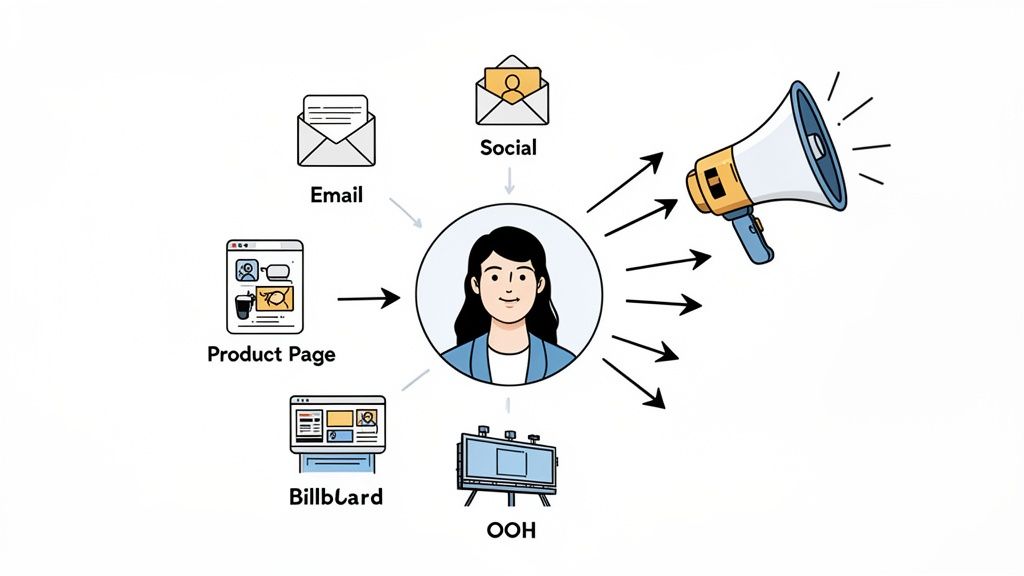
Transform Your Email Marketing with Social Proof
Your email list is pure gold—a direct line to your most engaged audience. It’s the perfect place to swap out sterile, branded graphics for something with a bit more personality.
Imagine you're launching a new product. Instead of just a polished studio shot, lead the email with a gorgeous photo from an influencer. A little further down, add a carousel of real customer photos showing off the product in the wild. This combination of aspirational (the influencer) and relatable (the customer) is incredibly effective.
Here are a few quick wins for your emails:
- Boost Clicks: Embed the first few seconds of an influencer's video review and add a button to "See It In Action" on your site.
- Build Trust: Pull a powerful quote from a customer's glowing review and feature it as a testimonial right below the "Buy Now" button.
- Save Abandoned Carts: Did someone leave an item in their cart? Send a follow-up email featuring photos of other customers loving that exact product.
This simple shift turns your emails from a sales pitch into a helpful nudge from a trusted friend.
Power Up Your Paid Social Ads
Let’s be honest: people have become experts at scrolling past ads. Polished, corporate-looking creative gets ignored. What stops the scroll? Content that looks like it belongs in their feed—content from real people.
This is where your UGC and influencer assets really shine. They feel native to platforms like Instagram and TikTok, grabbing attention because they don't scream "I'm an ad!"
Influencer whitelisting is a game-changer here. By running ads directly through an influencer's account, you get their built-in credibility paired with your powerful ad targeting. A skincare brand, for instance, could run a whitelisted ad from a dermatologist partner that features before-and-after photos submitted by actual customers. It’s the ultimate combo of expertise and real-world results.
This strategy is so powerful because it blends an influencer’s trusted voice with undeniable proof from your community. It feels less like an ad and more like an authentic recommendation.
Enhance Your Website and On-Site Experience
Your website is where the final decision happens. This is your moment to erase any last-minute doubts with a tidal wave of social proof.
Product pages are the most critical spot. Instead of just static product images, embed a dynamic gallery of UGC. Show how real people are wearing your clothes or using your home goods. This helps shoppers visualize the product in their own lives and gives them the confidence to hit "Add to Cart." According to one study, adding UGC galleries to websites can lead to a 90% increase in time on site and a 20% lift in return visitors.
To get the biggest bang for your buck, this needs to be part of a larger omnichannel ecommerce strategy that ensures your message is consistent and authentic, no matter where customers find you.
Repurpose Everything: The Content Multiplier Effect
A single high-performing piece of content shouldn't just live in one place. Your best assets can, and should, be sliced, diced, and remixed for different channels. This extends the life of your content and maximizes the return on your initial investment.
Below is a quick-start guide to help you think through how one piece of content can be repurposed into many.
Content Repurposing Ideas for Maximum ROI
This matrix gives you practical ideas for taking a single piece of content and adapting it across multiple channels to extend its life and impact.
| Original Content | Social Media Repurpose | Email Marketing Repurpose | Website/Blog Repurpose | Paid Ads Repurpose |
|---|---|---|---|---|
| Influencer Video Review (e.g., a "Get Ready With Me" video) | Post 15-second clips as Reels/Shorts. Create a carousel post with key moments. Turn a quote into a graphic. | Embed a GIF of the best moment in a campaign email, linking to the full video. | Feature the full video on the product page. Write a blog post titled "How to Get the Look" embedding the video. | Use the most engaging 5-10 seconds as a top-of-funnel video ad. Create a retargeting ad with a clip showing the final result. |
| Customer Photo (UGC) | Feature as "Post of the Week" on your main feed. Add to a "Community Looks" Story Highlight. | Include in a "What's Trending" email newsletter, showing how others are styling the product. | Add to a shoppable UGC gallery on your homepage or product page. | Use in a dynamic product ad (DPA) to show the item in a real-world context. Test against studio shots in A/B tests. |
| Customer Testimonial (Text-based UGC) | Create a branded graphic with the quote for Instagram/Facebook. Share the quote in a LinkedIn post about customer satisfaction. | Use as a powerful headline or sub-headline in a promotional email. Add to your email signature. | Create a dedicated "Testimonials" page. Sprinkle quotes throughout your product descriptions. | Use the quote as ad copy or as text overlay on a video ad for social proof. |
By thinking this way, you turn every piece of content into a workhorse that drives results across your entire marketing ecosystem. You've already done the hard work of sourcing it—now it's time to let it shine everywhere.
Measuring Success When You Use UGC and Influencer Content Together
Alright, let's get to the part that really matters: the results. After you’ve gathered all that amazing content and pushed it out across your channels, you have to prove it’s actually working. When you use UGC and influencer content together, you're building a ton of momentum, but you can only see how much by measuring it the right way.
This means we have to look past the easy vanity metrics like likes and shares. Sure, they feel good, but they don't tell the whole story or help you justify your budget for the next quarter. What we really need are metrics tied to real business outcomes that show a clear return on investment (ROI).
Key Performance Indicators for an Integrated Strategy
To get a true read on performance, you need to track KPIs that show how both types of content are working together. This isn't about looking at influencer reach on its own or just tracking UGC engagement in a vacuum. It’s about measuring their combined power.
Your tracking dashboard should zero in on metrics that tie directly back to your business goals. Here are a few I always keep a close eye on:
- Blended Engagement Rate: This is your secret weapon. Calculate the total engagement (likes, comments, shares, saves) across both the initial influencer posts and the UGC that follows. A high blended rate is solid proof that your campaign message is genuinely connecting with people.
- Conversion Lift on UGC-Infused Ads: This is a simple but powerful test. Run A/B tests on your social ads. Pit your standard, polished brand creative against ads featuring authentic UGC or whitelisted influencer content. A meaningful lift in click-throughs and conversions is the kind of hard data that proves ROI.
- Website Session Duration: When you embed UGC galleries on your product pages, are people sticking around longer? An increase in time-on-site is a strong signal of higher purchase intent.
Keeping tabs on these specific metrics helps you paint a much clearer picture of what's working and where you should be putting more of your budget.
Attributing Sales with Precision
One of the oldest challenges in marketing is figuring out which specific piece of content or creator actually led to a sale. This is where getting disciplined with your tracking links becomes non-negotiable.
UTM parameters are absolutely essential here. These little bits of code you add to your URLs let you see exactly where your traffic and sales are coming from in your analytics platform. For every single influencer, you should be creating unique UTM-tagged links to track every click and every dollar they drive.
Platforms like REACH can make this a whole lot easier. With a central dashboard, you can spin up unique tracking links for each creator and watch their performance in real-time. This doesn't just show you which influencer is driving traffic; it can show you which specific post is getting the most conversions. If you want to go deeper on this, our guide on how to measure influencer engagement and ROI breaks down the entire process.
By assigning unique tracking links to both your influencer campaigns and specific UGC initiatives (like a contest), you stop guessing and can confidently connect revenue back to every part of your strategy.
From Top Creators to Brand Ambassadors
Good measurement doesn't just justify past spending—it tells you exactly what to do next. As you look at the data, you’ll quickly spot a small group of UGC creators whose content just plain works better than everyone else's.
These people are gold. They're your future brand ambassadors.
Don't let these relationships go cold. Reach out to these top performers and bring them into a more official partnership. When you turn your most passionate customers into long-term advocates, you’re building a sustainable content engine that's incredibly cost-effective. It's a smart way to foster a loyal community that creates authentic content on an ongoing basis, fueling your marketing for years to come.
Common Questions About UGC and Influencer Marketing
Even the sharpest marketing plans hit a few snags, especially when you're weaving UGC and influencer content together for the first time. Let’s tackle some of the most common questions that pop up. This is your go-to guide for clearing up those gray areas so you can move forward with confidence.
Getting these fundamentals right is what separates a good program from a great one—one that not only works but is built to last.
How Do I Actually Get the Rights to Use Someone's UGC?
This is a big one. Getting this wrong can land you in some seriously hot water, but the right way to do it is actually pretty simple. You absolutely have to get clear, direct permission before you even think about repurposing a customer’s post. A simple tag or mention isn't enough.
Here’s the best way to handle it:
- Just Ask: Slide into their DMs or send a quick email. Start with a genuine compliment on their photo or video, then be upfront about how you’d like to use it. For example, "We'd love to feature this on our Instagram feed" or "This would be perfect for our upcoming email newsletter."
- Get a 'Yes' in Writing: For organic social sharing, a simple "Yes, go for it!" in a direct message is usually fine. But if you’re planning to use the content in a bigger way, like for paid ads, it’s smart to send them a link with simple terms they can agree to.
- Say Thanks: You don’t always have to pay, but a small gesture goes a long way. Offering a discount code, a little store credit, or a prominent feature on your page builds a ton of goodwill and makes them more likely to create content for you again.
Never just take someone’s content. A quick, polite request is all it takes to protect your brand and show your customers you respect them. It’s one of the easiest ways to turn a happy customer into a true brand advocate.
This simple process ensures your content library is built on a solid foundation of trust and legal safety.
Should I Pay for UGC or Just Wait for It to Happen Organically?
Honestly? You need both. A smart strategy uses a mix of organic and paid content because they do different jobs.
Organic UGC is the gold standard of social proof—it's content your customers create just because they love your brand.
- The good: It’s as authentic as it gets, builds a real sense of community, and is incredibly cost-effective.
- The bad: It’s totally unpredictable. You can’t control the quality, the timing, or what people create.
Paid UGC (sometimes called commissioned content) is when you pay a creator to make something for you. These aren't necessarily big-name influencers; often, they’re just everyday people who are great at making relatable content.
- The good: You get exactly what you need—high-quality, on-brief assets that still have that authentic feel. Plus, you get full usage rights.
- The bad: It costs money, and if you’re not careful with your briefing, it can sometimes feel a bit less spontaneous than the purely organic stuff.
Think of it like this: Use organic UGC as the foundation of your community engagement. Then, bring in paid UGC to fill in the gaps and guarantee you have a steady supply of top-notch creative for specific campaigns, like a new product launch or a big push in paid social.
How Can I Spot Influencers Who Are Good at Encouraging UGC?
This is a great question. Not all influencers are created equal when it comes to sparking a conversation. You have to look past the follower count and see if they're actually community builders, not just broadcasters.
Here are a few dead giveaways of a creator who knows how to get their audience involved:
- They ask questions in their captions. Do they genuinely invite their followers to share opinions and experiences?
- They feature their followers. Look to see if they regularly reshare or highlight content from their community in their Stories or on their feed.
- Their comment section is a real conversation. Is it a vibrant back-and-forth, or just a long list of "So pretty!" and fire emojis?
Using an influencer discovery platform like REACH can help you zero in on these community-builders. You can filter by engagement metrics, not just follower size, to find partners who are genuinely skilled at starting the kind of conversations that lead to a flood of authentic user-generated content.
What's the Real Difference Between a UGC Creator and an Influencer?
It’s easy to get these two mixed up, and while their content can sometimes look similar, their roles in your strategy are completely different.
- An influencer’s primary value is their audience. You work with them to reach their followers and borrow their credibility. The content they create is meant to be distributed on their channels.
- A UGC creator’s primary value is their content. You work with them to get high-quality, authentic-looking assets that you can use on your channels—think paid ads, your website, or email campaigns. Their own following might be tiny, and that’s perfectly okay.
Here’s a simple way to think about it: You hire an influencer for their megaphone. You hire a UGC creator for a ready-to-use, rights-approved piece of creative. The most powerful campaigns often use both to cover all their bases.
Ready to stop guessing and start building a content engine that truly drives results? REACH gives you the tools to find the right influencers, manage campaigns without the chaos, and actually see the ROI on your efforts. When you use UGC and influencer content together, you create an unstoppable marketing force, and REACH is the platform that brings it all together.
Book a demo with REACH today and see how our platform can supercharge your strategy.