 Skip to content


In a world saturated with content, the biggest challenge isn't just creating more, but creating smarter. Generic advice and rehashed trends no longer cut it. Brands, agencies, and creators need actionable, data-driven content creation ideas that not only capture attention but also deliver measurable results, from boosting engagement to driving sales.
This requires moving past the 'what' and diving deep into the 'how' and 'why.' Effective content today is strategic, built on the right partnerships and platforms to build authentic connections. A top influencer marketing platform like REACH Influencers is key in this new landscape, changing how brands discover and collaborate with creators. By providing advanced discovery engines, real-time analytics, and organized campaign management, REACH allows marketers to execute detailed strategies with precision. For a comprehensive guide on elevating your content strategy, explore these essential 10 Content Creation Best Practices to Master in 2026.
This guide offers 12 powerful content creation ideas designed to break through the noise, build authority, and prove ROI. Each idea is a complete strategic framework, packed with practical implementation details, real-world examples, and the insights you need to turn concepts into high-performing campaigns. Forget abstract tips; here you will find specific blueprints for success, from calculating micro-influencer ROI to orchestrating multi-platform campaigns that genuinely connect with your audience. We'll explore everything from influencer contract templates to building diverse and inclusive creator programs that reflect modern consumer values.
Table of Contents
- Micro-Influencer ROI Calculator: Proving the Value of Niche Marketing
- The Creator Economy Career Path: From Micro-Creator to Full-Time Income
- Influencer Campaign Brief Template: What Brands Need to Communicate Upfront
- Engagement Rate Deep Dive: Why It Matters More Than Follower Count
- Multi-Platform Campaign Orchestration: Maximizing Reach Across Instagram, TikTok, YouTube, and LinkedIn
- The Complete Guide to Influencer Contract Negotiations and Pricing
- Agency Growth Blueprint: Scaling Influencer Marketing Services with White-Label Solutions
- From Nano to Mega: Influencer Tier Selection Strategy by Campaign Objective
- Real-Time Campaign Analytics: Measuring Performance Beyond Vanity Metrics
- Niche Community Building Through Authentic Influencer Partnerships
- Creator Diversity and Representation Strategy: Why It Matters and How to Execute
- Seasonal and Trending Campaign Strategies: Capitalizing on Timely Opportunities
- 12-Point Content Creation Comparison
- Turn Your Ideas Into Impact with REACH
- Your Actionable Next Steps
1. Micro-Influencer ROI Calculator: Proving the Value of Niche Marketing
One of the most effective content creation ideas for brands is to build an interactive tool that directly answers a customer's core question. A Micro-Influencer ROI Calculator does just that by helping marketing managers prove the business case for working with smaller, niche creators. This tool moves beyond vanity metrics and tackles the common misconception that a larger follower count guarantees better results.

This type of content works by allowing a user to input key campaign variables, such as budget, target industry, and desired number of influencers. The calculator then processes this data to forecast potential outcomes, comparing the projected cost-per-engagement and conversion rates of a micro-influencer campaign against those of a macro-influencer campaign. By presenting clear, data-backed comparisons, it demonstrates the high engagement and conversion efficiency that partners with 10k-100k followers often deliver. For a deeper understanding of this creator tier, you can learn more about what a micro-influencer is and why they are so effective.
How to Implement This Idea
- Allow User Inputs: Create fields for users to enter their own campaign budget, average engagement rate targets, and conversion goals.
- Provide Downloadable Reports: A key feature is the ability for users to generate a PDF or CSV report. This makes it easy for them to present the findings to stakeholders and get budget approval.
- Update Data Regularly: Keep the tool relevant by updating the underlying data with fresh market rates and engagement benchmarks each quarter.
- Include a Strong CTA: Guide users to the next step. For example, add a call-to-action directing them to use a platform like REACH to find and manage the right micro-influencers for their calculated campaign.
2. The Creator Economy Career Path: From Micro-Creator to Full-Time Income
One of the most powerful content creation ideas for a brand is to map out a clear success path for its community. A "Creator Economy Career Path" guide does exactly this by documenting the realistic journey from part-time creator to a full-time professional. This content moves beyond aspirational stories and provides a tangible roadmap that addresses creators' core concerns about income stability and growth. It shows them how to build a sustainable business step-by-step.
This guide works by breaking down the creator journey into distinct stages. For each stage, it outlines typical income benchmarks, key milestones for audience growth, and specific strategies for monetizing their influence. Topics can include shifting from gifted collaborations to paid sponsorships, incorporating affiliate marketing, and eventually developing digital products. By featuring case studies and transparent income data, like those seen in reports from Creator.co, it demystifies the path to a full-time career. To succeed in this path, leveraging the right tools and platforms is crucial; for a general overview, you might want to explore the functionalities of the Saucial app.
How to Implement This Idea
- Feature Creator Case Studies: Showcase creators from different niches who have successfully grown their income, detailing their strategies and timelines.
- Provide Practical Templates: Include downloadable rate cards, media kits, and brand pitch templates to give creators actionable tools. This is a foundational step if you want to learn how to become a content creator professionally.
- Address Common Failure Points: Be transparent about potential pitfalls, such as burnout or inconsistent income, and offer solutions for how to navigate them.
- Integrate Your Platform as a Solution: Position your tool or service as a key resource for accelerating their journey. For example, demonstrate how the REACH platform helps creators find paid sponsorships that align with their career goals.
3. Influencer Campaign Brief Template: More Powerful Content Creation Ideas for Brands
Clear communication is the foundation of any successful influencer partnership. An excellent content creation idea is to offer a downloadable Influencer Campaign Brief Template, which standardizes communication and prevents costly misunderstandings. This tool provides a clear, structured framework that ensures brands and creators are aligned on every critical detail from day one, eliminating the friction caused by vague expectations.
This template works by guiding marketing managers through the essential components of a campaign brief. It includes dedicated sections for deliverables, messaging guidelines, posting schedules, key performance indicators (KPIs), payment terms, and content usage rights. By providing a comprehensive, fillable document, brands can present creators with a professional and thorough plan. This not only sets a positive tone for the collaboration but also demonstrates a commitment to operational excellence, much like the centralized campaign management tools found within the REACH platform.
How to Implement This Idea
- Offer Industry-Specific Versions: Create tailored templates for different sectors, such as fashion, tech, or fitness, to address unique needs and terminology.
- Include a Companion Guide: Add a short guide or video walkthrough that explains how to fill out each section of the brief effectively, highlighting common mistakes to avoid.
- Show Good vs. Bad Examples: Illustrate the difference a quality brief makes by showing a side-by-side comparison of a vague, poorly written brief and a clear, detailed one.
- Integrate a Strong CTA: After a user downloads the template, guide them to a logical next step. For example, add a call-to-action to use a platform like REACH to find influencers and manage the campaign you've just briefed.
4. Engagement Rate Deep Dive: Why It Matters More Than Follower Count
One of the most important content creation ideas for brands is to educate your audience on what truly matters in influencer marketing. An engagement rate deep dive does exactly this by explaining why metrics like comments and shares are more valuable than follower count. This content shifts the focus from vanity metrics to meaningful interaction, teaching brands how to identify authentic creators who drive real results.
This type of educational content works by breaking down the formula for engagement rate and contrasting it with the often-misleading nature of a large follower count. It can show how a creator with 15,000 highly engaged followers can deliver a better ROI than one with 500,000 passive ones. By providing industry benchmarks and explaining how to spot fake engagement, you empower marketers to make smarter decisions and justify their investment in niche creators.
How to Implement This Idea
- Explain the "Why": Start by clearly defining engagement rate and explaining why it is a superior indicator of an influencer's connection with their audience compared to follower numbers alone.
- Provide Benchmarking Data: Offer clear, platform-specific engagement rate benchmarks (e.g., Instagram vs. TikTok vs. YouTube). Include data for different industries to make the information more relevant.
- Teach Fraud Detection: Create a simple framework or checklist that helps marketers identify red flags like comment pods, purchased followers, or generic bot comments.
- Feature Your Tools: Showcase how a platform like REACH simplifies this entire process. For instance, our client, a leading beauty brand, used REACH’s built-in analytics to identify a creator with a 7.2% engagement rate, resulting in a 35% higher conversion rate than a macro-influencer campaign with ten times the budget.
5. Multi-Platform Campaign Orchestration: Cross-Channel Content Creation Ideas
A powerful content creation idea for any brand is to build a unified campaign that spans multiple social platforms. This approach involves more than just cross-posting; it requires tailoring content to fit the unique audience and format of each channel, from Instagram’s visual polish to TikTok’s raw authenticity. By coordinating your message across platforms, you can amplify reach and engage different segments of your audience where they are most active.
This strategy works by creating a cohesive brand story that adapts to each platform's strengths. For example, a campaign could feature a high-production YouTube video as its core asset, supported by behind-the-scenes clips on Instagram Stories, quick-cut edits for TikTok, and professional insights shared on LinkedIn. For a deeper dive into this approach, you can explore these multi-channel marketing strategies and learn how to connect with users at every touchpoint.
How to Implement This Idea
- Create Platform-Specific Playbooks: Develop clear guidelines for each platform, outlining tone of voice, content formats (e.g., Reels vs. Shorts), and creator selection criteria.
- Use a Centralized Dashboard: Employ a tool like REACH to manage influencer communication, content approvals, and performance tracking across all platforms from a single interface, which reduces administrative workload.
- Develop a Cross-Platform Calendar: Plan your content schedule to create a consistent narrative flow. For instance, tease a campaign on Instagram a day before launching the main video on YouTube.
- Diversify Your Creators: Select a mix of influencers whose primary platforms align with your campaign goals. A YouTube tech reviewer, a TikTok comedian, and a LinkedIn industry expert can all contribute to the same campaign with unique perspectives.
6. The Complete Guide to Influencer Contract Negotiations and Pricing
A powerful content creation idea that establishes authority and solves a major industry pain point is developing a complete guide to influencer contracts and pricing. This resource demystifies the complex process of negotiating with creators, moving beyond simple rate cards to address critical details like usage rights, payment structures, and market benchmarks. For many brands, navigating these discussions is a significant hurdle, making a comprehensive guide an invaluable asset.
This type of content educates your audience on fair market rates by follower tier, common contract pitfalls to avoid, and the nuances of flat-fee versus performance-based payment models. By providing templates, negotiation scripts, and examples of red-flag language, you empower marketers to secure fair and effective partnerships. This content directly addresses the administrative burden of influencer management, positioning a platform like REACH’s integrated contract and payment processing tools as the ideal solution to simplify the entire workflow.
How to Implement This Idea
- Provide Downloadable Templates: Offer downloadable contract templates and negotiation scripts that marketers can adapt for their own campaigns. This provides immediate, tangible value.
- Include Market Rate Benchmarks: Create and regularly update a database of average influencer rates categorized by niche and follower count to help users budget effectively.
- Highlight Common Pitfalls: Use anonymized case studies or examples to show common negotiation mistakes and contract disputes, along with advice on how to resolve them.
- Partner with Legal Experts: Collaborate with legal professionals specializing in media or contract law to review your content, adding a layer of credibility and ensuring the advice is sound.
7. Agency Growth Blueprint: Scaling Influencer Marketing Services with White-Label Solutions
For agencies, one of the most powerful content creation ideas is developing a strategic guide that helps other agencies grow. An "Agency Growth Blueprint" focused on white-label influencer marketing serves this exact purpose. It provides a roadmap for digital marketing agencies to add or scale influencer services under their own brand without the heavy lift of building the required infrastructure from the ground up.
This type of content demonstrates how a partner solution, such as REACH's white-labeled campaigns, can remove backend complexities. The blueprint would detail how an agency can maintain its client relationships and brand identity while a partner manages the influencer discovery, negotiation, and campaign execution. This positions the agency as a full-service provider and unlocks a new, high-demand revenue stream. By offering a clear business model, this content directly addresses a common agency pain point: how to expand service offerings efficiently and profitably.
How to Implement This Idea
- Provide Financial Models: Include templates for pricing packages and ROI projections. This gives agency owners concrete numbers to evaluate the business opportunity.
- Showcase Service Tiers: Create example service packages, such as "Starter," "Growth," and "Scale," detailing what is included at each level to help agencies visualize their own offerings.
- Detail the Onboarding Process: Clearly explain the steps for getting started with a white-label partner like REACH, from initial consultation to the first campaign launch, to reduce perceived friction.
- Offer Proposal Templates: Include downloadable templates for service proposals and client contracts. This actionable resource makes it easier for an agency to start selling the new service immediately.
8. From Nano to Mega: Influencer Tier Selection Strategy by Campaign Objective
One of the most strategic content creation ideas is developing a framework that maps influencer tiers to specific campaign goals. Instead of defaulting to the "bigger is better" mindset, this approach guides brands in selecting the right mix of nano, micro, mid-tier, macro, and mega-influencers to achieve objectives like brand awareness, lead generation, or sales conversions. It creates a smarter, more efficient marketing spend by aligning creator size with desired outcomes.
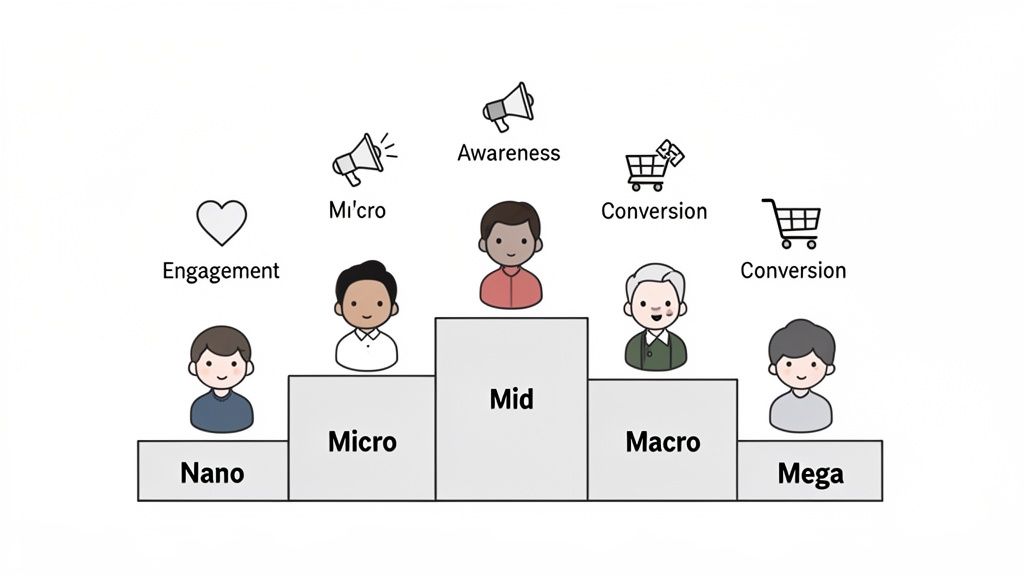
This method works by creating decision-making content, such as a downloadable guide or an interactive quiz. It educates marketers on the unique strengths of each tier; for example, nano and micro-influencers are excellent for building authentic community engagement and driving conversions in niche markets, while macro and mega-influencers are ideal for generating mass awareness quickly. This content helps brands build a balanced portfolio of creators, a process made simpler with platforms like REACH that offer advanced filters to discover high-quality talent across every tier. For more on this, check out Influencer Marketing Hub's tier analysis.
How to Implement This Idea
- Develop a Decision Tree: Create a visual flowchart that guides users to the ideal influencer tier based on their answers to questions about budget, goals, and target audience.
- Offer Budget Allocation Templates: Provide spreadsheets that suggest how to allocate a campaign budget across different influencer tiers to maximize ROI for specific objectives.
- Showcase Campaign Examples: Feature case studies of brands that successfully used a multi-tier strategy, detailing the creators they chose and the results they achieved.
- Integrate a CTA to a Discovery Tool: After educating the user, direct them to use a platform like REACH to find and vet the right influencers for their newly defined strategy.
9. Real-Time Campaign Analytics: Measuring Performance Beyond Vanity Metrics
A powerful content creation idea is to educate your audience on a complex but vital topic, establishing your brand as a guide. A detailed guide on real-time campaign analytics achieves this by showing marketers how to measure what truly matters. This content moves beyond superficial metrics like impressions and reach, focusing instead on data that drives business decisions, such as conversion rates, cost per acquisition, and audience sentiment.
Creating this content demonstrates your commitment to tangible results and helps your audience justify their marketing spend. It explains how to set up proper tracking, interpret incoming data during a live campaign, and make agile optimizations. By showcasing how a platform like REACH provides built-in, real-time click tracking and performance dashboards, you position your tool as an essential part of a data-driven marketing strategy. One client, a SaaS company, used our dashboard to pivot their messaging mid-campaign, boosting lead quality by 22% in just one week.
How to Implement This Idea
- Create Platform-Specific Guides: Develop tutorials on setting up analytics for specific platforms like Instagram, TikTok, or YouTube to provide direct, actionable value.
- Offer Free Templates: Provide downloadable analytics audit templates or dashboard mockups for different campaign goals (e.g., brand awareness vs. lead generation).
- Showcase Real Dashboards: Use anonymized screenshots or video walkthroughs of your platform’s analytics dashboard to show users exactly what insights they can gain.
- Include a Clear CTA: After explaining the importance of real-time data, guide users to a solution. For instance, add a call-to-action inviting them to explore the REACH Influencers platform to access integrated analytics and manage their campaigns effectively.
10. Niche Community Building Through Authentic Influencer Partnerships
One of the most powerful content creation ideas for long-term growth is to move beyond one-off campaigns and build a loyal community through authentic influencer partnerships. This strategy involves identifying creators who are already trusted leaders within your target niche and fostering genuine, long-term relationships with them. Instead of simply paying for posts, brands co-create value, turning influencers into true advocates who champion the brand to their dedicated following.
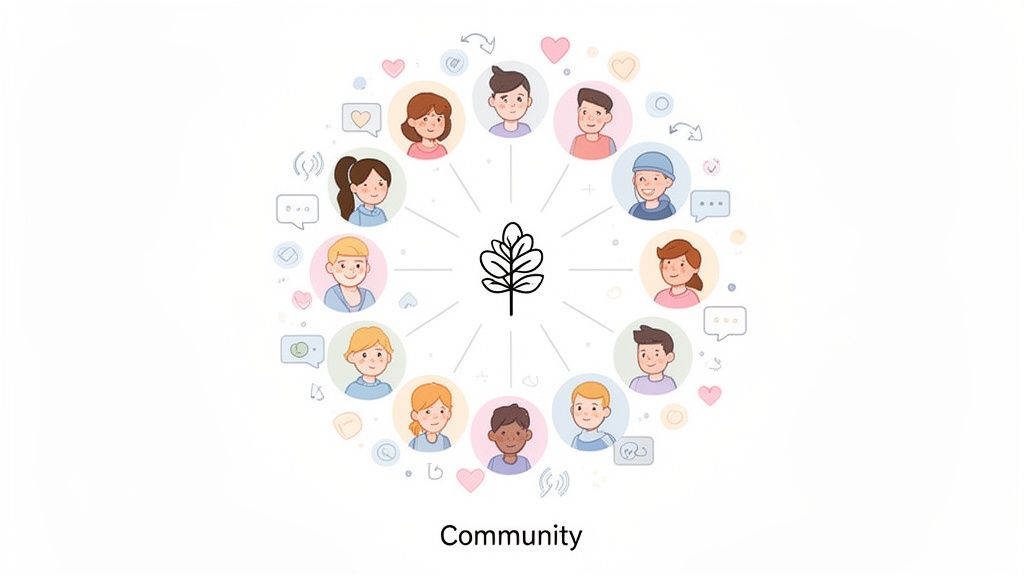
This approach works by prioritizing relationship-building over transactional exchanges. Companies like Patagonia and Glossier have excelled at this, partnering with creators who genuinely align with their brand ethos. The resulting content feels less like an advertisement and more like a trusted recommendation from a friend. For brands, this method cultivates a dedicated community, drives higher lifetime value, and produces a steady stream of authentic user-generated content. Finding these ideal partners is simplified with platforms like REACH, which allows for niche filtering to connect with creators who are genuine community leaders.
How to Implement This Idea
- Shift to a Relational Mindset: Move away from short-term campaign metrics and focus on building lasting relationships. Offer multi-collaboration contracts or ambassador programs instead of single-post deals.
- Co-Create and Empower: Involve creators in the product development or campaign ideation process. Give them the creative freedom to produce content that resonates with their audience.
- Develop Relationship Management Systems: Use templates or a CRM like REACH to track communication, contract details, and performance to maintain strong, organized partnerships over time.
- Measure Community Health: Track metrics beyond engagement, such as brand sentiment, repeat purchase rate from creator codes, and the growth of your owned brand community channels.
11. Creator Diversity and Representation Strategy: Why It Matters and How to Execute
A powerful content creation idea that builds brand relevance and fosters true community connection is to develop a formal Creator Diversity and Representation Strategy. This approach moves beyond performative gestures and embeds diversity, equity, and inclusion (DEI) into the core of your influencer marketing. It involves intentionally partnering with creators from underrepresented communities, ensuring your brand’s content reflects the diverse world your customers live in.
This strategy is about more than just ethics; it drives business performance. Brands that authentically represent a wide range of voices, backgrounds, and perspectives resonate more deeply with modern consumers. By showcasing diverse creators, you expand your market reach and build stronger brand loyalty. This approach requires a thoughtful framework to avoid tokenism and ensure partnerships are respectful and equitable. For example, outdoor brands are actively working to feature more BIPOC creators, and fashion brands are committing to showcasing a wider range of body types and abilities.
How to Implement This Idea
- Partner with DEI Experts: Collaborate with diversity and inclusion consultants to audit your current creator roster and develop an authentic, long-term strategy.
- Use Advanced Discovery Tools: A key part of execution is finding the right partners. Platforms like REACH offer demographic filtering capabilities, making it easier to discover creators from specific communities and backgrounds.
- Feature Creator Stories: Go beyond one-off posts. Create content that highlights the unique stories, perspectives, and experiences of your diverse creator partners.
- Establish a Feedback Loop: Create a process for creators and community members to provide feedback on your representation efforts, and be prepared to address past failures and learnings transparently.
12. Seasonal and Trending Campaign Strategies: Capitalizing on Timely Opportunities
One of the most powerful content creation ideas is to connect your brand to timely cultural conversations. This strategy involves planning for seasonal moments like holidays while staying nimble enough to jump on unexpected trends. It strikes a balance between meticulously planned campaigns and agile, real-time responses, ensuring your brand remains relevant and top-of-mind with audiences.
This approach works by aligning influencer collaborations with what people are already talking about, from major sporting events to viral TikTok sounds. Brands like Wendy's have mastered this with their real-time Twitter commentary, while Netflix often builds entire campaigns around cultural moments sparked by its own shows. The key is moving quickly without sacrificing quality, which requires a pre-vetted network of creators and a streamlined workflow for rapid content deployment and approval.
How to Implement This Idea
- Create a Seasonal Calendar: Develop an annual content calendar that maps out key holidays, industry events, and seasonal peaks to plan campaigns well in advance.
- Establish Trend Monitoring: Set up workflows using social listening tools and assign team members to monitor emerging trends on platforms like TikTok and X (formerly Twitter).
- Build a Fast-Response Network: Curate a list of trusted creators who are known for producing high-quality content on short notice. Platforms like REACH can help you manage these relationships and activate them quickly.
- Use Agile Briefing Templates: Create simple, flexible creative briefs specifically for trending topics. These briefs should give creators enough direction to stay on-brand but enough freedom to be authentic and timely.
12-Point Content Creation Comparison
| Content Asset | Implementation Complexity 🔄 | Resource Requirements ⚡ | Expected Outcomes 📊 | Ideal Use Cases 💡 | Key Advantages ⭐ |
|---|---|---|---|---|---|
| Micro-Influencer ROI Calculator: Proving the Value of Niche Marketing | Medium‑High 🔄 — interactive + data integration | Dev, analytics, proprietary campaign data | Strong evidence of ROI; better budget justification 📊 ⭐⭐⭐⭐ | Brands assessing micro vs macro influencer spend | Proves value with numbers; highly shareable |
| The Creator Economy Career Path: From Micro‑Creator to Full‑Time Income | Medium 🔄 — long‑form guide + case studies | Writers, creator interviews, SEO effort | Builds creator trust and acquisition; authority boost 📊 ⭐⭐⭐ | Aspiring creators; creator onboarding & retention | Emotional connection; positions REACH as mentor |
| Influencer Campaign Brief Template: What Brands Need to Communicate Upfront | Low 🔄 — template + guidance | Legal review, design, export functionality | Reduces misalignment and back‑and‑forth 📊 ⭐⭐⭐⭐ | Brands/agencies briefing creators | Immediately usable; standardizes process; lead driver |
| Engagement Rate Deep Dive: Why It Matters More Than Follower Count | Medium 🔄 — research and benchmarks | Data analysis, examples, periodic updates | Educates selection decisions; thought leadership 📊 ⭐⭐⭐⭐ | Brands vetting creator quality; agencies | Demonstrates analytics capability; practical benchmarks |
| Multi‑Platform Campaign Orchestration: Maximizing Reach Across Platforms | High 🔄 — cross‑platform strategy & templates | Cross‑platform research, case studies, templates | Improved multi‑platform ROI and coordination 📊 ⭐⭐⭐⭐ | Agencies and brands running cross‑platform campaigns | Shows centralized workflow and operational efficiencies |
| The Complete Guide to Influencer Contract Negotiations and Pricing | Medium 🔄 — legal complexity & templates | Legal experts, rate benchmarks, templates | Faster negotiations; fewer disputes 📊 ⭐⭐⭐⭐ | Legal teams, agencies, brands negotiating deals | Reduces legal risk; provides ready templates and scripts |
| Agency Growth Blueprint: Scaling Influencer Services with White‑Label Solutions | Medium 🔄 — business models & financials | Business strategy, financial models, case studies | New revenue streams; faster agency scaling 📊 ⭐⭐⭐ | Agencies adding influencer services without infra | Positions REACH as white‑label enabler; high‑value content |
| From Nano to Mega: Influencer Tier Selection Strategy by Objective | Medium 🔄 — frameworks + decision trees | Benchmarks, selector tool, examples | Smarter budget allocation; objective‑aligned mixes 📊 ⭐⭐⭐ | Brands planning tiered campaigns and budgets | Practical tier guidance; challenges “bigger is better” |
| Real‑Time Campaign Analytics: Measuring Performance Beyond Vanity Metrics | High 🔄 — technical tracking & attribution | Dev, analytics, privacy/compliance expertise | Real‑time optimization; improved CPA and attribution 📊 ⭐⭐⭐⭐ | Analytics‑focused marketers; live campaign optimization | Enables data‑driven decisions; showcases REACH analytics |
| Niche Community Building Through Authentic Influencer Partnerships | High 🔄 — long‑term relationship strategy | Community management, long‑term content, measurement | Higher LTV and organic advocacy over time 📊 ⭐⭐⭐ | DTC and niche brands focused on loyalty | Builds authentic advocates; sustained brand growth |
| Creator Diversity and Representation Strategy: Why It Matters and How to Execute | Medium‑High 🔄 — nuanced DEI guidance | DEI experts, demographic data, stakeholder buy‑in | Improved reputation and diverse audience reach 📊 ⭐⭐⭐ | Socially conscious brands; DEI initiatives | Ethical positioning; expands authentic reach |
| Seasonal and Trending Campaign Strategies: Capitalizing on Timely Opportunities | Medium 🔄 — agile planning + rapid deployment | Trend monitoring, rapid outreach network, templates | High short‑term engagement and relevance 📊 ⭐⭐⭐⭐ | Brands needing real‑time relevance; social‑first campaigns | Competitive advantage via speed; high engagement on trends |
Turn Your Ideas Into Impact with REACH
We've explored a deep roster of content creation ideas, moving far beyond generic tips to provide actionable frameworks for real-world impact. From calculating micro-influencer ROI to orchestrating complex multi-platform campaigns, the path to successful content is paved with strategy, data, and authentic partnerships. The core lesson is clear: a great idea is only as powerful as its execution. Simply having a list of potential projects isn't enough; you need a system to bring them to life efficiently and measurably.
The strategies we've detailed, whether it's building a diverse creator roster or negotiating fair contracts, highlight a recurring need for structure and organization. Without the right support, even the most brilliant content creation ideas can get bogged down in administrative tasks, lost in endless email chains, or fail due to an inability to prove their value. This is where a dedicated platform becomes a true competitive advantage, turning creative potential into business results.
Key Takeaways for Your Next Campaign
As you move from brainstorming to building, keep these central principles at the forefront of your planning. They represent the most critical shifts in modern content strategy.
- Measurement Defines Success: Move beyond vanity metrics. The real value of a campaign is understood through engagement rates, conversion data, and ROI, as highlighted in our deep dives. Your ability to track these KPIs directly influences your ability to secure future budgets and refine your approach.
- Authenticity is Non-Negotiable: Today’s audiences demand genuine connection. This is achieved by empowering creators, building niche communities, and prioritizing diversity and representation. Your brand's values must be reflected in the partners you choose and the stories you tell together.
- Structure Frees Creativity: Strong foundations lead to better creative outcomes. Using tools like a detailed campaign brief template, understanding influencer tiers, and having a clear process for contract negotiations removes friction. This allows both your team and your creator partners to focus on what they do best: creating compelling content.
Your Actionable Next Steps
Inspiration without action is just a pleasant thought. To turn these content creation ideas into tangible growth, your immediate focus should be on building a scalable, repeatable process. Start by evaluating your current workflow. Where are the bottlenecks? Are you spending more time on administrative tasks than on strategy? Are you able to confidently report on campaign performance to key stakeholders?
Answering these questions will likely reveal gaps in your current system. Juggling spreadsheets, direct messages, and payment trackers is not a sustainable model for growth. The next logical step is to centralize your entire influencer marketing operation, from discovery and outreach to campaign management and analytics, within a single, unified platform. This is the most direct path to implementing the advanced strategies discussed in this article, giving you the control and clarity needed to execute ambitious campaigns. Platforms like REACH provide the essential infrastructure to manage these moving parts, ensuring your best ideas see the light of day and deliver measurable returns.
Ready to transform your content creation ideas from a document into a high-performing campaign? REACH provides the end-to-end platform to discover authentic creators, manage relationships, and track the metrics that matter. Schedule your personalized demo today and see how our tools can bring your vision to life.
{ “@context”: “https://schema.org”, “@type”: “BlogPosting”, “headline”: “12 Next-Level Content Creation Ideas for 2026”, “name”: “12 Next-Level Content Creation Ideas for 2026”, “description”: “Discover 12 powerful, data-driven content creation ideas for 2026. This guide provides actionable frameworks for influencer marketing success, from calculating ROI to orchestrating multi-platform campaigns.”, “image”: “https://reach-influencers.com/wp-content/uploads/2026/03/content-creation-ideas-relationship-roi.jpg”, “author”: { “@type”: “Organization”, “name”: “REACH Influencers” }, “publisher”: { “@type”: “Organization”, “name”: “REACH Influencers”, “logo”: { “@type”: “ImageObject”, “url”: “https://reach-influencers.com/logo.png” } }, “datePublished”: “2024-10-26” }