 Skip to content


So, you want to learn how to become a content creator? It's a path that can turn a personal passion into a full-blown profession, but it doesn't happen by accident. The journey involves a few key milestones: first, finding your unique voice, then creating content that genuinely connects with people, building a loyal community around that content, and finally, figuring out how to make a living from it.
In a world overflowing with talent, the real question is how you stand out. Forget overnight fame; we're talking about building a real, sustainable career with a smart, repeatable strategy. This guide is your roadmap, breaking down the actual journey from start to finish. We'll walk you through how to find your voice, produce content that people actually want to see, grow an audience that sticks around, and ultimately turn your passion into a business. And when you're ready to partner with brands, platforms like REACH Influencers can connect you with opportunities that align with your unique brand.
Table of Contents
- Your Path From Aspiring Creator to Full-Time Professional
- How to Find a Niche That Actually Stands Out
- Building a Content Engine That Won't Burn You Out
- Turning Your Content Into a Real Business
- Common Questions About Becoming a Content Creator
Your Path From Aspiring Creator to Full-Time Professional
The creator economy is absolutely exploding, hitting USD 203.6 billion recently and on track to blow past USD 1 trillion by 2032, according to Goldman Sachs research.
What’s driving this? A massive shift in how we all consume media. It's why 54.9% of creators now consider this their full-time job. The opportunity is very, very real.
This simple flowchart lays out the a creator's career path perfectly.
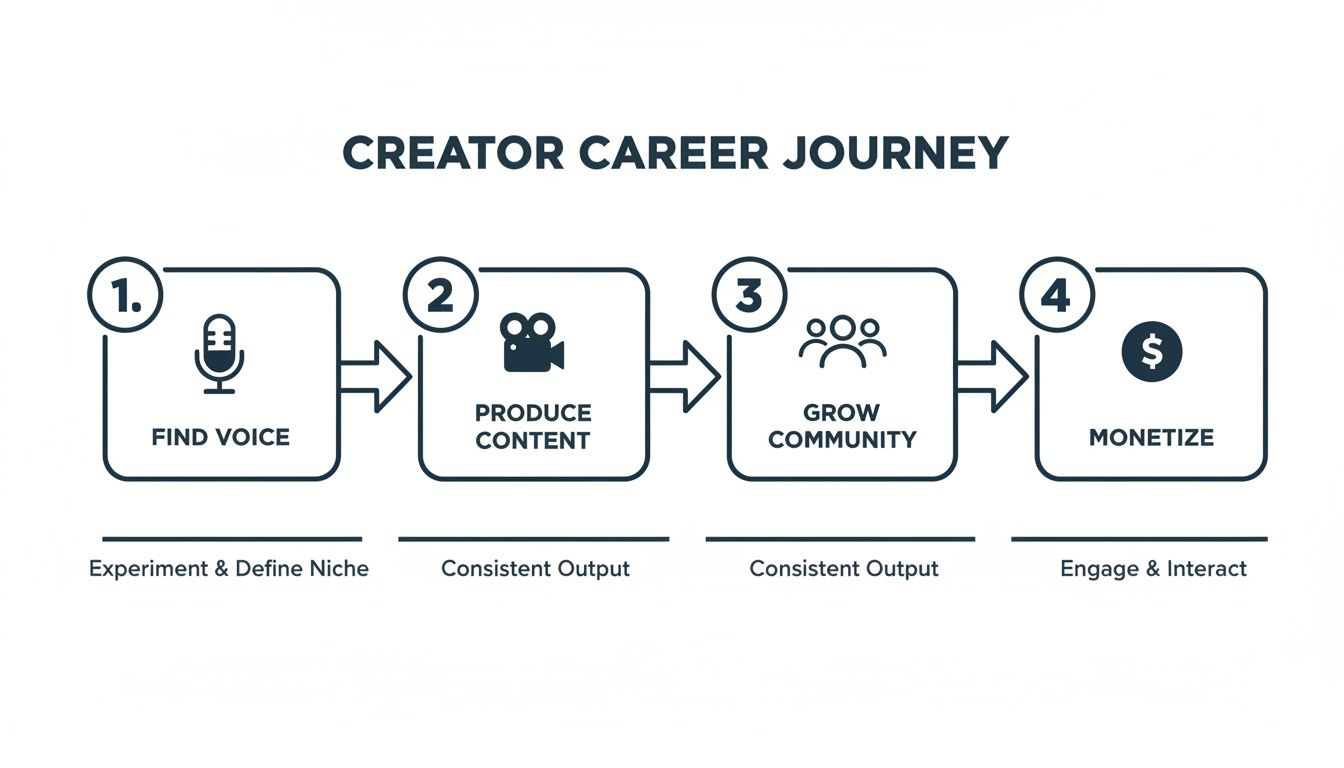
As you can see, making money is the final piece of the puzzle. It only works if you've done the foundational work of establishing your voice, consistently putting out great stuff, and taking care of your audience.
Building Your Foundation
A huge piece of this puzzle is building your personal brand. This isn't just about picking a cool username or a slick logo; it’s about getting crystal clear on what you stand for and who you're trying to reach. It’s what makes you you.
Your personal brand is what people say about you when you're not in the room. A strong brand builds trust and makes you memorable in a very crowded space, opening the door for future partnerships and opportunities.
If you want to go pro, you have to treat this like a business from day one. That means truly understanding your audience, setting real goals, and making a plan you can actually stick to.
The path from hobbyist to professional creator generally moves through a few distinct phases. This table breaks down what that looks like.
The Content Creator Career Stages
| Stage | Primary Focus | Key Goal |
|---|---|---|
| Discovery | Finding your niche and defining your brand identity. | Establish a clear and unique voice. |
| Production | Developing a consistent content creation workflow. | Publish high-quality content on a regular schedule. |
| Growth | Building and engaging with your community. | Grow your audience and increase engagement rates. |
| Monetization | Exploring and securing revenue streams. | Create a sustainable and profitable business. |
Think of these stages not as a strict checklist, but as a natural progression. You’ll find yourself moving back and forth between them, but understanding the core focus of each one helps you know what to prioritize and when.
How to Find a Niche to Become a Content Creator Who Stands Out
"Just follow your passion" is probably the most common advice given to new creators. It’s a nice thought, but passion alone won't build a sustainable career. The real starting point for learning how to become a content creator is finding that sweet spot where three things overlap: what you genuinely love, what you’re actually good at, and what people are searching for.
Succeeding in a crowded space isn’t about shouting the loudest; it’s about having the clearest message. Your niche is that specific corner of the internet where you become the go-to person for a very specific group.
Uncovering Your Niche With a Mind Map
Before you even think about algorithms, grab a pen and paper. Seriously. Start a mind map with "My Interests & Skills" at the center and branch out with every single topic you enjoy or know something about.
Don't hold back. Jot down everything from "vintage video games" to "baking sourdough" or even "project management software." Once it's all on paper, look for connections. Maybe your love for "hiking" links to "landscape photography," which then branches into "photo editing tutorials." This simple exercise can spark some truly unique content ideas that blend your passions in a way no one else is doing.
Validating Demand With Keyword Research
Okay, you have a few potential niches. Now it’s time to find out if anyone else cares. You don't need to splurge on expensive tools just yet. Free resources like Google Trends or the auto-complete suggestions in the YouTube and Pinterest search bars are goldmines.
Start typing in your main topics. If you’re exploring "home organization," you might see phrases like "small apartment organization hacks" or "decluttering for busy moms" pop up. Those aren't just suggestions; they are direct insights into what real people are desperately searching for. This helps you narrow a huge topic down to a specific, high-demand niche.
The goal isn't just to find a topic, but to find a problem you can solve for a specific audience. A broad "fitness" channel is tough to grow; a channel focused on "30-minute workouts for remote workers" solves a clear problem for a defined group.
Analyze the Competition to Find Your Gap
Next up, do a little digital sleuthing. Search for successful creators in your potential niche. The point isn't to copy them—it's to find what they're not doing. That's your opening.
- Content Gaps: Are all the top videos long and serious? Maybe there's a huge opportunity for short, funny, and informative content. Do they only cover beginner-level stuff? You could swoop in and become the expert for intermediate or advanced fans.
- Audience Gaps: Take a look at who they're talking to. If every big name in "financial advice" is targeting millennials, there could be a massive, underserved audience of Gen Z students looking for someone who speaks their language.
Finding this gap is everything. For instance, a fitness creator might see a million high-intensity workout videos but notice a lack of content for post-natal recovery. That specific focus—post-natal fitness for new moms—is a powerful niche because it serves a dedicated audience with a very real need.
Create Your Ideal Audience Persona
You can't make content that resonates if you don't know who you're talking to. This is where an audience persona comes in. It's basically a fictional character representing your perfect viewer, and it makes your content creation process so much easier.
Give this person a name, a job, and most importantly, a list of their struggles and aspirations.
- Name: Marketing Maria
- Age: 28
- Job: Social media manager at a startup.
- Problems: She's completely overwhelmed by new social media trends and feels like she can't keep up. She also has a tough time proving the ROI of her work to her boss.
- Goals: She wants to feel confident in her strategy, create content that actually gets results, and maybe start her own freelance business one day.
When you have Maria in mind, every piece of content has a laser-focused purpose. You're no longer just making a video about "Instagram Reels tips." You're making a video that helps Maria save time and finally impress her boss. That kind of focus is what builds a loyal community and eventually attracts brands who want to reach that exact person.
Building a Content Engine That Won't Burn You Out
A great idea is just the spark. The real work of a successful content creator lies in building a system—a creative engine that hums along in the background, so you can stop scrambling and start creating. This is how you shift from being a hobbyist to a pro.
Without a solid workflow, you're always chasing the next idea, a surefire recipe for burnout. A structured process doesn't kill creativity; it gives it a playground to thrive in. It’s the difference between waiting for a lightning bolt of inspiration and knowing how to build a generator.
Find Your Three to Five Core Content Pillars
Stop staring at a blank page for every new post. Instead, define three to five content pillars—these are the big, overarching themes you'll return to again and again. Think of them as the main sections of your own personal magazine.
Let's say you're a creator focused on sustainable living. Your pillars might look something like this:
- Zero-Waste Swaps: Showing off and reviewing eco-friendly products.
- DIY Projects: Step-by-step guides for making things at home to cut down on waste.
- Ethical Brand Spotlights: Putting the spotlight on companies that walk the talk.
- Sustainable Habits: Simple, practical tips for weaving eco-friendly choices into daily life.
Suddenly, brainstorming isn't so scary. When you feel stuck, you just have to ask, "What's a cool idea for my 'DIY Projects' pillar this week?" This simple shift keeps your content laser-focused and consistently signals your expertise to your audience.
Map It All Out with a Content Calendar
Your content calendar is your command center. It's more than just a schedule; it’s a strategic map that lets you plan ahead, stay consistent, and sync up your content with holidays, trends, or product launches. You don’t need anything fancy—a Google Sheet or a free board on a tool like Trello or Asana works wonders.
A well-kept content calendar is the ultimate antidote to creator burnout. It transforms the daily chaos of finding ideas into a calm, organized process, giving you the space to batch your work and get your life back.
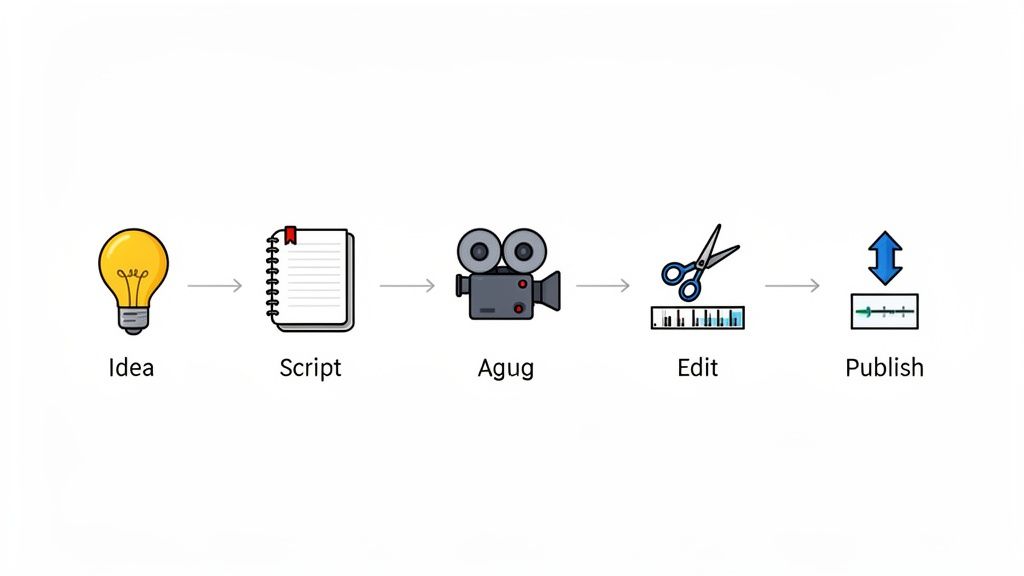
When you plan your content a few weeks—or even a month—out, you can start working smarter, not harder. You could spend one day scripting all of your videos for the week, the next day filming them all, and another day just for editing. This "batching" technique is a game-changer for productivity compared to the frantic start-to-finish dash for a single post every day. If you need a hand getting set up, check out our guide on how to create a content calendar that works for you.
Pick the Right Tools for Your Budget and Workflow
Getting your hands on professional-grade production tools has never been easier or cheaper. With the creator tools market projected to hit USD 53.11 billion by 2031, you have a ton of options at your fingertips, many of them completely free.
Here’s a quick breakdown of some of the best tools to get you started, from freebies to pro-level software:
| Stage | Free & Low-Cost Tools | Professional Tools |
|---|---|---|
| Planning & Scripting | Google Docs, Notion, Trello | Final Draft, Scrivener |
| Video & Photo Editing | CapCut, Canva, DaVinci Resolve | Adobe Premiere Pro, Final Cut Pro |
| Graphic Design | Canva, Figma | Adobe Photoshop, Illustrator |
| Publishing & Scheduling | Buffer (Free Plan), Later (Free Plan) | Sprout Social, Agorapulse |
My advice? Start with the free stuff. Your smartphone, a free editing app like CapCut, and some good natural light are honestly all you need to create amazing content right out of the gate.
Once you start landing brand deals, a platform like REACH Influencers becomes an indispensable part of your workflow. Instead of getting bogged down in endless email threads for approvals, REACH gives you a central hub to submit content, get brand feedback, and track all your deliverables. It keeps your projects on track and your deadlines met, so you can spend less time on admin and more time doing what you love—creating.
Grow Your Audience and Community
You’ve hit publish. That’s a huge win, but now the real adventure begins: connecting with people and turning them from casual viewers into a real community. This is where you shift from just making content to building a sustainable career as a creator.
It's tempting to chase viral trends, but long-term success isn't built on a one-hit-wonder. It’s built on genuine connection and a loyal audience that shows up for you again and again.
Play by the Platform's Rules
Every social media platform has its own unwritten rules and personality. The strategy that crushes it on TikTok might fall completely flat on YouTube. You have to learn the native language of each platform you're on.
- On YouTube, SEO is your superpower. Think like your audience. What terms are they typing into the search bar? Weave those keywords into your titles, descriptions, and tags to help your videos get discovered.
- For Instagram and TikTok, hashtags are your friend. The right mix of popular, niche, and trending hashtags can get your content in front of thousands of new eyeballs. Short-form video is king here, so lean into Reels and TikToks to reach people outside your existing followers.
The goal isn't just to cross-post; it's to adapt. Tailor your content to fit the vibe and expectations of each platform's audience.
Spark Conversations, Not Just Likes
Forget vanity metrics. Real growth comes from real conversation. Things like comments, shares, and saves are powerful signals to the algorithms that your content is worth showing to more people. Even more importantly, a highly engaged audience is exactly what brands look for in a partner.
Here are a few dead-simple ways to get the conversation started:
- Ask a question. End your captions or videos with a direct question that invites people to share their own experiences.
- Use polls and quizzes. Instagram Stories make this incredibly easy. It's a low-stakes way for people to engage and for you to learn what they care about.
- Actually reply to comments. Don't just drop a heart emoji. Ask a follow-up question or add to their thought. It shows a real person is on the other side of the screen.
A true community isn't built overnight from a single viral video. It's built brick-by-brick through hundreds of small, meaningful interactions. Every thoughtful reply and genuine answer forges a stronger bond with your audience.
If you’re ready to go deeper on this, our guide on how to build an online community is packed with more advanced tactics.
Team Up to Grow Faster
Collaborating with other creators is one of the most effective shortcuts to growth. It’s a classic win-win: you introduce your audience to someone new they might love, and they do the same for you.
Look for creators in your niche who are at a similar point in their journey. Don't waste your time DMing the biggest names in the game. Instead, build relationships with your peers. Genuinely engage with their content, support what they're doing, and then pitch a collaboration idea that benefits both of you.
Platform-Specific Growth Tactics
To put this all into perspective, let's break down how these growth levers work in the wild. Each platform rewards different behaviors, so you need a tailored game plan.
| Platform | Primary Growth Lever | Key Engagement Tactic |
|---|---|---|
| YouTube | SEO & Watch Time | Create a series of videos that encourages binge-watching and community discussion in the comments. |
| Reels & Hashtags | Use interactive story features like Q&As and polls to create daily touchpoints with your followers. | |
| TikTok | FYP Algorithm & Trends | Jump on relevant trends and use trending audio to boost your chances of landing on the For You Page. |
At the end of the day, lasting growth comes down to two things: consistently providing value and building real human connections. If you put your audience first, the numbers will take care of themselves.
Turning Your Content Into a Real Business
Once you've nailed down a consistent workflow and started building a real community, it's natural to think about the next step: turning this passion project into a proper business. This is where the journey of learning how to become a content creator gets serious, moving from a creative outlet to a strategic career. It's not just about getting paid; it’s about building a sustainable, long-term business.
This is the point where you graduate from one-off gigs to building a diverse portfolio of income streams. The most successful creators I know never rely on a single source of money. They're smart about it, combining multiple monetization methods to create a safety net that protects them from the whims of algorithm changes and market shifts.
Building Diverse Income Streams
The creator economy runs on a whole menu of monetization models, and the savviest creators mix and match them to build a stable income. While brand deals get all the attention, they’re just one piece of a much larger puzzle.
Here are the most common paths creators take:
- Brand Sponsorships: The classic model. A brand pays you to feature their product or service in your content. Simple and effective.
- Affiliate Marketing: You earn a commission when someone in your audience buys something using your unique link or discount code. It's a great way to earn passively from products you already use and love.
- Advertising Revenue: Platforms like YouTube will split the ad revenue with you from views on your videos. It can take a while to build up, but it becomes a steady source of income over time.
- Selling Your Own Products: This is where you take full control. Think digital products like ebooks and presets, or even physical merch like t-shirts and mugs.
- Offering Services: Your expertise is valuable. You can offer coaching, consulting, or freelance creative services based on the skills you've developed.
Diversifying your revenue isn't just a good idea; it's essential. Recent data shows that creators are earning the bulk of their revenue—59%—from sponsored content. Platform payouts (24.4%) and affiliate marketing (8.2%) follow behind. But it's important to keep expectations in check: only 12% of full-time creators earn more than USD 50,000 a year.
Mastering the Art of Brand Partnerships
For most creators, landing that first brand deal feels like a huge win. But how do you actually make it happen? Firing off cold DMs and emails often feels like shouting into the void. The secret is to shift your mindset and position yourself as a valuable partner, not just another creator with their hand out.
A great brand partnership is a two-way street. The brand gets authentic access to a highly engaged audience, and you get to work with a company you genuinely believe in. The best collaborations feel like a natural part of your content, not a jarring commercial break.
Before you even think about outreach, get your house in order by creating a professional media kit. This is your creator resume—a one- or two-page PDF that shows off who you are, your niche, your audience demographics, key stats, and examples of your best work. A polished media kit signals to brands that you mean business.
Finding and Landing Your First Brand Deals
Instead of sitting back and waiting for brands to discover you, it's time to get proactive. This is where platforms like REACH Influencers can be a game-changer. They're built to be matchmakers, connecting creators directly with brands and agencies that are actively looking for partners.
The REACH discovery engine lets brands filter for creators based on niche, audience location, engagement rates, and more. This means you’re no longer a needle in a haystack. You become discoverable to companies who are already searching for a creator just like you. For example, a travel creator focused on sustainable tourism can be easily found by an eco-friendly hotel chain looking for an authentic partnership. It's a far more efficient way to professionalize your monetization than just crossing your fingers and hoping for the best.
Once you're on the platform, the REACH dashboard makes the entire campaign process feel effortless.
- Streamlined Contracts: Forget the endless back-and-forth over confusing legal docs.
- Clear Deliverables: You'll know exactly what content is required and when it's due.
- Secure Payments: Get paid on time, every time, without the hassle of chasing invoices.
- Campaign Reporting: Easily track your performance and show brands the real-world impact of your collaboration.
As you get serious about turning your content into a career, mastering monetization is non-negotiable. You can learn more about securing lucrative partnerships by understanding how to get brand deals and impress sponsors.
Ultimately, building a business as a creator means treating it like one. By diversifying your income and using professional tools to manage your partnerships, you'll be laying a solid foundation for long-term success. If you're ready to dive deeper, check out our complete guide on how to monetize your content for even more strategies.
Common Questions About Becoming a Content Creator
Diving into the world of content creation is exciting, but let's be real—it also comes with a lot of questions. It's totally normal to feel a bit uncertain when you're starting something new. Getting some honest, straightforward answers can make all the difference, giving you the confidence to move forward.
Here, we'll tackle some of the biggest concerns that pop up for aspiring creators.

How Much Can a New Content Creator Realistically Make?
I'm not going to sugarcoat it: you probably won't get rich overnight. For most people starting out, the first earnings are small. Think trickles of income from affiliate links or maybe a small, one-off collaboration with a brand. It’s a slow burn that demands patience and a long-game mindset.
But stick with it. As your audience and engagement grow over that first year or two, your financial picture can change dramatically. You'll open the door to more consistent income streams like YouTube ad revenue, bigger sponsorships that pay hundreds or even thousands of dollars, and maybe even launching your own products.
My best advice? Diversify your income from day one. Never put all your eggs in one basket. Your real goal is to build a strong, loyal community—that's the ultimate asset that brands and audiences are willing to invest in.
What Is the Bare Minimum Equipment I Need to Start?
You almost certainly already have what you need to get started: a modern smartphone. Seriously. The camera on your phone is more than good enough for your first year of creating content. It's a classic rookie mistake to think you need a ton of expensive gear to succeed.
Before you even think about buying a fancy camera, focus your budget on two things that will have a much bigger impact:
- A good microphone: Clean, crisp audio is a non-negotiable. I'd argue it's even more important than 4K video. Bad sound will make people click away instantly, no matter how good your video looks.
- Basic lighting: You don’t need a full-blown studio. A simple ring light or a single softbox can make your content look worlds more polished and professional.
Starting simple lets you focus on what really counts: your message and your content. You can always upgrade your setup later as your channel starts to grow and bring in some cash.
How Do You Deal With Negative Comments and Burnout?
Putting yourself out there online means making yourself vulnerable, and that can be tough. When the negative comments roll in, the first thing to do is learn to tell the difference between constructive feedback and pure hate. Block the trolls without a second thought. Engaging with them just adds fuel to the fire.
That said, if you start noticing a pattern in the more constructive comments, take a step back. It might be a genuine opportunity to make your content even better.
To sidestep burnout, you absolutely have to create a sustainable content schedule. It is far better to post one amazing video every single week than to pump out daily content for a month only to vanish for the next six. Schedule breaks. Protect your mental health. This is a marathon, not a sprint, and your well-being is your most important asset.
How Long Does It Really Take to See Growth?
There's no magic number here, but having a realistic timeline is key to not getting discouraged. You should expect to put in consistent, focused work for at least six to 12 months before you start to see any real, meaningful traction.
Growth is almost never a smooth, upward line. It’s usually a series of long, flat plateaus followed by sudden bursts of progress. The creators who make it in the long run are the ones who keep showing up, even during those quiet months when it feels like nobody is watching.
Stay focused on your analytics, learn what's resonating with your audience, and engage with every single person who supports you in those early days. In this game, patience is just as important as passion.
This guide has shown you how to become a content creator by finding your niche, building a content system, growing an audience, and monetizing your work. The next step is to put these strategies into action.
Ready to professionalize your creator journey and connect with top brands? REACH Influencers provides the tools you need to manage campaigns, secure payments, and grow your business. Find your next partnership at https://reach-influencers.com.