 Skip to content

In today's crowded digital landscape, simply having a social media presence isn't enough. True success lies in a strategic, data-driven approach that turns followers into loyal customers and brand advocates. These are the best practices for social media that top-performing brands, agencies, and creators use to drive measurable growth, build authentic communities, and achieve a clear return on investment. Without a clear plan, even the most creative content can fail to deliver tangible results, wasting time and resources.
This guide provides a comprehensive, actionable framework to move beyond inconsistent posting and into a structured strategy. From optimizing your content calendar to leveraging influencer partnerships effectively, we will break down the essential pillars of a successful social media program. To simplify and scale your influencer marketing efforts, for example, platforms like REACH Influencers offer a centralized solution. Their advanced discovery tools and real-time analytics ensure every campaign is aligned with your goals and delivers maximum impact.
This article cuts through the noise to provide a definitive roundup of tactics that work. You will learn how to:
- Define clear goals and measure what truly matters.
- Develop a consistent content schedule that resonates with your audience.
- Create authentic, value-driven posts that foster engagement.
- Analyze performance data to iterate and continuously improve your strategy.
We will cover 10 critical best practices that will transform your social strategy from guesswork into a high-performance engine for your business. Let's dive into the core principles that will unlock your brand's full potential online.
Table of Contents
- Define Clear Social Media Goals and KPIs
- Develop a Consistent Content Calendar and Posting Schedule
- Leverage Influencer Partnerships Strategically
- Create Authentic, Value-Driven Content
- Engage Authentically with Your Audience
- Analyze Data and Iterate Based on Performance
- Maintain Brand Consistency Across Channels
- Prioritize Engagement Rate Over Vanity Metrics
- Build Community and Foster Two-Way Dialogue
- Invest in Quality Visuals and Video Content
1. Define Clear Social Media Goals and KPIs
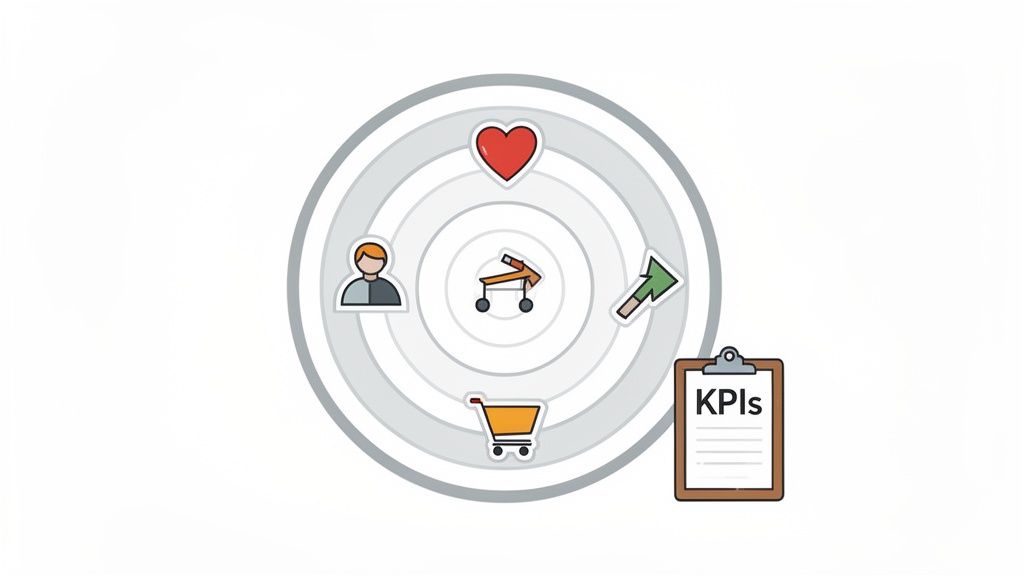
One of the most foundational best practices social media managers can implement is setting clear goals before a single post goes live. Without a defined objective, your content lacks direction, making it impossible to measure success or prove its value to stakeholders. Establishing specific, measurable, attainable, relevant, and time-bound (SMART) goals transforms your social media from a reactive task into a strategic business driver. These goals connect your daily activities to larger business outcomes, ensuring every effort has a purpose.
From Vague Ideas to Actionable Metrics
Instead of aiming for generic targets like "more followers," define what success truly means for your brand. Key Performance Indicators (KPIs) are the specific metrics you use to track progress against your goals.
- For Brand Awareness: Track reach, impressions, and follower growth rate. The goal is to get your brand in front of as many relevant people as possible.
- For Engagement: Monitor likes, comments, shares, and saves. This shows how well your content resonates with your audience.
- For Conversions: Measure click-through rate (CTR), cost-per-click (CPC), and conversion rate from social channels. This directly links social media activity to sales or leads.
For example, a direct-to-consumer brand might set a quarterly goal to increase website conversions from Instagram by 15%, tracking the conversion rate via UTM parameters. An agency, on the other hand, might focus on achieving a 20% lift in engagement for a client over a six-month campaign.
Key Insight: Connecting social media KPIs directly to business objectives like revenue or lead generation is crucial for demonstrating ROI and securing future budget.
How to Implement Goal-Setting
Start by auditing your current performance to establish a baseline. From there, set both short-term (monthly) and long-term (quarterly) goals. To kickstart your content strategy and ensure it aligns with these goals, consider using a Youtube Channel Idea Generator for fresh inspiration that matches your brand's mission.
Use a centralized dashboard to track your KPIs in real-time. Platforms like REACH Influencers offer integrated analytics that consolidate metrics from various campaigns, making it easier to monitor performance and adjust your strategy weekly. This data-driven approach ensures your social media marketing is both efficient and effective.
2. Develop a Consistent Content Calendar and Posting Schedule
One of the most impactful best practices social media professionals can adopt is the disciplined use of a content calendar. A structured calendar transforms social media from a reactive, last-minute scramble into a proactive, strategic operation. It ensures a consistent brand presence, prevents awkward content gaps, and allows your team to plan strategically around key dates, product launches, and seasonal campaigns. Consistency not only builds audience trust and expectation but is also favored by platform algorithms, which tend to reward regular posting patterns.
From Random Posts to a Strategic Timeline
A content calendar is more than just a schedule; it’s a strategic blueprint for your brand’s narrative. It helps you visualize your content mix and maintain a healthy balance between different types of posts.
- For Brand Consistency: Plan your content themes, visual aesthetics, and tone of voice weeks in advance to ensure every post aligns with your brand identity.
- For Team Collaboration: For agencies managing multiple clients or brands coordinating with influencers, a centralized calendar prevents confusion and streamlines the approval process.
- For Audience Growth: Use analytics to identify peak engagement times for your audience and schedule posts to maximize visibility and interaction.
For example, a consumer brand might use a calendar to schedule five Instagram posts per week, balancing product showcases with user-generated content and educational tips. An agency could use a color-coded master calendar to manage ten different client accounts, ensuring no brand’s messaging gets crossed. To effectively manage your content strategy, learn how to create a content calendar that ensures consistency and impact.
Key Insight: A content calendar is your single source of truth. It empowers you to be agile by leaving intentional gaps for trending topics while maintaining a strong, consistent content baseline.
How to Implement a Content Calendar
Start by choosing a tool that fits your team's needs, whether it's a simple spreadsheet or a sophisticated scheduling platform. Schedule content at least one to two weeks in advance to allow for review and adjustments.
Aim for a balanced content mix, such as a 50/50 split between promotional and value-driven content. Build in about 20% flexibility to jump on real-time trends and cultural moments. For a deeper dive into building an effective schedule, explore our detailed guide on how to create a content calendar. This approach keeps your feed relevant and prevents your brand from appearing out of touch.
3. Leverage Influencer Partnerships Strategically
Moving beyond one-off sponsored posts, a core element of modern best practices social media involves building strategic, long-term influencer partnerships. This approach focuses on aligning your brand values with creators whose audiences authentically match your target customers. Instead of just buying reach, you are fostering genuine advocacy that extends your brand’s voice, builds trust, and drives measurable results in a way that traditional advertising cannot replicate.
From Follower Counts to Authentic Alignment
The most effective partnerships prioritize connection over sheer audience size. A creator with 15,000 highly engaged followers in a specific niche can often deliver far greater ROI than a macro-influencer with a million generic followers. The key is finding creators whose content and community resonate with your brand's mission.
- For D2C Brands: Partner with micro-influencers (10-50K followers) for authentic product reviews and unboxing videos. Their high engagement rates (often 2-5% or more) lead to credible social proof.
- For SaaS Companies: Collaborate with respected B2B influencers in your industry to create co-branded webinars, whitepapers, or thought-leadership content.
- For Agencies: Launch integrated campaigns with a diverse group of complementary creators to maximize reach and hit different audience segments simultaneously.
For instance, Glossier built its empire by partnering with micro-influencers and turning loyal customers into brand advocates, creating a powerful community-driven marketing engine. This model proves that authentic alignment generates more sustainable growth than just paying for visibility.
Key Insight: Prioritize a creator's engagement rate and audience demographics over their raw follower count. Authentic alignment with a smaller, dedicated community drives better business outcomes.
How to Implement Strategic Partnerships
Start by clearly defining your campaign goals. Are you aiming for brand awareness, lead generation, or direct sales? Your objective will dictate the type of creator you need. Use filters on platforms like REACH Influencers to pinpoint creators based on niche, audience location, and engagement metrics. A structured process is crucial for finding the right partners and for more guidance, you can explore detailed strategies on how to find the right influencer.
Before committing, always request a media kit and past performance data. Establish clear contracts detailing deliverables, usage rights, and timelines. To measure success, provide each influencer with a unique discount code or a trackable UTM link. This allows you to attribute sales directly to their efforts, proving ROI and identifying your top-performing partners for future long-term collaborations.
4. Create Authentic, Value-Driven Content
In an era of endless scrolling, one of the most effective best practices social media can offer is prioritizing authenticity and value over hard-selling. Audiences are increasingly wary of purely promotional messaging and connect more deeply with content that educates, entertains, or solves a problem. This approach builds trust and community by showing that your brand cares about more than just the next sale, transforming passive followers into loyal advocates.

From Product-Centric to People-Centric
The most successful brands treat their social media channels like community hubs, not just digital storefronts. This means shifting focus from what you sell to what you can give your audience.
- Educate: Create tutorials, how-to guides, or industry insights that help your audience achieve their goals. A skincare brand might share tips on building a routine for different skin types.
- Entertain: Use humor, behind-the-scenes glimpses, or compelling storytelling to create a memorable brand personality. Skims excels at this by sharing the product development process, making customers feel like insiders.
- Inspire: Share user-generated content (UGC), success stories, or content aligned with your brand's mission. Patagonia’s focus on environmental stories, rather than just jackets, builds a powerful community around shared values.
For instance, a fitness app could share a weekly workout challenge that requires no equipment, providing immediate value to its audience, whether they are paying customers or not. This generosity fosters goodwill and keeps the brand top-of-mind.
Key Insight: Authentic content isn’t about perfection; it’s about being genuine. Sharing failures, lessons learned, and real customer testimonials often resonates more powerfully than a polished ad.
How to Implement Value-Driven Content
Start by deeply understanding your audience's pain points and interests outside of your product. Create content pillars based on these needs. For example, a pillar could be "Quick Weeknight Recipes" for a kitchenware brand.
Encourage and amplify UGC by creating a branded hashtag and featuring customer posts on your feed. Use interactive formats like polls and "Ask Me Anything" sessions to start conversations. When collaborating with influencers, brief them on your brand values but give them the creative freedom to share your product's story in their own voice. This ensures the endorsement feels natural and authentic to their audience, which is a core tenet of modern influencer marketing.
5. Engage Authentically with Your Audience
One of the most powerful best practices social media offers is treating your platforms as a conversation, not just a broadcast channel. Authentic engagement means actively participating in the community you’re building by responding to comments, answering questions, and acknowledging mentions. This two-way communication builds trust, fosters loyalty, and signals to platform algorithms that your content is valuable and worth showing to more people. For brands and influencers, this is how you turn passive followers into a dedicated community.
From Broadcasting to Community Building
Shifting your mindset from simply posting content to actively nurturing conversations is key. Genuine interaction shows that there are real people behind the brand who listen and care, which can significantly boost brand perception and customer loyalty.
- For Brands: Responding promptly and personally to customer questions or feedback can turn a neutral or even negative experience into a positive one. Brands like Wendy's on X (formerly Twitter) use a distinct, humorous voice to engage with followers, creating memorable interactions that go viral.
- For Agencies: Managing a client's reputation involves active community management. Promptly addressing concerns and celebrating positive user-generated content demonstrates a brand's commitment to its audience.
- For Influencers: Micro-influencers often build tight-knit communities by replying to nearly every comment and direct message. This personal touch makes followers feel seen and valued, strengthening their connection to the creator.
For example, a small e-commerce business that personally thanks every customer who tags them in a post not only encourages more user-generated content but also builds a reputation for excellent customer care.
Key Insight: Authentic engagement is a long-term investment in community. The more you interact with your audience, the more invested they become in your brand's success, leading to higher organic reach and loyalty.
How to Implement Authentic Engagement
Start by setting a clear brand voice and response guidelines for your team. This ensures consistency while still allowing for personalization. Dedicate specific times each day to check notifications and mentions across all platforms.
Use social listening tools to track conversations about your brand that don't directly tag you. When you find positive comments, amplify them. Platforms like REACH Influencers offer tools to monitor campaign mentions, helping you track how your audience and creator partners are talking about your brand so you can engage effectively. The goal is to make every follower feel like part of an exclusive conversation.
6. Analyze Data and Iterate Based on Performance
One of the most critical best practices social media professionals master is the art of continuous improvement. Top-performing brands don't just post and hope for the best; they operate in a cycle of testing, learning, and optimizing. By using data to guide decisions, you can move beyond assumptions and double down on what truly drives results. This iterative approach is essential for demonstrating value, whether you're an agency proving ROI to a client or a creator scaling your personal brand.

From Guesswork to Data-Driven Decisions
Instead of blindly following trends, you need a systematic way to evaluate what resonates with your specific audience. This involves isolating variables and measuring their impact on your key metrics. A commitment to data-driven iteration is what separates stagnant accounts from those with exponential growth.
- For Content Formats: A brand might test a video against a carousel post on the same topic and discover the video drives a 60% higher engagement rate, leading them to prioritize video production.
- For Audience Engagement: A creator could experiment with posting times and find that content published at 7 p.m. consistently generates 40% more comments and saves than morning posts.
- For Conversion Goals: A direct-to-consumer brand may analyze content themes and identify that product education posts generate three times more website clicks than lifestyle content.
By systematically testing and documenting these findings, you build a customized playbook for your account's success rather than relying on generic advice.
Key Insight: Treat every post as a data point. Over time, these data points create a clear road map, telling you exactly what content to create, when to post it, and how to format it for maximum impact.
How to Implement Iterative Testing
Begin by performing a comprehensive review to understand your current performance benchmarks. To get a clear picture of where you stand, a structured process is key, and you can learn how to conduct a complete social media audit to establish your baseline. From there, create a testing calendar that outlines your hypotheses for the upcoming month or quarter.
Use a platform with robust analytics, like REACH Influencers, to track performance and compare results from different tests. Focus on one variable at a time (e.g., headline, CTA, or visual format) to accurately attribute changes in performance. Review your analytics weekly to spot trends, but wait for at least two to four weeks of data before drawing firm conclusions and adjusting your overarching strategy.
7. Maintain Brand Consistency Across Channels
One of the most powerful best practices social media brands can adopt is maintaining unwavering consistency across every channel. While platforms like TikTok and LinkedIn demand different content formats and tones, your core brand identity-visuals, voice, and values-must remain recognizable. This consistency builds trust and brand recall, ensuring your audience has a coherent experience whether they see your ad on Facebook, a Reel on Instagram, or a post on X.
From Fragmented Presence to Unified Identity
A scattered brand presence confuses your audience and dilutes your message. The goal is to create a unified identity that feels familiar everywhere, reinforcing who you are at every touchpoint. This doesn't mean posting the exact same content on every platform; it means adapting the content to fit the channel while preserving the brand's soul.
- Visual Identity: Use consistent logos, color palettes, and font styles. A brand like Tiffany & Co. uses its signature blue so effectively that the color itself is synonymous with the brand.
- Tone of Voice: Define your brand's personality. Is it witty, authoritative, inspirational, or playful? Apple maintains a minimalist, innovative, and sleek tone across all communications, from product launches to customer support tweets.
- Core Messaging: Your key value propositions and mission should be consistent. Nike’s "Just Do It" ethos of empowerment and athletic achievement permeates everything they do, regardless of the platform.
For agencies managing multiple clients, establishing clear brand playbooks is non-negotiable. These documents become the single source of truth for all creative and messaging decisions.
Key Insight: Brand consistency isn't about being repetitive; it's about being reliable. It builds the mental shortcut in your audience's mind that links your specific look, feel, and voice directly to your brand.
How to Implement Brand Consistency
Start by creating a simple, one-page brand guidelines document that can be shared internally and with external partners like influencers. This document should be the foundation of your content creation process.
Use design tools with template features like Canva or Figma to produce visually aligned assets quickly. To ensure partners adhere to these standards, consider using a platform like REACH Influencers, which allows you to share brand guidelines and manage content approvals directly within your campaign workflow. This ensures every piece of user-generated content aligns perfectly with your brand before it goes live, safeguarding your identity at scale.
8. Prioritize Engagement Rate Over Vanity Metrics
A crucial shift in modern social media strategy is looking past surface-level numbers. One of the most impactful best practices social media professionals can adopt is prioritizing engagement rate over vanity metrics like follower count or likes. While a large audience seems impressive, it means little if those followers are inactive, uninterested, or fake. True influence lies in an audience that actively listens and interacts, making engagement rate the most reliable indicator of content resonance and community health.
Moving Beyond Follower Count
Vanity metrics can be misleading and often fail to correlate with business outcomes. A high follower count with low interaction signals a disengaged audience, which is a poor investment for ad spend or influencer collaborations. Focusing on engagement reveals the true value and loyalty of an audience.
- For Influencer Selection: When vetting partners, engagement rate is paramount. A micro-influencer with 15,000 followers and a 9% engagement rate will almost always deliver better results than a macro-influencer with 500,000 followers and a 1% engagement rate. The smaller, more dedicated community is more likely to trust recommendations and take action.
- For Content Strategy: Tracking your own engagement rate helps you understand what content genuinely connects with your audience. A Reel that gets thousands of likes but few saves or comments may be less valuable than a carousel post that sparks a meaningful conversation in the comments section.
- For Campaign Measurement: Instead of reporting on follower growth, focus on how engagement rate impacts conversions. High engagement often leads to higher click-through rates and website traffic because the audience is genuinely invested.
For example, a skincare brand might find that a creator with 50,000 followers and an 8% engagement rate drives more sales than one with 500,000 followers and a 1.5% engagement rate. The smaller creator's audience is more niche, trusting, and responsive.
Key Insight: Engagement rate is a direct measure of audience health and content effectiveness. It separates passive followers from active, loyal community members who are more likely to convert.
How to Implement an Engagement-First Approach
Start by calculating the engagement rate for your own channels and for any potential influencer partners. The standard formula is: (Total Engagements / Total Followers) × 100. Use this metric as your primary KPI for content performance.
To benchmark your efforts, consider that a 2-5% engagement rate is generally good, 5-10% is excellent, and anything over 10% is exceptional for most platforms. When working with creators, always request access to their backend analytics or use a platform that verifies this data. This ensures transparency and helps you set realistic campaign goals based on their proven performance, not just their follower count.
9. Build Community and Foster Two-Way Dialogue
One of the most impactful best practices social media has evolved into is shifting from one-way broadcasting to two-way community building. Top-performing accounts don’t just talk at their followers; they create spaces for genuine interaction and make their audience feel seen, heard, and valued. This community-centric approach transforms a passive audience into an engaged, loyal tribe that drives organic reach and authentic word-of-mouth marketing.
From Audience to Active Community
Instead of just chasing follower counts, focus on nurturing relationships. A community is built on shared interests and mutual respect, turning your social media presence into a destination rather than just another account in a crowded feed. This dialogue-driven strategy is fundamental to long-term brand loyalty.
- For Engagement: Ask open-ended questions in captions and Stories to spark conversations. Prompt followers to share their own experiences or opinions related to your niche.
- For Loyalty: Acknowledge and feature User-Generated Content (UGC). When a follower tags your brand, reshare their post and give them credit. This simple act validates their contribution and encourages others to participate.
- For Advocacy: Identify and reward your most active community members. Brands like Gymshark excel at this, turning superfans into official brand ambassadors who authentically promote their products.
For example, a skincare brand could create a branded hashtag like #MySkinStory and encourage followers to share their journey, featuring the most compelling posts on their feed. This not only provides authentic social proof but also makes the community the hero of the brand’s narrative.
Key Insight: A strong community acts as a powerful moat for your brand. Competitors can copy your products, but they can't replicate the trust and loyalty you've built with your audience.
How to Implement Community-Building
Start by actively listening. Monitor comments, DMs, and mentions to understand what your audience cares about. Commit to responding promptly, especially within the first hour of posting, to signal that you are present and engaged.
Create rituals that encourage participation, such as weekly Q&A sessions, polls, or themed challenges. To scale these efforts, especially when identifying potential brand ambassadors from your community, platforms like REACH Influencers offer tools to track engaged followers and manage relationships. By treating your social media as a digital town square, you foster connections that translate directly into business growth.
10. Invest in Quality Visuals and Video Content
In today's visually saturated digital landscape, one of the most impactful best practices social media can offer is prioritizing high-quality visuals and video. Social media algorithms, particularly on platforms like Instagram and TikTok, heavily favor dynamic video content, while polished visuals consistently outperform low-effort posts. Investing in photography, videography, and professional design elevates your brand's perceived quality and significantly boosts engagement, transforming passive scrollers into an active audience.
From Static Images to Engaging Stories
The shift from static content to video is undeniable, with video formats driving up to 10 times higher engagement than still images on most platforms. This doesn't mean every post must have Hollywood-level production; authenticity often resonates more. However, a strategic approach to visual content is non-negotiable for growth.
- For Brand Building: High-quality visuals create a cohesive and professional aesthetic that builds brand trust and recognition. Think of how Olaplex uses slick video testimonials and product demonstrations to reinforce its premium positioning.
- For Engagement: Short-form video content like Reels, TikToks, and Shorts is designed for high interaction. It encourages comments, shares, and saves, signaling to algorithms that your content is valuable.
- For Viral Potential: A single creative video can achieve massive reach. Dollar Shave Club’s viral launch video is a classic example of how humor and a strong visual concept can disrupt an entire market overnight.
Key Insight: Prioritize a vertical, mobile-first (9:16) video strategy. The vast majority of social media is consumed on phones, and content optimized for this format captures more screen real estate and attention.
How to Implement a Visual-First Strategy
Start by dedicating a portion of your content calendar specifically to video, aiming for at least a 30% video content mix. You don't need an expensive camera; modern smartphones are powerful enough to create compelling content, especially when paired with good lighting and clear audio.
Focus on creating content that provides value, whether through tutorials, behind-the-scenes glimpses, or entertaining skits. Use accessible editing tools like CapCut or invest in professional software like Adobe Premiere. Always add captions or text overlays, as many users watch videos without sound. Collaborating with creators who specialize in video production through platforms like REACH Influencers can also provide a steady stream of high-quality, authentic content that is already optimized for social media performance.
Top 10 Social Media Best Practices Comparison
| Title | 🔄 Implementation Complexity | ⚡ Resource Requirements | 📊 Expected Outcomes | 💡 Ideal Use Cases | ⭐ Key Advantages |
|---|---|---|---|---|---|
| Define Clear Social Media Goals and KPIs | Medium — framework setup and baseline measurement | Low–Medium — dashboards, reporting time | Clear accountability, measurable ROI, easier optimization | Campaign planning, executive reporting, cross-channel comparison | Enables data-driven decisions and stakeholder buy-in |
| Develop a Consistent Content Calendar and Posting Schedule | Medium — requires planning and coordination | Medium — scheduling tools, content creation capacity | Improved posting consistency, better algorithmic reach | Product launches, seasonal planning, multi-client agencies | Reduces last-minute work and ensures on-brand timing |
| Leverage Influencer Partnerships Strategically | High — vetting, contracts, relationship management | Medium–High — influencer fees, discovery tools, outreach | Targeted reach, authentic advocacy, variable ROI | D2C scaling, niche audience targeting, awareness campaigns | Cost-effective reach and strong social proof when aligned |
| Create Authentic, Value-Driven Content | Medium–High — creative development and oversight | Medium — creative team or creator partnerships | Higher engagement, trust, long-term brand affinity | Brands seeking differentiation and loyalty building | Drives shareability and reduces ad fatigue |
| Engage Authentically with Your Audience | Medium — ongoing community management | Medium — moderators, monitoring tools, time | Increased loyalty, improved sentiment, amplified content | Reputation management, brands focused on CX | Provides real customer insights and strengthens community |
| Analyze Data and Iterate Based on Performance | High — testing methodology and analysis skills | Medium–High — analytics tools, time for testing | Continuous optimization, clearer winners, better ROI | Performance-driven campaigns, agencies proving results | Enables evidence-based strategy and faster improvements |
| Maintain Brand Consistency Across Channels | Medium — guidelines creation and enforcement | Low–Medium — brand assets, approval workflows | Stronger recognition, reduced confusion, cohesive messaging | Multi-channel brands, agencies managing multiple clients | Simplifies creative work and improves influencer alignment |
| Prioritize Engagement Rate Over Vanity Metrics | Medium — requires deeper analytics and vetting | Low–Medium — engagement analysis tools | Better partner selection, more predictable campaign outcomes | Influencer selection, budget allocation, partnership vetting | Prevents wasted spend and highlights high-performing creators |
| Build Community and Foster Two-Way Dialogue | High — sustained moderation and program management | Medium–High — community teams, incentives, events | Organic reach, loyalty, user-generated content | Brands focused on advocacy, ambassador programs, long-term growth | Generates authentic content and network-driven growth |
| Invest in Quality Visuals and Video Content | Medium–High — production planning and editing | High — equipment, production talent, editors | Substantially higher engagement and conversion rates | Product demos, awareness campaigns, creator-led video | Stronger algorithmic performance and perceived brand quality |
Putting It All Together: Your Path to Social Media Mastery
Navigating the dynamic world of social media can feel like trying to hit a moving target. Platforms evolve, algorithms shift, and audience preferences change. However, the core principles of effective communication and community building remain constant. This guide has provided a comprehensive roadmap, detailing the essential best practices social media professionals rely on to drive meaningful, sustainable growth. The journey from social media novice to seasoned expert isn't about finding a single secret hack; it's about the consistent and strategic application of these foundational pillars.
The ten practices we’ve explored are not isolated tactics but interconnected components of a holistic strategy. You cannot create authentic content without first understanding your audience. You cannot measure success without defining clear goals and KPIs. And you cannot foster a genuine community without prioritizing two-way dialogue and authentic engagement. Think of these practices as a system where each part strengthens the others, creating a powerful engine for brand growth.
From Theory to Action: Your Implementation Checklist
Feeling overwhelmed? Don't be. Mastery begins with a single, deliberate step. Instead of trying to implement everything at once, focus on strengthening one area at a time. Use this checklist to guide your next moves:
- Audit Your Goals: Revisit your social media objectives. Are they specific, measurable, achievable, relevant, and time-bound (SMART)? If not, refine them. This clarity will inform every other decision you make.
- Refine Your Content: Look at your last ten posts. How many of them provided genuine value versus just promoting your product? Aim to shift the balance toward value-driven content that educates, entertains, or inspires. Remember, high-quality visuals and video are non-negotiable.
- Deepen Your Engagement: Dedicate time each day to actively respond to comments, engage with user-generated content, and participate in relevant conversations. This is how you transform passive followers into a loyal community.
- Leverage Strategic Partnerships: Consider how influencer collaborations could amplify your message. Instead of one-off promotions, think about building long-term relationships with creators whose values align with your brand. This is a cornerstone of modern best practices social media strategy, as it builds authentic social proof.
The True Value of Social Media Excellence
Implementing these best practices for social media does more than just boost your follower count or engagement rate. It fundamentally changes your relationship with your audience. You move from being a broadcaster, shouting into the void, to becoming a valued community leader and a trusted resource. This shift builds brand equity, fosters customer loyalty, and ultimately drives tangible business results, from increased website traffic to higher conversion rates.
The most successful brands understand that social media is a long-term investment in relationships. It requires patience, consistency, and a genuine commitment to serving your audience. By analyzing your data, iterating on what works, and maintaining brand consistency across all touchpoints, you build a predictable and scalable channel for growth. This is the ultimate goal: turning your social media presence from a daily task into a strategic asset that fuels your entire business. Your path to mastery starts now, with the consistent application of these proven principles.
Ready to elevate your influencer marketing and seamlessly integrate one of the most powerful best practices social media has to offer? REACH Influencers provides an all-in-one platform to discover authentic creators, manage campaigns, and measure ROI with precision. Stop guessing and start building strategic partnerships that drive real results by exploring REACH today.