 Skip to content

A content creator hire usually starts the same way. A few promising DMs. A spreadsheet with tabs that made sense for one week. An inbox full of rate cards, rough ideas, revised ideas, shipping questions, late drafts, and payment follow-ups.
Then the campaign gets real.
The stress rarely comes from finding creators. It comes after that. Someone needs to lock the brief, track approvals, confirm usage rights, manage deadlines, keep creators warm without micromanaging them, and make sure finance doesn't become the bottleneck. That's the difference between a one-off collaboration and a repeatable creator program.
The market is only making that gap more obvious. The creator economy was valued at $191.55 billion in 2025 and is projected to reach $528.39 billion by 2030, while 93% of brands plan to increase their creator marketing efforts in 2025, according to creator economy statistics compiled by AWISEE. More brands are hiring creators. Very few have cleaned up the operating system behind that decision.
Moving Beyond DMs and Spreadsheets
I've seen this pattern across in-house teams and agencies. The first five creator partnerships feel manageable. By the time you're coordinating multiple creators across different platforms, every tiny gap in process becomes expensive.
One creator says they never got the latest brief. Another posts the wrong talking point because feedback lived in three email threads. Finance asks who approved payment. Legal asks where the signed terms are. The social team asks which post version was final. Nobody is wrong. The system is.

A content creator hire shouldn't be treated like casual freelance outreach. It functions more like campaign operations. That means you need one place for creator status, deliverables, approvals, contracts, and payment records. If your team is still patching that together manually, the process breaks as soon as volume increases.
What chaos usually looks like
Here are the warning signs that the workflow is already slipping:
- Outreach lives in personal inboxes. If one team member goes on leave, the relationship history disappears with them.
- Deliverables are tracked in spreadsheets. They work until version control falls apart.
- Feedback is fragmented. Creators get notes from brand, agency, paid media, and legal without a single owner.
- Payment is handled at the end. That delays creator response times and damages trust quickly.
Most teams think they have a sourcing problem. They usually have an operating problem.
That's why a campaign command center matters. A platform built for the workflow after discovery gives your team a single source of truth. Teams evaluating systems for that job usually start with tools built for campaign management, such as the influencer marketing platform from REACH Influencers, because discovery alone doesn't solve execution.
The shift teams need to make
Stop asking, "How do we find creators?"
Start asking:
| Operational question | Why it matters |
|---|---|
| Who owns creator communication? | Prevents mixed messages and slowdowns |
| Where are approvals logged? | Reduces revision loops |
| How are deliverables tracked? | Keeps launches on schedule |
| How are payments and documents handled? | Protects creator relationships and internal compliance |
When a brand makes that shift, the content creator hire process becomes less reactive. That's when creator marketing starts acting like a channel instead of a scramble.
Define Your Campaign Goals and Ideal Creator
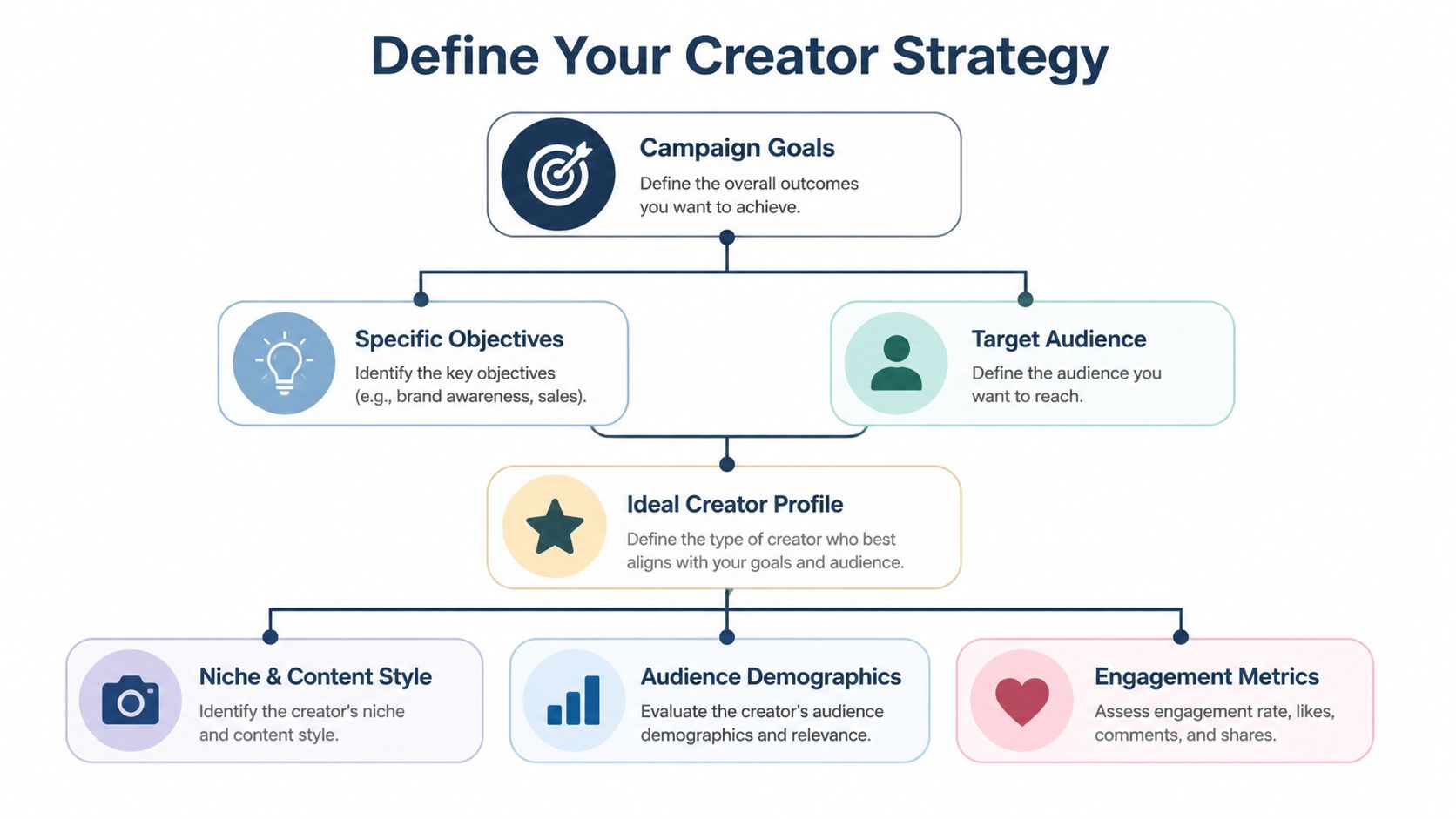
Most bad creator hires start before outreach. They start when the internal team isn't aligned on what success looks like.
If your brief says "we need creators for awareness," you'll attract broad interest and weak fit. If your brief says you need creators who can speak credibly to a specific audience, create a certain content format, and support a defined business goal, your decisions get easier fast.
A lot of confusion comes from using "creator" as a catch-all term. Before building your shortlist, it helps to understand what a content creator is in practical terms, especially the difference between someone who entertains, someone who educates, and someone who consistently drives action for a brand.
Start with the business outcome
The first question isn't platform. It isn't follower count either.
It's this: what does the business need from this campaign?
That answer usually falls into a few buckets:
- Awareness. You need reach, shareable creative, and a strong fit between creator voice and your product category.
- Consideration. You need creators who can explain the product clearly and naturally.
- Conversion. You need creators who can build trust quickly, handle objections in content, and make the offer feel easy to act on.
- Content production. You need usable assets your brand can repurpose across paid and organic channels.
If your internal stakeholders can't agree on the primary outcome, pause there. Hiring before that alignment usually creates friction later when different teams judge success by different standards.
Build an ideal creator profile
Once the goal is clear, define the creator profile in terms your team can screen against.
I use a simple framework:
Category fit
Does the creator already speak to the problem your product solves?Audience fit
Are they attracting the people your brand wants to reach, not just a broad public audience?Creative fit
Does their style match how your brand needs to show up? Polished, educational, conversational, trend-led, founder-led, or testimonial-driven.Professional fit
Do they communicate clearly, hit deadlines, and understand revision cycles?
Practical rule: If the creator looks right but would need a total change in tone to fit your campaign, they're not a fit.
A simple pre-hiring worksheet
Use this before you contact anyone:
- Campaign objective: State the single primary outcome.
- Content formats: Reels, TikToks, YouTube integrations, product demos, testimonials, stills, or whitelisting-ready assets.
- Non-negotiables: Brand safety rules, category experience, required disclosures, and response-time expectations.
- Creative latitude: What the creator can reinterpret, and what must stay fixed.
- Success signals: The specific indicators your team will use to evaluate the campaign.
This prep work sounds basic. It isn't. It prevents the most common content creator hire mistake, which is choosing creators based on surface appeal and then trying to force strategy onto them afterward.
Write Briefs That Attract Top-Tier Talent
A generic brief tells skilled creators that your team isn't ready.
Strong creators can spot a vague campaign instantly. If the deliverables are fuzzy, timelines are missing, approvals are undefined, and the creative direction is contradictory, the best people either pass or raise their rates to cover the expected friction.
Research published by Interacting with Computers found that when organizations switch from generic ads to KPI-bound, behaviorally specific framing for creator roles, they typically see hiring accuracy improve by 20 to 30%, along with lower turnover in the first six months. That's not just a hiring insight. It's a brief-writing lesson.
What a useful brief includes
A strong brief doesn't drown creators in brand language. It gives them enough direction to execute well without stripping away their voice.
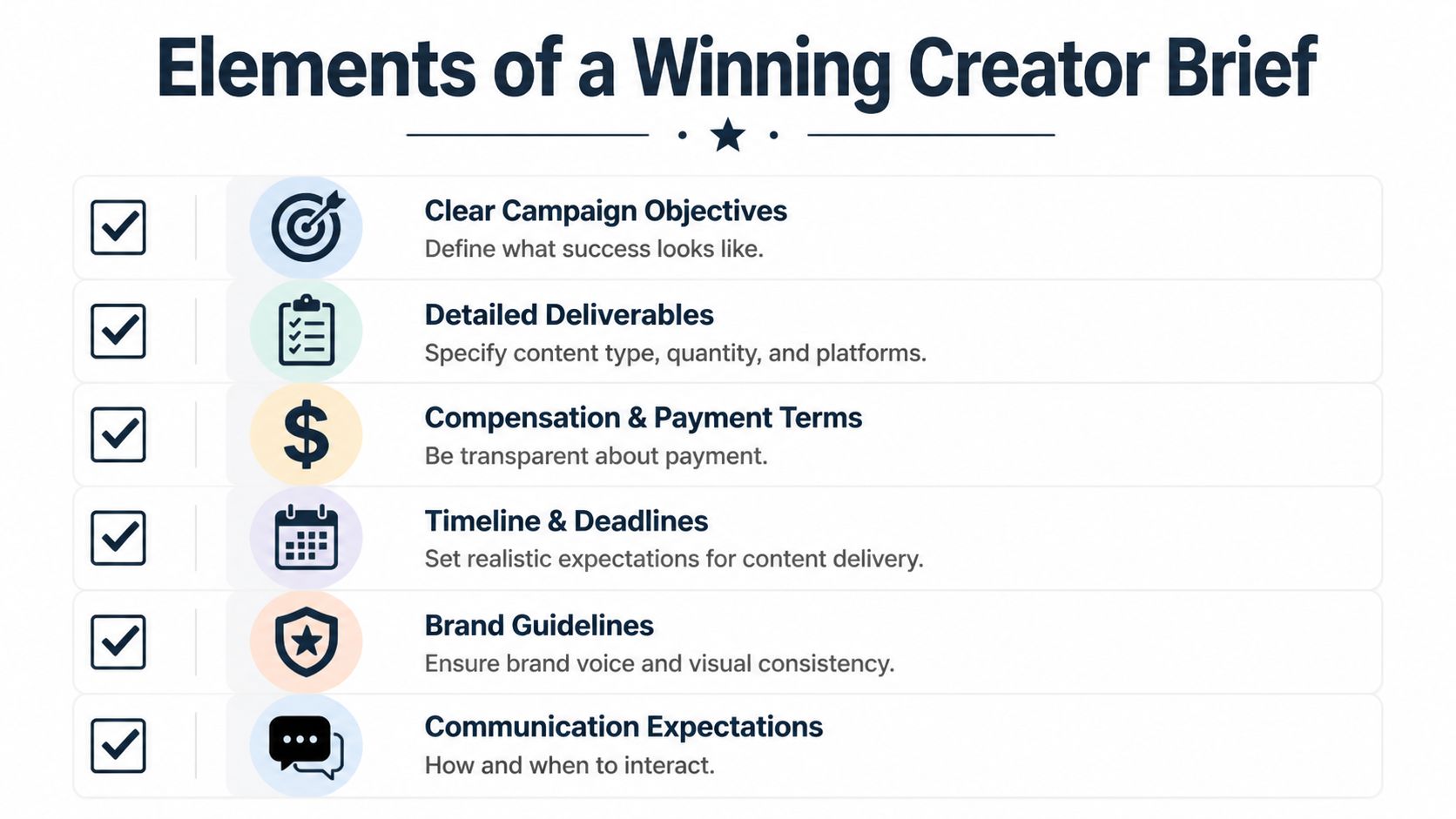
The best briefs usually include:
- Brand context. What the product is, who it's for, and why this campaign exists now.
- Deliverables. Exact formats, platforms, rough duration, and whether raw footage is required.
- Creative direction. Mandatory talking points, visual guardrails, and examples of what "on-brand" looks like.
- Operational details. Deadlines, review windows, posting dates, and approval steps.
- Usage terms. Whether the brand wants organic posting only, paid usage, whitelisting access, or asset licensing.
What weak briefs get wrong
The most common issues aren't dramatic. They're small omissions that create big waste.
| Weak brief habit | What it causes |
|---|---|
| "Make it authentic" with no examples | Creators guess what you mean |
| No approval timeline | Posts bunch up at launch |
| No revision limit | Endless edits |
| No usage-rights language | Disputes after content is delivered |
A strong brief should answer the creator's first ten questions before they ask them.
A practical template structure
The easiest format to use is:
- Campaign summary
- Audience and product context
- Required deliverables
- Creative guidance and prohibited claims
- Timeline and review process
- Compensation and terms
- Reporting expectations
Teams that want a starting point can adapt a structured influencer brief template and tailor it by platform and campaign type.
Good creators don't need more words. They need cleaner instructions.
One more point matters here. Briefs should be specific, but they shouldn't read like a script unless legal or compliance requires it. If you over-control the content, you'll kill the creator's value. The right balance is clear goals, clear constraints, and room for the creator to sound like themselves.
Source and Vet Creators for True Brand Fit
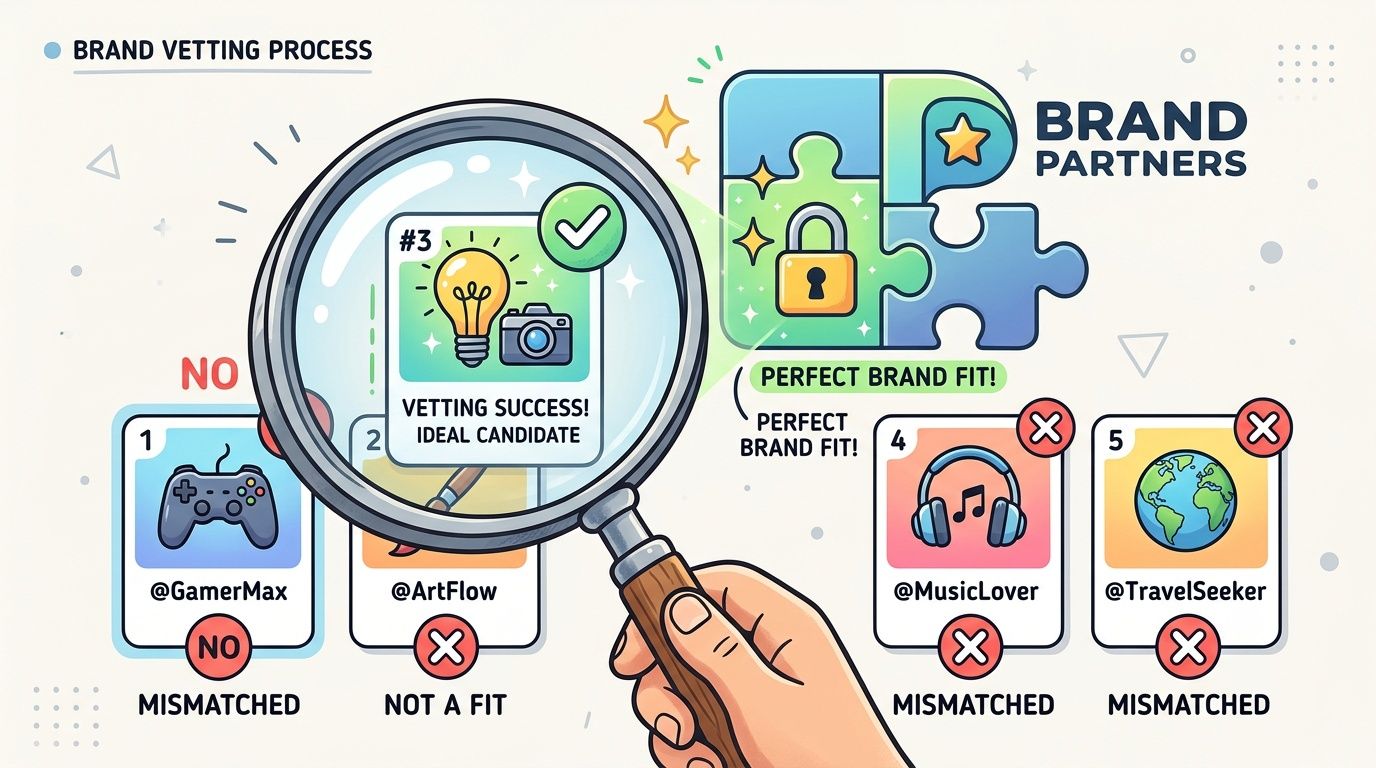
Finding creators is easy now. Vetting them properly is still where teams make expensive mistakes.
There are over 207 million content creators worldwide, and only 4% are full-time professionals earning an average of $44,000 annually in the U.S., according to Spiralytics' 2025 content creator statistics. That doesn't mean part-time creators are a bad choice. It means professionalism can't be assumed. You have to verify it.
Where to source without wasting time
Hashtag searches can still surface talent, but they shouldn't be your only input. Strong sourcing usually combines platform-native discovery with pattern recognition from your own campaign needs.
Look for creators in these places:
- Competitor-adjacent categories. Not direct copies. Adjacent voices often bring fresher creative.
- Comment sections and community threads. Skilled emerging creators often show expertise before they scale.
- Past customer content. Some of the strongest UGC-style partners already know your product.
- Platform search tools. Search by niche, posting style, and audience relevance rather than raw popularity.
The best shortlist usually includes a mix of proven operators and new voices. Established creators reduce uncertainty. Emerging creators often give you stronger creative flexibility and closer brand alignment.
How to vet beyond surface metrics
A solid vetting pass looks at the creator's content like an operator, not a fan.
Check these areas:
Content consistency
Are they reliable in tone and quality, or does every post feel like a different person made it?Brand integration skill
When they mention products, does it feel natural or forced?Communication quality
Their first few replies tell you a lot. Late, vague, or confusing communication early usually gets worse later.Audience alignment
Read comments. You can learn more from how people respond than from a visible follower count.Professional signals
Do they have a media kit, a rate sheet, prior partnership examples, or a clear workflow for drafts and revisions?
A creator can be talented and still be a poor operational fit. Those are different evaluations.
A quick vetting scorecard
Use a simple pass-fail system before you move anyone to negotiation:
| Vetting area | What to review |
|---|---|
| Creative quality | Hook, clarity, pacing, editing, presence |
| Brand fit | Values, tone, safety, category relevance |
| Reliability | Response speed, organization, deadline behavior |
| Partnership readiness | Revision handling, deliverable clarity, business maturity |
Once the shortlist is tight, send a small test prompt in your outreach. Ask how they'd approach the campaign concept, not for free spec work. The way they think through the ask often tells you more than another analytics screenshot.
A practical walkthrough can help if your team wants examples of what experienced creator outreach and evaluation looks like in motion:
The right content creator hire isn't just someone who can make content. It's someone who can make the right content, inside the constraints your team operates under.
Negotiate Contracts and Streamline Onboarding
A lot of teams treat the deal as done once rate and deliverables are agreed. That's where operational trouble begins.
The risky part of creator hiring isn't usually discovery. It's the backend. Contracts, usage rights, approvals, invoices, tax forms, payment timing, and status tracking. Those pieces decide whether the partnership feels professional or messy.
A documented pain point in creator hiring is that payment and compliance friction remains critical, with many platforms emphasizing discovery while overlooking the operational backend of 1099 tax compliance and payment processing across multiple creators, as noted in this discussion of creator hiring workflow gaps on YouTube.
Contract terms that shouldn't be vague
Every creator agreement should make a few things unambiguous:
- Deliverables. Exact content outputs, deadlines, and revision expectations.
- Usage rights. Where the brand can use the content, for how long, and in what format.
- Exclusivity. Whether the creator can work with competitors during or after the campaign.
- Payment terms. Amount, payment timing, and what triggers payment release.
- Disclosure responsibility. Who handles required ad disclosures and approval of final wording.
If any of this is left implied, your team will end up resolving it mid-campaign when everyone is under time pressure.
Payment structure affects creator quality
Compensation isn't just a finance issue. It shapes who wants to work with you again.
If your team is still learning understanding model payment structures can be a useful parallel for thinking through day rates, usage-based pricing, and deliverable-based agreements. Creator deals aren't identical, but the same principle applies. The more commercial value the brand gets from the asset, the more carefully the payment model should reflect that.
Slow payment tells creators your internal process is their problem.
Onboarding should remove guesswork
Once the contract is signed, creators should receive a clear operating package:
- Single point of contact so they know where to send questions
- Final brief and approved messaging in one place
- Submission process for drafts and revisions
- Posting instructions for timing, tags, links, and disclosures
- Payment and tax steps completed before content is due
This is where software matters. A tool like REACH can centralize campaign details, deliverable tracking, creator communication, payments, and 1099 compliance in one workflow. That's useful when the issue isn't finding creators, but running multiple partnerships without missing details.
The brands that creators want to work with repeatedly usually aren't the ones with the flashiest outreach. They're the ones that make the working relationship easy.
Manage Workflows and Measure Campaign ROI
The content creator hire is only valuable if the campaign runs cleanly after the contract is signed.
Most performance issues don't start with bad creative. They start with loose workflow. Draft links live in email. Approvals happen in chat. Paid media asks for raw files nobody saved properly. Then reporting day arrives, and the team can't confidently connect outputs to business results.
Build a workflow that survives launch week
A working campaign system needs a few basics:
- A live deliverables tracker that shows status by creator and asset
- One approval path so creators don't get conflicting notes
- Centralized communication instead of scattered DMs and inbox threads
- Asset storage and version control for raw files, finals, and rights info
If you're scaling a creator program alongside paid social, this practical guide for growth marketers is a useful companion read because it mirrors the same operational reality. Creative output only becomes valuable when the team can consistently ship, review, and learn from it.
Tie performance back to the original goal
A campaign should be judged against the job it was hired to do.
If the goal was awareness, review reach-oriented outcomes and content resonance. If the goal was conversion, focus on how effectively the creator's content moved people toward action. If the goal was asset production, evaluate reusability, edit quality, hook strength, and how well the content performs across channels after delivery.
That sounds obvious, but teams often drift into reporting what is easiest to collect rather than what was meant to matter.
| Original campaign goal | What to review after launch |
|---|---|
| Awareness | Content resonance, audience response, reuse potential |
| Consideration | Product clarity, objection handling, comment quality |
| Conversion | Offer communication, CTA strength, landing-page fit |
| Asset generation | Editing quality, platform fit, paid media usability |
Use reporting to improve the next hire
Campaign reporting shouldn't be a victory lap or a postmortem only. It should sharpen your next creator decision.
Ask:
- Which creators needed the least hand-holding?
- Which briefs produced the fewest revisions?
- Which content formats were easiest to reuse?
- Which partnerships created the strongest downstream value for paid, organic, or sales enablement?
Those answers matter more than broad opinions about whether a creator was "great."
A structured ROI review also makes budget conversations easier. If your team needs a framework for that side of the conversation, this breakdown of the ROI of influencer marketing is a useful reference point for connecting creator work back to business impact.
A reliable creator program doesn't come from hiring more people. It comes from reducing friction between strategy, execution, and reporting.
If your team has outgrown DMs, spreadsheets, and disconnected tools, REACH gives you a centralized way to run creator campaigns after discovery. You can organize briefs, track deliverables, keep communication in one place, monitor content across platforms, and handle payments and 1099 compliance without stitching the process together manually.