 Skip to content

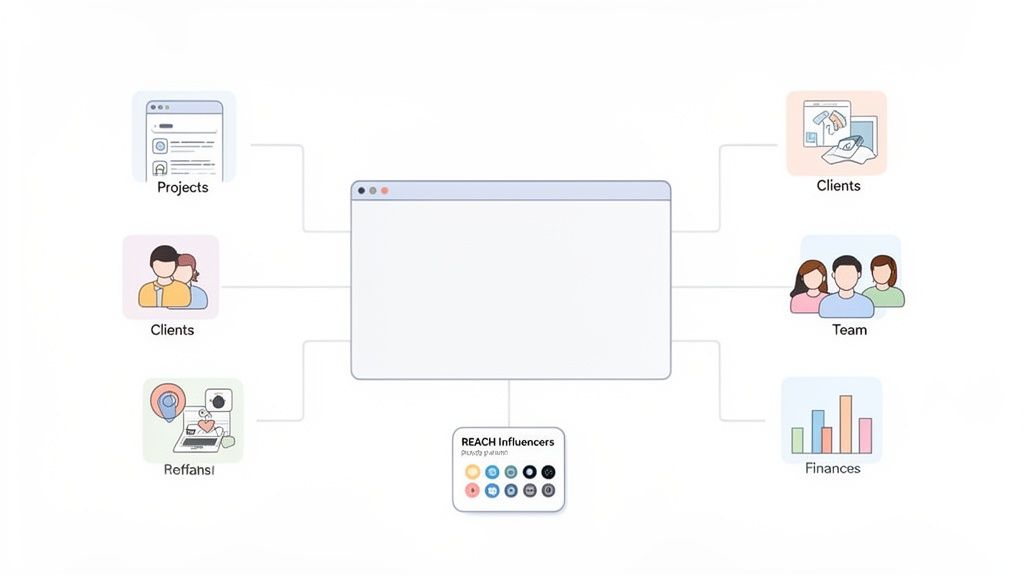
Running a digital agency often feels like juggling a dozen different apps, spreadsheets, and Slack channels. If that chaos sounds familiar, you're not alone. The solution is digital agency management software, a centralized system designed to bring your projects, clients, team, and finances into one cohesive hub. This guide will walk you through everything you need to know to select, implement, and leverage this software to scale your agency effectively.
Table of Contents
- What Is Digital Agency Management Software?
- Unpacking The Core Features of Digital Agency Management Software
- The Real-World Benefits for Your Agency's Bottom Line
- How to Choose the Right Software for Your Agency
- A Practical Guide to a Smooth Implementation
- Answering Your Most Common Questions
What Is Digital Agency Management Software?
Think about trying to build a car when the engine parts are in one warehouse, the chassis is in another, and the electronics are spread across ten different workshops. It’s a logistical nightmare. That’s pretty much what running a digital agency feels like when you’re relying on a patchwork of disconnected tools.
Digital agency management software is built to solve that exact problem. It's an all-in-one platform designed specifically for the whirlwind, project-driven world agencies live in. Instead of paying for and juggling separate tools for task management, time tracking, invoicing, and client communication, this software weaves them all together into a single, smooth workflow.
It's helpful to think of it as a specialized version of professional services automation (PSA) software. While PSA tools are built for a wide range of professional services, agency management software is tailored to the unique pain points of marketing, creative, and digital agencies.
The Core Purpose of Agency Software
At its core, this software is all about answering the tough questions that are nearly impossible to figure out when your data is all over the place. Which projects are actually profitable? Which team members are burning out? Are we hitting deadlines and staying on budget? It brings clarity by connecting all the critical pillars of your agency.
A unified platform gives agency leaders a real-time, 360-degree view of the business. This isn’t just about convenience; it’s a massive strategic advantage. It lets you make proactive decisions instead of constantly reacting to problems, which is the key to scaling an agency without everything falling apart.
The industry is catching on fast. The global Agency Management Software Market is expected to explode from USD 7.8 billion in 2026 to USD 17 billion by 2035. This massive growth is a direct reflection of agencies needing smarter tools to handle complex client work and analytics all in one spot.
Integrating Specialized Services
Today's agencies often offer specialized services that demand their own dedicated tools. For instance, if you're running influencer marketing campaigns, a generic project board just won't cut it. You need a platform with robust features for discovering influencers, managing contracts, tracking campaign performance, and handling automated payments.
This is exactly where a top influencer marketing platform like REACH Influencers slots into the agency tech stack. While your main management software handles the big-picture project plan and finances, REACH delivers the deep, specialized functionality you need to run influencer campaigns effectively. For example, a social media agency using REACH can automate influencer payment workflows for a 50-creator campaign, saving an estimated 20+ hours of manual administrative work per month compared to using spreadsheets.
A powerful tech stack combines a robust, all-in-one management platform with best-in-class specialized tools. This hybrid approach gives agencies both broad operational control and deep functional expertise where it matters most.
By integrating a platform like REACH, an agency can track an influencer campaign's budget and timeline in their central management software while using REACH's dashboard for the nitty-gritty work of creator outreach, content approvals, and performance analytics. You can learn more about how agencies can improve their operations with dedicated agency client management software. This synergy creates a powerful, customized system that supports every service your agency offers, making sure nothing slips through the cracks.
Unpacking The Core Features of Digital Agency Management Software
Shopping for digital agency management software can feel overwhelming. Every platform claims to be the silver bullet, packed with a dizzying array of features. But from my experience, only a handful of them truly matter for day-to-day operations.
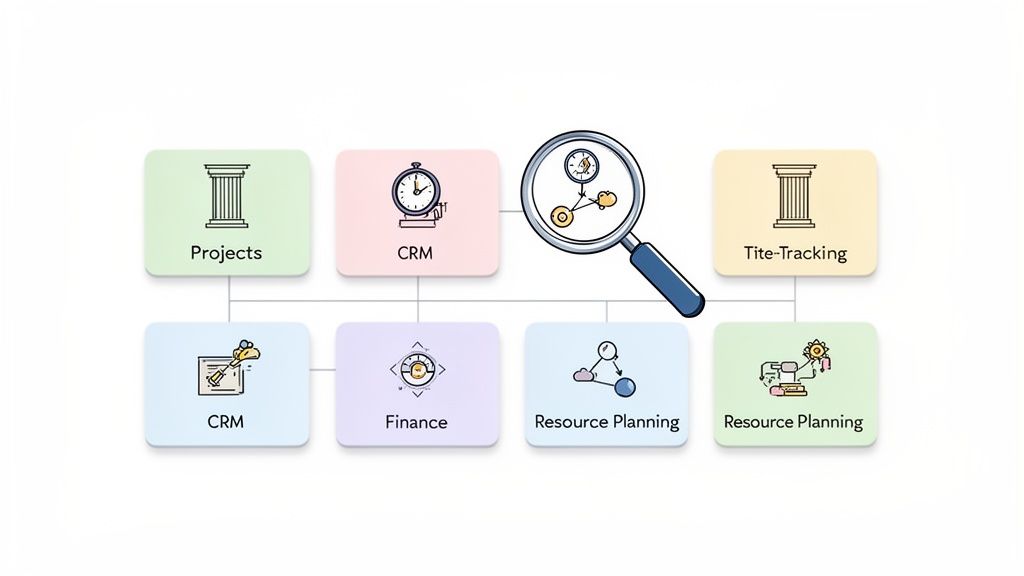
Instead of getting distracted by shiny objects, it's smarter to focus on the four foundational pillars that actually solve problems. These are the components that bring order to chaotic projects, clarify profitability, and give you a real command center for your agency.
Unified Project and Task Management
Projects are the beating heart of any agency. A solid project management module does more than just list what needs to be done; it gives you a complete, visual map of the entire project. Think of it as your GPS, showing not just the final destination but every turn, stoplight, and potential traffic jam ahead.
Here's what that looks like in practice:
- Task Dependencies: This is a simple but powerful feature. It ensures Task B can't start until Task A is finished, which automatically prevents bottlenecks. It’s the digital version of pouring the foundation before putting up the walls.
- Kanban Boards and Gantt Charts: These tools give you different ways to see the same information. Kanban boards are fantastic for tracking the day-to-day flow of work, while Gantt charts offer that high-level, bird's-eye view of the entire project timeline.
- Automated Notifications: No more chasing people for updates. The system automatically pings team members about new tasks, upcoming deadlines, and status changes, freeing everyone up to focus on the actual work.
Centralized Client Relationship Management (CRM)
Your clients are everything. A built-in CRM makes sure every single interaction is captured and organized. It’s far more than a digital Rolodex—it’s a living history of each client relationship, from the first introductory email to the most recent invoice.
This context is what builds strong, lasting partnerships. You need robust CRM tools for lead management to see the full picture—proposals, support tickets, meeting notes—all in one spot.
Integrated Financial and Time Tracking Tools
At the end of the day, profitability is what keeps the lights on. Integrated financial tools are crucial because they connect the work your team does directly to the revenue it brings in. Without that link, you're essentially flying blind. You can't see which clients or project types are actually making you money.
This pillar absolutely must include time tracking that’s tied to specific projects and tasks. This data is gold. It tells you which services are most profitable and flags clients who are consistently eating up more hours than you budgeted for. It also makes invoicing a breeze, ensuring you bill accurately without spending hours manually piecing together timesheets.
A core benefit of digital agency management software is its ability to translate time into data. When you know precisely where your team's hours are going, you can make smarter decisions about pricing, staffing, and client selection.
Intelligent Resource and Capacity Planning
Resource planning answers a simple but vital question: Who is working on what, and can they handle more? This feature is your best defense against team burnout and ensures projects have the right people on them. A good system gives you a clear visual of everyone's workload, making it easy to spot who's overloaded and who has room for more.
This is what allows you to scale confidently. When a new client signs on, you can assign work without worrying about overwhelming your best people or letting deadlines slip. The demand for these tools is exploding; the digital marketing software market is projected to hit USD 404.01 billion by 2034, and it’s all driven by this need for better management.
For agencies with specific service offerings, this planning gets even more specialized. An influencer agency, for example, might integrate a platform like REACH Influencers. That tool becomes a specialized resource hub, and its dashboard gives a real-time view of campaign performance. That data then flows back into the main agency software, keeping the influencer side of a project perfectly in sync with everything else. The right marketing dashboard software makes this kind of visibility possible.
To tie it all together, let's break down the essential features and the real-world benefits they bring to your agency's daily grind.
Essential Features of Digital Agency Management Software
| Core Feature | Primary Function | Key Benefit for Agencies |
|---|---|---|
| Project & Task Management | Organizes workflows, deadlines, and deliverables. | Creates a single source of truth, reducing confusion and keeping projects on track. |
| Client Relationship Management (CRM) | Stores and manages all client communication and data. | Provides a 360-degree view of client history, improving service and retention. |
| Time Tracking | Logs hours spent on specific projects, tasks, and clients. | Uncovers true project profitability and ensures accurate, transparent billing. |
| Financial Management & Invoicing | Handles budgeting, expense tracking, and client billing. | Streamlines the entire financial cycle from proposal to payment, improving cash flow. |
| Resource & Capacity Planning | Visualizes team workloads and availability. | Prevents team burnout, improves project staffing, and supports scalable growth. |
| Reporting & Analytics | Generates reports on KPIs like profitability and utilization. | Delivers data-driven insights for smarter, more strategic business decisions. |
Ultimately, the goal is to find a platform with a strong foundation in these core areas. Fancy bells and whistles are nice, but they're useless if the fundamentals aren't rock-solid.
The Real-World Benefits for Your Agency's Bottom Line

While the feature list for any digital agency management software can look impressive, features are just tools. What really matters is what you can build with them. The true value lies in the tangible outcomes that strengthen your agency's health, boost your profits, and drive real growth.
Adopting a central platform is less about buying software and more about shifting from managing chaos to strategically building a resilient business. The benefits show up on your balance sheet, in your team's day-to-day happiness, and in the trust you build with clients. It's the difference between thinking a project was profitable and knowing its exact margin, down to the last dollar.
Boosting Operational Efficiency and Reclaiming Lost Hours
One of the first things you'll notice is a huge jump in efficiency. Just think about all the time your team loses each week to administrative friction—digging through emails for the latest file, chasing down an approval, or manually piecing together data for a client report. This isn't just a minor annoyance; it's a direct hit to your most valuable asset: billable time.
By centralizing assets and automating routine tasks, a DAM (Digital Asset Management) component within your software can save hundreds of hours a year. That’s time you can pour back into client strategy, creative work, or pitching new business—the things that actually grow your agency.
For instance, a project manager might burn four hours every Friday pulling stats from different tools to build client reports. An integrated system can generate those same reports in minutes. That simple change frees up nearly 200 hours per year for just one employee. Imagine that impact across your whole team.
Sharpening Project Profitability with Accurate Data
Profitability is the lifeblood of any agency, but it’s often a fuzzy metric based on guesswork. Without a clear line connecting time and expenses to specific projects, you’re flying blind. You might feel like a client is a big win, but the numbers could be telling a completely different story of scope creep and razor-thin margins.
This is where digital agency management software becomes a game-changer. It connects every billable hour and every project expense, giving you an honest, undeniable picture of your financial performance.
- Spot Unprofitable Clients: The software can instantly flag the clients who consistently blow past their budgets or demand excessive non-billable work. This gives you the data you need to renegotiate terms or even fire a client that's draining your resources.
- Price Your Services Accurately: When you have historical data on how long projects actually take, you can build smarter proposals and scopes of work. You protect your margins from day one.
- Optimize Your Team: You can see which team members are most efficient at certain tasks, which helps you staff future projects more intelligently and profitably.
Enhancing Team Morale and Preventing Burnout
A chaotic work environment is the fastest way to burn out your best people. When your top talent spends half their day fighting confusing workflows and dealing with unclear expectations, morale takes a nosedive. A disorganized agency doesn't just lose money; it loses its people.
A unified platform brings clarity and predictability to everyone's workday. Team members know exactly what they need to do, when it's due, and how their piece fits into the larger puzzle. Good resource planning features also keep a few key players from getting constantly overloaded, spreading the work more evenly. This structure reduces stress, improves job satisfaction, and helps you keep the talent you worked so hard to find.
Specialized platforms like REACH Influencers plug right into this philosophy. Manually managing dozens of influencer contracts, content approvals, and payments is a recipe for burnout. REACH automates that entire process, freeing your campaign managers to focus on strategy and relationships instead of spreadsheets. That's how you scale your influencer marketing services without overwhelming your team—a direct link between smart software, happy employees, and a healthy bottom line.
How to Choose the Right Software for Your Agency
Picking the right agency management software is a huge decision, one that will echo through your business for years. Think of it like choosing the central nervous system for your agency. Get it right, and information flows effortlessly, enabling smooth, coordinated growth. Get it wrong, and you're in for a world of chronic pain and expensive fixes.
The best way to avoid a costly mistake is to follow a clear, structured process. It starts not with flashy software demos, but with a hard look in the mirror. You have to know exactly what problems you're trying to solve before you can find the right tool to solve them.
Audit Your Current Workflows and Identify Pain Points
First things first, you need to play detective inside your own agency. Map out your entire process, from the moment a new lead comes in to the day you send the final invoice. Where are the bottlenecks? Where do things consistently fall apart?
Is it the messy handoff from your sales team to your project managers? Or maybe it's the soul-crushing hours spent manually compiling client reports each month. Be brutally honest here.
Jot down your top five or ten biggest operational headaches. This list becomes your guide. It’ll help you cut through all the marketing fluff and zero in on platforms that fix your actual, real-world issues. For instance, if "inaccurate project profitability tracking" is a major problem, then any tool with weak financial reporting is out—no matter how cool its other features seem.
Set a Realistic Budget and Plan for Scalability
Next up: money. You need to square your wish list with what you can actually afford. Software pricing can be a minefield, with everything from simple per-user fees to complex enterprise contracts. Always look past the sticker price. Ask about setup fees, training costs, and whether you have to pay extra for priority support. A tool that looks cheap at first can bleed you dry with hidden add-on costs.
Just as important is thinking about tomorrow. The software you pick today needs to grow with you for the next three to five years. A platform that works great for a team of 10 might buckle under the pressure when you hit 30.
A classic mistake is buying software that only solves today's problems. The right platform doesn't just support your current agency; it gives you the foundation you need to scale.
This is why scalability isn't just a buzzword—it's essential. Ask vendors how their pricing and features change as you add more clients, staff, and projects. Can you upgrade your plan easily? Does the system grind to a halt when loaded with data? You’re not just buying a tool; you're investing in a partner for your agency’s future.
Evaluate Integrations and Specialized Functionality
Let's be real: no single piece of software does everything perfectly. Your agency already has a tech stack you rely on, whether it's QuickBooks for accounting, HubSpot for sales, or Slack for team chat. Your new agency management platform has to play nice with the tools you already use. If it doesn't, you'll just create more data silos—the very problem you're trying to fix.
You also have to know when a general-purpose tool isn't enough. For specialized services like influencer marketing, a generic project management module just won't cut it. You need a platform built from the ground up for that specific workflow.
This is where a hybrid approach really shines. Pairing your main management system with a specialized tool like REACH Influencers gives you a massive strategic edge. While your core software handles the big picture—like project budgets and deadlines—REACH gives you the deep, purpose-built features for influencer discovery, campaign analytics, and automated payouts. Many agencies even explore how white-label marketing software allows them to offer these expert services under their own brand. This approach gives you the best of both worlds: broad operational control and deep functional mastery.
Choosing a vendor is a big commitment. It's crucial to ask the right questions upfront to avoid surprises down the road. The checklist below is designed to help you dig deep and find a true partner, not just a software provider.
Vendor Evaluation Checklist
| Evaluation Category | Key Questions to Ask | Why It Matters |
|---|---|---|
| Onboarding & Support | What does the implementation process look like? Who will be our main point of contact? What are your support hours and typical response times? | A great tool with poor support is a useless tool. You need a partner who will be there to help you get started and solve problems quickly when they arise. |
| Scalability & Pricing | How does your pricing change as we add users, projects, or clients? Are there data storage limits? Can the platform handle 2x or 5x our current workload? | Your agency is built for growth, and your software should be, too. Avoid platforms that will penalize you for success with steep price hikes or performance issues. |
| Integrations & API | Do you have native integrations with [X, Y, Z tools]? Is your API open and well-documented? Are there extra costs for using the API? | The software must fit into your existing ecosystem. A robust API is a sign of a flexible, future-proof platform that can adapt to your needs. |
| Product Roadmap | What new features are you planning for the next 6-12 months? How do you incorporate customer feedback into your development process? | You're not just buying the software as it is today; you're investing in its future. A clear and customer-focused roadmap shows the vendor is committed to improvement. |
| Security & Reliability | What are your data security protocols? What is your guaranteed uptime (SLA)? How often do you back up our data? | Your agency's and clients' data is invaluable. You need to trust that your software partner takes security and reliability as seriously as you do. |
Using a structured checklist like this forces you to look beyond the sales pitch. It helps you compare vendors objectively and make an informed decision that will set your agency up for long-term success.
A Practical Guide to a Smooth Implementation
Picking the right digital agency management software is a huge step, but it’s only half the journey. The most amazing platform on the market won't do you any good if it just gathers digital dust. A smart, deliberate implementation plan is what separates a game-changing investment from a pricey mistake.
The real goal isn't just to flick a switch and "go live." It's to make the software a natural, indispensable part of how your agency works every single day. That means you need a clear roadmap to get there—one that avoids chaos, encourages your team to actually use the tool, and demonstrates its value right from the start.
Phase 1: Laying the Groundwork for Success
Before a single client file gets moved, you need to talk to your team. They have to understand why this change is happening. Don't just present it as a new directive from the top. Frame it as the solution to the very problems they complain about—the messy reporting, the confusion over who's doing what, the missed deadlines.
Find one or two people on your team to be the internal "champions" for the new platform. These should be well-respected colleagues who are genuinely excited about the software. Their honest enthusiasm and peer-to-peer help will be a hundred times more effective than any top-down mandate.
Phase 2: Data Migration and System Setup
The thought of moving all your data can be daunting, but it doesn't have to be a disaster. The first, most important step is to clean house. Archive old projects, get rid of outdated client contacts, and tidy up your current files. Starting with clean data prevents you from simply transferring old problems into your shiny new system.
This is where you lean heavily on your software vendor. They’ve done this hundreds of times. They can give you a clear, step-by-step checklist for getting data out of your old tools and mapping it correctly into the new one. Following their lead is the best way to prevent headaches and lost information.
The biggest mistake in software implementation is underestimating the human element. Technology is the easy part. Getting people to change their habits and embrace a new way of working is the real challenge.
Phase 3: Training and Pilot Testing
Great training isn't about showing off every single feature. It's about making it relevant. Organize sessions based on roles. Project managers need to master resource planning and timelines. Creatives need to know how to log their hours and share files. A generic, one-size-fits-all demo is a recipe for low adoption.
Once people have the basics down, run a pilot test. Pick a real-world project and a small, dedicated team to manage it from start to finish exclusively in the new software. This trial run is incredibly valuable because it:
- Shakes out any weird workflow issues before they impact the whole agency.
- Turns your "champions" into true experts who can help their coworkers.
- Creates a success story that builds positive buzz for the full rollout.
This simple diagram shows the high-level thinking that should happen before you even get to implementation.
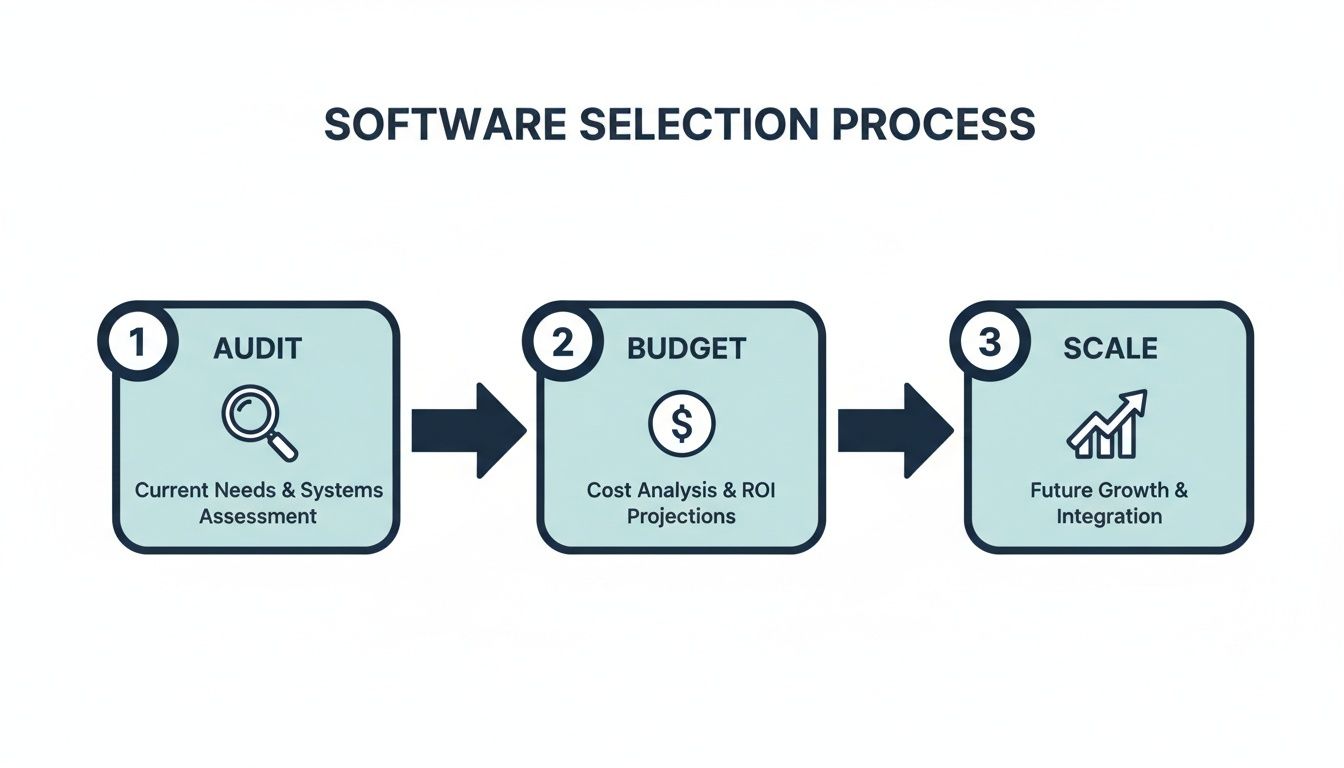
Nailing this process—Audit, Budget, and Scale—is the foundation that a successful implementation is built on.
Phase 4: Phased Rollout and Success Metrics
Resist the temptation of a "big bang" launch where everyone switches over on the same day. That’s a recipe for chaos. A much safer bet is a phased rollout. You could start with just one team or bring one client’s portfolio into the new system first. This approach lets you learn and adjust as you go, minimizing the risk of major disruptions.
Finally, know what success looks like before you even begin. What do you want to achieve in 90 days? Maybe it’s a 15% reduction in hours spent on manual reports or a 10% improvement in project profitability. By setting these concrete goals, you can prove the software’s ROI and cement its role as a vital tool for your agency's future.
Answering Your Most Common Questions
Jumping into digital agency management software is a big move, so it’s completely normal to have a few questions. Let's tackle some of the most common ones we hear from agency leaders. The goal here is to give you straight, clear answers to help you feel confident as you figure out what’s right for you.
How Much Does Digital Agency Management Software Typically Cost?
Honestly, the price is all over the map. The cost really hinges on how many people will be using it, what features you need, and the vendor’s pricing model. It helps to think of it in a few different tiers.
Simple project management tools can start as low as $10 to $20 per user per month. But when you start looking at the more robust, all-in-one platforms built specifically for agencies, that price can climb quickly—anywhere from $50 per user per month to several hundred dollars for larger teams that need advanced features like financial forecasting.
A word of caution: don't just look at the monthly sticker price. Always ask vendors about the costs that might be hiding in the fine print, like:
- Implementation and Onboarding Fees: Some companies charge a one-time fee to get you set up and move your existing data over.
- Premium Support Charges: Basic support is usually included, but if you want priority access to their experts, it might cost extra.
- Integration Costs: Need to connect the software to other tools you already use? That might require paid add-ons or even custom work.
Can Small Agencies or Freelancers Benefit From This Software?
Absolutely. It’s easy to look at a 50-person agency and see why they need a central system, but the perks for small teams and solo operators are just as real. In a lot of ways, this kind of software is what allows a small crew to punch well above its weight class.
For a small agency, it automates the tedious admin work that can swallow a founder’s entire day. It makes your client reporting look more professional, ensures an invoice never gets lost in the shuffle, and keeps projects moving forward even when everyone is wearing multiple hats. Many platforms even offer plans that scale with you, making it an affordable investment that fuels your growth from day one.
How Does Specialized Software Fit With an All-In-One Agency Platform?
This is a fantastic question, especially for agencies that offer highly specialized services. Think of it like a general contractor and a master electrician.
Your all-in-one platform is the general contractor. It oversees the whole project—managing client relationships, tracking overall budgets, and keeping the timeline in check. A specialized tool like REACH Influencers is the master electrician. It comes in to handle the complex, high-stakes wiring of your influencer campaigns with a level of detail and precision the general platform just can't offer. REACH gives you advanced influencer discovery, automated campaign management, and the kind of deep analytics that prove your value.
The smartest tech stacks combine a central "hub" for operations with best-in-class tools for specialized services. This gives an agency total control over its business while delivering expert-level results where it matters most.
Most agencies end up integrating the two. They'll track time and manage the project at a high level in the main system, but they’ll jump into REACH to actually run and report on the influencer campaigns. It's the best of both worlds.
What Is the Biggest Mistake Agencies Make When Adopting New Software?
By far, the most common and expensive mistake is failing to get the team on board and train them properly. You can buy the fanciest, most powerful software on the planet, but if your team doesn’t see the point or doesn’t know how to use it, the whole thing will fall flat.
Remember, technology is just a tool; it’s the people who make it work. A successful rollout needs a clear plan that puts your team first.
This means you have to:
- Communicate the 'Why': The agency leaders need to be crystal clear about why this change is happening and how it’s going to make everyone's lives easier by solving real problems.
- Provide Comprehensive Training: Don't just do a one-size-fits-all demo. Training should be specific to each person's role, showing them exactly how this new tool helps them do their job better.
- Find Your Champions: Identify a few people on the team who are excited about the new software. Make them your internal advocates who can help their colleagues and keep the energy positive.
Rushing the process and trying to force it on your team is a surefire way to waste your money and end up with a frustrated staff.
Choosing the right digital agency management software is foundational to scaling your operations and improving profitability. By centralizing your workflows and integrating powerful, specialized tools, you can eliminate chaos and focus on what truly matters: delivering exceptional results for your clients.
Ready to streamline your influencer marketing and deliver results that will blow your clients away? REACH Influencers is the all-in-one platform built for agencies that want to scale their influencer campaigns without the chaos. Discover influencers, manage campaigns, and prove your ROI with our powerful, intuitive dashboard.