 Skip to content


In today's digital landscape, effective influencer program management for nonprofits is no longer a luxury—it's a critical component of a mission-driven marketing strategy. It’s not about finding the biggest names out there; it's about building authentic partnerships with voices who truly care about your cause and can drive real results, whether that's donations, volunteer sign-ups, or getting your message to a wider audience. To succeed, you need a clear plan, the right partners, and a streamlined workflow.
This comprehensive guide will walk you through every stage of managing a successful nonprofit influencer program, from setting mission-aligned goals to measuring your true impact. We'll leverage insights from platforms like REACH Influencers, which is designed to help nonprofits discover authentic creators, manage campaigns, and track ROI all in one place. By the end, you’ll have a practical framework for launching and scaling an influencer program that amplifies your mission and delivers measurable outcomes.
Table of Contents
- Building Your Nonprofit Influencer Strategy
- Finding and Recruiting Mission-Driven Influencers
- Crafting Compelling Incentives on a Nonprofit Budget
- Streamlining Your Influencer Management Workflow
- Measuring the True Impact of Your Influencer Campaigns
- Got Questions? We’ve Got Answers.
Building Your Nonprofit Influencer Strategy
Staring at the vast world of influencer marketing can feel overwhelming for a nonprofit, especially when resources are tight. Where do you even begin? The key to effective influencer program management for nonprofits is to build a solid foundation with a clear purpose, ensuring every partnership and every piece of content directly supports your mission.
This isn't about chasing vanity metrics. It's about creating a sustainable program that works within your limitations and delivers real, measurable impact. Without a plan, you risk pouring precious time and money into partnerships that just don’t move the needle on what matters most.

Defining Your Mission-Aligned Goals
Before you even start looking for influencers, you need to know what success looks like. Your goals will shape every single decision you make down the line. Are you trying to reach a younger group of potential donors? Maybe you need to get more boots on the ground for an upcoming event.
Common goals for nonprofit influencer programs often fall into a few key buckets:
- Boosting Donations: This could mean driving traffic to a specific fundraising campaign or growing your base of recurring monthly donors.
- Recruiting Volunteers: Getting people to sign up for local or even virtual volunteer opportunities.
- Raising Awareness: Simply educating the public about an important issue or letting them know about a new initiative.
- Driving Advocacy: Pushing for specific actions, like signing a petition, contacting government representatives, or sharing critical information.
My Advice From the Trenches: Don't try to do it all at once. The most successful programs I've seen focus on one or two primary goals per campaign. Trying to achieve everything just dilutes your message and makes it impossible to measure what’s actually working.
For example, an animal shelter's goal might be to increase adoptions by 15% by partnering with local pet influencers. That's a specific, measurable target that gives both you and your influencer partners a clear finish line to aim for.
Identifying Your Ideal Influencer Profile
Once your goals are set, it’s time to figure out who can help you get there. It's so tempting to get star-struck by follower counts, but for nonprofits, authenticity and audience alignment are everything. The right influencer isn't just popular; they're a trusted voice whose personal values line up perfectly with yours.
Look past the numbers and dig into what really matters:
- Value Alignment: Do they have a track record of supporting similar causes? Does their personal brand feel genuine and in sync with your mission? A quick scroll through their history often tells you all you need to know.
- Audience Demographics: Is their audience the community you want to reach? A creator with 10,000 highly engaged local followers is often way more valuable than one with 100,000 followers scattered across the globe.
- Engagement Rate: Look for creators whose followers are actually talking back. Lots of comments, shares, and genuine discussion are signs of a strong, trusted relationship.
To help you get started, this table breaks down the essential pillars you need to think through. It's a simple way to organize your thoughts and make sure you're not missing any crucial steps.
Key Pillars of a Successful Nonprofit Influencer Strategy
| Strategy Pillar | Key Questions to Answer | Example for a Clean Water Charity |
|---|---|---|
| Primary Goal | What is the #1 outcome we need to achieve? Is it measurable? | Increase recurring monthly donations by 20% in Q4. |
| Target Audience | Who are we trying to reach? What are their interests and online habits? | Millennials (25-40) who are environmentally conscious and active on Instagram and TikTok. |
| Influencer Profile | What makes an influencer a good fit? (Values, niche, engagement) | Creators focused on sustainability, ethical living, or outdoor adventure with high engagement rates. |
| Key Platforms | Where does our target audience spend their time? | Instagram (Reels, Stories) and TikTok for short-form video content. |
| Core Message | What is the simple, compelling story we want them to share? | "Your $10 a month can provide a family with clean, safe drinking water for a year." |
Thinking through these pillars gives you a solid blueprint. It moves your strategy from a vague idea to an actionable plan, setting you up for partnerships that truly make a difference.
Platforms like REACH Influencers are designed to help you pinpoint these ideal partners. Instead of spending days searching manually, you can filter creators by location, audience demographics, engagement rates, and even keywords related to social good. This targeted approach saves a ton of time and connects you with people who are far more likely to form a genuine, impactful partnership.
In fact, influencer programs are now a critical part of modern nonprofit marketing. Recent reports show that around 94% of nonprofits running these partnerships use Instagram, using its visual storytelling to build deeper connections and boost fundraising. You can discover more social media insights for nonprofits to see how different platforms stack up.
Finding and Recruiting Mission-Driven Influencers
Once your strategy is locked in, the real hunt begins. Finding influencers who are genuinely passionate about what you do is the absolute cornerstone of a successful nonprofit program. Forget mass emails and generic pitches. This is about making a real human connection with people who can become true champions for your mission.
The right partners are out there, but they’re often buried under a sea of sponsored content. Your job is to know where to look and how to approach them with an offer that speaks to their values, not just their wallet.
Where to Discover Authentic Voices
Finding people who truly care requires a mix of smart searching and the right tools. More often than not, your ideal partners are already talking about the issues that matter to your organization. You just have to tune into the right conversations.
Start by manually searching on platforms like Instagram and TikTok. Don't just search for broad terms. Get specific. Think about the hashtags and keywords that genuine advocates would actually use.
- For an environmental nonprofit: Look for tags like
#SustainableLiving,#ZeroWasteHome, or#ClimateActionNow. - For a local food bank: Search for creators using
#CommunityAction,#EndHunger, or even check geo-tagged posts from local volunteer events. - For a mental health organization: Dig into content under
#MentalHealthMatters,#SelfCareTips, or#EndTheStigma.
This hands-on approach is fantastic for getting a feel for the landscape, but it’s slow. To speed things up, a platform like REACH Influencers is a lifesaver. It lets you filter a huge database of creators by their interests, audience demographics, and even their history with social good campaigns. It saves countless hours and helps you find people who have already put their values into action. For more tips on this, check out our guide on how to find influencers for your cause.
Vetting for True Alignment
So you've got a list of potential partners. Now comes the crucial part: separating the passionate advocates from those just looking for their next paid gig. Honestly, their follower count is the least important metric here.
Instead, look for these tell-tale signs:
- Content History: Do they consistently post about topics related to your cause, even when no one is paying them? That's genuine interest right there.
- Audience Engagement: Don't just glance at the likes; read the comments. Are their followers having real conversations? An engaged community is far more valuable than a massive, passive one.
- Authentic Voice: Does their personality feel real? The best partners for nonprofits are the ones whose storytelling feels like it’s coming from a trusted friend.
The influencer market is projected to hit $32 to $33 billion in 2025, and within that space, micro-influencers are a secret weapon for nonprofits. They often drive up to 60% higher engagement than bigger names. Their smaller, tight-knit communities offer the trust you need to inspire real action, which is a huge win for any organization working with a tight budget. You can discover more influencer marketing statistics that back this up.
The Art of a Personal Outreach
Your first message is everything. It sets the tone for the entire relationship. A generic, copy-pasted template is the fastest way to get ignored. The best outreach is personal, respectful, and focused on shared values.
My Pro Tip: Build the relationship before you make the ask. Follow them. Genuinely engage with their content for a week or two. Share a post you find interesting. By the time you slide into their DMs, you're no longer a complete stranger.
When you're ready to send that first message, make sure you hit these key points:
- Make a Personal Connection: Start by mentioning a specific post of theirs that resonated with you and briefly explain why it connects to your mission.
- State Your "Why" Clearly: In a sentence or two, tell them what your nonprofit does and why you believe their voice would be a powerful force for your cause.
- Use a Soft Call-to-Action: Don't ask them to partner right away. Instead, invite them to a quick, no-pressure chat to learn more about your work.
This thoughtful approach shows you see them as a person and a creator, not just a marketing channel. It’s the first step in building a genuine, lasting partnership that can truly amplify your mission.
Crafting Compelling Incentives on a Nonprofit Budget
Let’s be honest—most nonprofits can't go head-to-head with the big corporate brands and their massive influencer budgets. So, how do you put together an offer that creators will actually get excited about? The trick is to stop thinking purely in terms of cash and start focusing on the value of your mission and the unique experiences you can provide.
A successful influencer program management for nonprofits is all about understanding what really drives a creator. Sure, fair pay is important, but a lot of influencers genuinely want to use their platform for good. When you frame a partnership as a chance to make a real, tangible difference, you're offering something that money can't buy.
Moving Beyond Monetary Compensation
While having a budget for paid collaborations is great, a lack of one doesn't have to be a dealbreaker. Many creators, especially micro-influencers who have really strong connections with their audience, are open to non-monetary perks that align with their own values.
Think about what your organization can offer that no one else can. These kinds of incentives often feel way more special and meaningful than a check.
- Exclusive Access: Invite an influencer to see your work firsthand. This could be a tour of your facility, a visit with the communities you serve, or a behind-the-scenes look at a project. A wildlife conservation group, for example, could offer a private tour of an animal rehabilitation center—an experience that leads to incredibly powerful, authentic content.
- Skill-Building Opportunities: Offer them a spot on a special committee, an invitation to speak on a panel, or even some media training. It’s a win-win: they get a chance to grow professionally, and you get their expertise.
- Public Recognition: Give them a real shout-out for their support. You could feature them in your annual report, honor them at your next fundraising gala, or give them a dedicated spotlight in your newsletter.
- Direct Impact Storytelling: Let them be the one to tell the story of a specific person or project their partnership helped fund. There's nothing more motivating than seeing a direct line between their work and a positive outcome.
The most powerful incentive you can offer is the story itself. Giving an influencer a front-row seat to your mission allows them to create content that is not only genuine but also deeply moving for their audience.
Structuring Fair Compensation When Funds Are Available
When you do have a budget to work with, it's so important to be fair and strategic about how you structure payments. This builds trust from the get-go and shows that you truly value the creator's time, energy, and audience. Thankfully, there are several models that work well for nonprofits on a tight budget.
One of the most effective approaches is a performance-based model. Instead of a big, flat fee upfront, you can tie their compensation directly to the campaign's goals. For instance, you could offer an influencer a percentage of all donations that come through their unique tracking link. This seriously lowers your upfront financial risk and ensures your budget is spent on getting actual results.
Designing Tiered Incentive Packages
Not all influencers have the same reach or engagement, so a one-size-fits-all offer just won't work. By creating different tiers of incentives, you can tailor your packages to everyone from nano-influencers just starting out to creators with much larger followings. This kind of structured approach makes your influencer program management for nonprofits much easier to scale over time.
Having a clear breakdown of your incentive models can make the conversation with potential partners much smoother. I've found that a simple comparison table helps everyone get on the same page quickly.
Comparing Influencer Incentive Models for Nonprofits
This table breaks down various monetary and non-monetary compensation options, helping you choose the best approach based on your budget and the influencer's tier.
| Incentive Type | Best For (Influencer Tier) | Pros | Cons |
|---|---|---|---|
| Non-Monetary Perks | Nano & Micro (Under 25k) | Low cost, builds authentic relationships, attracts passionate advocates. | May not be appealing to creators who rely on this as their primary income. |
| Product Gifting + Small Stipend | Micro (10k-50k) | Affordable, covers creator costs, shows you value their time. | The stipend may not be enough for creators with higher engagement rates. |
| Performance-Based (Affiliate) | Micro & Mid-Tier (10k-250k) | Low risk, directly tied to ROI, motivates high performance. | Unpredictable earnings can be a deterrent for some influencers. |
| Flat Fee Per Deliverable | Mid-Tier & Macro (50k+) | Predictable budget, clear expectations, preferred by professional creators. | Higher upfront cost, not directly tied to performance metrics like donations. |
By mixing and matching these options, you can put together compelling offers that respect both your budget and the value a creator brings to the table. At the end of the day, the best partnerships are built on mutual respect and a shared passion for making the world a better place.
Streamlining Your Influencer Management Workflow
A great influencer program runs on more than just goodwill and exciting ideas—it needs a solid, efficient system to back it up. Without a clear workflow, even the most promising partnerships can get lost in a sea of missed deadlines, confusing feedback, and endless email chains.
Proper influencer program management for nonprofits is all about creating a process that supports creativity while still protecting your organization. It's the structure that saves your team from spreadsheet headaches and ensures every post is on-brand, compliant, and true to your mission.
Laying the Groundwork with Clear Agreements
Before any content gets created, you need a solid influencer agreement. Think of this document as your safety net—it sets crystal-clear expectations for both you and the creator right from the start. This isn’t about being overly corporate; it’s about making sure everyone is on the same page to prevent simple misunderstandings down the road.
Your agreement should be straightforward and cover these essentials:
- Campaign Timeline and Deliverables: Get specific here. Detail exactly what you need (e.g., two Instagram Reels, one blog post), when drafts are due, and the final go-live dates.
- Content Usage Rights: Define how you can use the influencer's content. Can you feature it on your website, in donor emails, or in fundraising ads? Be clear about how long you have these rights—whether it's for one year or in perpetuity.
- FTC Disclosure Guidelines: This is an absolute must. The contract must require the influencer to clearly disclose their partnership with your nonprofit. Using hashtags like #ad or #charitypartner builds trust and keeps you compliant.
- Compensation and Payment Terms: Spell out the compensation, whether it’s a flat fee, a cool non-monetary perk, or a performance-based incentive. Make sure to include when they can expect payment.
Creating a Smooth and Collaborative Content Approval Process
The content creation stage is where the magic happens, but it can quickly become a bottleneck. A clunky approval process can drain a creator's enthusiasm and bring a campaign to a grinding halt. Your goal should be to provide helpful, constructive feedback without killing their creative spark.
The best feedback is a conversation, not a command. Frame your suggestions around the campaign goals. Instead of saying "Change this," try asking, "How can we make the call-to-action for donations even stronger here?"
To keep things moving, ditch the confusing email threads and use a centralized place for feedback. Leaving comments directly on content drafts is a game-changer. This is where you might look into the best social media management tools for nonprofits or dedicated influencer platforms that provide a single space for communication, reviews, and approvals.
This diagram breaks down a simple but highly effective workflow that I’ve seen work time and time again.
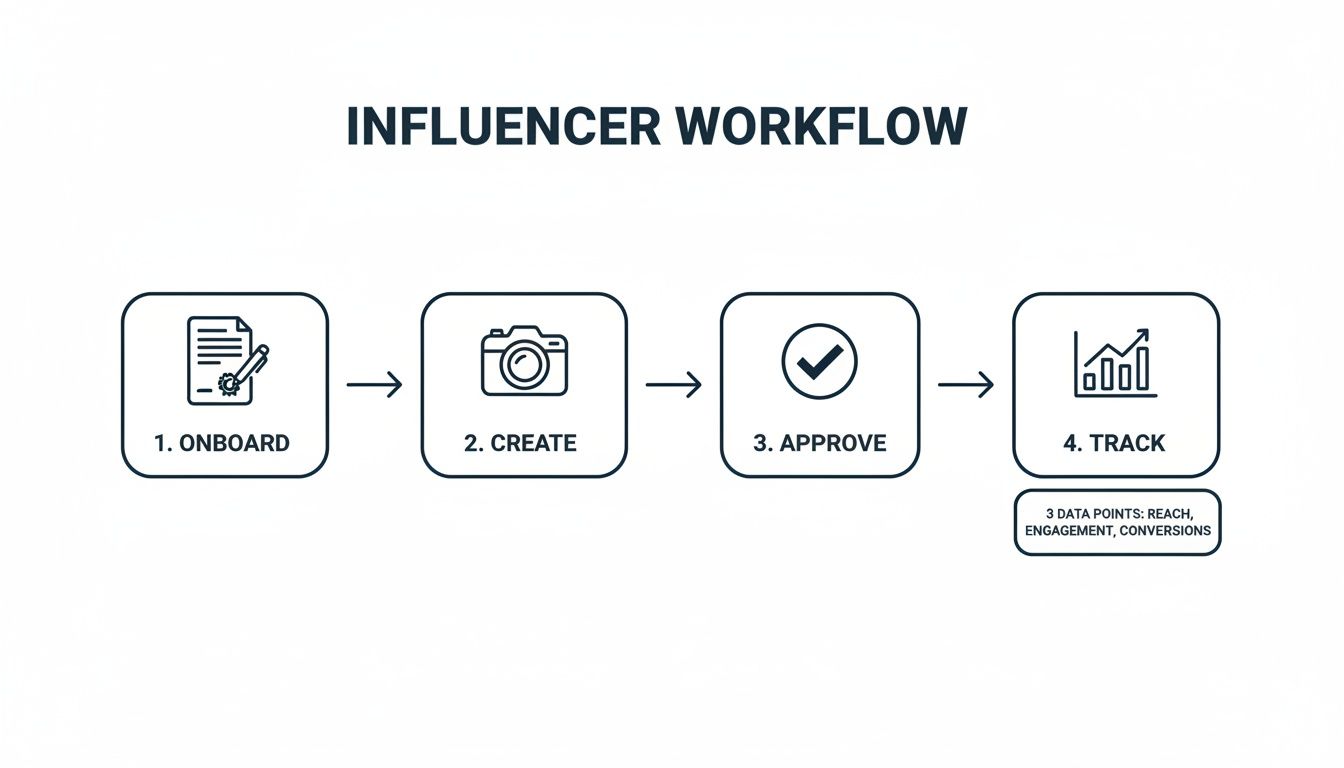
Following a simple structure like this—Onboard, Create, Approve, Track—makes sure nothing falls through the cracks and keeps the campaign humming along.
Centralizing Communication and Tracking Your Deliverables
Managing one or two influencers manually is one thing. But when your program grows to ten or more, trying to track contracts, drafts, links, and performance data in separate documents is a recipe for chaos. Centralizing your influencer program management for nonprofits is the only way to scale effectively.
A dedicated platform quickly becomes your best friend. It acts as the single source of truth for your entire program, keeping all your assets and conversations neatly organized.
- One Hub for Communication: All messages, creative briefs, and feedback are stored in one clean thread per influencer. No more digging through your inbox.
- Easy Deliverable Tracking: A quick glance at a dashboard can show you which posts are in progress, which are awaiting your review, and which are live.
- Automated Nudges: Many platforms can send out automated reminders for upcoming deadlines, which helps keep both your team and your influencers on track without you having to play police.
By bringing in tools to handle these administrative tasks, you free up your team to focus on what really moves the needle: building authentic relationships and driving real impact for your cause. You can learn more about how to streamline your process with influencer marketing automation to save precious time and boost your program's efficiency.
Measuring the True Impact of Your Influencer Campaigns
So, how do you walk into a board meeting and prove this whole influencer thing is actually working? When you're managing an influencer program for a nonprofit, success isn't just about likes and views. To justify your budget and grow the program, you have to track the results that push your mission forward.
Likes are nice, but they don't keep the lights on or recruit volunteers. The real story is told in tangible actions—donations, volunteer sign-ups, petition signatures. Your job is to connect the dots between an influencer’s post and a supporter taking that crucial next step.
Setting Up Your Tracking Foundation
If you can’t measure it, you can’t prove it. Accurate tracking starts with having the right tools in place. Guesswork won't cut it when you need to show that a specific influencer drove a specific action. You need a clear digital trail.
Thankfully, you don't need a complex or expensive setup. A few simple tools do most of the heavy lifting:
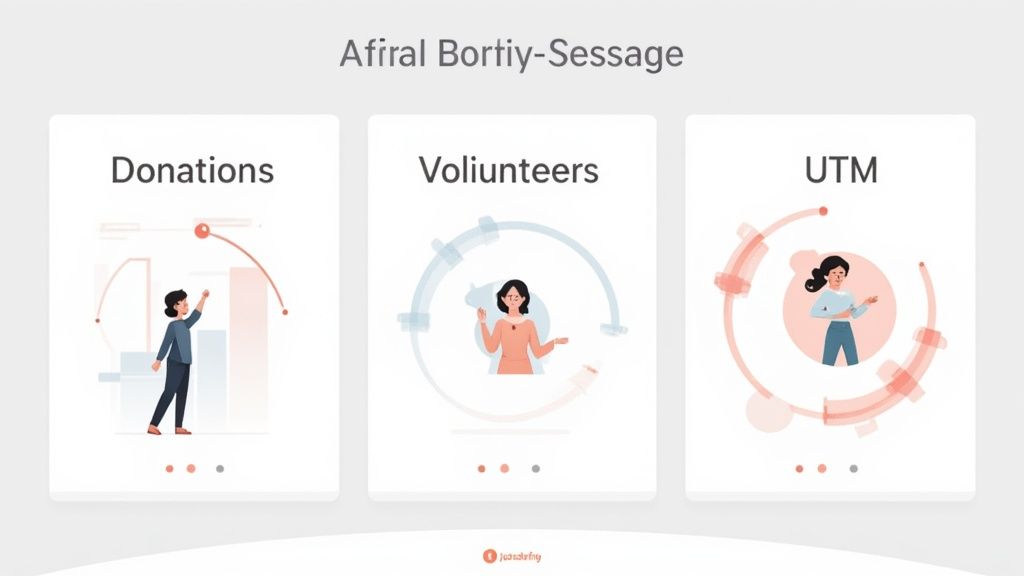
- Unique Tracking Links: This is the most straightforward method. Give each influencer their own custom URL for your donation or sign-up page. It immediately tells you who's driving traffic and, more importantly, conversions.
- UTM Parameters: These are little tags you add to the end of a URL. They don't look like much, but they feed your analytics software with rich data—the influencer's name, the platform they posted on, and the specific campaign. It's incredibly powerful.
- Custom Landing Pages: For your bigger campaigns or top-tier partners, think about building a dedicated page for each one. Not only does this make tracking a breeze, but it also lets you personalize the message for their audience, which can really boost results.
At the end of the day, this is all about outcome measurement. It’s a shift in thinking from "what we did" (outputs) to "what difference we made" (outcomes).
Key Performance Indicators That Matter for Nonprofits
Once your tracking is solid, you can zero in on the KPIs that actually mean something to your organization. While every campaign will have unique goals, there are a few metrics that are almost universally important for nonprofits.
It’s about digging past the surface-level numbers to find the data that tells the real story.
- Conversion Rate: Of all the people who clicked an influencer's link, what percentage actually donated or signed up? This tells you how persuasive their content was.
- Cost Per Acquisition (CPA): How much did it cost to get one new donor or volunteer from a specific influencer? This is your go-to metric for calculating ROI.
- Donation Amount Per Influencer: Tracking the total funds raised by each partner helps you quickly identify your most valuable relationships.
- Advocacy Actions Taken: Don't forget non-monetary goals. Count the number of petition signatures, letters sent, or shares on an important educational post.
Don't just report numbers; tell a story with your data. A dashboard showing that Influencer A drove 50 new recurring donors at a $15 CPA is far more powerful than saying their posts got 10,000 likes.
Visualizing Success with Reporting Dashboards
Let's be honest, leadership doesn't have time to sift through spreadsheets. Presenting your results in a clear, visual format is the best way to get their buy-in. A good dashboard turns all that raw data into a compelling story about your program's impact, making your influencer program management for nonprofits feel transparent and essential.
Some platforms, like REACH Influencers, have built-in analytics that automatically track clicks, conversions, and ROI, putting this data right at your fingertips. It makes it much simpler to generate live reports that show which influencers and what content are hitting the mark. If you want to get into the nitty-gritty, we have a whole guide on how to measure influencer engagement and ROI.
The most successful nonprofit strategies today are data-informed. I’ve seen case studies where personalized social media campaigns led to a 78% increase in fundraiser signups and an incredible 160% jump in active fundraisers. These aren't outliers; they show a clear trend where nonprofits leveraging influencer and supporter-generated content are seeing far better results than they ever did with traditional ads.
Got Questions? We’ve Got Answers.
Jumping into influencer partnerships can feel like a whole new world, especially when you're a nonprofit juggling a million other priorities. It’s natural to have questions. We’ve pulled together some of the most common ones we hear from organizations just like yours to give you clear, straightforward advice.
Think of this as your go-to cheat sheet for handling the tricky parts of nonprofit influencer programs, from figuring out your budget to knowing what to do when things don’t go as planned.
How Much Should We Actually Budget for This?
This is the million-dollar question, but the answer is surprisingly simple: start where you are. You don't need a massive budget to get started.
A pilot program can be incredibly powerful, especially when you focus on micro-influencers. These are creators who are often genuinely passionate about causes and might be happy to partner for gifted items, unique experiences, or a very small fee. You could realistically test the waters with just a few hundred dollars to cover the basics.
Once you see what works, you can build from there. An established program with proven results might set aside $5,000 to $15,000 per campaign to collaborate with a wider mix of creators.
The real key is to connect your spending directly to your goals. When you can show that a partnership led to a specific number of donations or volunteer sign-ups, it's much easier to justify a bigger budget next time. And don't forget the "soft costs"—things like management tools, shipping, and, most importantly, the hours your team puts in.
What Are the Big Legal Must-Dos?
When it comes to protecting your organization, two things are non-negotiable: contracts and disclosures. No matter how friendly or informal a partnership feels, you absolutely need these in place. It’s about protecting your nonprofit’s reputation and being a good, transparent partner to the influencer.
First up, always have a formal agreement or contract. This isn't just a formality; it's your roadmap for the partnership. It should spell out:
- The exact deliverables: How many posts, what kind (e.g., one Instagram Reel, three Stories), and on what platforms.
- The timeline: Clear deadlines for drafts and when the content goes live.
- Content rights: What can you do with their content after they post it? Can you use it on your website or in an email newsletter?
- Payment details: How much, when, and how you’ll pay them.
Second, you have to follow FTC guidelines on disclosures. This means the influencer must make it crystal clear that they're partnering with you. A simple #ad or #charitypartner at the very beginning of the caption is the standard way to do this. Make this a requirement in your contract so there’s no confusion.
What Happens if an Influencer Posts Something That’s… Off-Brand?
Let’s be honest, this is a common fear. But the best way to handle this is to prevent it from happening in the first place. A solid vetting process and a crystal-clear creative brief will solve 99% of potential problems before they start. When everyone is on the same page about the message, tone, and look from day one, mishaps are rare.
But if something slips through, the key is to act fast, stay calm, and keep it private. Get in touch with the influencer directly. Don't accuse; instead, gently point out the issue and refer back to the brief or contract you both agreed on.
If it’s a small thing, like a typo or a photo that isn’t quite right, just ask for a quick edit. If it’s a major misstep that misrepresents your mission, you’ll need to ask them to take the post down.
Your contract should give you final approval and the right to request removal if the content doesn't meet the agreed-upon standards. By approaching it as a collaborative conversation, you can often fix the problem without burning the bridge.
Can We Really Work with Influencers Who Aren’t Experts on Our Cause?
Absolutely! In fact, sometimes they’re the best people for the job.
Think about it: an influencer who is learning about your work right alongside their audience brings a natural curiosity and authenticity to the table. Their journey of discovery can be a powerful story that feels genuine and trustworthy, introducing your mission to a whole new group of people in a very human way.
The trick is to equip them for success. Give them a fantastic, easy-to-digest briefing packet with key facts, compelling stories, and access to someone on your team who can answer their questions. Their job isn’t to be a policy wonk; it's to be a passionate storyteller.
Ready to streamline your influencer program management for nonprofits and drive measurable results for your cause? REACH Influencers provides the tools you need to discover authentic partners, manage campaigns efficiently, and track your true impact—all in one place. By centralizing your workflow, you can save time, build stronger creator relationships, and focus on what truly matters: amplifying your mission.
Learn more about how REACH can amplify your mission
{
“@context”: “https://schema.org”,
“@type”: “BlogPosting”,
“mainEntityOfPage”: {
“@type”: “WebPage”,
“@id”: “https://reach-influencers.com/influencer-program-management-for-nonprofits”
},
“headline”: “Influencer Program Management for Nonprofits: A Step-by-Step Guide”,
“description”: “Discover how to build, manage, and scale a successful influencer program for your nonprofit. This guide covers strategy, recruitment, workflow, and measurement to amplify your mission and drive results.”,
“image”: “https://cdn.outrank.so/64cdc0e0-2a54-4cd9-a45d-c4196c5e1d4e/26bd922d-272f-4580-a395-64dde1d5db77/influencer-program-management-for-nonprofits-team-collaboration.jpg”,
“author”: {
“@type”: “Organization”,
“name”: “REACH Influencers”
},
“publisher”: {
“@type”: “Organization”,
“name”: “REACH Influencers”,
“logo”: {
“@type”: “ImageObject”,
“url”: “https://reach-influencers.com/logo.png”
}
},
“datePublished”: “2024-10-26”
}