 Skip to content


Meta Description: What is the true micro influencer definition? Discover why creators with 10k-100k followers deliver higher engagement and ROI, and learn how to find and partner with them effectively.
Table of Contents
- The Modern Micro-Influencer Definition
- Why Engagement Matters More Than Followers for the Micro Influencer Definition
- The Business Impact of Micro-Influencer Partnerships
- How to Find and Vet the Right Micro Influencers
- How to Scale Your Micro Influencer Program
- Wrapping It Up: What Really Defines a Micro-Influencer?
- Frequently Asked Questions
So, what exactly is the modern micro influencer definition?
Think of them as creators with a following that's substantial but not massive—typically somewhere between 10,000 and 100,000 people. They've carved out a space for themselves by building a tight-knit community around a specific niche or passion.
They aren't distant celebrities; they’re more like the trusted, go-to expert in your circle. Their real value isn’t just the number of followers they have, but the genuine connection and trust they’ve built with those people. At REACH Influencers, we help brands harness this power by connecting them with creators who drive authentic engagement and measurable results.
The Modern Micro-Influencer Definition
Let's dig a little deeper than just follower counts. What truly defines a micro-influencer is their relatability and deep knowledge in their specific area. They're the foodies who know the best-hidden gems in town, the fitness coaches whose advice you actually follow, or the skincare junkies whose recommendations feel like they're coming from a close friend.
This blend of being both an expert and someone who feels approachable is what makes them such powerful partners for brands.
Micro-influencers occupy a real sweet spot. They have a large enough audience to make a measurable impact, yet they're still small enough to have personal, one-on-one conversations with their followers. It’s that direct engagement that builds a kind of trust larger creators often can't match.
Understanding the Follower Count Spectrum
In the world of influencers, audience size is the most common way to categorize creators. The general consensus puts micro-influencers in the 10,000–100,000 follower range on platforms like Instagram, TikTok, and YouTube.
- Creators with fewer than 10,000 followers are usually called nano-influencers.
- Those with over 100,000 start moving into the macro and mega-influencer tiers.
If you're interested in a more detailed look at these tiers, you can find great influencer marketing insights that break it down even further.
To really see how these groups compare, let's lay them out side-by-side.
Influencer Tiers at a Glance
| Influencer Tier | Follower Range | Key Strength |
|---|---|---|
| Nano | 1k – 10k | Hyper-niche communities and sky-high engagement |
| Micro | 10k – 100k | The perfect balance of reach and authentic trust |
| Macro | 100k – 1M | Broad awareness and a professional content polish |
| Mega/Celebrity | 1M+ | Massive, celebrity-level reach |
This table makes it clear why so many brands are drawn to the "micro" tier—it hits that ideal middle ground.
The main thing to remember is that the micro-influencer definition is less about hitting an exact number and more about their function. They're big enough to build awareness but small enough to keep it personal.
This visual helps put it all into perspective, showing where micro-influencers fit into the bigger picture.
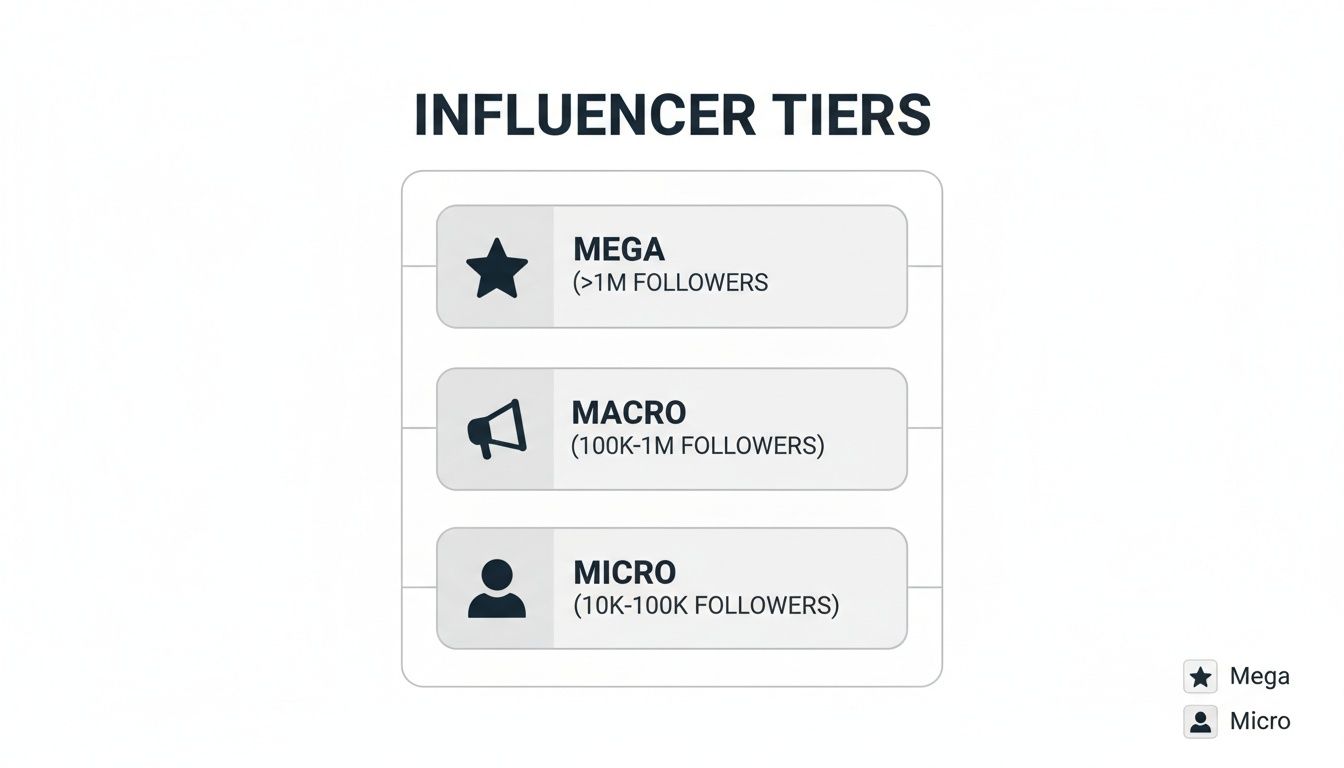
As you can see, they sit right in that crucial spot that balances meaningful reach with the high engagement that actually gets people to act.
Beyond the Numbers
At the end of the day, a true micro influencer definition goes beyond just looking at stats on a screen. It’s about finding people whose followers genuinely listen to them, trust their judgment, and act on what they recommend.
For brands, this means looking past the follower count to find partners who truly align with their values and can speak to customers in an authentic way. This is exactly why platforms like REACH exist—they give you the tools to look deeper, analyzing audience demographics, engagement quality, and niche relevance to make sure your partnerships are built on a rock-solid foundation of genuine influence.
Why Engagement Matters More Than Followers for the Micro Influencer Definition
For a long time, the name of the game was "more followers is better." But to really get what a micro-influencer is, we have to flip that idea on its head. True influence isn't about how many people see your content; it's about how many people act on it.
Think about it: a creator with 25,000 fans who hang on their every word is infinitely more valuable than one with 250,000 who just scroll on by.
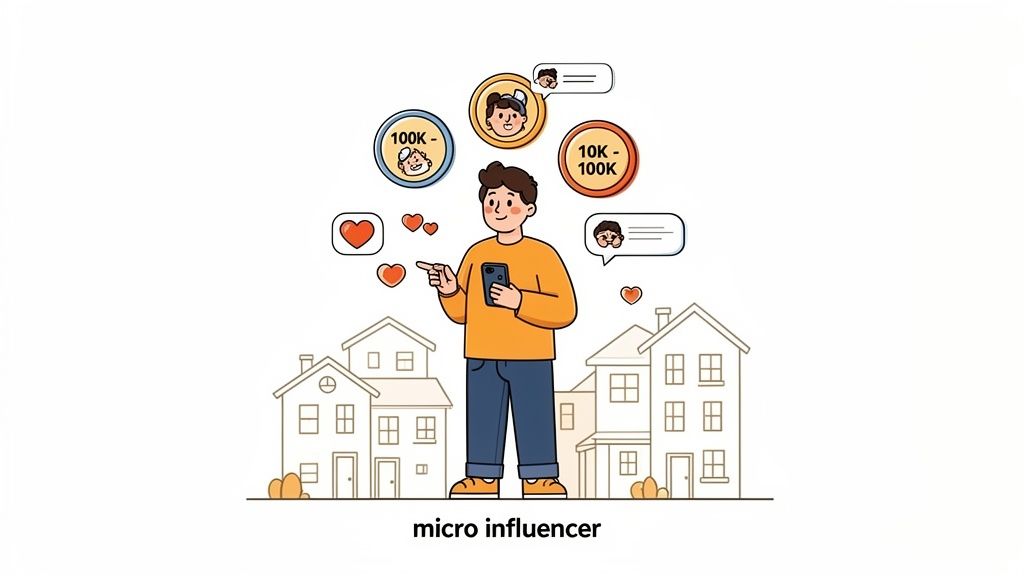
It’s like the difference between speaking in a massive, silent stadium versus hosting an intimate workshop. The workshop is where the real magic happens—questions get asked, ideas are shared, and connections are made. Micro-influencers are hosting these powerful little "workshops" with their audience every single day.
The Numbers That Actually Show Influence
A big follower count can be just a vanity metric. If you want to find real influence, you have to look at the numbers that show an active, thriving community.
Here’s what you should be looking for instead:
- Comment Quality: Forget the fire emojis. Are people leaving thoughtful comments and starting real conversations? That's a sign they're truly tuned in.
- Share Velocity: How often is their content getting shared? A share is the ultimate stamp of approval. It means someone found the content so good they wanted their own friends to see it.
- Audience Sentiment: What’s the general vibe in the comments section? When you see overwhelmingly positive and enthusiastic feedback, you know the creator has built a strong, trusting relationship with their audience.
These metrics give you a much clearer picture of who can actually get their audience to take action. To really get into the weeds, you'll want to understand what is a good engagement rate and the specific benchmarks to look for.
When we talk about performance, the modern micro influencer definition is all about their engagement rate. The data doesn't lie: micro-influencers on Instagram average an engagement rate around 3.86%, while mega-influencers often get just 1.21%. That's more than three times the interaction.
On a platform like TikTok, the gap is even wider. Creators with fewer than 15,000 followers can pull in a massive 17.96% engagement rate. This is why so many marketers call them the "engagement sweet spot."
These creators are still small enough to reply to comments and answer DMs, which builds an incredible sense of community and trust. That's why they're often the most effective partners for brands—they offer solid reach combined with amazing interaction. To make the most of this, it helps to know the fundamentals behind building that connection. You can learn more about the proven social media engagement strategies that make it all happen.
This is where a platform like REACH Influencers comes in handy. It gives you the tools to look past the surface-level follower count and see the metrics that really matter. Our dashboard lets you peek behind the curtain, so you can find partners who don’t just have an audience—they have an audience that listens, trusts, and acts. It's about investing in relationships that actually drive results.
The Business Impact of Micro-Influencer Partnerships
Okay, so you know the micro influencer definition. But how does that actually help your business? This is where the magic happens. The genuine connection and high engagement these creators have with their audience aren't just feel-good metrics; they translate directly into real, tangible results for your brand. It’s about choosing meaningful impact over a massive, passive follower count.
This isn't just a hunch; it's a smart financial move. Brands are increasingly putting their money into these partnerships for a few solid, data-driven reasons. Micro-influencers punch way above their weight, delivering a better return on investment, being more budget-friendly, and reaching deep into niche markets that bigger campaigns just can't touch.
Why Niche Reach Drives Higher ROI
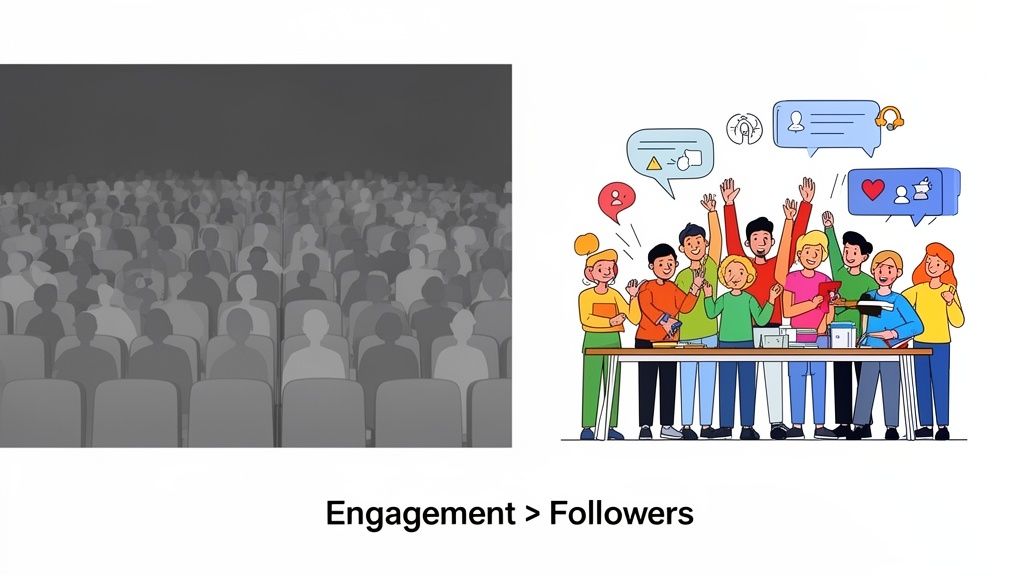
Here's an easy way to think about it. A mega-influencer's audience is like a giant, sprawling city—full of all sorts of people with different interests. A micro-influencer's audience is more like a dedicated club, where everyone is obsessed with the same thing. If you're selling high-end hiking gear, would you rather talk to 1,000 die-hard hikers or 100,000 people who might not even own a pair of sneakers?
This laser-focused reach is incredibly efficient. When you look at the numbers, you'll see that micro-influencer campaigns can bring in $5 to $6.50 in revenue for every $1 spent. That’s because you're not paying for wasted impressions. For many marketing pros, the working micro-influencer definition is simply "the creators who get us the best bang for our buck." This trend is backed up by all sorts of influencer marketing statistics.
For example, a new skincare brand used REACH to connect with ten micro-influencers in the "clean beauty" community. Instead of one big, flashy partnership, they got a wave of genuine reviews from voices their target audience already trusted. The outcome? A 400% jump in sales tied directly to their discount codes in just the first month.
Cost-Effectiveness and Scalable Authenticity
The financial upside is huge, especially if you're trying to make every marketing dollar count. For the cost of partnering with a single macro-influencer, you could often team up with an entire squad of micro-influencers. This doesn't just spread your message wider; it creates a much richer library of user-generated content.
This strategy gives you two big wins:
- Diversified Risk: If one partnership doesn't perform as expected, it won’t derail your entire campaign.
- Authentic Social Proof: Seeing multiple creators talk about your product feels far more organic and trustworthy than one big, obviously sponsored post.
But let's be real—managing dozens of individual partnerships can turn into a logistical nightmare. That's where a platform like REACH becomes a game-changer. Our tools handle the tedious parts—finding the right creators, sending outreach, and processing payments—so you can scale your program without drowning in spreadsheets. It lets you focus on the big picture while the platform handles the busywork, turning a great idea into a real growth engine.
How to Find and Vet the Right Micro Influencers
Knowing the micro influencer definition gets you to the starting line. But actually finding the right partners for your brand? That's where the real race begins. To pull off a campaign that truly delivers, you need a smart way to discover and vet creators who genuinely click with your brand's personality and mission.
It all starts with your goals. What are you trying to achieve? Is it brand awareness, direct sales, or just getting a library of amazing user-generated content? The answer will point you to the right type of partner. A creator with a knack for beautiful, aspirational photos is perfect for awareness, while someone who’s a pro at driving sales with discount codes is your go-to for hitting revenue targets.
The Problem with Manual Searching
Let's be honest: trying to find these creators by hand is a grind. You can spend hours, even days, endlessly scrolling through hashtags on Instagram or picking through your competitors' followers. It feels like searching for a needle in a haystack, and there’s no guarantee the person you find has a real, engaged audience. It’s slow, tedious, and nearly impossible to do at scale.
This is exactly why influencer platforms are such a game-changer. Instead of just guessing, you can use powerful tools to find precisely the right people. With a platform like REACH, for example, you can filter creators by their audience's age and location, their specific niche, and even brands they’ve worked with before. This cuts right through the noise, helping you pinpoint perfect partners in minutes, not days. For a closer look at these strategies, our full guide on how to find micro-influencers breaks it all down.
Pro Tip: Your best influencers might already be in your customer list. Finding and activating these existing brand fans is a shortcut to authenticity, since their endorsement comes from a place of genuine loyalty.
Vetting Your Shortlist of Influencers
Once you have a list of potential partners, it's time to dig deeper. This is the vetting stage, where you look past the follower count and really analyze the health and vibe of their community. It's also helpful to understand the broader creator world; resources like a modern guide to various types of models, including influencers, for photo shoots offer great context on different types of creative talent.
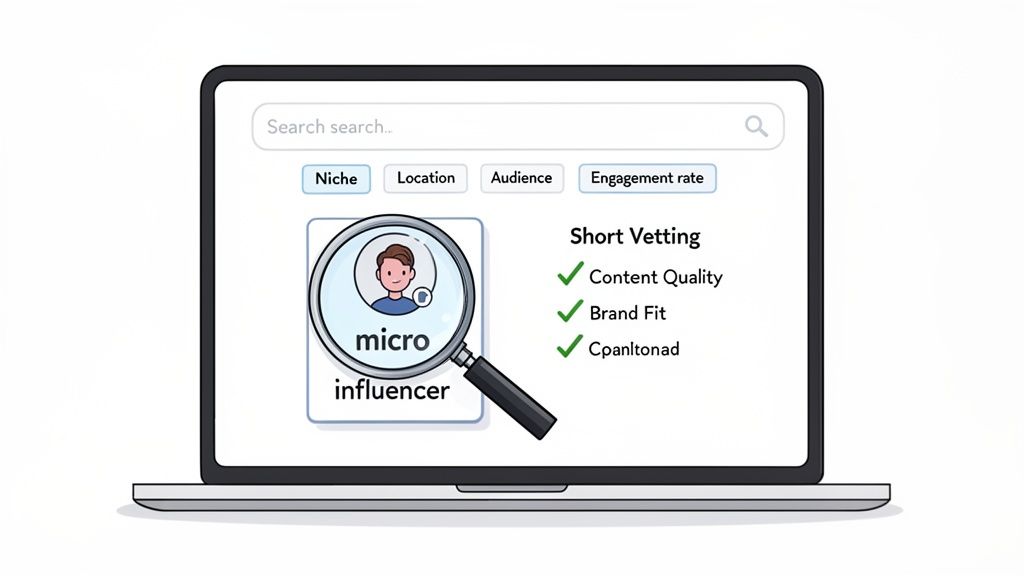
Before you reach out, run each candidate through a quick evaluation. A simple checklist can help you stay objective and spot the difference between a great partner and a potential headache.
Your Micro Influencer Vetting Checklist
Use this table as your guide to systematically review every potential micro-influencer. It helps ensure you're looking at the right signals and avoiding common pitfalls.
| Vetting Criteria | What to Look For | Red Flags |
|---|---|---|
| Content Quality & Vibe | A consistent, professional look that matches your brand’s aesthetic. They post regularly and have a clear voice. | Sloppy visuals, inconsistent posting, or a style that clashes with your brand. |
| Audience Engagement | Real conversations in the comments section. You see genuine questions, replies, and back-and-forth dialogue. | Comments are all generic emojis or one-word replies. High follower count but low likes/comments. |
| Brand Alignment | Past partnerships make sense for their niche. Their personal values seem to align with your company's mission. | They promote anything and everything, including direct competitors or products that contradict your brand values. |
| Authenticity Factor | A healthy mix of personal and sponsored content. Their recommendations feel genuine and earned. | Their feed is just an endless wall of #ad posts. The account feels overly commercialized and impersonal. |
This vetting process might seem like a lot of work, but it’s what separates a "meh" campaign from one that generates real buzz and ROI. Of course, a platform like REACH makes this much easier by providing deep analytics on audience health, engagement rates, and past campaign performance right at your fingertips.
How to Scale Your Micro Influencer Program
Working with one or two micro-influencers is pretty simple. But what happens when you want to bring on twenty, fifty, or even a hundred? This is where most brands get stuck. The very thing that makes these partnerships so powerful—their sheer number and unique voices—also creates a logistical headache. Suddenly, you’re buried in spreadsheets, email threads, and payment reminders.
This operational bottleneck is the biggest reason brands fail to tap into the full potential of micro-influencer marketing. All the manual work—the outreach, the negotiations, signing contracts, approving content, and tracking down payment info for every single person—just doesn't scale. A system that works for five creators completely falls apart with fifty.
From Manual Chaos to Automated Clarity
This is exactly why dedicated influencer marketing platforms exist. Instead of drowning in admin tasks, you can automate and organize the entire workflow from one central dashboard. A platform like REACH is specifically designed to manage the complexity of working with lots of influencers, turning a messy, overwhelming process into a smooth, efficient operation.
Think about it: all your messages, contracts, and content approvals in a single, organized place. That’s the game-changer. REACH helps brands and agencies efficiently handle hundreds of partnerships at once, transforming a complicated strategy into a scalable program that actually drives revenue.
Here are a few of the key tasks that become so much easier:
- Automated Outreach: You can send personalized messages to hundreds of pre-vetted creators in one go, saving an incredible amount of time.
- Centralized Contracts: Use standard templates to create and manage solid legal agreements without the endless email back-and-forth.
- Streamlined Payments: Pay all your partners at the same time, automatically. No more manual invoicing or late payments.
Building a Scalable Influencer Engine
When you get rid of all that manual friction, your team is free to focus on what really moves the needle: building authentic relationships and planning creative campaigns. You get to spend more time perfecting your messaging and less time chasing down content or sending payment reminders.
The real goal of scaling isn’t just to do more of the same—it’s to do it better. When you automate the tedious operational stuff, you ensure consistency, cut down on mistakes, and get the data you need to make your campaigns stronger over time.
This structured system is the foundation for real growth. With the right tools and workflows, you can grow your program from a handful of creators to hundreds without losing that authentic touch. Following a solid framework is essential for making this growth last; our guide on the best practices for influencer marketing provides some great principles for building a program that scales well.
In the end, scaling your micro-influencer program is all about shifting from one-off partnerships to a systematic, repeatable process. With a platform like REACH, you’re not just managing influencers—you’re building a powerful marketing engine that grows right alongside your brand and delivers results you can actually measure.
Wrapping It Up: What Really Defines a Micro-Influencer?
So, where do we land on the micro-influencer definition? After everything we've covered, it’s clear they are so much more than just a follower count. They represent a sweet spot where audience size, genuine engagement, deep niche knowledge, and hard-earned trust all come together.
These creators aren't just broadcasting to a crowd; they're leading conversations within a dedicated community. That’s their superpower. It's what allows them to drive real action, whether that's getting people talking about a new product or making a sale simply because their audience trusts their recommendation.
The question isn't just "what is a micro-influencer?" anymore. It’s "how will you use them to build your brand?"
If you're ready to move from planning to action, you'll quickly realize that juggling even a handful of these partnerships requires serious organization. Keeping track of conversations, contracts, content, and results is a job in itself.
This is where a platform like REACH can give you the structure and confidence to scale your efforts. We take the chaos out of the process, helping you find the right creators, manage your campaigns, and actually measure what's working.
Book a demo of REACH today and see for yourself how we make it easier to build partnerships that deliver incredible results.
Frequently Asked Questions
It's totally normal to have questions when you're diving into the world of influencer marketing. Let's clear up a few of the most common ones so you can get started with confidence.
How Much Do Micro-Influencers Typically Cost?
This is the million-dollar question, but thankfully, the answer is usually much less! There isn't a single flat rate, as the cost really depends on the creator's niche, how engaged their audience is, and what you're asking them to do.
That said, these partnerships are known for being budget-friendly. A single sponsored Instagram post might run you anywhere from $100 to $500. For something more involved, like a dedicated YouTube video, you could be looking at a range of $200 to a few thousand dollars.
Don't forget, many micro-influencers are also open to other kinds of deals, like receiving free products or setting up an affiliate partnership. This is a great way to work together based on performance—you pay them a commission for every sale they drive. It's a win-win that keeps your upfront costs low while giving them a real incentive to create amazing content.
What’s the Difference Between Nano and Micro-Influencers?
The main thing that separates nano and micro-influencers is the size of their audience.
Nano-influencers are the smaller, more intimate creators with follower counts between 1,000 and 10,000. Their communities are often incredibly tight-knit, which is why they tend to have the highest engagement rates of all. If you're running a hyper-local campaign or need to build deep trust, nanos are perfect.
Micro-influencers, on the other hand, sit in that sweet spot of 10,000 to 100,000 followers. They offer a great balance—giving you a lot more reach than a nano-influencer but still feeling personal and authentic. They've built up real credibility in their niche without becoming so famous that they feel out of touch.
How Do I Measure the ROI of a Micro-Influencer Campaign?
Measuring your return on investment (ROI) is about way more than just counting likes and comments. To really know if a campaign worked, you have to connect the results back to your original goals.
Here are a few key metrics (KPIs) you should be tracking:
- Conversion Rate: How many sales, sign-ups, or downloads did you get? You can track this with unique affiliate links or custom discount codes.
- Click-Through Rate (CTR): Of all the people who saw the post, how many actually clicked the link to visit your website?
- Cost Per Engagement (CPE): This tells you how much you paid for each meaningful interaction (like, comment, share, or save). Just divide the total campaign cost by the total number of engagements.
This is where a dedicated platform is a lifesaver. For instance, a tool like REACH automatically tracks all these KPIs in one place. You get a clear, simple dashboard showing exactly which partnerships are driving real revenue and engagement, so you can double down on what’s working.
Ready to stop guessing and start building a high-impact influencer program? REACH provides the tools you need to discover, manage, and measure your campaigns with confidence. Book a demo today to see how our platform can help you scale your brand.
{
“@context”: “https://schema.org”,
“@type”: “BlogPosting”,
“mainEntityOfPage”: {
“@type”: “WebPage”,
“@id”: “https://reach-influencers.com/micro-influencer-definition/”
},
“headline”: “Your Guide to the Real Micro Influencer Definition”,
“description”: “What is the true micro influencer definition? Discover why creators with 10k-100k followers deliver higher engagement and ROI, and learn how to find and partner with them effectively.”,
“image”: “https://cdn.outrank.so/64cdc0e0-2a54-4cd9-a45d-c4196c5e1d4e/e31c5fe2-3f71-4c94-983e-7556674a1478/micro-influencer-definition-influencer-tiers.jpg”,
“author”: {
“@type”: “Organization”,
“name”: “REACH Influencers”
},
“publisher”: {
“@type”: “Organization”,
“name”: “REACH Influencers”,
“logo”: {
“@type”: “ImageObject”,
“url”: “https://reach-influencers.com/logo.png”
}
},
“datePublished”: “2023-10-26”,
“dateModified”: “2023-10-26”
}