
Think about the last time you saw a TV commercial. Did you trust it? Now, think about the last time a friend you respect recommended a great new restaurant or gadget. Which one felt more real?
That's the fundamental shift we're seeing in marketing. In 2026, working with influencers for brands isn't just a clever tactic; it's the backbone of how smart companies build genuine trust and drive real growth. The old advertising playbook is gathering dust because consumers now trust creators far more than faceless corporations. This guide will walk you through everything you need to know to build a winning influencer strategy, from finding the right partners to proving your campaign’s ROI.
This is exactly why platforms like REACH Influencers are no longer a "nice-to-have" but an essential part of the modern marketer's toolkit. REACH gives you a central hub to manage everything, from discovering the perfect creator to tracking your campaign's ROI in real time. It cuts through the noise, allowing you to find influencers for brands by filtering for specific niches, engagement rates, or audience demographics. This ensures you're not just finding a creator, but the right creator whose audience truly matches your own.
The Power of Influencers for Brands in 2026
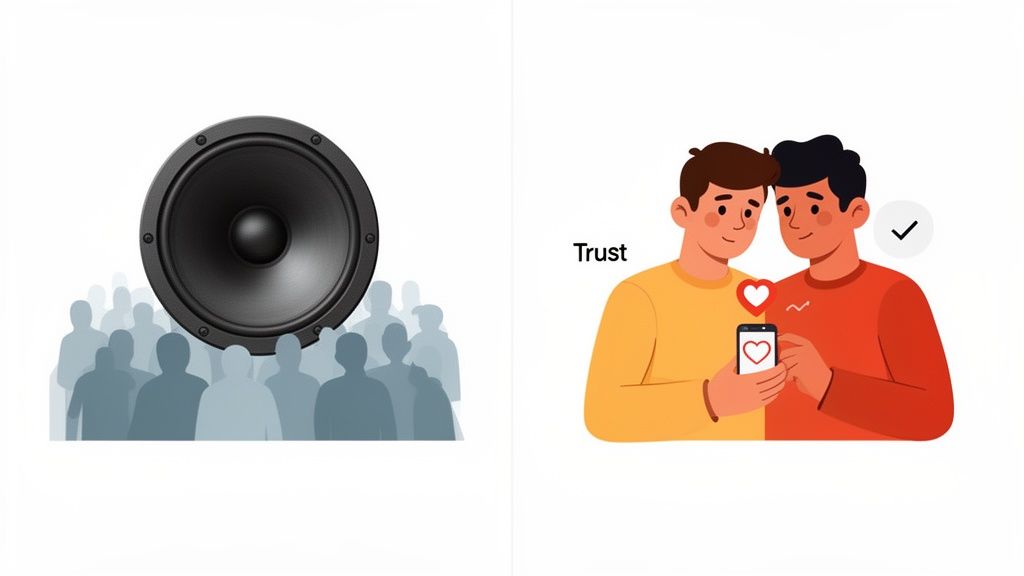
Let's be honest, people are tired of being advertised to. We’ve become experts at tuning out the noise. In fact, 42% of all internet users are now running some form of ad-blocking software, which means a huge chunk of traditional digital ads never even reach their intended audience.
This is where influencers come in. They aren't just people with big follower counts; they're creators who have spent years building communities around shared passions. Whether it's gaming, home decor, or personal finance, their audience turns to them for authentic advice, not a sales pitch.
Building Authentic Connections
At the end of the day, influencer marketing is about a transfer of trust. When a creator that your target customer already knows and admires recommends your product, it feels less like an ad and more like a personal endorsement. It cuts through the natural skepticism people have toward polished corporate messages.
This works because it taps directly into social proof—our natural tendency to look to others for cues on what to buy, try, or do. The data backs this up. A study from Matter Communications found that a staggering 69% of consumers trust recommendations from influencers. That's a level of credibility most brands can only dream of building on their own.
From Side Project to Full-Time Career
If you still think of influencing as a hobby, it's time for a reality check. For a growing number of creators, this is a serious, full-time profession that demands an incredible amount of work and skill. The experts at Ignite Social Media, a top-tier digital agency, put it perfectly:
Being an influencer is a lot of work… It’s not that easy. Being an influencer is a full time job and that’s on top of the 40 hour work week most people already put in at their regular job.
This isn't just about snapping a quick photo. A creator's job description really includes:
- Content Creation: The entire process of ideating, filming, and editing high-quality, engaging content.
- Community Management: Actively responding to comments and DMs to nurture the relationship with their audience.
- Business Operations: Juggling contracts, managing brand expectations, and analyzing their own performance metrics.
Recognizing this professional commitment is the first step toward building a partnership based on mutual respect.
The Need for the Right Tools
Because the creator economy has matured so much, the old-school approach of manually scrolling through Instagram and sending cold DMs just doesn't cut it anymore. Finding the right partners has become a strategic challenge that requires the right tools.
This is where a dedicated influencer marketing platform becomes indispensable for any serious brand. Instead of wasting hours on manual searches, a platform like REACH Influencers provides a streamlined, data-driven solution. With REACH's advanced discovery tools, you can instantly filter through millions of creator profiles by niche, engagement rate, audience demographics, and past brand collaborations. This ensures every partnership is strategically aligned with your goals from day one, saving you time and dramatically increasing your campaign's chance of success.
Why Influencer Marketing Is Now a Core Growth Engine
Let's be honest: the old advertising playbook is gathering dust. Those glossy, big-budget corporate ads just don't hit the way they used to. Why? Because the person we trust most has changed. It's no longer a faceless brand—it's the creators we follow, the people whose lives and opinions we genuinely connect with.
This isn't just a small change; it’s a complete rewiring of how we decide what to buy. That's why working with influencers for brands has gone from a quirky experiment to a must-have growth strategy. It’s a direct line to consumers, speaking their language in a way that feels natural and authentic.
The Power of "They're Just Like Me"
At its core, influencer marketing taps into two very human instincts: relatability and social proof. When you see someone you relate to—someone who shares your sense of humor, your style, or your daily struggles—using a product, it just clicks. It feels real and achievable, not like a sales pitch from a celebrity in a different universe.
And that feeling gets a huge boost from social proof. We’re wired to look to others for cues on what's good, what's cool, and what's worth our money. An influencer endorsing a product is like a trusted friend leaning in and saying, "Seriously, you have to try this." That simple, personal recommendation is pure gold.
The real magic of influencer marketing isn't just getting content made. It's the transfer of authentic trust from a creator to your brand. In today’s market, that trust is the most valuable currency you can have.
The numbers don't lie. This is no passing fad. The global influencer marketing industry is projected to hit a massive $32.55 billion in 2025. That's up from just $1.4 billion in 2014, with a compound annual growth rate of 33.11%. In the U.S. alone, brands are expected to spend $9.3 billion in 2025. You can see a full breakdown of this explosive growth in this comprehensive report on influencer marketing.
It's a Strategic Investment, Not Just a Trend
Year after year, marketing budgets for influencer partnerships are growing. That’s because business leaders see clear, measurable returns. It's one of the most effective ways to reach highly engaged communities that are otherwise expensive and difficult to connect with.
Think about it: traditional ads interrupt what you're doing. Influencer content is what you're there to see. It fits right into the feed, offering entertainment and value instead of a disruption.
For any business owner or marketing team, the question is no longer if you should work with influencers, but how you can do it effectively. It’s about building genuine partnerships and understanding how to use new tools, like those that create AI UGC content for brands, to fuel authentic growth.
By teaming up with the right creators, you gain instant credibility and access to communities that are ready to listen. This approach doesn't just build awareness; it drives real sales and cements your brand's place in the market. The main challenge is finding, managing, and measuring these partnerships—which is exactly where a platform like REACH Influencers brings much-needed clarity and data to the process.
Choosing the Right Type of Influencers for Your Brand
Think about it like this: you wouldn't use a megaphone to have a one-on-one conversation. The same principle applies to influencer marketing. The best creator for your brand isn't always the one with the most followers; it's the one who's just right for the job you need done. Picking the right type of influencer is your first real step toward a campaign that actually works.
So many brands get this wrong right out of the gate. They get distracted by huge follower counts and assume bigger is always better. While a massive audience has its place, it's often the smaller, tight-knit communities that deliver the most powerful results. Each tier of influencer brings something different to the table, and knowing which one to tap into is the secret to getting a great return on your investment.
This isn't just a niche tactic anymore. As you can see below, influencer partnerships have become a core part of the modern growth strategy, right alongside traditional ads.
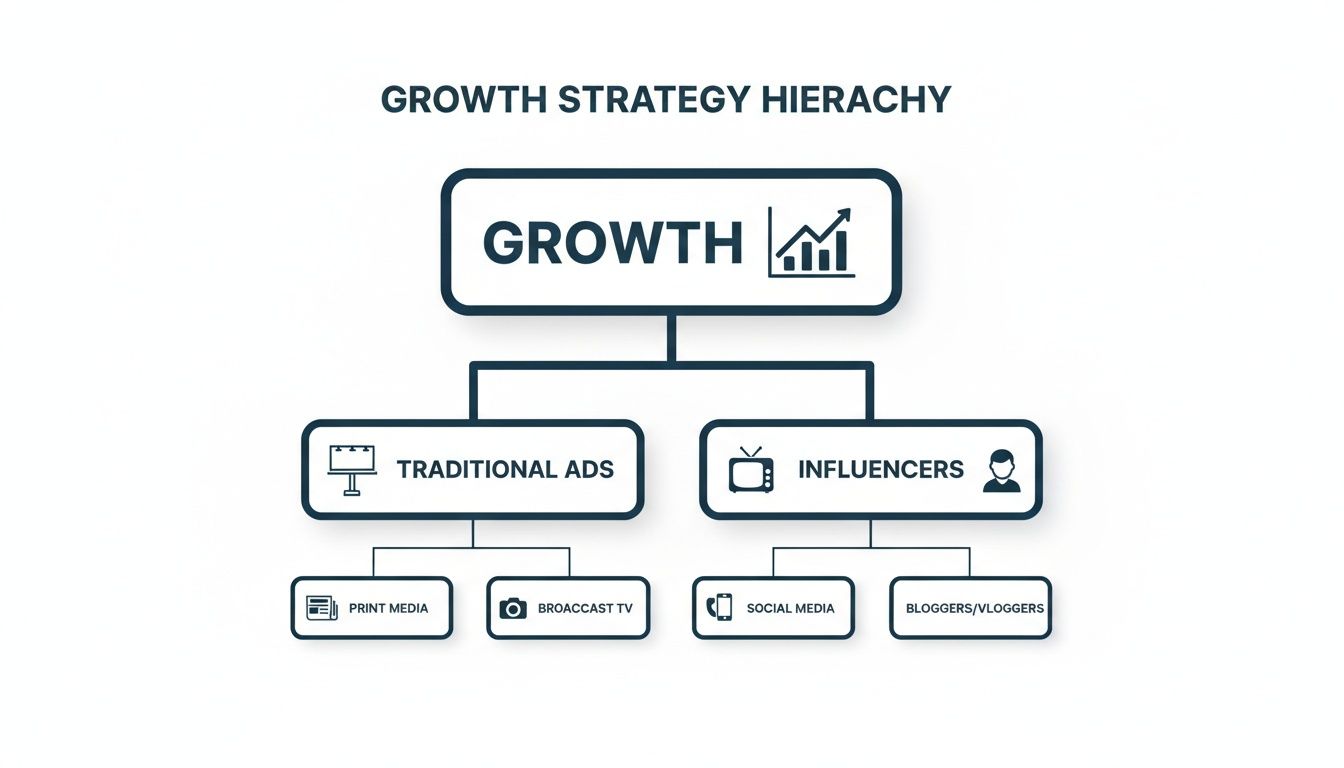
This really drives home how central creators have become. They aren't just an add-on; they are a fundamental channel for growing your brand.
Decoding the Influencer Tiers
To make a smart choice, you have to understand what each type of influencer actually does best. It helps to think of it as building a team, where every person has a very specific and valuable skill.
Nano-Influencers (1,000 – 10,000 Followers): These are your passionate, everyday experts. Their real strength is the trust they've built with their small but mighty audience. A recommendation from them feels less like an ad and more like a tip from a good friend. They're fantastic for generating buzz in a specific city or earning credibility in a super-niche community.
Micro-Influencers (10,000 – 100,000 Followers): A step up from nanos, micro-influencers are established authorities in their space, whether that's vintage denim or home fermentation. They offer a sweet spot of solid reach and fantastic engagement, making them one of the best bangs for your buck. To really dig into this group, check out our complete guide on what is a micro-influencer.
These smaller creators tend to have the highest engagement rates simply because they can still have real conversations with their followers. If your goal is authentic connection and driving actual sales, nano and micro-influencers are your go-to.
Scaling Up for Broader Reach
Now, if your goal is less about niche trust and more about getting your brand in front of as many eyes as possible, it's time to look at the big players. These influencers act more like broadcast channels, capable of making a huge splash with a single piece of content.
Don't get blinded by the follower count. The real story is in the engagement rates, the audience's interests, and what happened with their last few brand deals. True influence is about getting people to act, not just getting seen.
Macro-Influencers (100,000 – 1 Million Followers): These creators are often full-time professionals who produce slick, high-quality content. Think of them as established social media personalities. They’re perfect for big campaigns where the goal is to drive brand awareness and send a ton of traffic to your site.
Mega-Influencers (1 Million+ Followers): We're talking celebrities and the absolute top-tier of the creator world. Their superpower is sheer, undeniable reach. A partnership here can put your brand on the map overnight and is best reserved for massive product launches or when you need to generate widespread public buzz.
A Comparison of Influencer Tiers
To help you visualize how these tiers stack up, this table breaks down the key characteristics of each. Use it to match the right type of partner to your specific campaign goals.
| Influencer Tier | Follower Count | Best For | Engagement Rate | Cost |
|---|---|---|---|---|
| Nano | 1K–10K | Hyper-niche credibility, local marketing | Very High | Low / Product Gifting |
| Micro | 10K–100K | High-quality leads, community trust | High | Low to Moderate |
| Macro | 100K–1M | Brand awareness, large-scale traffic | Moderate | Moderate to High |
| Mega | 1M+ | Mass-market reach, major launches | Low | Very High |
As you can see, the "best" influencer really depends on what you're trying to achieve—whether it’s deep trust with a small group or massive exposure to a broad audience.
Trying to find the right mix of influencers for your brand can feel like searching for a needle in a haystack. That's where a platform like REACH Influencers comes in. Our discovery tools let you filter creators by tier, engagement, audience demographics, and more, so you can skip the guesswork and find the perfect partners for your campaign. For example, a skincare brand could use REACH to find micro-influencers in the "clean beauty" niche whose audience is 90% female, aged 25-40, and located in the US—all in a matter of minutes.
Building Your Winning Influencer Campaign Strategy
Alright, you've figured out what type of influencer you need. Now, it's time to shift from the "who" to the "how." A successful campaign doesn't just happen by chance; it’s built on a deliberate, step-by-step strategy. This framework is your roadmap to ensuring every dollar you spend is tied to a real goal and every partnership feels genuine.
Without a solid plan, even the most perfect influencer match can fizzle out. You need a clear process that takes you from setting your initial goals all the way to sending that final payment. This is how you turn influencer marketing from a guessing game into a predictable and powerful growth engine for your brand.
Start With Your End Goal
Before you even think about sending that first DM, you have to ask yourself: what does a "win" actually look like for this campaign? Are you trying to get your name out there and build brand awareness, or are you focused on driving immediate sales? These two goals are worlds apart and require completely different approaches.
For Brand Awareness: Here, your attention should be on metrics like reach, impressions, and video views. The main objective is simply to get your brand in front of a big, relevant audience. Macro- and Mega-influencers are usually your best bet for this kind of broad exposure.
For Direct Sales: Success is all about the numbers: clicks, conversion rates, and revenue. You’ll be working with trackable links, unique discount codes, and a strong call-to-action. Micro-influencers really shine here, as their followers trust their recommendations and are more likely to make a purchase.
Once you’ve locked in your primary goal, every other decision—from the creators you pick to the content you ask for—needs to support it. To really nail the execution, you'll also want to think about building a social media content calendar to make sure your influencer posts fit seamlessly with your other marketing activities. If you need a hand getting started, this influencer marketing strategy template here is a great resource.
Set Your Budget and Compensation Model
Deciding how much to spend is a huge step, and it's clear that brands are investing more seriously than ever. Looking ahead, a staggering 87.49% of brands are planning to increase their influencer marketing spend, with 72.22% preparing to boost it by 50% or more. This isn't just wishful thinking; it's driven by real performance, as influencer-driven orders nearly doubled during Cyber Week 2025.
This trend highlights a massive shift in thinking. Today, 70% of brands have a dedicated, standalone budget for influencer marketing—a huge leap from just 37% back in 2019.
With a budget in place, the next piece of the puzzle is deciding how you’ll pay your partners.
Common Compensation Models:
- Flat Fee: A simple, one-time payment for a specific list of deliverables (like one Instagram post and three stories). It’s straightforward and makes budgeting easy.
- Affiliate Commission: The influencer gets a cut of every sale they generate. This is a pure performance model that directly links your costs to your results.
- Hybrid Deal: This is a mix of a smaller flat fee plus an affiliate commission. It gives the creator some guaranteed income while still motivating them to drive sales.
- Product Gifting: This involves sending free products in exchange for content, and it’s most common with Nano-influencers. It works best when the product itself has a high perceived value.
The best partnerships are always a two-way street. A fair compensation model shows that you value a creator's time and talent, and it lays the groundwork for a strong, long-term relationship.
Empower Creators With a Clear Brief
The final piece of your strategic plan is the creative brief. This is the document where you'll outline the campaign’s goals, key messages, your "do's and don'ts," and the specific deliverables. But here’s the key: a great brief is a guide, not a script.
The real magic of using influencers for brands comes from their unique voice and the authentic connection they have with their audience. If you try to micromanage their content, you’ll end up with an ad that feels stiff and out of place. Give them clear guardrails, but then give them the creative freedom to do what they do best. That's how you get content that truly connects and gets results.
This is where a platform like REACH Influencers can become your command center. It helps you manage the entire process—from initial outreach and contracts to content approvals and payments—all in one place. An organized workflow like this keeps your campaigns running smoothly, freeing you up to focus on what really matters: building genuine partnerships and hitting your goals.
How to Measure Sales and ROI From Influencers for Brands
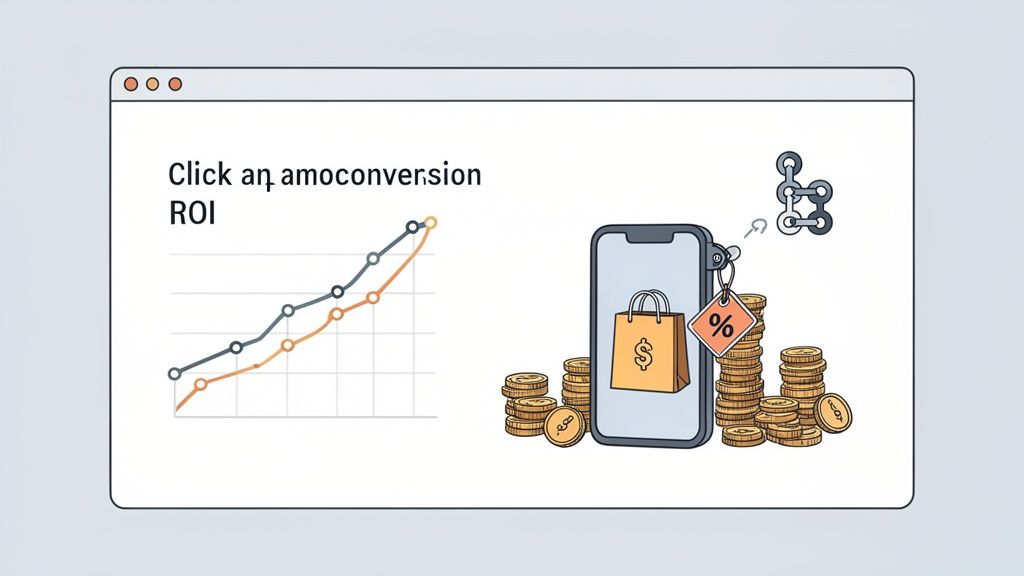
Let's get down to the question every marketer has on their mind: does this stuff actually sell? While it's great to see high reach and engagement, the real proof is in the numbers that hit your bottom line.
The good news is, we've moved past the guesswork. Today, we can draw a straight line from an influencer's post directly to a customer's purchase, making it easier than ever to prove the value of your campaigns.
Key Metrics for Tracking Sales and Conversions
To truly understand how your influencer partnerships are performing, you need to look past the vanity metrics and focus on what really moves the needle. These are the numbers that justify budgets and help you fine-tune your strategy.
- Conversion Rate: This is the big one. It's the percentage of people who actually buy something after clicking an influencer's link. A high conversion rate means their recommendation is genuinely connecting with their audience.
- Cost Per Acquisition (CPA): Simply put, how much did it cost to get each new customer? A low CPA tells you your partnership is efficient and profitable.
- Average Order Value (AOV): Are the customers coming from influencers spending more or less than your average customer? A higher AOV from influencer traffic is a fantastic sign they're attracting high-value buyers.
Nailing these metrics gives you a clear, honest picture of your campaign’s financial impact. If you want to go even deeper, you can explore our full guide on calculating the ROI of influencer marketing.
The Modern Toolkit for ROI Measurement
The rise of built-in shopping features on social media has transformed these platforms into measurable sales channels. This shift has made it much simpler to track the direct impact of influencers for brands.
Here’s what every brand should have in their measurement toolkit:
- Custom Discount Codes: A classic for a reason. Giving each influencer a unique code (like "SARAH15") is a foolproof way to track sales right from your e-commerce dashboard.
- Trackable Affiliate Links: By using UTM parameters, these special links show you exactly how many clicks and sales came from a specific creator’s post or bio link.
- Dedicated Landing Pages: Creating a custom page for an influencer's traffic not only provides a seamless experience for their followers but also makes it incredibly easy to see how that specific audience behaves on your site.
- Social Commerce Features: Tools like TikTok Shop and Instagram Checkout are game-changers. Customers can buy without ever leaving the app, giving you a closed-loop system for tracking every step of the purchase.
The ability to tie every click and conversion back to a specific influencer is what separates good campaigns from great ones. It gives you the confidence to double down on what works and invest your budget where it will have the biggest impact.
This is precisely where a dedicated platform becomes essential. For instance, the REACH Influencers platform brings all these metrics into a single, real-time dashboard. You can see clicks, monitor sales, and generate reports that clearly show the value your program is delivering—no more messy spreadsheets or manual tracking.
The sales power of creators is only growing. Influencer-driven social commerce is on track to become a $2.9 trillion industry by 2026, with a staggering 70% of Gen Z now buying products they see in creator content.
On average, these partnerships deliver a 32% higher ROI than traditional paid ads. During Cyber Week 2025, influencers doubled their share of orders with a 51% growth in spend against stable costs, proving their efficiency. You can discover more about these top influencer marketing trends and see how creators are quickly becoming one of the most powerful sales channels for modern brands.
Common Mistakes to Avoid With Influencer Partnerships
Even the most promising influencer campaigns can fall flat. After managing hundreds of these partnerships, I've seen the same handful of avoidable mistakes sink otherwise great strategies. It’s not just about getting the big things right; it's about sidestepping the common traps that can waste your budget and damage your brand.
The first and most common pitfall is choosing influencers for brands based on follower count alone. It's an easy trap to fall into. A massive audience looks great on paper, but it’s often just a vanity metric. If that huge following isn't actually interested in what you sell, you're just paying to shout into an empty stadium.
Instead, you need to dig deeper. Look for creators with stellar engagement rates and a community that genuinely trusts their recommendations. This is where having the right data is a game-changer. Using a platform like REACH Influencers lets you look past the follower number and see the metrics that actually matter—like audience demographics and real engagement—to find creators with true influence.
Overly Restrictive Creative Direction
Another mistake I see all the time is brands micromanaging the creative process. When you hand an influencer a rigid script and dictate every single shot, you strip away the very thing you're paying for: their authentic connection with their audience. The result is a stiff, awkward ad that their followers will spot a mile away.
The key is to set clear guardrails, not build a cage. Give them a solid creative brief with your goals, key messages, and essential do's and don'ts. Then, get out of the way and let them work their magic.
Trust the creators you hire. They built their audience for a reason. Giving them creative freedom within a structured brief leads to content that is both on-brand and genuinely resonant with their followers.
Unclear Contracts and Expectations
Nothing sours a partnership faster than ambiguity. Vague agreements about what you expect, what you'll pay, and when you'll pay it are a recipe for disaster. Without a crystal-clear contract, you're opening the door to misunderstandings, disappointment, and even legal headaches down the road.
Before any work begins, make sure you have a detailed contract that spells everything out. It should explicitly cover:
- Specific Deliverables: The exact number and type of posts, stories, or videos required.
- Content Usage Rights: How, where, and for how long you can use the content they create.
- Payment Terms: The total compensation, how it will be paid, and on what schedule.
- Exclusivity Clauses: Whether the influencer is restricted from working with direct competitors for a certain period.
This might sound like a lot of administrative work, and frankly, it can be. This is another area where a dedicated platform like REACH Influencers can be a lifesaver. It provides standardized contract templates and handles payments, making sure everyone is protected and on the same page from the start. It lets you focus on the fun part—the creative collaboration.
Your Top Questions About Working with Influencers, Answered
Jumping into influencer marketing for the first time? You've probably got a few questions. That's a good thing. It means you’re thinking strategically.
To clear things up, we've put together straight-to-the-point answers for the most common questions we hear from brands.
How Much Does It Cost to Hire an Influencer?
This is the million-dollar question, isn't it? The honest answer is: it’s all over the map. There’s no standard rate card.
An influencer’s fee depends on everything from their audience size and niche to how much work you’re asking them to do. A nano-influencer with a tight-knit community might be thrilled with a product exchange, while a macro-influencer can command thousands of dollars for a single post.
But here’s a pro tip: don't get hung up on the sticker price. A small investment in a micro-influencer with a super-engaged audience often yields a far better return than a huge spend on a celebrity with passive followers. A tool like REACH Influencers can be a lifesaver here, giving you a clear look at potential costs so you can find creators who align with your budget.
How Do I Measure the ROI of an Influencer Campaign?
Measuring your return on investment (ROI) always starts with what you wanted to achieve in the first place. If your goal was brand awareness, then you'll want to look at your reach, impressions, and engagement.
If you’re after sales, you need to get more direct. The best way to do this is by giving each influencer their own way to track performance. Think of things like:
- Unique discount codes (e.g., "SARA15")
- Custom affiliate links to track clicks and sales
- Dedicated landing pages for their specific audience
This is where a solid platform really shines. The dashboard inside REACH Influencers, for example, pulls all this data into one place. You can see what’s working in real-time and generate simple reports that show exactly what you got back for your investment.
Is Follower Count or Engagement Rate More Important?
Hands down, engagement rate is the better indicator of a creator's true influence. A massive follower count looks impressive, but if nobody is liking, commenting, or saving their posts, it's just a vanity metric. It could even signal a fake or bot-filled audience.
A high engagement rate, even on a smaller account, signals an active and loyal community that trusts the influencer's recommendations. This is the strongest indicator of true influence.
When you're searching for influencers for your brand, always look for signs of a real community. Are people having conversations in the comments? Are they sharing the content? That’s what tells you you're not just buying eyeballs—you're investing in a community that actually listens.
Finding the right influencers for brands and managing campaigns can be complex, but it's one of the most powerful ways to build trust and drive growth in today's market. With the right strategy and tools, you can move beyond guesswork and create partnerships that deliver real, measurable results.
Ready to find the perfect influencers and prove your campaign's ROI? REACH Influencers makes it simple to discover authentic partners, manage campaigns efficiently, and track every conversion.
Get started with REACH today and see how the right tools can transform your influencer marketing strategy.