 Skip to content


Before you even think about a launch day countdown, you need a solid foundation. A great product launch marketing plan isn't just a list of tasks; it’s the strategic blueprint that guides every decision, from the messaging you craft to the audience you target. Getting the core elements right long before the world knows your product exists is the key to success.
A well-executed plan ensures you build momentum, generate authentic buzz, and drive meaningful business results, not just a temporary spike in social media chatter. By focusing on a clear strategy from the start, you set the stage for a launch that resonates with your ideal customers and establishes a strong market presence.
This guide will walk you through building a comprehensive product launch marketing plan, covering everything from pre-launch groundwork to post-launch optimization, ensuring your next product makes the impact it deserves.
Table of Contents
- Building Your Pre-Launch Foundation
- Mapping Your Launch Timeline And Channel Strategy
- Harnessing Influencer Marketing for a Powerful Launch
- Managing Your Launch Campaign Execution
- Measuring Success and Optimizing After the Launch
- Frequently Asked Questions
Building Your Pre-Launch Foundation
Every blockbuster product launch starts with meticulous groundwork. This foundational phase is where you replace assumptions with hard data, align your teams, and set meaningful, measurable goals.
Skipping this stage is a primary reason many products launch to the sound of crickets. Taking the time here allows you to build a campaign that drives real, sustainable growth.
Defining Clear Objectives and KPIs
First, you must define what a "win" looks like for this launch. Vague goals like "get more brand awareness" are insufficient. You need specific key performance indicators (KPIs) that connect directly to business results.
Everyone on the team—from marketing to sales to product—must agree on these objectives. Are you aiming to capture a specific market share, hit a certain number of user sign-ups, or achieve a new monthly recurring revenue (MRR) target?
Here are examples of strong, data-driven goals:
- Generate 1,500 qualified leads within the first 60 days.
- Secure $50,000 in new MRR by the end of the quarter.
- Land product reviews in five top-tier industry publications within one month of launch.
- Drive 10,000 free trial sign-ups with a target 15% conversion rate to paid.
With clear goals, your team has a North Star. It eliminates confusion and makes it simple to measure whether your product launch marketing plan is succeeding.
Identifying Your Ideal Customer Profile
You can't write compelling copy or create engaging ads if you don't know who you're talking to. This is where your Ideal Customer Profile (ICP) is essential. It goes beyond demographics to offer a deep dive into your perfect customer's biggest frustrations, motivations, and problems.
For a comprehensive walkthrough, our guide on how to create buyer personas that drive results is a great resource.
A razor-sharp ICP will shape every single part of your launch plan, including:
- Your Messaging: The exact words, tone, and style that will make them listen.
- Your Channels: Where they actually spend their time online and get their information.
- Your Content: The blog posts, videos, or guides that will grab their attention and solve a problem for them.
Focusing on a tight ICP means you're not just shouting into the void. You're having a real conversation with the people most likely to buy, which is how you get a much better return on your marketing spend.
Crafting Your Product Positioning
Once you know your goals and your audience, it's time to carve out your spot in the market. Your product positioning is the unique space you want to own in your customer's mind. It answers the most important question they have: "With all the choices out there, why should I pick this one?"
Your positioning statement needs to be clear, concise, and persuasive. It must shine a spotlight on what makes you different and better than the competition. This isn't just a marketing exercise—it's crucial for survival. Industry data consistently shows that a staggering 28% of product launches fail because of a disconnect with the market or a flawed strategy.
To give your product the best possible start, you need to dig into solid planning. For example, the guide on Crafting An Effective SaaS Marketing Plan offers an excellent framework for structuring this process. This is also the perfect time to use a platform like REACH to start building shortlists of influencers who genuinely align with your positioning. Getting authentic voices on board from day one can make all the difference.
Essential Pre-Launch Checklist
This table summarizes the foundational pieces you absolutely need to have in place. Getting these right sets the stage for everything that follows.
| Component | Key Objective | Example Metric |
|---|---|---|
| Clear Objectives | Define what success looks like for the business. | Achieve $50k in new MRR. |
| Ideal Customer Profile (ICP) | Know exactly who you are selling to and why. | 25% demo-to-trial conversion. |
| Product Positioning | Differentiate from competitors in the customer's mind. | Top 3 mention in G2 category. |
| Value Proposition | Clearly state the primary benefit and outcome for the user. | 15% increase in website conversions. |
Nailing these four areas gives your launch plan the strategic spine it needs to succeed. It transforms your efforts from a series of random tactics into a cohesive, goal-oriented campaign.
Mapping Your Launch Timeline And Channel Strategy
A product launch without a detailed timeline is a recipe for chaos. Even the most brilliant products can fizzle out if the execution is a mess of missed deadlines and teams tripping over each other. A solid timeline is your roadmap, keeping marketing, sales, and product development marching in the same direction.
Instead of a mad dash to launch day, it's far better to think of your timeline in three distinct acts: pre-launch, launch, and post-launch. Each phase has its own mission and milestones, all designed to build momentum, not just create a one-day spike. This approach turns a complex process into a manageable one.
This visual gives you a great snapshot of those critical pre-launch steps. It drives home how you have to nail your objectives, customer profile, and positioning before anything else.
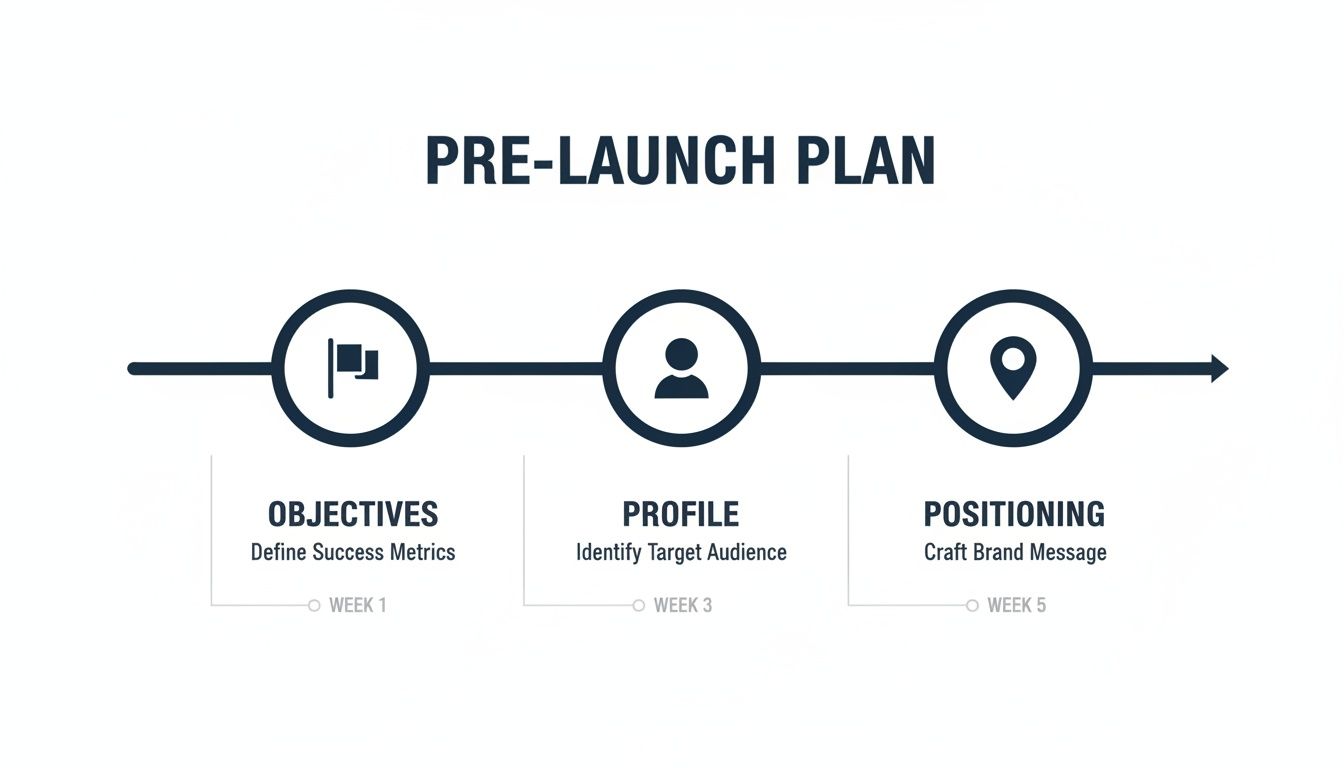
The big takeaway here is that these pieces have to be locked in first. Get this foundation right, and the rest of your campaign has a much better chance of succeeding.
The Three Phases Of A Launch Timeline
A great launch is a campaign, not a single event. By breaking your timeline down, you can put your resources where they need to be and focus on the right activities at the right time.
- Pre-Launch (90 to 30 Days Out): This is all about the buildup. Your main goal is to create anticipation and get your audience warmed up. Think of it as the drumroll. You'll be finalizing your messaging, creating core assets like landing pages and ad creative, and starting your influencer outreach. This is the perfect window to use a platform like REACH to find creators and start building those relationships that lead to early social proof.
- Launch (The Big Day/Week): Now it's go-time. The goal is pure, unadulterated impact and visibility. Every channel you have should light up at once in a coordinated push. Your press release goes out, email announcements hit inboxes, paid ad campaigns go live, and influencers share their content. It's all about driving a massive wave of traffic and getting those first sign-ups.
- Post-Launch (The First 90 Days): The initial splash is over, but the real work is just beginning. Your focus shifts to keeping the momentum going and optimizing based on what you're learning. This means digging into campaign performance, gathering customer feedback, nurturing all those new leads, and shouting out early success stories. This is the phase that separates a temporary blip from long-term growth.
Integrating Your Paid, Owned, and Earned Channels
Your channels can't be working in their own little bubbles. They need to work together to create an experience that feels seamless to the customer. When your message is consistent and amplified across every touchpoint, your product launch marketing plan becomes exponentially more powerful.
Owned Media is your home base. This is your website, your blog, your email list, and your social media accounts. During pre-launch, you can use your blog to drop teaser content or give your email subscribers an exclusive sneak peek.
Paid Media is your accelerator. We're talking about Google Ads, LinkedIn Ads, and social media advertising. Use paid ads to send highly targeted traffic to your shiny new landing page. You can also use them to put some firepower behind the awesome content your influencer partners are creating, turning that earned media into a scalable traffic driver.
Earned Media is what builds your credibility. This is PR, organic social proof from real customers, and influencer marketing. When an industry publication writes a glowing review or a respected influencer vouches for your product, it builds a kind of trust that you just can't buy with ads.
A truly effective launch uses these channels in concert. For example, a compelling piece of earned media, like a positive review, can become the centerpiece of a paid ad campaign, which then drives traffic back to your owned landing page for conversion.
Allocating Your Budget Across Channels
Budgeting is always a tightrope walk, especially with global ad spend dynamics putting pressure on brands to get more from every dollar. With total spend projected to hit $1.1 trillion in 2024 and many marketers looking to trim the fat, the smart money is moving toward high-ROI tactics. Social media, with its staggering 5.24 billion users, is still a crucial launch pad, especially when you consider that 76% of users buy products they see in their social feeds. You can dig deeper into these trends by exploring more global product marketing statistics.
How you slice up your budget should be a direct reflection of your goals.
- For Awareness-Focused Launches: You'll want to lean heavily into paid media, probably allocating 60-70% of your budget there to get as many eyeballs as possible.
- For Lead Generation Launches: A more balanced approach usually works best. You'll need a solid investment in both paid ads to drive traffic and influencer marketing (earned media) to build trust and bring in high-quality sign-ups.
- For Community-Driven Launches: Here, you might invest more in owned media (creating amazing content) and earned media (hiring community managers, seeding products with influencers) to spark organic conversations.
Ultimately, your channel mix isn't set in stone. Any good product launch marketing plan should have weekly or bi-weekly check-ins built in to review the data and shift budget to the channels that are actually delivering the goods.
Harnessing Influencer Marketing for a Powerful Launch
Influencer marketing isn't a last-minute tactic you bolt onto your campaign. For a modern product launch marketing plan, it’s the engine that generates real buzz, builds undeniable social proof, and drives sales from day one.
When done right, you aren't just buying an ad; you're connecting your product with an engaged audience through a voice they already know and trust. That's an impact paid ads simply can't buy.
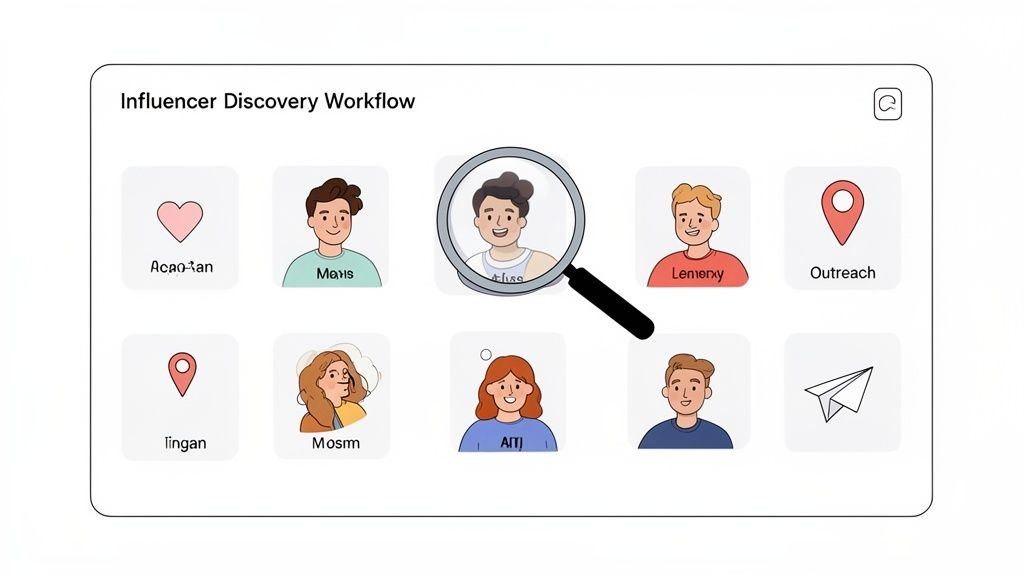
The secret is to stop thinking of influencers as billboards and start treating them like genuine partners. This means bringing them into the fold early and giving them the creative freedom to talk about your product in a way that feels natural to their followers.
Identifying And Vetting The Right Partners
Finding the right creators is where most campaigns either succeed or fail. A massive follower count is pure vanity if that audience couldn't care less about what you're selling. The goal is to find partners whose content, values, and audience are a dead-on match for your brand.
This is exactly why scrolling through hashtags and sliding into DMs is a recipe for disaster. It's slow, wildly inefficient, and you often end up with terrible fits. A dedicated platform like REACH completely changes the game. Its discovery engine lets you get incredibly specific with your search filters, looking at metrics that actually matter:
- Engagement Rate: Find creators with active, responsive communities, not just a bunch of bots and inactive accounts.
- Audience Demographics: Zero in on the right age, location, gender, and interests to make sure you're talking to your ideal customers.
- Content Niche: Pinpoint influencers who are already experts in your space, whether it’s tech, beauty, or B2B SaaS.
This data-first approach saves countless hours and helps you uncover those hidden-gem micro-influencers. These creators often deliver the best ROI because they have smaller, tight-knit communities that hang on their every word.
A Practical Workflow For Outreach And Onboarding
Once you've got a solid shortlist, it's time for outreach. Please, no more generic, copy-paste DMs—they get ignored instantly. Your first message needs to prove you’ve actually watched their content and understand their vibe.
Your outreach should quickly cover:
- Who you are and why you think they're a perfect fit for this launch.
- What your new product is and the specific problem it solves for people.
- A quick snapshot of the campaign idea and what you're hoping to achieve together.
Once they show interest, you move into negotiation and onboarding. This is where you lock in the deliverables, timeline, and payment. A formal agreement isn't optional; it protects both you and the creator. Make sure the contract spells out content rights, usage terms, and exactly when they get paid.
Your most important tool here is a well-structured campaign brief. It needs to give clear direction on key messages, brand do's and don'ts, and any mandatory CTAs. But—and this is crucial—it must leave room for their personality to shine through. Micromanage their creativity, and you'll get sterile, inauthentic content that their audience will see right through.
Choosing The Right Collaboration Model
Not all influencer partnerships are the same. You need to pick a model that aligns with your specific launch goals. Some are great for generating initial buzz, while others are built to drive sales.
Here’s a quick breakdown of the most common models to consider for your launch.
Influencer Collaboration Models for Product Launches
| Model | Best For | REACH Platform Feature |
|---|---|---|
| Product Seeding | Generating a high volume of organic content and unboxing experiences with minimal upfront cost. Ideal for building early social proof. | Product Gifting Tools streamline shipping and tracking for large-scale seeding campaigns. |
| Paid Placements | Securing guaranteed, high-quality content like in-depth reviews, tutorials, or "day in the life" integrations with specific messaging. | Campaign Management Suite automates contracts, payments, and deliverable tracking for paid partnerships. |
| Affiliate Programs | Driving direct sales and tracking ROI with precision. Highly motivating for performance-focused creators. | Affiliate Link & Code Generation creates unique tracking for each influencer to monitor sales and commissions in real-time. |
Ultimately, the best approach is to mix and match these models based on your budget and what you need to accomplish at each stage of your launch.
The shift toward authentic partnerships isn't just a hunch; the data backs it up. Influencer marketing has become a non-negotiable part of modern launch playbooks, with 59% of marketers planning to increase their influencer budgets in 2025. This is happening because 76% of social media users say content they see on social media influences what they buy—a number that skyrockets to 90% among Gen Z.
By weaving influencers into your strategy from the beginning and treating them like the valuable partners they are, your product launch marketing plan becomes a powerful, trust-building machine. For a deeper dive, check out our guide on building authentic influencer collaborations that truly connect with people.
Managing Your Launch Campaign Execution
You've got a solid plan locked in. Now comes the hard part: execution. This is where all the strategy and planning come to life, but it's also where things can go sideways without killer coordination. A great product launch marketing plan isn't a static document you file away; it's a living, breathing operation that needs a central command center to keep everything in sync.
The goal here is to get everyone out of messy email threads and confusing spreadsheets. Think of yourself as the air traffic controller for the launch. Every single person, from the in-house social media manager to your external influencer partners, needs to know exactly what they're doing and when. More importantly, they need to see how their piece of the puzzle fits into the bigger picture.
Creating A Central Content Calendar
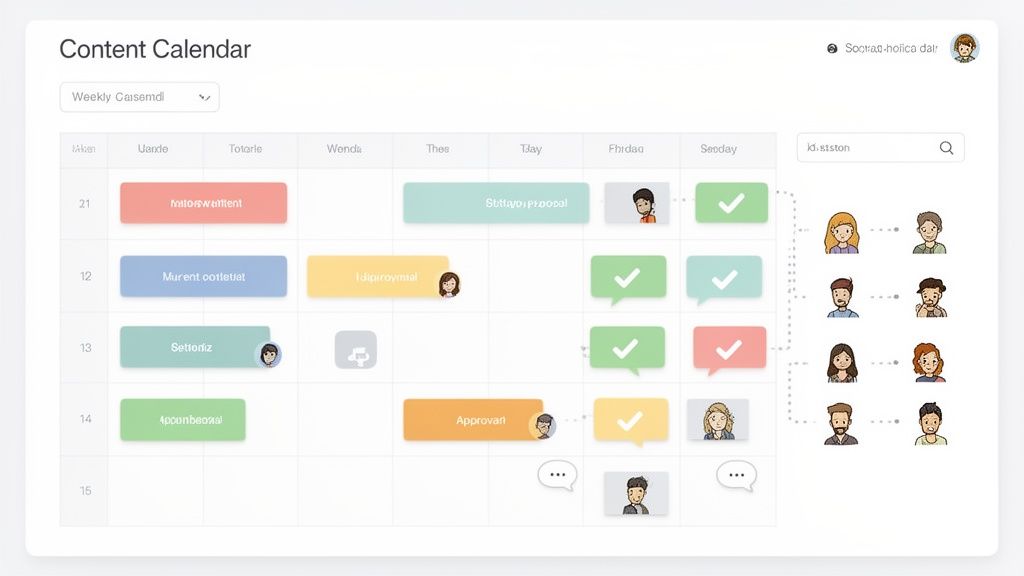
Your single source of truth for the entire campaign will be a shared content calendar. This is way more than just a list of publish dates. It's a detailed schematic that maps out every single asset, channel, and deadline. It gives everyone total visibility, which is crucial for preventing awkward content overlaps and ensuring a consistent message hits your audience at every turn.
Your calendar needs to be comprehensive. At a minimum, include:
- Asset Details: What’s the format (blog post, video, IG Story)? What’s the topic? What’s the core message?
- Channel Assignment: Where is this going live? LinkedIn, the email newsletter, an influencer’s YouTube channel?
- Owner and Status: Who is responsible for getting this done? Where is it in the process (In Draft, Pending Review, Approved)?
- Publish Date and Time: The exact moment each piece goes live. Don't forget to coordinate across time zones if your audience is global.
This level of detail takes all the guesswork out of the equation. Your team can see the entire campaign at a glance and understand how the blog post on Monday tees up an influencer’s video on Wednesday, which then supports the paid ad campaign kicking off Friday.
Streamlining Workflows With Technology
Trying to track everything manually is a surefire way to miss deadlines and burn out your team. The secret to smooth execution is using the right tech to automate and centralize your workflows, especially when you're juggling multiple partners and creators. This is where a dedicated platform is a non-negotiable.
For instance, with a tool like REACH, you can run your entire influencer campaign from one dashboard. Instead of trying to manage dozens of separate conversations, you can:
- Consolidate Communication: All back-and-forth with creators happens right in the platform, creating a clear, organized record of every discussion.
- Simplify Content Approvals: Influencers submit their draft content directly through the tool. Your team can then drop in feedback, ask for changes, or give the final green light—all in one spot.
- Track Performance in Real-Time: The dashboard gives you live analytics on clicks, engagement, and conversions, so you always have a pulse on what's actually working.
This centralized approach is a game-changer for your execution process. It pulls your team out of the administrative black hole of tracking spreadsheets and chasing down email replies, freeing them up to focus on what really moves the needle: optimizing the campaign and building great relationships with creators.
Staying Agile And Ready To Pivot
Let’s be honest: no plan ever survives first contact with the market. A successful launch isn't about sticking rigidly to the script you wrote weeks ago. It's about being nimble enough to react to what the real-time data is telling you. You have to be watching performance constantly and be ready to make smart adjustments on the fly.
This is why understanding the nuts and bolts of how to launch ad campaigns is so valuable. It gives you the insight to see which creative is resonating and which messaging is falling flat, so you can quickly shift your budget to what’s actually driving results.
Here’s how to build that agility right into your execution:
- Hold Daily Check-Ins: A quick, 15-minute stand-up meeting each morning is perfect. Review the previous day's numbers and call out any immediate roadblocks or opportunities.
- Monitor Key Metrics Hourly (at first): On launch day and for that first critical week, keep a hawk-eye on website traffic, social mentions, and conversion rates. Is one channel blowing up? Double down on it, now.
- Listen to Your Audience: Pay close attention to what people are saying in comments, DMs, and to your customer support team. This feedback is pure gold and can instantly reveal messaging gaps or product questions you need to address.
When you embrace this nimble mindset, your product launch marketing plan becomes a dynamic strategy that evolves with your audience. That’s how you keep the momentum going long after the initial launch-day buzz dies down.
Measuring Success and Optimizing After the Launch
The big day is over. The launch-week confetti has settled. So, now what?
For the sharpest marketing teams, this is where the real game begins. A product launch isn't a finish line; it’s the starting gun for sustained growth. Your marketing plan needs to have legs, focusing on what happens after the initial push through smart tracking, clear reporting, and continuous tweaking.
This post-launch phase is all about listening. You're turning a flood of data into a handful of clear signals that tell you what's working, what's not, and where to place your next bets.
Building Your Post-Launch Command Center
Before you can fine-tune anything, you need to see what’s happening. Your first move is to build a dashboard that pulls together the key metrics you defined way back in the planning stage. This isn't about data for data's sake; it's about zeroing in on the numbers that actually matter.
Your dashboard should give you a holistic view by pulling from a few key areas:
- Sales & Revenue Data: Keep a close eye on new monthly recurring revenue (MRR), customer acquisition cost (CAC), and especially trial-to-paid conversion rates.
- Website & Traffic Analytics: Where are people coming from? Check unique visitors, traffic sources, and how long they're sticking around on your new product pages.
- Social & Engagement Metrics: What's the conversation like? Track brand mentions, sentiment, and how people are engaging with your launch content.
- Influencer Campaign ROI: This one's huge. You need to know which partners are actually driving clicks, conversions, and sales.
The goal here is to create a single source of truth. When the whole team is looking at the same dashboard, you stop debating opinions and start making decisions based on facts.
Showing the Value with Clear Reporting
Your boss, your clients, your stakeholders—they all want to know one thing: "Did it work?" Clear, concise reporting is how you answer that question and prove the value of your marketing spend.
Dumping a spreadsheet in their inbox isn't going to cut it. Your reports need to tell a story that connects the dots between your activities and the bottom line.
This is where a platform like REACH becomes a lifesaver. Instead of spending hours manually piecing together data from Instagram, TikTok, and your sales platform, REACH gives you live, shareable reports. You can see clicks, conversions, and real-time attributed sales from your influencer campaigns, making it dead simple to show leadership the ROI.
When you present your findings, keep it simple and direct:
- Lead with the headline. Did you beat your sales goal by 15%? Say that first. Don't bury the lead.
- Make it visual. A simple chart is worth a thousand rows of data. Show trends with graphs to make them instantly understandable.
- Tie it back to the goals. Explicitly connect the metrics to the original KPIs you set for the product launch.
This turns reporting from a chore into a strategic tool that builds confidence and gets you the budget you need for the next big thing.
Turning Numbers into Your Next Move
Knowing what happened is good. Understanding why it happened is where the magic is. This is how you shift from simply monitoring performance to actively managing it.
Start digging into your data. Ask the tough questions.
Let's say one influencer’s content drove 3x more conversions than anyone else's. Why? Was it their messaging? The format they used? The specific audience they reached? Figure it out, because that's a lesson you can apply to every future collaboration.
If you notice a particular ad creative on LinkedIn is crushing it, it’s time to put more budget behind that message and visual. The insights you pull from your post-launch data are the fuel for optimizing everything you do next.
Learning how to properly connect marketing activities to actual business outcomes is a critical skill. To get better at it, I'd recommend diving into our guide on cross-channel marketing attribution. This is the knowledge that separates a flash-in-the-pan launch from a product that builds real, long-term momentum.
Got Questions About Your Product Launch Plan? We've Got Answers.
Even with the best blueprint, you're bound to have questions when you're deep in the planning process. A solid product launch marketing plan is built on clarity, so let's tackle some of the most common questions we hear from brands and agencies.
Think of this as a quick way to sidestep a few common pitfalls and keep your launch on the right track.
How Far Out Should We Really Start Planning?
Honestly, you should give yourself a solid 3-6 months. I know that can sound like a long time, but that runway is essential for getting the foundational work right. It's not just about ticking boxes; it's about giving yourself enough time for real market research, nailing down your audience and messaging, and thoughtfully building out your strategy across every channel.
More importantly, that lead time is what allows you to line up key partnerships. The best influencers, for example, often have their calendars booked months in advance. Giving yourself this buffer lets you build genuine anticipation during the pre-launch phase instead of just scrambling at the last minute. That frantic rush is where mistakes happen and your launch day impact gets watered down.
What's the Single Biggest Mistake We Need to Avoid?
The most damaging mistake I see, time and time again, is a lack of integration across marketing channels. So many brands still plan in silos. They'll have a social media plan, a PR plan, an email plan, and an influencer plan, but none of them talk to each other. It’s a recipe for a weak launch.
To your audience, a great launch should feel like one single, unified event. Every channel needs to reinforce the others, telling one cohesive story. When you fail to create that seamless experience, you just confuse your customers, dilute your core message, and hamstring the overall impact of all your hard work.
A launch isn't just a collection of tactics; it's a symphony. When your paid ads amplify your influencer content, and your email campaign drives traffic to a blog post featuring a glowing review, the cumulative effect is exponentially greater than the sum of its parts.
How Do We Set a Budget That’s Actually Realistic?
A realistic budget always, always starts with your goals. What are you trying to achieve? Is it all about brand awareness? Driving direct sales? Grabbing a specific slice of market share? Your budget has to be a direct reflection of those priorities.
A good rule of thumb to start with is to allocate 20-30% of the product's projected first-year revenue to the launch marketing budget. From there, you can start breaking that total down by channel:
- Paid Media: For getting immediate reach and highly targeted traffic.
- Influencer Marketing: For building authentic social proof and credibility.
- Content Creation: For your owned assets, like videos, photos, and blog posts.
- Public Relations: For earning media mentions and industry validation.
The key here is to use tools that let you track spending and ROI in real-time. This isn't a "set it and forget it" situation. You need the agility to shift funds to the channels that are actually delivering the best results.
How Can We Actually Measure Influencer Marketing ROI?
Measuring the return from your influencer partnerships is non-negotiable for any modern product launch marketing plan. Vague metrics like "exposure" just don't cut it anymore. You have to connect their efforts directly to your business goals.
It's simpler than you think. Give each creator a unique discount code or a trackable affiliate link to attribute sales directly. Use UTM parameters in your web analytics to monitor referral traffic from their posts and stories. And don't just stop at sales—track engagement metrics that signal high intent, like shares and saves, and keep an eye on brand mentions.
An influencer platform like REACH makes this whole process way easier. It pulls all these metrics into one dashboard, so you get a clear, data-backed picture of your ROI. That's how you prove the value of your partnerships to your team and your stakeholders.
Ready to stop juggling spreadsheets and bring professional-grade efficiency to your next launch? REACH provides the tools you need to discover the perfect influencers, manage campaigns, and track ROI—all in one place. Book a demo today and see how our platform can supercharge your next product launch marketing plan.
{
“@context”: “https://schema.org”,
“@type”: “BlogPosting”,
“mainEntityOfPage”: {
“@type”: “WebPage”,
“@id”: “https://reach-influencers.com/blog/product-launch-marketing-plan”
},
“headline”: “A Modern Product Launch Marketing Plan That Actually Works”,
“description”: “Learn how to create a product launch marketing plan that drives results. This comprehensive guide covers pre-launch strategy, influencer marketing, channel integration, and post-launch optimization.”,
“image”: “https://cdn.outrank.so/64cdc0e0-2a54-4cd9-a45d-c4196c5e1d4e/1abbf87b-cfe4-4531-b0e5-ff9deddff182/product-launch-marketing-plan-pre-launch-plan.jpg”,
“author”: {
“@type”: “Organization”,
“name”: “REACH Influencers”
},
“publisher”: {
“@type”: “Organization”,
“name”: “REACH Influencers”,
“logo”: {
“@type”: “ImageObject”,
“url”: “https://reach-influencers.com/logo.png”
}
},
“datePublished”: “2024-05-21”,
“dateModified”: “2024-05-21”
}
{
“@context”: “https://schema.org”,
“@type”: “FAQPage”,
“mainEntity”: [{
“@type”: “Question”,
“name”: “How far out should we start planning a product launch?”,
“acceptedAnswer”: {
“@type”: “Answer”,
“text”: “You should start planning your product launch 3-6 months in advance. This provides enough time for market research, messaging development, and securing key partnerships like influencers, whose schedules often fill up months ahead.”
}
},{
“@type”: “Question”,
“name”: “What is the biggest mistake to avoid in a product launch marketing plan?”,
“acceptedAnswer”: {
“@type”: “Answer”,
“text”: “The biggest mistake is a lack of integration across marketing channels. A successful launch requires a unified strategy where paid, owned, and earned media work together to tell a cohesive story, amplifying your message and maximizing impact.”
}
},{
“@type”: “Question”,
“name”: “How do you set a realistic budget for a product launch?”,
“acceptedAnswer”: {
“@type”: “Answer”,
“text”: “A realistic budget starts with your goals. A common rule of thumb is to allocate 20-30% of the product’s projected first-year revenue to the launch marketing budget. This total should then be broken down by channel based on your strategic priorities, such as awareness or lead generation.”
}
},{
“@type”: “Question”,
“name”: “How can you measure the ROI of influencer marketing for a launch?”,
“acceptedAnswer”: {
“@type”: “Answer”,
“text”: “Measure influencer marketing ROI by using trackable affiliate links, unique discount codes, and UTM parameters to attribute sales and website traffic directly to specific creators. Platforms like REACH simplify this by consolidating these metrics into a single dashboard, providing a clear view of performance.”
}
}]
}