 Skip to content

For many creators, a strong social media profile on Instagram or TikTok feels like the ultimate goal. But building your entire business on rented land is a massive risk. Algorithm changes, unexpected account suspensions, or platform shutdowns can wipe out your hard work overnight. The only digital space you truly own is your personal website.
This is why creating professional websites for influencers is no longer a luxury—it's a critical business asset. Your website is your central hub, your digital headquarters where you control the narrative, own your audience, and showcase your value to brands. It's the foundation for a sustainable, long-term creator career. At REACH Influencers, we see firsthand how creators with a polished website stand out and attract higher-quality partnerships.
Table of Contents
- Why Your Social Profile Just Isn't Enough Anymore
- Picking the Right Platform for Your Influencer Website
- Your Media Kit: The Secret to Landing Brand Deals
- Integrating Tools That Build Your Audience
- Getting Your Site Ready for Brand Deals
- Monetizing Your Brand Beyond Sponsored Posts
- Conclusion: Your Website is Your Most Powerful Asset
Why Your Social Profile Just Isn't Enough Anymore
Relying solely on social media means your business is at the mercy of forces you can't control. An algorithm update can demolish your reach, and an unexpected suspension could erase years of effort in an instant. While these platforms are incredible for audience engagement, they are a shaky foundation for a serious career. A professional website provides the stability and control you need to build a lasting brand.
Take Back Control of Your Brand and Audience
A website gives you total freedom to craft your brand's story and aesthetic exactly how you envision it. You aren't confined by a platform's rigid layouts or character limits. More importantly, it allows you to build a direct connection with your audience through an email newsletter—a channel immune to algorithmic whims.
Owning websites for influencers provides serious advantages:
- You Own Your Audience: An email list is a direct, unfiltered line to your community. It's yours, forever.
- No Content Restrictions: You can finally publish long-form blog posts, high-resolution portfolios, or in-depth case studies that don't fit into a social feed.
- Look Like a Pro: A polished website signals to brands that you are a serious business owner, not just a hobbyist.
This image drives home the concept of owning your digital 'house' versus renting space on social media.

The house represents your website—a solid, stable asset you control. The floating social media icons are the volatile, rented spaces where you are merely a tenant.
Land Bigger, Better Brand Deals
Brands and agencies seek professionalism. When they discover a dedicated website featuring a sharp media kit and a comprehensive portfolio, you immediately stand out as a top-tier candidate for partnerships on platforms like REACH Influencers. It proves you've invested in your brand and provides a single, convenient location for them to review your best work, audience demographics, and past successes.
The influencer marketing industry is booming, projected to become a $32.55 billion market by 2025. To secure your share, you must operate like a business. Exploring current influencer marketing statistics highlights the massive scale of this opportunity.
Picking the Right Platform for Your Influencer Website
Choosing the right platform for your website is a critical decision. It’s not just about technology; it’s about selecting a digital home that reflects your brand and supports your future growth. The goal is to match the platform to your business, not the other way around. This choice impacts everything from how easily you update your portfolio to how you appear to potential brand partners, and it determines your site's ability to scale as your influence expands.
Comparing Top Website Builders for Influencers
To simplify this choice, here is a quick comparison of the most popular platforms. This table breaks down what each one is best for, its ease of use, approximate cost, and key features relevant to influencers.
| Platform | Best For | Ease of Use | Monthly Cost (Approx.) | Key Features |
|---|---|---|---|---|
| Squarespace | Stunning visual portfolios and brand lookbooks. | Very Easy | $16 – $49 | Beautiful templates, drag-and-drop editor, all-in-one platform. |
| Wix | Total creative control and unique, custom designs. | Easy | $17 – $45 | Huge template library, flexible editor, app market for new features. |
| WordPress.org | SEO, blogging, and building a long-term content hub. | Moderate | $15 – $50+ | Unmatched flexibility with plugins, total ownership, powerful for SEO. |
| Shopify | Selling physical products and merchandise. | Easy | $29 – $299 | World-class e-commerce tools, inventory management, secure checkout. |
While this provides a snapshot, the ideal platform depends on your specific goals. Let’s explore which one best fits your creator style.
For the Visual Storyteller
If your brand revolves around aesthetics—like fashion, travel, or food photography—you need a platform that makes your visuals the star. Squarespace excels here, with gorgeous, minimalist templates designed to make high-quality photos and videos pop. You can have a professional-looking site live in an afternoon.
Another fantastic option is Wix. It offers more of a blank canvas with its drag-and-drop editor, providing incredible creative freedom for a pixel-perfect design. If you want precise control over every element's placement, Wix is your ideal playground.
- Squarespace: The top choice for a clean, design-first portfolio that looks amazing on mobile right out of the box.
- Wix: Perfect for creators who want a highly customized, unique look without writing any code.
For the Content-Driven Creator
If your focus is on building a community through blogs, in-depth guides, or tutorials, you need a robust platform that prioritizes function and SEO. That's WordPress, without a doubt. While there's a steeper learning curve, the power you gain is unmatched. With its vast library of plugins, you can add nearly any feature imaginable—from advanced SEO tools to full-fledged membership portals. WordPress is the foundation for building an authority site that can dominate search rankings and become a true content empire.
Your platform choice is a long-term business decision. Think about where you want your brand to be in three years. Will you be selling courses, launching a product line, or building a media empire? Choose a platform that can support that future vision, not just your needs today.
For the Entrepreneurial Influencer
If selling is part of your plan—whether it's merchandise, digital downloads, or your own course—you need a platform built for e-commerce. For physical products, Shopify is the undisputed leader, designed from the ground up to manage everything from inventory and shipping to secure payments.
For selling knowledge, specialized platforms are often the best bet. Reviewing a guide like this ultimate online course platform comparison is a crucial step. Platforms such as Podia or Teachable are designed specifically for digital products and can easily integrate with your main website. Aligning the platform's strengths with your brand transforms your website from a simple page into a powerful engine for your business.
Your Media Kit: The Secret to Landing Brand Deals
Your media kit is your single most important sales tool. A powerful media kit does more than display your follower count—it tells a compelling story. It shows brands who you are, who your audience is, and why a collaboration with you is a smart investment. Think of it as your personal pitch deck: professional, data-packed, and easily scannable for a busy marketing manager.
What Brands Actually Want to See in Your Media Kit
To create a media kit that secures a "yes," you need to provide the exact information brands are looking for—a blend of personality and hard data.
Every solid media kit must include these core components:
- A quick bio and a professional headshot: Introduce yourself and your niche with personality.
- Audience demographics: Brands need to know if your followers are their target customers. Share breakdowns of age, gender, location, and key interests.
- Your key metrics: Don't just list follower counts. Highlight your average engagement rate, reach, and impressions on your primary platforms. Honesty is crucial.
- Proof of performance: Showcase logos from past brand collaborations. Even better, include a brief case study with key results from a successful campaign to build instant trust.
- Your services and rates: Clearly outline what you offer, such as Instagram Reels, dedicated YouTube videos, or blog posts, with a starting price or rate range.
The features you prioritize on your website depend on your primary goal as a creator.
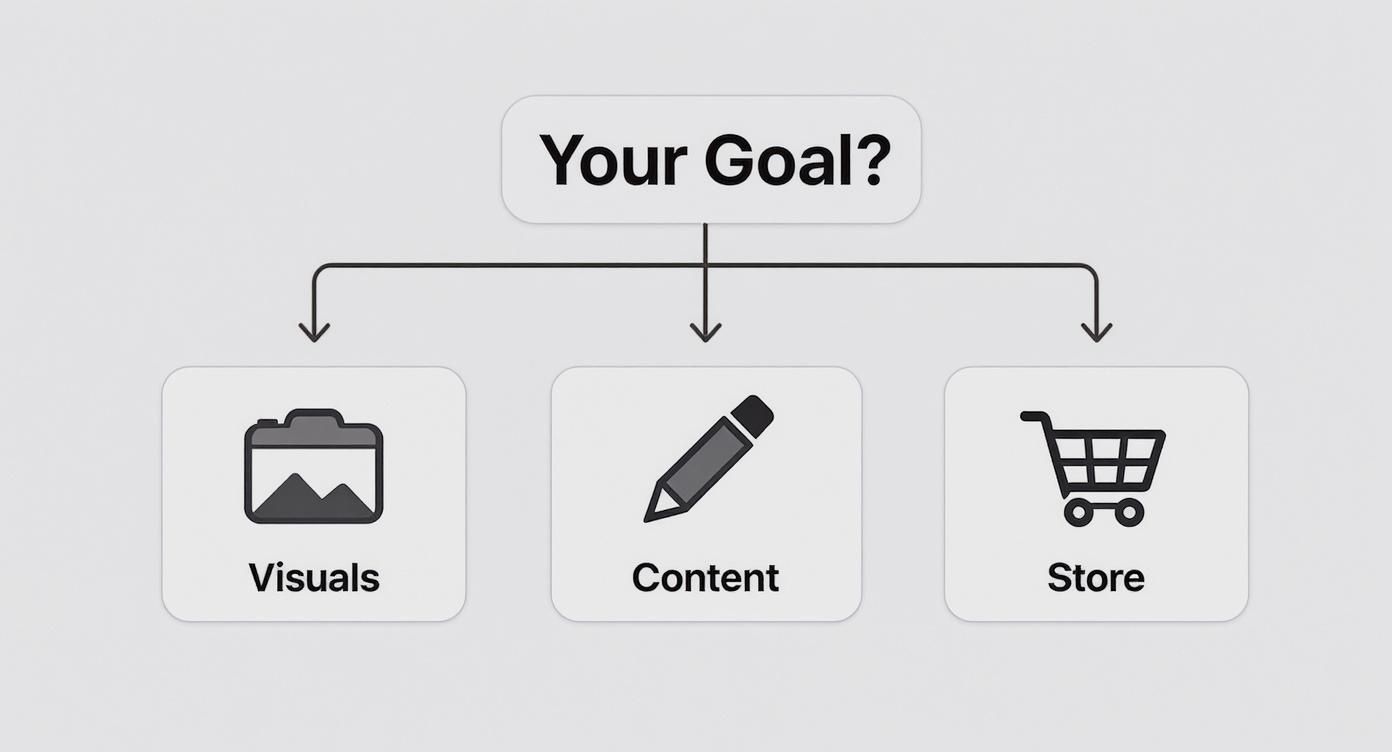
This breakdown illustrates how your main objective shapes the kind of website you should build, ensuring it's perfectly configured for success.
Don't Just Show Numbers—Tell a Story With Them
Data alone can be dry, but data that tells a story is powerful. The key is to connect your analytics to a tangible return on investment (ROI) for a brand. Instead of simply stating you have a 5% engagement rate, illustrate what that means for them.
My go-to tip: Always frame your stats as a benefit to the brand. For example, say: "My sponsored posts average a 5% engagement rate, which consistently drives a 10% click-through rate to partner sites. This shows my audience isn't just scrolling—they're taking action."
You've just linked your performance directly to what brands care about most: traffic and sales. Including testimonials from past clients is another excellent way to build credibility. For those starting out, our complete guide on building a content creator media kit offers templates and examples. Ensure your media kit is easily accessible on your website, typically as a downloadable PDF on a "Work With Me" page.
Integrating Tools That Build Your Audience
A great website is more than a digital business card; it’s an engine for building a loyal community. By integrating the right tools, you can transform your site from a passive portfolio into an active hub for audience growth, forging direct connections away from the unpredictable nature of social media algorithms.
The most critical tool is an email newsletter form. Your email list is one of the few digital assets you truly own. It’s your direct line to your most dedicated fans, allowing you to share updates, launch products, and build community without competing for attention in a crowded feed.
Tools like FloDesk or ConvertKit make it easy to embed stylish, on-brand sign-up forms on your homepage, at the end of blog posts, or in a pop-up.
Making Connections and Displaying Your Work
Your website must make it simple for brands and followers to contact you. A professional contact page is essential. Use a simple form to gather key information from potential partners, helping you filter out spam and respond efficiently.
To keep your site feeling current, integrate your social media feeds. Most website builders have widgets that pull in your latest Instagram posts or TikToks. This achieves two important goals:
- Social Proof: It immediately shows visitors you’re active and gives them a taste of your content style.
- Engagement Loop: It encourages website visitors to follow you on social media and vice versa, creating a powerful cycle.
Understanding Your Audience with Analytics
To understand what’s working on your site, you need analytics. Setting up Google Analytics is non-negotiable. It's free, powerful, and provides a wealth of information about your visitors. With analytics, you can track key metrics to make smarter content decisions.
- Top Pages: Which blog posts or portfolio projects are most popular?
- Audience Demographics: Who are your visitors? Discover their age, location, and interests.
- Traffic Sources: How are people finding you? Is it through Google, Instagram, or referral links?
By analyzing this data, you stop guessing and start creating content you know your audience wants. For example, if a blog post about your favorite travel camera gets thousands of views from organic search, that's a clear signal to create more content on that topic.
Monitoring these numbers is fundamental to growth. As you advance, you might consider dedicated marketing dashboard tools to consolidate these insights. These integrations turn a basic website into a smart platform that fuels sustainable brand growth.
Getting Your Site Ready for Brand Deals
With your website built and essential tools in place, it's time to turn it into a machine that attracts brand deals. This requires thinking like a marketer. A little search engine optimization (SEO) can significantly help brands find you when they're scouting for creators. Your site should work for you 24/7, pulling in the partnerships you truly want. The first step is creating a dedicated "Work With Me" or "Partnerships" page.
Creating a Partnership Page That Actually Converts
Your partnership page must be sharp, professional, and convincing. A busy brand manager needs to see what you offer and why it matters, quickly. Your goal is to answer their questions proactively and make it incredibly easy to get in touch.
Here’s what your partnership page absolutely needs:
- A Clear Value Proposition: Lead with a strong statement about who you are and the audience you serve. For example: "I connect innovative tech brands with an engaged audience of early adopters and gadget enthusiasts."
- Your Menu of Services: Be specific. List exactly what you offer, like Sponsored Instagram Reels, Dedicated YouTube Unboxings, or Full-Funnel Blog Post Packages.
- The Numbers That Matter: Showcase key stats like engagement rate, monthly views, and a snapshot of your audience demographics. Data builds trust.
- Social Proof is Everything: Feature logos of brands you've worked with. Seeing that other companies have trusted you is a powerful signal.
- A Clear Call-to-Action (CTA): Tell them exactly what to do next. A simple contact form with an invitation to "Request My Full Media Kit" is a perfect, low-friction next step.
This business-minded approach immediately sets you apart. For a deeper dive, learning how to build an online presence that attracts clients can give you a competitive edge.
Using Keywords to Let Brands Find You
How do you get brand managers to your site? Think about what they’re searching for on Google. Instead of generic terms like "influencer," use specific long-tail keywords that match a scout's search query.
Consider keywords like:
- "Sustainable fashion influencer in Austin"
- "Vegan food blogger for family recipes"
- "Tech content creator for gaming setups"
Weave these phrases naturally into your site's text—your bio, services page, and blog post titles. This simple strategy makes you visible to brands actively searching for your expertise. And they are searching: data shows 63% of marketers find that creator-generated content drives better results than their own brand creative, delivering an average ROI of 5.78x.
Pro Tip: Every blog post is a new opportunity to rank in search results. A post titled "My Top 5 Eco-Friendly Skincare Products" isn't just content; it's a beacon for clean beauty brands seeking their next partner. Good SEO transforms your passion into a lead-generation engine.
Monetizing Your Brand Beyond Sponsored Posts
Your website is your digital headquarters, a place to build income streams independent of brand deals. When your income relies solely on sponsored posts, you let brands dictate the terms. Diversifying how you earn money on your own platform gives you creative control and builds a more stable business.
This is particularly true for creators with smaller, tight-knit communities. Over 75% of all creators globally are in the nano category (1,000 to 20,000 followers). Their superpower is an exceptionally high average engagement rate of 3.86%, driven by audience trust. This authenticity is invaluable for selling directly to your fans. You can explore more of these influential marketing statistics on brentonway.com.
Setting Up Your Own E-commerce Store
One of the most effective ways to monetize your influence is by selling your own products. Your website is the perfect place to open a shop, whether you're selling branded merchandise or a unique product you've created. Platforms like Shopify or the WooCommerce plugin for WordPress allow you to build a professional online store directly on your site, giving you full control over products, pricing, and branding.
Selling Digital Products and Exclusive Content
If you prefer to avoid shipping logistics, digital products are a fantastic, scalable option. You create them once and can sell them indefinitely, with incredible profit margins. Consider what knowledge or skills your audience values.
- Presets and Templates: If you're a photographer, sell your Lightroom presets. If you're a designer, your Canva templates could be a hit.
- Ebooks and Guides: Package your expertise into a downloadable guide, such as a 30-day workout plan or a collection of recipes.
- Memberships and Subscriptions: Offer exclusive content—like behind-the-scenes footage or deep-dive tutorials—to paying members in a private section of your site.
Earning with Affiliate Marketing
Affiliate marketing allows you to earn passive income by recommending products you genuinely use and love. By placing special affiliate links in your blog posts, you earn a commission when someone makes a purchase through your link.
The key to successful affiliate marketing is authenticity. Only recommend products you believe in that align with your brand. A blog post that solves a real problem for your reader and naturally includes a helpful affiliate link will always outperform one that feels like a pushy advertisement.
This strategy not only generates revenue but also solidifies your status as an expert in your niche. For more ideas, explore our guide on how to monetize content in a way that feels authentic to you and your audience.
Conclusion: Your Website is Your Most Powerful Asset
Ultimately, creating high-quality websites for influencers is about building a brand that lasts. It's about taking control of your audience, professionalizing your operations, and opening up multiple streams of income beyond sponsored posts. While social media is an essential tool for discovery and engagement, your website is the asset you own—your digital home base that works for you 24/7. By investing in a strategic, well-designed website, you're not just building a portfolio; you're building a resilient and profitable business for the future.
Ready to find brand partnerships that complement your growing business? REACH Influencers provides a direct line to top brands and agencies actively looking for creators like you. Sign up today and start discovering your next big opportunity.
{
“@context”: “https://schema.org”,
“@type”: “BlogPosting”,
“mainEntityOfPage”: {
“@type”: “WebPage”,
“@id”: “https://reach-influencers.com/blog/websites-for-influencers”
},
“headline”: “The Ultimate Guide to Websites for Influencers That Land Brand Deals”,
“description”: “Learn why a professional website is a critical asset for influencers. This guide covers choosing the right platform, creating a media kit, and monetizing your brand to land bigger deals.”,
“image”: “https://cdn.outrank.so/64cdc0e0-2a54-4cd9-a45d-c4196c5e1d4e/62cdc89f-7376-4b85-b869-c118a569efdc/websites-for-influencers-house-social-media.jpg”,
“author”: {
“@type”: “Organization”,
“name”: “REACH Influencers”,
“url”: “https://reach-influencers.com”
},
“publisher”: {
“@type”: “Organization”,
“name”: “REACH Influencers”,
“logo”: {
“@type”: “ImageObject”,
“url”: “https://reach-influencers.com/logo.png”
}
},
“datePublished”: “2023-11-15”,
“dateModified”: “2023-11-15”
}