

Ever seen something from a brand that felt more like a great story than a sales pitch? That's branded content in a nutshell.
At its core, branded content is media a brand pays for, but it's not an ad. Instead, its whole purpose is to entertain, educate, or inspire you. The idea isn't to interrupt what you're doing, but to become the thing you choose to watch, read, or listen to.
So, What's the Difference?
Think of a traditional ad as a commercial break—it's loud, it interrupts, and its message is "buy this now!" Branded content is completely different. It's more like a fascinating documentary or a helpful tutorial that just happens to be brought to you by a brand.
The goal is to provide real value upfront, building a connection with you first. That positive feeling you get from the content naturally gets associated with the brand behind it. It’s a shift from shouting at customers to drawing them in.
The best branded content is so good it could exist on its own, even without a logo. That's how it builds the kind of trust and loyalty that a typical ad just can't.
This infographic neatly summarizes the three key goals that drive any successful branded content campaign.
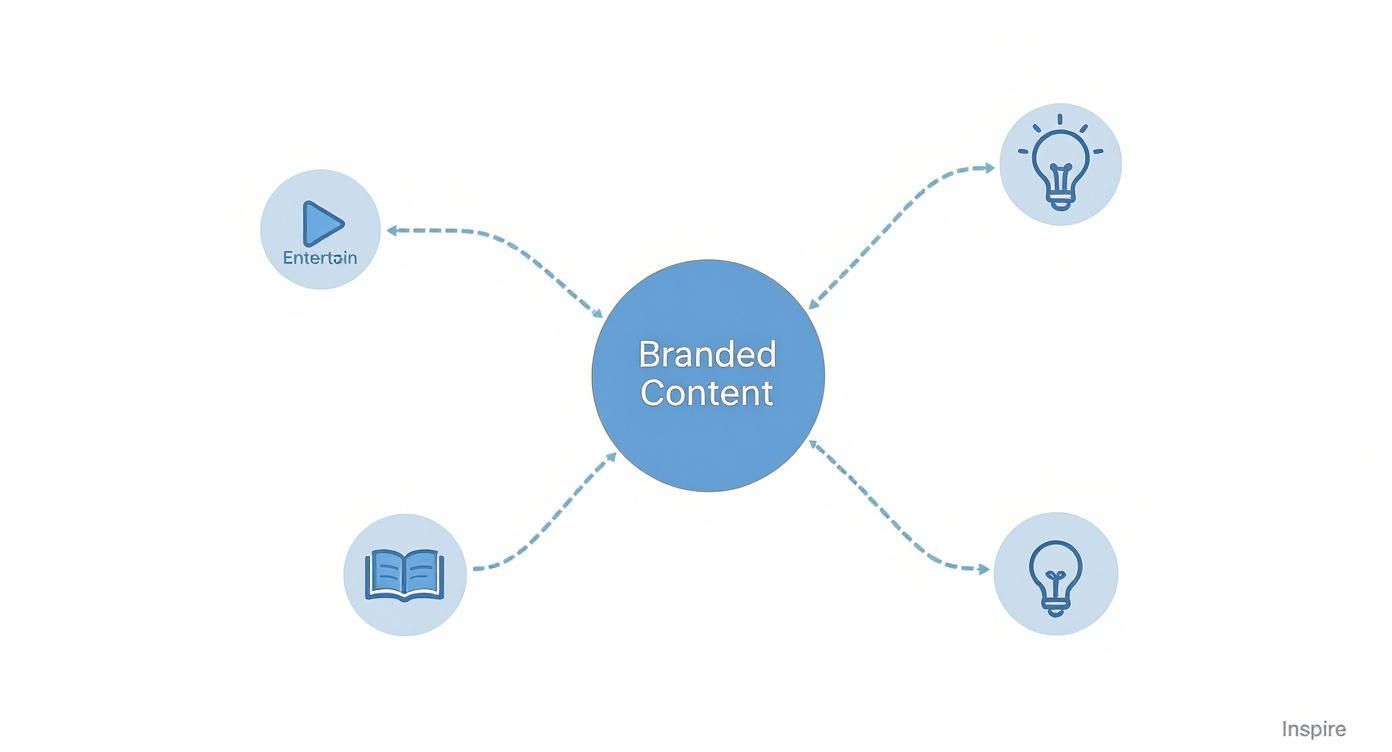
As you can see, it all comes back to giving the audience something genuinely valuable. Whether it's a laugh, a new skill, or a moment of inspiration, the content has to connect on a human level.
Branded Content vs Traditional Ads vs Content Marketing
It's easy to get these terms mixed up, but they each play a very different role. This table breaks down the key distinctions.
| Attribute | Branded Content | Traditional Advertising | Content Marketing |
|---|---|---|---|
| Primary Goal | Build brand affinity and emotional connection | Drive immediate sales and promote products | Build authority, generate leads, and educate |
| Focus | Storytelling, entertainment, inspiration | Product features, benefits, calls to action | Practical value, problem-solving, information |
| Audience's Role | Active participant (chooses to engage) | Passive recipient (interrupted) | Seeker (looks for solutions) |
| Tone | Subtle, conversational, authentic | Direct, persuasive, promotional | Informative, helpful, educational |
| Example | A short film funded by a brand | A 30-second TV commercial for a car | A how-to blog post on a company website |
While all three are important marketing tools, branded content stands out by focusing on the relationship with the audience, rather than just the transaction.
Why Branded Content Is So Effective Today

Let's be honest, people are tired of ads. We've all gotten incredibly good at ignoring the constant sales pitches thrown our way. Branded content works so well because it flips the script—instead of shouting about a product, it whispers a story or shares something genuinely useful.
It’s about pulling people in, not pushing a sale. By giving your audience something they actually want—whether it's a laugh, a helpful tip, or an inspiring story—you start building a real connection.
This approach feels less like a sales pitch and more like a conversation. It builds trust, makes your brand feel more authentic, and creates positive vibes that stick around long after the content is viewed.
The Power of Authenticity and Trust
The reason branded content is taking off comes down to one simple thing: it drives way more engagement than old-school, disruptive ads. Take influencer marketing, a perfect example of branded content in action. The return on investment speaks for itself.
A recent study projects that for every $1 spent on influencer marketing in 2025, brands can expect an average return of $5.78. That’s a massive shift in where marketing dollars get the most bang for their buck.
This all comes back to authenticity. When a creator or brand tells a story that feels real and connects on a human level, people listen. In fact, a staggering 70% of consumers say they trust recommendations from influencers far more than they trust traditional advertising.
If you want your own campaigns to hit the mark, it’s worth brushing up on some key content marketing best practices to make sure your strategy truly connects with your audience.
What Kinds of Branded Content Can You Create?
Branded content isn't just one thing—it’s a whole creative sandbox. The real magic happens when you pick the right format to tell your story in a way that genuinely clicks with the people you want to reach. Each type gives you a different way to provide value.
Think of it less like a sales pitch and more like a great conversation. The most effective formats are built on storytelling and genuine connection.
- Articles and Blog Posts: This is your chance to become the go-to expert. A series of helpful articles can position your brand as a trusted source of advice and insight in your field.
- Video Content: Video is a massive world of its own. You can create everything from short, beautiful films that pull at the heartstrings to practical tutorials that solve a real problem. For a deep dive into one of the most powerful formats out there, check out this fantastic guide to brand video production.
- Podcasts: Podcasts let you have a much deeper, more personal conversation. A branded podcast series can explore topics your audience cares about, building a loyal following over time.
Tapping into Collaborative Content
You don't have to create everything yourself. Sometimes, the most authentic content comes from working with others.
Influencer marketing is a perfect example. Here, creators weave your brand's message into their own content, sharing it with an audience that already trusts them. This often goes hand-in-hand with user-generated content, where you inspire your own customers to share their experiences. If you want to harness the power of your community, learning how to build a user-generated content strategy is a great place to start.
At the end of the day, the best format is whatever feels most natural for your brand and gives your audience something truly valuable. It could be entertainment, education, or just a bit of inspiration. The medium is secondary to the message.
Inspiring Examples of Branded Content in Action

The best way to understand branded content is to see it in the wild. When done right, it doesn't even feel like marketing. It feels like an event, a short film, or a piece of entertainment you’d actually choose to watch.
Think about Red Bull's "Stratos" project. They didn't just make an ad showing someone drinking their product. Instead, they sponsored Felix Baumgartner's incredible, record-breaking freefall from the literal edge of space. The event was the content, perfectly capturing their "gives you wings" slogan without ever having to spell it out.
Then there's Dove's "Real Beauty Sketches." This viral video wasn't about soap; it was a short film that tapped into the powerful difference between how women view themselves and how they're seen by others.
By focusing on a universal human feeling instead of a product, Dove sparked a global conversation and built a deep, emotional connection with millions. The content added real value by making people feel understood.
What Made Them Work?
So, why did these campaigns hit home? It boils down to a few key ingredients. They all put the audience, not the product, first.
- They told a captivating story. Each one was built around a narrative that was much bigger than the brand itself—exploring human potential or self-perception.
- They made you feel something. Whether it was the heart-pounding thrill of "Stratos" or the raw vulnerability of "Real Beauty," emotion was the driving force.
- The brand was the stage, not the star. The product stayed in the background. Instead, the brand provided the means for an unforgettable story to play out.
Looking at other powerful brand storytelling examples is a great way to get the creative juices flowing for your own content.
How Branded Content Drives B2B Growth

In the B2B world, decisions aren't made overnight. The sales cycles are long, the stakes are high, and trust is the most valuable currency you can have. This is where branded content really shines. It’s not about a quick sale; it’s about building a foundation of confidence with your potential partners.
Think about it. Instead of a hard sell, a B2B company might release an in-depth whitepaper, host a webinar with industry experts, or publish a detailed case study. This isn't just advertising—it's genuine problem-solving. You’re showing your audience that you understand their challenges, and more importantly, that you know how to fix them.
This approach immediately sets you apart from the competition. You stop being just another vendor and start becoming a go-to resource, an expert they can rely on. It's a shift from selling a product to providing real value.
And it’s clear that B2B marketers are all-in on this strategy.
In fact, about 46% of B2B marketers plan to increase their content marketing budgets in 2025, and another 41% expect theirs to stay the same. This money is flowing into high-impact areas like video, thought leadership, and even AI-assisted content creation to build stronger connections. If you want to dig deeper, you can explore more B2B content marketing trends to see exactly where the industry is heading.
Common Questions About Branded Content
https://www.youtube.com/embed/ezZsIC6U0Sk
Even after getting the hang of branded content, a few practical questions almost always pop up. Let's clear up some of the most common ones so you can move forward with confidence.
What Is the Main Difference Between Branded Content and Native Advertising?
This is a big one. While they're often mistaken for each other, their core jobs are quite different. Native advertising is all about form—its main goal is to seamlessly match the look and feel of the platform it's on, so it doesn't feel like a jarring ad.
Branded content, on the other hand, is all about substance. Its purpose is to tell a compelling story that provides real entertainment or educational value, forging a genuine connection with the audience.
Here's a simple way to think about it: Native advertising is the camouflage that helps the content blend in. Branded content is the valuable message inside. You'll often see branded content delivered using a native ad format.
How Do You Measure the ROI of Branded Content?
Measuring the return on branded content isn't as simple as tracking a click to a sale. You have to look at the bigger picture and focus on the long-term value it creates.
Instead of direct sales, you'll want to track metrics like:
- Audience Engagement: Look at the likes, comments, shares, and especially the time people spend with your content. When engagement is high, you know your story is hitting the mark.
- Brand Lift: This is usually tracked with surveys that measure how awareness, perception, and purchase intent have changed after someone sees your campaign.
- Owned Channel Growth: Are you getting more social media followers or email sign-ups? That’s a great sign your content is inspiring people to join your community.
Can Small Businesses Use Branded Content?
Absolutely! Branded content isn't about having a Hollywood-sized budget; it's about telling an authentic, high-quality story. A small business might not be funding a blockbuster, but they can create incredibly powerful campaigns.
For instance, a local coffee shop could partner with a neighborhood micro-influencer to share stories from their community. A small tech startup could start a podcast that offers up genuine industry know-how. The trick is to deeply understand your niche audience and create something that genuinely speaks to them. In branded content, authenticity always beats a big budget.
Ready to connect with influencers who can bring your brand's story to life? With REACH, you can find the perfect creators, manage campaigns, and measure your impact all in one place. Discover your ideal influencer partners today.