 Skip to content

{
"@context": "https://schema.org",
"@type": "BlogPosting",
"headline": "What Is White Label Software? A Complete Guide for Agencies",
"name": "What Is White Label Software? A Complete Guide for Agencies",
"description": "Unlock explosive growth for your agency. This guide explains what white label software is, how it works, and how you can use it to add new services and boost revenue instantly.",
"image": "https://cdn.outrank.so/64cdc0e0-2a54-4cd9-a45d-c4196c5e1d4e/a615a4c5-f1d8-49ee-ae05-a41fb1be6757/what-is-white-label-software-white-label.jpg",
"url": "https://reach-influencers.com/blog/what-is-white-label-software",
"author": {
"@type": "Organization",
"name": "REACH Influencers"
},
"publisher": {
"@type": "Organization",
"name": "REACH Influencers",
"logo": {
"@type": "ImageObject",
"url": "https://reach-influencers.com/logo.png"
}
},
"datePublished": "2023-10-26",
"dateModified": "2023-10-26",
"mainEntityOfPage": {
"@type": "WebPage",
"@id": "https://reach-influencers.com/blog/what-is-white-label-software"
}
}
Table of Contents
- What Is White Label Software? A Simple Analogy
- How White Label Software Actually Works
- White Label vs. Private Label vs. OEM: What's the Difference?
- The Strategic Benefits of Using White Label Software
- The Not-So-Obvious Downsides of White Labeling (And How to Dodge Them)
- How to Implement a White Label Solution
- Your Top White Label Software Questions Answered
Ever wondered how some agencies launch sophisticated software platforms seemingly overnight? The secret isn't a massive in-house development team, but something much smarter: understanding what is white label software.
Put simply, it's a fully built, ready-to-go product that a company can buy, put its own branding on, and sell as its own. It’s like getting the keys to a brand-new car, but you get to put your own logo on the hood. This strategy allows you to offer powerful new services instantly, without the massive headache and expense of building from scratch. For agencies looking to scale, a white label platform like REACH Influencers can be a game-changer, enabling you to offer top-tier influencer marketing services under your own brand from day one.
What Is White Label Software? A Simple Analogy
Let's break it down with a familiar example. Think of a local coffee shop known for its great vibe and service. They want to sell their own signature blend of coffee beans, but they don't own a farm or a complex roasting facility.
So, they find a large, expert coffee roaster who produces fantastic beans. The roaster packages the beans in plain, unbranded bags. The coffee shop just slaps its own beautiful logo and label on the package, and voilà—they're now selling "their" unique coffee blend to loyal customers.
That’s exactly what is white label software. A developer builds a solid, unbranded platform and then licenses it to other businesses. Those businesses (the resellers) customize it with their own branding—their logo, color scheme, and even their own domain name. To their clients, it looks like a custom-built tool they created themselves.
This setup is a win-win. The developer handles the tricky technical stuff like coding, updates, and maintenance. Meanwhile, the reseller gets to focus on what they do best: marketing, sales, and building great customer relationships.
The Strategic Advantage for Modern Businesses
The real magic of white-labeling is the speed. Building a new piece of software from the ground up is a long, expensive journey that can take years and drain hundreds of thousands of dollars. With a white-label solution, you can get a new service up and running in weeks, sometimes even days.
This model delivers some powerful, tangible benefits:
- Accelerated Growth: You can bolt on a new revenue stream almost immediately.
- Enhanced Brand Authority: Offering a branded software tool makes you look like a tech leader in your industry.
- Reduced Risk and Cost: You skip the giant upfront investment and the ongoing costs of hiring a development team.
- Focus on Core Competencies: You can stick to your strengths while letting a tech partner handle the software side.
For instance, a marketing agency could use a platform like REACH to offer a white-label influencer marketing dashboard. Their clients log into a portal with the agency's branding, giving them a seamless, professional experience without the agency having to write a single line of code. For a closer look at how this works in practice, this guide on What Is White Label Software and How Can It Launch Your SaaS Business is a great resource.
By leveraging a pre-built foundation, businesses can bypass the entire development lifecycle and go straight to market, capturing opportunities that would otherwise be out of reach. It democratizes access to advanced technology, leveling the playing field for smaller companies.
Ultimately, figuring out what a white label solution is can unlock a ton of new ways to grow your business. If you want to go deeper, you might want to check out our detailed guide on what is a white label solution. It’s more than just a shortcut; it's a strategic move to give your customers more value and solidify your spot in the market.
How White Label Software Actually Works
To really get what white label software is, it helps to peek behind the curtain. The whole system hinges on a partnership between two main players: the company that builds the software and the business that resells it.
It all starts with the software provider. This is the team of developers and tech experts who build, maintain, and update the core product. Think of them as the architects, focused on making sure the technology is solid, reliable, and packed with useful features.
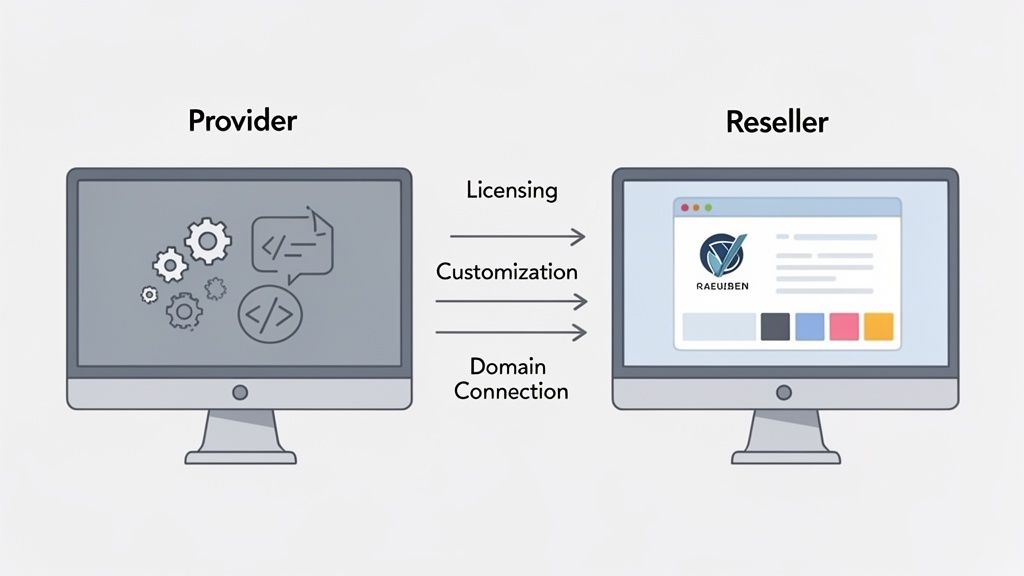
Then, you have the reseller. This could be a marketing agency, a business consultant, or really any company looking to add a new service to their lineup. The reseller pays the provider for a license, which gives them the right to rebrand and sell the software as their own.
The Transformation Process
Once the deal is done, the reseller's job is all about transformation. This is where the generic software gets a complete brand makeover. It’s a straightforward process that usually involves a few steps:
- Customization: The reseller adds their logo, changes the colors to match their brand, and tweaks the user interface for a look that feels uniquely theirs.
- Domain Connection: They hook the software up to their own domain. So, instead of sending clients to the provider's URL, they’ll go to something like
portal.youragency.com. - Feature Configuration: The reseller decides which features to make available and can even create different service tiers or packages for their clients.
This rebranding makes it look like the reseller built the tool from scratch. For instance, an agency using the REACH Influencers platform can give clients a branded dashboard for tracking influencer results. The client only ever sees the agency’s logo and colors, creating a seamless experience, while REACH’s engine hums along quietly in the background.
This model creates a perfect division of labor.
The software provider handles all the heavy lifting—squashing bugs, patching security holes, and rolling out new features. This frees up the reseller to focus on what they do best: growing their business, managing client relationships, and marketing their "new" tool.
A Growing Market Trend
This smart separation of duties is why white-labeling is booming, especially in fast-moving industries like influencer marketing. By 2026, the market for these tools is expected to be part of a massive USD 99 billion ecosystem. It's no wonder, with over 60% of agencies now making AI-powered reporting and content automation a top priority.
The pricing models are also a huge draw. Plans can start as low as $49/month for a handful of clients and scale up to support hundreds, sometimes even including branded mobile apps. If you're curious about the technical side, there are great resources on building scalable white-label SaaS that dive deeper into the architecture.
After the platform is fully rebranded, the reseller owns the entire customer relationship. They market the software, handle onboarding, provide support, and manage all the billing. The end client usually has no clue a third party is even involved, which builds the reseller's brand authority and makes for a much stickier, long-term relationship.
White Label vs. Private Label vs. OEM: What's the Difference?
When you're looking to sell a product without building it from scratch, you'll run into terms like white label, private label, and OEM. People often throw these around as if they mean the same thing, but they're actually very different ways of doing business. Picking the right one is crucial, so let's clear up the confusion.
At its heart, what is white label software is a "one-to-many" deal. A software company builds a single, solid product and then lets other businesses—like yours—buy it, slap their own brand on it, and sell it as their own. It’s the perfect play for agencies that want to bolt on a new service without the headache and cost of developing it themselves.
Diving into White Label
The whole idea behind white label is that the product is generic and ready to go. The developer has already done the hard work of building and testing it, so you can just license it and start selling. Because the same core software is sold to everyone, the costs are kept down, making it a fantastic option for businesses of all sizes.
Your job as the reseller is all about the branding and the sales pitch. For example, an agency might use a platform like REACH for its influencer marketing services. To their clients, it looks like a custom-built, in-house tool, complete with the agency's logo, colors, and a custom domain. Meanwhile, dozens of other agencies could be using the exact same technology—and no one is the wiser.
How Private Label Is Different
Private label is the opposite—it's a "one-to-one" relationship. Here, a manufacturer creates a product exclusively for one specific company. Sometimes the product is just a slight tweak of an existing one, but it can also be a completely new item built to the company’s exact specs. The key word here is exclusivity.
Think about the generic brands at the grocery store. A big supermarket chain doesn't make its own brand of pasta sauce; it hires a food manufacturer to create a unique recipe that's sold only under the store's name. This gives them a unique product no competitor has, but it also means higher costs and committing to large orders.
So, What Is OEM?
Then there's OEM, which stands for Original Equipment Manufacturer. This isn't about rebranding a finished product at all. An OEM makes a single part or component that another company then uses to build a final product. The component is just one piece of a much bigger puzzle.
The classic example is Intel processors inside a Dell laptop. You're buying a Dell computer, but one of its most important parts is made by Intel. The OEM part (the processor) is a feature, not the final product.
Comparing White Label, Private Label, and OEM
Let's put it all together. Seeing the differences side-by-side can really help you decide which model makes the most sense for what you're trying to achieve, especially when you consider what white label software can do for your business.
This table clarifies the key differences between these common product reselling models to help you choose the best strategy for your business.
| Attribute | White Label | Private Label | OEM |
|---|---|---|---|
| Exclusivity | Non-exclusive; sold to many resellers. | Exclusive; created for a single retailer. | Component; sold to multiple manufacturers. |
| Customization | Limited to branding (logo, colors, domain). | Can involve unique product modifications. | No customization by the end-brand. |
| Target User | Agencies/resellers adding a new service. | Large retailers seeking a unique product line. | Companies building a complex final product. |
| Speed to Market | Very fast; product is ready to go. | Slower; requires product development. | N/A; part of a larger development cycle. |
| Cost | Low entry cost; subscription-based. | High entry cost; large order required. | Varies; based on component complexity. |
For most agencies, consultants, and creators, the white label model is the clear winner. It's the fastest, most cost-effective, and lowest-risk way to broaden your services, build your brand's reputation, and give your clients more value—all without getting bogged down in product development.
The Strategic Benefits of Using White Label Software
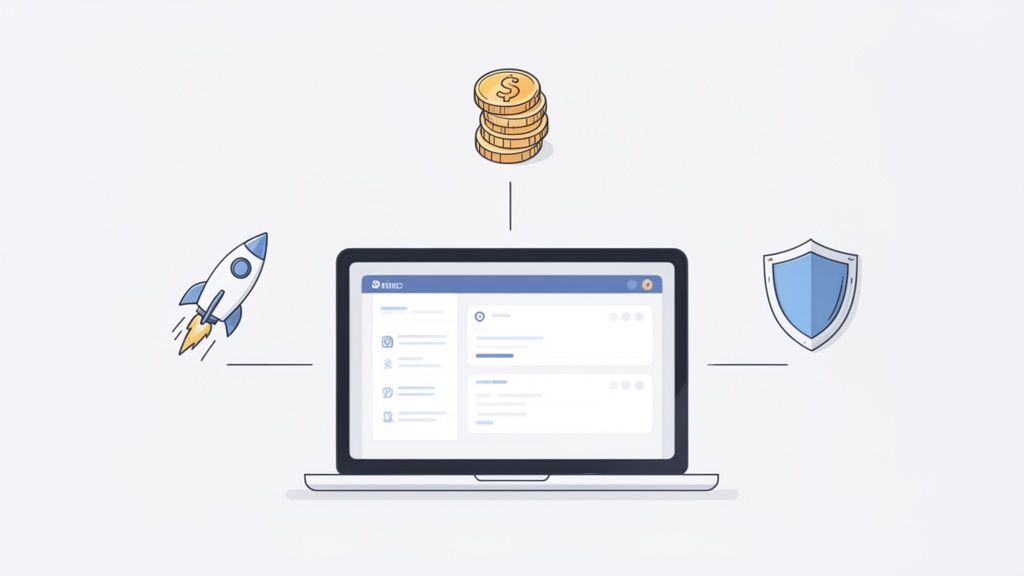
Choosing a white label solution is so much more than a simple shortcut. It’s a smart, strategic move that can give your business an immediate and powerful boost. The most obvious advantage is speed. Think about it: instead of spending a year or more building something from scratch, you can launch a polished, market-ready service in a matter of weeks.
This speed to market is a game-changer. It lets you instantly roll out new services and jump on market opportunities long before your competitors even know what's happening.
Accelerate Growth and Boost Profitability
Beyond just being fast, the cost savings are huge. Building software in-house means pouring money into research, development, and testing. And that's before you even get to the ongoing headache of hiring and paying a skilled tech team. White label software lets you sidestep all of that.
This financial efficiency goes straight to your bottom line. With lower overhead, you can offer your new service at a competitive price and still make a healthy profit. You're essentially trading a massive, unpredictable capital expense for a predictable monthly one.
Key Takeaway: White label software lets you scale your business and serve more clients without having to hire a single new developer. It's a blueprint for more profitable, sustainable growth.
For example, an agency using REACH’s white label features can give its clients a sophisticated influencer analytics platform that looks and feels like their own. This move builds trust and justifies higher prices, all without writing a line of code. It's a direct path to more revenue and happier, stickier clients.
Enhance Brand Authority and Credibility
When you offer a software solution with your own branding, it instantly elevates your company's image. Clients logging into a professional platform with your logo see you as a serious, tech-savvy player in your industry.
This is especially true in digital marketing, where data and technology are everything. The white-label marketing market is set to explode, projected to hit USD 99 billion by 2026. This growth is all about agencies scrambling to meet client demands for better tech. Going the white-label route can slash your time-to-market by up to 70% compared to building it yourself, giving you a massive head start.
Mitigate Risk and Focus on Core Strengths
Let's be honest—building your own software is risky. Projects go over budget, miss deadlines, and sometimes, the final product just doesn't hit the mark. When you use a proven white label solution, you're offloading all that risk to a company whose entire business is focused on perfecting that one piece of technology.
This frees you up to do what you do best: serving your clients, building your brand, and growing your business. You get to focus on strategy and service, knowing the tech backbone is solid and handled by experts.
When you're thinking about adding new capabilities, it's helpful to compare different approaches. Understanding managed services vs staff augmentation makes it clear why white labeling is unique—you're not just hiring help, you're licensing a complete, finished product.
Ultimately, white label software creates a positive feedback loop for growth. You can innovate faster, strengthen your brand, and operate more profitably. For a closer look at how this applies directly to agencies, check out our guide on white label influencer software for agencies. It’s a strategic way to deliver more value and secure a stronger foothold in your market.
The Not-So-Obvious Downsides of White Labeling (And How to Dodge Them)
White labeling sounds like a dream, and often it is. But let's be realistic—no business strategy is without its potential headaches. Going in with your eyes open is the best way to make sure you get all the benefits without the buyer's remorse.
The biggest thing to wrap your head around is your dependency on the provider. You don't own the code, which means you're hitching your wagon to their star. You're counting on them for every update, every security patch, and every new feature. If they're slow, stop innovating, or worse, go out of business, your product is dead in the water. That's a huge risk, especially if it's a service your clients rely on daily.
Then there's the issue of limited customization. Sure, you can slap your logo on it and change the color scheme, but that's usually where it ends. You're essentially putting a new coat of paint on someone else's car—you can't change what's under the hood. This becomes a real problem when a client asks for a specific feature you can't deliver because the original developer doesn't offer it.
Playing It Smart: How to Navigate the Challenges
So, how do you avoid these traps? It all comes down to doing your homework before you sign on the dotted line. You have to vet the provider with the same rigor you'd use for a business partner.
- Look for a Proven Partner: Don't be a guinea pig. Go with a provider that has a solid, established track record. Hunt for case studies, read reviews, and talk to their existing customers if you can. A company that openly shares its product roadmap is also a great sign they're in it for the long haul.
- Kick the Tires on Their Support: Before you commit, test their support team. Send them a few tricky questions and see how quickly and thoroughly they respond. Great support can turn a potential client crisis into a minor hiccup.
- Actually Read the Contract: Pay close attention to the service level agreement (SLA). What are their uptime guarantees? How do they handle feature requests? Getting clarity on these details upfront saves you a world of pain later.
Think of it this way: you're not just buying a product, you're investing in a partnership. A reliable provider acts like an extension of your own team, ensuring the software you're selling stays dependable and valuable.
How to Stand Out When Everyone Has the Same Tools
One final hurdle is differentiation. If you and your competitors are all rebranding the same underlying what is white label software, how do you convince clients to choose you? The secret isn't in the software—it's in the service you wrap around it.
Don't just be a reseller. Focus on creating a unique, high-value experience that nobody else can offer. This is where you really make your mark.
- Become the Expert: Offer strategic advice and consulting to help clients get incredible results from the tool.
- Provide White-Glove Service: Dazzle them with fantastic onboarding, proactive support, and regular check-ins to review their progress.
- Bundle It Up: Make the software part of a bigger, more comprehensive package that solves a larger problem for your clients.
When you take this approach, the tool becomes just one piece of your unique solution. You're no longer just selling software; you're a strategic partner delivering a complete answer to their problems. That's something your competitors will find much harder to copy.
How to Implement a White Label Solution
So, you understand the "what" and "why" of white-label software. Now for the fun part: actually putting it to work for your business. Making the leap from concept to reality isn't just about picking a tool off the shelf; it's about thoughtfully integrating a new service that feels like it’s always been part of your brand. A solid plan here is the difference between a clunky add-on and a game-changing new revenue stream.
Before you even start window shopping for providers, you need to look inward. What specific pain point are you solving for your clients? Who, exactly, is going to be using this software every day, and what are their absolute must-have features? Get this down on paper. A clear checklist of needs will keep you grounded and prevent you from being dazzled by shiny features that don’t actually solve the core problem.
Once you know what you’re looking for, it’s time to find the right partner. This is where you need to be picky.
Vetting Potential Software Providers
Choosing a white-label partner is a massive decision. Don't just skim their marketing site. You need to dig deep to find a provider who is reliable, secure, and ready to scale with you. Going for the cheapest option from an unproven company is a recipe for disaster—it can cost you clients and do serious damage to your reputation.
Here’s what your vetting checklist should cover:
- Stellar Reviews and Case Studies: Look for proof. Can they show you success stories from businesses that look like yours? Real-world results speak louder than marketing copy.
- Robust Security Protocols: You’re trusting them with your clients' data. Make sure they have top-notch security, are compliant with regulations like GDPR or CCPA, and can promise solid uptime.
- A Scalable Platform: You’re planning to grow, right? Your software partner needs to be able to handle more clients and more data without breaking a sweat.
- Transparent Pricing and Licensing: Get a magnifying glass and go over their pricing. Are there hidden fees? Does their licensing model actually make sense for how you plan to make money?
This simple three-step strategy can help you sidestep the most common pitfalls people run into.
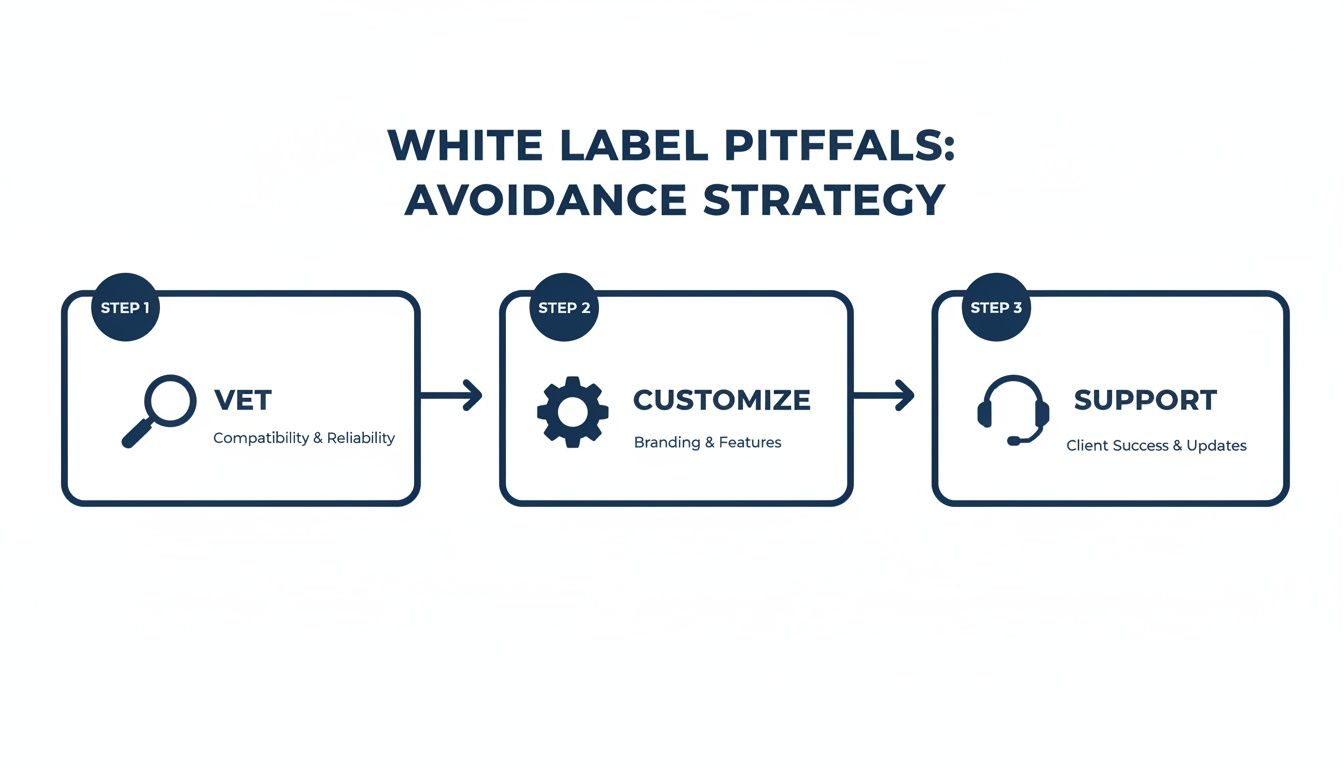
As you can see, it really boils down to three core ideas: vetting your options carefully, customizing the tool to truly make it your own, and ensuring you have great support for the long haul.
Branding Customization and Market Launch
With a partner selected, it's time to make the software yours. This is about more than just slapping your logo on it. You'll want to customize the color palette, set up a custom domain (like portal.youragency.com), and tweak the user interface until it feels like a natural part of your brand ecosystem. When a client logs in, there should be no question they're in your world.
Finally, you need a plan to launch it. How are you going to introduce this awesome new service to your clients and prospects? You'll need to create some marketing materials, update your website, and get your sales team excited and trained on what it is and why it matters.
A polished user interface is critical, but don't forget what's happening behind the scenes. Integrating things like payment processing and ensuring you're compliant with regulations are just as important for a professional, seamless experience.
Think about it: an agency using a platform like REACH to run influencer campaigns needs a dead-simple way to handle creator payouts. An integrated system that manages payments and tax compliance under the agency's own brand is a must-have for looking professional and staying efficient. This need is why the white-label payment gateway market is booming—it's expected to hit USD 7,500 million by 2025, all because businesses want secure, branded financial tools that just work.
By carefully moving from one stage to the next—from figuring out your needs to launching your branded solution—you can roll out a white-label service that genuinely grows your business. If you'd like to dig deeper, check out our guide to white label marketing software.
Your Top White Label Software Questions Answered
Diving into white label software can bring up a lot of questions. It's a big decision, so let's clear up some of the most common things that agencies, brands, and creators ask before getting started.
Is White Label Software Legal and Safe?
Absolutely. White labeling is a well-established and completely legal business model. The whole thing hinges on a licensing agreement where the software company gives you the green light to put your brand on their product and sell it as your own.
The real question is about finding a trustworthy provider. A good partner will have rock-solid security to protect your data (and your clients' data), often including compliance with standards like GDPR. Always do your homework and check out their security and privacy policies before you sign anything.
How Much Can I Actually Customize?
This is a great question, and the answer varies. Generally, white label customization is all about the branding. You can almost always expect to:
- Swap their logo for yours.
- Change the colors to match your brand's palette.
- Use your own domain name so the platform looks and feels like it’s part of your website.
What you usually can't change is the core software functionality. The provider keeps one main version of the software for everyone. This is actually a good thing—it means updates are smooth and the platform stays stable for all users.
Do I Get to Set My Own Prices?
Yes, and this is where the model really shines. You pay the provider a flat licensing fee, but you have total control over what you charge your customers.
This freedom lets you get creative. You can package the software into different tiers, bundle it with your existing services, or price it to perfectly match what your clients are willing to pay. The difference between what your clients pay you and what you pay the provider is your profit. Simple as that.
What Kind of Support Should I Expect?
Think of a good white label provider as your silent, behind-the-scenes tech team. They handle all the heavy lifting—server maintenance, bug fixes, security patches, and new feature updates—so you don't have to worry about a thing.
Most also provide direct support to you, their partner. If you have a technical question or run into a snag, you have an expert to call. The key is that they support you, and then you support your own clients. This helps maintain the appearance that you built and own the software completely.
Understanding what is white label software is the first step toward unlocking new revenue streams and enhancing your brand's authority. By partnering with a proven platform, you can offer advanced services without the cost and risk of in-house development. Ready to offer powerful influencer marketing tools under your own brand? REACH Influencers provides a fully white-label platform that lets you manage campaigns, track ROI, and impress clients with a seamless, professional experience. Find out how our solution can kickstart your agency's growth and book a demo today.