
Picture this: you have the choice between a flashy Super Bowl ad that millions of people see but instantly forget, or a heartfelt recommendation from a friend who’s an expert on the topic. Which one do you trust?
That's the essence of micro-influencer marketing. It’s a strategy that swaps the massive, often impersonal reach of celebrity endorsements for the genuine, high-trust connection you get from creators with smaller, but incredibly dedicated, audiences.
What Is Micro-Influencer Marketing And Why It Works
Micro-influencer marketing is all about partnering with creators who have a modest yet highly engaged following, typically somewhere between 5,000 and 20,000 people. Instead of shouting your message from a digital rooftop to millions, you're tapping into tight-knit communities where the influencer is seen as a relatable expert or a trusted friend.
The real magic here is authenticity. When a micro-influencer talks about a product, it feels less like a scripted ad and more like a genuine tip-off. This builds a kind of trust that bigger, celebrity-level influencers just can't replicate. Their followers are there for a reason—be it sustainable fashion, vegan cooking, or retro gaming—which makes them a pre-qualified and receptive audience for the right brand.
The Power of Niche Communities
Think of a mega-influencer like a giant radio station playing the top 40 hits for everyone. A micro-influencer, on the other hand, is like a niche podcast that goes deep on one specific subject. The podcast's audience is smaller, for sure, but they are deeply invested, loyal, and far more likely to act on what the host recommends.
This is the secret sauce. This focused connection is precisely why micro-influencer marketing delivers such great results for brands. If you want to dig deeper into the people who make these campaigns tick, you can explore https://reach-influencers.com/what-is-a-micro-influencer/ in our detailed guide.
This targeted approach brings some serious advantages to the table:
- Higher Engagement Rates: Because they can maintain a personal connection with their followers, micro-influencers see much higher interaction rates (likes, comments, and shares).
- Greater Authenticity: Their content just feels more real. This strengthens audience trust and makes your brand seem more credible by association.
- Cost-Effectiveness: Let's be honest, it's way more affordable. You can partner with a whole squad of micro-influencers for the price of a single post from a macro-influencer.
To really see the difference, let's break it down.
Micro Influencers Vs Macro Influencers A Quick Comparison
The table below gives you a quick, side-by-side look at how these two types of influencers stack up. It’s a great way to visualize the unique value that micro-influencers bring.
| Attribute | Micro Influencers (5k-20k Followers) | Macro Influencers (1M+ Followers) |
|---|---|---|
| Engagement Rate | Typically higher (around 3.86%) | Lower (often 1-2%) |
| Audience Trust | High, feels like a peer recommendation | Moderate, seen more as an entertainer |
| Niche Specificity | Very high, focused on specific topics | Broad, general appeal |
| Cost Per Post | Lower, more budget-friendly | High, can be extremely expensive |
| Authenticity | Perceived as highly authentic and genuine | Can sometimes feel commercialized |
| Accessibility | Easier to contact and build relationships | Often managed by agents, harder to reach |
As you can see, if you're looking for genuine connection and a better return on your investment, micro-influencers have a clear edge.
A Growing Force In Digital Marketing
The entire influencer marketing world is exploding, on track to become a $32.55 billion industry by 2025. And right at the heart of that growth are micro-influencers. They consistently punch above their weight, boasting an average engagement rate of around 3.86%, which easily outshines their macro counterparts.
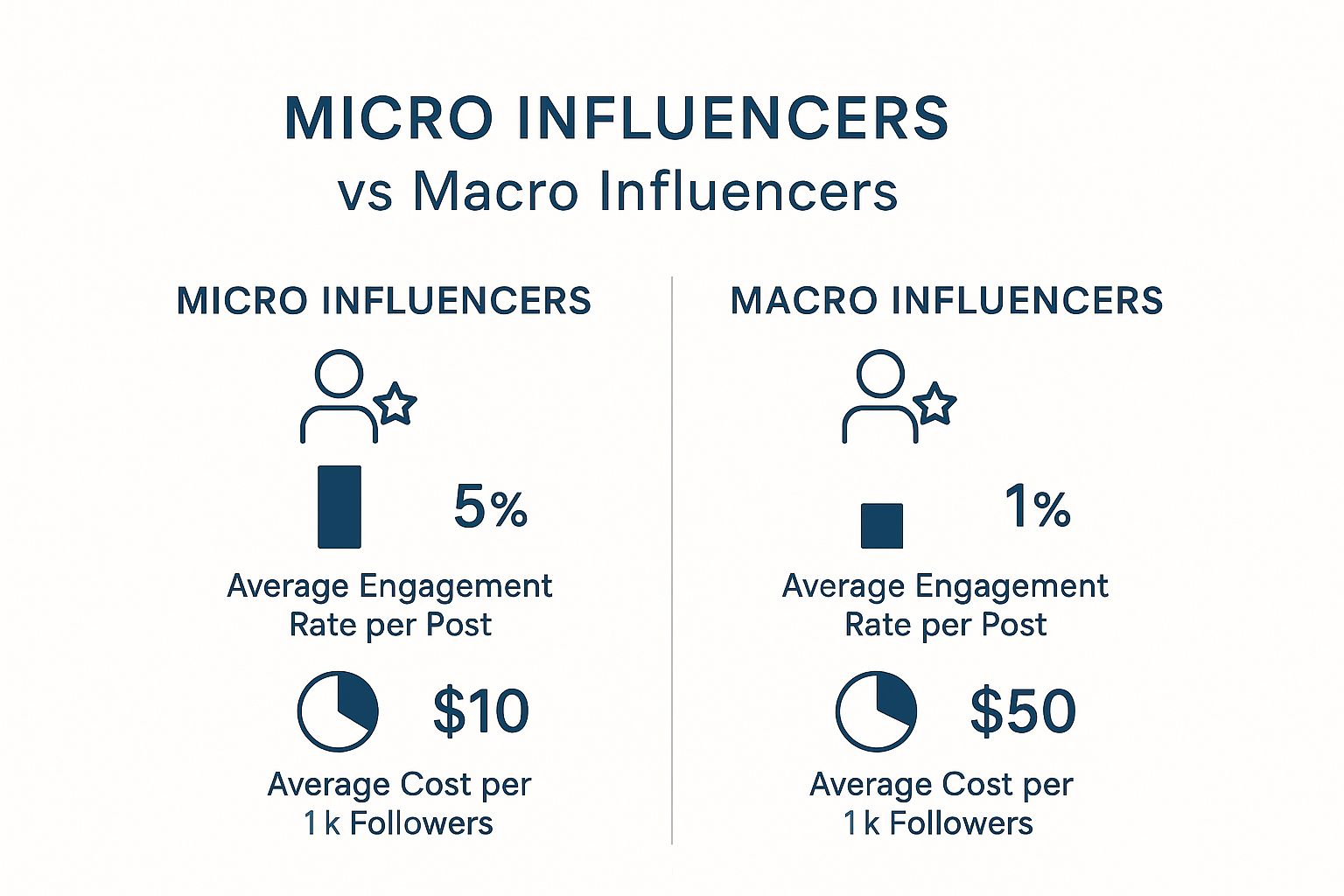
The numbers don't lie. Micro-influencers deliver more bang for your buck, driving more meaningful interactions for a fraction of the cost.
By prioritizing genuine connection over sheer follower counts, micro-influencer marketing lets brands build real relationships with dedicated communities, turning followers into loyal customers.
This isn't just a fleeting trend; it's a fundamental shift toward more personal, effective communication between brands and people. A great place to start is by understanding foundational influencer seeding strategies, which are all about building these powerful relationships from the ground up.
How to Find the Right Micro-Influencers for Your Brand

Finding the right partners for your brand is a bit like casting the perfect actor for a role. You aren't just looking for the biggest name; you're looking for someone whose performance feels real and truly connects with the audience. In the world of micro-influencer marketing, that means digging deeper than follower counts to find creators whose audience and values are a genuine match for yours.
It all starts with a gut check on authenticity. Take a hard look at the quality of their engagement. Are the comments on their posts actual conversations, or is it just a wall of fire emojis and "Great post!"? Real interaction is the tell-tale sign of a loyal, tapped-in community.
Start With Your Own Community
More often than not, your best advocates are already right under your nose. The most effective micro-influencers are usually genuine fans who are already talking about your products simply because they love them. That existing passion makes for a seamless and believable partnership.
So, the first place to look is within your own circle.
- Monitor Your Mentions and Tags: Keep a close eye on who’s tagging your brand in their posts and stories. These are warm leads—people who already get what you do.
- Track Branded Hashtags: Do a little digging into hashtags related to your brand. You’ll often find passionate creators who have built small but mighty followings around topics that are a perfect fit for your business.
This approach helps you find people who have an organic connection to your brand, which is the bedrock of any solid influencer campaign. Their endorsement will feel natural because it is natural. For a deeper dive, our complete guide offers more strategies on how to find micro-influencers who are a perfect fit.
https://reach-influencers.com/how-to-find-micro-influencers/
Using Platforms and Search Tools
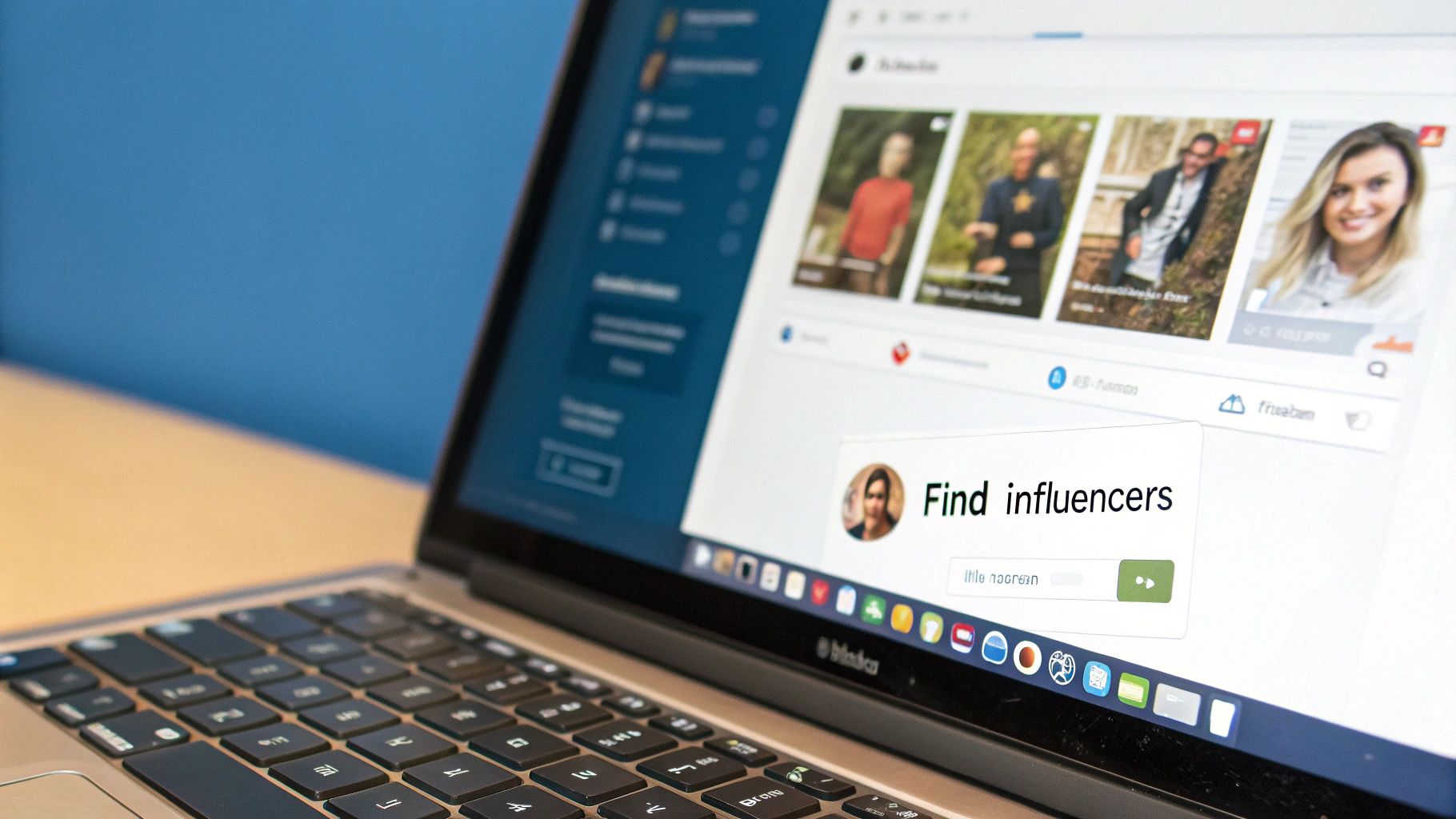
While your own community is a goldmine, you'll also need to proactively scout for new talent. Thankfully, modern platforms give you powerful tools to pinpoint creators based on incredibly specific criteria, letting you filter by niche, audience demographics, location, and key engagement metrics.
Think of these influencer discovery tools as a specialized search engine for creative partners. Instead of manually sifting through thousands of profiles, you can set precise filters to quickly get a shortlist of high-potential collaborators.
Key Takeaway: The goal isn't just to find someone with 10,000 followers in your niche. It’s to find a creator whose audience is a mirror image of your ideal customer and whose content style genuinely clicks with your brand’s voice.
Once you have a list of potential partners, the real work begins. It’s time to vet them and separate the contenders from the pretenders.
The Vetting Checklist: Green Flags and Red Flags
Before you even think about sending that first message, do a thorough review of each candidate’s profile. This is the step that ensures you’re investing your time and money into partnerships that will actually deliver.
Green Flags to Look For:
- Consistent, High-Quality Content: Their feed has a clear theme and aesthetic that feels complementary to your brand.
- Responsive to Comments: They don't just post and ghost; they actively chat with their followers.
- Authentic Brand Mentions: You can see they’ve worked with brands before, and it felt natural, not like a forced ad.
- Clear Niche Expertise: They are a recognized and respected voice within a specific community.
Red Flags to Avoid:
- Sudden Spikes in Followers: This is a classic sign they may have bought fake followers.
- Low Comment-to-Like Ratio: Tons of likes but very few comments can indicate weak or fake engagement.
- Generic or Spammy Comments: If the comments are all from bots ("Nice pic!"), that's a huge warning sign.
- Inconsistent Messaging: Their personal brand or values just don't seem to align with what your company stands for.
After you've vetted your list, it's time to connect. Mastering the art of social media influencer outreach is what turns a potential partner into a signed deal, and that first contact really sets the tone for the entire collaboration.
Building Your First Micro Influencer Campaign
Alright, you've found a few micro-influencers who look like a great fit. Now what? This is where the real work begins—turning that potential into a concrete plan that actually gets results. A killer micro-influencer marketing campaign isn’t about luck; it’s about having clear goals and a solid strategy before you even think about reaching out.
Think of it like building with LEGOs. You wouldn't just start grabbing bricks and hoping for the best. You need the instruction manual, or at least a picture of the finished Millennium Falcon on the box. Your campaign plan is that guide, ensuring every post, story, and link works together to build something amazing for your brand.
Defining Your Campaign Goals
First things first, you have to answer a simple question: "What does a win look like for us?" If you don't know the answer, you're just throwing content into the void and hoping something sticks. Your goals are the foundation for everything else, from who you partner with to how you measure success.
And please, be specific. A goal like "increase brand awareness" is way too fuzzy to be useful. You need concrete, measurable outcomes you can point to and say, "The campaign did that."
Here are a few common (and actionable) goals to get you started:
- Generate User-Generated Content (UGC): Your goal could be to collect 20 high-quality photos and videos from influencers that you can use on your own social media or website.
- Drive Direct Sales: This is all about tracking conversions. You might aim to "get 100 sales using influencer-specific discount codes."
- Increase Website Traffic: Use trackable UTM links to see exactly how many people an influencer sends to your site. A solid goal would be to drive 1,000 new visitors to a specific product page.
- Boost Social Engagement: Set a target for the total number of likes, comments, and shares you want to see across all campaign posts.
The clearer you are about your destination, the easier it is to draw the map. Measurable goals take the guesswork out of the equation and give you a real way to see if your investment paid off.
Crafting an Effective Influencer Brief
Once you know what you want to achieve, it's time to create your influencer brief. This document is your campaign's bible. It gives the creator everything they need to know without stifling the very creativity and authenticity you hired them for.
A great brief is a balancing act. It provides guardrails but still gives the influencer room to be themselves. After all, you chose them because their audience trusts their voice, not a corporate script you wrote for them. Think of it as a guide, not a set of commands.
A solid brief should always cover these bases:
- Campaign Summary: A quick, one-paragraph overview of what the campaign is about and what you're promoting.
- Key Messaging Points: Just 2-3 non-negotiable points about your product that absolutely must be mentioned. Keep it simple.
- Deliverables: Spell out exactly what you expect. For example, "One Instagram Reel and three accompanying Stories."
- Important Dos and Don'ts: This is where you list mandatory tags (@yourbrand), specific hashtags (#YourCampaign), or things to avoid (like mentioning a competitor).
- Timeline: Give them clear deadlines for when you need to see a draft and when the final content should go live.
This simple document prevents so many headaches down the road. It makes sure everyone is on the same page and helps the influencer create content that hits all your goals.
Choosing the Right Campaign Model
Not all influencer collaborations are created equal. The way you structure your campaign should line up with your budget, goals, and how deep you want the partnership to be. Each model has its pros and cons.
Let’s break down the most popular options:
- Product Seeding (Gifting): This is often the first step for brands dipping their toes into influencer marketing. You send your product to influencers for free, crossing your fingers that they'll love it and post about it. It's a low-cost way to get some buzz, but there are zero guarantees.
- Affiliate Programs: Here, you give influencers a special link or discount code. They get a cut of every sale that comes through their code. This is a pure performance play—if they don't drive sales, you don't pay. It’s perfect if your main goal is revenue.
- Paid, One-Off Campaigns: This is the most straightforward model. You pay a flat fee for a specific list of deliverables (e.g., one YouTube video, two Instagram posts). You know exactly what you're getting and when, which offers a ton of predictability.
- Long-Term Ambassadorships: When you find an influencer who is a perfect match for your brand, signing them on for a longer-term partnership can be incredibly effective. They become a true brand advocate, creating consistent content over several months and building much deeper trust with their audience.
The right choice really depends on where you are as a business. A brand-new company might start with gifting to see what sticks, while a more established brand might invest in a few key ambassadorships to solidify their community.
Managing Campaigns and Building Lasting Partnerships

The real magic of micro-influencer marketing doesn't come from a single, fleeting post. It’s unlocked when you shift your mindset from one-off campaigns to building genuine, lasting partnerships. Finding the right creator is just the first step; how you manage that relationship determines whether you get a quick mention or a loyal brand advocate.
Think of it less like hiring a contractor and more like cultivating a professional friendship. It all boils down to clear communication, mutual respect, and a shared goal. When you get this right, your influencer program transforms from a simple tactic into a reliable growth engine for your brand.
From Outreach to Onboarding
That very first message you send an influencer? It sets the tone for everything that follows. Generic, copy-and-pasted emails are a one-way ticket to the trash folder. Your outreach needs to prove you've actually paid attention and see real value in what they do.
Personalization isn't optional. Mention a specific post or video you loved and connect it back to why their voice is a perfect match for your brand. This small gesture shows you respect their work and instantly makes you stand out from the crowd of other brands sliding into their DMs.
Once they're interested, your onboarding needs to be just as thoughtful and professional. This is where you lay the groundwork and make sure everyone's on the same page.
- Negotiate Fair Compensation: Be upfront about payment. While some creators might be open to gifted products, most expect to be paid for their time, effort, and audience access. Discuss your budget openly and find a middle ground that feels valuable to both sides.
- Outline a Clear Contract: Don't skip the contract. Ever. It should clearly spell out the deliverables, deadlines, how content can be used, and payment terms. This protects you and the creator, preventing headaches and misunderstandings later.
A strong partnership begins with a clear, respectful agreement. Investing time in a proper contract ensures both the brand and the creator are aligned on goals and expectations, setting the stage for a smooth and successful collaboration.
Empowering Creators While Maintaining Brand Safety
One of the biggest blunders a brand can make is trying to micromanage the creative. You’re partnering with a micro-influencer for their authentic voice and the trust they've built, so handing them a rigid script completely defeats the purpose. Their followers will sniff out a phony, overly-produced ad in a heartbeat.
The goal is to find that sweet spot between creative freedom and brand alignment. Your influencer brief should be a set of guardrails, not a straitjacket. Give them the essentials—key messages, mandatory tags, and clear "do's and don'ts"—and then trust them to bring it to life in their own style.
This approach not only builds trust but also leads to content that actually feels real. When a creator is empowered to speak in their own voice, the endorsement connects on a much deeper level with their community. It’s a win-win: they keep their credibility, and you get a promotion that truly resonates.
Managing Logistics and Fostering Communication
Behind every great campaign are solid logistics. Getting the practical details right—like shipping products on time, having a simple content approval process, and paying promptly—is crucial for a smooth partnership. A clunky, disorganized process just creates unnecessary friction and can sour the relationship.
Open and consistent communication is the glue that holds it all together. Check in with your creators, be available to answer their questions, and offer constructive feedback during the review stage. When you treat your partners with professionalism, they're far more likely to go the extra mile for your brand.
Looking ahead, technology is making this process even more seamless. Recent data shows that in 2025, 66.4% of marketers who used AI tools in their influencer strategies saw improved results. And with 73% believing AI can automate a large part of influencer marketing, it's clear that tech will continue to streamline how these partnerships are managed. You can learn more about how AI is shaping the future of influencer marketing from recent industry findings.
Ultimately, when you focus on building strong relationships backed by clear communication, you don’t just get a campaign. You get a genuine fan who is excited to champion your brand long after the contract is signed.
How to Measure Your Campaign Success and ROI
https://www.youtube.com/embed/O-wq-C-52NY
Launching a micro-influencer campaign is only half the battle. The real win comes from proving it actually worked. So, how do you get past fuzzy "likes" and show tangible, bottom-line results? The secret is focusing on data that ties directly back to your business goals.
Think of it this way: likes and comments are the applause. They feel great, but they don't tell you if you sold any tickets. Your key performance indicators (KPIs) are your ticket sales report—the hard data that shows whether you're on the right path to profitability.
Moving Beyond Vanity Metrics
First things first, you have to shift your focus from surface-level numbers to metrics that show genuine action. A post with thousands of likes is nice, but it doesn't pay the bills. Instead, you need to zero in on KPIs that reveal how deeply an audience is actually connecting with your brand.
Here are the metrics that really move the needle:
- Engagement Rate: Don't just glance at the like count. Calculate the total engagement (likes + comments + shares + saves) and divide it by the influencer's follower count. A high rate here means the content didn't just get seen; it got a reaction from a loyal community.
- Website Clicks: How many people were curious enough to leave social media and visit your website? This is a crystal-clear measure of interest and the very first step toward a sale.
- Conversion Rate: This is the big one. What percentage of those website visitors actually did what you wanted them to do—make a purchase, sign up for your email list, or download an ebook?
Tracking these numbers gives you a much clearer picture of your micro influencer marketing campaign's health. It’s the difference between knowing people saw your ad and knowing people acted on it. To really get a handle on this, it's crucial to get good at measuring content performance that truly drives business outcomes.
Setting Up Your Tracking Systems
To capture all this juicy data, you need to have the right tools in place before the campaign goes live. Guesswork is your enemy here. You need precise attribution to know exactly which influencer and which piece of content is driving your results.
Your two best friends for this are UTM parameters and unique promo codes.
A UTM parameter is just a small piece of code tacked onto the end of a URL. It lets your analytics software see precisely where your traffic is coming from, turning a vague "social media" source into a specific, trackable click from an influencer’s post.
For instance, a link might look like this: yourwebsite.com/product?utm_source=instagram&utm_medium=influencer&utm_campaign=winter_launch. This tells your analytics that the click came from Instagram, was driven by an influencer, and was part of your winter launch. Simple, but incredibly powerful.
Unique promo codes—like "SARAH15" for a 15% discount—are just as effective for tracking sales. They create a direct line between a purchase and a specific creator, making it dead simple to see who's driving the most revenue.
To help you get started, here's a table breaking down the most important metrics you should be watching.
Key Metrics For Measuring Micro Influencer Campaign Success
This table outlines the essential metrics for evaluating your campaign's performance, explaining what each one measures and why it's critical for understanding your overall success and ROI.
| Metric | What It Measures | How to Track It |
|---|---|---|
| Engagement Rate | Audience connection and content resonance. | (Likes + Comments + Shares + Saves) / Followers |
| Reach & Impressions | The total number of unique users who saw the content and how many times it was displayed. | Social media platform analytics (e.g., Instagram Insights). |
| Website Clicks | The volume of traffic driven from the influencer's content to your website. | UTM parameters in links, tracked via Google Analytics. |
| Click-Through Rate (CTR) | The percentage of viewers who clicked the link in the influencer's post. | (Total Clicks / Total Impressions) x 100 |
| Conversion Rate | The percentage of website visitors who completed a desired action (e.g., purchase). | Tracked through unique promo codes or goal completions in Google Analytics. |
| Cost Per Acquisition (CPA) | How much you spent to acquire one new customer through the campaign. | Total Campaign Cost / Number of New Customers |
| Return on Investment (ROI) | The total profitability of the campaign. | (Revenue – Cost) / Cost x 100 |
By keeping a close eye on these metrics, you move from hoping your campaign worked to knowing exactly how well it performed.
Calculating Your True Return on Investment
Once the campaign wraps up and all your data is in, it’s time for the final report card: calculating your return on investment (ROI). This is the definitive number that proves the financial value of your micro-influencer marketing. The formula itself is quite simple.
ROI Formula: (Revenue from Campaign - Total Campaign Cost) / Total Campaign Cost x 100
Let's walk through a quick example. Imagine you spent $1,000 total on a campaign (this includes the influencer's fee and any product costs). Using your tracked promo codes and UTM links, you can attribute $4,000 in new sales directly to that campaign.
- ROI = ($4,000 – $1,000) / $1,000 x 100
- ROI = $3,000 / $1,000 x 100
- ROI = 300%
A 300% ROI means for every dollar you put in, you got three dollars back. This is the kind of hard data that justifies budgets and proves your strategy is a winner. For a deeper dive, check out our guide on measuring influencer marketing ROI.
And these aren't just hypotheticals. Recent data shows that brands are earning an average of $5 to $20 for every dollar spent on influencer marketing. With over 70% of consumers trusting influencer recommendations over traditional ads, these strong returns are fueled by the genuine credibility that micro-influencers bring to the table.
Still Have Questions About Micro-Influencer Marketing?
Jumping into any new marketing channel can bring up a lot of questions, and working with micro-influencers is no different. As you start exploring this space, you'll naturally wonder about things like budgets, contracts, and what not to do.
Think of this section as a quick FAQ with an expert who’s seen it all. We’re covering the most common questions brands have so you can move forward with confidence and set your campaigns up for success.
How Much Should I Pay A Micro-Influencer?
This is the million-dollar question, isn't it? The honest answer is: it really depends. There's no universal rate card, and anyone who tells you there is isn't giving you the full picture. Pricing is a conversation that balances a few key factors: the influencer’s engagement rate, their specific niche, what you’re asking them to do, and the type of content you need.
A classic rule of thumb you’ll hear is “$100 per 10k followers,” but treat that as a starting point, not a hard-and-fast rule. Many micro-influencers are also incredibly open to receiving free products, especially if the item’s value matches the effort they’ll put into a post. If you sell a high-value product, a simple product-for-post exchange can be a huge win for everyone involved.
For bigger campaigns with specific requirements, like a series of videos or multiple Instagram posts, you'll almost always agree on a flat fee. The most important thing is to be upfront about your budget from the very first message. Negotiate a package that feels fair and valuable to both you and the creator you're excited to work with.
How Do I Handle Content Usage Rights?
Pay close attention here, because this is a critical detail that can turn into a huge headache if you ignore it. A very common—and costly—mistake is assuming that paying for a post means you own the content forever. You don't. The creator almost always retains the copyright to their photos and videos; you’re simply paying for a license to use them.
Your influencer agreement must spell out these rights in crystal-clear terms. Get specific about:
- Where can you use it? Is it just for your brand's Instagram feed, or can you also feature it on your website, in email blasts, or on TikTok?
- How long can you use it? Are the rights indefinite, or do they expire after six months or a year?
- Can you edit the content? Are you allowed to crop the image, add a text overlay, or include it in a video montage with other clips?
- Can you use it in paid ads? This is a big one. Repurposing influencer content for a paid ad on Facebook or Instagram almost always requires a separate, and higher, fee.
Always define content usage rights in a written agreement before any work begins. This saves you from legal trouble down the road and makes sure everyone is on the same page about how the awesome content they create will be used.
Securing broader rights will naturally cost more, so be smart about it. Only pay for the rights you actually plan to use to keep your budget lean and effective.
What Are the Biggest Mistakes to Avoid?
Micro-influencer marketing is powerful, but a few common missteps can easily derail a campaign. Knowing what these are ahead of time will help you build much stronger, more successful partnerships with creators.
The number one mistake is obsessing over follower count while ignoring what really matters: engagement and audience fit. A creator with 20,000 followers who are deeply invested in their content is infinitely more valuable than one with 50,000 followers who barely pay attention. Always, always prioritize the quality of the community over the size of the audience.
Another classic blunder is handing over a rigid, word-for-word script. This completely defeats the purpose of the collaboration! You’re partnering with them for their unique voice and the trust they’ve earned. Stifling their creativity makes the content feel like a forced, cringey ad—something their followers will spot from a mile away and promptly ignore.
Finally, don’t treat the relationship like a simple transaction. Micro-influencers are partners, not ad slots. Building a real rapport, paying them on time, and just being easy to work with goes a long way. When you invest time in nurturing these relationships, you turn a one-off post into a long-term brand advocacy program.
Ready to stop guessing and start building powerful, data-driven influencer campaigns? REACH is the all-in-one platform that helps you discover the perfect micro-influencers, manage your campaigns seamlessly, and prove your ROI with real-time analytics. Find your next brand advocate today!