 Skip to content

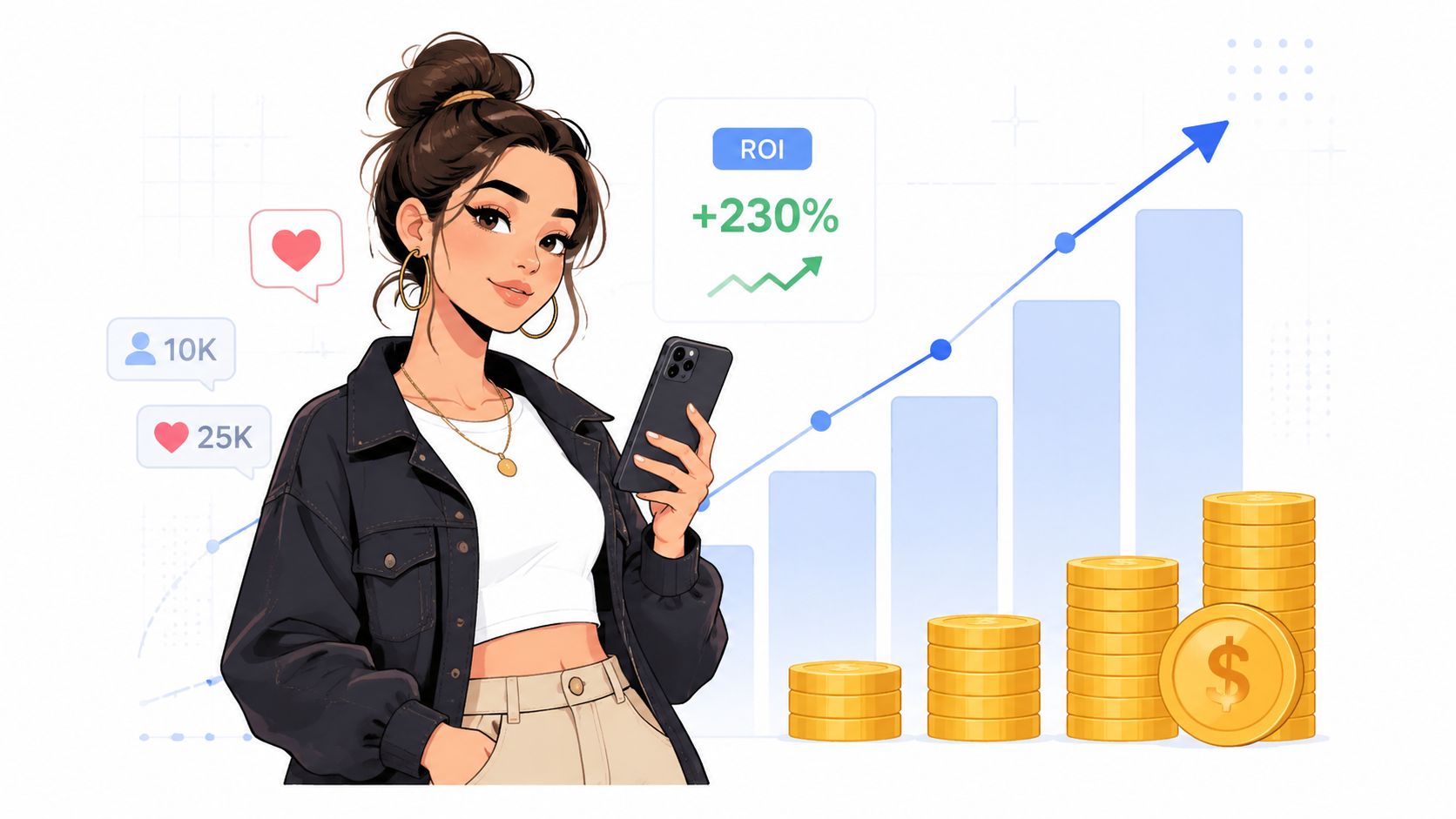
Influencer marketing does work. In 2025, it delivers an average ROI of $5.78 for every $1 spent, which makes it one of the strongest-performing digital channels available.
That headline number answers the big question, but it hides the part brand managers wrestle with every week. A campaign can look profitable on paper and still feel messy, slow, and hard to scale in practice. The core issue usually isn't whether creators can drive demand. It's whether your team can execute fast enough, track cleanly enough, and manage the operational load without leaking margin at every step.
That's why the smartest way to evaluate influencer marketing isn't just “does influencer marketing work.” It's “does it still work after your team handles sourcing, briefs, approvals, follow-ups, content collection, payments, compliance, and reporting.”
Many teams learn this the hard way. They start with a few promising creator partnerships, see decent engagement, then lose momentum inside spreadsheets, inbox threads, scattered DMs, and late approvals. The channel still works. The workflow doesn't.
For context, the market keeps expanding because brands have seen the upside. The global influencer marketing market was estimated to exceed $32 billion in 2025, reflecting continued investment in the channel, according to Statista's influencer marketing overview. But a bigger market doesn't automatically mean easier execution. It usually means more complexity, more creator options, and more room for process failure if the campaign machine behind the scenes is weak.
This guide looks at the ROI, the measurement model, the campaign ingredients that matter, and the hidden operational drag that often determines whether influencer marketing becomes a profit center or a recurring headache.
Does Influencer Marketing Actually Work The 2026 Verdict
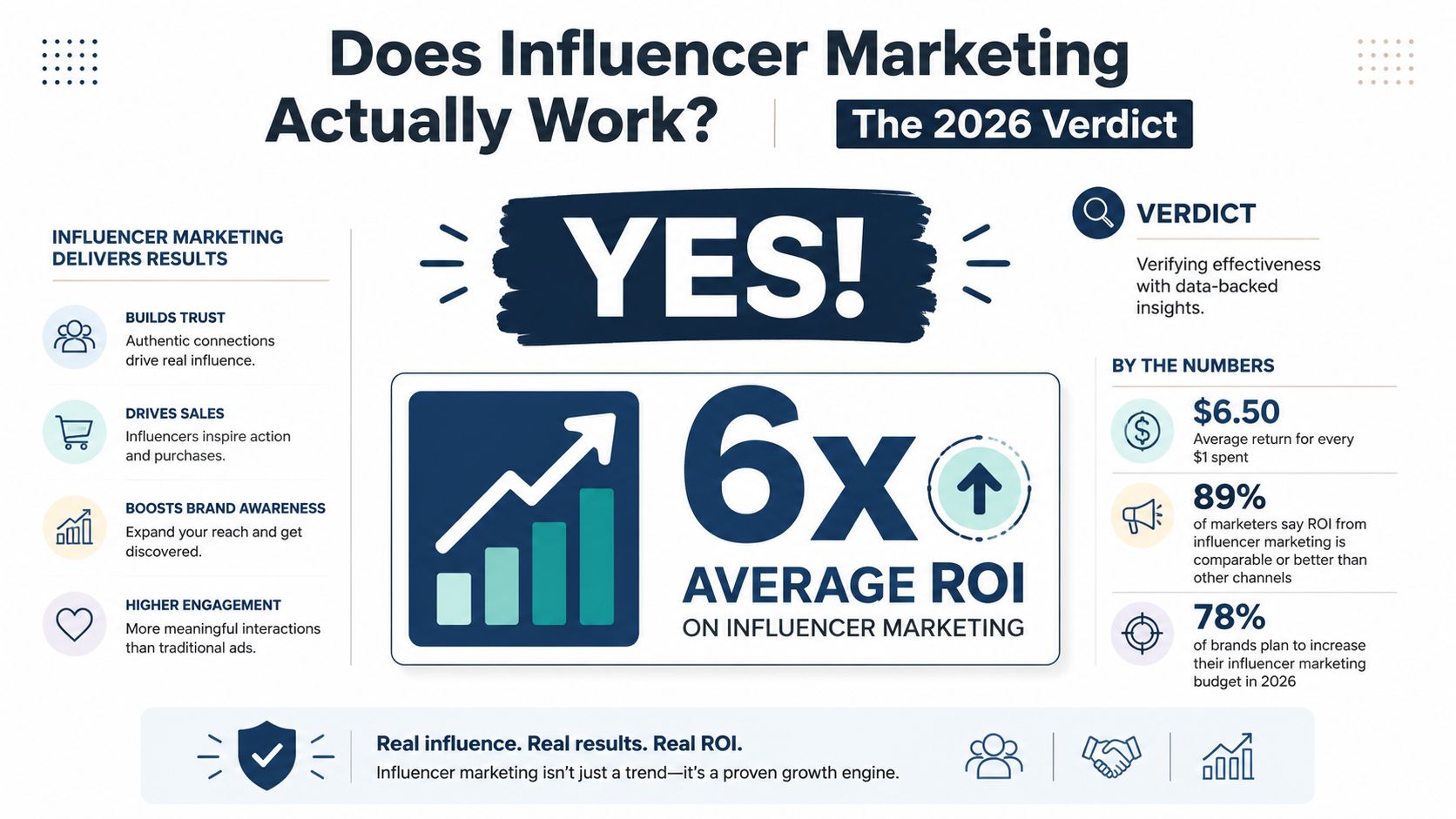
The short verdict is yes. Influencer marketing works because it combines trust, content, and commerce in a way traditional ads often can't. The strongest proof is financial. Influencer marketing delivers an average ROI of $5.78 for every $1 spent in 2025, and 86% of US marketers partnered with influencers that year, which shows the channel has moved into the standard marketing mix rather than staying an experimental tactic, based on Sprinklr's social media marketing statistics.
That said, the answer gets less useful if you stop there. Plenty of campaigns fail to turn good creator content into good business outcomes because the execution around the campaign breaks down. Teams miss deadlines, approve content too slowly, lose track of deliverables, or can't connect spend to revenue clearly enough to scale with confidence.
Why the channel works
Influencer marketing works best when a creator transfers trust to a product in a format that feels native to the audience. That trust shows up in action, not just awareness. Consumers follow creators for entertainment, expertise, and product discovery, and that makes the recommendation feel closer to a peer signal than a banner ad.
Practical rule: A creator campaign should be treated like a revenue channel with a content layer, not a content channel with vague revenue hopes.
That shift matters because it changes how you plan. Instead of asking for “some posts,” strong teams set objectives, map creators to audience segments, and define what a winning action looks like before outreach starts.
Where teams misread the verdict
A lot of marketers hear “high ROI” and assume the rest will sort itself out. It won't. High-potential channels punish loose operations. If your internal process is slow, your campaign economics slip fast, especially when creator fees rise and launches depend on timing.
If you want a useful outside perspective on the broader creator economy, FLYP's creator platform guide is worth reading because it helps frame how creators think about monetization and partnership structure from their side of the table.
For a deeper look at the business upside itself, this breakdown of the benefits of influencer marketing is helpful. The core lesson is simple. The channel is proven. Your process decides whether you keep the return.
How to Measure Influencer Marketing Effectiveness
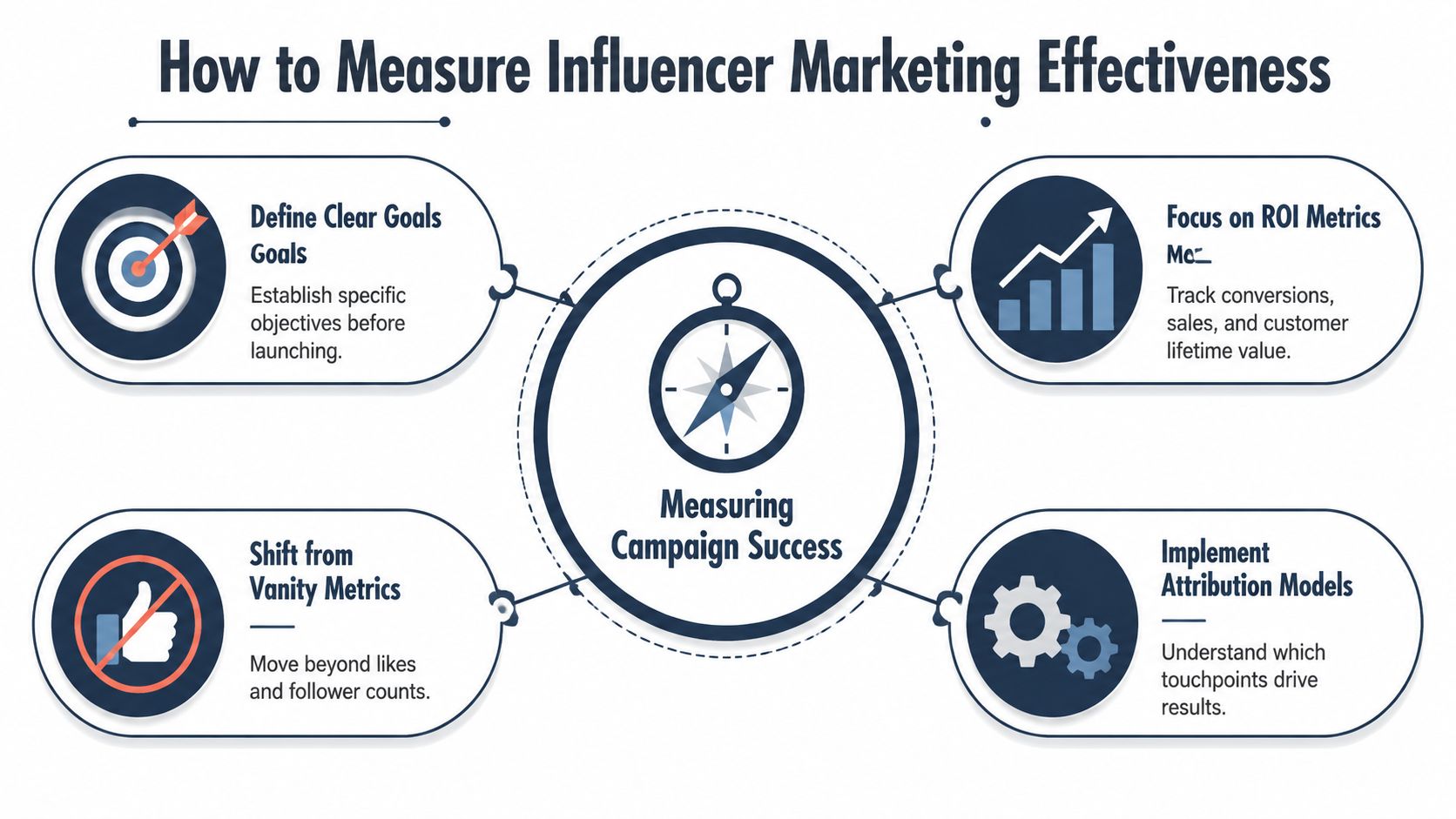
If you still measure influencer campaigns by likes, views, and follower count alone, you're not measuring effectiveness. You're measuring surface activity. That might help with creative review, but it doesn't help a brand manager defend budget.
The more reliable model uses Return on Ad Spend, Cost Per Acquisition, and Customer Lifetime Value. According to The Cirqle's 2025 influencer metrics analysis, a 3:1 RoAS is a common benchmark, and brands are moving away from vanity metrics toward revenue-linked KPIs they can monitor in real time.
Start with the metric that matches the job
Not every campaign has the same purpose. A product seeding program, a launch push, and an always-on ambassador program shouldn't be judged the same way.
Use this simple framework:
| Campaign type | Best primary measure | What to watch closely |
|---|---|---|
| Product launch | RoAS | Conversion path and speed |
| Customer acquisition | CPA | Audience fit and landing page quality |
| Retention or repeat purchase | LTV | Creator consistency and offer alignment |
| Upper-funnel trust building | Assisted conversions | Traffic quality and retargeting lift |
Many teams often get stuck, asking creators for performance without building tracking that can show it. At minimum, that means clean UTM structure, offer codes when appropriate, and post-campaign reporting tied to business outcomes.
What good measurement looks like
A strong campaign dashboard should answer five questions quickly:
- Which creator drove revenue: Not just clicks or views, but actual attributed sales where possible.
- Which platform converted best: TikTok, Instagram, YouTube, or another channel may play different roles.
- Which content format worked: Short-form demo, story sequence, testimonial, unboxing, or tutorial.
- What the true cost was: Include creator fee, product cost, amplification, and internal handling effort.
- Whether results justify scale: A decent pilot is not the same as a scalable program.
Good measurement removes two bad habits at once. It stops marketers from overvaluing reach, and it stops finance teams from dismissing creator work as soft branding.
If you want a related read on performance thinking from an adjacent format, FindClout meme campaign analytics offers a useful perspective on creative spend optimization and attribution discipline.
Brands that want to tighten reporting can use this guide on how to measure influencer marketing ROI as a practical starting point.
Two mistakes that distort the numbers
First, teams compare influencer campaigns to paid social as if both serve exactly the same function. Paid social is often more predictable for immediate conversion. Influencer content often does better at trust formation and assisted conversion. You need both perspectives.
Second, teams over-credit coupon codes and under-credit view-through influence. If a customer sees creator content, visits later through search or retargeting, and buys, the creator still mattered. Your attribution model should reflect that reality, even if it isn't perfect.
What Makes an Influencer Campaign Successful
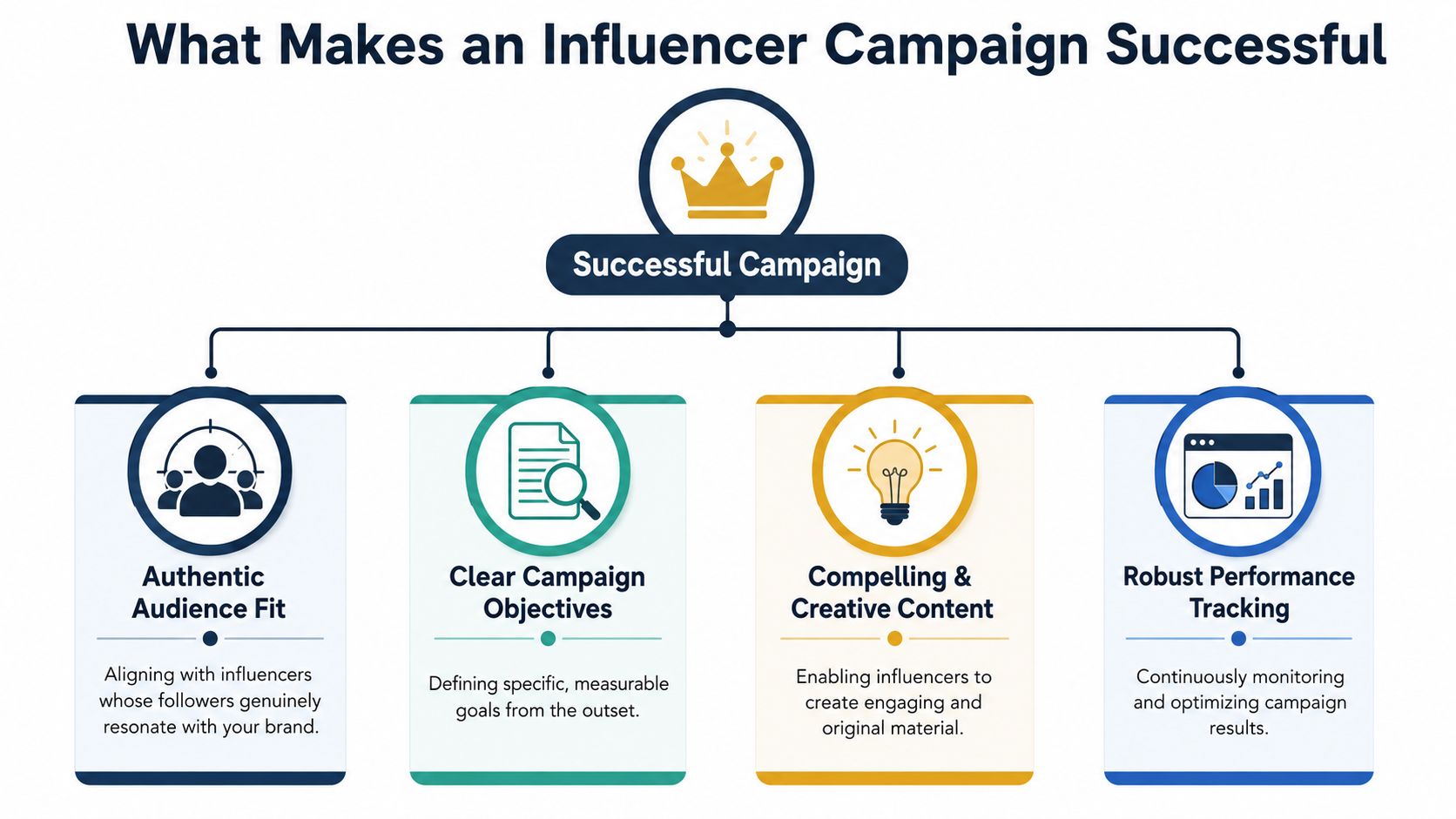
Successful campaigns rarely come from choosing the biggest creator in the category. They come from choosing the right creator, the right format, and the right level of creative control.
The strongest signal is audience fit. PartnerCentric's influencer trust and commerce statistics report that half of followers have made at least one purchase based on an influencer recommendation, with an average spend of $372 per person this year, and 61% of consumers trust influencer endorsements more than traditional ads. That trust is valuable, but it only converts when the creator's audience overlaps with your buyer.
Audience fit beats creator fame
A creator can look perfect on the surface and still fail commercially. The most common reason is simple. Their content style or audience composition doesn't match the product's actual buyer.
Here's the working checklist I'd use before approving any partnership:
- Check follower relevance: Ask whether the audience matches your buyer, not whether the creator matches your brand mood board.
- Review past brand integrations: Look for natural selling behavior, not just polished content.
- Test content-to-product fit: Some creators educate well. Others entertain well. Few do both equally.
- Study comment quality: Comments often show whether the audience trusts recommendations or just enjoys the personality.
A niche creator with a highly aligned audience often outperforms a larger creator with weak purchase relevance.
A campaign usually fails before launch, not after publication. The failure happens when the wrong audience gets matched to the wrong offer.
Creative freedom matters more than polish
Many brands still over-script influencer campaigns. That usually strips away the exact thing that makes creator content work. The audience follows the creator for their voice, framing, and delivery. If the post reads like a brand memo, performance drops.
UGC-style content often wins because it feels native, less staged, and closer to real use. In practice, that means creators should have room to tell the story in their own format, within clear guardrails for claims, brand safety, and deliverables.
A useful reference point is this guide to influencer marketing best practices, especially if your team tends to over-control briefing and under-support execution.
This video breaks down the broader mechanics well:
Platform choice changes the job
Instagram still plays well for brand presence and creator partnerships. TikTok often drives faster action because the content style shortens the distance between discovery and purchase. YouTube can work well when the buyer needs more explanation or product education.
The mistake is trying to run the same brief across every platform. A story sequence on Instagram, a TikTok product demo, and a YouTube integration should not sound the same or ask for the same viewer behavior. Matching the platform to the buyer journey usually improves outcomes more than squeezing another revision out of the creative.
Avoiding the Operational Chaos of Campaign Management
This is the part most ROI articles skip. A campaign can be strategically sound and still underperform because the operations behind it are clumsy.
According to this analysis of influencer marketing challenges, it takes brands an average of 14 days just to complete a single collaboration, with workflow fragmentation and rising creator costs among the top problems. That delay is expensive because it slows launches, stretches internal labor, and turns a high-return channel into an administrative grind.
Where margin gets lost
Operational drag usually shows up in familiar places:
- Scattered communication: Outreach in one tool, approvals in email, revisions in DMs, status notes in a spreadsheet.
- Weak deliverable control: Teams lose track of posting dates, revisions, rights usage, and missing assets.
- Slow approvals: Legal, brand, and social teams create bottlenecks when nobody owns turnaround time.
- Messy payments and compliance: Finance gets involved late, creators wait, and trust falls on both sides.
Each issue looks small on its own. Together, they consume time and erode campaign profitability.
The hidden cost in influencer marketing usually isn't the creator fee. It's the labor hours and missed timing created by a broken workflow.
What better operations look like
A clean campaign process includes a few essential elements. One source of truth for briefs and status. One place for communication. Clear ownership for approvals. Deliverable tracking that's visible to everyone involved. Payment handling that doesn't become a separate project.
If your team is still running influencer campaigns through spreadsheets plus inboxes plus DMs, you don't have a campaign system. You have a patchwork of reminders.
A better operating model usually follows this sequence:
- Lock the brief early: Audience, message, format, offer, rights, and deadlines should be finalized before outreach scales.
- Centralize approvals: Creative review needs a defined owner and a response window.
- Track every asset: Don't wait until launch week to ask who has the final files.
- Close the loop fast: Once content goes live, reporting and payment should happen on a predictable cadence.
The reason this matters is simple. Efficient operations protect the upside your strategy created. Without that layer, even strong creator partnerships become difficult to repeat.
Influencer Marketing Examples That Delivered Results
The strongest examples of influencer marketing usually look different from one another. That's part of the point. The channel isn't one tactic. It's a framework that works across different buyer journeys when the creator, platform, and offer line up.
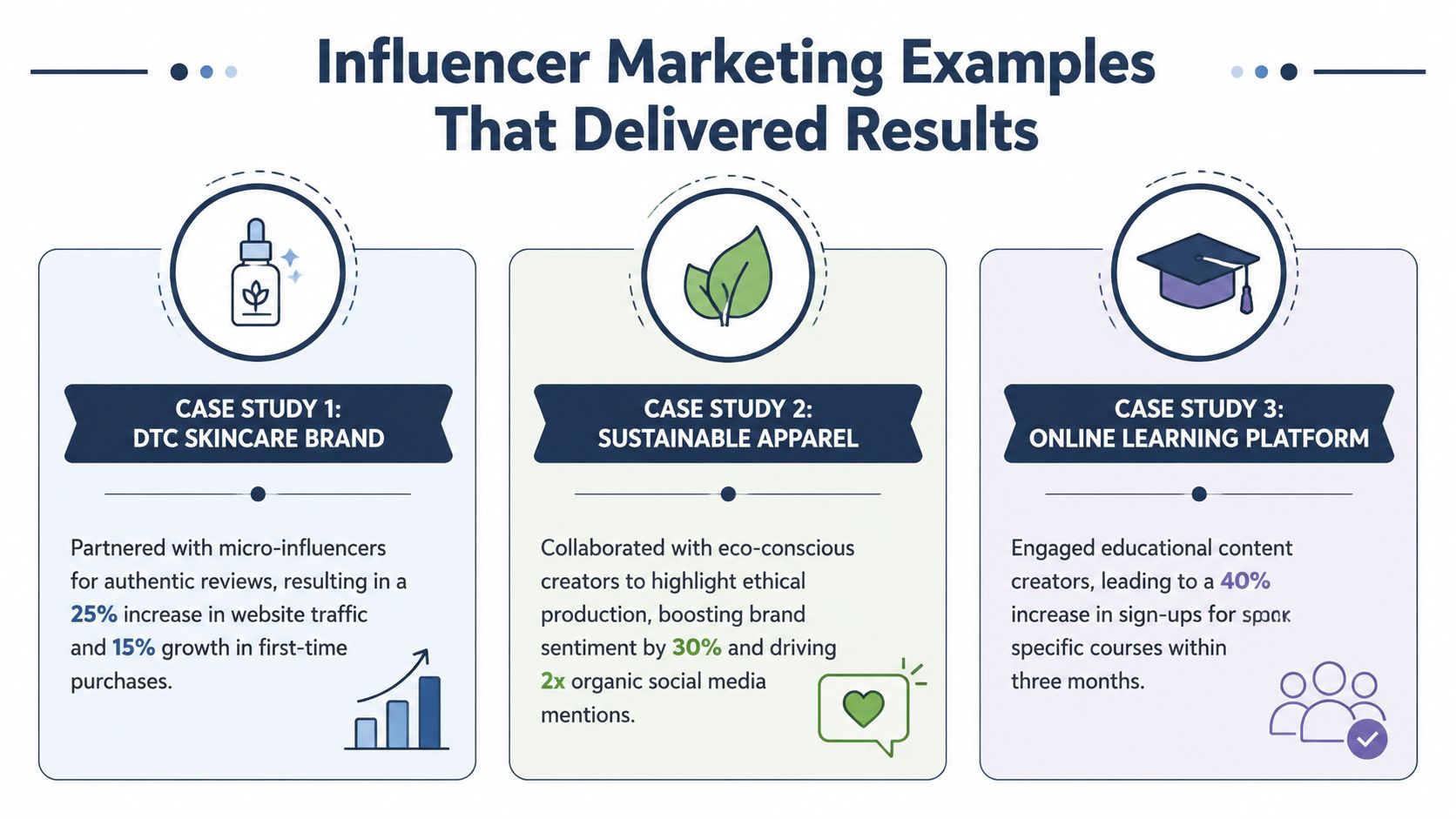
A useful market signal comes from Influencer Marketing Hub's benchmark report. In 2026, TikTok is the top platform for brands increasing influencer investment, with 32% of budget increases allocated to it, and 48.4% of marketers expect ROI within two weeks. That doesn't mean every brand should rush to TikTok. It does mean brands increasingly expect creator campaigns to be measurable and fast.
Example one with fast-conversion consumer products
A direct-to-consumer product brand often gets the best result from short-form creator demos, simple hooks, and a clear purchase path. TikTok tends to work well here because native product discovery is built into how people use the platform. The creator doesn't need celebrity status. They need credibility, clear communication, and content that feels native rather than scripted.
This model works best when the brand gives creators room to show product use naturally and pairs the campaign with clean attribution.
Example two with considered purchases
A higher-consideration brand, such as a wellness, parenting, or home product, often benefits from creators who educate rather than just entertain. Instagram can work well when the brand needs repeat exposure through posts, stories, and saved content. The campaign usually performs better when creators explain why they use the product, what problem it solves, and who it's right for.
That style doesn't always create instant conversion spikes, but it often produces stronger trust and better downstream retargeting performance.
Example three with expert-led categories
For products that need authority, the creator should look more like a trusted specialist than a lifestyle personality. That can apply to fitness, finance-adjacent education, software, or technical consumer products. In these campaigns, the creator's expertise carries as much weight as their audience size.
The common thread across all three examples is not platform hype. It's execution discipline:
- Right creator role: Demonstrator, educator, or expert.
- Right content format: Native to the platform and natural for the creator.
- Right operational setup: Fast approvals, clear briefs, and usable reporting.
- Right expectation: Some campaigns close quickly. Others build trust that later converts through other channels.
Brands get the best results when they stop asking for generic “influencer content” and start designing creator programs around how customers buy.
Your Decision Framework for Investing in Influencer Marketing
If you're deciding whether to invest, the answer isn't just yes or no. It's whether your team is ready to run the channel in a disciplined way.
Here's the practical filter I'd use.
Invest if these conditions are true
- Your product benefits from trust transfer: Creator recommendation matters most when buyers want proof, context, or social validation.
- You can measure business outcomes: RoAS, CPA, LTV, or assisted conversion should be visible enough to guide decisions.
- You know your buyer clearly: Audience fit matters more than creator popularity.
- You can support operational execution: Briefs, approvals, deliverables, and payment all need structure.
Wait if these problems are still unresolved
- Your team wants reach without attribution: That usually creates internal skepticism fast.
- Your briefs are too rigid: Over-scripted creator work tends to lose the trust that makes the channel perform.
- Your process is fragmented: Spreadsheet-led operations often cap scale before strategy does.
- You expect every campaign to behave like paid search: Influencer marketing can drive direct revenue, but it also builds trust that improves conversion later.
The best time to scale influencer marketing is when you can measure it like performance marketing and manage it like operations, not when you simply feel pressure to “be doing creator campaigns.”
If you're asking does influencer marketing work, the evidence says yes. But the profitable version of influencer marketing is not just creator selection. It's creator selection plus good measurement plus reliable operations. That combination is what turns isolated wins into a repeatable channel.
Use that standard when you evaluate your next campaign. If the strategy is solid but your workflow is weak, fix the workflow before you add more budget. That's usually where profitability is won or lost.
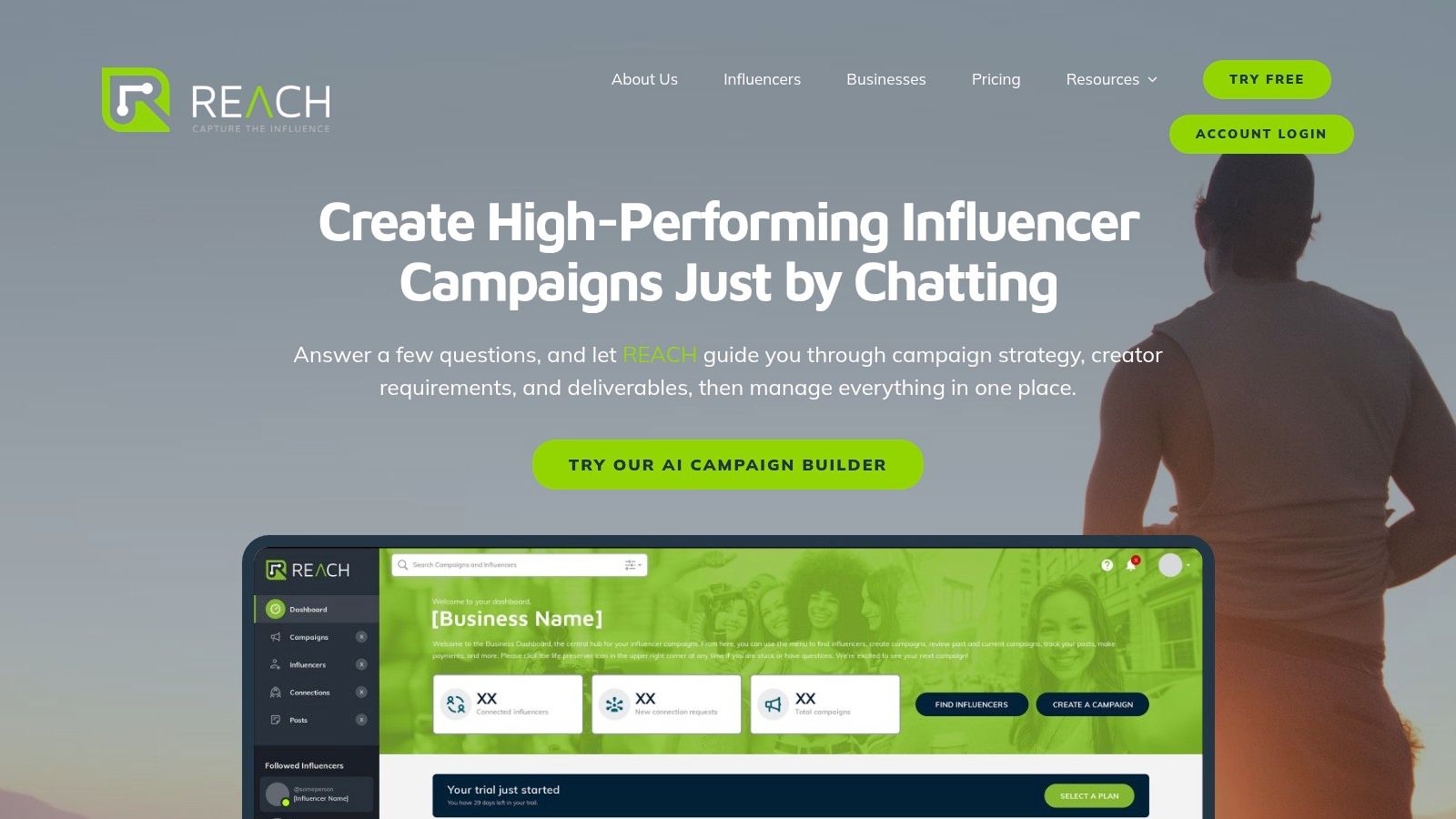
If your team is ready to run creator campaigns without the usual spreadsheet chaos, REACH is worth a close look. It gives brands and agencies one place to build campaigns, manage communication, track deliverables across platforms, and handle payments and compliance without duct-taping multiple tools together. If you want influencer marketing to work not just in theory but in day-to-day execution, REACH helps turn that into a repeatable system.