 Skip to content

For eco-friendly brands, influencer marketing isn't just another marketing channel. It's about finding creators who genuinely live and breathe your environmental values and partnering with them to build real connections with conscious consumers. It's how you cut through the noise, sidestep greenwashing accusations, and show a skeptical world you’re the real deal. This guide provides a practical framework for building authentic campaigns that drive real impact.
The REACH Influencers platform is specifically designed to help mission-driven brands connect with authentic creators. Our advanced discovery tools allow you to filter influencers by values like "zero-waste," "ethical fashion," and "vegan," ensuring your partnerships are built on a solid foundation of shared principles from the very start.
Table of Contents
- Why Authenticity is Everything in Green Marketing
- Building Your Sustainable Campaign Foundation
- How To Find and Vet True Green Influencers
- Crafting Briefs That Inspire, Not Dictate
- Measuring the Real Impact of Your Green Campaigns
- Your Questions, Answered
Why Authenticity is Everything in Green Marketing
Let’s be honest, the old marketing playbook is dead. Today’s shoppers, especially those looking for sustainable products, are incredibly savvy. They demand proof, not just promises, that a brand is truly committed to the planet. This shift has made authenticity the most valuable asset a green brand can have.
This is where influencer marketing becomes essential. Consumers are on high alert for "greenwashing"—when companies make vague or misleading claims about how eco-friendly they are. And with good reason. When a recent study showed that nearly two-thirds of people are worried about climate change, it's no surprise they're scrutinizing every brand's environmental promises.
The New Wave of Values-Driven Shoppers
People today don't just buy products; they invest in brands that mirror their own values. They want to see transparency in the supply chain, ethical practices, and a genuine desire to make a difference. This creates the perfect opening for a new kind of marketing, one built on a foundation of trust.
The real power of influencer marketing for eco-friendly brands is its ability to deliver that trust on a silver platter. When a respected sustainability advocate gives your brand their seal of approval, it sends a powerful message of credibility to their entire audience.
Eco-conscious consumers aren't just looking for a good product—they're looking to join a mission. An authentic influencer partnership is the best way to share that mission and turn followers into a dedicated community.
Earning Trust in a World Full of Doubt
Think about it. An influencer who has dedicated years to building a community around zero-waste living or slow fashion has earned a level of trust that a brand simply can't buy. Their followers look to them as a trusted friend and guide, not a walking advertisement.
When these creators organically weave a brand's products into their sustainable lifestyle, it's the ultimate form of social proof. This kind of genuine promotion creates massive what is earned media, sparking conversations and shares that feel natural, not forced.
This means you have to change how you find partners. Forget just looking at follower counts. The real gold is in genuine alignment. This is where a platform like REACH Influencers becomes indispensable. It helps you find and vet creators who are already passionate advocates for sustainability, ensuring your partnerships are built on integrity from the ground up. It’s about building a community, not just chasing clicks, and making sure your message connects with an audience that prizes authenticity above all else.
Building Your Sustainable Campaign Foundation
Before you even think about reaching out to influencers, you need to lay the groundwork. This isn’t just about ticking boxes; it’s your best defense against accusations of greenwashing and the key to building partnerships that feel real because they are real.
It all starts with getting crystal clear on what "eco-friendly" actually means for your brand. This has to go beyond a marketing tagline and become a core part of your identity. Are you all about plastic-free packaging? Maybe your focus is on a circular production model or hyper-local, ethical sourcing. Pinpoint your specific mission. This becomes the compass for your entire strategy, guiding every decision you make from here on out.
This shift in consumer thinking is fundamental. People are moving away from traditional advertising and actively looking for brands they can believe in, which is why authentic partnerships are so crucial.
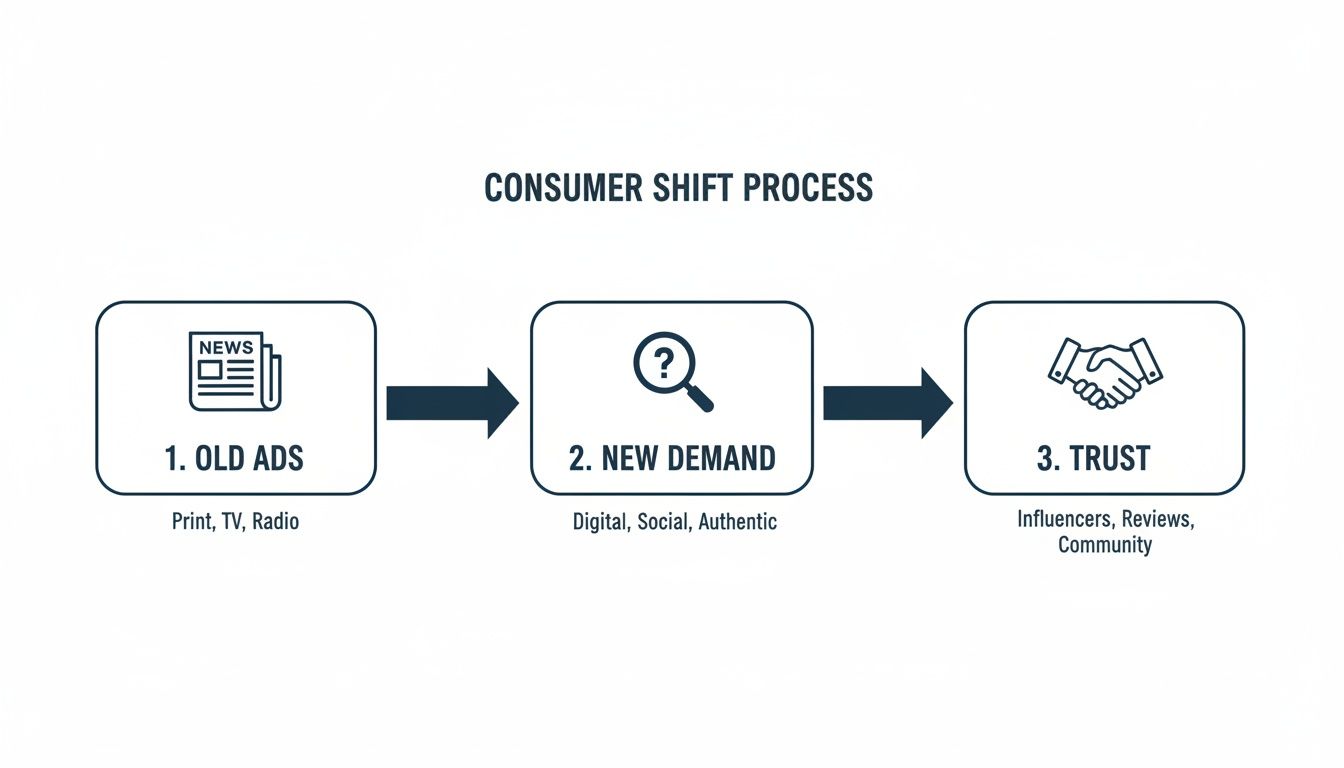
As you can see, the old advertising playbook is losing its grip. Today's consumers want transparency and trust, making authentic influencer voices more valuable than ever.
Defining Your Brand's Green Narrative
Think of your green narrative as the story of your brand's commitment, backed by hard evidence. It’s the collection of facts, proof points, and stories you’ll share with potential partners to show them you’re the real deal. This is where you bring the receipts.
Start compiling the proof of what makes your brand genuinely sustainable.
- Certifications: Do you have any third-party validations like B Corp, Fair Trade, or LEED? These are instant trust signals.
- Supply Chain Transparency: Can you trace your materials back to the source? Highlighting ethical factories or local suppliers adds a ton of credibility.
- Impact Reports: Pull data from your annual sustainability reports. Showcasing actual numbers on waste reduction, water savings, or carbon offsets is powerful.
- Founder Stories: Why was the company started? A personal, mission-driven origin story can connect with people on a much deeper level.
This isn't just content for your "About Us" page. This is the toolkit you'll hand over to influencers, giving them everything they need to tell your story with confidence. If you're new to this space, it's worth taking some time for understanding the fundamentals of influencer marketing.
Setting Clear and Measurable Goals
Once you have your story straight, you need to decide what you want to achieve. A successful influencer marketing for eco-friendly brands campaign is one you can actually measure. Vague goals like "raise awareness" just won't cut it.
You need to get specific and tie your objectives to tangible outcomes. Here are a few common goals to consider:
- Increase Brand Awareness: Reaching a new, highly targeted audience that genuinely cares about sustainable living.
- Drive Sales: Generating direct revenue through unique influencer promo codes or affiliate links.
- Build Community: Growing your social media following with people who are engaged and share your values.
- Educate the Market: Teaching consumers about an environmental problem your product helps solve.
A well-defined goal is the difference between a campaign that feels good and a campaign that does good—for your mission and your bottom line. When your goals are aligned with your eco-conscious values, every piece of content serves a purpose.
After you've picked a primary goal, break it down into measurable Key Performance Indicators (KPIs). For instance, if your goal is to educate the market, you could track KPIs like the share count on an informative post, the average watch time on a video explaining your process, or the number of comments that show people truly grasp the issue.
Getting this foundation right is critical, especially now. With 63% of companies globally planning to increase their green marketing spend in 2025, the space is getting crowded. Authentic influencer voices are what will set you apart. By laying this groundwork, you ensure your campaign is built on a solid foundation of purpose from day one.
How To Find and Vet True Green Influencers
Now that you’ve mapped out your brand’s sustainable story, it’s time for the most critical step: finding the right people to help you tell it. This is where so many eco-conscious brands go wrong. Real success in influencer marketing for eco-friendly brands isn’t about chasing big names; it’s about finding genuine partners whose values and audience truly connect with yours.
Think of it this way: you're looking for advocates, not just billboards. These are creators who have built their entire platform on trust and a real, demonstrated commitment to sustainability. Partnering with someone who doesn't live and breathe your mission is the fastest way to get called out for greenwashing, and that can destroy the very consumer trust you’ve worked so hard to earn.

Looking Beyond Follower Counts
Let's get one thing straight: the number of followers an influencer has is probably the least important metric for an eco-friendly brand. A creator with 10,000 deeply engaged followers who are genuinely passionate about low-waste living is far more valuable than a macro-influencer with a million followers who couldn't care less about sustainability.
Your focus needs to be on authenticity and engagement. This means you have to do some digging. Go through their content history to see if their green lifestyle is a long-term passion or just a trend they jumped on last month.
A Framework for Vetting Authenticity
A solid vetting process isn't optional—it’s your brand's insurance policy. It protects your reputation and makes sure your investment actually generates meaningful results. This means blending a bit of gut feeling with some hard data.
Here’s a practical way to break down your analysis of potential partners:
- Dig into their content history. Don't just look at the last few posts. Scroll back at least a year. Are they consistently talking about sustainable living, or did it just start popping up? Creators like Aditi Mayer (@aditimayer) are great examples; she has been a powerful voice for slow fashion and labor rights for years.
- Check for value alignment. Does their specific focus within sustainability match yours? If you’re a vegan and cruelty-free beauty brand, it makes no sense to partner with a zero-waste influencer who isn’t vegan. That creates a confusing message.
- Analyze the quality of their engagement. Forget about vanity metrics like likes. Read the comments sections. Are people asking thoughtful questions or sharing their own eco-tips? That's the sign of a real community, not just passive scrolling.
A true green influencer doesn't just post about sustainability; they live it. Their feed should tell a consistent story of their personal journey, complete with the challenges and triumphs of living a more conscious lifestyle.
Doing all this manually is a ton of work, which is why a platform like REACH Influencers can be a total game-changer. Its discovery tools let you filter creators by specific keywords and values like "zero-waste," "vegan," or "slow fashion." This gives you a pre-vetted list of creators already aligned with your mission, saving you hours of painful scrolling. As you get started, it's also smart to brush up on the fundamentals of how to collaborate with influencers to set yourself up for success.
Spotting Red Flags and Green Flags
When you’re vetting, it’s just as important to look for warning signs as it is positive ones. Has the influencer been involved in controversy? Do they have a history of partnering with fast-fashion brands? These are immediate red flags.
To make it easier, here's a quick-reference table to help you spot the difference between an authentic partner and a potential greenwasher.
Vetting Eco-Influencers: Red Flags vs. Green Flags
| Vetting Criteria | Green Flag (Authentic Partner) | Red Flag (Potential Risk) |
|---|---|---|
| Content History | Consistent eco-content for over a year; shows a personal journey. | Sudden pivot to sustainability; posts feel trendy or generic. |
| Value Alignment | Their specific niche (e.g., vegan, zero-waste) matches your brand's core values. | Promotes conflicting values (e.g., partners with fast fashion). |
| Audience Engagement | Comments are thoughtful, conversational, and show community trust. | Comments are generic ("great post!") or spammy; low engagement ratio. |
| Previous Partnerships | Collaborates with other reputable, mission-aligned brands. | History of one-off promotions with brands of all types, including known polluters. |
| Personal Lifestyle | Their "off-camera" life seems to align with their public persona. | Actions contradict their public message (e.g., frequent air travel for leisure). |
This table is a great starting point, but don't forget to check the health of their audience.
Ensuring Your Message Reaches Real People
Inflated follower counts are everywhere. Partnering with an influencer who has a huge number of fake or bot followers will absolutely tank your ROI because your message isn't reaching anyone. You need real people who are actually interested in what you have to say.
You can get a rough idea by looking at their engagement-to-follower ratio, but for true peace of mind, it’s best to use a proper tool. There are several great options out there, including REACH’s own powerful fake follower checker, which can analyze an influencer’s audience for authenticity.
Taking these extra steps ensures you're investing in a creator with a real, engaged community—the foundation for a successful partnership that drives real impact.
Crafting Briefs That Inspire, Not Dictate
You’ve found your perfect influencer partners. Now comes the moment that can make or break the campaign: the creative brief. It's a common mistake to think of the brief as just a list of instructions. It's not. The goal is to give your creators a clear vision for the campaign, not a rigid script they have to follow word-for-word.
A well-crafted brief is the bridge between your brand's mission and the influencer's unique storytelling style. For an eco-friendly brand, this document is absolutely crucial. You need to inspire content that genuinely educates and connects with people, without stripping away the authenticity that made you want to work with that creator in the first place. Think of it as setting clear guardrails for the project, but leaving plenty of room for their personality to shine.
Give Them Freedom, Not a Cage
So, where do brands usually go wrong? They create briefs that are way too restrictive. Micromanaging an influencer suffocates their creativity and leads to content that feels like a stiff, forced ad. That’s the last thing you want.
Instead of getting bogged down in dictating the exact captions or camera angles, focus on the why. Share what gets you excited about your brand's mission. Talk about the specific environmental problem you're tackling and the feeling you hope to spark in their audience. This context is gold for a creator; it gives them the raw material they need to build a story that feels personal to them.
A great brief doesn't tell an influencer what to say. It gives them the inspiration and information they need to say it in their own words, ensuring the message lands with genuine passion.
For instance, let's say you sell bamboo toothbrushes. A restrictive brief might say, "Post a photo of our toothbrush on your bathroom counter." A much better, more collaborative approach would be something like, "We'd love to see how our toothbrush fits into your zero-waste morning routine and hear your honest thoughts on reducing plastic in the bathroom." See the difference? One asks for a staged product shot, the other invites a real story.
The Must-Haves for Any Good Brief
A solid brief protects you and the creator, making sure everyone is on the same page from day one. It needs to be clear and concise—giving them all the necessary info without becoming a novel.
Here are the key things I always make sure to include:
- Campaign Snapshot: A quick, punchy summary of what the campaign is all about and what your core sustainability mission is.
- Key Messages: Just two or three core ideas you want to get across. Focus on the impact and the story, not just a list of product features.
- The Deliverables: Spell out exactly what you need. Is it one Instagram Reel and three Stories? Be specific.
- The Mandatories: This is for the non-negotiables. Think specific campaign hashtags, your brand's @handle, or a particular call-to-action.
- Dos and Don'ts: Lay out clear boundaries. This is where you can say things like, "Please don't make unverified scientific claims" or "Avoid mentioning competitors."
Getting this structure right provides clarity and shows respect for the creator's time and expertise. This is where a platform like REACH Influencers can be a huge help, offering tools to build, send, and manage your briefs all in one spot. If you’re starting from scratch, our free influencer brief template gives you a proven framework to build from.
Let's Co-Create the Narrative
The most powerful campaigns I've seen have been true collaborations. Don't be afraid to actually brainstorm with your influencers. They know what makes their audience tick better than anyone, and their insights can be incredibly valuable.
Think about different story angles that could work for your brand:
- A Day in the Life: This is a classic for a reason. It shows how your product naturally fits into someone's sustainable lifestyle, making it feel relatable and practical.
- The Educator: If you’ve partnered with an expert, let them do what they do best. Ask them to break down a complex topic related to your product, like the truth about microplastics or the benefits of regenerative farming.
- Problem-Solution: This is a powerful storytelling tool. Frame your product as the answer to a common challenge, like finding a great plastic-free alternative for a daily essential.
And one last, critical point: always be upfront about the legal stuff. The brief must clearly state that all sponsored content needs to follow FTC disclosure guidelines. This means using clear indicators like #ad or #sponsored. It’s not just about compliance; it's about protecting your brand, the creator, and maintaining the audience's trust.
When you shift from dictating to inspiring, you build stronger, more authentic partnerships that deliver real results.
Measuring the Real Impact of Your Green Campaigns
So, you’ve launched your campaign. How can you tell if it’s actually working? For brands built on sustainability, the answer isn’t just about likes and shares. Real success means proving your influencer partnerships created a genuine shift in awareness, trust, and even consumer behavior.
Of course, the traditional marketing metrics still have their place. But on their own, they only paint half the picture. To understand the true value of your efforts, you need to look at both the hard numbers and the softer, but equally critical, signs of brand impact. It’s about measuring your campaign's full effect on your mission and your bottom line.
Moving Beyond Vanity Metrics
It's always a thrill to see a post get a ton of engagement, but a viral moment doesn't automatically equal a meaningful impact. A great influencer collaboration should be judged on its ability to drive real action—whether that’s a purchase, a lifestyle change, or a stronger connection to your brand's purpose.
Start with the fundamentals, but view them through an eco-conscious lens.
- Conversion Tracking: Give each influencer their own unique affiliate links and custom discount codes. This is the clearest way to see exactly who is driving sales.
- Website Traffic: Jump into your analytics and see where referral traffic is coming from. Are people just clicking to a product page, or are they digging deeper into your sustainability mission?
- Audience Growth: Keep an eye on your own social media follower count during the campaign. More importantly, look for new followers who are genuinely engaged and seem to share your values.
These numbers give you a solid baseline for ROI, but they're really just the starting point.
Introducing Eco-Specific KPIs
This is where you start to measure what really matters for a mission-driven brand. Eco-specific Key Performance Indicators (KPIs) help you see the educational and cultural impact of your campaign. They prove your message isn't just being seen—it's sinking in.
The industry is already catching on. We're seeing a massive wave of creators shifting their focus to this space. In 2025, the global influencer marketing industry has ballooned to $32.55 billion in spend, and an incredible 62% of all influencers are now creating eco-content instead of old-school haul videos. You can dive into the specifics by exploring the latest influencer marketing data.
This massive trend shows just how critical it is to track more than clicks.
For eco-friendly brands, the ultimate ROI isn't just a sale today, but a loyal advocate for life. Measuring shifts in sentiment and behavior reveals the true long-term value of authentic partnerships.
Tracking Brand Sentiment and Community Advocacy
How do people feel about your brand after seeing an influencer’s post? Are they just buying a product, or are they buying into your mission? To find out, you need to dig into sentiment analysis and track what your community is saying and doing.
- Analyze Comment Quality: Go beyond the generic "love this!" comments. Are people asking thoughtful questions about your supply chain? Are they sharing their own sustainability tips inspired by the content? This qualitative feedback is a goldmine.
- Monitor Educational Hashtags: If your campaign had a unique hashtag (like
#PlasticFreePledge), track how it’s being used. If people are using it to share their own stories and progress, you know you've sparked a real conversation. - Track User-Generated Content (UGC): One of the most powerful signs of success is when customers start creating their own content with your product. This kind of organic advocacy is priceless and a clear sign of true brand loyalty.
This is where a platform like REACH Influencers can make a huge difference. The analytics dashboard pulls everything together in one place—from sales data to engagement quality—giving you a complete picture of how your campaign is performing. It helps you calculate a tangible ROI that factors in both the revenue you’ve generated and the invaluable brand equity you’ve built, proving the undeniable worth of your investment.
Your Questions, Answered
Working with influencers in the sustainable space can feel a bit different, and you probably have some questions. Let's get them sorted out so you can build partnerships that feel good and get real results.
What's a Fair Rate for an Eco-Friendly Influencer?
Honestly, there's no one-size-fits-all answer here. Influencer rates depend on way more than just their follower count. You have to look at their engagement, how good their content actually is, and exactly what you're asking them to do.
Some micro-influencers might be happy to collaborate in exchange for products, especially if they truly love your brand. But more established creators will almost always have a set fee. A great first step is to ask for their media kit, which usually breaks down their pricing. Remember, it's okay to negotiate, but the goal is always a fair exchange that values their creative work and the community they've built.
How Do We Handle Legal Disclosures (like FTC)?
This one is simple: be completely upfront. Transparency is everything. The Federal Trade Commission (FTC) is crystal clear that any paid partnership needs to be disclosed. This means the influencer has to use obvious tags like #ad, #sponsored, or #BrandPartner right at the beginning of their post.
Hiding a disclosure at the bottom of a long caption or drowning it in a sea of other hashtags just doesn't cut it. It’s not compliant. Make clear disclosure a non-negotiable part of your creative brief.
This isn't just about following the rules—it's about earning and keeping the trust of the very audience you're trying to reach. Eco-conscious consumers can spot a lack of transparency from a mile away.
Should We Go for Micro-Influencers or Macro-Influencers?
For most brands in the eco space, micro-influencers (10,000 to 100,000 followers) are where the magic happens. Why? Because they've usually cultivated a tight-knit community that hangs on their every word. A recommendation from a micro-influencer who’s dedicated their platform to zero-waste living feels less like an ad and more like a tip from a trusted friend.
Sure, macro-influencers can get you massive reach, but that comes with a much bigger price tag and often, lower engagement. It's almost always better to prioritize genuine alignment over a massive audience. A smaller, passionate following will do more for your brand than a lukewarm, giant one.
How Do I Make Sure Our Campaign Isn't Seen as Greenwashing?
This starts at home. Your own brand’s sustainability claims have to be rock-solid, specific, and verifiable. Once you have that locked down, your job is to equip influencers with the facts and then let them tell your story in their own voice.
Here are a few ways to keep it real:
- Get Specific: Don't just say "eco-friendly." Say "our packaging is made from 100% post-consumer recycled cardboard."
- Show Your Work: Give your influencer partners access to your certifications, impact reports, or details about your supply chain. Give them the proof they need.
- Welcome Honest Reviews: Let creators share their real experience with your product. An authentic review, even if it mentions a small flaw, builds far more trust than a polished, scripted ad ever will.
Finding creators who are already living and breathing sustainability is half the battle. Using a platform like REACH Influencers can make this so much easier, connecting you with people who are already a natural fit for your mission.
Ready to find partners who can genuinely share your brand's sustainable story? REACH Influencers helps you discover, vet, and team up with creators who truly get what you're all about. Start building impactful campaigns today.