 Skip to content

Social media collaborations are powerful partnerships that bring brands and creators together. By leveraging each other's audiences and expertise, these alliances create authentic content that drives brand awareness, engagement, and sales in a way that traditional advertising often can't. This guide will walk you through a proven framework for building and managing successful social media collaborations, from setting clear goals to proving your return on investment (ROI).
Setting the Stage for Winning Social Media Collaborations
Before you even think about sliding into a creator’s DMs, you need a plan. So many brands jump straight to finding creators without laying the proper groundwork, and that's a surefire way to waste time and money. The campaigns that truly deliver results are built on a solid foundation: clear goals, a realistic budget, and a genuine understanding of what you’re trying to accomplish.
This upfront work is what separates a high-ROI campaign from one that just fizzles out. It’s about getting specific and moving past fuzzy goals like "more followers" to define what success actually looks like for you.
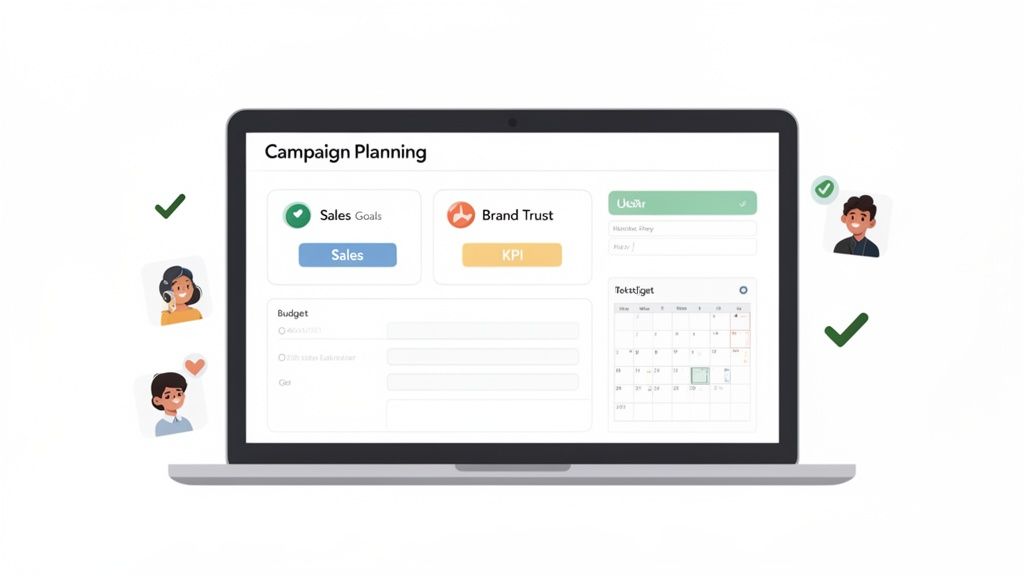
Defining Your Campaign Goals and KPIs
Every single collaboration needs a purpose. What’s the point? Are you trying to drive sales for a new product launch, or is this more about building trust and getting some authentic user-generated content (UGC) you can use later? Your answer will shape everything that follows, from who you partner with to how you measure success.
Some common goals for social media collaborations include:
- Boosting Brand Awareness: Get your brand in front of new, like-minded people. You'll want to watch your impressions, reach, and follower growth like a hawk.
- Driving Sales and Conversions: This is all about getting people to buy. Track unique discount code usage, affiliate link clicks, and conversion rates.
- Increasing Engagement: Build a more active and loyal community around your brand. Keep an eye on likes, comments, shares, and saves to see what's hitting the mark.
- Generating Authentic Content: Let creators make high-quality content for you. Here, success is measured by the volume and quality of the content you get back.
This first step is so much easier with a tool built for the job. For instance, an influencer marketing platform like REACH lets you set these objectives right inside the campaign brief. You can link them directly to your KPIs, making sure every partnership is tied to a real business outcome from the get-go. It keeps everything focused and makes reporting a breeze.
This simple flow chart really nails the first few steps.
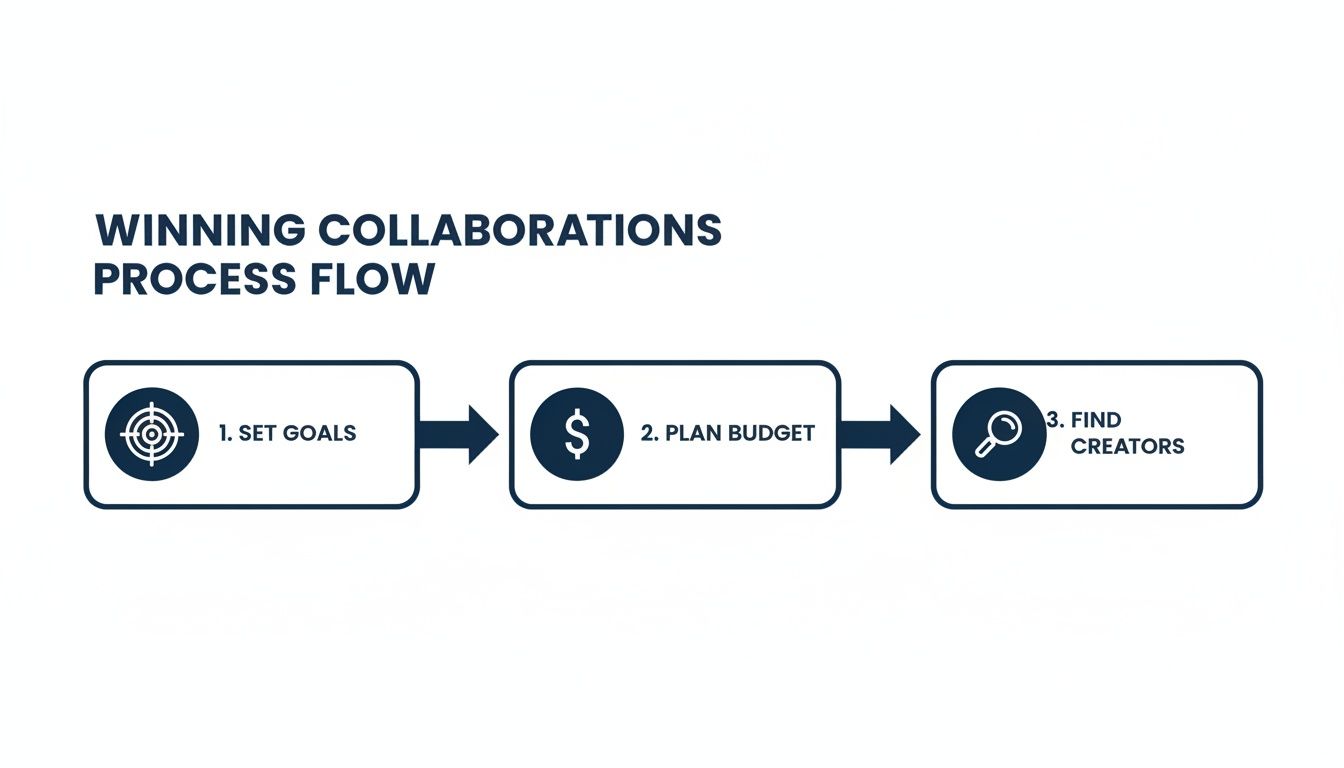
As you can see, figuring out your goals and budget has to happen before you start your creator search. It’s foundational.
To help you connect your goals to the right metrics, here's a quick breakdown of what to track.
Key Metrics for Your Collaboration Goals
| Campaign Goal | Primary KPI | Secondary Metrics | REACH Tracking Feature |
|---|---|---|---|
| Brand Awareness | Reach & Impressions | Follower Growth, Profile Visits, Shares | Real-time analytics dashboard tracks audience growth and content spread. |
| Drive Sales | Conversion Rate | Clicks, Add-to-Carts, Discount Code Usage | Integrated tracking for affiliate links and coupon codes. |
| Boost Engagement | Engagement Rate | Likes, Comments, Saves, Shares | Post-level engagement monitoring to identify top-performing content. |
| Generate UGC | Content Volume & Quality | Usage Rights Secured, Content Repurposing | Centralized content library to collect and manage all creator assets. |
Tracking the right numbers is the only way you'll know if your campaign is actually working. Aligning your KPIs with your main goal from the start makes measuring your ROI so much clearer down the line.
Establishing a Realistic Budget
With your goals locked in, it's time to talk money. You need a budget that can actually support your ambitions. And remember, it’s not just about what you pay the creator.
A smart budget covers everything:
- Creator Compensation: The fee for their time, creativity, and audience.
- Product Costs: The retail value of any products you’re gifting.
- Shipping and Logistics: The cost to get those products into their hands.
- Platform or Agency Fees: Any overhead for management tools or services.
The influencer marketing world has absolutely exploded, which makes smart budgeting more critical than ever. The industry is on track to hit $32.55 billion by 2026, showing just how much brands are investing in creators. What’s really interesting is that nano and micro-influencers now represent the huge majority of creators on Instagram (75.9%) and TikTok (87.68%). They often deliver much higher engagement rates than the mega-stars. Gifted campaigns also perform incredibly well, proving that you don't always need a massive budget to make an impact. For more context, check out these influencer marketing growth statistics.
Key Takeaway: A well-planned budget isn't just about the total amount; it’s about how you allocate it. A healthy mix of paid, gifted, and affiliate collaborations lets you work with different types of creators and maximize your results without breaking the bank.
Finding and Vetting Partners for Social Media Collaborations
With your goals mapped out and a budget in place, it’s time for the fun part: finding the perfect creators to bring your campaign to life. This is easily the most critical decision you'll make. The right partner has more than just a big follower count; they have the right followers and a genuine connection that truly clicks with what your brand is all about.
This discovery phase is where a lot of campaigns stall. It's easy to get lost scrolling through Instagram or TikTok, trying to guess a creator's audience stats and past performance. That manual approach is a massive time sink and, frankly, often a shot in the dark. To really succeed, you have to look past the surface and dig into what makes a partnership work.
Beyond Follower Count: What Really Matters
Let's be honest: a huge follower count can be a vanity metric. What you’re really after is authentic engagement and an audience that’s a perfect match for your brand. I'd take a creator with 10,000 highly engaged, niche followers over one with 100,000 passive scrollers any day of the week.
Here’s what you should be laser-focused on:
- Audience Demographics: Does their audience mirror your ideal customer? Check their stats for age, location, and key interests. You want their community to be a direct reflection of who you’re trying to reach.
- Engagement Quality: Don't just glance at the engagement rate. Dive into the comments. Are people having real conversations, or is it just a wall of fire emojis? Meaningful discussion is the sign of a healthy, connected community.
- Content Authenticity and Brand Fit: Scroll through their feed. Does their style and tone feel right for your brand? If you’re an organic skincare line, a creator whose content is mostly fast-fashion hauls probably isn't the right fit.
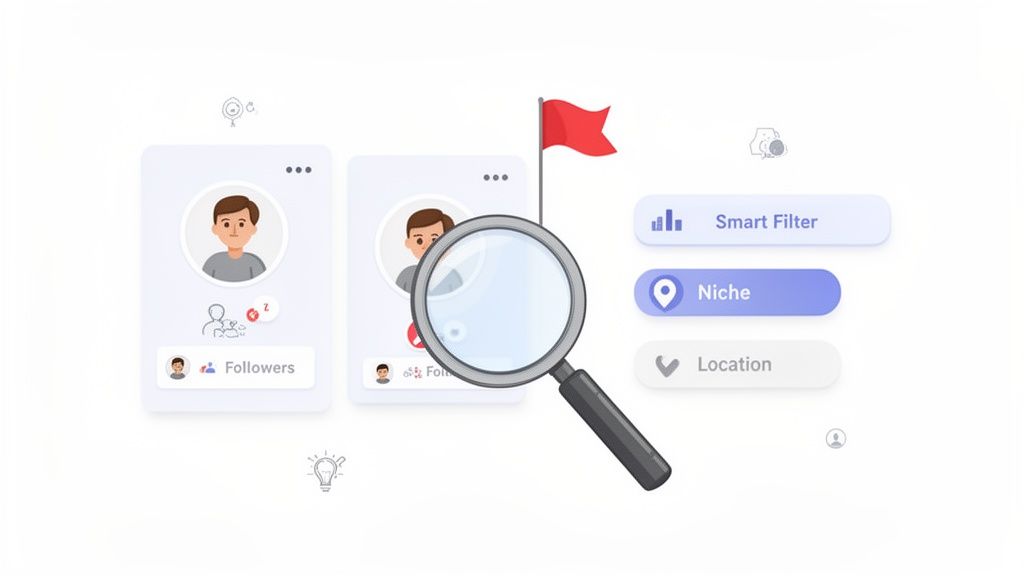
This is exactly where a platform like REACH comes in. Instead of guessing, you can use its discovery engine to filter creators with incredible precision—by niche, engagement rate, keywords, and even their past brand deals to check for conflicts. It turns hours of manual searching into minutes, giving you a pre-vetted list of great potential partners.
Spotting Red Flags Before You Commit
Vetting is also about knowing who to avoid. The wrong partnership can do more than just fall flat; it can actively damage your brand's credibility.
Keep an eye out for these common red flags:
- Sudden Follower Spikes: A huge, overnight jump in followers is a classic sign of buying followers.
- Low-Quality Engagement: Generic comments like "Nice pic!" or totally unrelated remarks often point to engagement pods or bots.
- Inconsistent Content: A feed that jumps all over the place suggests they haven't found their niche, which usually means their audience isn't very engaged.
- Past Controversies: A quick Google search is your best friend here. Uncover any potential issues before they can reflect poorly on your brand.
Pro Tip: Look at the creator's other sponsored posts. Do they promote anything and everything, or are they selective? A creator who is thoughtful about their partnerships is far more likely to produce authentic, compelling content for you.
When you've found some promising creators, you'll need to reach out. A great resource for finding someone's email from LinkedIn can help you move the conversation to a more professional channel once you’ve confirmed they’re a potential match.
Ultimately, this process is all about finding a true, authentic match. Investing the time upfront to find the right people will pay off tenfold when you find that perfect creator who can champion your brand to an audience that's eager to listen.
Crafting Outreach That Actually Gets a Reply
Alright, you've found your dream list of partners. Now comes the moment of truth: making contact. This is where so many brands go wrong, and frankly, it’s not hard to see why. Top creators get absolutely flooded with DMs and emails filled with generic, copy-paste requests. Most of them hit the trash bin in seconds.
To stand out, your outreach can't just be another piece of noise. It needs to be thoughtful, professional, and genuinely interesting. This first message is your handshake—it sets the entire tone for the partnership. Forget mass emails. A little bit of personalization shows you've actually paid attention, and that goes a long way.
The Anatomy of a Perfect Pitch
Creators are busy. Your first message has to be short enough to read quickly but packed with enough information to make them want to learn more. A winning pitch gets right to the point, explaining the who, what, and why.
Here's a breakdown of what every great outreach message should contain:
- A Personal Touch: Start with a genuine compliment. Mention a specific post, video, or story you enjoyed. "Loved your recent video on sustainable living" is much better than "I like your content." It proves you're not a bot.
- A Quick Intro: Briefly introduce your brand and what you stand for. More importantly, connect your brand's mission to their personal brand or audience.
- The "Why You" Factor: This is critical. Tell them exactly why you think they are the perfect fit. Is it their authentic storytelling? Their unique visual style? Their incredibly engaged community? Be specific.
- A Snapshot of the Campaign: Give them the high-level details. What's the core idea? What might the deliverables look like? Think, "We're launching a new product and envisioning one Instagram post and three stories."
- Compensation and Value: Don't be shy about money. Be upfront about how you plan to compensate them, whether it's a flat fee, gifted product, or an affiliate deal. This transparency builds immediate trust.
- A Clear Call to Action: Make the next step easy. End with a simple, low-pressure question like, "Would you be open to a quick chat next week to discuss details?"
Pro Tip: The best outreach feels like a true partnership, not a transaction. Frame it as a win-win. It’s not just about what the creator can do for your brand, but also what you can offer them—be it fair pay, creative freedom, or a product their audience will genuinely love.
Ditch the Messy DMs and Emails
Trying to manage dozens of conversations across Instagram DMs, TikTok messages, and email is a recipe for chaos. Details get lost, follow-ups get missed, and incredible partners slip through the cracks. For anyone serious about social media collaborations, using a dedicated platform is a non-negotiable.
This is where a tool like REACH can save your sanity. It pulls all your creator conversations into one organized dashboard. You can send your initial pitch, negotiate rates, and track follow-ups without ever leaving the platform. It keeps you organized and makes the entire process smoother for everyone involved. If you need a starting point, these influencer outreach email templates are a great resource for structuring your initial messages.
Managing Your Social Media Collaborations for Success
You’ve found your perfect partners and they're ready to create. Now comes the part that makes or breaks a campaign: the execution. This isn't about micromanaging your creators; it's about building a solid, professional foundation so everyone can focus on what they do best.
Getting the logistics right—from agreements and content approvals to payments—is what separates a messy, one-off campaign from a smooth, long-term partnership. When creators feel supported and the process is clear, the creative work thrives.
Start with a Clear Agreement
Before a single photo is taken or a video is shot, you need a clear agreement. Think of it as a roadmap for your collaboration. It’s not about burying your partner in legal jargon; it's about getting on the same page to protect both of you and avoid any “I thought you meant…” moments later.
A good, simple agreement should always cover these bases:
- The Deliverables: What are you actually getting? Be specific. One Instagram Reel and three Stories? A dedicated YouTube video? Spell out the exact quantity, format, and which platforms the content will live on.
- Content Rights & Usage: This is a big one. Define how you can use the content once it's made. Can you run it as a paid ad? Feature it on your website or in your email newsletter? Also, specify for how long (e.g., for 12 months from the publish date).
- Payment Terms: Lay out the compensation, how you'll pay, and when. Is it 50% upfront and 50% on completion? A single payment 30 days after the final post goes live? Clarity here keeps everyone happy.
- FTC Disclosure: You must require the creator to use clear disclosures like
#ador#sponsored. This isn't just good practice; it's a legal requirement that maintains transparency with their audience.
Tools like REACH can take the headache out of this. They offer customizable templates that have all the important clauses already baked in. You can generate a professional agreement in a few clicks, skip the legal guesswork, and get your collaboration started on the right foot.
Build a Content Workflow That Actually Works
Nothing kills creative energy faster than a clunky approval process. An endless chain of emails with vague feedback like "can we make this pop more?" is a recipe for frustration. The goal is to set up a system that protects your brand without stifling the creator’s voice—the very reason you hired them.
A great workflow gives creators freedom within a clear structure. Instead of scattered feedback, use a central hub where they can submit drafts for review. This allows your team to leave specific, time-stamped comments or approve content with a single click, keeping the entire process organized and moving forward.
A Quick Tip from Experience: Respect the creator's time. Consolidate your feedback into one round if possible, and make sure it’s constructive and actionable. This shows you value them as a creative partner and helps keep the momentum going.
The industry is also shifting in a big way. We're moving away from one-off posts and toward long-term, continuous partnerships. In fact, 58% of B2B brands are already running "always-on" influencer programs, and consumer brands are right behind them. This approach just works better.
This long-term strategy, which experts predict will be the norm by 2026, makes having a streamlined management system absolutely essential. Check out these 2026 influencer marketing predictions to see where things are headed.
This is where nano-influencers are becoming so valuable. They tend to share 67% more sponsored content than mega-influencers because they're more accessible and their audiences are incredibly engaged. But managing dozens of these ongoing relationships can be a logistical nightmare without the right system.
Platforms like REACH are built for this new reality. By centralizing contracts, content, payments, and reporting in one place, they make it feasible to scale these high-impact partnerships without drowning in admin work.
Measuring Performance to Prove Your Social Media Collaborations ROI
So, your content is live and the audience is chiming in. Great! But the job isn't done—in fact, you’ve just hit the most important part. Launching a campaign without tracking its performance is like shouting into the wind; you have no idea if your message landed or if anyone was even listening. This is where you connect all your hard work to real business results, prove the value of your social media collaborations, and learn exactly how to make the next one even better.
This isn’t just about tallying up likes and comments. It's about building a clear, confident story around your return on investment (ROI) that you can take straight to your team or key stakeholders.

Connecting Metrics to Your Initial Goals
The metrics you watch have to be a direct reflection of the goals you set way back at the start. If you don't connect your measurement strategy back to your original "why," you’ll just end up with a pile of vanity metrics that look nice but don’t actually mean anything for the business.
Let’s see how this plays out in the real world:
- Goal: Drive Sales. The most direct path here is using unique, trackable links and discount codes. How many people clicked the creator’s affiliate link? How many shoppers punched in their promo code at checkout? This gives you a concrete revenue figure.
- Goal: Boost Brand Awareness. For this, you’re looking at reach and impressions. How many unique sets of eyes saw the content? It's also smart to watch your brand's follower count during the campaign to see if the collaboration brought in new people.
- Goal: Increase Engagement. Go deeper than just the number of likes. Metrics like shares, saves, and thoughtful comments are pure gold. These actions show that the content didn't just get a passing glance—it resonated enough for someone to save for later or pass on to their friends.
Trying to track all this manually, especially with several creators on different platforms, can get chaotic fast. This is exactly why a central hub is a game-changer for any serious brand.
Take the REACH platform, for example. It automates this entire headache. Its dashboard pulls real-time data from every creator and every post into one simple report. Instead of chasing partners for screenshots, you get live numbers on clicks, conversions, and engagement, letting you watch your ROI grow as it happens.
Analyzing What Worked and What Didn't
After the campaign wraps up, it’s time to roll up your sleeves and dig into the data to find the why behind the results. This analysis is where the real learning happens. It’s what turns one-off campaigns into a long-term, winning strategy.
Start by asking a few tough questions:
- Which creators delivered the best results? Was it the influencer with a massive following, or the micro-creator with a super-loyal niche audience?
- What content formats killed it? Did Reels get more traction than static posts? Did candid, behind-the-scenes Stories spark more conversations than perfectly polished feed content?
- What part of the message really hit home? Read through the comments and DMs. What specific words or selling points did the audience get excited about?
This kind of analysis helps you spot the patterns. You might find that video content consistently delivers 3x more conversions for your brand, or that your audience loves creators with a sense of humor. These are the powerful insights that shift your marketing from guesswork to a data-driven machine. For a more detailed look, our guide on how to measure influencer engagement and ROI offers some more advanced models.
Reporting and Optimizing for the Future
The last step is to package your findings into a clean, easy-to-understand report. This isn't just paperwork; it proves the value of your marketing spend to leadership and gives you a playbook for what to do next.
Your report should tell a story, not just dump data. Highlight the big wins, the lessons learned, and the actionable steps you’ll take for the next campaign. Using automated reports from a platform like REACH makes this part a breeze, giving you shareable dashboards that clearly show the campaign's impact without you having to spend hours glued to a spreadsheet.
In the end, measurement isn't just something you do when a campaign is over. It’s the start of a cycle of constant improvement. By tracking, analyzing, and reporting on your performance, you make sure every collaboration you run is smarter and more effective than the last.
Common Questions About Social Media Collaborations
Even the most well-thought-out plan hits a few bumps. When it comes to social media collaborations, a few common questions always seem to pop up, whether you're a brand, an agency, or a creator yourself. Let's tackle some of the most frequent ones I hear.
How Do I Set the Right Budget for a Collaboration?
Figuring out what to spend isn't about pulling a number out of thin air. It really depends on your goals, your industry, and the creators you want to work with. You've probably heard the old "$100 per 10,000 followers" rule for an Instagram post, but honestly, you should treat that as a starting point, not a hard-and-fast rule.
The final price tag is going to shift based on a few key factors:
- Engagement Rate: I'd much rather pay for a creator with a smaller, super-engaged audience than one with a million followers who don't interact. True influence lies in connection, not just numbers.
- Content Type: A polished YouTube video or a high-effort Instagram Reel will naturally cost more than a simple static photo. Video just takes more work.
- Usage Rights: Planning to use the content in paid ads or on your website? That's extra value, and you should expect to pay more for those rights.
- Exclusivity: If you ask a creator not to work with your direct competitors for a while, that's going to increase their fee. It's a reasonable request, but it limits their other income opportunities.
My advice? Don't put all your eggs in one basket. A smart strategy often blends paid partnerships with gifted collaborations and affiliate deals. Using a platform like REACH can be a huge help here, as it lets you track all your spending and results in one place to see what's really driving your ROI.
What Is the Difference Between Gifted and Paid Collaborations?
This one is simple: it all comes down to money and expectations. Getting this right is crucial for building a healthy, balanced influencer program.
A gifted collaboration is pretty straightforward. You send a product to a creator for free, hoping they'll love it enough to post about it. There's no guarantee they will. This approach is fantastic for generating authentic user-generated content (UGC) and starting relationships, especially with nano and micro-influencers who are often eager to partner with brands they love.
On the other hand, a paid collaboration is a formal business deal. You pay the creator a set fee to produce specific content. This always requires a contract that spells out the deliverables, timelines, and usage rights. It gives you, the brand, way more control over the final product.
What Are the Most Important Legal Parts of a Contract?
A solid contract is your safety net. It protects you and the creator by making sure everyone is on the same page from day one, which helps avoid so many headaches down the road.
Make sure your agreement always covers these essentials:
- Clear Deliverables: Be specific. How many posts? Stories? Videos? On which platforms?
- Content Approval Process: Lay out the steps for how and when the creator will send content for you to review before it goes live.
- Usage and Licensing Rights: Define exactly how, where, and for how long you can use the content they create. This is a big one.
- Payment Schedule: State the total compensation, how you'll pay (e.g., PayPal, bank transfer), and the exact dates for payment.
- FTC Disclosure Guidelines: You must legally require the creator to use clear disclosures like
#ador#sponsored. It’s non-negotiable.
This can feel overwhelming, which is why using a platform like REACH that provides legally-vetted contract templates can be a lifesaver. It takes the guesswork out of the process.
How Can I Effectively Measure the ROI of My Campaign?
Measuring ROI is all about tying your results back to the goals you set at the very beginning. If you can't show the value of your campaign, you can't justify spending the money on it. It’s that simple.
If your goal was sales, you're tracking conversions from unique discount codes, clicks from affiliate links, and traffic to your landing pages. If you were aiming for brand awareness, you’ll be watching metrics like reach, impressions, and follower growth. For engagement, look past simple likes and focus on meaningful actions like comments, shares, and saves.
The classic ROI formula is comparing your total campaign cost (creator fees, product costs, your team's time) to the total value you got back (revenue, estimated media value, etc.). An analytics dashboard that pulls in clicks, conversions, and engagement data in real-time makes this so much easier and gives you the hard numbers you need to prove your campaign was a success.
Ready to run smarter, more effective social media collaborations? By following this framework, you can move beyond simple partnerships to build a powerful, scalable marketing engine. The key is to combine a strategic approach with the right tools. Platforms like REACH give you everything you need to find the right partners, manage your campaigns without the chaos, and prove your ROI with real-time data. Schedule a demo today and see how we can supercharge your influencer marketing.