 Skip to content


Brand ambassador programs are all about building long-term relationships with people who genuinely love your brand. Forget one-off paid posts. This is about creating a community of advocates who talk about your products because they’re true fans, not just because they're on the payroll.
The result? A powerful, credible, and sustainable way to grow your business through authentic word-of-mouth marketing.
Why Ambassador Programs Are Your Secret Weapon
Think of your marketing like trying to build a fanbase for a band. You could hire a famous musician to play a one-night-only show (that’s your influencer campaign), or you could find your most passionate street-level fans and empower them to start a fan club (that’s your ambassador program). The concert creates a temporary buzz, but the fan club builds a lasting community.
This is exactly why ambassador programs for brands are so effective. They focus on fostering deep, real connections with people who are already on your team—your most loyal customers, your proudest employees, and your biggest supporters. Their advocacy isn't just a paid endorsement; it's a genuine recommendation that carries real weight.
Building a Community vs. Renting an Audience
Let's break down the difference between ambassador programs and standard influencer campaigns.
| Characteristic | Ambassador Programs | Influencer Campaigns |
|---|---|---|
| Relationship | Long-term, ongoing partnership | Short-term, project-based collaboration |
| Motivation | Genuine passion for the brand | Primarily financial compensation |
| Audience | Often smaller, highly-engaged communities | Typically larger, broader reach |
| Authenticity | High, based on real product experience | Can feel transactional or staged |
| Goal | Build community and sustained advocacy | Generate immediate brand awareness |
| Compensation | Perks, free products, commissions | Fixed fee or pay-per-post |
Essentially, one-off influencer campaigns are like renting a billboard. You get a quick burst of visibility, but once the contract is up, the billboard comes down. An ambassador program, on the other hand, is like planting a garden. It takes time and care, but it grows into a self-sustaining ecosystem of advocacy.
The real magic is in the motivation. Influencers are paid for a specific deliverable. True brand ambassadors are driven by their passion for the brand itself—the perks are just the icing on the cake.
The Rise of Authentic Advocacy
Today’s consumers are smart. They can spot a polished, impersonal ad from a mile away and are growing more skeptical by the day. What do they trust? Recommendations from people they know and respect.
This is precisely the role an ambassador plays. If you want to understand what is a brand ambassador, picture them as that friend who just discovered an amazing new product and can't wait to tell you about it. Their endorsement feels real because it is.
This infographic breaks down how that genuine enthusiasm creates a powerful marketing engine.
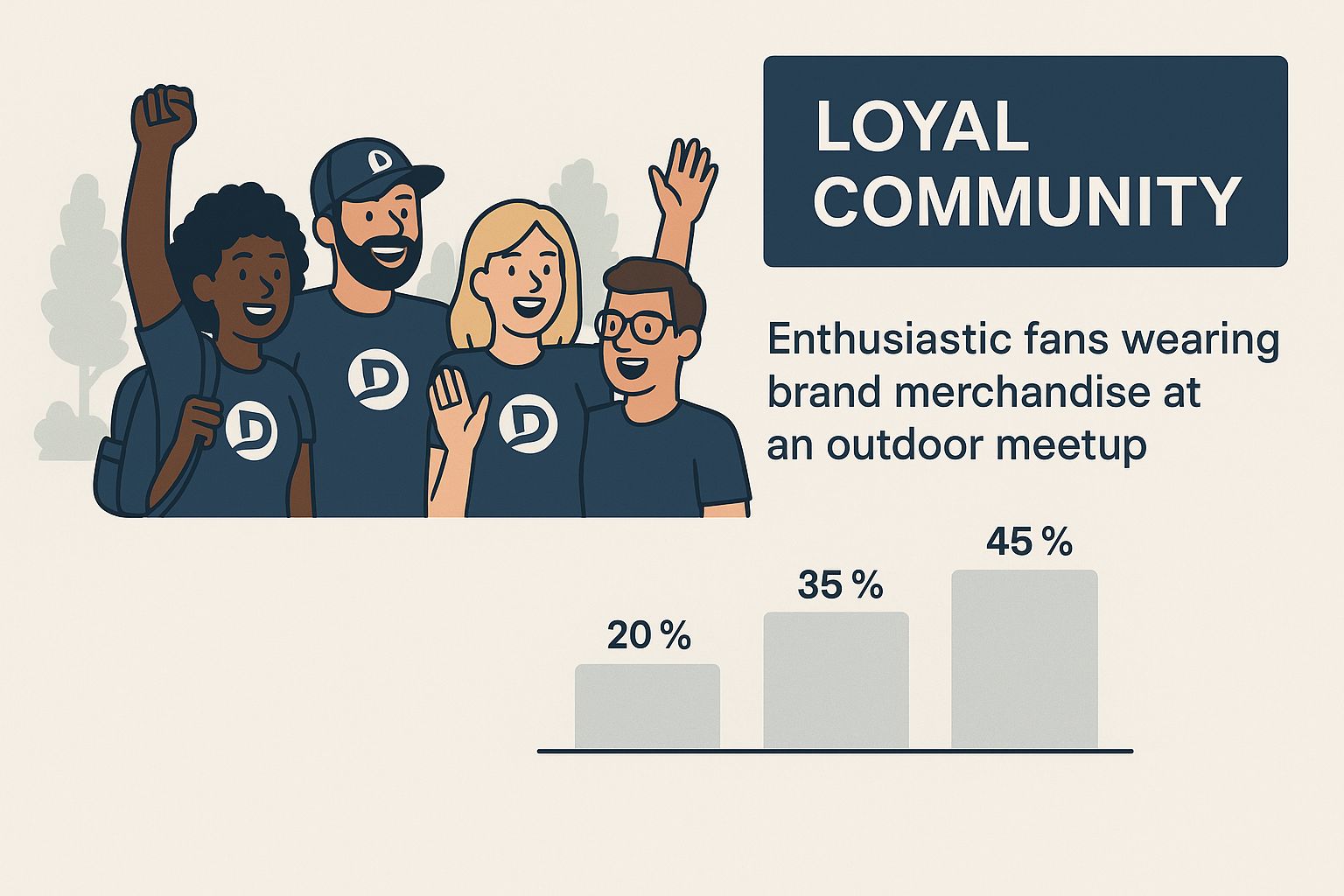
As the image shows, you’re not just buying reach; you’re nurturing a community that drives real engagement. And brands are catching on. Recent studies show that a whopping 73% of marketers are planning to increase their investment in ambassador programs, citing better authenticity and engagement as the main drivers.
The Real-World Benefits of a Strong Ambassador Program
It’s one thing to talk about ambassador programs in theory, but what do they actually do for your business? A well-built program delivers real, tangible results that hit your bottom line. These aren't just fluffy metrics; they're powerful advantages that traditional advertising often struggles to match.
The magic here is that the benefits create a virtuous cycle of authentic content, deep-seated trust, and, ultimately, more sales.
Let's break down the three core ways these programs move the needle, transforming your marketing from a recurring expense into a powerful growth engine.
Generate Authentic User-Generated Content at Scale
Every marketing team knows the struggle: the constant, grinding need for fresh content. An ambassador program is a brilliant solution. It essentially turns your most passionate customers into a volunteer content creation crew.
They produce genuine user-generated content (UGC) that resonates because it’s not from a marketing team—it’s from real people who actually use and love what you sell. Instead of sterile, staged photoshoots, you get a firehose of authentic images and videos showing your product out in the wild. This is exactly what modern consumers are looking for; in fact, a staggering 69% of people are more likely to trust content from a real person than from a brand.
This stream of UGC becomes a goldmine of assets you can put to work everywhere:
- Social Media Feeds: Keep your Instagram, TikTok, and Facebook feeds fresh with relatable content that your audience actually wants to see.
- Product Pages: Add real customer photos to show your products in action, which can significantly boost conversion rates.
- Email Campaigns: Weave ambassador stories and photos into your newsletters to build a stronger sense of community.
- Ad Creatives: Test UGC in your paid ad campaigns. You'll often find it outperforms slick, professionally produced ads because it feels more trustworthy.
Build Unshakable Trust and Social Proof
In a world where everyone is skeptical of advertising, trust is the ultimate currency. Ambassador programs build this trust naturally. When a potential customer sees someone they follow and admire championing your brand day after day, it acts as powerful social proof.
Think of it as the digital version of a friend giving you an enthusiastic recommendation over coffee. It just hits differently.
This effect is amplified because ambassadors are in it for the long haul, not just a one-off sponsored post. Their sustained support tells a story of genuine loyalty that a single ad simply can't replicate.
A brand ambassador's endorsement feels less like an advertisement and more like a trusted piece of advice. This credibility is critical, especially when you consider that 77% of consumers say their trust in a brand is influenced by how it treats its people, including its advocates.
This is how you build a rock-solid reputation. It’s a long-term investment that pays off every single day.
Drive Measurable Sales and Conversions
At the end of the day, marketing has to make money. This is where a great ambassador program really proves its worth. By giving your ambassadors the right tools, you can connect their efforts directly to sales, making word-of-mouth marketing more trackable than ever before.
The two most effective tools for this are straightforward:
- Unique Promo Codes: Giving each ambassador a personal discount code (like "CHLOE15") lets you see every single purchase they drive.
- Custom Affiliate Links: These special, trackable links show you exactly how many clicks and sales each ambassador is sending your way.
This kind of direct tracking lets you calculate a clear return on investment (ROI). You'll know precisely which ambassadors are your top performers, so you can reward them accordingly and fine-tune your strategy. This data-driven approach turns authentic advocacy into a reliable and scalable sales channel, helping you lower customer acquisition costs and boost your overall profitability.
How to Structure Your Ambassador Program for Success

An ambassador program that actually works doesn’t just happen. It’s built on a solid, well-thought-out foundation. Think of it like building a house—you wouldn't start laying bricks without a detailed blueprint. This structure is what keeps your ambassadors motivated and ensures their hard work lines up perfectly with what your brand needs to achieve.
Without a clear plan, even your most passionate fans can lose steam and become disengaged. The secret is to build a system that’s easy to understand, genuinely rewarding, and sets them up for success from day one. Let’s walk through the essential pieces you need to assemble a program that delivers real, measurable results.
Designing a Compelling Compensation Model
First things first: you have to figure out how you're going to reward your ambassadors. While their love for your brand is the engine, a fair and exciting compensation plan is the fuel that keeps them going long-term. There's no one-size-fits-all solution here, so your best bet is often a hybrid model that mixes different kinds of rewards.
- Free Products or Swag: This is the classic starting point. Giving ambassadors your latest gear not only rewards them but also gives them the tools to create authentic, hands-on content.
- Commission on Sales: This is a fantastic performance-based incentive. By giving each ambassador a unique affiliate link or discount code, you can offer them a cut of every sale they drive. Their success becomes your success.
- Flat Fees or Stipends: For specific, time-bound campaigns or ambassadors with a huge following, a fixed payment can offer stability and guarantee you get the content you need. This is usually reserved for more established creators.
- Exclusive Experiences: Never, ever underestimate the power of perks that money can't buy. Think invites to special events, early access to unreleased products, or a chance to meet the team. These experiences make ambassadors feel like true insiders.
A tiered system is a great way to pull all of this together. It creates a clear ladder for ambassadors to climb, motivating them to put in more effort to unlock better rewards. A new ambassador might start with free products, while a seasoned pro could earn a higher commission rate and get flown out for your annual brand summit.
Establishing Clear Guidelines and Onboarding
Once you know how you'll reward them, you need to create a clear playbook. Solid guidelines get rid of any guesswork and empower your ambassadors to represent your brand with confidence. This isn't about stifling their creativity—it's about giving them a roadmap to follow.
Your rulebook should be thorough but not overwhelming. A killer onboarding process makes sure every ambassador gets this crucial info right from the start.
Key Components of an Ambassador Agreement:
- Content Expectations: Be specific. Define what you're looking for, whether it’s 2 Instagram stories per week or one in-depth blog post a month.
- Brand Voice and Messaging: Give them a feel for your brand’s personality. Are you fun and edgy, or more professional and educational?
- Disclosure Requirements: This one is non-negotiable. You must require them to use hashtags like #ad or #ambassador to comply with FTC rules and keep everything transparent.
- Do’s and Don’ts: Clearly outline anything that's off-limits—certain topics, language, or types of imagery—to protect your brand's reputation.
A great onboarding experience is more than just a welcome email. It’s about making your ambassadors feel seen, valued, and ready to go. Put together a welcome kit with some branded swag, a printed handbook, and a handwritten note to start the relationship off on the right foot.
That initial investment in training will pay for itself over and over in the quality and consistency of the content they create.
Fostering a Vibrant and Exclusive Community
Finally, the best ambassador programs for brands aren't just transactional arrangements; they're genuine communities. Creating a dedicated space for your ambassadors to connect with each other—and with you—transforms them from a group of individuals into a unified team.
That sense of belonging is an incredibly powerful motivator. A huge part of building a successful program is nurturing this kind of environment, much like the strategies found in these expert tips on building a thriving online community. A private Slack channel, an exclusive Facebook group, or a dedicated forum can become the program's home base.
Inside this hub, you can:
- Share program news and roll out new campaign briefs.
- Run fun, exclusive contests with bonus rewards.
- Encourage ambassadors to share tips and collaborate with each other.
- Get direct, honest feedback on new product ideas or marketing concepts.
This community becomes your direct line to your most passionate customers, giving you priceless insights while making their bond with your brand even stronger. By investing in this three-part framework—compensation, guidelines, and community—you're not just launching a program; you're building a sustainable engine for authentic brand growth.
Finding and Recruiting Your Ideal Brand Ambassadors
Let’s be honest: your program's success boils down to one thing—the people. Finding the right brand ambassadors isn't a numbers game. It's not about chasing massive follower counts; it's about finding people who have a genuine, unshakeable passion for your brand.
Think about it this way: an ambassador with 1,000 deeply engaged followers who actually loves your product is infinitely more valuable than a mega-influencer with a million passive viewers.
The real goal here is to build a team of authentic advocates. You want people who will champion your brand because they want to, not just because there’s a paycheck involved. This means you have to look past the surface-level metrics and dig deeper for qualities like brand affinity, true audience engagement, and shared values.
Where to Find Your Future Ambassadors
Here’s the good news: your ideal ambassadors are probably hiding in plain sight. They’re already talking about you, buying your stuff, and telling their friends. You just need to know where to look.
-
Your Existing Customer Base: This is your goldmine. Dive into your own customer data and see who your most loyal, repeat buyers are. Who’s leaving glowing reviews or tagging you on Instagram without being asked? These superfans are the lowest-hanging fruit and your most authentic potential partners.
-
Social Media Mentions: Get into the habit of actively monitoring your brand mentions and hashtags. Who is consistently creating amazing content featuring your products for free? These are organic advocates who have already proven their loyalty and talent.
-
Your Email List: These people have literally raised their hands to hear from you. Scan your subscriber list for those who consistently open your emails, click through on new product launches, and actually participate in your surveys. They’re an engaged and pre-qualified group just waiting to be activated.
These channels are the best place to start because they lead you to people with a proven, organic love for what you do. For a more detailed playbook on sourcing methods, you can check out our complete guide on how to find brand ambassadors for your program.
Crafting a Compelling Application Process
Once you know where to look, you need a smart way to bring people into the fold. A formal application process is the best way to vet candidates systematically and make sure they’re the right fit.
Think of your application form as both a filter and a magnet—it should gently weed out the casual applicants while attracting the people who are genuinely passionate about what you stand for.
Your form needs to go beyond basic contact info. Ask smart questions that reveal their true potential:
- Why do you want to be an ambassador for our brand? (This gets right to their passion.)
- Describe your experience with our products. (This verifies they’re a real customer.)
- How do you connect with your community? (This evaluates their engagement skills.)
- What makes you a good fit for our brand's values? (This is a crucial check for alignment.)
This approach helps you find people who not only have an audience but also share your brand's mission and vibe.
A well-designed application shows you're serious about your program. It tells potential ambassadors that this is a real partnership, not just a casual shout-out, which attracts higher-quality candidates from the start.
The Art of the Outreach Message
Okay, so you've shortlisted your ideal candidates—either from applications or your own searching. Now comes the critical part: reaching out. Your very first message sets the tone for the entire relationship, so it needs to be personal, compelling, and focused on what’s in it for both of you.
Whatever you do, avoid generic, copy-paste templates. They reek of spam. A personalized message shows you've actually done your homework and genuinely value what they could bring to the table.
Key Elements of an Effective Outreach Message:
- Personalize the Opening: Don't just say "Hi." Reference a specific post or piece of content you loved. Show them you’re already a fan of their work.
- State Your Purpose Clearly: Get to the point. Explain that you're building an exclusive ambassador program and you think they would be a perfect fit.
- Highlight the "Why": Tell them why you chose them. Is it their authentic voice? Their creative photography? Their super-engaged community? Be specific.
- Outline the Mutual Benefits: Briefly touch on the perks—free products, commissions, exclusive access. Frame it as a true partnership where everyone wins.
- Include a Clear Call to Action: End with a simple, easy next step. Invite them to a brief chat or direct them to your application page to learn more.
By focusing on genuine connection and a mutually beneficial partnership from day one, you lay the groundwork for a strong, effective, and long-lasting ambassador relationship.
See How the Pros Do It: Real-World Ambassador Programs
It's one thing to talk about ambassador programs in theory, but it's another to see them in action. The best programs aren't just a side project for the marketing team; they're well-oiled machines that pump out content, build community, and generate real buzz.
Let's break down what makes a couple of these programs tick. We'll look at how PopSockets, the phone accessory giant, turned its fans into a content-creation powerhouse. Then, we'll dive into how beauty brand Cocunat used its online community to make a huge splash with its physical store launches.
PopSockets: Turning Fans into a Content Factory
PopSockets had a problem every marketer knows well: the constant, nagging need for more content. Their social media channels were hungry, and professional photoshoots are expensive and time-consuming. Their solution? Empower their biggest fans to become their creative department.
They built an ambassador program that wasn't just about driving sales. It was designed to reward creativity. Ambassadors got clear missions and briefs, guiding them to create the exact kind of high-quality photos and videos the brand needed. It was a brilliant way to get a steady stream of user-generated content (UGC).
And it worked. Big time.
The results speak for themselves. The PopSockets Europe ambassador program generated over 7,000 unique pieces of content in just two years. Suddenly, they had a massive library of authentic, real-world visuals that connected with audiences way better than slick, polished ads ever could.
This is a perfect example of how an ambassador program can solve the content crunch. It's a smart, cost-effective way to keep your brand’s story feeling fresh and genuine.
Cocunat: From Online Hype to Offline Crowds
Think ambassador programs only work for online goals? Think again. The natural cosmetics brand Cocunat masterfully used its digital community to blow up its physical store openings. They knew their most dedicated online fans could be the key to creating a real-world frenzy.
Here’s how they did it: Before a new store opened, Cocunat gave its local ambassadors a mission. They tasked them with flooding social media with posts about the upcoming launch. This wasn't just random noise; it was a targeted campaign designed to build hype and get the word out to the right people in the right area.
For a single store launch, this strategy led to 45 unique social media posts from their ambassadors. That concentrated blast of online chatter translated directly into a packed store on opening day. You can dig into more of these impressive brand ambassador case studies and their results to see just how powerful this can be.
Cocunat’s success story proves that a passionate online community is a massive asset for driving real-world results, whether it’s filling an event or boosting retail sales.
How to Measure the ROI of Your Ambassador Program
An ambassador program is a serious investment in your brand's future, and just like any investment, you need to know if it’s paying off. Without solid numbers, you're just guessing. Measuring the return on investment (ROI) is what turns a fun side project into a strategic marketing engine that proves its worth.
Figuring out the ROI for an ambassador program goes way beyond just counting sales. It's about seeing the full picture of value your ambassadors bring—from getting your name out there to driving direct purchases. Let’s walk through the essential metrics you need to keep your eye on.
Tracking Awareness and Engagement Metrics
Before someone can buy from you, they have to know you exist. Ambassadors are fantastic for this top-of-funnel awareness, and while these initial interactions don't always lead straight to a sale, they're vital signs of your program's health and reach.
This is where you start. Think of it as the first ripple in the pond.
Key awareness and engagement metrics to watch:
- Reach and Impressions: At the most basic level, how many eyeballs are seeing your brand because of your ambassadors? This gives you a sense of the total audience you're now connected to.
- Engagement Rate: Don't just look at views; look at actions. Likes, comments, shares, and saves on ambassador posts tell you that people aren't just seeing the content—they're connecting with it.
- Website Traffic: Are people curious enough to take the next step? Using trackable links shows you how much traffic is flowing from your ambassadors' content directly to your digital doorstep.
To get laser-focused on where this traffic comes from, you need to master UTM variables for accurate campaign tracking. UTMs let you see exactly which ambassador, platform, and post sent a visitor your way. It's non-negotiable for serious tracking.
Measuring Direct Conversions and Sales
This is where the rubber meets the road. Tracking direct sales is the clearest, most undeniable way to prove your program is making money. Thankfully, it’s easier than ever to link revenue directly to your ambassadors' work.
You really only need two simple but powerful tools here:
- Unique Discount Codes: Give each ambassador their own code (like "MARIA10"). It's a foolproof way to track every single purchase they inspire.
- Affiliate Links: Provide custom, trackable links for ambassadors to share. Every click and sale generated from that link is credited back to them.
When you combine the data from promo codes and affiliate links, you get a crystal-clear report card on the revenue your program is generating. This is the hard data that justifies your budget and helps you spot your star performers.
Calculating Your True ROI
Once you have your numbers, the math is pretty simple. You just need to weigh the total value your program created against what it cost to run.
The Formula: (Value Generated - Program Costs) / Program Costs x 100 = ROI %
Let's break that down:
- Value Generated: This starts with the total sales driven by discount codes and affiliate links. But don't stop there. You can also assign a monetary value to all the great content they create, often called Earned Media Value (EMV).
- Program Costs: This is the total investment. Add up everything you've spent, including ambassador commissions, the cost of free products you've sent out, any software fees, and the time your team spends managing it all.
For a more detailed look at quantifying these numbers, our guide on measuring influencer marketing ROI provides some great frameworks you can easily adapt for your ambassador program.
By staying on top of these figures, you can confidently show the financial impact of your program and make smart, data-backed decisions to make it even better.
Got Questions About Ambassador Programs? We've Got Answers.
It's natural to have a lot of questions when you're thinking about starting an ambassador program. You want to get it right before putting time and money on the line. Let's walk through some of the most common things brand managers ask.
Most of the time, these questions boil down to a few key areas: telling ambassadors apart from influencers, figuring out compensation, and understanding the legal side of things.
Ambassador vs. Influencer: What’s the Real Difference?
It all comes down to the relationship. People often use these terms interchangeably, but they represent two very different marketing approaches.
Think of an influencer collaboration as a short-term transaction. You're essentially renting access to their audience for a specific campaign or a set number of posts. It’s effective for a quick burst of visibility.
A brand ambassador, on the other hand, is in it for the long haul. This is a genuine partnership built on authentic love for your brand. They aren't just posting an ad; they're weaving your products into their daily lives because they actually use and believe in them. Their recommendations feel less like a sales pitch and more like a trusted tip from a friend.
How Should We Compensate Ambassadors?
There's no magic number here, and a "one-size-fits-all" approach usually falls flat. The best compensation plans are a smart mix of tangible rewards and valuable perks that keep your ambassadors excited and engaged.
Instead of just cutting a check, think about building a multi-layered reward system:
- Products & Perks: This is the foundation. Start by giving them free products. Then, sweeten the deal with exclusive access to new launches before anyone else or invites to special company events.
- Performance-Based Pay: Give them skin in the game. Offer a commission on every sale they drive through their unique affiliate link or discount code. This directly ties their success to your success.
- Community & Recognition: Don't underestimate the power of belonging. Create an exclusive community for your ambassadors and give public shout-outs to celebrate their hard work. Making them feel seen and valued is a powerful motivator.
A great way to encourage growth is to set up a tiered system. As ambassadors hit certain milestones or drive more sales, they can "level up" to unlock even better rewards.
A quick but crucial note: a clear contract is non-negotiable. It should spell out everything—compensation, what content you expect, and how you can use it. Also, ambassadors are legally required to be transparent about their paid relationship. Make sure they know to use hashtags like #ad or #ambassador to follow FTC guidelines and keep their audience's trust.
Ready to find, manage, and grow your own team of ambassadors? REACH is the all-in-one platform for discovering authentic creators, running smooth campaigns, and tracking your ROI down to the last dollar. Start building your team of brand advocates today.