 Skip to content

Meta description: Learn how to get PR packages from brands with a professional, repeatable system. Build a brand-ready profile, pitch the right companies, manage deliverables, and turn one-off gifting into long-term partnerships.
You keep seeing creators unbox beautiful mailers, tag a brand, and move on. From the outside, it looks random. It isn't.
If you're trying to figure out how to get PR packages from brands, the answer usually has very little to do with luck and a lot to do with operational discipline. Brands aren't just handing out products to whoever asks. They look for fit, clarity, professionalism, and signs that a creator can represent the product well.
That matters even more now because gifting sits in the middle ground between content, relationship building, and campaign operations. A PR package might be a simple send with no posting requirement. It might also be a trade-for-post arrangement with deadlines, usage questions, disclosure rules, and follow-up reporting. Treating all PR as "free stuff" is how creators stay stuck at one-off gifts instead of building a real business.
A good way to frame the work is this. You are not trying to get lucky enough to receive a box. You are building a system that makes brands comfortable adding you to their creator pipeline. The same mindset that helps with PR also improves paid deals later. If you want better ideas for how brands think about creator-led storytelling, studying strong examples of content marketing helps because PR works best when your content already feels useful, native, and audience-aware.
Moving Beyond Free Stuff to Strategic Partnerships
New creators often make the same mistake. They focus on the package instead of the partnership.
A PR send can be useful, but its true value is elsewhere. It can lead to repeat gifting, affiliate opportunities, paid content, event invites, or a long-term relationship with a brand team that now knows you're reliable. That shift in mindset changes how you present yourself, how you pitch, and what you do after a brand says yes.
What brands are actually evaluating
Brands don't just ask, "Will this person post?" They ask harder questions.
- Fit with the product: Does your content already make sense for this brand?
- Audience relevance: Will your viewers care about the item?
- Execution quality: Can you create clean, useful, on-brand content?
- Professional reliability: Will you answer emails, confirm details, and follow through?
If your page looks scattered, your bio is vague, and your outreach feels mass-sent, brands read that as risk.
Practical rule: The package is the smallest part of the opportunity. The operational trust you build is what gets you invited back.
The creator who gets picked
The creators who consistently get PR tend to do a few things well. They make their niche obvious. They talk about products in a way that feels natural. They make it easy for a coordinator or PR manager to understand what kind of creator they are within seconds.
That means your content, profile, and pitch need to line up. If those three parts tell different stories, brands hesitate. If they tell one clear story, even a smaller creator can look like a smart fit.
Laying the Foundation for Brand Partnerships
A creator sends ten outreach emails, gets one reply, and then loses the opportunity because their profile is hard to read, their bio has no contact email, and they cannot answer a basic question about audience fit. That is usually not a content problem. It is an operations problem.
Before outreach starts, set up your profile and materials so a PR coordinator can review you fast, see the fit, and move you into a gifting or partnership workflow without extra back-and-forth.
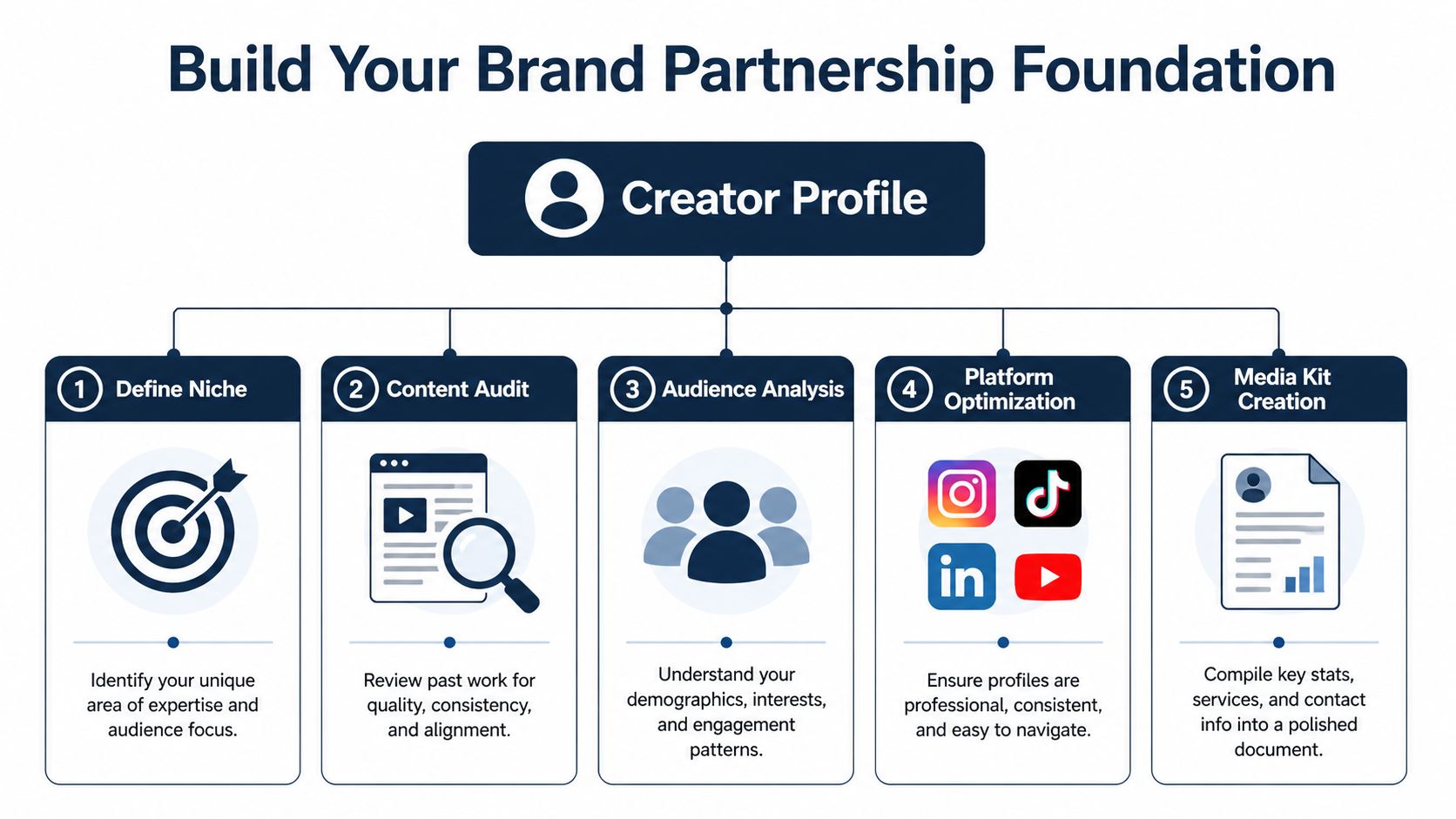
Write your niche in one sentence
A brand team should understand your lane in a few seconds.
Weak niche statements create friction:
- lifestyle creator
- beauty and fashion and wellness
- content creator sharing things I love
Clear niche statements give a brand something to evaluate:
- skincare creator focused on routine-based product education for acne-prone skin
- modest fashion creator sharing affordable try-ons and styling ideas
- home coffee creator reviewing tools, beans, and simple brewing workflows
Use that sentence as a filter for the rest of your profile. If your niche is skincare education, your recent content should support that story. A mixed feed can still work for audience growth, but it usually makes PR selection slower because the fit is harder to prove.
Audit your last 10 posts
Recent content is your first screening document.
Review your last 10 posts and look for:
- Topic consistency: Do the posts serve one audience problem or interest area?
- Visual coherence: Does the account look intentional?
- Product relevance: Can a brand picture where its product would appear?
- Format repeatability: Do you have at least one format you can reproduce for a partner?
- Caption clarity: Are you using niche language that signals authority and context?
If the feed does not support the kind of brand work you want, fix the page before you pitch. That delay is usually worth it. A smaller creator with a focused profile often converts better than a larger creator with scattered content.
Turn your bio into a business asset
Your bio should answer three practical questions fast:
- What do you make content about?
- Who is it for?
- How should a brand contact you?
A simple structure works well:
- niche
- audience
- content style or promise
Keep it easy to scan. Remove filler, vague slogans, and jokes that make sense only to existing followers.
If you need a terminology refresher while building your profile materials, REACH explains what PR package stand for.
An unclear bio creates admin work for the brand side. PR teams usually skip creators who require too much interpretation at the first review stage.
Use analytics as proof, not decoration
Analytics matter because they help a brand predict performance and fit. They also help you pitch with more discipline.
Pull the numbers that support a business conversation:
- top-performing content formats
- audience location
- age and gender split
- saves, shares, comments, and profile visits
- product-related posts that performed better than your baseline
Do not send a folder full of screenshots with no explanation. Pull out the few points that matter. For example, if tutorials outperform unboxings and most of your audience is in the brand's shipping region, that is useful. If your audience saves comparison posts at a high rate, that suggests purchase intent or research behavior.
Build a media kit that answers decision-making questions
A good media kit helps a brand decide whether to send product, what kind of content to request, and whether you are organized enough to work with.
Include these sections:
| Section | What to include |
|---|---|
| Creator summary | One sentence on your niche, audience, and style |
| Platform overview | Your active channels and what each is best for |
| Audience snapshot | Demographics and audience interests from platform analytics |
| Performance highlights | Engagement rate, top content themes, and strongest format |
| Content examples | Links or visuals showing product-focused content |
| Partnership options | Gifting consideration, trade-for-post, paid work, affiliate, whitelisting if relevant |
| Contact details | Email and any management contact |
If you do not have past brand work, use your best organic product content. Show what a review, tutorial, routine integration, or unboxing would look like on your account. Brands care less about polish alone than they do about whether you can execute a usable concept.
Set up the back office before outreach
This is the part fluffy PR advice skips.
Even if you are only trying to get gifted product, build a simple system to track outreach, package status, posting obligations, usage rights, and follow-ups. A spreadsheet is enough at the start. A creator CRM or partnership tool becomes useful once you are handling multiple brand conversations at once, especially if you need to log deliverables, store briefs, and keep reporting in one place.
Track:
- brand name
- contact person
- date contacted
- status
- product discussed
- expected deliverable
- usage rights or repost permissions
- shipping details
- follow-up date
- posted date
- results or notes
This is how PR starts functioning like a business process instead of a series of DMs and forgotten promises. It also protects you later. Once gifting turns into affiliate, paid, or recurring work, clean records make contracts, reporting, and renewals much easier to manage.
Identifying and Qualifying the Right Brands
A creator can spend ten hours sending pitches and still end the week with nothing useful to show for it. The usual problem is not effort. It is list quality.

Start with brands you can actually serve
PR is not a prize for getting noticed. It is a sourcing decision on the brand side. The team is asking a practical question: if we send product to this creator, are we likely to get useful content, honest feedback, or a relationship worth developing?
That changes how you build your target list.
A strong prospect usually has clear audience overlap, products that fit your existing content, and a realistic path from gifting to something more structured later. If the brand sells to a customer your audience does not resemble, or the product would look forced in your content, remove it. Free product that confuses your positioning costs more than it gives back.
Look for operational signs, not just aesthetic fit
A pretty feed does not mean a brand runs creator seeding well. Look for signs that there is an actual process behind the scenes.
Check whether the brand:
- reposts creator content consistently
- credits creators properly
- runs repeat gifting or launch mailers instead of random one-off boxes
- has a clear influencer, partnerships, or PR contact
- works with creators at your size tier, not only macro talent
- gives enough product context for a creator to make usable content
Those details matter because disorganized brands often create disorganized partnerships. Missing addresses, vague asks, no usage discussion, and late follow-up usually start here.
A practical shortcut is reviewing lists of brands that send PR to small influencers to find companies already investing in smaller creators.
Build a shortlist from observable behavior
Good research starts in public.
Study tagged posts, creator mentions, campaign landing pages, retail launch calendars, and LinkedIn team titles. If a skincare brand keeps sending product to creators who make routine breakdowns and ingredient education, that tells you what kind of content they know how to use. If a fashion label only reposts polished studio photos, a casual try-on account may be a weaker fit even if follower counts match.
I usually separate targets into three groups:
| Brand tier | What qualifies them | Best use |
|---|---|---|
| Priority now | Strong fit, visible creator seeding, reachable team | Pitch first |
| Nurture | Excellent fit, but slower to access or more competitive | Build familiarity over time |
| Portfolio builders | Smaller brands with clean product fit and usable content potential | Build proof and case studies |
This keeps outreach focused and makes follow-up easier to manage in your tracker or creator CRM.
Qualify the brand like a manager would
Before you contact anyone, answer a few operational questions.
Can you find the right contact without guessing? Does the brand have shipping policies that make gifting realistic in your country? Are there signs they expect unpaid posting in exchange for product, or do they separate gifting from guaranteed deliverables? If they repost creator content, do they ask permission or treat tagged content as free inventory?
These are early signals about how the relationship will feel later when briefs, whitelisting, affiliate links, or paid renewals enter the picture. A brand that handles small details well is usually easier to work with once the partnership gets more formal.
Use peer research carefully
Peer research helps, but only when you read it correctly. The goal is not to copy whoever got a box last month. The goal is to identify patterns in who the brand chooses and what they seem to value.
Focus on creators with similar audience intent, content format, and product use case. A beauty creator who teaches application techniques is a better comparison point for you than a larger lifestyle creator who happened to receive the same package.
For platform-specific examples of how smaller creators turn niche relevance into sponsor interest, see BeyondComments' YouTube sponsorship guide.
Warm the relationship without becoming a pest
Brand familiarity helps, especially with small teams who scan names quickly. Follow the account. Engage when you have something specific to say. Share a product you already use if it fits your content. Reply to Stories when the response adds value, not because you want to appear in notifications.
Keep it professional. Social teams notice repeated low-effort comments, and they also notice creators who already understand the product and customer.
If your name shows up attached to relevant content before your email arrives, the pitch lands in a different context. You are no longer a random request. You are a creator the brand has already seen using the product category the right way.
Optimize for discoverability inside your niche
Brand teams and agencies often search by content type, problem, or product category. Your profile should make that easy.
Use plain language in your bio, captions, titles, and on-screen text:
- acne routine
- fragrance review
- modest workwear styling
- protein snack comparison
- before and after wash day
Clear labeling helps brands qualify you faster. It also improves your own system because you can point to specific content formats when logging what performs well and which brands are a match.
A smaller, qualified list beats a giant aspiration list every time. It saves outreach hours, improves response quality, and gives you a cleaner pipeline to manage once samples, approvals, and reporting start stacking up.
Mastering the Art of the Professional Pitch
A brand manager opens your email between shipping approvals, creator tracking, and a dozen campaign replies. You have a few seconds to show that working with you will be easy to assess, easy to brief, and easy to manage.
That is the standard.
What your email needs to do
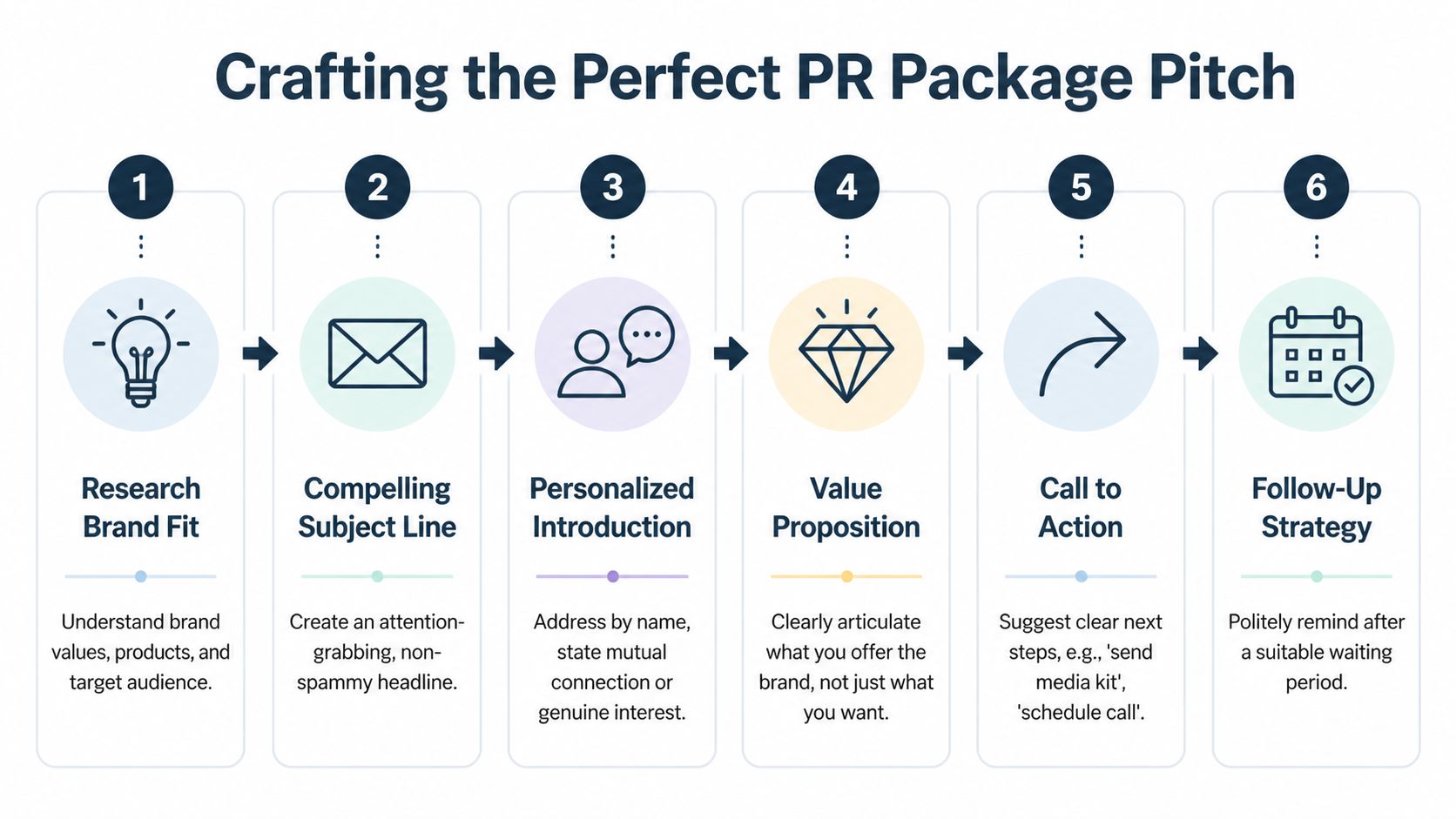
A good pitch reduces decision friction. The person reading it should understand four things fast: who you are, what you make, why you fit this brand, and what you want from them.
Treat the pitch like the first step in a business process, not a request for free product. If a brand says yes, someone on their side may need to log your details, send terms, confirm an address, track deliverables, and report results in a system such as REACH or their own creator CRM. Creators who present themselves clearly make that process easier. They get remembered.
Use a structure like this:
- a short opener tied to a product, launch, or campaign
- one sentence on your niche and audience
- one or two proof points relevant to the brand
- a clear ask for gifting, seeding, or campaign consideration
- links to your media kit and one strong content example
Subject lines that get opened
Subject lines should read like professional outreach, not fan mail.
Good examples:
- Skincare creator for product seeding consideration
- Coffee creator interested in gifting opportunities
- Creator fit for your upcoming beauty launch
Weak examples:
- Let's collab!!!
- PR package request
- Influencer inquiry urgent
The goal is clarity. Brand teams sort inboxes fast, and vague subject lines are harder to prioritize.
Write for mutual fit
The strongest pitches answer the brand's internal question: can this creator help us place product with the right audience and get usable content or feedback back?
That changes how you write. Skip generic praise. Point to fit.
Hi [Name],
I create [niche] content for [audience], with a focus on [format or topic]. I noticed your [product, launch, or campaign], and it fits the kind of [routine, review, styling, comparison] content my audience already responds to.Recent examples include [brief proof point], and my content in [category] consistently drives [saves, comments, replies, clicks, or another relevant result].
I would like to be considered for gifting, seeding, or upcoming creator campaigns if you are building out your list. My media kit is here: [link], and a relevant content example is here: [link].
If useful, I can also share audience details, shipping information, and past brand examples.
Best,
[Name]
[Email]
[Handle]
This works because it respects how brand outreach is reviewed. Clear fit first. Logistics second. No one has to guess what you want.
Keep your proof concrete
Relevant proof beats impressive sounding proof.
Use details like:
- a product review in the same category that drove strong saves or shares
- repeat audience questions about the problem this product solves
- a content format you use consistently, such as tutorials, wear tests, or comparisons
- evidence that you can deliver clean UGC, not just lifestyle posts
If you want a useful reference point for how this thinking carries into paid deals, BeyondComments' YouTube sponsorship guide shows the same principle in a different format. Clear positioning gets better responses.
For first drafts, this set of influencer outreach email templates can help you build a message that sounds professional without turning into a script.
Use applications and portals properly
Some brands prefer creator portals, campaign forms, or agency-managed applications instead of cold email. Those systems often feed directly into internal review workflows, which means your submission may be filtered, tagged, and compared side by side with other creators.
Fill them out carefully. Match your category labels to your actual content. Use recent links. Keep audience notes specific. If a form asks what you can provide, answer in operational terms: unboxing, first impression, tutorial, usage feedback, stills, short-form video.
A short video walkthrough can help if you want to see how creators think about packaging their pitch and presence:
Follow up once, then close the loop
Follow up one time if you do not hear back after a reasonable gap. Keep it in the same thread so the original context stays attached.
Example:
Hi [Name],
Following up on my note below in case your team is still reviewing creators for gifting or seeding. I create [niche] content for [audience], and I believe [brand or product] is a strong fit based on my recent [type of content].Happy to send additional examples or audience details if helpful.
Best,
[Name]
Then stop.
Professional outreach is not about sending the most emails. It is about being easy to evaluate, easy to onboard, and easy to work with once a yes comes through.
From 'Yes' to Unboxing Day What to Do Next
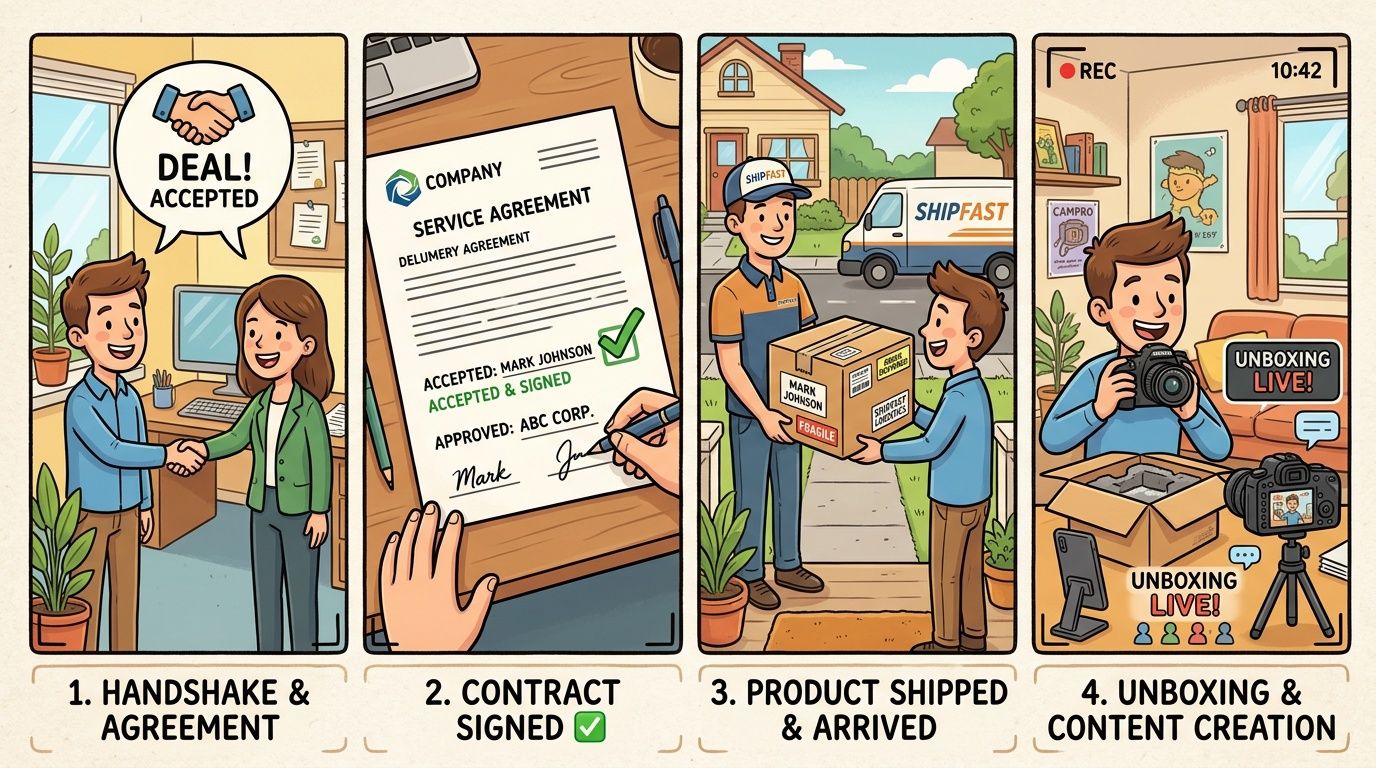
The email says yes. Good. Now the work shifts from pitching to account management.
This is the point where creators either look easy to work with or create extra cleanup for the brand team. A PR send may look casual on the outside, but internally it usually sits inside a process with approvals, shipping deadlines, creator notes, and reporting expectations. Treat it that way from the start.
Clarify the arrangement before you share your address
A yes can mean several different things. Some brands are sending product with no posting requirement. Some expect content in exchange for the package. Others are testing creators for future paid work and want to see how you handle a low-risk send first.
Get the terms in writing before anything ships. Ask clear questions:
- Is this gifted with no obligation?
- Is content expected in exchange for the product?
- What are the posting dates or launch windows?
- Which formats are requested, if any?
- Does the brand want approval before posting?
- Who is the day-to-day contact if shipping or content issues come up?
If the ask starts to sound like a paid campaign, with fixed deliverables, revisions, usage rights, and deadlines, say so. That is not being difficult. It is basic scope control.
Confirm logistics like a manager, not a fan
Shipping mistakes waste time and can kill momentum around a launch. Send your details in one clean message and verify the basics before the package goes out.
Include:
- full legal shipping name
- delivery address
- phone number for courier issues
- apartment, gate, or unit details
- blackout dates if you will be traveling
- any product restrictions, such as shade match, sizing, or dietary limits
I also recommend keeping a simple tracker or using a creator management tool like REACH so every send has a status, date, contact, and follow-up note. Once you handle more than a few brands at once, memory stops being a system.
Set content rights before content exists
Many creators often give away more than they realize.
A brand reposting your Story to its organic feed is one thing. Using your video in paid ads, retailer listings, email, or website product pages is different. If the brand mentions "usage" without specifics, ask them to define exactly what they want.
Use a quick rights checklist:
| Question | Why it matters |
|---|---|
| Can the brand repost organically? | Organic reposting is common, but it still helps to confirm it |
| Can the brand use the content in paid ads? | Paid usage usually carries separate value |
| How long does the usage period last? | Open-ended terms can block future deals or reuse |
| Will the brand credit you? | Credit affects attribution and portfolio value |
| Can they edit or crop the content? | Editing can change how your work and likeness appear |
Short written confirmation is enough for a gifting send. If the package turns into a larger collaboration, move the terms into a simple agreement.
Handle disclosure and approvals early
Do not wait until posting day to ask whether the brand wants review or what disclosure language applies.
If a product is gifted and you feature it, disclose that relationship clearly. If there is a trade arrangement or any contractual requirement to post, be even more precise. Brand preferences matter, but platform rules and advertising regulations matter more.
Ask for the approval process too. Some teams only want to see content if claims are regulated, such as skincare, wellness, or supplements. Others do not pre-approve creator content at all. Clarify that upfront so nobody is chasing edits when the package has already arrived.
Build your own intake process
Creators who last treat each PR send like a small campaign file. That means logging what came in, what was promised, and what needs to happen next.
Track:
- brand name
- contact name and email
- product sent
- estimated retail value
- shipment date and delivery date
- required or optional content
- posting window
- usage terms
- disclosure notes
- content links after publishing
- performance notes and follow-up
This also makes relationship management easier later. If a brand sends a second package, you should be able to see the history in minutes, not search your inbox for half an hour. For thank-you strategy after a send, AliSave Pro's appreciation ideas has a few practical examples worth adapting for creator-brand relationships.
Fulfillment and Building Lasting Brand Relationships
The easiest way to stay a one-time recipient is to disappear after posting. The easiest way to become a repeat partner is to make the brand's job easier.
Post like someone who wants to be invited back
A rushed Story mention rarely builds a relationship. Brands remember creators who integrate products naturally and make them look useful in context.
That usually means:
- show the product in use, not just in packaging
- explain why it fits your routine
- answer audience questions if they come in
- keep the content consistent with your normal style
Authenticity matters here, but so does effort. If the content feels careless, the brand notices.
Send a follow-up report even if no one asks
This is one of the simplest ways to stand out.
After you post, send a short email with:
- content links
- what you created
- any notable audience response
- appreciation for the send
- interest in future relevant launches
You don't need a fancy deck. A short, organized note is enough.
Some of the strongest creator relationships come from simple professional habits. Deliver on time, communicate clearly, and close the loop.
Show appreciation without being performative
Relationship building doesn't require flattery. It requires professionalism and consistency.
If you want ideas for thoughtful, low-pressure ways businesses show appreciation and maintain goodwill, these client appreciation ideas are useful because the same principle applies to creator-brand relationships. People remember respectful follow-up and thoughtful communication.
Think in cycles, not single sends
A good PR outcome is not "I got free product." A good PR outcome is:
- the brand got content or goodwill it valued
- you created something that fits your portfolio
- the exchange created a reason to work together again
If a product wasn't a fit, be honest in your own internal notes and move on professionally. Not every send should become a relationship. The point is to identify the ones that should.
Your Blueprint for Sustainable Brand Partnerships
Learning how to get PR packages from brands comes down to one idea. Treat PR like a business process, not a lucky break.
That means getting your profile ready before outreach. It means targeting brands that fit your niche. It means writing a concise email that gives a brand enough confidence to continue the conversation. And once a brand says yes, it means handling logistics, rights, disclosures, deadlines, and follow-up with the same care you'd give a paid campaign.
Creators who do this well don't just collect boxes. They build trust. That trust is what turns a one-time gifting opportunity into repeat sends, stronger portfolio pieces, and better paid work later.
If you're serious about scaling your creator work, organization becomes a competitive advantage as much as content quality does.
If you're managing more brand conversations, deliverables, and follow-ups than a spreadsheet can comfortably handle, REACH is the next step. It gives brands, agencies, and creator teams one place to organize outreach, track content, manage deliverables, monitor payments, and keep campaigns from getting messy. That's useful when you're moving beyond the first PR package and building a repeatable partnership system.