 Skip to content

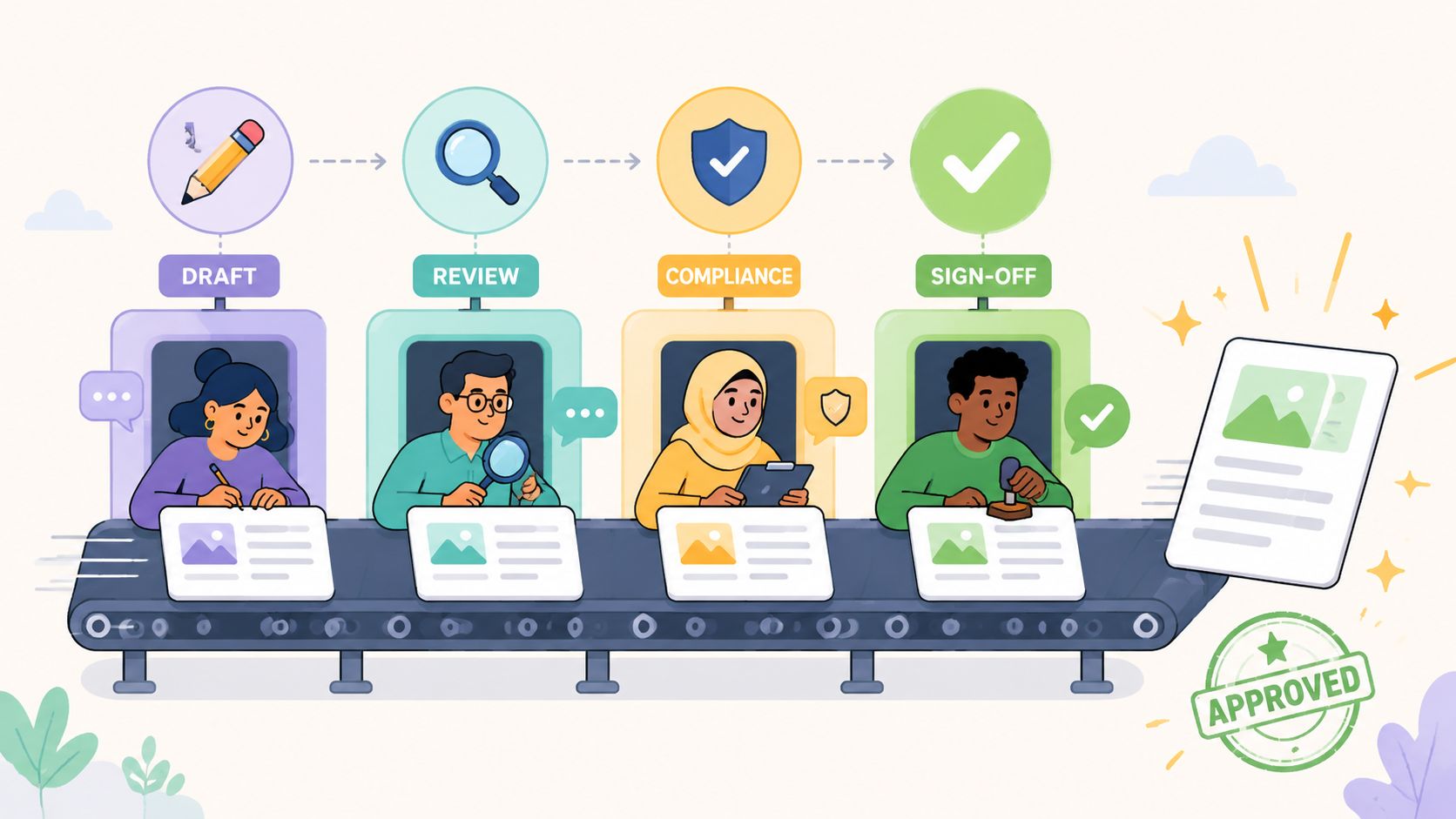
An influencer campaign can go sideways in an afternoon. A creator sends a revised cut by email. Brand feedback sits in a shared doc. Legal requests one line change in Slack. The account manager approves the wrong file in Drive, and the post misses the moment it was built for.
That is how content approval breaks in real campaigns. Not through one obvious failure, but through small handoff problems that stack up fast. Comments live in different places. Ownership gets fuzzy. Nobody is fully sure which version is current.
For influencer marketing teams, that delay hits harder than it does in slower content programs. Trend timing matters. Client expectations are tight. A single asset may still need review from the creator, campaign manager, brand lead, client contact, and compliance team before it can go live.
Manual coordination does not scale well under that kind of pressure. Spreadsheets, email threads, and chat messages can keep a small campaign moving for a while, but they rarely hold up once revisions start and approvals involve multiple stakeholders.
A fast team needs one system of record. It needs clear approval steps, visible ownership, and a single place to review the right asset. That is the difference between chasing approvals and running a workflow.
From Creative Chaos to Campaign Clarity
A campaign is set to launch at 3 p.m. At 2:17, the creator emails a revised video. The client has comments in a PDF from yesterday. Brand edits are buried in Slack. Legal approved an older version on a call. The campaign manager now has one job and four places to look for the truth.
That setup breaks fast in influencer marketing because approval volume looks small until revisions start. One Reel or TikTok can pass through the creator, account team, brand lead, client contact, and compliance reviewer in a matter of hours. If each person works in a different tool, the team spends more time chasing confirmation than reviewing content.
The problem is not only delay. It is decision quality.
Teams working from email threads and shared folders lose version control first. Then they lose accountability. Someone publishes the wrong file, approves language that was already changed, or assumes another stakeholder signed off. I have seen all three happen in active campaigns, usually when the team thought the process was still "good enough."
A practical workflow fixes that by giving every asset one review path, one current version, and one visible approval record. That matters more in influencer programs than in slower content environments because timing is part of performance. If approval takes too long, the post misses the trend, the creator's audience has moved on, and the client still expects the original result.
Practical rule: If comments, files, and approvals live in different systems, the workflow is already costing the team time.
REACH solves that bottleneck in a straightforward way. Creators submit in one place. Reviewers comment on the actual asset. Approval status stays visible to everyone who needs it. The team stops asking who approved what and starts managing campaigns from a single source of record.
That shift turns approval from reactive coordination into campaign control.
What Is a Content Approval Workflow
A content approval workflow is the structured path content follows before it goes live. It defines the review stages, who participates at each stage, where feedback is captured, and who has the authority to approve publication.
The easiest way to think about it is an assembly line.
A product doesn't skip from raw materials to shipping because each checkpoint serves a purpose. Content works the same way. One stage checks message quality. Another checks accuracy. Another confirms the content is safe to publish under brand or compliance rules. When teams skip those stage checks, they don't move faster. They create rework.
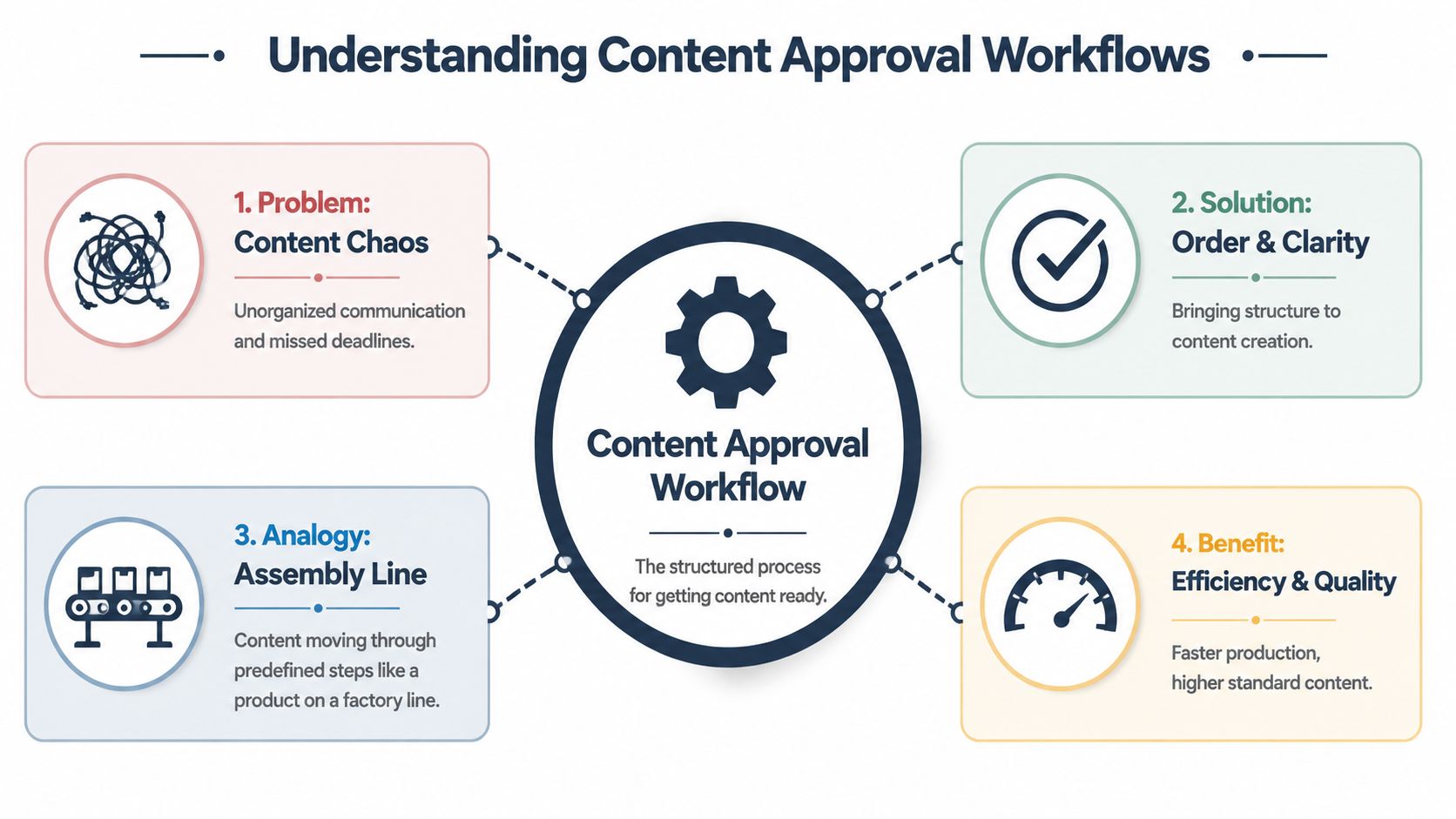
Why it became a real operational problem
Content approvals got more formal because marketing output expanded. Jotform cites HubSpot reporting that 70% of marketers had an active content marketing program in 2020. Once brands began publishing continuously across blogs, email, social, and video, ad hoc approval habits stopped working.
That shift matters in influencer marketing more than is typically appreciated. Creator content isn't only creative work. It's also branded communication, public-facing messaging, and sometimes regulated communication. The workflow has to support all of that without turning every asset into a committee project.
What a strong workflow actually gives you
A working content approval workflow does four jobs well:
- Protects quality: Review happens in sequence, so copy, creative, and factual issues get caught before publishing.
- Keeps brand voice consistent: Teams review against a standard instead of reacting case by case.
- Reduces compliance risk: Legal or policy review happens only when needed, but it happens in the right place.
- Improves speed through structure: Clear stages remove duplicate review and stop the same draft from bouncing around.
Teams often think structure slows content down. In practice, unclear review paths slow it down more.
For fast-moving campaigns, especially creator partnerships, the workflow isn't bureaucracy. It's what makes quick publishing repeatable.
The Stages of an Effective Content Approval Workflow
A reliable content approval workflow needs stage gates. Without them, reviewers jump in at the wrong time, comments overlap, and nobody knows whether a draft is nearly done or still in open revision.
Smartsheet recommends explicit stage gates such as draft, internal review, legal or compliance, and final sign-off to reduce duplicate reviews and prevent unapproved changes from going live. A five-stage path often proves beneficial in practice.
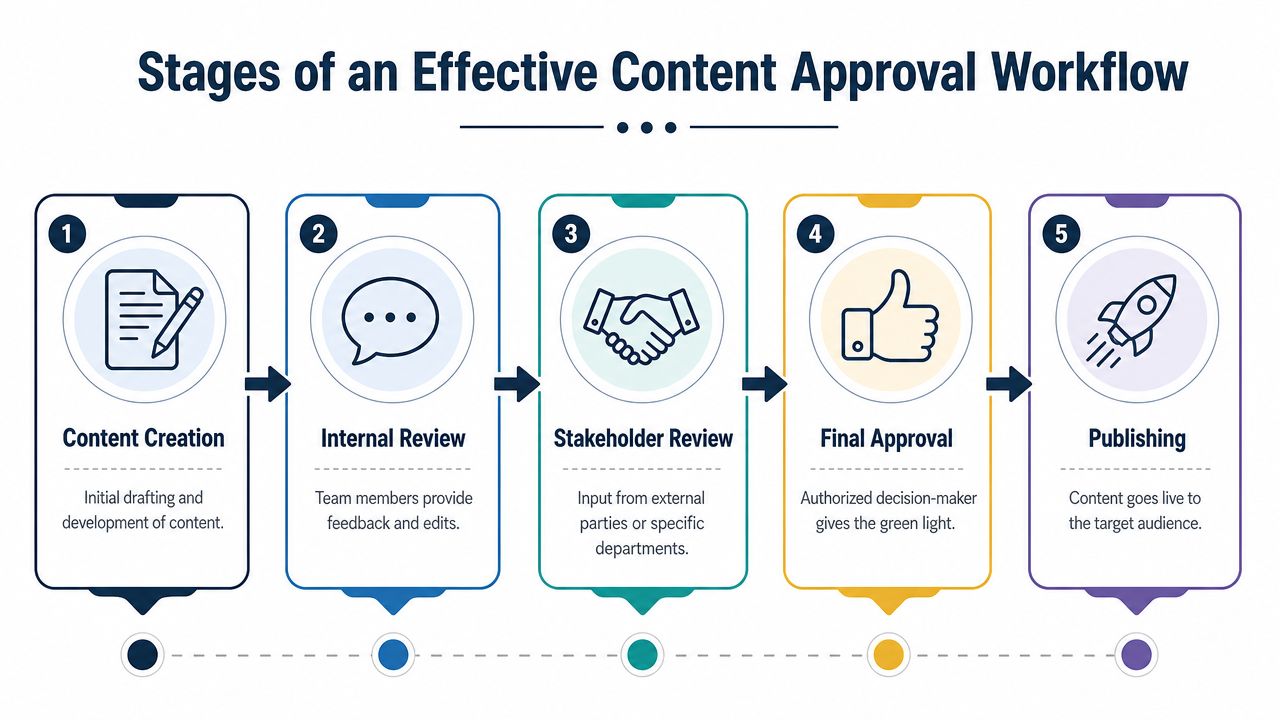
Stage one draft and creation
The asset is built from the brief. For influencer campaigns, that may include a caption draft, video cut, story sequence, usage notes, and disclosure language.
The main mistake here is inviting reviewers too early. If the creator or internal content lead hasn't finished a workable draft, early comments tend to be broad, inconsistent, and expensive to act on.
A better rule is simple. Don't send rough thinking into formal review.
Stage two internal review
Internal review checks whether the asset matches campaign goals, brand tone, and platform expectations. This stage is usually owned by marketing, social, or the campaign manager.
Use this checkpoint to consolidate obvious issues before broader review starts. If the brand team already knows the hook is off, the CTA is wrong, or the talking points drift from the brief, fix that now. Don't make outside stakeholders spend time on preventable edits.
Stage three stakeholder or specialist review
Not every piece of content needs this stage. But when it does, it should be tightly scoped.
A product marketer may verify claims. A legal reviewer may check required language. A client contact may confirm the message fits the campaign direction. The problem starts when this stage turns into open-ended commentary from anyone with access.
Late-stage stakeholders should review for their lane, not rewrite the asset from scratch.
Stage four revisions
This is the discipline stage. Feedback gets resolved, conflicting comments get triaged, and the newest version becomes the only version under review.
Teams often waste time here because they don't separate actionable edits from opinion. Good revision management means one person owns the change list, the creator responds to a single consolidated set of comments, and the next version is clearly marked as the current draft.
Stage five final approval and publishing
Final approval should answer one question only. Is this asset approved to publish as submitted?
If that question opens another general feedback round, the workflow isn't complete. The final approver shouldn't restart creative debate. They should confirm that required reviews are complete and release the asset for scheduling or publication.
A simple way to keep these stages visible is to track them in one place:
| Stage | Primary purpose | Main owner |
|---|---|---|
| Creation | Produce draft from brief | Creator |
| Internal review | Check fit, tone, campaign alignment | Marketing or campaign lead |
| Specialist review | Validate legal, product, or client concerns | Relevant stakeholder |
| Revisions | Resolve comments into one updated version | Creator plus workflow owner |
| Final approval | Authorize publishing | Final approver |
Mapping Roles and Responsibilities in Your Workflow
Most approval problems aren't caused by bad content. They're caused by vague roles.
If three people think they can give final approval, nobody really owns final approval. If five people can request revisions without seeing each other's comments, the creator gets contradictory direction. If a publisher has to guess whether legal signed off, the process is already broken.
That's why role design matters as much as stage design.

The five roles that matter most
A clean workflow usually involves these people:
- Content creator: Produces the initial draft and handles revisions.
- Internal reviewer: Checks quality, brand voice, and campaign fit before wider circulation.
- Specialist stakeholder: Reviews only when subject-matter, legal, or compliance input is required.
- Final approver: Makes the release decision.
- Publisher or scheduler: Pushes approved content live on the correct platform.
Those roles can be held by different people depending on team size. In a smaller brand, one person may wear multiple hats. What matters is that each responsibility is still clear.
Why one final approver beats committee approval
For complex content, experts recommend limiting approvers to 3–4 essential decision-makers and defining one final approver. That advice holds up in real campaign operations.
The fastest workflows aren't the ones with the fewest opinions. They're the ones that control when opinions enter the process and whose decision closes it.
A single final approver does three useful things:
- Ends ambiguity: Everyone knows whose sign-off is binding.
- Prevents looping revisions: Reviewers can comment, but not all of them can hold the asset indefinitely.
- Protects deadlines: Someone owns the release call when timing matters.
This also helps when you're working with external creators. If your review chain is messy, creators feel it immediately. They get fragmented notes, repeated asks, and last-minute changes. That hurts both campaign quality and relationship quality.
If you need outside production support, it's worth building a workflow that pairs clear review ownership with the right talent. Teams that source specialists through REACH's content creator hiring options still need a defined approval model after the brief is handed off.
The creator shouldn't have to decode your organization chart to get a post approved.
Building Your Content Approval Workflow in REACH
The old way of managing influencer approvals relies on patched-together systems. Brief in a doc. Deliverables in a spreadsheet. Drafts in email. Feedback in chat. Final sign-off in someone's memory.
That setup doesn't fail because people are careless. It fails because the workflow has no center.
A centralized system changes the job. Instead of chasing status, the campaign manager manages movement through a visible process.
What setup looks like in practice
Inside a dedicated influencer operations platform, the workflow starts at the campaign level. You define deliverables, due dates, and submission expectations before the creator uploads anything. That matters because approval quality usually reflects briefing quality.
A practical setup often follows this pattern:
- Create campaign deliverables: Define what each creator owes, such as a video draft, caption, cutdowns, or story set.
- Set review expectations: Identify who reviews brand fit, who handles client feedback, and who has release authority.
- Route submissions into one hub: Creators submit assets in the same system where the team reviews them.
- Keep feedback attached to the asset: Comments stay with the relevant draft instead of scattering across inboxes.
- Track revision status visibly: Everyone sees whether content is pending review, needs changes, or is approved.
The gain isn't just convenience. It's control. The team can see exactly where a draft sits without digging through messages.
Why centralized collaboration beats email chains
Email works for notification. It doesn't work well for workflow.
When approvals happen by email, several problems show up fast:
| Manual method | What goes wrong |
|---|---|
| Email attachments | Reviewers comment on outdated files |
| Spreadsheets | Status goes stale unless someone updates it manually |
| Chat threads | Feedback gets buried and loses context |
| Shared drives | Files are centralized, but decisions often aren't |
A system built for marketing collaboration software handles the missing layer. It doesn't just store files. It organizes submissions, comments, ownership, and approval state in one operating view.
That matters most when multiple creators are active at once. One delayed approval shouldn't force the team to manually reconstruct who owes revisions, which deliverables are blocked, or which posts are safe to publish.
A walkthrough helps make that real:
The practical standard to enforce
The best influencer workflows are boring in the right way. Each asset enters through the same path. Reviewers know where to comment. The latest version is obvious. Approval status is visible without a meeting.
If your team still relies on “final_final_v2” naming habits and status updates in Slack, the workflow isn't operational yet. It's improvised.
Measuring Success and Avoiding Common Pitfalls
A content approval workflow should be managed like an operating process, not a creative ritual. If you can't tell where time is lost, you'll keep treating every delay like a one-off exception.
The most useful measures are simple and directional:
- Average approval time: How long content takes to move from submission to final sign-off.
- Revision cycles: How many rounds a typical asset needs before approval.
- On-time publication rate: Whether approved content is ready when the campaign calendar needs it.
- Approval bottlenecks by stage: Which review step repeatedly slows output.
Those metrics don't need to be fancy to be useful. They just need to be visible and reviewed consistently. Teams that track workflow performance usually spot the same patterns: too many reviewers, unclear comments, and last-minute stakeholder involvement.
The mistakes that keep slowing teams down
A few failure points show up again and again:
- Too many approvers: More input doesn't always mean better output. It often means slower decisions.
- Vague feedback: Comments like “make it pop” or “not quite right” create extra rounds because the creator can't act on them cleanly.
- Late specialist review: Bringing in legal or client stakeholders near publish time invites preventable rework.
- No single source of truth: If status lives in one tool and feedback in another, people make decisions with incomplete information.
Good approvals depend on specific feedback, defined authority, and one current version of the asset.
Performance tracking also helps connect workflow discipline to business outcomes. Teams that care about efficiency should pair operational review with a broader look at content marketing ROI so approval speed, production quality, and campaign value are evaluated together.
A healthy workflow feels predictable. Content moves. Reviewers know their lane. Creators know what changed. Publishing doesn't depend on someone hunting through inboxes for the latest “approved” message.
If your influencer campaigns still run on spreadsheets, DMs, and approval-by-email, it's time to move to a system built for real execution. REACH gives brands and agencies one place to manage creator deliverables, feedback, approvals, payments, and campaign operations without the usual chaos. Schedule a demo and see what a cleaner content approval workflow looks like when the process finally has a command center.