
Meta Description: Discover the essential creator economy platforms brands need to build trust, drive sales, and generate authentic content. Learn how to choose the right tools and unlock measurable ROI.
At their heart, creator economy platforms are the digital toolkits that creators and brands use to build and run their businesses online. Think of them as the scaffolding of the creator ecosystem. They provide specialized software for everything from making money and landing brand deals to selling products and understanding audience behavior. Platforms like REACH Influencers transform how brands connect with creators, providing the data-driven tools needed for discovery, campaign management, and proving ROI.
Simply put, these platforms provide the essential infrastructure that helps turn a creative passion into a real, sustainable career for creators and a scalable growth channel for brands.
Table of Contents
- The Foundation of Modern Content Creation
- Exploring the Five Types of Creator Economy Platforms
- How Brands Win with Creator Economy Platforms
- How to Choose the Right Creator Economy Platform
- Future Trends in the Creator Economy
- Got Questions About Creator Economy Platforms?
The Foundation of Modern Content Creation
Imagine trying to build a house with just a hammer. You might get something up, but it would be slow, inefficient, and incredibly difficult. Creators trying to operate without the right platforms face a similar uphill battle when it tomes to growing their audience and earning an income. This is where creator economy platforms step in, acting as a complete digital toolbox for the modern entrepreneur.
These platforms are what's powering the big shift away from old-school advertising and toward authentic, creator-led content. The ecosystem has blown up far beyond basic social media apps; it now includes a whole range of specialized services built for business. This isn't just a fleeting trend—it's a fundamental change in how we create, share, and value content, backed by solid E-E-A-T (Experience, Expertise, Authoritativeness, and Trustworthiness).
A Rapidly Expanding Digital Marketplace
The scale of this shift is staggering. According to a report from Goldman Sachs, the global creator economy is a booming industry, valued at roughly $250 billion today and on track to hit nearly $480 billion by 2027. This explosive growth is being driven by over 200 million creators worldwide who are turning their passions into professions and bypassing the old media gatekeepers.
This whole economic transformation is built on a simple idea: direct connection. These platforms act as a bridge between three key groups:
- Creators: The people producing the content, from vloggers and artists to writers and online teachers.
- Audiences: The communities and followers who watch, read, engage with, and support the content.
- Brands: The companies that partner with creators to connect with those audiences in a more genuine way.
At its core, the creator economy is about empowerment. It gives individuals the tools to build their own brand, control their own distribution, and make money from their unique voice—all without needing a stamp of approval from traditional institutions.
This table gives you a quick overview of the different roles these platforms play.
Key Functions of Creator Economy Platforms
| Platform Function | Primary Goal for Creators | Example Platform Type |
|---|---|---|
| Monetization & Subscriptions | Earn recurring revenue directly from their audience. | Membership Platforms (e.g., Patreon) |
| E-commerce & Merchandising | Sell physical or digital products to their community. | Creator Storefronts (e.g., Spring) |
| Creator Tools & Services | Create, edit, and manage content more efficiently. | Video Editors, Link-in-Bio Tools |
| Influencer Marketing | Connect with brands for paid partnerships and campaigns. | Influencer Marketplaces (e.g., REACH Influencers) |
| Payroll & Business Mgmt. | Handle finances, taxes, and business operations. | Creator-focused Fintech |
As you can see, the ecosystem is designed to support nearly every aspect of a creator's business journey, from creation to monetization.
More Than Just Social Media
It's easy to think that platforms like TikTok or Instagram are the creator economy. While they're absolutely vital stages where content lives and finds an audience, they're only one piece of the puzzle. The true creator economy platforms are the business tools humming along behind the scenes.
Take influencer marketing platforms, for example. A solution like REACH Influencers is a central hub that connects brands with the right creators for their campaigns, all based on real data. It provides the tools for discovery, campaign management, payments, and analytics—things your standard social media app just doesn't do. If you're new to this world, our guide to social influence marketing is a great place to start.
Ultimately, these platforms provide the operational muscle that allows both creators and brands to professionalize their work and achieve success at scale.
Exploring the Five Types of Creator Economy Platforms
The term "creator economy platforms" gets thrown around a lot, but it's not a one-size-fits-all label. It covers a whole ecosystem of different tools, each built for a specific job. Think of it like a chef's kitchen—you have your knives for chopping, your pans for sautéing, and your oven for baking. You wouldn't use a whisk to flip a steak, right?
The same logic applies here. Creators and brands need the right tool for the right task, whether that's earning a living directly from fans or managing a massive brand partnership.
Getting a handle on these different categories is the first step toward building a smart strategy. We can break the whole landscape down into five key types of platforms. Each one solves a very particular problem for creators and the brands they work with.
This map really drives home how creators are the sun in this solar system, with platforms, brands, and audiences all orbiting around them.
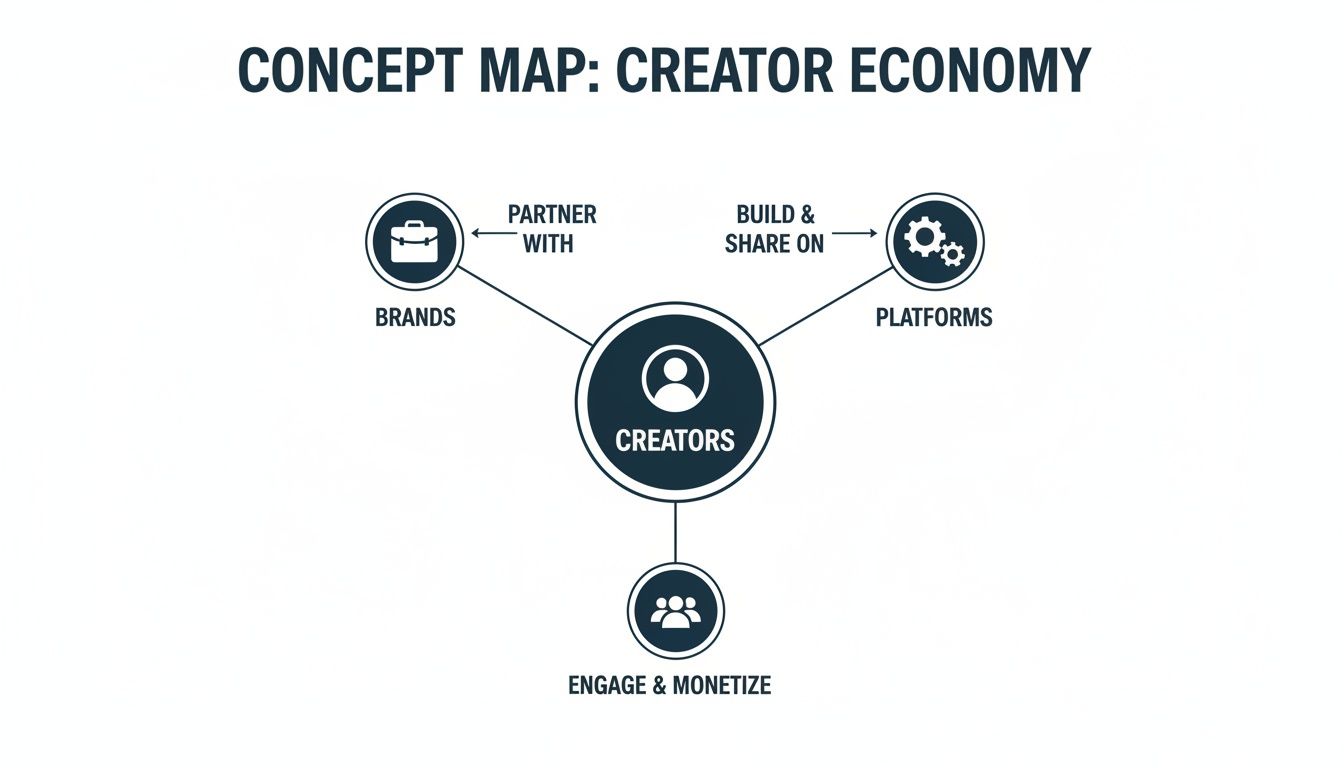
As you can see, creators are the central hub. The platforms are just the connective tissue—the essential infrastructure that lets them monetize their work and grow their business.
1. Monetization and Subscription Platforms
These platforms are all about one thing: helping creators get paid directly by their biggest supporters. The idea is simple—if your audience loves what you do, some of them will be happy to pay for it. This model gives creators a much more predictable income than, say, relying on ad revenue, which can be a total rollercoaster.
You’ve probably heard of platforms like Patreon or Substack. They let creators put exclusive content, early access, or community perks behind a paywall for subscribers. This builds a direct financial line between the creator and their audience, which creates a powerful sense of community and keeps fans coming back.
The real game-changer here is recurring revenue. For any creator trying to turn their passion into a sustainable career, that kind of stability is everything.
2. Creator Commerce and Merchandising Tools
Great creators don't just make content; they build brands. And a strong brand can sell everything from hoodies and coffee mugs to digital courses and e-books. Creator commerce tools are the platforms that make this happen, handling the nitty-gritty of e-commerce so the creator can focus on creating.
These platforms turn creators into true entrepreneurs.
- Shopify: The go-to for building a fully customized online store from the ground up.
- Spring (formerly Teespring): Perfect for print-on-demand merch, meaning creators don't have to worry about buying or storing inventory.
- Gumroad: A simple, effective platform for selling digital products like presets, templates, and guides.
With these tools, a creator’s influence becomes a powerful sales channel, opening up a huge revenue stream beyond sponsorships and ads.
3. Influencer Marketing Platforms
This is where brands and creators meet to do serious business. Influencer marketing platforms are the professional matchmaking services of the creator economy. They’re way more sophisticated than just sliding into someone's DMs—they’re the engines that make large-scale, measurable collaborations actually work.
For a brand, a platform like REACH Influencers is a goldmine. It’s a searchable database where you can filter creators by their niche, audience demographics, engagement rates, and more. It completely takes the guesswork out of finding the right person for a campaign. For example, a sustainable fashion brand used REACH Influencers to identify micro-influencers whose audiences showed high engagement with eco-friendly content, resulting in a 35% lift in conversions compared to previous campaigns.
But these platforms do more than just connect people. They're end-to-end management systems. They handle the contracts, content approvals, payments, and—most importantly—the performance tracking. Brands get to see a clear ROI on their investment.
If you want to go a layer deeper, you need to understand the world of user-generated content (UGC). Many brands use these platforms specifically to source authentic content from creators. You can learn more about how that works in our guide to UGC creator platforms.
4. Creator Service Marketplaces
Let's be real: most creators aren't a one-person production house. They need help with video editing, thumbnail design, or writing show notes. Creator service marketplaces are where they find that help, connecting them with skilled freelancers for specific jobs.
Platforms like Fiverr and Upwork have become indispensable. They allow a creator to:
- Hire an expert for a specific, one-off project.
- Scale up their content output without the cost of a full-time employee.
- Tap into specialized skills they don't have themselves.
Suddenly, a solo creator can operate with the power and efficiency of a much bigger team.
5. Link-in-Bio and Funnel Tools
Finally, we have the tools that solve one of the internet's most annoying little problems: the "one link" rule on social media profiles. Platforms like Linktree or Koji transform that single, precious link into a slick, customizable landing page. It's like a digital storefront for everything a creator is working on.
From this one spot, a follower can find a creator's YouTube channel, their online store, their latest blog post, or a link to a brand partner. It’s a simple but brilliant way to streamline a creator's online presence and make sure their audience can find everything they have to offer.
And the landscape is always evolving. To see where things are headed, it's worth checking out emerging concepts like Web3 quest platforms, which are finding new ways to redefine creator engagement.
How Brands Win with Creator Economy Platforms
So, you know what creator economy platforms are. But how do you actually put them to work for your brand? The real win for brands isn't just finding a new tool; it's unlocking a completely different way to grow, build trust, and connect with customers. It's about shifting your mindset from disruptive, old-school ads to collaborative, creator-led content.
Think of it as moving from interruption to invitation. Instead of yelling at potential customers, you're partnering with trusted voices who are already a welcome part of their daily conversations.
Build Genuine Audience Trust
Let's be honest: today’s consumers are over polished corporate advertising. They’re looking for something real, and they trust recommendations from actual people way more than they trust a slick ad. This is precisely where creators have the upper hand—they’ve already done the hard work of building a foundation of trust with their audience.
When a creator that a follower knows and respects recommends a product, it doesn't land like an ad. It feels like a genuine suggestion from a friend. That kind of authentic endorsement cuts through the marketing noise and builds brand credibility in a way traditional tactics just can't match.
This is especially critical for D2C brands whose entire business model relies on strong community bonds. According to Nielsen, 71% of consumers trust advertising opinions and product placements from influencers. When brands use platforms to find creators who truly vibe with their products, they can see significant jumps in engagement and conversions.
Drive Measurable Sales and ROI
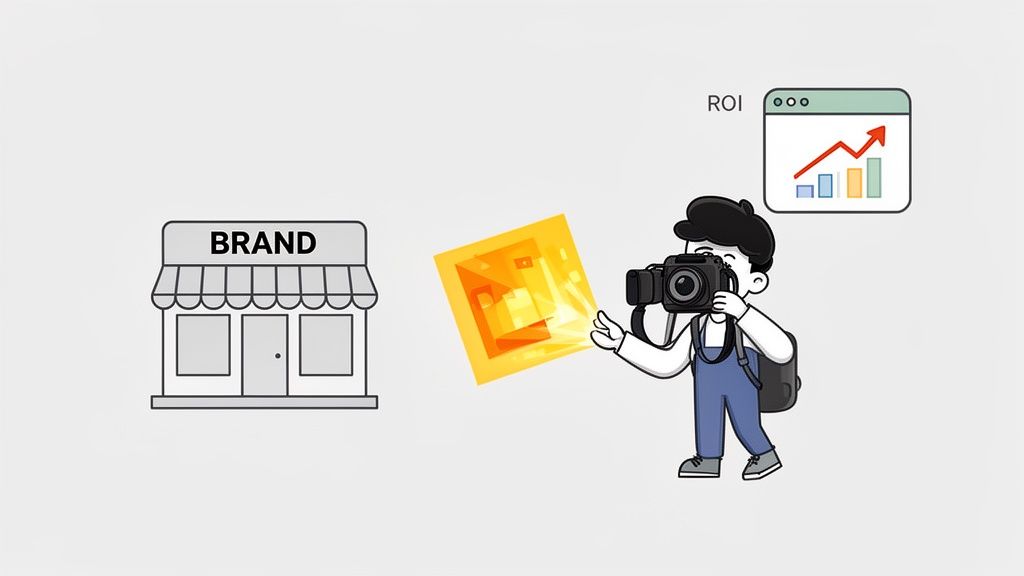
One of the oldest headaches in marketing is proving that your efforts actually made the cash register ring. Creator economy platforms are finally solving this, offering deep, actionable analytics that tie campaign activity directly to sales.
For example, a platform like REACH Influencers gives you a real-time dashboard tracking every single click, conversion, and sale that comes from a creator’s unique link. This means you can see exactly which partners are driving revenue and calculate a precise return on investment (ROI) for every dollar you spend.
It's time to move beyond vanity metrics like likes and follows and focus on what really moves the needle: business performance. Platforms with robust analytics empower you to tweak your campaigns based on hard sales data, ensuring your marketing budget is working as efficiently as possible.
This data-first approach takes influencer marketing out of the "hope it works" column and turns it into a predictable, scalable sales channel.
Generate Cost-Effective and Authentic Content
Let’s talk about content. Producing high-quality marketing assets is notoriously expensive and time-consuming. A single photoshoot can cost a fortune and might still miss the mark with your audience. Creator partnerships offer a brilliant, budget-friendly alternative.
By working with creators, you can tap into a constant flow of authentic, high-performing user-generated content (UGC) for a fraction of what it costs to produce in-house. Not only is this content more affordable, but it often performs better because it feels real and relatable.
Think about the perks of a creator-led content strategy:
- Scalability: You can work with dozens of creators at once, quickly building a diverse library of images, videos, and testimonials.
- Authenticity: The content is made by real people who use your product, providing powerful social proof that connects with new customers.
- Versatility: This treasure trove of UGC can be repurposed everywhere—from your social media ads and website to email campaigns and product pages.
Simplify Campaign Management and Payments
Anyone who has tried to manage creator relationships manually knows it's a logistical nightmare. You're drowning in outreach emails, wrestling with messy tracking spreadsheets, navigating complex contracts, and chasing down invoices. This administrative overload is a huge bottleneck for any brand trying to scale.
This is where the operational muscle of creator economy platforms really shines. An end-to-end solution like REACH Influencers pulls the entire workflow into one clean dashboard. You can discover new creators, handle all communications, approve content, process secure payments, and even manage tax compliance, all in one spot.
By automating all those tedious tasks, these platforms free up your team to focus on what matters: strategy and building great relationships with your creators. That kind of efficiency is non-negotiable for any brand that’s serious about winning in the creator economy.
How to Choose the Right Creator Economy Platform
With a sea of creator economy platforms out there, picking the right one can feel like trying to find a needle in a haystack. They all promise to make your life easier and your business bigger, but the truth is, the "best" platform is the one that actually fits your specific goals. This isn't just a simple purchase; it's a major business decision, so you need a smart way to sort through the options.
Think of it less like buying software and more like hiring a critical business partner. You need a platform that aligns with how you make money, gives you data you can actually use, and fits into how you already work. A rushed choice here can mean wasted money and a lot of missed opportunities down the road.
Define Your Primary Objective First
Before you even start looking at fancy features, you have to answer one simple question: What is the single most important thing you need this platform to do? Your answer to this will instantly cut through the noise and point you in the right direction.
Are you a brand trying to drive real sales from authentic creator collaborations? Then you should be laser-focused on an influencer marketing platform with rock-solid conversion tracking. Are you a creator who wants to build a reliable, recurring income stream? A subscription platform is where you should be looking.
Getting clear on your main goal is your compass. It keeps you from getting distracted by shiny features you’ll never use and guides you straight to the tools that will actually make a difference.
Evaluate Monetization and Payment Features
Once your goal is set, it’s time to talk about money. How a platform handles payments is where the rubber meets the road, directly impacting your bottom line and how smoothly things run. Don’t just glance at the pricing page—dig into the financial nuts and bolts.
Here are the financial details you absolutely need to check:
- Commission Rates and Fees: Get a clear picture of the pricing model. Is it a flat monthly subscription, a cut of every transaction, or something else? Do the math to see how those fees will impact your revenue now and as you scale.
- Payout Speed and Process: How quickly and reliably will you (or your creators) get paid? Slow or clunky payment systems can really strain relationships and create a ton of administrative headaches. Platforms that automate payouts ensure everyone is paid on time, every time.
- Currency and Global Support: If you’re working with people around the world, make sure the platform can handle different currencies and international payment rules. This is non-negotiable if you plan to scale globally without running into logistical nightmares.
Scrutinize Analytics and Reporting Capabilities
In the creator economy, data is everything. A platform without powerful analytics is like trying to drive with a blindfold on—you're moving, but you have no idea if you're headed in the right direction. You need data that gives you real insights, not just numbers that look good on a slide.
A great platform will offer deep, real-time reporting. For example, REACH Influencers gives brands a live dashboard to track everything from a creator’s audience demographics and engagement rates all the way to click-throughs and final sales. That’s the kind of detail you need to measure the true ROI of every single partnership.
Vague reports on "reach" or "impressions" just don't cut it anymore. Demand analytics that clearly connect creator activity to business results like leads, sales, and customer acquisition costs. That’s the only way to prove your strategy is working and make it even better over time.
Assess Integration and Scalability
The platform you choose doesn't work in isolation; it has to connect with the other tools you rely on every day. A platform with solid integration capabilities is a sign that it’s built to fit your workflow, not force you into a new one.
Before you sign anything, double-check that the platform can connect to your essential systems. To dive deeper, check out our complete guide to the best influencer marketing platforms and how they connect with other tools like your e-commerce store, CRM, or email marketing software.
And don't forget about scalability. The platform that works for you today needs to be able to handle your growth tomorrow. Make sure it can support more campaigns, more creators, and more data as your brand gets bigger. A platform that can't grow with you will eventually become a frustrating bottleneck.
To help you put all this into practice, we’ve created a simple checklist to use when you're comparing different platforms. Think of it as your scorecard for finding the perfect fit.
Platform Evaluation Checklist for Brands
| Feature to Evaluate | What to Look For | How REACH Influencers Excels |
|---|---|---|
| Creator Discovery | A large, searchable database with advanced filters (demographics, location, niche, engagement rates). | Access to over 200 million global creator profiles with AI-powered search to find the perfect match in minutes. |
| Campaign Management | Intuitive tools for briefing creators, tracking deliverables, and managing communication all in one place. | Centralized campaign dashboards, automated workflows, and direct in-platform messaging streamline the entire process. |
| Analytics & ROI Tracking | Real-time, granular data that connects creator activity directly to sales, sign-ups, and other KPIs. | Live dashboards provide deep insights into every metric, from engagement to conversion, proving ROI with clear data. |
| Payment Processing | Automated, secure, and timely global payment systems that handle different currencies and tax forms. | Fully automated global payouts ensure creators are paid correctly and on time, eliminating manual administrative work. |
| System Integrations | Seamless connections with your existing tech stack (e.g., Shopify, CRM, Google Analytics). | Native integrations with major e-commerce and marketing platforms for a unified, automated workflow. |
| Scalability & Support | The ability to handle growth in campaign volume and a responsive, expert support team. | Built for enterprise-level scale and backed by a dedicated team of influencer marketing experts for hands-on support. |
Using a structured approach like this checklist ensures you’re not just picking a platform with cool features, but one that is fundamentally aligned with your business goals and built to help you succeed in the long run.
Future Trends in the Creator Economy
The creator economy is anything but static. It's constantly moving, shaped by new tech and what brands and audiences expect next. To really succeed, you can't just master what works today; you have to see where things are headed.
One of the biggest game-changers on the horizon is Artificial Intelligence (AI). It's moved beyond a simple buzzword and is now a practical tool that’s fundamentally changing how creators operate and how brands connect with them.
The Rise of AI in Creator Discovery
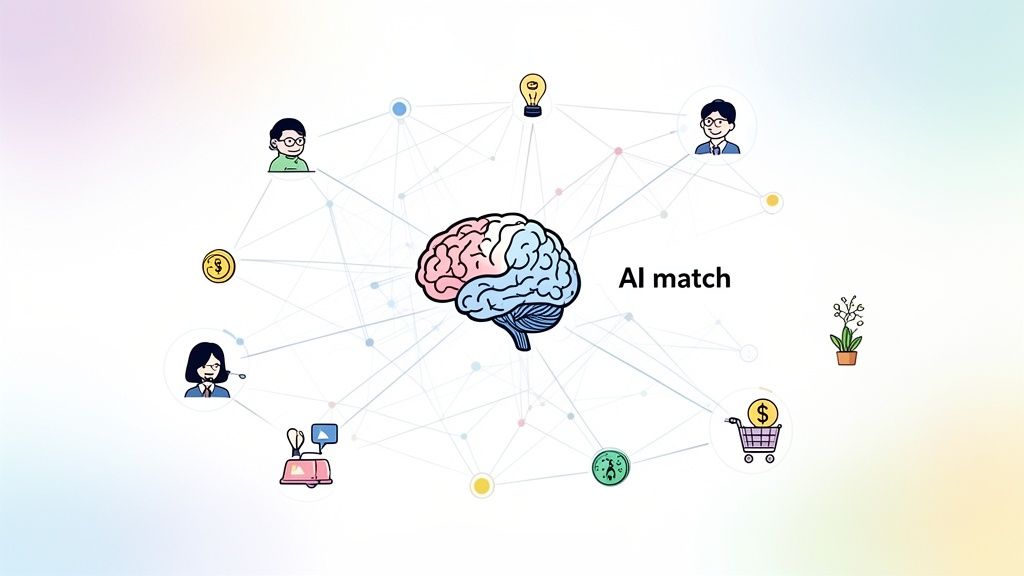
Remember the days of scrolling endlessly through hashtags to find a good brand partner? Those days are numbered. The smartest creator economy platforms now use AI to play matchmaker, and they do it with stunning accuracy. These algorithms dig into millions of data points—way beyond just follower counts—to pinpoint creators whose audience and style are a perfect match for a brand's goals.
For instance, a platform like REACH Influencers uses its AI to comb through a huge database of creators. It doesn't just look for high engagement; it flags partners whose values and audience profile genuinely align with the brand. This saves brands a ton of time and makes it far more likely that the partnership will feel authentic and successful.
AI-driven discovery is shifting the entire industry from a numbers game to a quality game. The focus is no longer on finding the biggest creators but on finding the right ones. It’s all about making sure every collaboration feels real and hits home with the audience.
The Growing Power of Niche Communities
Another huge shift we're seeing is the move away from chasing mega-influencers. Brands are catching on that real influence isn't just about having a massive audience—it's about the trust and connection within a dedicated community. This is where micro- and nano-influencers shine. Their followers are often far more engaged and loyal, which makes their recommendations incredibly persuasive.
This is all about authenticity. People are much more likely to trust a creator who is a true expert in a specific field, whether that's sustainable fashion or vintage video games. Creator platforms are responding by building better tools for brands to find and work with these smaller, high-impact creators efficiently.
To keep up with how fast things are changing, it’s a good idea to follow industry-specific blogs for the latest trends and insights.
Integrated Commerce and Financial Tools
Creators aren't just making content anymore; they're running full-blown businesses. The next generation of creator economy platforms gets this, and they're building sophisticated commerce and financial tools right into their systems. The goal is to give creators a single place to manage everything.
We’re starting to see platforms roll out features like:
- Integrated Storefronts: This lets creators sell merchandise or digital products directly on the platform, so their audience never has to leave.
- Automated Invoicing and Tax Tools: These tools handle the boring financial admin that can really slow a creator down.
- Banking and Lending Services: Some platforms are even offering financial products designed specifically for the unpredictable income of a creator.
This isn't just a minor upgrade. It turns a content platform into a complete business-in-a-box, giving creators the power to professionalize their work and build new revenue streams. The platforms that offer these all-in-one solutions are becoming essential partners for any serious creator.
Got Questions About Creator Economy Platforms?
Diving into the world of creator economy platforms can feel a bit overwhelming at first, but it's simpler than it looks. A lot of the same questions pop up for brands and creators who are just getting their feet wet.
Let's clear the air and answer some of the most common ones we hear. Think of this as your practical FAQ for getting started. We'll break down the key differences, talk about how payments work, and outline the first steps you can take.
How Do I Start as a Small Business?
The best advice for any small business is to start small and be deliberate. Don't try to be everywhere at once. The first step is to get crystal clear on your number one goal. Are you looking to get your brand name in front of a new audience, or do you need to generate sales right now?
Once you know your objective, pick one type of platform that helps you get there. For instance, if you're focused on building awareness and earning trust, an influencer marketing platform is a fantastic place to start. A great approach is to run a small pilot campaign on a platform like REACH Influencers. You can team up with a few micro-influencers in your niche to test the waters without a huge budget. This lets you learn what works, get some real data, and prove the concept before you go all in.
What Is the Difference Between Social Media and Creator Platforms?
This is a big one, and getting it right is key. Social media platforms—think Instagram, TikTok, or YouTube—are the stages. They’re built for sharing content and talking to an audience. It’s where creators perform and connect with their communities out in the open.
On the other hand, creator economy platforms are the business tools humming away behind the scenes. They handle the critical stuff that turns a creative hobby into a real business, like getting paid, managing brand deals, setting up an online store, and tracking how everything is performing.
Here's a simple way to think about it: If Instagram is the concert venue where the show happens, a platform like REACH Influencers is the booking agent, tour manager, and accountant rolled into one. It handles the deals, the logistics, and the money that makes the show possible.
Social media gives you the audience; creator platforms give you the professional setup to build a business around it.
How Do These Platforms Handle Payments Securely?
Trust is everything, which is why good platforms act as a neutral third party to protect both the brand and the creator. They use proven financial tools like escrow services, automatic invoicing, and built-in payment processors. This makes sure every dollar is handled securely, openly, and on time, taking the guesswork and risk out of direct deals.
For example, the payment system inside REACH Influencers is designed to manage the whole process, from handshake to payday. This includes things like:
- Automated Contracts: Locking in clear terms and what needs to be delivered upfront.
- Secure Payment Processing: Handling the money safely for everyone involved.
- Tax Compliance: Generating the necessary paperwork, like 1099s, when tax season rolls around.
By taking care of these details, the platform frees up brands and creators to focus on what they're actually good at—running great campaigns and making amazing content.
Can Brands Work with Creators Without a Platform?
You can, but it’s a tough road. Going it alone without a platform comes with a lot of headaches that most people underestimate, especially when you try to do it at scale. Without a dedicated system, you’re opening the door to problems that can quickly sink your entire effort.
Trying to manage partnerships directly means endless, time-consuming manual outreach, and finding the right creators feels like searching for a needle in a haystack. You’re also stuck with inconsistent contracts, huge payment risks, and no real way to track your return on investment (ROI). It's almost impossible to justify your marketing spend or figure out how to improve.
Creator economy platforms were literally built to solve these problems. They provide the structure, security, and efficiency you need to turn a few one-off partnerships into a powerful, predictable way to grow your business. For any brand that wants real, measurable results, using a platform isn’t just a nice-to-have; it’s a must.
Ready to stop guessing and start growing with the right creator economy platform? REACH Influencers provides the tools you need to discover the perfect creators, manage campaigns efficiently, and track your ROI with precision. Book a demo today and see how our platform can elevate your brand.