 Skip to content


Finding the right pet product influencers in the USA is about more than just chasing high follower counts. It’s about finding creators who build real trust and drive genuine engagement. You need a smart mix of targeted search strategies and the right tools—like the REACH Influencers platform—to pinpoint partners whose audiences mirror your ideal customer. For any brand trying to make a splash in the massive American pet market, this is the secret sauce: influencers who don't just have followers, but who can actually inspire them to buy. This guide provides a practical framework to help you master this process.
Table of Contents
- Why Pet Influencers Are Your Brand's Best Friend
- A Strategic Approach to Find Pet Product Influencers in the USA
- Looking Beyond the Follower Count: How to Properly Vet Influencers
- How to Craft an Outreach Message That Actually Gets a Reply
- Managing Campaigns and Measuring Real ROI
- Frequently Asked Questions
Why Pet Influencers Are Your Brand's Best Friend
The American pet market isn’t just a marketplace; it’s a passionate community where trust is everything. Pet parents look to other owners for advice on everything from kibble to carriers, and this is exactly where pet influencers come in. They aren't just broadcasting content—they're trusted voices in a dedicated niche.
Working with these creators instantly gives your brand a stamp of approval. When a well-loved dog or cat "recommends" your product, it doesn't feel like a pushy ad. It feels like a genuine tip from a friend, and that's a level of authenticity that traditional marketing can rarely achieve.
The Power of Authentic Connection
The bond between a pet influencer and their audience is uniquely emotional, unlike almost any other niche. People follow along because they're invested in the pet's daily life, its quirks, and its happiness. This builds an incredibly loyal and engaged community around the creator.
This dynamic is a golden opportunity for brands. When an influencer features your product, it's woven naturally into their story, making it feel completely organic. For example, pet influencers can offer honest and detailed dog car seat reviews, guiding their followers toward smart buying choices.
Unmatched Engagement in a Crowded Space
Let's talk numbers, because they tell a powerful story. Content centered around pets consistently blows other categories out of the water. Pet influencers in the USA are capturing attention like never before, with engagement rates that often put human influencers to shame.
Industry data shows pet influencers pull in an average 5% engagement rate, while most human creators are stuck around 1-3%. That’s not a small gap—it's a massive advantage for brands trying to get seen in the projected $157 billion U.S. pet industry.
Key Advantages of US Pet Influencer Partnerships
A quick look at why partnering with American pet influencers is a smart move for your brand's growth and audience connection.
| Key Advantage | Impact on Your Brand | Supporting Statistic |
|---|---|---|
| Authentic Trust | Your product is presented as a trusted recommendation, not just another ad. | 82% of consumers are highly likely to follow a recommendation from an influencer. |
| Higher Engagement | Your message gets more visibility, likes, comments, and shares. | Pet influencers average a 5% engagement rate, more than double that of most human influencers. |
| Niche Targeting | You can reach specific pet owner demographics (e.g., city dog owners, multi-cat households). | Influencer marketing can deliver 11x higher ROI than traditional advertising. |
| Emotional Connection | Your brand becomes part of a pet's story, building positive emotional associations. | 95% of pet owners consider their pets to be family members, creating a strong emotional market. |
By tapping into these advantages, you're not just marketing a product; you're building a genuine connection with a passionate and ready-to-buy audience.
A partnership with a pet influencer isn't just about reach; it's about accessing a pre-built community that is highly attentive, emotionally connected, and primed to trust the recommendations they see.
This high level of interaction means your message is far more likely to land, stick, and convert. A platform like REACH Influencers is designed to help you tap into this, offering powerful tools to find pet product influencers in the USA with proven engagement. It turns your search from a guessing game into a data-driven strategy.
To truly grasp the potential here, it's worth exploring the full benefits of influencer marketing and how this approach can reshape your brand's growth. By focusing on creators with this kind of dedicated following, you can build lasting customer loyalty and drive serious sales.
A Strategic Approach to Find Pet Product Influencers in the USA
If your influencer search strategy still revolves around scrolling through hashtags, it's time for an upgrade. To find US-based pet product influencers who can actually drive sales, you need to get more strategic. That means moving beyond basic searches and adopting a smarter approach that blends clever manual tactics with powerful discovery platforms.
Think of it this way: you can sift through a river with a pan, or you can use specialized equipment. Both might yield gold, but one is far more efficient.
The Old-School Manual Dig
Let's start with the digital equivalent of panning for gold: Boolean search on Google. It’s surprisingly effective if you know what you’re doing. By using simple operators, you can tell Google exactly what to look for, cutting through a ton of noise.
Imagine you're launching a new line of organic dog treats. You could try a search string like this:
("corgi influencer" OR "dog mom blogger") AND ("california" OR "west coast")
This little command is powerful. It tells Google to find pages that have either "corgi influencer" or "dog mom blogger," but they must also mention "California" or "west coast." Suddenly, you’ve filtered out tons of irrelevant creators.
The catch? It's still a massive time sink. You’ll spend hours clicking through results, vetting profiles one by one, and making educated guesses about their audience and engagement. It works, but it doesn't scale.
The Smarter Way: Precision Targeting with Platforms
This is where a dedicated influencer marketing platform becomes a game-changer. Tools like REACH Influencers are built from the ground up to solve this exact problem. They take the days you'd spend on manual research and condense them into a few minutes of highly focused searching.
Let's go back to our organic dog treat brand. Instead of endless Google searches, they can jump into a discovery engine and pinpoint their perfect partners with surgical precision.
Here’s how that might look in practice:
- Pet & Breed: They'd start by filtering for "Dog" and then specifying the "Corgi" breed.
- Location: Next, they could target the entire state of "California" or get even more specific with cities like Los Angeles or San Diego. (If you’re running a broader campaign, you can learn more about how to find local influencers across different regions.)
- Audience Data: This is where it gets interesting. They can filter for influencers whose audience is primarily aged 25-45, making sure their message hits the right demographic.
- Performance Metrics: Finally, they can set a minimum engagement rate to weed out any accounts with passive or fake followers, ensuring they only connect with creators who have a genuinely active community.
In just a few clicks, the platform serves up a curated list of Corgi influencers in California whose audience perfectly matches the brand’s target customer. Every profile is backed by real analytics, so there's no more guesswork.
From Discovery to Conversion
This initial discovery phase is everything. Getting it right sets the stage for a campaign that actually performs. The whole process is a straightforward journey from finding the right people to getting real results.
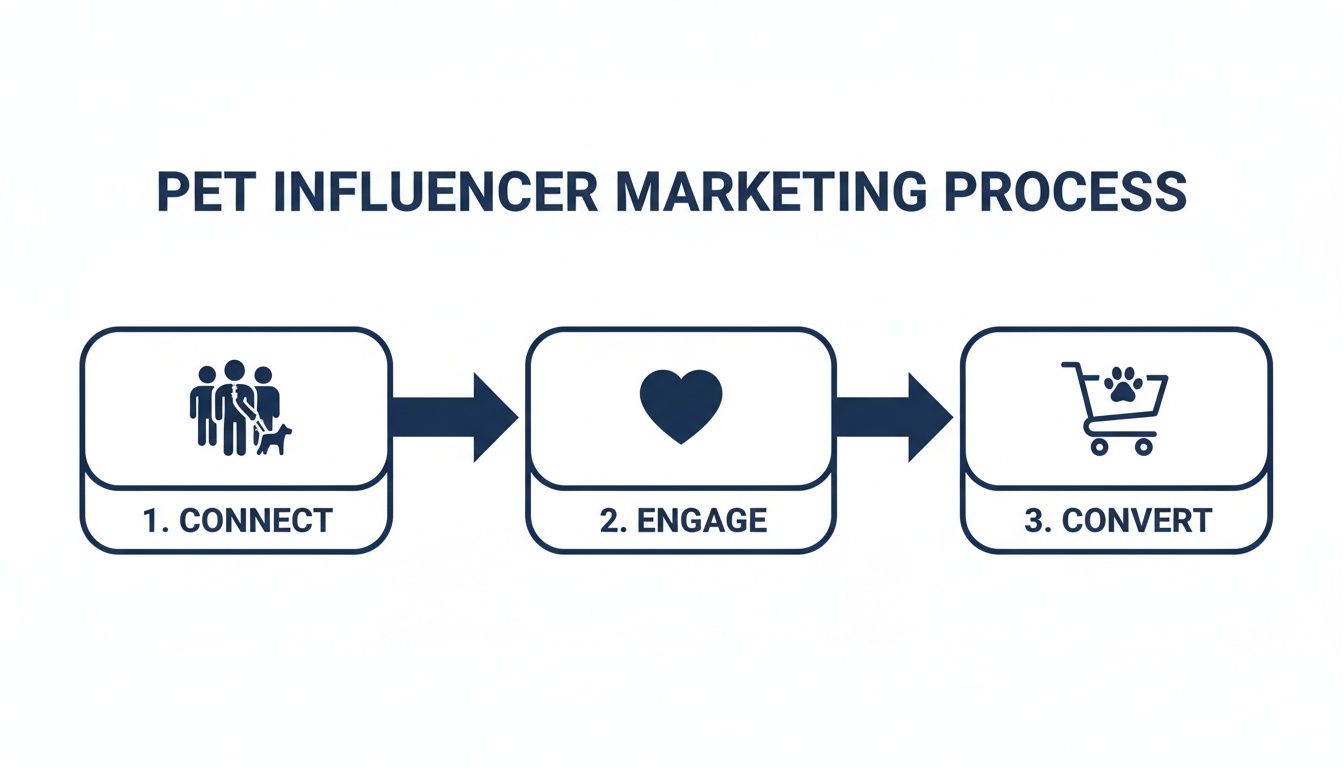
As you can see, a successful campaign always starts with a targeted connection. That connection is then built upon through authentic engagement, which ultimately leads to the conversions you’re looking for.
By taking a data-driven approach from day one, you avoid wasting your budget on influencers whose audience is a poor match for your product. You're not just throwing money at the wall; you're making a calculated investment.
This level of precision is simply out of reach with manual methods alone. It’s the difference between saying, "let's find some dog accounts," and saying, "let's find Corgi influencers in Southern California with a primarily millennial female audience and an engagement rate over 4%."
The difference in the final outcome is massive. A strategic approach ensures you find pet product influencers who aren't just popular—they're the right partners to help you hit your goals.
Looking Beyond the Follower Count: How to Properly Vet Influencers
Alright, you’ve got a list of potential creators. This is where the real work begins. It’s easy to get impressed by a huge follower count, but that number is often just a vanity metric. To find US-based pet influencers who actually drive results, you have to dig much deeper.
Honestly, this vetting stage is the most important part of the whole process. It's how you separate the creators with inflated numbers from the genuine partners who can connect with your audience. I'd take a small, highly engaged community over a massive, passive one any day of the week.
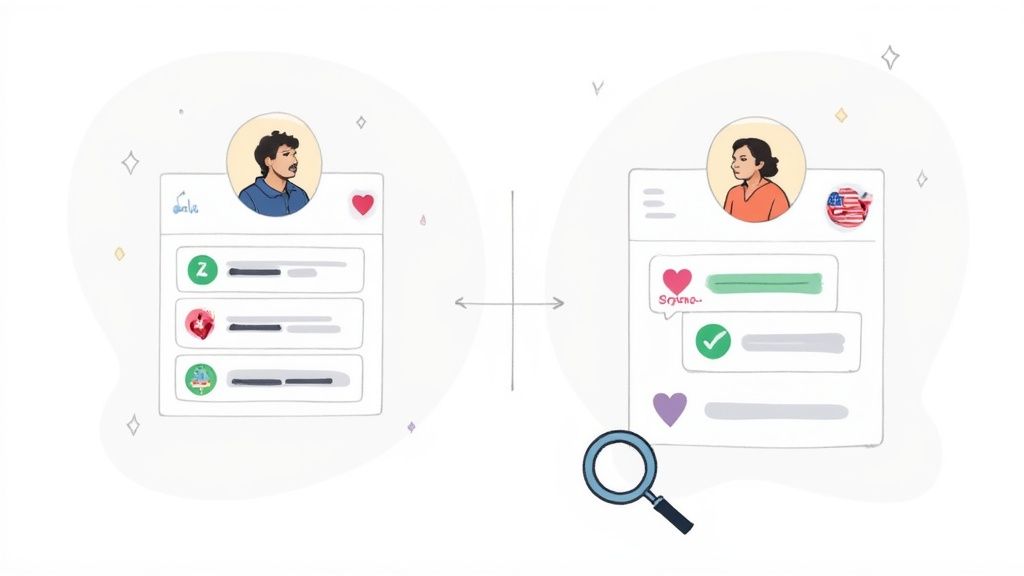
Is Their Audience Real?
The first thing I always look for is inauthentic engagement. A massive follower count paired with shallow, low-quality interaction is a huge red flag. You need to put on your detective hat and spend some real time in their comments section.
Are the comments just a bunch of "So cute!" or a string of fire emojis from the same few accounts? Or are people asking real questions and sharing their own stories? Authentic communities have real conversations.
Fake followers are another major problem. These are just bot accounts that add zero value and completely mess up an influencer's performance data. You can't possibly check every follower by hand, which is why you need a tool for this. REACH Influencers automates this kind of analysis, but you can also use a standalone tool to get a quick read. For a more detailed guide on this, check out our walkthrough on using a fake follower checker to protect your budget.
Engagement Quality Trumps Quantity
An engagement rate is a good starting point, but the quality of that engagement is what truly matters. From my experience, a micro-influencer with 15,000 followers and an 8% engagement rate is almost always a better bet than a macro-influencer with 200,000 followers and a 1.5% rate.
Think about it like this:
- Influencer A (The Macro): They have 200,000 followers. Posts get tons of likes, but the comments are generic. Their audience is all over the map, with followers in dozens of different countries.
- Influencer B (The Micro): They have 15,000 followers. Their posts generate detailed discussions. You see followers asking specific questions about the products, sharing stories about their own pets, and tagging friends who might be interested.
Influencer B's audience isn't just scrolling by—they're tuned in and participating. This is the kind of community that trusts recommendations and actually buys things. When you find a pet influencer with this kind of loyal following, your potential ROI goes through the roof.
Making Sure It's a True Brand and Audience Fit
Your final vetting checks should confirm two things: brand value alignment and audience demographic alignment. Start by looking at their past brand deals. Are they working with brands that match your quality and vibe, or are they just promoting anything that comes with a paycheck? A creator who is selective about partnerships has far more credibility.
Next, you have to verify that their audience is your target customer. This is where a platform like REACH Influencers is a game-changer. Its analytics dashboards let you see exactly who is following them, taking all the guesswork out of the equation.
You can instantly confirm critical details like:
- Geographic Location: Is a high percentage of their audience actually in the USA?
- Age & Gender: Do their followers match your ideal customer (e.g., millennial women, ages 25-40)?
- Interests: Does their audience also show a strong interest in things like pet wellness, hiking, or sustainable living?
This data-driven approach means you're not just hoping their audience is a good fit. You're confirming it with hard numbers before you even think about sending an outreach email.
This level of detailed vetting ensures you're not just finding a popular pet account. You’re finding a true partner whose influence will translate into real business results.
How to Craft an Outreach Message That Actually Gets a Reply
So you've done the hard work and found a handful of amazing pet influencers you’d love to work with. Now comes the moment of truth: making contact.
This is where so many brands drop the ball. A generic, copy-pasted DM is the fastest way to get your message ignored, or worse, deleted. To get a reply, your outreach needs to prove you’ve done your homework and that you see the creator as a potential partner, not just another name on a spreadsheet.
The Anatomy of a Winning First Impression
Think of your first message as a friendly conversation starter, not a cold sales pitch. It should be warm, respectful, and get to the point without feeling pushy or transactional.
The secret? Personalization. It needs to be crystal clear that you're not just blasting the same message to a hundred other accounts. The best way to do this is to mention something specific you genuinely loved about their content.
Instead of this:
- The Bad: "We like your page and want to work with you."
Try something that shows you've actually been paying attention:
- The Good: "We absolutely loved the video of Charlie playing with his new puzzle toy last week! His focused determination was hilarious and so relatable."
See the difference? That simple, specific compliment instantly shows you’ve invested a minute to understand their content, making them far more likely to keep reading.
Get to the Point: What’s in It for Them?
After your personalized opener, it's time to explain why you're reaching out. This is your value proposition—the "what's in it for them?" part. Be direct about what you’re offering and, more importantly, why you think their pet and their audience are the perfect fit.
Let’s continue with our example:
"Because Charlie is such a smart boy, we think he'd go nuts for our new interactive feeder. We’d love to send one over for him to try. We really believe your audience of engaged dog owners would find his experience with it super valuable."
This approach hits all the right notes. It compliments their pet, connects your product directly to the pet's known personality, and frames the whole thing as a benefit to their audience. It’s a win-win-win.
Talking Money and Sealing the Deal
Once you get a positive response, the conversation will naturally shift toward compensation. This is a critical part of building a professional relationship, so approach it with transparency and respect.
The earning power of U.S. pet influencers is no joke. Fair pay is the bedrock of any good, long-term partnership. Top-tier dog influencers can command $10,000 or more for a single collaboration, while accounts in the 10K-50K follower range often earn $200-$500 per sponsored post. The market is there because the influence is real: over 70% of Gen Z pet owners follow "petfluencers," and their willingness to buy an endorsed product jumps by over 40%. You can dig deeper into how pet influencer earnings drive trust and sales to understand the market better.
Be ready to discuss a few different payment models to find what works for everyone.
Common Compensation Structures:
- Flat Fee: A set payment for a specific list of deliverables (e.g., one Reel and three Stories). This is the cleanest, most common, and usually preferred model for established creators.
- Affiliate Commission: The influencer earns a percentage of sales from a unique discount code or tracking link. This is a great performance-based option for driving direct sales, sometimes offered in addition to a smaller flat fee.
- Product-Only (Gifting): Honestly, this is only a viable option for brand-new or very small accounts (nano-influencers). While it can be useful for getting your product out there initially, you can’t expect established creators to work for free.
Come to the table with a clear budget and a real understanding of the value they bring. Remember, you're not just buying a post—you're investing in a creative partner who can bring your brand to life for a passionate, engaged audience.
Managing Campaigns and Measuring Real ROI
You've found the perfect pet influencer. That's a huge milestone, but the real work is just getting started. Now it's time to shift gears from finding partners to driving performance—turning all that great creative content into real, tangible results for your business.
Effective campaign management all starts with a crystal-clear brief. Think of it as your roadmap, outlining the core goals, key messages, and specific deliverables. But here's a pro tip: the best briefs provide direction without killing creativity. You have to give influencers the freedom to weave your brand into their world authentically. If you micromanage every detail, you'll end up with content that feels stiff, forced, and totally disconnected from the audience you’re trying to reach.
The goal is always collaboration, not control. A smooth, efficient content approval process is a lifesaver here. It helps ensure the final posts are on-brand while still feeling like they belong on the influencer's feed. Striking that balance is everything.
Moving Beyond Vanity Metrics
Likes and comments feel good, but they don’t directly grow your business. To really know if your influencer partnerships are paying off, you need to look past these "vanity metrics" and focus on Key Performance Indicators (KPIs) tied to your bottom line.
This means getting comfortable with a few essential tracking tools:
- UTM Codes: These are simple little tags you add to a URL. Give each influencer their own unique UTM link, and you'll know exactly how many people clicked through from their post to your website. No guesswork needed.
- Conversion Rates: This is the big one. What percentage of those click-throughs resulted in a desired action, like making a purchase? This metric tells you if an influencer can actually motivate their audience to buy.
- Cost Per Acquisition (CPA): How much did it cost to get each new customer through the campaign? You calculate this by dividing the total campaign cost by the number of conversions. It's the ultimate measure of efficiency.
These data points paint a vivid picture of your return on investment. You’ll quickly see which partnerships are the most profitable and where your budget will work hardest in future campaigns.
Centralizing Your Campaign Data
Trying to track these KPIs across a dozen different influencers using spreadsheets is a recipe for a headache. The data gets scattered, things get missed, and you can't see the big picture. This is precisely why a centralized platform is a game-changer for any brand serious about finding and managing pet product influencers in the USA.
Tools like REACH Influencers are designed to solve this problem. They pull all of your campaign information into a single, easy-to-digest dashboard. You get a live, at-a-glance view of how everything is performing.
This dashboard, for instance, shows how you can track metrics like Click-Through Rate (CTR) and Cost Per Acquisition (CPA) all in one spot.
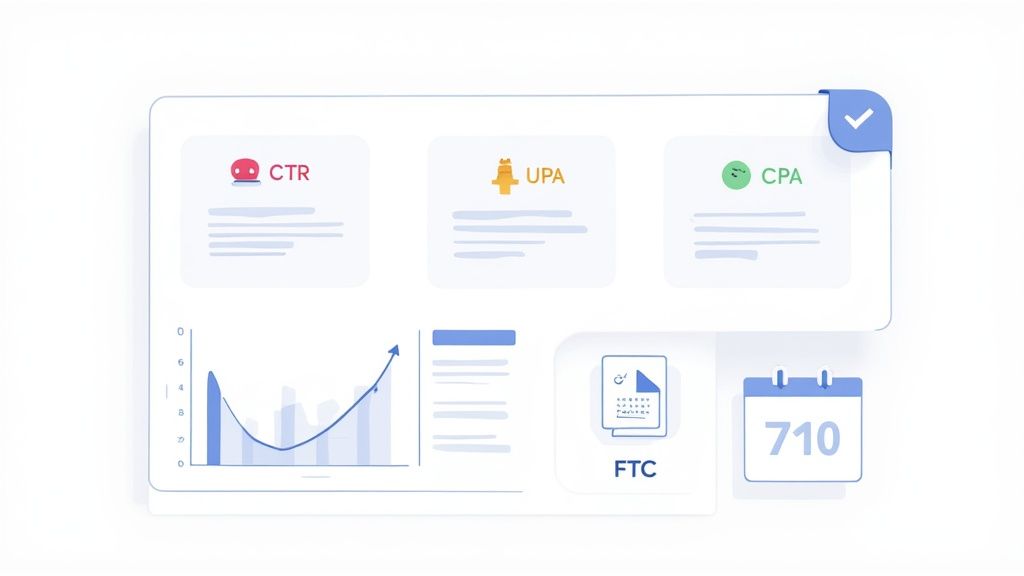
Having this kind of consolidated view lets you make quick, data-backed decisions to optimize your campaigns for the best possible ROI. It turns measurement from a tedious chore into a powerful strategic advantage.
Key Takeaway: An influencer's true value isn't their follower count—it's their ability to drive measurable action. Focus on tracking clicks, conversions, and CPA to understand your actual ROI.
This data-driven approach is absolutely critical in the competitive American pet market. Cat influencers, for example, have become a massive force. Nala, a Siamese-tabby mix with 4.5 million Instagram followers, is so popular she even launched her own pet food line with Walmart. With 40% of social media users actively looking for pet content, the potential impact is enormous. You can discover more about the rise of top cat influencers and see just how much market power they hold.
Staying Compliant with FTC Guidelines
Finally, let's talk rules. A successful campaign is a compliant one. The Federal Trade Commission (FTC) has very clear guidelines about disclosing sponsored content, and it's not just the influencer's job to follow them. Your brand can be held responsible for violations, too.
Thankfully, the rules are straightforward. The influencer must clearly and conspicuously disclose their paid relationship with your brand. This usually means including a hashtag like #ad or #sponsored right at the beginning of the post's caption. This simple act of transparency builds trust with consumers and, just as importantly, keeps your brand out of legal hot water.
Got Questions? We've Got Answers
Diving into pet influencer marketing always brings up a few questions. Here are the answers to the most common ones we hear from brands trying to find their perfect influencer match in the US.
What's a Better Way to Find Pet Influencers Than Just Scrolling Through Hashtags?
Manually searching hashtags on Instagram or TikTok is an option, but honestly, it's a huge time sink and you're just guessing. You have no real data to back up your choices.
The most efficient, data-backed approach is using a dedicated influencer marketing platform. A tool like REACH Influencers is built for this. Its filters let you get incredibly specific—targeting US-based creators by location, pet type, audience demographics, and, most importantly, verified engagement rates. It cuts through the noise and connects you with the right partners from the get-go.
How Much Do US Pet Influencers Actually Cost?
There's no single price tag. A pet influencer's rate depends on everything from their follower count and engagement to the specific work you're asking them to do.
But to give you a ballpark idea, here's what you can generally expect:
- Micro-influencers (10k-50k followers): These creators usually charge between $200 and $500 for a sponsored post. They often have incredibly dedicated, niche audiences that really trust them.
- Mid-tier creators (100k-500k followers): You're looking at anywhere from $1,000 to $3,000 per post. This tier offers a great mix of solid reach and genuine engagement.
- Celebrity pets (millions of followers): The big dogs (and cats!) often start at $10,000 and go up from there for a single collaboration, offering massive brand exposure.
Your budget should always be tied to an influencer's actual performance data and what you're trying to achieve. Don't be afraid to explore different payment models, like a flat fee, affiliate commissions, or a hybrid of the two.
Remember, a good partnership is built on fair compensation. Investing properly in creators who deliver real value is the secret to building strong, long-term relationships that pay off.
What Campaign Metrics Actually Matter?
It’s tempting to chase vanity metrics like follower counts and likes, but those numbers don't pay the bills. To understand if your campaign is actually working, you have to track the KPIs that are directly tied to your business goals.
Your focus should be on metrics that show action and impact your bottom line. Look at these three first:
- Click-Through Rate (CTR): What percentage of people are actually clicking the link in the influencer’s post or bio? Use unique UTM-tagged links for every creator so you can track this with precision.
- Conversion Rate: Of those clicks, how many led to a sale or another key action, like a newsletter sign-up? This tells you if the traffic is high-quality.
- Return on Investment (ROI): This is the ultimate measure of success. By tracking sales from unique discount codes and affiliate links, you can calculate exactly how much revenue the campaign brought in for every dollar you spent.
Zeroing in on these KPIs will give you a crystal-clear picture of whether you managed to find pet product influencers USA who can truly drive business growth.
Do I Really Need a Formal Contract with a Pet Influencer?
Yes. One hundred percent. A formal contract isn't just a suggestion—it's essential for protecting both your brand and the creator. It gets rid of any guesswork and makes sure everyone is on the same page from day one.
A solid contract should clearly spell out all the important details.
Must-Haves for Your Contract:
- Scope of Work: Be specific. How many posts, Reels, or Stories are required?
- Content Usage Rights: Define how and where your brand is allowed to reuse the influencer's content.
- Campaign Timeline: Set firm deadlines for content drafts, revisions, and go-live dates.
- Payment Terms: Lay out the compensation amount, when they get paid, and how.
- FTC Disclosure Rules: Require the use of clear disclosures like #ad or #sponsored to stay compliant with legal guidelines.
Using a platform that helps you generate and manage contracts can make this whole process much less of a headache.
Ready to stop guessing and start building partnerships that work? REACH gives you the discovery tools, real-time analytics, and campaign management features you need to find US-based pet product influencers who deliver real results. Discover your perfect influencer match today.