

FTC compliance in influencer marketing is all about being upfront and honest with your audience. It simply means making sure everyone knows when a post is sponsored because of a material connection between a brand and an influencer. This connection isn't just about cash. It covers any relationship—from a paycheck to a free lipstick—that could influence how people see an endorsement.
Navigating these rules can be complex, but getting it right is crucial for protecting your brand and building trust. This is where a dedicated platform like REACH Influencers becomes invaluable. By integrating compliance checks directly into your campaign workflow, REACH helps automate disclosure management, streamline content approvals, and maintain perfect records, turning a potential legal headache into a seamless part of your strategy.
This guide will walk you through everything you need to know about FTC compliance for influencer marketing, from understanding the rules to implementing them flawlessly in your campaigns.
Table of Contents
- Why FTC Compliance Influencer Marketing Matters
- The Real Cost of Ignoring FTC Guidelines
- How to Nail Disclosures on Every Social Platform
- How REACH Influencers Takes the Headaches Out of FTC Compliance
- Your Go-To FTC Compliance Checklist for Every Campaign
- What's Next for Influencer Marketing Rules?
- Common Questions About FTC Influencer Rules
Why FTC Compliance Influencer Marketing Matters
Diving into influencer marketing can feel a bit like the Wild West, but there's a clear sheriff in town: the Federal Trade Commission (FTC). The heart of their rules is one simple, powerful idea: honesty. It's all about making sure that when an influencer recommends a product, their audience knows the full story behind that recommendation.
Think about a TV commercial or a full-page magazine ad. You know instantly it's an advertisement. The FTC wants that same gut-level clarity on social media. When someone is scrolling through Instagram or TikTok, they deserve to know if a post is a genuine, off-the-cuff recommendation or a paid-for endorsement.
Defining the "Material Connection"
The need for a disclosure all comes down to what the FTC calls a “material connection.” This is a fancy term for any relationship that might make a consumer think twice about how credible an endorsement is. A lot of people mistakenly believe this only means getting paid money.
In reality, a material connection is much broader and includes pretty much anything of value:
- Money: This is the most straightforward one—getting paid for posts, stories, or videos.
- Free Stuff: Getting a product for free, even with no strings attached, still counts.
- Trips and Perks: Brands covering travel, hotels, or event tickets.
- Contest Entries: Being entered into a giveaway or contest for posting.
- Personal Ties: A family member or close friend owns or works for the brand.
- Business Relationships: Being an employee or having a business partnership outside of the campaign.
The bottom line? If an influencer gets anything of value from a brand they're promoting, it's almost certainly a material connection that needs to be disclosed.
To make this crystal clear, here’s a quick summary of the core FTC requirements.
Key FTC Disclosure Requirements at a Glance
| Requirement | What It Means for Your Campaign | Why It's Non-Negotiable |
|---|---|---|
| Clear & Conspicuous | The disclosure must be impossible to miss. No hiding it in a sea of hashtags or behind a "see more" button. It needs to be seen at a glance. | If the audience has to hunt for the disclosure, it’s not compliant. The goal is immediate transparency, not a scavenger hunt. |
| Easy to Understand | Use simple language. Hashtags like #ad, #sponsored, or #BrandPartner are great. Vague terms like #collab or #spon are not. | Ambiguity defeats the purpose. The FTC wants language that everyone, regardless of their social media savvy, will understand instantly. |
| Placed Correctly | The disclosure must appear with the endorsement. For videos, it should be in the video itself (vocally and visually) and in the description. For images, it should be in the first few lines of the caption. | A disclosure buried at the end of a long caption or only appearing in a temporary Story sticker might be missed. It has to be part of the core message. |
These aren't just suggestions; they are the rules of the road for any brand working with creators.
The Role of Transparency and Trust
Ignoring these guidelines isn't just a legal gamble—it's a direct hit to the trust you have with your audience. Consumers today are smart. They can spot a disingenuous post from a mile away, and discovering a hidden partnership can poison their view of both the influencer and the brand.
Building a successful influencer marketing strategy rests on a foundation of trust. Clear, upfront disclosures are not just a legal requirement; they are a sign of respect for the audience, reinforcing the authenticity that makes influencer content so powerful in the first place.
Getting compliance right from the start protects your brand, builds better relationships with creators, and earns long-term trust with customers. For a deeper look at the rules, our FTC guidelines for influencers guide breaks it all down.
This is where a platform can make a huge difference. Tools like REACH Influencers help you manage these moving parts by building compliance checks right into your workflow. By automating disclosure reminders and tracking content approvals, you can stay focused on the creative side, knowing the legal details are buttoned up.
The Real Cost of Ignoring FTC Guidelines
https://www.youtube.com/embed/lbfyQ9Q3AgQ
It’s tempting to think of FTC guidelines as just another box to check, but ignoring them is one of the quickest ways to derail your marketing efforts. This isn't just a minor slip-up; it's a serious business risk with consequences that sting long after the campaign ends.
The most obvious penalty is financial. We're not talking about a small slap on the wrist, either. The FTC hands out substantial fines designed to make brands and influencers sit up and pay attention to FTC compliance influencer marketing.
The FTC can—and will—fine both brands and creators for every single deceptive post. Those fines add up fast, especially if you're running a campaign with multiple influencers or have a history of non-compliant posts. And make no mistake, the buck stops with the brand. The FTC has been crystal clear that its enforcement actions will almost always target the advertiser first.
You can't just plead ignorance. Claiming you didn't know an influencer forgot to add a disclosure won't get you off the hook. It's your job as the brand to educate your partners, keep an eye on their posts, and make sure everyone is playing by the rules.
The Financial Stakes Keep Getting Higher
The influencer world moves fast, and the FTC is working hard to keep up. That means the financial risks for getting it wrong are only getting bigger.
For 2025, the Federal Trade Commission (FTC) jacked up the maximum civil penalty to $51,744 per violation. This wasn't a small adjustment; it was a major hike meant to send a clear message: transparency in advertising is non-negotiable.
Think about that for a second. A single non-compliant Instagram post could trigger a fine big enough to wipe out a small business's entire annual marketing budget. Now, imagine a campaign with ten, twenty, or fifty influencers. The potential financial hit is staggering.
This isn't just a scare tactic. The FTC has a track record of bringing the hammer down. In one well-known case, a company was ordered to pay a $15.2 million judgment for making bogus health claims and failing to make sure its influencers disclosed their connection to the brand. Cases like these are a harsh reminder that the penalties are very real and can be crippling.
Beyond the Fines: The Damage to Your Brand's Reputation
As scary as a multi-million dollar fine sounds, the long-term damage to your brand’s reputation can be even worse. In today’s market, trust is everything. Once you lose it, winning it back is a long, uphill battle. An FTC enforcement action is a public relations nightmare that will follow your brand for years.
This loss of trust shows up in a few painful ways:
- Your Credibility Evaporates: Suddenly, your audience starts to second-guess everything you do, not just your influencer posts.
- Customers Turn on You: People who once loved your brand feel betrayed. This can lead to a firestorm of negative comments, bad press, and even boycotts.
- Top Talent Walks Away: The best influencers are protective of their own reputations. They won't risk partnering with a brand known for shady practices.
Negative reviews are an unavoidable consequence when customers feel misled. Knowing how to handle them is key, and this guide on how to remove negative reviews can help you manage that fallout.
At the end of the day, the cost of an FTC violation goes way beyond the money you pay in fines. It hits your sales, your customer loyalty, and your brand's ability to grow. Being proactive about compliance isn't just about following rules—it's smart business.
How to Nail Disclosures on Every Social Platform
Think of a disclosure as a crucial piece of communication, not just a legal checkbox. A one-size-fits-all approach simply doesn't work. What’s crystal clear on an Instagram post can get completely lost in a fast-scrolling TikTok feed, leaving you open to compliance headaches.
The trick is to think about how people actually use each platform. The core goal—transparency—is always the same, but how you achieve it has to fit the medium. It's about moving beyond just dropping an #ad and really considering the user's experience.
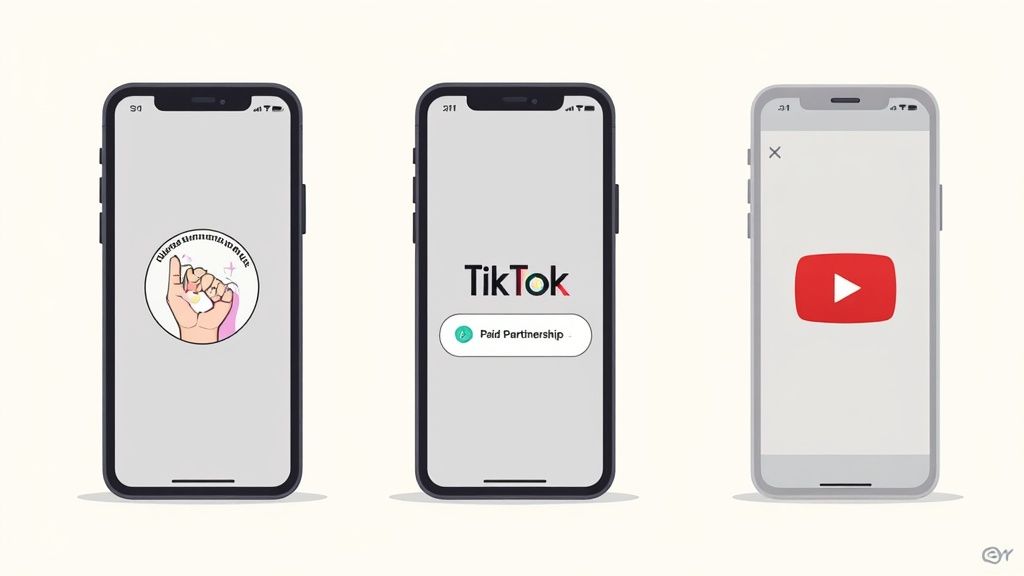
Instagram Disclosures for Posts Stories and Reels
Instagram is a multi-format beast, and your disclosure strategy needs to be just as flexible. One of the most common mistakes brands make is thinking the platform’s built-in tools are enough. They’re a great start, but they aren't the whole story.
For feed posts and Reels, your disclosure has to be unmissable. That means placing it right at the top of the caption, above the "more" button. If someone has to tap to expand the text just to see your disclosure, you’ve already failed the FTC’s test.
The FTC’s "clear and conspicuous" standard means a disclosure must be easily seen and understood at a glance. Hiding it at the end of a long caption or in a sea of hashtags fails this test every time.
Here's how to get it right on Instagram:
- Use the "Paid Partnership" Label: This is your first line of defense. It clearly flags the content at the top of a post, Story, or Reel, making the brand relationship obvious from the get-go.
- Add a Clear Hashtag: Don't stop there. Back up the platform label with a straightforward disclosure like #ad or #sponsored at the very beginning of your caption.
- Handle Stories with Care: On Stories, the "Paid Partnership" label is a must. You should also add a text sticker with
#adthat’s big enough to read and placed where it won’t get covered up by the reply bar or other interface elements.
Getting these details right is crucial, especially for more involved campaigns. For a deeper dive into these features, check out our complete guide on how to collab on Instagram.
TikTok Disclosures for a Fast-Paced Feed
TikTok moves at lightning speed. Users are swiping from one video to the next, often with the sound on, and a caption-only disclosure is almost guaranteed to be missed.
To stay compliant, the disclosure has to be part of the video itself. This is non-negotiable. You have to assume that many viewers will never even glance at the caption.
Good vs. Bad TikTok Disclosure Examples:
| Good Disclosure (Compliant) | Bad Disclosure (Non-Compliant) |
|---|---|
| Uses TikTok's "Paid partnership" toggle, making the relationship clear. | Relies only on a vague hashtag like #collab in the caption. |
Includes a clear text overlay like #Ad that is visible for most of the video. |
Buries #sponsored at the very end of a long list of hashtags. |
| The creator verbally mentions the sponsorship early in the video. | Makes no mention of the partnership within the video content itself. |
Your safest bet is a multi-layered approach. Use TikTok's built-in toggle, slap a persistent text overlay on the video, and have the creator mention the partnership out loud. That way, it's virtually impossible to miss.
YouTube Disclosures for Long-Form Content
With its longer formats, YouTube requires more than a single disclosure. Viewers often skip ahead or only watch the first couple of minutes, so burying a disclosure in the description box and calling it a day just won't cut it.
A compliant YouTube video weaves the partnership disclosure into the entire viewing experience, ensuring the audience gets the message no matter how they watch.
Here’s your checklist for bulletproof YouTube disclosures:
- Use YouTube's Paid Promotion Feature: When uploading, always check the "My video contains paid promotion" box. This automatically adds a clear disclosure overlay at the start of the video.
- Make a Verbal Disclosure: The creator needs to say, out loud, that the video is sponsored, and they should do it within the first minute. A simple "This video is sponsored by [Brand]" works perfectly.
- Include a Visual Cue: While the creator is making their verbal disclosure, add a text overlay on the screen that says something like "Sponsored by [Brand]."
- Add It to the Description Box: Finally, place a clear disclosure like "This video is sponsored by [Brand]. #ad" at the very top of the description box—before any other text or links.
By tailoring your disclosures to each platform, you show respect for your audience and build a protective layer around your brand. This attention to detail is what separates amateur influencer marketing from a truly professional program.
How REACH Influencers Takes the Headaches Out of FTC Compliance
Let's be honest: trying to keep up with disclosure rules, platform-specific quirks, and the legal side of influencer marketing can feel like a full-time job. The constant monitoring and record-keeping needed for FTC compliance influencer marketing can easily distract you from the creative work of building great partnerships. This is exactly where a dedicated platform can step in, turning a huge legal burden into a simple, automated process.
Forget juggling spreadsheets, endless email threads, and manual spot-checks. An influencer marketing platform brings your entire compliance workflow under one roof. Think of it as your command center, with the rules built right into every step of your campaign. It’s a proactive way to work that not only cuts down on risk but also builds a transparent partnership from the get-go.
Automating Disclosures and Contracts
The easiest way to make sure everyone is compliant is to build it right into the deal from the start. With REACH Influencers, we bake the disclosure requirements directly into our campaign briefs and influencer contracts. This way, everyone is on the same page with clear, legally-sound expectations before any content is even created.
Creators see the exact disclosure language they need to use and where it needs to go—like putting #ad in the first two lines of a caption—as a core part of their deliverables. This completely removes the guesswork and eliminates any "oops, I forgot" moments later on.
When you embed compliance directly into the contract, you're no longer just chasing down mistakes after they happen. You're proactively managing the partnership. The rules aren't just guidelines anymore; they're a locked-in part of the agreement.
This automated step ensures that every influencer you work with, from seasoned veterans to up-and-comers, has precisely what they need to post fully compliant content every single time.
Streamlining Content Approval Workflows
Even with the best instructions, you still need to verify everything. Chasing down draft links through DMs and emails is a recipe for disaster. It's clunky, inefficient, and makes it way too easy for non-compliant content to slip through the cracks and go live.
REACH Influencers fixes this problem with a structured approval workflow. We designed our platform features to give you total control and keep your campaigns on the right track.
As you can see, managers can review, comment on, and approve or reject every single post from one central dashboard. You can double-check for correct hashtag placement, make sure the "Paid Partnership" tool is switched on, and confirm that any claims made in the content are accurate. This gives you a final, crucial checkpoint to catch any compliance issues before they become a public headache.
Creating an Indisputable Audit Trail
Picture this: the FTC asks questions about a campaign you ran a year ago. How do you prove you did everything right? It's nearly impossible if your records are a chaotic mess of emails and DMs. Solid record-keeping is your best defense in any potential investigation.
REACH Influencers automatically creates a secure and complete audit trail for every single campaign. Our platform archives everything you could possibly need:
- All Communications: Every message between your team and the influencer is saved.
- Signed Contracts: The final agreements spelling out disclosure rules are kept on file.
- Approved Content: The final versions of every post, story, and video are archived.
- Performance Data: All the metrics are linked directly back to each piece of content.
This creates a bulletproof record that proves you took all the right steps to educate your partners and enforce the rules. If a problem ever comes up, you have a complete, time-stamped history ready to go. By handling these critical tasks, the right influencer marketing platforms don't just save you time—they offer crucial protection for your brand's reputation and your bottom line.
Your Go-To FTC Compliance Checklist for Every Campaign
Let's be honest: navigating FTC compliance for influencer marketing can feel like a maze. But it doesn't have to be. The secret is to stop thinking of compliance as a one-time hurdle and start treating it as a series of simple checkpoints throughout your campaign.
By building a repeatable process, you turn a potential headache into a proactive strategy that protects your brand from start to finish. We’ve broken it down by campaign phase so you can easily follow along and make sure nothing slips through the cracks.
This workflow shows how to keep your briefs, approvals, and records in perfect order for every single campaign.
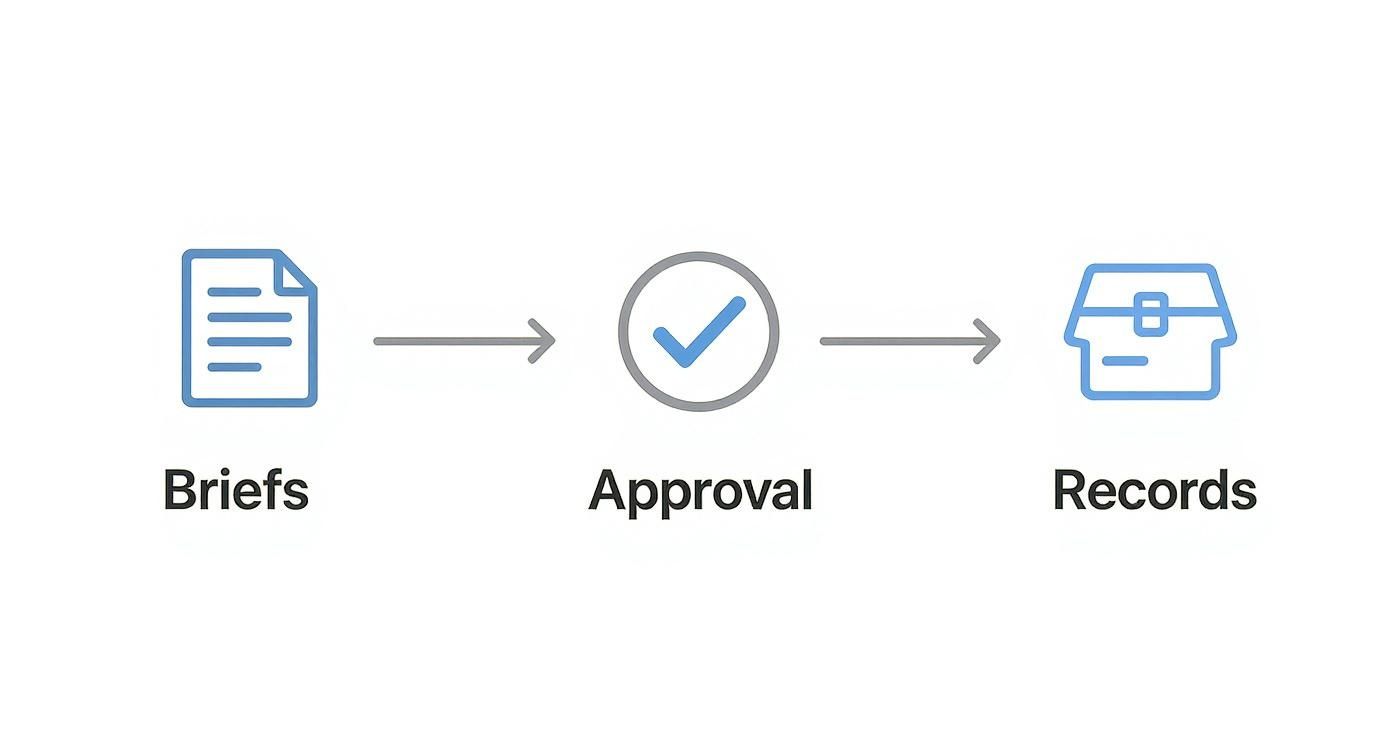
Think of it this way: every piece of content starts with a clear brief, gets a documented green light, and is then safely archived. This creates a rock-solid paper trail if the FTC ever comes knocking.
Pre-Campaign Phase: Building a Strong Foundation
A compliant campaign begins long before a single post goes live. This is where you lay the groundwork by setting crystal-clear expectations and locking in a legally sound partnership.
- Do Your Homework on Influencers: Take a look at a creator's past work. Do they consistently use clear disclosures like #ad, or do they try to bury vague terms like #collab in a sea of hashtags? A quick check can save you from partnering with someone who has a history of cutting corners.
- Create an Ironclad Contract: Your agreement needs to spell out the influencer's responsibility to follow FTC guidelines. Get specific. Dictate the exact hashtags they must use (like #sponsored or #ad) and where they must place them (for example, "within the first two lines of the caption").
- Write a No-Nonsense Creative Brief: Don't just mention disclosures—show them. Your brief should include visual examples of what compliant posts look like versus non-compliant ones for each platform you're using. This leaves zero room for misinterpretation.
Campaign Launch and Execution Phase: Guide and Review
Once the campaign is underway, your role shifts to education and oversight. It’s your chance to reinforce the rules and catch any potential missteps early on.
One of the biggest mistakes brands make is just assuming influencers know the rules inside and out. A simple one-page "Compliance Cheat Sheet" included with the brief is an incredibly effective way to keep your standards top of mind.
- Schedule a Quick Kick-Off Call: A brief chat can do wonders. It’s a great way to stress the importance of disclosure and give the influencer a chance to ask questions. This confirms everyone is on the same page.
- Make Draft Submissions Mandatory: This is non-negotiable for managing risk. Require every piece of content—posts, Stories, videos, and all accompanying text—to be submitted for your review before it gets published.
Content Review and Approval Phase: The Final Checkpoint
This is your most critical moment. Before any content sees the light of day, it needs a thorough compliance check.
- Scrutinize Disclosure Placement: Is the disclosure impossible to miss? For Instagram, is #ad visible without having to tap "see more"? For videos on TikTok or YouTube, is there both a verbal and a clear text overlay? Don't settle for anything less than obvious.
- Fact-Check the Claims: Make sure the influencer's endorsement is rooted in their actual experience. They can't make up wild claims about a product's benefits that you can't substantiate.
- Give Clear, Actionable Feedback: If something isn't right, don't be vague. Tell them exactly what needs to change and why. For example, "Great post, but please move #ad to the very first line of the caption to meet FTC rules."
Post-Campaign and Archiving Phase: Document Everything
Your job isn't done when the post goes live. Proper record-keeping is your ultimate safety net if the FTC ever raises questions down the line.
- Archive Everything: Save final, published versions of every post, story, and video. Also, keep copies of all contracts, briefs, and important email communications. This creates the audit trail you need to prove you did your due diligence.
- Do One Last Spot-Check: After a week or so, quickly review the live posts again. You need to make sure the disclosures weren't edited out or moved after you gave your final approval.
To make sure your whole team is prepared to follow these steps, it’s worth investing in proper education. Incorporating actionable compliance training best practices can make all the difference in building a truly compliant culture.
What's Next for Influencer Marketing Rules?
If there's one thing we know about influencer marketing, it's that it never stays the same for long. The same goes for the rules. As new platforms and technologies pop up, brands need to keep an eye on what's coming down the pipeline for FTC compliance influencer marketing. It’s not just about playing by today's rules; it's about getting ready for tomorrow so you can stay ahead of the curve.
One big shift we're already seeing is the FTC putting sensitive industries under a microscope. If you're in health, wellness, finance, or marketing to kids, expect intense scrutiny. Any vague claims or buried disclosures in these sectors are a huge red flag for regulators who are trying to shield consumers from bad information.
New Tech, New Rules
The rulebook is getting thicker as technology throws new curveballs at us. There are some fresh legal questions on the horizon that will absolutely shape the future of compliance.
Here are a few key areas I’m watching closely:
- AI Influencers: Virtual influencers are no longer science fiction, but the rules for disclosure are very real. Brands have to be upfront about the fact that these personas are AI-generated to avoid misleading people.
- The Metaverse: How do you disclose a paid partnership in a virtual world like Roblox or Decentraland? It's still a bit of a gray area, but the fundamental need for transparency isn't going anywhere. We'll need to figure out how to make disclosures clear and obvious in these new, immersive spaces.
- More Consumer Lawsuits: It's not just the FTC you have to worry about anymore. We're seeing a huge spike in class-action lawsuits aimed at brands and influencers. In the first half of 2025 alone, consumers filed several class-action suits citing deceptive marketing that violated FTC Endorsement Guides and state laws. You can explore more about these trends and legal precedents to see just how much is changing.
The core principle isn't changing: you have to disclose a material connection. The real test will be figuring out how to apply that timeless rule to brand-new ways of creating and sharing content.
By thinking about these changes now, you can build a compliance strategy that's built to last. Being proactive means your marketing can stay effective and ethical, no matter what new tech comes our way.
Common Questions About FTC Influencer Rules
Even with the official guidelines in hand, running a real-world campaign brings up plenty of tricky situations. It's one thing to read the rules, and another to apply them when you're in the trenches.
Let's clear up a few of the most common questions we hear from brands and creators. Getting these right will give you the confidence to build campaigns that are not only powerful but also play by the rules.
Do I Need to Disclose Gifted Products?
Yes, you absolutely do. This is a huge point of confusion. Many people think that if no money is exchanged, a disclosure isn't necessary. But from the FTC's perspective, a free product is a form of payment—it creates a "material connection" between the brand and the creator.
If a brand sends you a free product and you post about it, your audience has a right to know. A simple, upfront tag like #gifted or a clear line like, "Thanks to [Brand] for sending this over!" is all it takes to stay transparent.
Is Using Instagram’s “Paid Partnership” Label Enough?
Platform-specific tools like Instagram's "Paid Partnership" label are a fantastic start, but they shouldn't be your only method of disclosure. Think of them as one layer of protection, not the whole suit of armor.
Relying solely on a platform's built-in tool can be a gamble. To be safe, always add your own clear, unmistakable disclosure—like #ad or #sponsored—right at the beginning of your caption.
This belt-and-suspenders approach ensures that even if someone overlooks the platform's native label, your own disclosure is impossible to miss.
What if an Influencer Forgets to Add a Disclosure?
Ultimately, the buck stops with the brand. The FTC has been very clear that while they can pursue action against an influencer, their primary focus is almost always on the advertiser footing the bill.
This is exactly why having a solid workflow is non-negotiable. An influencer marketing platform like REACH helps you build a safety net. By setting up mandatory content approvals, you create a documented paper trail showing you did your due diligence and reviewed every post for proper disclosure before it went live. That kind of proactive management is your best defense.
Ready to stop worrying about compliance and start building amazing campaigns? REACH provides the tools you need to automate disclosures, streamline approvals, and maintain perfect records. Discover how our platform can simplify your FTC compliance influencer marketing today!
{
  "@context": "https://schema.org",
  "@type": "BlogPosting",
  "mainEntityOfPage": {
    "@type": "WebPage",
    "@id": "https://reach-influencers.com/ftc-compliance-influencer-marketing/"
  },
  "headline": "Your Ultimate Guide to FTC Compliance in Influencer Marketing",
  "description": "Master FTC compliance for influencer marketing with this ultimate guide. Learn the rules, avoid fines, and build trust with clear disclosures on every platform.",
  "image": "https://cdn.outrank.so/64cdc0e0-2a54-4cd9-a45d-c4196c5e1d4e/ebacd576-5917-4127-a546-e0c76580dbc9/ftc-compliance-influencer-marketing-honesty-incentives.jpg",
  "author": {
    "@type": "Organization",
    "name": "REACH Influencers"
  },
  "publisher": {
    "@type": "Organization",
    "name": "REACH Influencers",
    "logo": {
      "@type": "ImageObject",
      "url": "https://reach-influencers.com/wp-content/uploads/2023/11/reach-logo-new.svg"
    }
  },
  "datePublished": "2024-05-21",
  "dateModified": "2024-05-21",
  "faqPage": {
    "@type": "FAQPage",
    "mainEntity": [{
      "@type": "Question",
      "name": "Do I Need to Disclose Gifted Products?",
      "acceptedAnswer": {
        "@type": "Answer",
        "text": "Yes, absolutely. The FTC considers a free product a form of payment that creates a 'material connection.' If a brand sends you a free product and you post about it, you must disclose this relationship with a tag like #gifted or a clear statement."
      }
    },{
      "@type": "Question",
      "name": "Is Using Instagram’s “Paid Partnership” Label Enough for FTC Compliance?",
      "acceptedAnswer": {
        "@type": "Answer",
        "text": "While platform tools like Instagram's 'Paid Partnership' label are a great start, they should not be your only method of disclosure. To be fully compliant, you should also add your own clear disclosure, such as #ad or #sponsored, at the beginning of your caption to ensure transparency."
      }
    },{
      "@type": "Question",
      "name": "What if an Influencer Forgets to Add a Disclosure?",
      "acceptedAnswer": {
        "@type": "Answer",
        "text": "The brand is ultimately responsible. The FTC holds advertisers accountable for their influencers' compliance. This is why using an influencer marketing platform with mandatory content approval workflows is crucial. It creates a documented process showing you reviewed every post for proper disclosure before it went live, which is your best defense."
      }
    }]
  }
}