 Skip to content

Thinking about becoming a brand ambassador? It's more than just a title—it’s about forging a real, long-term connection with a company you genuinely love. You get to create authentic content, start meaningful conversations with your community, and truly live the brand's values. Essentially, you turn your passion into a real partnership.
What a Brand Ambassador Actually Does
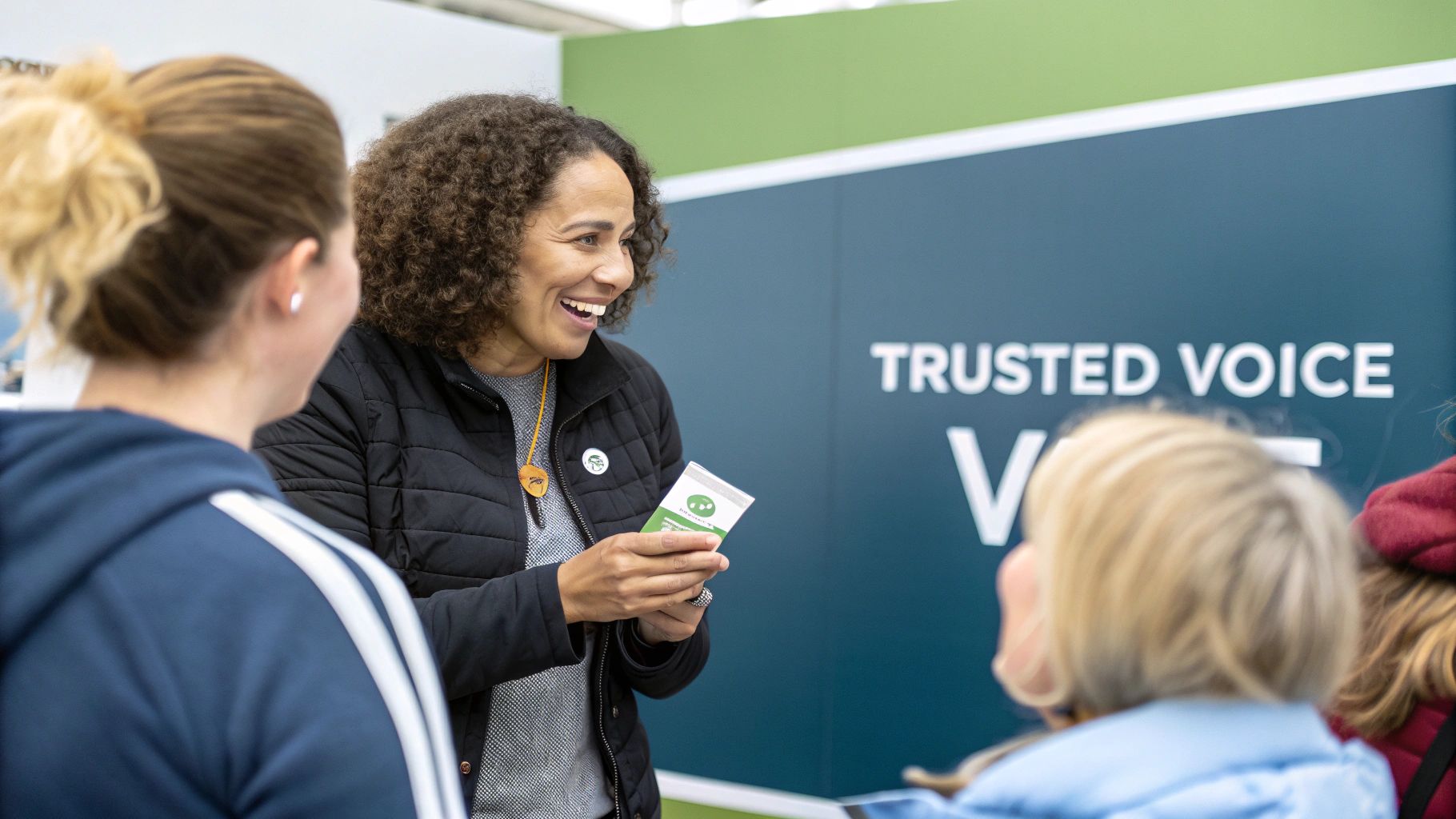
Before you start pitching brands, it’s important to get a clear picture of what this role is really about. It's a world away from just getting free stuff and posting a few photos. This isn't a quick, one-off transaction; it's a strategic partnership that relies on trust and shared values.
At its heart, a brand ambassador is the human face of a company. You’re not a walking advertisement. You are a trusted voice, a storyteller, and the crucial link between a brand and the people who might love it. That responsibility comes with a few key duties that make up the day-to-day work.
Your Day-to-Day Mission
So, what will you actually be doing? Your main tasks usually fall into these buckets:
- Creating Real, Honest Content: You'll be making posts, videos, and stories that naturally show how a brand fits into your life. The goal isn't a hard sell; it's to showcase the product in a way that feels completely genuine.
- Connecting With Your Community: This means answering questions from followers about the products, sparking discussions, and building positive feelings about the brand within your circle.
- Giving Brands a Direct Line: You're a valuable source of feedback. Companies count on your insights about how products are working, what customers are saying, and what's happening in the market.
- Living the Brand's Values: You represent the company's mission and ethics, both online and in your daily life. Your words and actions are a direct reflection of the brand.
This setup is different from other promotional gigs. For instance, affiliate marketing often runs on a commission-based model. If you're curious about that, this Affiliate Marketing for Beginners Guide is a great starting point. Brand ambassadorship, on the other hand, is built on a much deeper, more integrated relationship.
A true brand ambassador doesn't just promote a product; they live the brand's story. It's the difference between reading a script and sharing a personal experience your audience can trust.
Not Your Typical Influencer Gig
It's easy to blur the line between a brand ambassador and a traditional influencer, but the real distinction comes down to commitment and time. To make this crystal clear, let's break down the key differences.
Brand Ambassador vs. Traditional Influencer Key Differences
| Aspect | Brand Ambassador | Traditional Influencer |
|---|---|---|
| Relationship | Long-term, ongoing partnership | Short-term, often one-off campaign |
| Commitment | Deeper integration with brand values | Project-based, transactional |
| Goal | Build lasting brand loyalty and trust | Generate immediate awareness or sales |
| Content Focus | Authentic, lifestyle integration | Specific, campaign-focused posts |
| Exclusivity | Often exclusive to the brand in its category | May work with competing brands |
Ultimately, a one-time influencer campaign might be a single sponsored post. An ambassadorship is a long-term collaboration, often lasting for months or even years. If you want to dig deeper into the specifics, check out our full guide on https://reach-influencers.com/what-is-a-brand-ambassador/ for more detail. This long-haul approach is what allows you to build a powerful, authentic story and create a stronger bond with both the brand and your audience.
Build Your Foundation: Find Your Niche and Brand

Before you even think about sending your first pitch, the real work begins. Your journey to becoming a brand ambassador starts with building a solid foundation—your personal brand. Companies aren't just looking for big follower counts; they're looking to partner with real people who have a clear point of view and an authentic voice.
Think of your personal brand as your promise to your audience. It’s what tells them what to expect from you, from your content to your recommendations. In a crowded digital space, a strong brand is what makes you memorable and, most importantly, trustworthy.
Pinpoint Your Passion Niche
First things first, you need to find your niche. This isn't about jumping on the latest trend. It’s about finding that sweet spot where your genuine passion meets your expertise. Authenticity is your most valuable asset, and trust me, you can't fake genuine enthusiasm for long.
What do you already love to talk about, even when no one's paying you? Is it sustainable fashion, home espresso setups, productivity hacks for freelancers, or beginner-friendly fitness routines? The more specific you get, the better. A tight niche helps you build a loyal community that hangs on your every word.
When your niche is truly your passion, creating content stops feeling like work. It just becomes a natural part of who you are. That genuine excitement is what attracts both followers and brands.
For instance, instead of being a generic "travel" creator, you could focus on "budget-friendly solo travel for women." Rather than just "tech," you could become the go-to expert on "smart home gadgets for apartment dwellers." This kind of focus instantly positions you as an authority.
Define Your Personal Brand Identity
Once your niche is locked in, it's time to shape your brand identity. This goes way beyond a cool logo or a pretty color palette. It’s about the very core of who you are as a creator—the values you stand for and the feeling you leave with your audience.
To get to the heart of it, ask yourself a few questions:
- What's my mission? What problem am I trying to solve for my audience? What change do I want to inspire?
- What are my core values? Write down 3-5 things that are non-negotiable for you. Maybe it's honesty, sustainability, inclusivity, or innovation.
- What's my unique voice? Are you the funny, sarcastic friend? The encouraging, educational mentor? Or the calm, minimalist guide? Whatever it is, keep it consistent.
Having this clarity is everything. When a brand is scouting for partners, they’re looking for this exact alignment. A company selling rugged outdoor gear isn't going to partner with someone whose brand is all about luxury and comfort—they'll seek out the creator who lives and breathes adventure and resilience.
Optimize Your Social Media Profiles
Think of your social media profiles as your digital storefront. Within seconds, a visitor should know exactly who you are and what you're about. If your profile is confusing or unprofessional, you’re losing opportunities before they even start.
Your bio is prime real estate. In just a few lines, you need to nail your niche, your value proposition (what’s in it for your followers?), and add a dash of personality. Be sure to sprinkle in keywords that brands in your space might be searching for.
Next up, establish your content pillars. These are the 3-5 core topics you’ll talk about over and over again. For a fitness ambassador, these pillars might look something like this:
- Workout Tutorials: Simple, effective exercise demos.
- Healthy Recipes: Quick and nutritious meal ideas.
- Mindset & Motivation: Personal stories and words of encouragement.
These pillars give your feed a predictable rhythm and a cohesive feel. More importantly, this structure makes it incredibly easy for a potential brand partner to see exactly where their product fits into your world, turning your profile into a powerful, silent pitch.
Create Content That Brands and Audiences Actually Love
Think of your content as your entire professional identity wrapped up in one package. It’s your portfolio, your resume, and your first handshake. It's truly the most powerful tool you have for pulling in both a loyal audience and the brands you’re dying to work with. When you create high-quality, authentic content, you’re showing brands that you know how to connect with people. And that connection is the core of what a great brand ambassador does.
This isn’t about just hopping on the latest viral trend or mindlessly churning out posts. It's about carefully crafting a body of work that tells a clear story about who you are, what you stand for, and who you're talking to. Every single post, story, and video should feel like it belongs to your personal brand.
You Have to Embrace Short-Form Video
If you’re going to master one thing, make it short-form video. Seriously. Platforms like TikTok and Instagram Reels are no longer just for fun—they’re essential for building real relationships with an audience. Video lets your personality shine through, shows products in a real-world context, and tells a story in a way a static photo just can't compete with.
The data backs this up, too. Over 50% of consumers say they prefer watching videos from brands, and a staggering 83% of companies see a positive ROI from their video marketing. This is all part of a bigger shift where genuine, long-term ambassadorships are becoming far more valuable than one-off influencer posts that audiences have learned to ignore. You can dig deeper into these top brand ambassador program trends to see just how critical video has become.
The goal here isn't to create a Hollywood-level production. It's to create something genuine and relatable enough to stop someone's scroll. Your content should feel less like an ad and more like a conversation with a trusted friend.
So, where do you start? Begin by creating videos that directly tie into your main content themes. For instance, if you're a sustainable fashion creator, you could film:
- A "Get Ready With Me" video that features your favorite thrifted pieces or items from ethical brands.
- A quick tutorial showing how to mend a small tear in a shirt instead of tossing it.
- A behind-the-scenes look at a local artisan market, highlighting makers who use sustainable practices.
Each of these ideas reinforces what you're all about and gives your audience real value. That's what makes your content a magnet for both followers and the eco-conscious brands you want to partner with.
Plan Your Content to Stay Consistent
Consistency is what builds momentum and trust. If you post sporadically, it’s almost impossible to stay on anyone’s radar. This is why a content calendar is your absolute best friend. It doesn't have to be fancy—a simple spreadsheet or even a note in your phone works perfectly.
Planning your content just a couple of weeks out helps you keep up a steady drumbeat of posts that are thoughtful and on-brand. When you're trying to keep up with multiple platforms, an AI Post Generator can be a huge help for brainstorming ideas or drafting captions, which frees you up to focus on the creative side of things.
A simple calendar might look something like this:
| Day | Content Pillar | Post Idea | Platform | Status |
|---|---|---|---|---|
| Monday | Mindset/Motivation | Share a personal story about overcoming a challenge. | Instagram Story/Reel | Planned |
| Wednesday | Healthy Recipes | Film a 30-second recipe video. | TikTok & Reels | To Film |
| Friday | Workout Tutorials | Post a carousel with a new workout routine. | Instagram Post | Drafted |
Having a structure like this makes sure you're hitting all your key topics regularly, which goes a long way in establishing you as an expert in your space.
Actually Talk to Your Community
Your work isn’t over once you hit the "publish" button. In fact, the most important part is just beginning. The real magic happens in the comments, DMs, and replies. Engaging with your audience is non-negotiable if you're serious about being a brand ambassador—it’s how you turn passive followers into a real community.
When someone takes the time to comment, always write back. And don't just say "thanks!" Ask a follow-up question to keep the conversation going. Listening to what your audience has to say is not only great for building loyalty, but it also gives you a goldmine of ideas for what to create next.
Trust me, brands are watching this. A high comment count looks good, but a feed filled with genuine back-and-forth conversations looks even better. It’s undeniable proof that you have an engaged, trusting audience—and that's exactly what brands are looking to invest in.
Find and Pitch Your Dream Brands
You’ve built a solid personal brand and have a portfolio brimming with authentic content. Fantastic. But now it’s time to shift gears from waiting for opportunities to actively chasing them down. This is where you grab the wheel and start making connections with the brands you truly love and respect.
Sitting back and waiting for DMs to roll in is a slow-burn strategy, and frankly, it rarely works. The brand ambassadors who land the best deals are the ones who go out and get them. They identify companies that mirror their own values and aren't afraid to be the one to say "hello" first. Marketing managers notice that kind of initiative—it shows you’re genuinely passionate, not just looking for a freebie.
Where to Find Brand Ambassador Opportunities
So, where are these dream partnerships hiding? They aren't always advertised on a company's homepage. You'll need to put on your detective hat and do a little digging to find the right fits.
A great way to start is by simply making a "dream list" of 10-15 brands you already use and can’t stop talking about. Your authenticity is your biggest selling point, and it’s a whole lot easier to be genuine when you’re already a paying customer.
Beyond the products in your pantry or closet, here are a few other goldmines for opportunities:
- Influencer Marketing Platforms: Sites like REACH are literally built to connect creators with brands that are actively looking for partners. Think of them as a direct line to companies with a budget ready to go.
- Social Media Deep Dives: Get on Instagram and TikTok and search for specific hashtags. Try things like #brandambassadorsearch, #brandrepsearch, or even #[yourniche]ambassador. You'll often find brands that are publicly recruiting this way.
- Company "Careers" Pages: It might sound odd, but some larger brands tuck their ambassador programs away under their "Careers" or "Partnerships" sections. It only takes a minute to check the websites of your favorite companies.
The most powerful partnerships feel less like a transaction and more like a genuine connection. Don't just hunt for any brand; look for your brands. The ones you’d recommend to a friend even if you weren't getting paid.
Crafting the Perfect Media Kit
Before you fire off a single email, you need to get your media kit in order. This is your professional resume as a creator. It's often the very first thing a brand sees, so it needs to prove you’re serious about what you do.
Your media kit should be a clean, visually sharp 1-2 page PDF that spells out your value proposition in seconds. It’s your chance to show a brand why partnering with you is a smart business decision. For a fantastic step-by-step guide, check out this post on how to build a powerful content creator media kit.
Here’s what you absolutely must include:
- A Short Bio: Just a few sentences explaining who you are, what your niche is, and what makes your voice stand out.
- Key Audience Demographics: Pull this straight from your platform analytics. Include key data like the age range, gender split, and top cities or countries of your followers.
- Performance Metrics: This is the hard data. Showcase your follower count, average engagement rate, and typical reach or impressions. Quick tip: a high engagement rate is often way more impressive to brands than a massive follower count.
- Past Collaborations & Content Examples: Show, don't just tell. Include screenshots or links to your best work to give them a taste of what you can deliver.
- Contact Information: Make it incredibly easy for them to get in touch with you.
The whole process really boils down to three key stages: planning your content, actually creating it, and then engaging with your community once it's live.
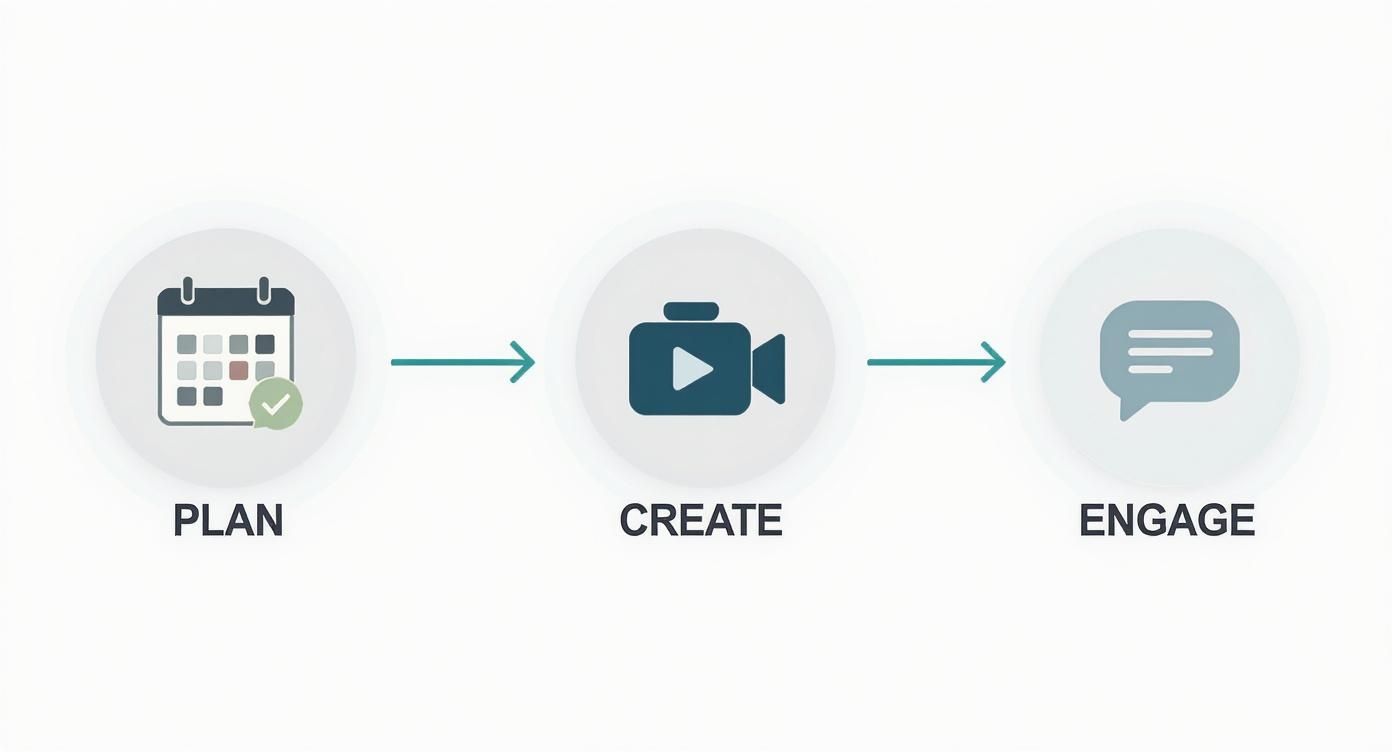
This workflow shows that becoming a successful ambassador isn't just about posting pretty pictures. Thoughtful planning and real community interaction are just as vital as the content itself.
Writing a Pitch That Gets a Response
With your media kit polished and ready, it's time to write that pitch. A generic, copy-and-paste email is a one-way ticket to the trash folder. Your outreach has to be personal, professional, and completely focused on the value you can bring to them.
First things first, find the right person. Hop on LinkedIn and search for titles like "Marketing Manager," "Social Media Manager," or "Partnership Coordinator" at your target company. A few minutes of research here makes all the difference.
Keep your email short and sweet. Your subject line needs to cut through the noise. Something like "Partnership Idea: [Your Name] x [Brand Name]" or "Brand Ambassador Inquiry from a [Your Niche] Creator" works well.
In the email itself, get straight to the point. Tell them why you genuinely love their brand and then—this is the important part—propose a specific idea for a collaboration. Don't just say, "I'd love to work with you." Instead, try something like, "I'm planning a video series on sustainable home products next month, and I think your eco-friendly cleaner would be a perfect fit for a dedicated review."
This proactive, idea-driven approach is more valuable than ever. Brands are pouring more money into these programs, with 73% of marketers planning to increase their investment. They're doing it because they see ambassadors as a way to improve content authenticity (36%) and boost campaign engagement (32%). Your genuine connection is exactly what they’re searching for.
Don't forget to attach your media kit! End your email with a clear call to action, like, "Are you free for a quick chat next week to discuss this?" And if you don’t hear back, a polite follow-up after a week is totally fine. It shows you’re persistent and professional.
Understand Compensation and Negotiate Your Contract
Alright, you've put in the real work building your audience and making connections. Now we get to the part that feels both exciting and a little nerve-wracking: talking money and signing on the dotted line. Learning to understand your worth and navigate the legal side of brand deals is what separates a hobbyist from a professional brand ambassador.
This is the moment you officially switch hats from passionate creator to savvy business owner. Brands expect you to know your value, so walking into a negotiation with confidence isn't just a good look—it's essential. It ensures you’re paid what you deserve for the time, creativity, and influence you've worked so hard to build.
Common Ways Brand Ambassadors Get Paid
Compensation isn't always a straightforward paycheck. Brands can get pretty creative with their budgets, so you’ll run into a few different payment models. Getting familiar with these will help you figure out which opportunities actually make sense for your goals.
You'll most often see these compensation models:
- Flat Fee: This is the simplest model. You get a set payment for specific deliverables, like a certain number of posts or videos each month. It's clean and predictable.
- Affiliate Commission: Here, you earn a cut of every sale made through your unique discount code or link. This is totally performance-based, which can be amazing if your content converts well.
- Free Product: Often called "gifting," this is a common starting point for new ambassadors. The brand sends you products in exchange for content. Just be sure the product's value is truly worth your effort.
- Hybrid Deals: A really popular option that mixes things up. Think a lower flat fee plus commission on sales, or free products along with a small stipend to cover your time.
A quick word of advice: don't undervalue your work, even when it's just for free products. You're still providing a powerful marketing service. Always do the math to see if the exchange feels fair for the time and energy you're about to pour in.
Calculating Your Rates with Confidence
So, the million-dollar question: how much should you charge? There's no magic formula, but you can land on a fair rate by looking at the data. Brands respect creators who can justify their prices with real numbers.
Start with your engagement rate. Honestly, a smaller, super-engaged audience is often way more valuable to a brand than a massive, silent one. Your rate should also scale with the scope of work. Think about the number of posts, how much effort video production takes, and whether the brand wants to use your content in their own ads (that costs extra!).
Earnings vary a ton across platforms and industries, with Instagram, TikTok, and YouTube leading the pack. As a rough benchmark, a typical earning for brand ambassadors on social media is about $320 per 1,000 likes. For longer-term partnerships, a six-month deal requiring two posts a month might land in the $2,700 to $3,000 range. Niches like fashion, beauty, and tech tend to pay more because authentic endorsements really drive buying decisions.
For more on this, our guide on how much to pay influencers offers valuable perspectives from the brand's side.
Key Contract Terms to Never Overlook
Once you and the brand agree on a rate, the contract arrives. Never, ever sign anything without reading it from top to bottom. This document locks in the entire partnership, and what's inside can impact your business for a long time.
Zoom in on these critical clauses:
- Content Ownership and Usage Rights: Who actually owns the content you create? The contract must be crystal clear about if, where, and for how long the brand can reuse your content—on their website, social media, paid ads, etc.
- Exclusivity: Does this deal stop you from working with other brands? Make sure "competitor" is clearly defined and that the exclusivity period is reasonable. You don't want to be locked out of other opportunities for too long.
- Deliverables and Deadlines: The contract needs to spell out every single deliverable (2 Instagram Reels, 4 Stories, etc.) and their exact due dates. No room for confusion here.
- Payment Schedule: When and how will you get paid? Standard terms are often "Net 30" or "Net 60," which means you'll be paid 30 or 60 days after you submit your invoice.
If anything in the contract feels off or unclear, don't hesitate to push back and ask for changes. A good brand partner will be totally open to a discussion to make sure you're both happy. This back-and-forth is a normal part of the process, and it shows you're a professional who takes your business seriously.
Got Questions About Becoming a Brand Ambassador?
If you're just starting out, the whole world of brand ambassadorships can feel a bit mysterious. You've probably got a ton of questions about what it really takes, what brands are actually looking for, and how to handle the business side of things without getting overwhelmed.
Let's cut through the noise and tackle some of the most common questions I hear. These are the straightforward, no-fluff answers you need to move forward with confidence.
"How Many Followers Do I Actually Need?"
This is the big one, right? Everyone wants to know the magic number, but the truth is, there isn't one. In fact, the obsession with massive follower counts is fading fast.
Many brands are now looking for nano-influencers (that's around 1,000-10,000 followers) and micro-influencers (10,000-100,000 followers). Why? Because smaller communities are often way more engaged and tight-knit. A creator with 3,000 followers who gets genuine, thoughtful comments on every post can be far more valuable than someone with 300,000 followers who only gets generic, one-word replies.
It's not about reach anymore; it's about real influence. A highly engaged community in a specific niche, no matter its size, is more powerful than a massive, passive audience. Focus on building that connection first, and the brands will follow.
"What Exactly Goes Into a Media Kit?"
Think of your media kit as your professional resume for brand deals. It’s your chance to make a killer first impression. It should be a clean, visually sharp 1-2 page PDF that gives a brand a quick snapshot of who you are, the audience you've built, and the value you bring to the table.
Your goal is to make a brand manager's job super easy. Here’s what you absolutely need to include:
- A Quick Bio: A short and sweet paragraph that tells your story. What's your niche? What makes your voice unique?
- Your Audience Snapshot: Pull key data straight from your social media analytics. Think age, gender, and top locations of your followers.
- Key Performance Numbers: Yes, include your follower count, but the real star here is your average engagement rate and typical content reach.
- Your Best Work: Show, don't just tell. Include screenshots or links to your best-performing content or previous brand collaborations.
- Contact Info: Don't make them hunt for it. Make it incredibly easy for a brand to get in touch.
"Can I Work With More Than One Brand?"
Absolutely! But you have to be smart and transparent about it. The golden rule here is to only partner with brands that genuinely fit your personal brand and values. Promoting two competing meal kit services at the same time, for example, is a quick way to lose the trust you’ve worked so hard to build.
Your credibility is everything. Always, always read your contracts and look for exclusivity clauses. These can restrict you from working with similar brands for a set amount of time. Being selective not only protects your authenticity but also makes each endorsement you give that much more powerful.
Here's a pro tip: Keep a personal "brand blacklist" of direct competitors for any company you partner with. It helps you avoid accidental conflicts and shows brands you're a true professional who respects the partnership.
"How Do I Handle the Legal and Tax Stuff?"
The moment you earn your first dollar from a brand deal, you're officially running a business. This is a huge mindset shift, but it's critical.
Most brand ambassadors are considered independent contractors, which means you're on the hook for your own taxes—the brand won't handle it for you. You need a simple system to track all your income and business-related expenses (like that new camera, software subscription, or travel for a campaign).
A good rule of thumb is to set aside 25-30% of every payment you receive specifically for taxes. This will help you avoid a nasty surprise at the end of the year. You'll likely need to pay estimated taxes quarterly, so get familiar with the process.
Seriously, one of the best investments you can make early on is a consultation with a tax professional. They can help you understand your obligations and find deductions you might have missed.
And when it comes to contracts, read every single line. Pay close attention to things like content ownership, usage rights, and payment schedules. For bigger deals, spending a little money to have a lawyer give it a quick look-over can save you from a world of headaches later. Taking the business side seriously is what separates the amateurs from the pros.
Ready to find brands that are actively looking for creators just like you? REACH is an influencer marketing platform that connects you directly with top-tier agencies and global brands. With clear campaign details and guaranteed fast payments, it's the perfect way to grow your audience and your income. Find your next brand partnership on REACH today.