 Skip to content

Social media marketing for brands starts with one reality many teams still underestimate. More than 5 billion active users worldwide now use social platforms, representing more than 60% of the planet’s population, and marketers are still increasing investment, especially in influencer partnerships, according to this 2025 Sprout Social coverage in Chief Marketer.
That scale changes the job. Social is no longer a channel you “also do” after email, search, and sales enablement. It’s where awareness forms, trust compounds, customer questions surface, and buying intent shows up in public.
The hard part isn’t deciding whether social matters. The hard part is running social media marketing for brands without turning it into three disconnected programs: an organic content calendar, a paid ads account, and an influencer spreadsheet. New brand managers usually inherit exactly that mess. The brands that get traction treat those pieces as one system, with shared goals, shared creative, and shared reporting.
Why Social Media Marketing Is Non-Negotiable for Brands Today
Brands now compete in a market where customer discovery, evaluation, and response often happen on the same screen, within the same session.
Social matters because it compresses the path from attention to action. A potential customer can see a creator mention your product, check your profile, read comments, compare offers, and click through to buy without ever leaving the platform for long. Few channels combine reach, audience targeting, creative testing, and public feedback that tightly.
That creates an operational requirement for brand teams. Organic content, paid distribution, and influencer partnerships have to work as one system, or performance gets harder to read. If each function runs on its own calendar, its own creative logic, and its own reporting view, teams miss the full customer journey and make weaker budget decisions.
The practical model is straightforward:
- Organic creates repeat visibility and brand memory
- Paid increases distribution and speeds up testing
- Influencer content adds credibility that brand assets often cannot create on their own
- Shared measurement shows how those pieces contribute together
I see this break down in a predictable way. A team credits paid for conversion, ignores the organic posts that warmed the audience, and treats creator content like a separate experiment instead of part of the same funnel. The result is fragmented reporting, duplicated spend, and creative that does not build on itself.
REACH helps solve that coordination problem by giving teams one place to manage creator activity alongside the broader social program, so campaign inputs and outcomes are easier to track across channels.
Practical rule: If social activity can’t be tied back to a business goal, it’s not a strategy. It’s publishing.
Strong social programs are structured enough to produce signal, but flexible enough to respond to what the market is doing. That balance is what turns social from a posting function into a revenue-driving part of the brand system.
Building Your Strategic Foundation for Social Media Success
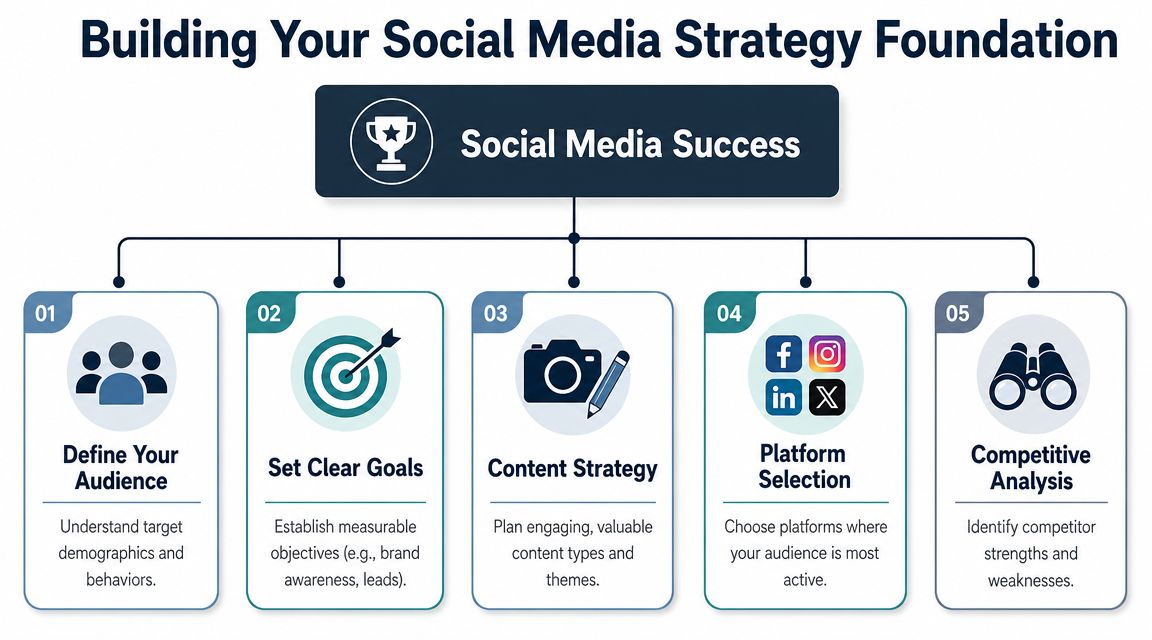
Most weak social programs fail before the first post goes live. The problem usually isn’t creative. It’s that the team never defined what success should look like, who they’re trying to move, or where those people spend time.
Social strategy works like a house blueprint. If the foundation is off, every later decision gets expensive.
Start with goals that change business outcomes
“More followers” isn’t a business goal. It may become a useful signal, but it doesn’t tell your team what to optimize for.
Use a tighter structure instead:
| Business need | Better social goal | What the team should watch |
|---|---|---|
| New category awareness | Increase qualified reach and brand recall | Reach, impressions, profile visits, saves |
| Lead generation | Move social traffic into forms, demos, or DMs | Clicks, landing page behavior, lead quality |
| Ecommerce growth | Turn content and creators into attributable revenue | Click-throughs, promo code use, conversion behavior |
| Retail sell-through | Support launches and local demand | Location response, comments, creator fit |
A brand launching into a crowded category shouldn’t judge itself the same way as a mature brand trying to improve repeat purchase. Different jobs require different scorecards.
Build audience definitions from behavior, not assumptions
A lot of teams still write audience personas like ad-school homework. Age range. Job title. A few interests. That’s not enough.
What you need to know is:
- What triggers interest
- What objections slow purchase
- What platform behavior looks like
- What content format they respond to
- What language they use when they describe the problem
Social listening and creator research help. Comments, DMs, tagged posts, and community conversations usually reveal more than a polished persona deck.
Your audience rarely says what a brand manager writes in the brief. They say it in simpler language, usually with more urgency.
Pick channels with discipline
A new brand does not need to be everywhere. It needs to be coherent somewhere.
Channel selection should come from audience fit and operational fit. If your team can produce good short-form video but has no spokesperson for thought leadership, TikTok or Instagram may be more realistic than a heavy LinkedIn strategy. If you sell into a long-consideration B2B cycle, LinkedIn may deserve more focus than trend-driven video.
Use this filter before opening another account:
- Is your audience active there in a meaningful way
- Can your team produce native content for that platform
- Can you respond fast enough to make the channel feel alive
- Can you measure the outcome you care about
If the answer is no on two or more of those, that channel probably belongs in phase two, not now.
Crafting Your Content and Defining a Posting Cadence
Content planning gets easier when you stop asking, “What should we post today?” and start asking, “What role should this post play?” Good brand feeds aren’t random. They balance different content jobs so the audience gets value before they get a sales ask.
Use a simple content matrix
A practical mix for social media marketing for brands includes four content types.
- Educate: Show the audience how something works, explain a pain point, answer common objections, or break down a buying decision.
- Entertain: Use humor, trend participation, quick edits, unexpected hooks, or a recognizable brand voice that feels native to the platform.
- Inspire: Share customer stories, behind-the-scenes moments, team perspective, or mission-led content that gives people a reason to care.
- Convince: Product demos, comparisons, social proof, creator testimonials, launch posts, and offer-led assets belong here.
Most weak feeds over-index on convince. Every post asks for something. The audience feels it.
A stronger mix gives people reasons to follow before asking them to buy.
Match the format to the message
Not every idea belongs in every format. A product education point might work better as a carousel. A founder opinion may land better in a short talking-head video. A creator testimonial may work best as paid amplification after it proves itself organically.
That’s why a content calendar matters. It lets your team see whether the month is balanced or repetitive. If you need a planning model, this guide to creating a content calendar is a practical place to start.
Consistency beats volume
Teams often burn out because they confuse frequency with discipline. Posting more doesn’t help if quality drops, approvals slow down, and community management gets ignored.
A workable cadence should fit your resources, not your ambition.
Try this operating pattern:
- Choose a repeatable weekly rhythm: a few core posts are better than a chaotic burst.
- Batch production where possible: shoot multiple clips, collect multiple testimonial assets, and write captions in blocks.
- Leave room for live moments: trends, reactions, or creator reposts need some flex in the schedule.
A realistic calendar beats an aspirational one that collapses after two weeks.
Integrating Organic Paid and Influencer Marketing
The biggest improvement most brands can make is simple. Stop running organic, paid, and influencer in separate lanes.
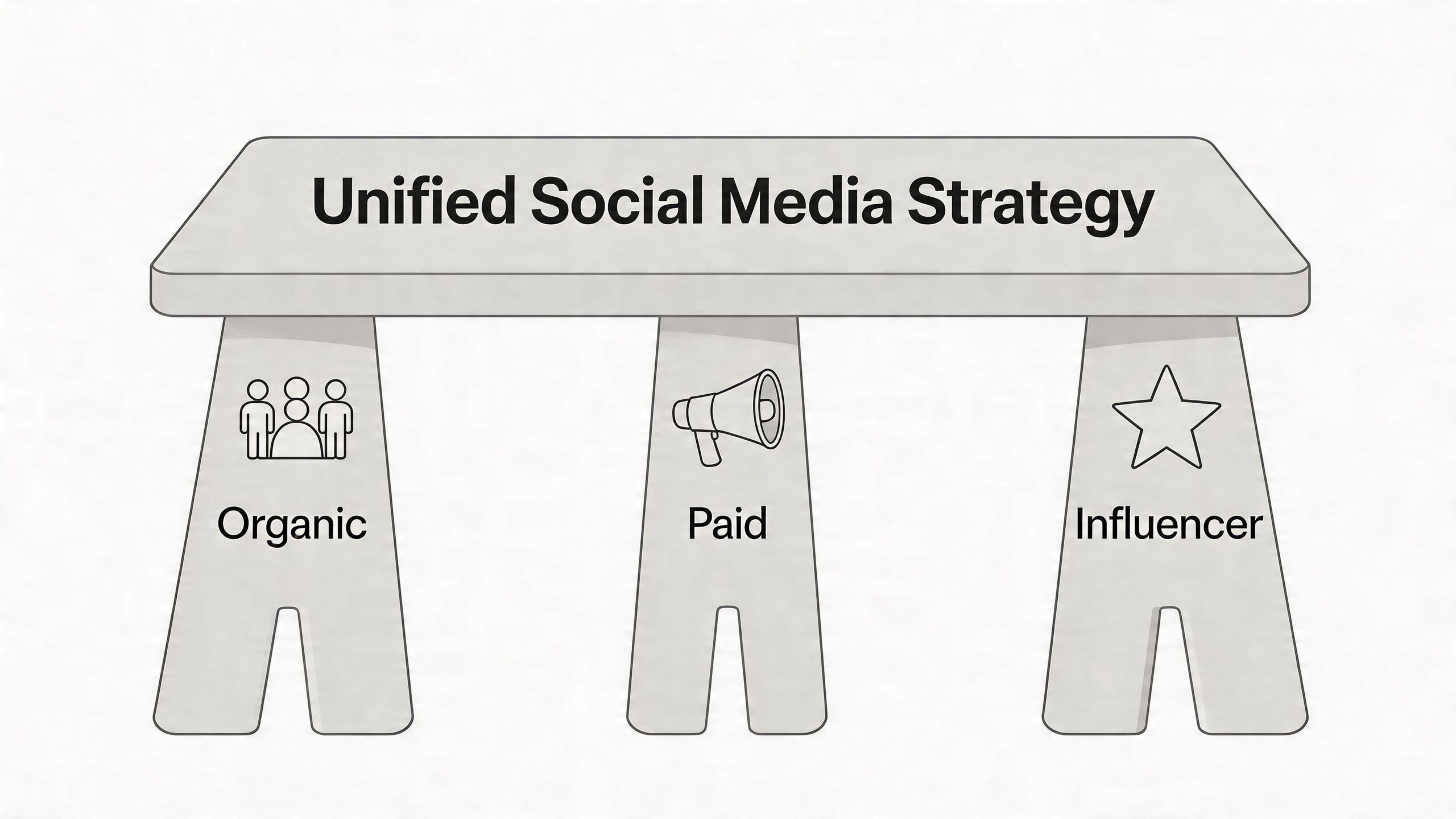
Treat them like a three-legged stool. Remove one leg and the system gets unstable. Organic gives the brand a living presence. Paid gives you controlled distribution. Influencer gives you borrowed trust and a different creative voice.
What each channel should do
Organic should not carry the full burden of growth. Its job is to build familiarity, respond to audience signals, and create a home base for the brand voice.
Paid should not invent the strategy from scratch. It should scale what’s already proving useful, whether that’s a top-performing product explainer, a creator asset, or a launch message with strong click behavior. Teams looking to improve campaign coordination between creative and ad execution often use workflow tools tied to platforms like meta ads mcp to reduce handoff friction.
Influencer should not be treated as isolated sponsorship. It should feed the whole system. Creator content can become paid creative. Creator feedback can improve your offer framing. Organic channels can repost creator proof to strengthen trust.
Why influencer is the trust multiplier
Many brand teams continue to leave value on the table. According to Thinkers360’s 2025 discussion of underrated social strategies, consumers trust peers 4.5x more than brands. The same source says 70% of strategies overlook micro-influencers with under 10k followers, even though they yield 22% higher engagement than mega-influencers.
That fits what practitioners see in the field. Smaller creators often produce stronger audience fit, better comment quality, and less polished but more believable content. They usually work best when the brand gives a clear brief, enough freedom to sound native, and a direct conversion path.
A short example helps:
- Organic posts identify which angles create interest
- Micro-influencers turn those angles into credible proof
- Paid media pushes the strongest creator assets to larger, targeted audiences
That loop is tighter than running each tactic alone.
A quick walkthrough can help your team picture the workflow:
Where unified strategies usually break
The usual failure points are operational, not conceptual.
- Creative mismatch: The ad team writes one message while creators tell a different story.
- No asset reuse plan: Strong creator content stays trapped in one post instead of becoming paid or organic material.
- Weak briefing: Brands over-script creators and kill authenticity, or under-brief them and get off-target content.
The fix is shared planning. One launch brief. One reporting view. One decision about what gets amplified.
Measuring Success A Guide to KPIs and Reporting
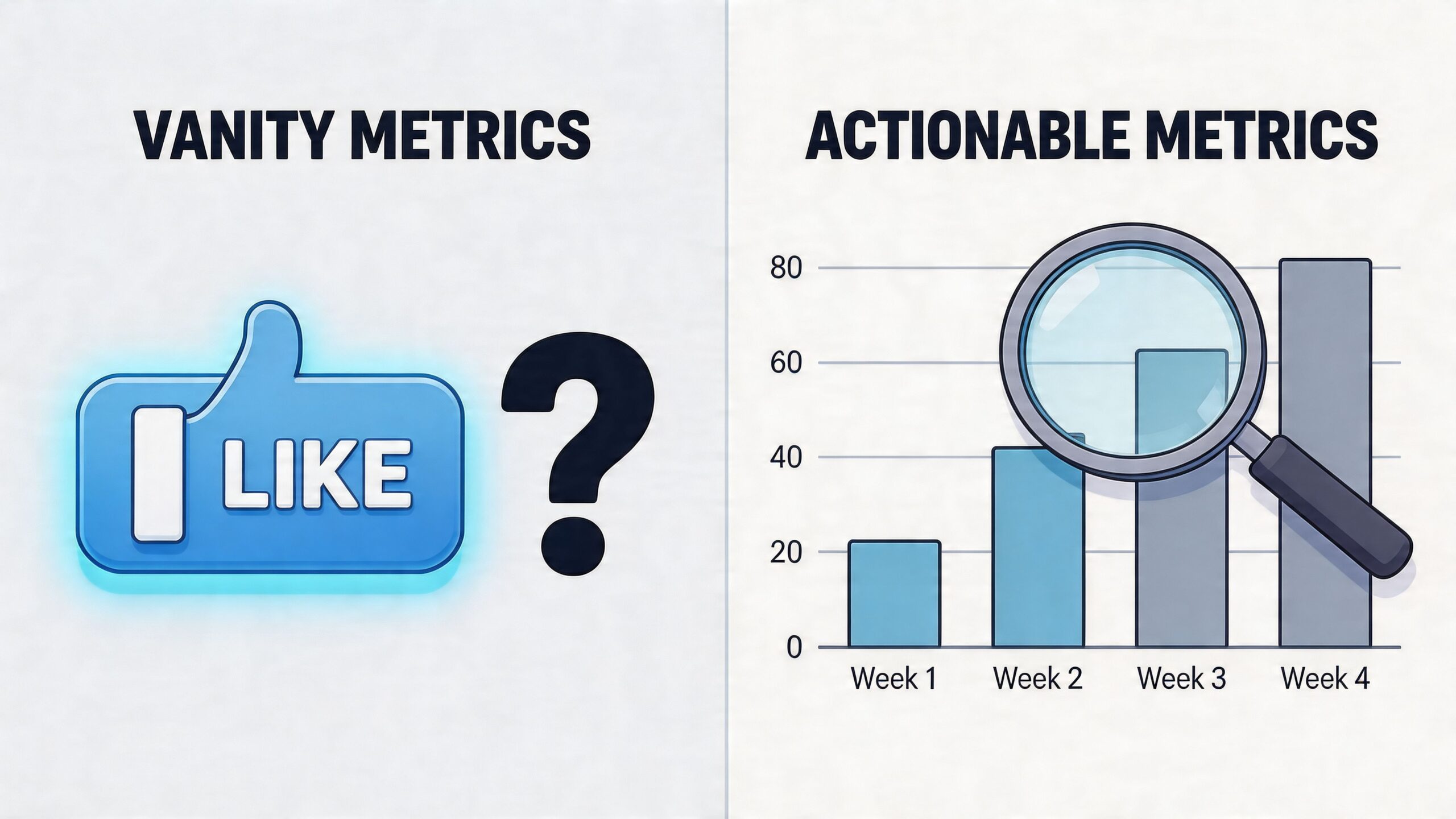
Likes feel good. They just don’t tell the full story.
Strong reporting in social media marketing for brands separates attention metrics from business metrics. You need both, but they answer different questions. Attention metrics tell you whether content is getting seen and interacted with. Business metrics tell you whether social activity is helping the company grow.
Know the difference between vanity and decision metrics
A clean way to organize reporting is this:
| Metric type | Examples | Why it matters |
|---|---|---|
| Attention metrics | Reach, impressions, views, engagement | Shows whether content is earning attention |
| Consideration metrics | Clicks, saves, DMs, profile visits | Shows buying interest or research intent |
| Outcome metrics | Leads, sales, promo code use, CPA, CLV | Shows business impact |
This distinction matters in stakeholder meetings. If a campaign produced strong engagement but weak conversion behavior, the creative might be working while the offer or landing page is not. If clicks are low but comments are high, the post may be more community-oriented than conversion-oriented.
Track influencer ROI with actual attribution
Influencer reporting falls apart when brands rely on screenshots and gut feel. The better approach is direct attribution.
According to Dataroars’ guide to social media analytics for brands, advanced analytics can evaluate influencer campaign ROI through metrics such as engagement rate per post, branded hashtag performance, story completion rates, click-through rates on affiliate links, direct message responses, and follower growth during campaigns. The same source notes that attribution can be tracked with custom UTM parameters and unique promo codes to quantify direct sales, new customer acquisition costs, customer lifetime value from influencer-referred audiences, and return on influencer spend.
That gives you a practical reporting structure:
- Tag each creator link separately
- Assign unique promo codes where relevant
- Compare creators by outcome, not only by audience size
- Review mid-campaign, not only after the spend is gone
If you need a clearer framework, this guide to social media measurement is useful for building a reporting model your stakeholders can read.
Good reporting changes budget decisions. Vanity reporting just fills slides.
Report for decisions, not decoration
Brand managers often send dashboards with too much information and too little judgment. A better monthly report answers a few direct questions:
- What content themes performed best
- Which creators drove measurable action
- Which paid assets deserve more budget
- Where drop-off happened in the funnel
- What the team should change next month
If your report doesn’t lead to an action, trim it.
Actionable Tactics for Today's Top Social Platforms
Platform advice gets weak when it turns into generic reminders to “be authentic” everywhere. Each network rewards different behaviors, different production styles, and different pacing. A practical social media marketing for brands plan adapts by platform without losing the same core message.
Instagram for proof and polish
Instagram still works best when brands combine visual consistency with social proof.
A useful playbook looks like this:
- Use Stories for daily proximity: product teases, reposted UGC, polls, restocks, and behind-the-scenes clips keep the brand present without overloading the main grid.
- Use Reels for reach: short product demonstrations, creator clips, and fast pain-point hooks usually travel better than highly polished brand ads.
- Use carousels for education: comparisons, how-to sequences, and “what to know before you buy” posts often outperform one-off promotional graphics.
Brands often miss the save-and-share behavior here. If a post helps someone make a decision, it tends to travel longer than a flashy asset with no practical value.
TikTok for native attention
TikTok punishes content that looks too much like an ad. The strongest brand posts usually start with a clear hook, move fast, and sound like a person rather than a campaign committee.
Three tactics tend to hold up:
- Lead with the problem early: don’t spend the opening seconds on logo animation.
- Shoot for platform fit over polish: simple creator-style footage often feels more credible.
- Edit aggressively: pacing matters. Teams that need to speed up mobile video production often use references like this roundup of top TikTok editing apps to tighten workflow and captioning.
LinkedIn for authority and buyer confidence
LinkedIn is not just for hiring posts and company updates. It’s where brand managers can build trust with buyers, partners, and category observers.
What works:
- Post informed opinions: reaction to industry shifts, customer patterns, and lessons from campaigns.
- Turn team expertise into recurring series: founder notes, product lessons, and POV-led posts tend to outperform generic announcements.
- Use comments as distribution: a smart comment strategy from leaders and team members often matters as much as the original post.
On LinkedIn, clarity beats cleverness. People reward useful perspective.
Facebook for overlooked local and rural demand
Many brands underuse Facebook because their strategy is shaped entirely by urban platform behavior. That leaves a gap.
According to Social Targeter’s analysis of rural and underserved market strategy, Instagram and TikTok dominate urban engagement, but rural audiences prefer Facebook for community building and local discovery. The same source states that rural digital ad spend grew 28% year over year, while only 15% of brands allocate budget there, even though 40% of global consumers reside in non-urban areas.
For brands with retail footprints, regional events, or strong community relevance, that changes channel planning. Facebook Groups, local partnerships, and community-led offers may outperform trend chasing in those segments.
Streamline Your Influencer Marketing with the REACH Platform
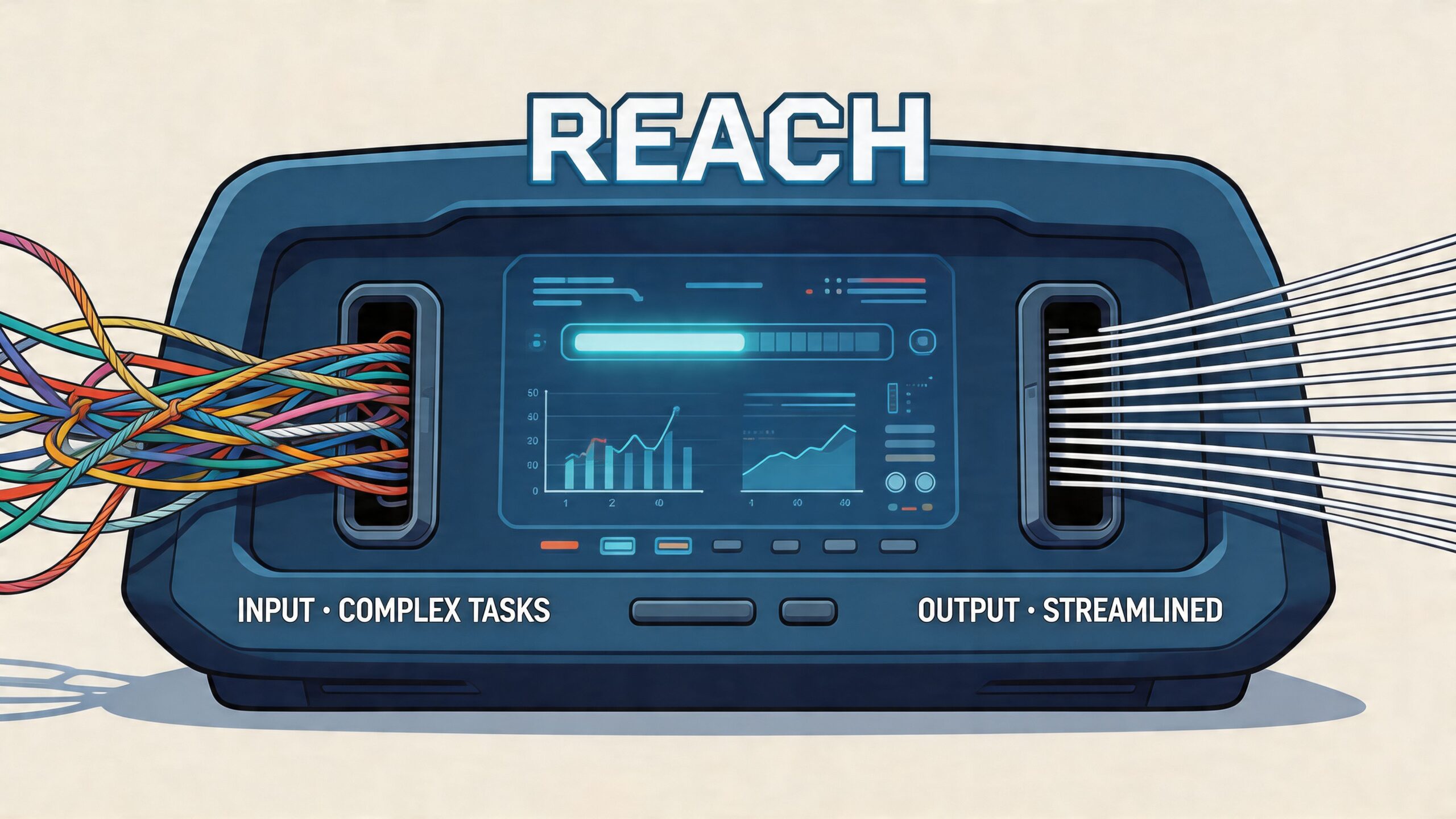
Influencer programs usually become messy in the same places. Discovery takes too long. Outreach lives in scattered documents. Approvals stall. Reporting gets rebuilt by hand. Then someone asks which creators drove results.
That workflow problem is why centralized systems matter.
Why aggregation improves decision-making
According to Revuze’s discussion of how brands use social data, social media data aggregation and cross-team accessibility form the backbone of a strong brand strategy. The same source cites HubSpot findings that positive reviews boost conversions by 133% for mobile users and social recommendations increase purchase likelihood by 71%.
The operating lesson is clear. When creator data, campaign activity, and audience response sit in one place, brand teams make better choices. They can compare creator fit more easily, spot patterns sooner, and connect campaign signals back to business outcomes.
Where a platform helps
For teams running creator programs at any meaningful scale, an influencer marketing platform can reduce manual work in three areas:
- Discovery: filtering creators by niche, location, engagement, and audience fit
- Operations: centralizing outreach, approvals, contracts, and payments
- Reporting: tracking clicks, content performance, and campaign outcomes without rebuilding reports from scratch
Brands also need a steady flow of usable creative around those campaigns. If your team is producing more short-form assets to support creators, paid ads, and owned channels, a lightweight Video creation platform can help speed up variations and repurposing.
The point isn’t to add more software for its own sake. It’s to reduce friction between strategy and execution.
Common Pitfalls in Social Media Marketing and How to Avoid Them
Most social underperformance isn’t mysterious. It usually comes from a handful of repeatable mistakes.
Mistake one is confusing activity with strategy
If a brand is posting often but can’t explain what each platform is supposed to do, the team is busy, not effective. Fix this by setting channel roles, defining business goals, and building a content mix that serves those goals.
Mistake two is treating every platform the same
The same message won’t land the same way everywhere. Instagram rewards visual proof. TikTok rewards native delivery. LinkedIn rewards useful perspective. Facebook may still matter more than many teams assume in rural and community-based segments.
Mistake three is separating influencer from the rest of social
Creator work performs best when it feeds both organic and paid. If influencer content stays in a one-off campaign folder, you lose value twice. First in distribution, then in learning.
Mistake four is reporting what’s easy instead of what matters
A dashboard full of engagement screenshots won’t help you defend budget. Track attribution, compare creative by outcome, and summarize what the team should change next.
A simple checklist helps keep the program honest:
- Check goal alignment: every campaign should map to awareness, consideration, or conversion
- Check platform fit: publish native content, not resized leftovers
- Check reuse opportunities: strong creator assets should move into paid or owned channels
- Check measurement quality: links, promo codes, and reporting structure should be set before launch
The brands that improve fastest aren’t always the loudest. They’re the ones that learn fastest.
Social media marketing for brands works when the system is connected. Organic content creates signal. Paid media scales what earns attention. Influencer content adds trust. Measurement tells you what to repeat.
If you want a cleaner way to run creator discovery, campaign workflows, approvals, and reporting in one place, take a look at REACH. It’s built for brands, agencies, and creators that need a more organized way to manage influencer marketing without relying on spreadsheets and manual reporting.