 Skip to content

Influencer marketing for beauty brands is the strategy of partnering with social media creators to promote your beauty products—whether it's makeup, skincare, or hair care. It's incredibly effective because these influencers have built genuine, authentic connections with their followers. A recommendation from them feels more like a tip from a trusted friend than a traditional ad, which is why it's a powerful way to reach specific, engaged audiences and drive real growth.
This guide provides a comprehensive framework, demonstrating why a platform like REACH Influencers is essential for discovering creators, managing campaigns, and proving ROI. We'll cover everything from defining your goals to measuring success, ensuring your influencer marketing for beauty brands strategy is built for results.
Table of Contents
- Why Influencers Are A Must-Have For Beauty Brands Today
- Defining Your Campaign Goals and Target Audience
- How to Find and Vet the Right Beauty Influencers
- Crafting Outreach and Briefs That Inspire Creativity
- Measuring Campaign ROI and Optimizing for Growth
- Your Top Influencer Marketing Questions, Answered
Why Influencer Marketing for Beauty Brands is Non-Negotiable
The way people discover and buy beauty products has completely changed. Remember when a glossy magazine ad or a TV spot was all it took? Those days are over. Now, your potential customers are scrolling through TikTok and Instagram, watching creators they trust for tutorials, honest reviews, and "get ready with me" videos. This shift means a solid influencer marketing strategy isn't just nice to have; it's absolutely critical for growth.
Authenticity is everything in the beauty world now. Shoppers are smart—they can see a forced, inauthentic ad from a mile away. What they really want are real stories and genuine recommendations from people who actually use and love the products.
This is where influencers shine. They bridge that gap, acting as that trusted friend whose opinion really matters. When a creator they follow raves about their favorite new serum, it lands as a personal recommendation, not a corporate sales pitch.
The Power of Niche Communities
The beauty industry isn't one giant monolith; it's made up of countless passionate subcultures. Just think about the dedicated communities around "clean beauty," "dupe culture," vegan skincare, or even specific aesthetics like "cottagecore." Trying to reach all these different groups with traditional advertising is next to impossible.
Influencers, on the other hand, are often the heart of these communities. Working with them gives your brand a direct line to a ready-made, highly engaged audience that’s already primed to be interested in what you sell. It’s far more efficient than casting a wide, expensive net and hoping for the best.
Key Takeaway: Influencers don’t just have followers; they build and nurture communities. Tapping into these communities helps beauty brands connect with people on a much deeper level, which is what builds real, long-term loyalty.
Driving Real Business Results
Beyond the warm and fuzzy feelings of trust and community, influencer marketing delivers hard, measurable results. The global market has absolutely exploded, hitting an estimated $32.55 billion—a staggering jump from just $1.7 billion back in 2016. Beauty brands are leading this charge because, simply put, it works.
Consider this: more than half of Gen Z and Millennial consumers say they actively consider buying products recommended by influencers. That's a direct line from creator content to a purchase. You can dig into more of these influencer marketing statistics to see the full impact.
This is where a dedicated platform is a lifesaver. Trying to manually find, vet, and manage dozens of creators is a logistical nightmare of spreadsheets and endless emails. A platform like REACH Influencers takes that entire headache away.
You can use advanced search filters to find creators who are a perfect match for your brand’s vibe and audience. Everything is centralized—from the first outreach message and contract negotiation to content approvals and tracking performance. This lets you scale your influencer programs without getting buried in admin work. Instead, you can focus on what really matters: building creative campaigns that drive growth and secure your brand's spot in a crowded market.
Defining Your Campaign Goals and Target Audience
Jumping into influencer outreach without a clear plan is like trying to follow a makeup tutorial in the dark. Before you even think about finding partners, you need to define what success actually looks like for your brand. It's time to move past vague goals like "brand awareness" and build a truly powerful and measurable influencer marketing for beauty brands strategy.
Every campaign needs a clear mission. Are you launching a groundbreaking new vitamin C serum? Your goal might be to generate authentic video reviews and drive those crucial first sales. Or maybe you're dropping a limited-edition eyeshadow palette. In that case, you're probably aiming to create intense hype and sell out fast.
This is where influencers become so critical. They bridge the gap between initial advertising and the final purchase.
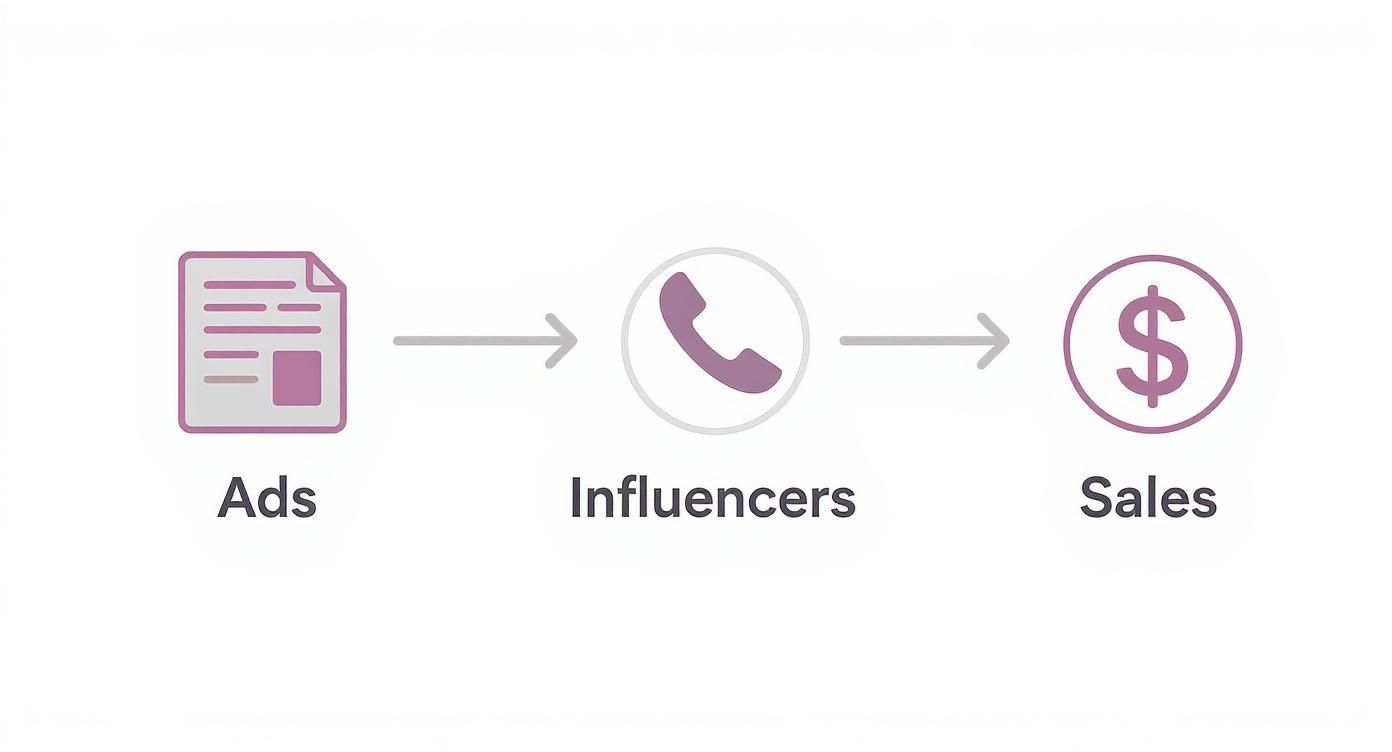
Think of them as the trusted friend who turns "I've heard of that brand" into "I need to buy that product."
Set Specific and Measurable Objectives
The goals you set will dictate everything—the type of influencers you work with, the content they create, and how you measure success. It all starts with tying your campaign to specific Key Performance Indicators (KPIs).
To make this crystal clear, we've put together a table that connects common campaign goals with the right metrics to track.
Mapping Campaign Goals to Key Performance Indicators
| Campaign Goal | Primary KPI | Secondary Metrics | Example Tactic |
|---|---|---|---|
| Increase Brand Awareness | Impressions & Reach | Video Views, Story Views, Profile Visits | Partner with macro-influencers for a broad-reaching "Get Ready With Me" video featuring your new foundation. |
| Boost Community Engagement | Engagement Rate (Likes, Comments, Shares, Saves) | Follower Growth, User-Generated Content (UGC) Mentions | Run a giveaway with micro-influencers, requiring followers to comment on why they want to try your product. |
| Drive Product Sales | Conversion Rate (Sales) | Click-Through Rate (CTR), Affiliate Code Usage, Add-to-Carts | Provide a unique discount code to an influencer for a dedicated YouTube review of your new skincare line. |
| Generate Authentic Content | Volume of High-Quality UGC | Content Usage Rights Secured, Sentiment Analysis | Send a PR box to nano-influencers with a creative brief encouraging unboxing videos and first impressions. |
Having this kind of scorecard from the start is non-negotiable. It’s how you’ll objectively measure performance and prove the ROI of your influencer efforts to your team or clients.
Develop Detailed Audience Personas
Knowing your goals is only half the battle; you also need to know exactly who you're talking to. A deep understanding of who you're trying to reach is paramount, making thorough audience analysis in modern marketing an indispensable first step in defining your campaign goals. Let's be honest, generic demographics like "women aged 18-35" are useless today.
The beauty market is all about passionate subcultures. Is your ideal customer part of the "clean beauty" movement? Are they a "dupe culture" follower hunting for affordable alternatives? Or are they dedicated to vegan and cruelty-free skincare? These details are everything.
To build a persona that actually works, go deeper:
- Where do they live online? (TikTok for quick tutorials, Instagram for a polished aesthetic, YouTube for in-depth reviews?)
- Which creators do they already follow and genuinely trust?
- What are their biggest beauty frustrations? (e.g., finding the right foundation shade, dealing with acne, or managing dry skin.)
- What content actually stops their scroll? (Short-form videos, detailed blog posts, or beautiful photo carousels?)
Answering these questions gives you a profile of a real person, not a statistic. This persona becomes your North Star, guiding every single decision you make, from which influencer to email to what to put in the creative brief.
How to Find and Vet the Right Beauty Influencers
Alright, you’ve got your goals locked in and you know exactly who you’re talking to. Now comes the fun part: finding the creators who will bring your campaign to life. This is where the magic happens, but it's also where a lot of brands stumble. Picking the wrong influencer isn't just a waste of money; it can seriously ding your brand's credibility.
Finding the right fit is part art, part science. You need a good gut feeling for what feels authentic, but you also need to back it up with solid data.
The influencer world is incredibly diverse. You've got creators of all shapes and sizes, and the right one for your campaign really depends on what you're trying to achieve. The smartest strategies almost always use a mix of different influencer types to hit various goals.
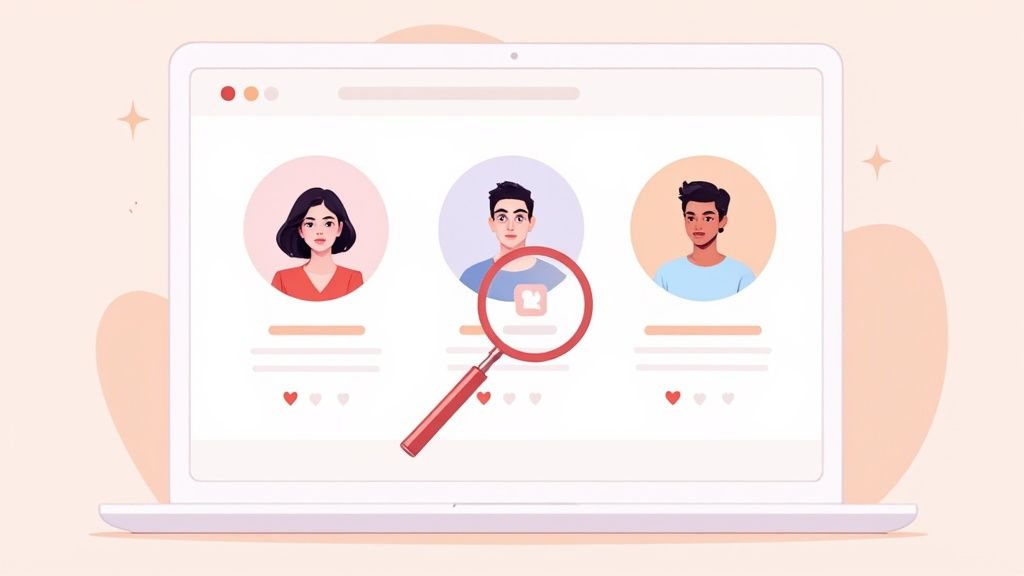
Let's be honest, scrolling endlessly through hashtags and follower lists is a soul-crushing way to find talent. It's nearly impossible to tell if a creator’s audience is legit or if their engagement is even real just by looking at their profile.
This is exactly why dedicated discovery tools are a non-negotiable part of the process. Platforms like REACH Influencers let you slice and dice a massive database of creators with filters that actually matter to a beauty brand—think audience location, age, specific engagement rates, and even keywords in their bios. It helps you uncover those hidden gems who are a perfect fit, saving you hours of guesswork. For a deeper dive, check out this guide on how to find influencers.
Understanding Influencer Tiers
Getting to know the different tiers of influencers is key. Each group brings something unique to the table, and knowing when to use each is crucial for a successful campaign.
- Nano-Influencers (1K–10K Followers): These are your grassroots champions. Their communities are small but mighty, and their content feels incredibly real. They're perfect for generating authentic user-generated content (UGC), creating buzz in a specific city, and building serious trust within niche communities (like "vegan makeup lovers").
- Micro-Influencers (10K–100K Followers): Here's the sweet spot between reach and engagement. Micro-influencers are often true experts in their niche, whether it's "acne-safe skincare" or "avant-garde makeup looks." They are fantastic for driving sales and getting high-quality, believable reviews.
- Macro-Influencers (100K–1M Followers): When you need to make a big splash, you turn to macros. They offer serious reach and are amazing for broad brand awareness campaigns. Think big product launches where you need to get in front of a ton of new people, fast.
- Mega-Influencers (1M+ Followers): These are the celebrities and household names of the creator world. Their reach is massive and immediate. While their engagement rates might be a bit lower, their power to spark a widespread conversation is unmatched for top-of-funnel awareness.
Vetting Beyond the Follower Count
Once you have a shortlist of potential partners, the real work begins. A big follower number can be a vanity metric; what you really care about is the quality of their community and the authenticity of their content.
Look for a creator whose personal brand and aesthetic just clicks with yours. Do their values line up with your brand's mission? If you're a cruelty-free brand, partnering with someone who regularly features non-cruelty-free products is going to create a disconnect that their followers will call out in a heartbeat.
A great influencer partnership should feel like a natural extension of your brand, not a clunky advertisement. The best collaborations happened when a creator was already a genuine fan or just fit seamlessly into our brand’s world.
Your vetting process should be a deep dive into their content and their numbers. Here’s what to look for:
Your Vetting Checklist:
- Quality of Engagement: Look past the likes. Are people in the comments having real conversations, or is it just a wall of "Great post!" and fire emojis? Meaningful discussion is the sign of a healthy, engaged community.
- Audience Authenticity: Use a tool to check for fake followers or sketchy growth patterns. A sudden, massive spike in followers overnight is a huge red flag that they likely bought them.
- Content Consistency & Quality: Go back and look at their past sponsored posts. Do they still sound like themselves, or do their ads feel forced and off-brand? A true pro knows how to weave a product into their content naturally.
- Brand Alignment: Do a thorough scroll through their feed. Is there any past content that clashes with your brand's values? Make sure they present themselves in a way that reflects the image you want to project.
The impact of influencer marketing is hard to overstate, especially when 67% of consumers trust influencers to help them discover new products. To really grasp this shift, you can find more beauty industry statistics on Awisee.com. Putting in the effort to find and vet the right partners is the single most important investment you can make in your campaign's success.
Crafting Outreach and Briefs That Inspire Creativity
Once you’ve pinpointed the right influencers for your brand, it's time to reach out. But here’s the reality: top beauty creators get slammed with dozens, sometimes hundreds, of pitches every single day. A generic, copy-paste email is a one-way ticket to their trash folder. Your outreach has to be as special as your products.
The secret? Make it personal. Show them you’ve actually paid attention. Mention a specific video you loved—that smoky eye tutorial they just posted or their morning skincare routine. Explain why you think their unique vibe and engaged audience are the perfect fit for your brand. This isn't just about stroking their ego; it’s about showing respect for their craft and signaling you’re serious about a real partnership, not just a quick transaction.

After you've made that connection, be upfront about what you're proposing. Briefly outline the campaign idea, the hero product you want to feature, and the type of collaboration you have in mind. This first message really sets the stage for everything that follows.
Negotiating Fair Compensation and Contracts
Let's talk money—and products. Compensation is a huge part of the conversation, and the right deal often depends on the influencer's size and your campaign goals. While many creators have set rate cards, there's usually some flexibility to find a sweet spot that works for everyone.
- Product Gifting (Seeding): This is perfect for nano-influencers or when you're just starting to build relationships. There's no guarantee they'll post, but a truly amazing product and unboxing experience often results in authentic, organic shout-outs.
- Hybrid Deals (Product + Fee): A go-to model for micro-influencers. You're covering their time and creative energy while also giving them the product to genuinely test and fall in love with.
- Paid Collaborations (Flat Fee): This is the standard for macro and mega-influencers. Their fee will be based on their reach, engagement stats, and the full scope of work, including how many posts you need and where you can use the content.
Once you’ve settled on the terms, do not move forward without a contract. I can't stress this enough. A simple, clear agreement protects you and the creator. It gets rid of any guesswork and makes sure you're both on the same page from day one.
A key insight: A good contract isn't about boxing a creator in. It’s about building a solid, safe foundation so their creativity can really shine. Make sure it clearly outlines deliverables, deadlines, payment details, content usage rights, and those all-important FTC disclosure rules.
Your agreement must explicitly state that the influencer has to use clear disclosures like #ad or #sponsored right at the beginning of their captions or as a visible sticker on their Stories. This isn't just a suggestion; it's a legal must-have that maintains trust with their audience and protects your brand.
Building an Inspiring Creative Brief
The creative brief is where so many brands stumble. They hand over a restrictive, step-by-step instruction manual that kills the very spark they hired the influencer for in the first place. A brief shouldn't dictate; it should inspire.
The best briefs provide freedom within a framework. You give the creator the necessary brand guardrails and campaign goals, but leave them plenty of room to work their magic. Their audience follows them for their voice and style, and your campaign will be so much more powerful if you let them use it.
So, what goes into a brief that actually works?
Essential Elements of a Creative Brief:
- Campaign Overview: Start with a short, exciting summary. What’s the story here? What's the hero product and why is it amazing?
- Clear Objectives: What’s the number one thing you want this content to do? Is it driving clicks to a product page? Announcing a new shade launch? Be specific.
- Key Messages: Give them 2-3 core talking points, not a script. For a new serum, this might be "deeply hydrates for 24 hours" or "features powerhouse ingredient hyaluronic acid."
- The "Do's and Don'ts": Keep this list tight and to the point. A "do" could be "show the gorgeous texture of the product on your skin." A "don't" might be "please avoid mentioning any other brands."
- Mandatory Inclusions: This is your list of non-negotiables. Think FTC disclosures (#ad), a specific campaign hashtag, or a call-to-action with a unique discount code.
This approach ensures your core message gets across without micromanaging the creative process. If you want a head start, downloading a professional influencer brief template can give you a rock-solid foundation. Getting the brief right is truly the cornerstone of a successful influencer marketing for beauty brands campaign.
Alright, your influencers are on board and the creative briefs are locked in. Now comes the fun part: bringing your campaign to life. A successful launch doesn’t just happen—it’s built on solid logistics, crystal-clear communication, and sticking to your timeline.
First up is product seeding. This is more than just shipping a product; it’s your brand’s first physical handshake with the creator. Don’t just toss your new foundation in a plain brown box. Craft an unboxing experience that feels like a gift. A little extra effort here can lead to amazing, organic bonus content, like unprompted Instagram Stories that weren't even in the contract.
Keeping Your Campaign Workflow in One Place
Handling one influencer collaboration is easy. But ten? Twenty? Fifty? That's when things can get messy, fast. Trying to track content calendars, feedback, and payments across a dozen different spreadsheets and email chains is a surefire way to miss deadlines and make expensive errors.
This is exactly why a dedicated platform is a non-negotiable for serious influencer marketing for beauty brands. A tool like REACH Influencers pulls everything into a single, organized dashboard. You can create a master content calendar, track product shipments, manage draft approvals, and handle payments without ever leaving the platform.
This isn't just about being organized. When everything is centralized and communication is clear, influencers feel valued and respected. That leads to better content and builds the kind of strong relationships that last. Plus, it lets you focus on the creative side of things instead of getting bogged down in admin work.
How to Structure Your Campaign for the Biggest Impact
Not every campaign should look the same. The way you structure it needs to tie directly back to the goals you set at the very beginning. For beauty brands, two models tend to work exceptionally well: the big splashy launch and the slow-burn ambassador program.
- High-Impact Product Launches: Think of this as a short, intense blitz to generate as much noise as possible for a new product. You might get dozens of influencers, from micro to macro, to post all within a 24-48 hour window. The idea is to completely take over social feeds, driving massive, immediate awareness and a huge spike in sales.
- Long-Term Ambassador Programs: This is a marathon, not a sprint. You're building deep, authentic relationships with a smaller group of creators over several months or even years. When an ambassador talks about your product repeatedly, their audience sees it as a genuine endorsement. This is the best way to build lasting brand trust and loyalty.
Your Final Pre-Launch Checklist
Before that first post goes live, do one last sweep to make sure you're ready for takeoff. A quick final check can save you from some major headaches down the road.
- Final Content Approval: Has every single piece of content been given the green light? Go back and confirm it all aligns with your brand guidelines and includes the essentials, like your campaign hashtag and proper FTC disclosures.
- Tracking Links are Live: Are all your UTM parameters and affiliate codes generated and sent to the right influencers? This is absolutely critical for tracking what’s working and actually measuring your ROI.
- Posting Schedule Confirmed: Circle back with every creator to reconfirm the exact date and time their content is scheduled to go live. You might stagger posts to keep the momentum going for a few days or have everyone post at once to create a viral moment.
- Internal Team is Ready: Is your social media manager prepped and ready to engage the second the content drops? Liking, commenting, and sharing influencer posts immediately not only boosts their visibility but also shows your partners you're all-in on their success.
Measuring Campaign ROI and Optimizing for Growth
Once the influencer’s content is live, the real work begins. Your focus needs to shift from managing the campaign to digging into the data. It’s here, in the numbers, that you’ll discover the true success of your influencer marketing for beauty brands and prove its return on investment (ROI).
This isn't just about counting likes and comments anymore. It's about drawing a straight line from an influencer's post directly to the business goals you set from day one. That means tracking every click, every code used, and every conversation to see the full picture of your campaign’s impact.

Key Metrics to Track
To really get what's going on, you need to look at a mix of metrics. Follower counts are nice, but they're surface-level. The real story is in the engagement and conversion data—the numbers that show how people are actually responding to your brand.
Here’s what to focus on:
- UTM Links: You absolutely must create unique tracking links for each influencer. This is the only way to see exactly how much website traffic and how many direct sales their content is driving. It’s a non-negotiable for proving direct ROI.
- Affiliate Codes: Giving influencers a unique discount code is a brilliant move. It gives their followers a reason to buy now and makes it incredibly simple to attribute sales back to a specific creator.
- Cost Per Engagement (CPE): This tells you how much you paid for every single like, comment, share, and save. Just divide your total campaign cost by the total number of engagements. A low CPE means your content hit the mark and grabbed people's attention.
- Earned Media Value (EMV): Think of EMV as the answer to this question: "If we had to pay for this same exposure through traditional ads, what would it have cost us?" It puts a dollar value on the organic buzz your campaign created.
If you want to go deeper, look into modern influencer marketing measurement strategies that move beyond vanity metrics to focus on what really matters to the bottom line.
Turning Data Into Actionable Insights
Collecting all this data is one thing, but the real magic happens when you turn those numbers into a smarter strategy for your next campaign. A great report doesn't just list metrics; it clearly shows which influencers, content formats, and platforms gave you the best results.
Don't just report the numbers—tell the story behind them. Did a specific TikTok video format cause a huge spike in sales? Did one of your micro-influencers absolutely crush it with the highest engagement rate? These are the golden nuggets that will make your future campaigns even stronger.
This is where having a centralized dashboard becomes a total game-changer. For example, the REACH Influencers platform pulls all your campaign data into easy-to-read reports automatically. You can quickly spot your top-performing partners and content, making it easy to double down on what’s working and get the most out of your budget.
The potential return for beauty brands is massive, with businesses earning an average of $5.78 for every dollar spent. The best campaigns can see even higher returns, which is why over 70% of brands are planning to work with influencers. Platforms like Instagram and TikTok are still the leaders, but TikTok's engagement rates are off the charts, helping brands drive incredible value and making influencer marketing an essential part of any modern beauty strategy.
Your Top Influencer Marketing Questions, Answered
Jumping into influencer marketing always brings up a few key questions. It's totally normal. From budgets to legal stuff, getting these things sorted out from the start is what separates a smooth, successful campaign from a stressful one. Let's tackle the questions I hear most often from beauty brands.
How Much Should We Actually Budget for Influencers?
This is the million-dollar question, right? The honest answer is, it really depends on where you are as a brand.
If you're an indie brand just starting out, you might begin with a product-gifting strategy. Sending your best products to a handful of nano-influencers can generate some amazing, authentic content without needing a big cash investment. On the flip side, an established brand dropping a new foundation line might set aside anywhere from $10,000 to $50,000 (or more!) for a single campaign that involves several well-known creators.
A solid rule of thumb is to allocate 10-20% of your total marketing budget to your influencer program.
Remember why this is a smart bet: the industry average ROI is a healthy $5.78 for every $1 spent. When you manage it right, even a small investment can pay off big time.
What Are the Big FTC Rules I Can't Ignore?
When it comes to the Federal Trade Commission (FTC), one rule stands above all others: clear and conspicuous disclosure.
If there's any "material connection" between you and an influencer—meaning you paid them or even just gifted them free product—they have to tell their audience. It can't be buried or ambiguous.
The gold standard is using hashtags like #ad or #sponsored right at the beginning of the caption. Don't hide it at the end of a long list of other tags. As the brand, you're also on the hook for making sure this happens, so make it a non-negotiable clause in your influencer contracts.
Should We Focus on Instagram or TikTok?
My answer is always: why choose? The smartest beauty brands don't pick one; they play to the unique strengths of both.
-
Instagram is your home for stunning, polished content. Think of it as your brand's visual identity—it's perfect for beautiful flat lays, aspirational Reels, and shoppable posts that scream quality.
-
TikTok is where you go for raw, unfiltered energy and viral potential. Nothing beats it for showing off a product's real-world results in a quick, authentic video that connects with a younger, savvier audience.
A winning influencer marketing for beauty brands strategy uses Instagram to build desire and TikTok to prove the product works.
Ready to streamline your influencer campaigns and prove your ROI? REACH Influencers provides the tools you need to discover the perfect beauty creators, manage campaigns efficiently, and track performance with powerful analytics. See how our platform can elevate your influencer marketing for beauty brands strategy at https://reach-influencers.com.