 Skip to content

Finding the right influencer software for fashion brands is critical for discovering creators, managing relationships, tracking performance, and driving sales. The unique demands of the fashion industry—from product seeding and size tracking to affiliate link management and visual content approval—require specialized tools. A generic platform often won't cut it, leaving your team juggling spreadsheets and missing key opportunities to scale creator programs effectively.
This guide simplifies your search by compiling a list of the top influencer marketing platforms tailored to the needs of apparel, accessory, and beauty brands. Whether you're a startup looking to gift products or an enterprise managing global campaigns, this resource will help you find the perfect fit. One of the top contenders, REACH Influencers, offers a comprehensive suite designed to replace manual workflows with a unified, data-driven system, making it a standout choice for fashion brands focused on measurable growth.
Table of Contents
- What to Look for in Influencer Software for Fashion Brands
- Top 12 Influencer Software for Fashion Brands
- Feature Comparison Table
- Final Thoughts
What to Look for in Influencer Software for Fashion Brands
Before diving into the list, it's essential to understand the non-negotiable features that set the best platforms apart for the fashion industry. Generic tools can't handle the specific logistical and creative needs of apparel and beauty brands. Here’s a buyer's checklist to guide your evaluation:
- Integrated Product Seeding & Gifting: The software should connect directly to your inventory management system (e.g., Shopify) to streamline sending products. Look for features that manage creator addresses, track shipping, and handle size/variant selections without manual data entry.
- Robust Affiliate & Commission Tracking: Fashion thrives on performance-based partnerships. The platform must be able to generate unique affiliate links and discount codes, track sales in real-time, and automate commission payouts.
- Advanced Discovery Filters: Finding the right aesthetic is everything. Your software needs granular search filters for style (e.g., "streetwear," "vintage," "sustainable"), audience demographics, and engagement metrics to pinpoint creators who match your brand's look and feel.
- Visual Content Approval Workflows: High-quality, on-brand visuals are paramount. The best tools offer a centralized place to review, comment on, and approve photos and videos before they go live, ensuring content meets your creative standards.
- User-Generated Content (UGC) Management: A great platform allows you to easily collect, organize, and repurpose influencer content for your own marketing channels, often including digital rights management to ensure compliance.
- Detailed ROI & Performance Analytics: Go beyond vanity metrics. The software must provide clear, data-driven reports that connect influencer activity to key business outcomes like website traffic, conversions, and revenue, demonstrating the program's true value.
Now, let's explore the top platforms that deliver these features and more.
Top 12 Influencer Software for Fashion Brands
1. REACH
REACH establishes itself as a premier, all-in-one influencer marketing platform, particularly well-suited for fashion brands aiming to scale their creator programs with precision and efficiency. It’s a comprehensive solution designed to replace manual spreadsheets and disjointed workflows with a unified, data-driven system. The platform excels at managing the entire campaign lifecycle, from discovery to payment, making it a standout choice for agencies and direct-to-consumer (DTC) brands focused on measurable growth.
What makes REACH exceptional as an influencer software for fashion brands is its meticulous approach to campaign management. It centralizes every critical task, including outreach, content approvals, and real-time performance tracking, into a single intuitive dashboard. For fashion campaigns, this means you can effortlessly manage everything from initial sample seeding to final post-approval in one place. For example, a sustainable apparel brand used REACH to identify 50 micro-influencers with high engagement in the "ethical fashion" niche, automating the entire outreach and product seeding process to launch a collection in under two weeks.
Key Features for Fashion Brands
- Precision Influencer Discovery: The advanced discovery engine allows fashion brands to find the perfect creator partners. You can filter by niche (e.g., "sustainable fashion," "streetwear"), audience demographics, and engagement rates to identify both rising micro-influencers and established style icons.
- End-to-End Campaign Control: Manage every step without leaving the platform. This includes sending contracts, approving lookbook-style content, tracking clicks on affiliate links, and analyzing performance with live reports.
- Streamlined Financials: The platform integrates secure payment processing with built-in tax compliance, guaranteeing fast and legal payouts to influencers. The built-in ROI calculator helps you project campaign profitability and manage your budget effectively.
- Agency-First Capabilities: For agencies managing multiple fashion clients, REACH offers white-label reports, unlimited client project spaces, and stakeholder-ready analytics to demonstrate clear campaign impact.
Pricing and Access
REACH promotes a free trial or starter option, allowing brands to explore its features firsthand. While specific pricing tiers are not published on its public website, an example on their ROI calculator indicates a 9% platform fee. For detailed pricing, you will need to request a demo.
Learn more at reach-influencers.com
| Pros | Cons |
|---|---|
| Comprehensive campaign management from discovery to analytics | Lack of public pricing tiers requires a demo for full cost details |
| Advanced filters for finding niche fashion influencers | No named client case studies publicly available to verify results |
| Secure, integrated payment system simplifies payouts and tax compliance | Platform effectiveness depends on the initial time investment in setup |
| Strong features for agencies, including white-labeling and client reports |
2. GRIN
GRIN is an all-in-one creator management platform that shines for direct-to-consumer (DTC) fashion brands. Its strength lies in its deep integration with major ecommerce platforms like Shopify and WooCommerce, making it a powerhouse for brands that want to tie influencer campaigns directly to sales and product logistics. This platform handles everything from discovery and outreach to product seeding and affiliate payments.
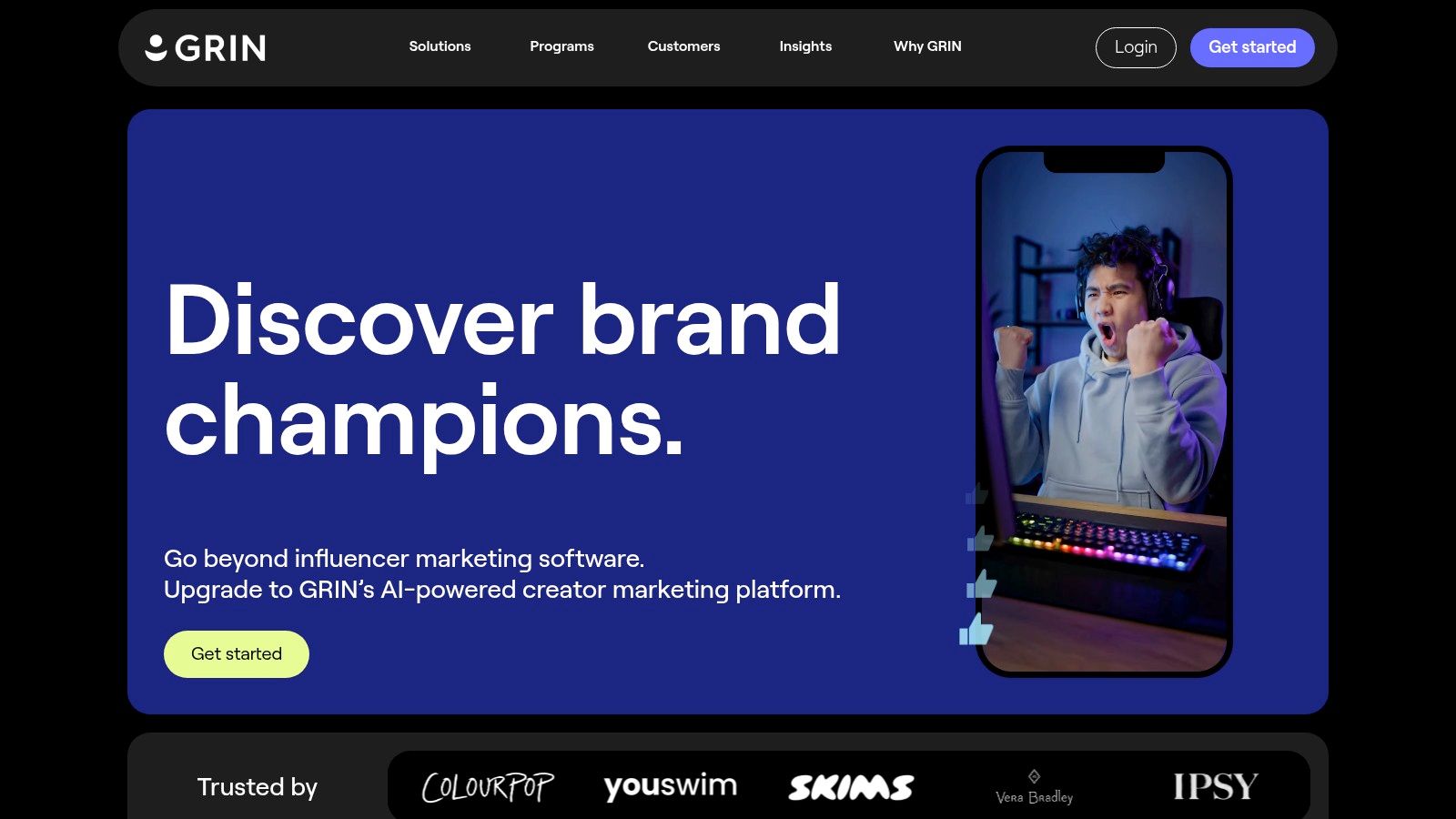
For fashion, the standout feature is the integrated product seeding. You can send products to influencers directly from your inventory, track shipping, and manage the entire gifting process without leaving the platform. This eliminates the logistical headaches of manually coordinating shipments and managing creator addresses.
Platform Breakdown
- Best For: Established DTC fashion and apparel brands with a high volume of influencer collaborations.
- Key Features: Deep ecommerce integrations (Shopify, WooCommerce), streamlined product seeding, creator affiliate and discount code tracking, and robust ROI reporting.
- Pricing: Quote-based and tailored to your brand's needs. Market estimates from sources like SaaS Scout suggest pricing typically starts around $25,000 per year, often with an annual contract.
Pros & Cons
| Pros | Cons |
|---|---|
| Deep commerce integration simplifies product seeding. | Premium pricing can be a barrier for smaller brands. |
| Mature automation for scaling influencer programs efficiently. | Annual contracts are common, requiring a long commitment. |
| Excellent for tracking sales and ROI from creators. |
GRIN is a top-tier choice if your main goal is to build a scalable, sales-driven influencer program that operates like a well-oiled machine.
3. CreatorIQ
CreatorIQ is an enterprise-grade influencer software for fashion brands managing large-scale, global campaigns. Its power lies in its AI-driven discovery, first-party data integrations with major social platforms like TikTok and Meta, and robust governance features. This makes it ideal for established fashion houses that require deep analytics, brand safety, and the infrastructure to manage hundreds or thousands of creators worldwide.

For global fashion brands, the platform’s ability to handle payments in over 60 currencies and ensure compliance across different regions is a significant advantage. Its competitive benchmarking tools allow brands to see how their share of voice and engagement rates stack up against competitors, providing crucial strategic insights. The direct data partnerships also offer more accurate and reliable reporting than platforms that rely on scraped data.
Platform Breakdown
- Best For: Large enterprise fashion brands and agencies that require global scale, data security, and advanced analytics.
- Key Features: AI-assisted discovery with brand safety (SafeIQ), global payment processing, competitive benchmarking, and direct data partnerships with TikTok, Meta, and YouTube.
- Pricing: Custom quote-based pricing. As an enterprise solution, it is positioned at a premium price point, often starting in the tens of thousands annually.
Pros & Cons
| Pros | Cons |
|---|---|
| First-party data integrations offer highly accurate analytics. | High-cost, enterprise focus makes it inaccessible for SMBs. |
| Strong security and governance for managing global campaigns. | Steeper learning curve compared to more simplified platforms. |
| Excellent for competitive benchmarking and market analysis. | Less focused on DTC ecommerce integrations like product seeding. |
CreatorIQ is the go-to choice for sophisticated marketing teams that need powerful, data-driven tools to manage complex influencer ecosystems at a global level. Learn more about the various influencer marketing platforms to see how CreatorIQ compares to others.
4. Aspire (formerly AspireIQ)
Aspire is an all-in-one influencer marketing platform built to help brands scale their community-building and user-generated content (UGC) efforts. It excels for fashion brands that want to manage both outbound influencer discovery and inbound applications from creators who already love their products. The platform provides a full suite of tools for everything from campaign automation and product seeding to affiliate payments and performance tracking.
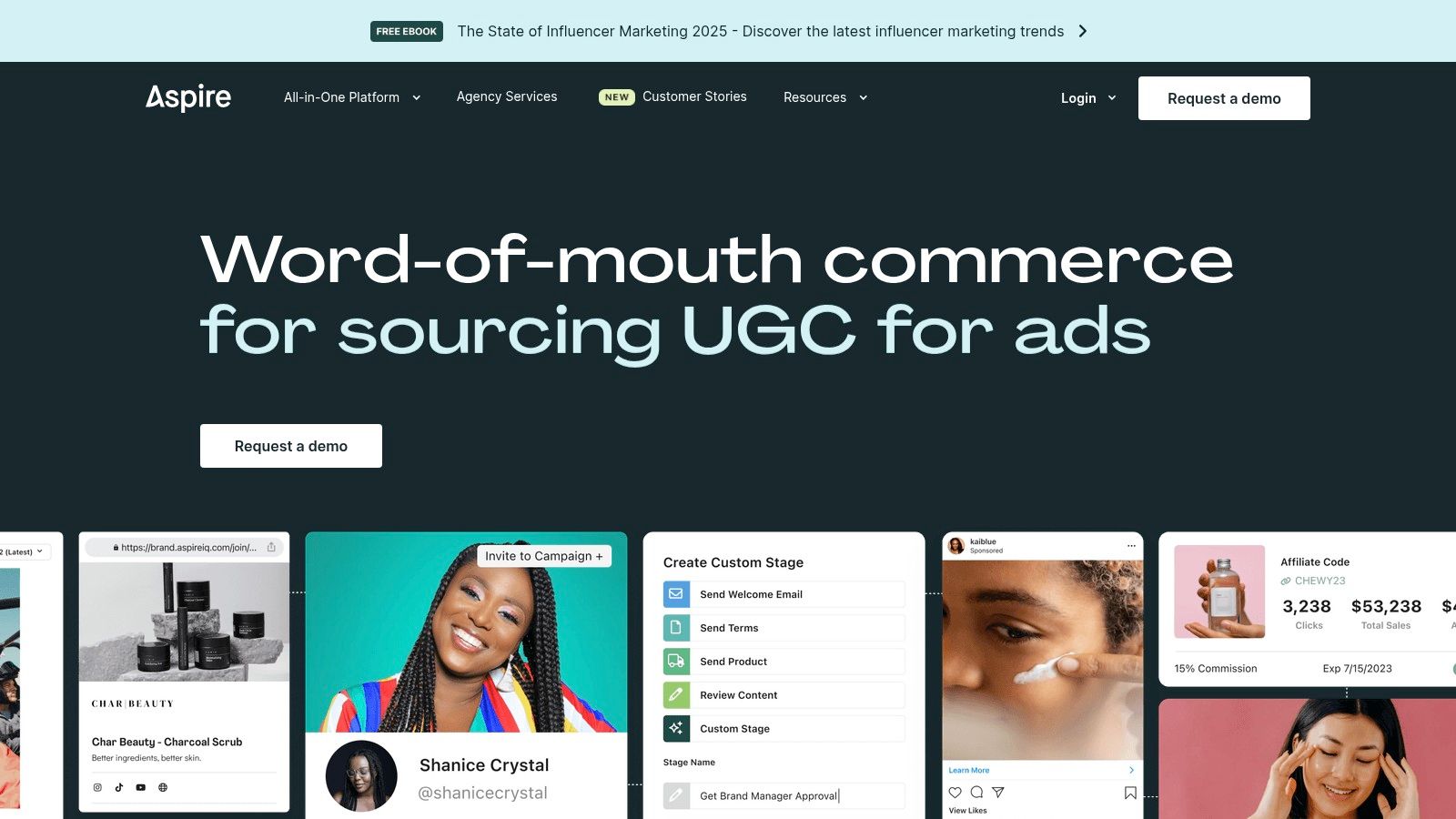
For fashion and ecommerce teams, Aspire’s strength is its dual approach to creator sourcing. You can proactively search for influencers or leverage its Creator Marketplace to receive pitches from interested creators, making it easier to find authentic brand fans. Its workflow automations and strong Shopify integration streamline the often-complex process of gifting products and collecting high-quality UGC at scale.
Platform Breakdown
- Best For: Mid-market DTC fashion brands focused on scaling product seeding, UGC collection, and building a creator community.
- Key Features: Creator Marketplace for inbound pitches, workflow automation for briefs and contracts, integrated product seeding pipelines, and performance dashboards with ad amplification.
- Pricing: Quote-based. Industry reports suggest plans start around $2,000+ per month, and the platform requires internal team members to manage campaigns effectively.
Pros & Cons
| Pros | Cons |
|---|---|
| Efficient at scaling product seeding and UGC programs. | Pricing is not publicly listed and can be a commitment. |
| Combines inbound marketplace with outbound search. | Requires dedicated internal resources to run DIY campaigns. |
| Strong Shopify workflows for direct-to-consumer teams. |
Aspire is an excellent piece of influencer software for fashion brands that have outgrown manual processes and need a centralized system to manage a growing volume of creator relationships.
5. Upfluence
Upfluence is a comprehensive influencer marketing platform that excels at consolidating multiple workflows into a single, cohesive system. For fashion brands, its power lies in combining a massive creator discovery database with integrated CRM, affiliate management, and product gifting tools. This makes it an ideal choice for brands that want to manage the entire influencer lifecycle, from initial search to final payment, without juggling different software.
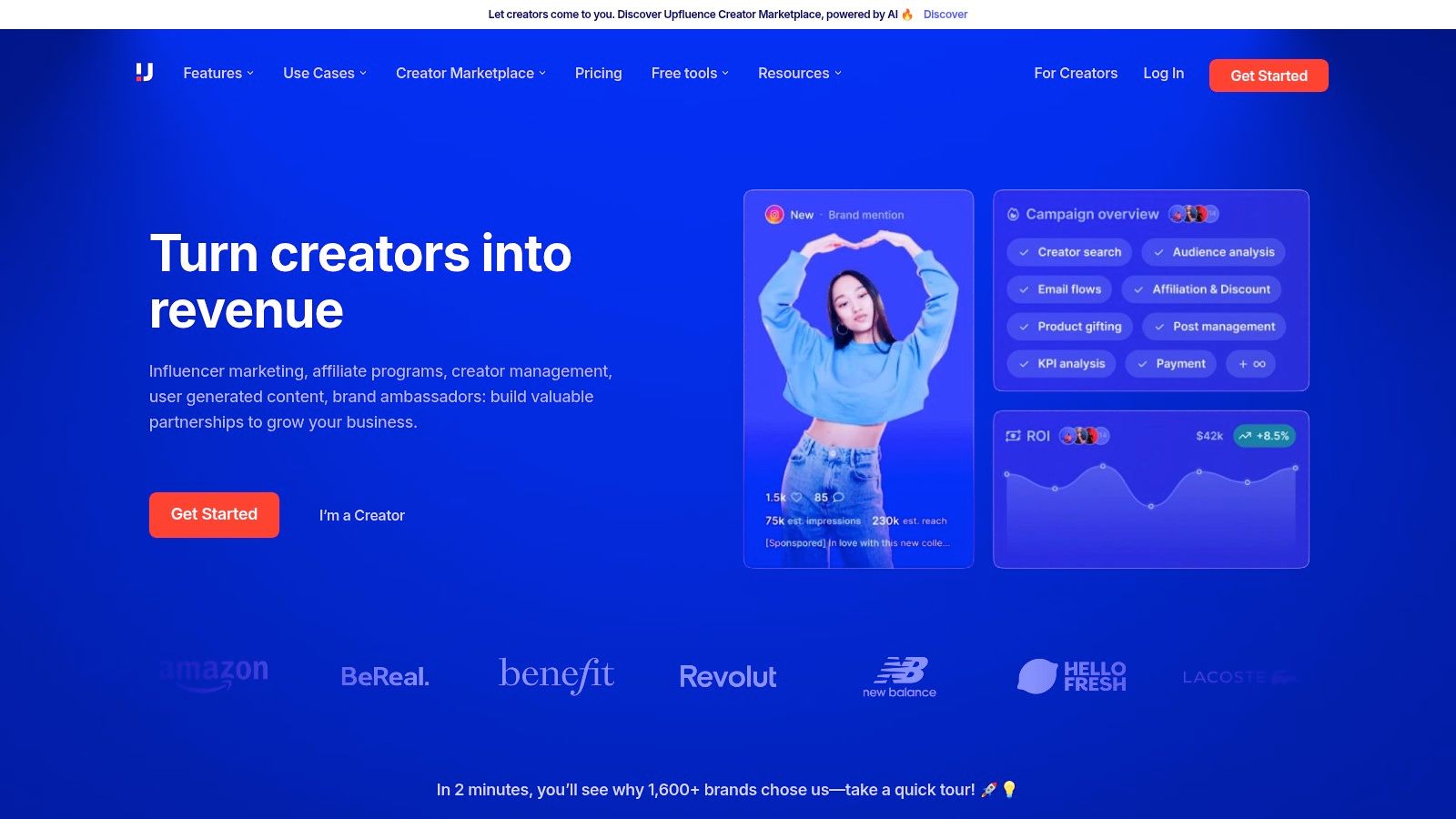
The platform’s integrations with Shopify and Klaviyo are particularly valuable for fashion, allowing for seamless one-click product shipments and aligning influencer campaigns with email marketing efforts. Its AI-assisted outreach helps streamline communication, while the built-in affiliate system makes it easy to set up and manage commission-based partnerships, a popular model for apparel and accessory brands. Upfluence serves as a powerful influencer discovery tool that also manages the rest of the campaign process.
Platform Breakdown
- Best For: DTC fashion brands looking for a single platform to handle discovery, outreach, gifting, and affiliate payments.
- Key Features: AI-powered creator discovery, integrated product gifting and shipment, affiliate commission management (Stripe/PayPal), and direct integrations with Shopify and Klaviyo.
- Pricing: Quote-based and modular. Market reports suggest pricing can range from $2,000 to $3,500+ per month, depending on the features and scale required.
Pros & Cons
| Pros | Cons |
|---|---|
| Consolidates many tools into one platform (discovery, CRM, gifting). | Pricing is not public and requires a demo to determine cost. |
| Strong ecommerce integrations streamline logistics. | The comprehensive feature set can be complex for beginners. |
| Scales well from initial discovery to final attribution. | Modular plans mean not all features are in the base package. |
Upfluence is a strong contender if your goal is to build an efficient, end-to-end influencer program with a heavy focus on affiliate marketing and product seeding.
6. Traackr
Traackr is an enterprise-level influencer marketing platform that focuses heavily on performance, measurement, and competitive intelligence. For established fashion and beauty brands, it offers a sophisticated way to manage and optimize influencer marketing investments. Instead of just focusing on discovery, Traackr provides deep analytics to benchmark your performance against competitors and measure the true ROI of your campaigns.
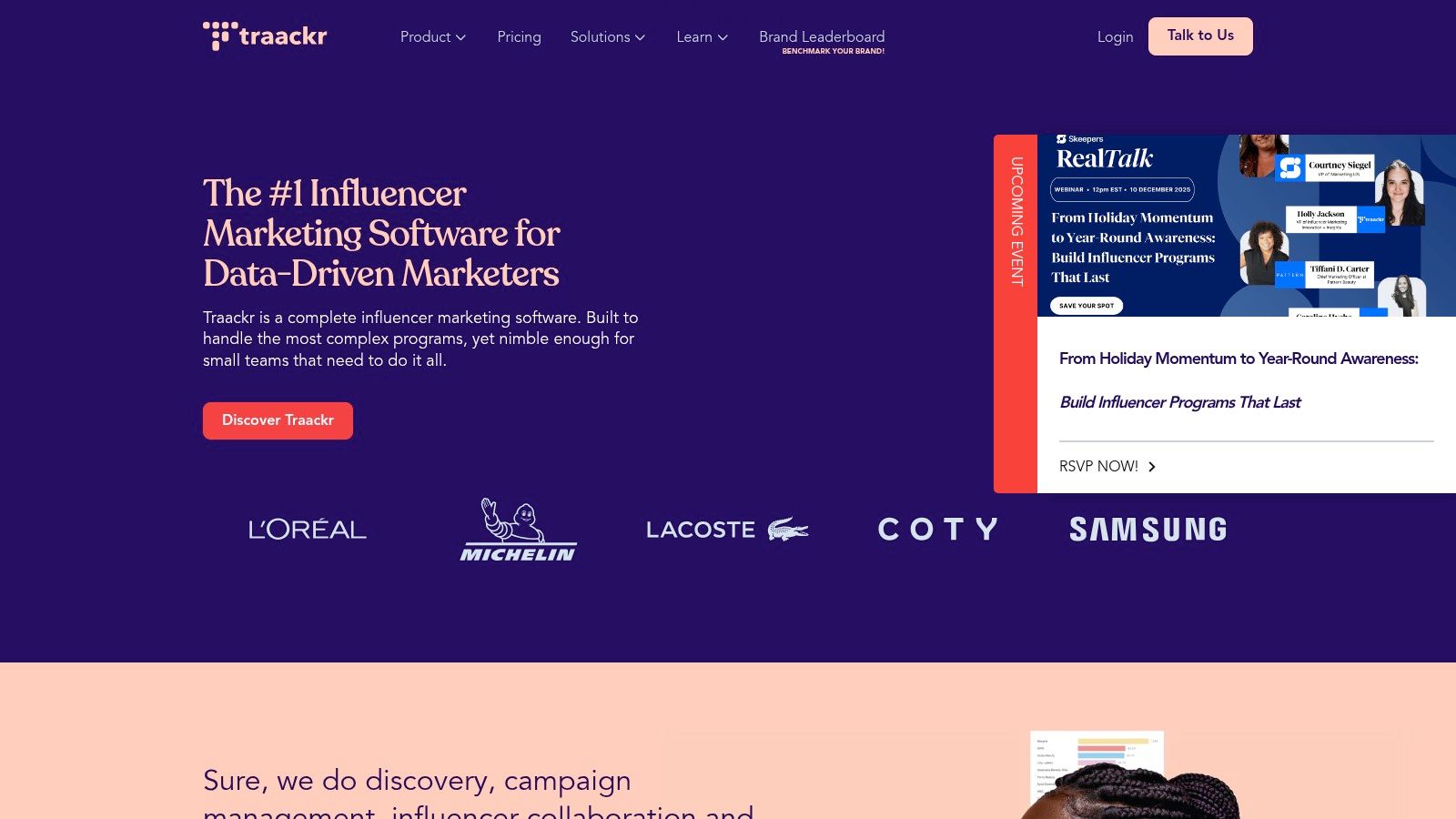
The platform is designed for brands that need governance and standardized measurement across global teams. Its strength lies in turning influencer marketing from a creative-led initiative into a data-backed business function. This makes it an ideal piece of influencer software for fashion brands that operate at scale and need to justify budget allocation with concrete performance data.
Platform Breakdown
- Best For: Large-scale fashion and beauty enterprises with established influencer programs and a need for rigorous analytics.
- Key Features: Global benchmarking and competitive intelligence, investment optimization tools, standardized performance measurement, and governance and compliance features.
- Pricing: Transparent annual pricing tiers based on user seats. Contracts are premium and designed for established teams, often starting in the tens of thousands per year.
Pros & Cons
| Pros | Cons |
|---|---|
| Deep analytics for budget and ROI optimization. | Premium annual contracts are a significant investment. |
| Strong presence and reputation in fashion and beauty. | Best suited for established teams, not smaller brands. |
| Transparent published pricing tiers for clear planning. | Less focus on ecommerce integration than platforms like GRIN. |
Traackr is the go-to solution when your brand needs to move beyond basic campaign execution and into strategic, data-driven program management.
7. Sprout Social Influencer Marketing (formerly Tagger)
Sprout Social's influencer marketing platform, which integrates the powerful technology of Tagger, is an excellent choice for fashion brands already using Sprout for their social media management. This consolidates your entire social and creator strategy into a single workflow. Its strength lies in its AI-powered discovery engine, which allows brands to find creators based on specific topics, audience demographics, and brand safety metrics, ensuring your partners align perfectly with your fashion aesthetic.
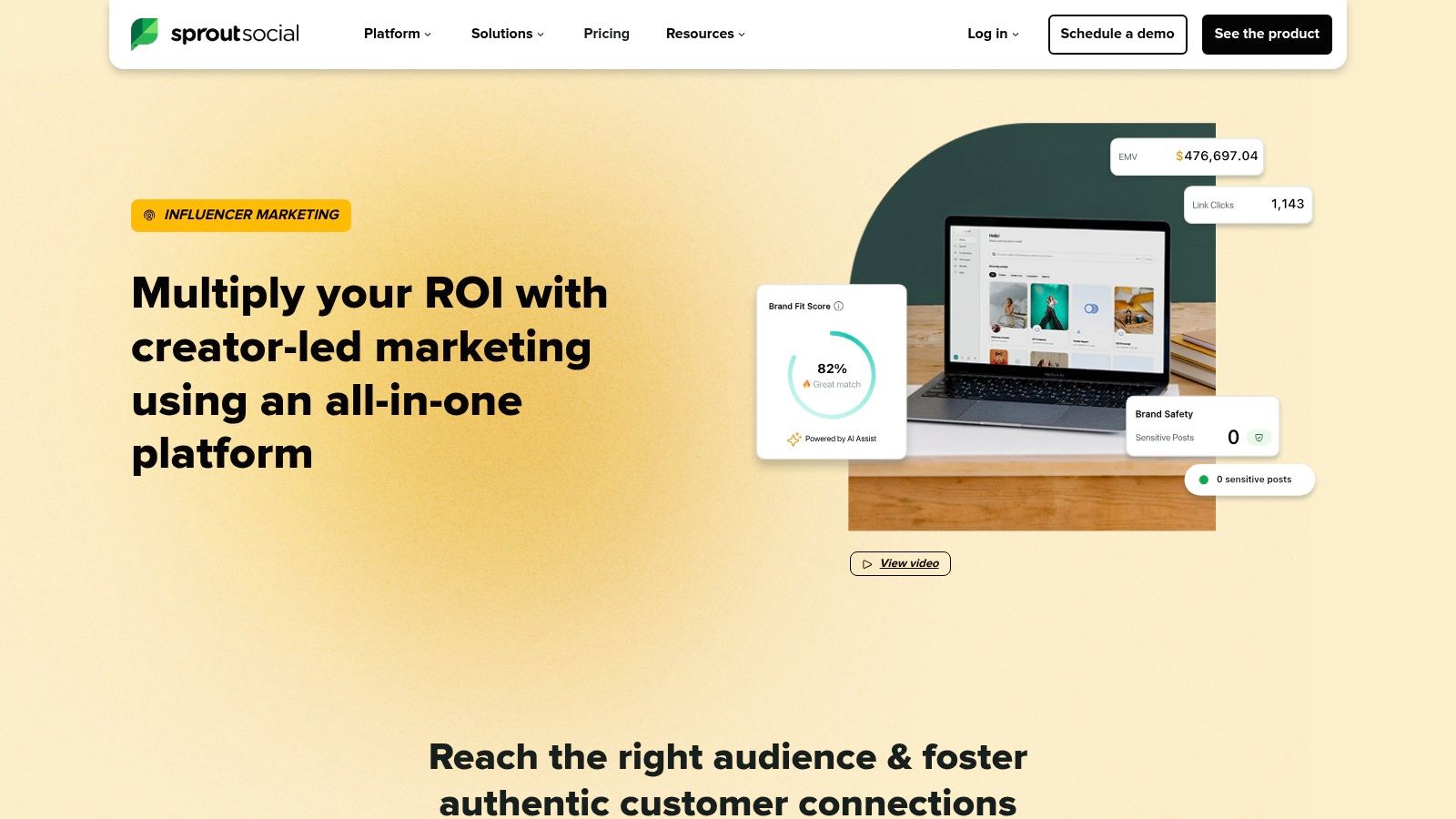
For fashion brands planning campaigns, the estimated fee and budget modeling tools are particularly useful. This feature helps you forecast costs accurately before you even begin outreach, making it easier to plan seasonal campaigns or collection drops. By combining influencer management with social publishing and analytics, Sprout provides a holistic view of your brand's digital presence.
Platform Breakdown
- Best For: Fashion brands that want to unify their organic social media management and influencer marketing efforts in one platform.
- Key Features: AI-powered and topic-led creator discovery, Brand Fit and Brand Safety analysis, integrated campaign workflows, and estimated fee/budget modeling tools.
- Pricing: Pricing for the influencer module is quote-based and requires a demo. It is an add-on to the core Sprout Social subscription, which has its own per-user pricing.
Pros & Cons
| Pros | Cons |
|---|---|
| Single login for social publishing and influencer workflows. | Influencer module pricing is not publicly listed. |
| Active product development and a clear feature roadmap. | Core Sprout seats are priced per user, which can add up. |
| Useful budget/fee estimation for planning campaigns. | Accessing the influencer add-on requires a sales demo. |
Sprout Social is the ideal influencer software for fashion brands seeking to streamline their tech stack and manage creators alongside their day-to-day social media operations.
8. impact.com / Creator
impact.com / Creator is a unified performance marketing platform where influencer marketing meets traditional affiliate programs. This is a game-changer for fashion brands focused on driving measurable commerce outcomes. It moves beyond simple awareness campaigns to help you manage creators who drive sales on a commission or hybrid payment model, tracking their performance with the same rigor you would an affiliate partner.
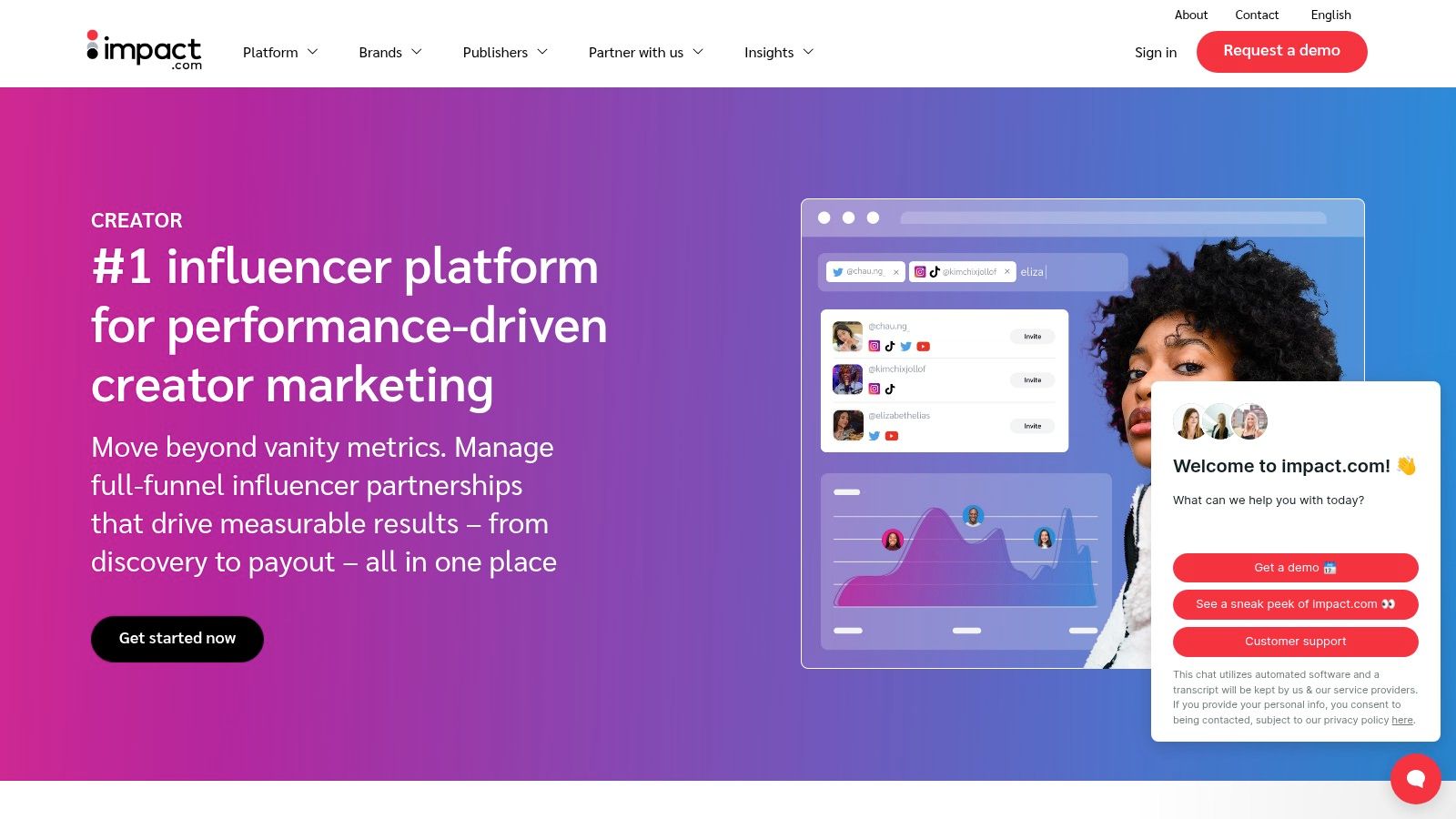
For fashion brands, this means you can seamlessly manage paid collaborations alongside a robust, commission-based ambassador program all in one place. The platform excels at contracting and automating payouts for complex, hybrid compensation models, making it a powerful piece of influencer software for fashion brands that want to build a true performance-based creator engine.
Platform Breakdown
- Best For: Fashion brands of all sizes that want to unify their influencer and affiliate marketing efforts under one performance-driven roof.
- Key Features: Creator discovery marketplace, automated contracting and payouts, hybrid compensation models (CPA, flat fee), deep cross-channel attribution, and ecommerce integrations.
- Pricing: Quote-based. Plans are available for small businesses, but full enterprise features come with higher-tier packages.
Pros & Cons
| Pros | Cons |
|---|---|
| Clear performance focus on sales and conversions. | The unified creator/affiliate approach has a learning curve. |
| Scales from small programs to enterprise-level needs. | Some advanced capabilities are locked behind higher-tier plans. |
| Excellent for managing complex, commission-based deals. |
If your goal is to build a creator program that directly and measurably contributes to your bottom line, impact.com / Creator is an outstanding choice.
Visit impact.com / Creator's Website
9. Shopify Collabs
For fashion brands built on Shopify, Shopify Collabs is the most seamless entry point into creator marketing. As a native app, it integrates directly into your Shopify admin, allowing you to recruit creators, manage affiliate programs, and handle gifting without ever leaving your dashboard. This makes it an incredibly low-friction option for emerging brands eager to test influencer and affiliate channels with minimal initial investment.
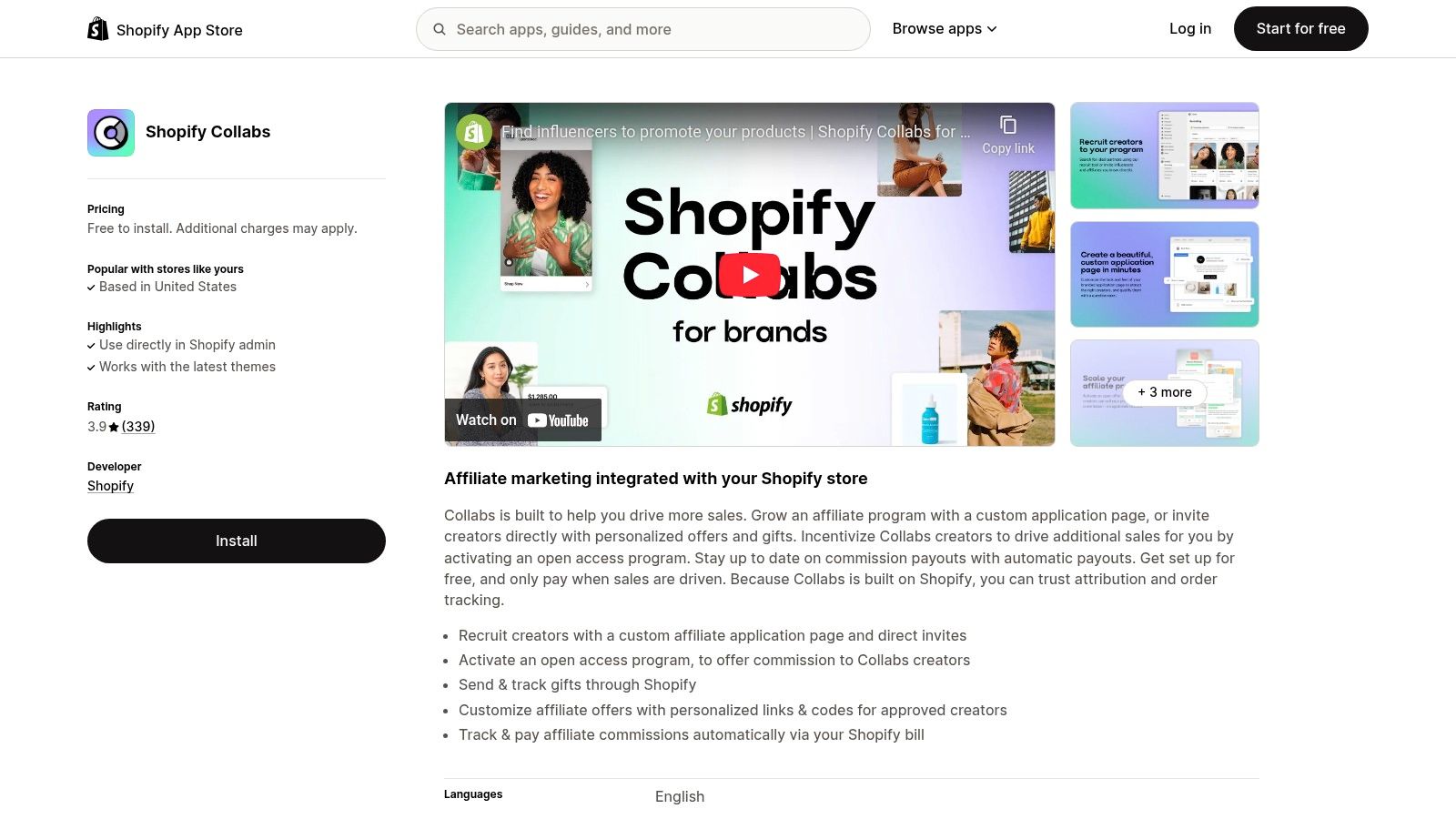
The platform’s strength is its simplicity. You can set up a custom application page for creators to join your community, create open affiliate programs with automatic link and commission tracking, and pay creators directly through Shopify. This removes many of the administrative hurdles that can bog down a new program, such as collecting W-9s and processing manual payouts. You can learn more about how Shopify Collabs streamlines influencer marketing for DTC brands.
Platform Breakdown
- Best For: Emerging and small-to-medium Shopify-based fashion brands starting their first affiliate or gifting programs.
- Key Features: Creator recruitment application pages, open affiliate programs, automatic commission tracking and payouts, and direct integration into the Shopify admin.
- Pricing: Free to install. Shopify charges a 2.9% commission processing fee on affiliate payouts you make, plus standard payment processing fees.
Pros & Cons
| Pros | Cons |
|---|---|
| Free to install and built directly into Shopify. | Discovery capabilities are very limited compared to other platforms. |
| Minimal setup cost to test creator programs. | Creator quality filtering often requires significant manual vetting. |
| Automatic payout and tax compliance for US creators. | Lacks advanced campaign management and reporting features. |
Shopify Collabs is the perfect first step for brands on Shopify that want a straightforward, cost-effective way to launch and manage affiliate partnerships.
10. LTK (formerly rewardStyle / LIKEtoKNOW.it)
LTK is a powerhouse in the fashion and lifestyle creator economy, operating as a massive creator commerce network. It connects brands with a highly curated group of influencers who are experts at driving sales through shoppable content. This platform is less about broad discovery and more about tapping into a proven network of commerce-focused creators.

For fashion brands, LTK's main appeal is its direct line to creators who have built entire businesses around affiliate marketing and converting followers into customers. Through the LTK Marketplace, brands can post campaign opportunities that creators can pitch for, streamlining the casting process. Its robust affiliate linking and consumer-facing app make it a go-to for performance-based campaigns.
Platform Breakdown
- Best For: Fashion and beauty brands of all sizes, from emerging labels to enterprise, looking to drive direct sales through affiliate partnerships.
- Key Features: Creator Marketplace for campaign pitches, robust affiliate link tracking, campaign management tools, and access to a large, sales-focused creator network.
- Pricing: Offers both self-serve and enterprise plans. Self-serve plans can start at a few hundred dollars per month, while enterprise solutions are quote-based.
Pros & Cons
| Pros | Cons |
|---|---|
| Highly concentrated creator network focused on fashion. | Self-serve plans have limits on monthly creator spend. |
| Access to creators who excel at converting shoppers. | The affiliate-heavy model may not suit awareness campaigns. |
| Self-serve plans available for smaller brands and budgets. |
LTK is the ideal influencer software for fashion brands that prioritize affiliate marketing and want to collaborate with creators who are proven to drive sales.
11. Fohr
Fohr blends self-serve software with managed agency services, making it a versatile choice for fashion and beauty brands. Its platform offers tools for influencer discovery, communication, and campaign management, but it truly stands out for brands that might need strategic support alongside their software. With deep roots in the fashion industry, Fohr understands the nuances of aesthetic-driven collaborations.
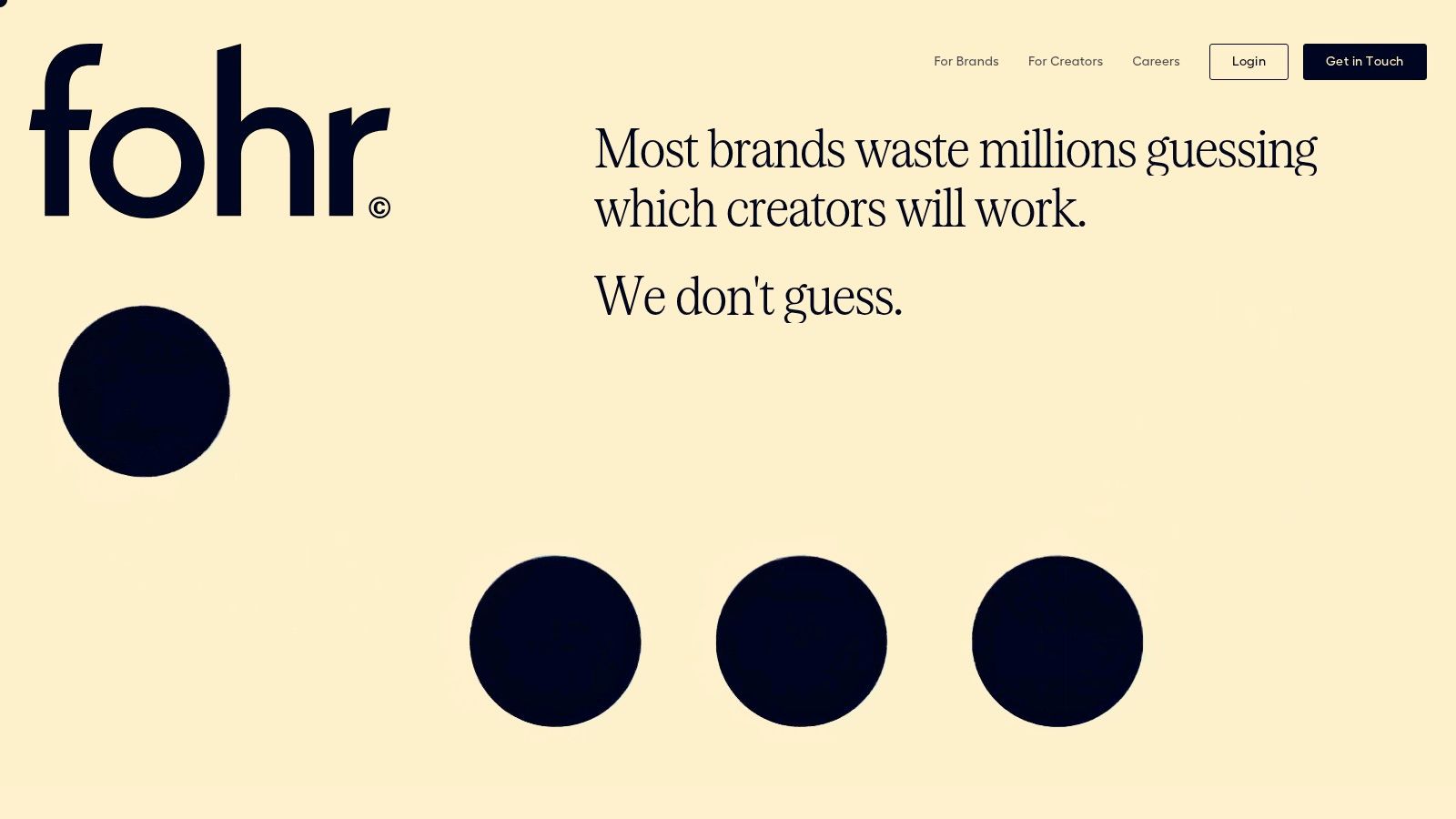
The platform is known for its opt-in creator community, where influencers create detailed press kit-style profiles, giving brands rich, verified data. A key feature for fashion brands is its ambassador program toolkit, which helps you recruit loyal customers and fans to become authentic brand advocates. Its gifting pipeline, FohrGifted, is also tailored specifically for the logistical needs of fashion and beauty product seeding.
Platform Breakdown
- Best For: Fashion and beauty brands that want the flexibility of a DIY platform with the option for expert agency support.
- Key Features: Self-serve discovery tools, opt-in creator community with detailed profiles, ambassador program management, and a specialized gifting pipeline (FohrGifted).
- Pricing: Pricing is not publicly listed and is provided upon request. The model supports both software subscriptions and managed service retainers.
Pros & Cons
| Pros | Cons |
|---|---|
| Strong expertise in the fashion and beauty verticals. | Pricing is not transparent on their website. |
| Flexible model combining DIY software and managed services. | The self-serve influencer database may be smaller than some rivals. |
| Creator-centric tools encourage high-quality, inbound interest. |
Fohr is an excellent option if you value industry expertise and want a solution that can grow with you, from self-managed campaigns to fully outsourced programs.
12. Later Influence (formerly Mavrck)
Later Influence, formerly known as Mavrck, is an enterprise-level influencer marketing platform now integrated into Later's popular social media suite. This combination is powerful for fashion brands that want to unite their influencer campaign management with their day-to-day social scheduling and analytics. It's built for creating predictable, performance-driven programs through advanced creator recruiting, workflow automation, and detailed measurement.
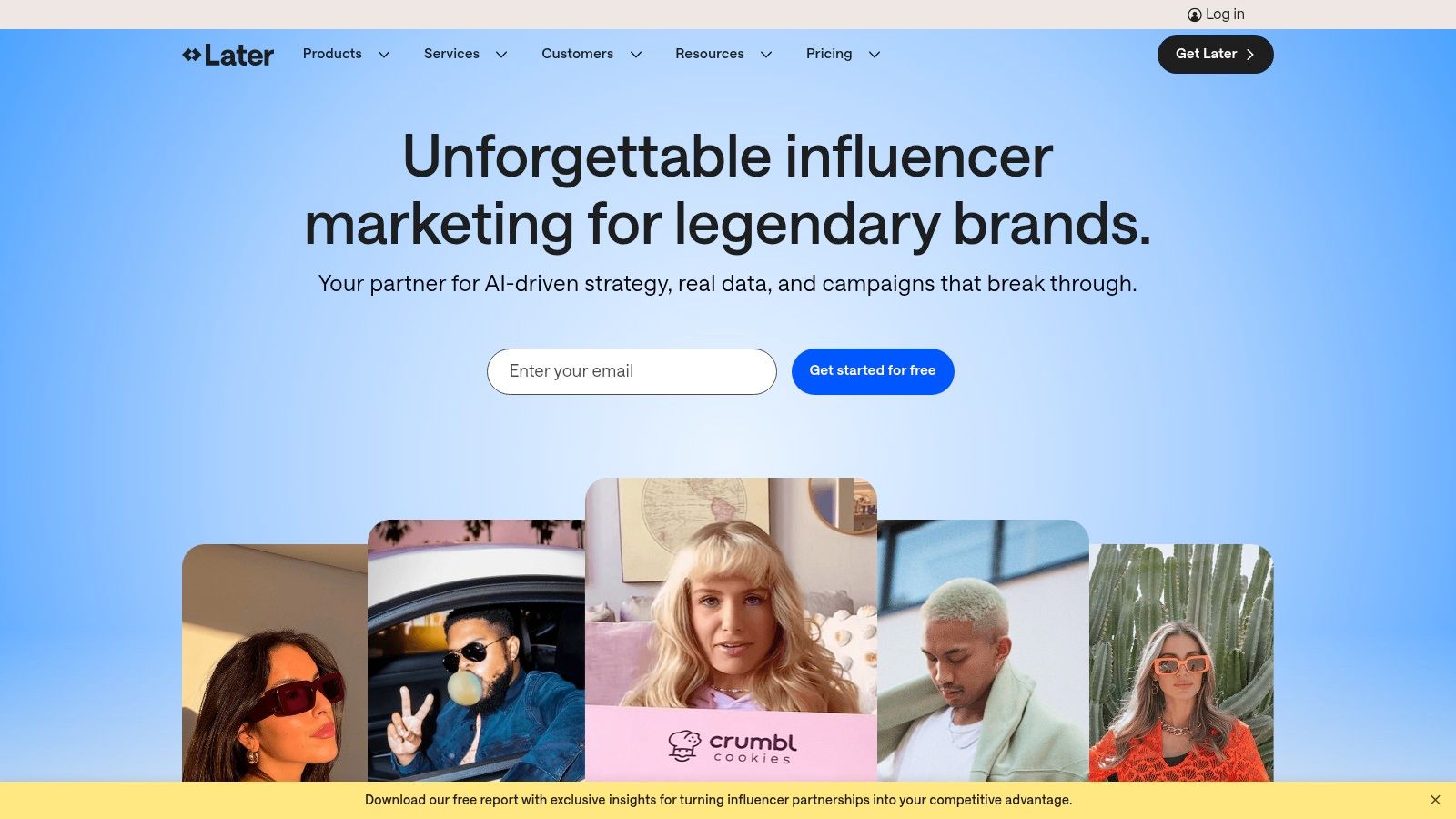
The platform excels at managing recurring influencer programs at scale. Fashion brands can use its scalable workflows to create detailed campaign briefs, assign deliverables, and run content approvals all in one place. Its opt-in "Influencer Index" provides a vetted pool of creators, and with the acquisition of Mavely, its commerce and affiliate capabilities are expanding, making it a more robust tool for sales-focused fashion campaigns.
Platform Breakdown
- Best For: Enterprise-level fashion and apparel brands already using or planning to use the Later suite for social media management.
- Key Features: Influencer Index database, scalable campaign workflows, integrated communication tools, content approvals, and expanding affiliate tracking capabilities.
- Pricing: Enterprise-oriented and available via a custom quote or demo. Pricing is tailored to brand size and specific needs.
Pros & Cons
| Pros | Cons |
|---|---|
| Proven enterprise tooling now backed by the Later ecosystem. | Pricing is quote-based and aimed at larger, enterprise clients. |
| Tight integration with Later's social scheduling and analytics. | Requires dedicated brand resources to maximize its DIY workflows. |
| Excellent for managing recurring, long-term influencer programs. |
Later Influence is a strategic choice for established fashion brands seeking an integrated, all-in-one solution for both influencer marketing and broader social media management.
Top 12 Influencer Software for Fashion — Feature Comparison
| Platform | ✨ Core features | 👥 Best for | 💰 Pricing / Value | ★ Rating & notes |
|---|---|---|---|---|
| REACH 🏆 | Precision discovery (engagement, demographics, location); centralized campaign dashboard; payments & tax compliance; ROI calculator | Agencies, DTC brands, creators | 💰 Platform fee shown ~9% (site example); free trial/demo for tiers | ★★★★☆ Time-saving, data-driven (pricing details via demo) |
| GRIN | Creator CRM, product seeding/gifting, affiliate tracking, content rights | DTC ecommerce (Shopify/WooCommerce) | 💰 Quote-based; market ~$25K+/year | ★★★★☆ Commerce-native workflows |
| CreatorIQ | AI-assisted discovery & SafeIQ brand safety; governance; global payments; platform partnerships | Large brands & agencies (enterprise) | 💰 Enterprise pricing (high; quote) | ★★★★★ Enterprise-grade analytics & scale |
| Aspire (AspireIQ) | Inbound marketplace + outbound search; automation; product seeding; dashboards & ad amplification | Mid-market ecommerce/fashion scaling UGC | 💰 Not public; market ~$2K+/mo entry | ★★★★☆ Strong UGC & seeding workflows |
| Upfluence | Discovery database, CRM, gifting/shipments, affiliate mgmt, Shopify integrations | US DTC brands consolidating discovery→attribution | 💰 Mid-market, modular plans (~$2K–$3.5K+/mo reported) | ★★★★☆ Broad consolidated toolset |
| Traackr | Investment optimization, global benchmarking, governance, standardized measurement | Enterprise beauty & fashion programs | 💰 Published annual tiers; premium contracts | ★★★★☆ Deep ROI & competitive intelligence |
| Sprout Social Influencer (Tagger) | AI/topic-led discovery, Brand Fit/Safety, campaign workflow inside Sprout | Brands wanting social + influencer consolidation | 💰 Influencer add-on sold via sales/demo | ★★★★☆ Unified social + influencer ops |
| impact.com / Creator | Creator marketplace, contracting & payout automation, cross-channel attribution | Performance-driven brands (affiliate + creator) | 💰 Entry-level available; scales to enterprise | ★★★★☆ Strong performance & attribution focus |
| Shopify Collabs | Creator recruitment, open affiliate programs, auto commission payouts & W-9 collection | Shopify-based stores testing affiliates/gifting | 💰 Free to install (low friction) | ★★★☆☆ Easy, low-cost test option (limited discovery) |
| LTK | Fashion-focused marketplace, affiliate linking, campaign casting, consumer-facing app | Fashion/beauty/lifestyle brands & commerce creators | 💰 Self-serve + enterprise tiers; caps on some self-serve plans | ★★★★☆ High commerce intent creators |
| Fohr | Self-serve discovery, creator profiles, ambassador management, gifting pipelines; managed services available | Fashion & beauty brands seeking DIY + agency support | 💰 Pricing not public; optional managed services | ★★★☆☆ Niche expertise; smaller dataset |
| Later Influence (Mavrck) | Influencer Index, briefs & approvals, scalable workflows, Later scheduling integration | Enterprise brands using Later for social | 💰 Enterprise pricing by demo/quote | ★★★★☆ Tight integration with Later’s suite |
Final Thoughts
Navigating the dynamic world of influencer marketing requires more than just a great collection; it demands the right technology to discover, manage, and measure your creative partnerships. As we've explored, the landscape of influencer software for fashion brands is rich and varied, offering solutions that cater to every niche, budget, and business size. From enterprise-level powerhouses like CreatorIQ and GRIN to specialized platforms like LTK and Fohr, the perfect tool is out there to elevate your brand’s presence and drive tangible results.
The key takeaway is that there is no one-size-fits-all solution. A startup direct-to-consumer brand focused on gifting might find Shopify Collabs to be an ideal starting point. Conversely, a global luxury house managing hundreds of campaigns will require the robust analytics and global creator discovery offered by a solution like Traackr or REACH. Your choice of influencer software for fashion brands should directly align with your business goals, team capacity, and budget.
Choosing the right software is a strategic decision that will shape your entire influencer program. Before you commit, define your brand’s specific needs. This self-assessment is the most critical step in finding a platform that will act as a true partner in your growth.
To recap, here are the essential steps to guide your decision-making process:
- Define Your Core Objectives: Are you aiming for brand awareness, driving direct sales through affiliate links, or generating high-quality user-generated content (UGC)? Your primary goal will heavily influence which platform’s features are most valuable.
- Assess Your Team's Capacity: Consider the size of your marketing team. Do you need a user-friendly platform, or do you have a dedicated team that can manage a more complex, data-heavy system?
- Establish a Realistic Budget: Determine what you can invest in the software subscription, influencer compensation, and product seeding.
- Prioritize Fashion-Specific Features: Revisit our buyer's checklist and prioritize functionalities like integrated product seeding, size tracking, digital showroom capabilities, and robust affiliate tracking.
Once you've selected your ideal influencer software for fashion brands, the work is just beginning. Successful implementation involves integrating the platform into your broader marketing ecosystem, connecting it with your e-commerce platform and social media management tools. View this software as a central hub for building and nurturing relationships. By investing in the right technology and focusing on authentic partnerships, your brand can create a powerful, scalable influencer marketing engine that not only keeps up with trends but sets them.
Ready to streamline your campaigns and build lasting creator relationships with a platform designed for the unique demands of the fashion industry? REACH offers a comprehensive suite of tools, from advanced discovery and product seeding to real-time analytics, helping you manage every aspect of your influencer program in one place. Explore how REACH can transform your fashion brand's influencer strategy today.
{
  "@context": "https://schema.org",
  "@type": "BlogPosting",
  "mainEntityOfPage": {
    "@type": "WebPage",
    "@id": "https://reach-influencers.com/blog/influencer-software-for-fashion-brands"
  },
  "headline": "12 Best Influencer Software for Fashion Brands in 2024",
  "description": "Discover the top 12 influencer software for fashion brands in 2024. Compare features, pricing, and pros/cons of platforms like REACH, GRIN, and CreatorIQ to find the perfect tool for your apparel or beauty brand.",
  "image": "https://cdn.outrank.so/64cdc0e0-2a54-4cd9-a9d4-cef4b5dbea84/screenshots/ac47533c-543a-45ee-a9d4-cef4b5dbea84/influencer-software-for-fashion-brands-software-dashboard.jpg",
  "author": {
    "@type": "Organization",
    "name": "REACH Influencers"
  },
  "publisher": {
    "@type": "Organization",
    "name": "REACH Influencers",
    "logo": {
      "@type": "ImageObject",
      "url": "https://reach-influencers.com/logo.png"
    }
  },
  "datePublished": "2024-05-15",
  "dateModified": "2024-05-15",
  "review": {
    "@type": "Review",
    "reviewRating": {
      "@type": "Rating",
      "ratingValue": "4.5",
      "bestRating": "5"
    },
    "author": {
      "@type": "Organization",
      "name": "REACH Influencers"
    }
  }
}