 Skip to content

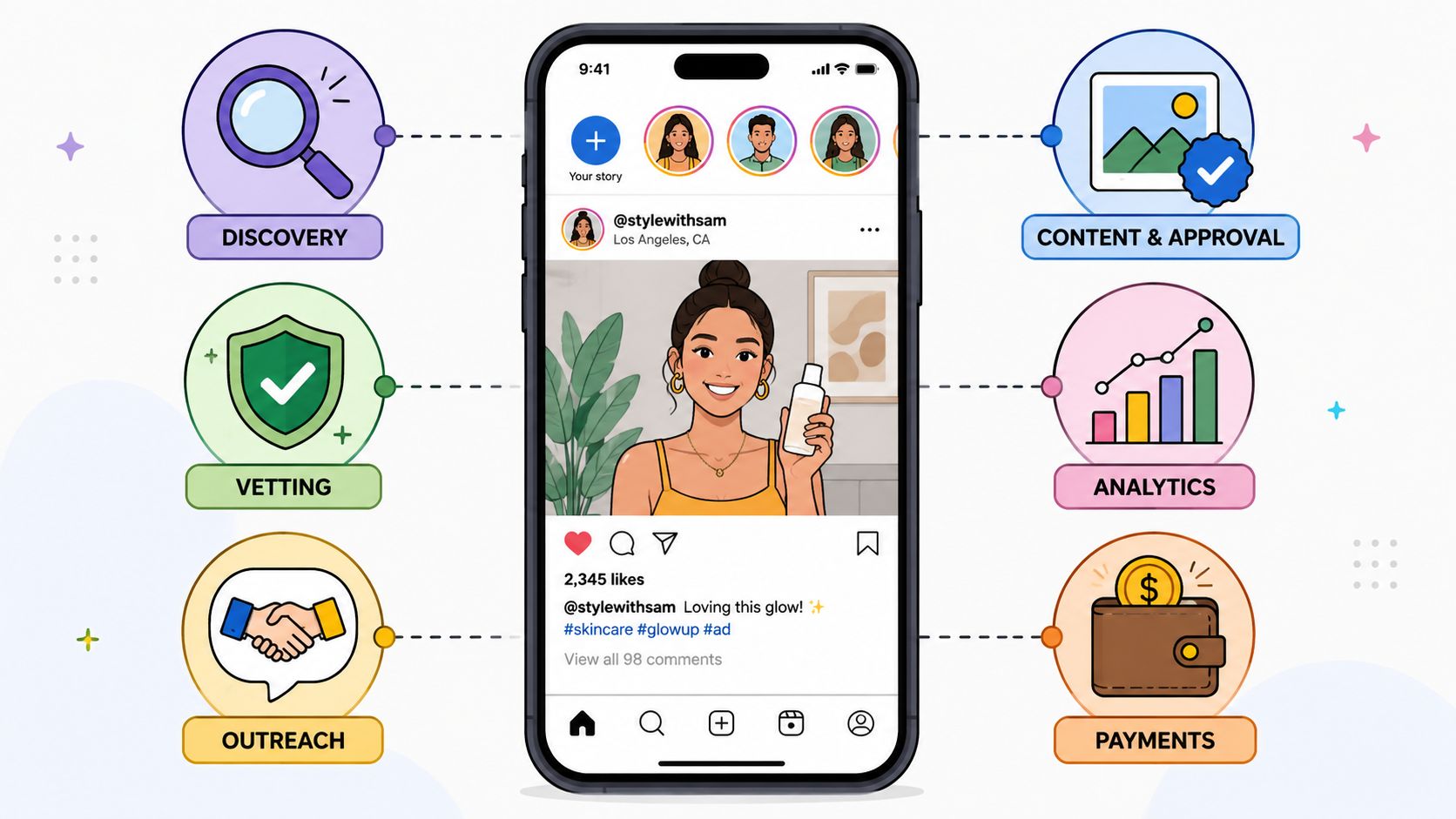
It usually starts the same way. A campaign is live, creators are replying in Instagram DMs, approvals are buried in email, and someone on the team is updating a spreadsheet that stops being accurate the moment the next message comes in. Or the team already bought a platform that handles discovery well enough, then learned that search is only one part of the job.
Instagram still anchors many influencer programs because it combines reach, creator density, and performance signals in one place. The harder decision is not whether to use Instagram. It is how to build a stack around it without creating more operational drag. Discovery gets the demo. Execution decides whether the campaign stays on schedule.
That gap shows up after creator selection. Briefs sit in separate docs. Content feedback gets split across threads. Payment status lives in finance or in someone's inbox. Reporting gets rebuilt for every recap. Statista's overview of the influencer marketing market shows how fast the category has expanded, and that growth helps explain why software has shifted from simple creator databases toward systems that cover execution and measurement in the same workflow: influencer marketing market data from Statista.
This guide approaches Instagram influencer marketing tools as a connected stack rather than a simple shopping list. Some tools are stronger for enterprise governance. Some fit e-commerce and affiliate-heavy programs. Others are better used for a specific stage, such as vetting creators or validating audience quality, while a central system handles briefs, approvals, payments, and reporting. That is the lens behind this list, and it is also why teams evaluating influencer marketing platforms for campaign operations should look past discovery alone.
The goal is simpler than the software category makes it sound. Use the right tools at each campaign stage, then run the work from one command center instead of five disconnected tabs.
1. REACH
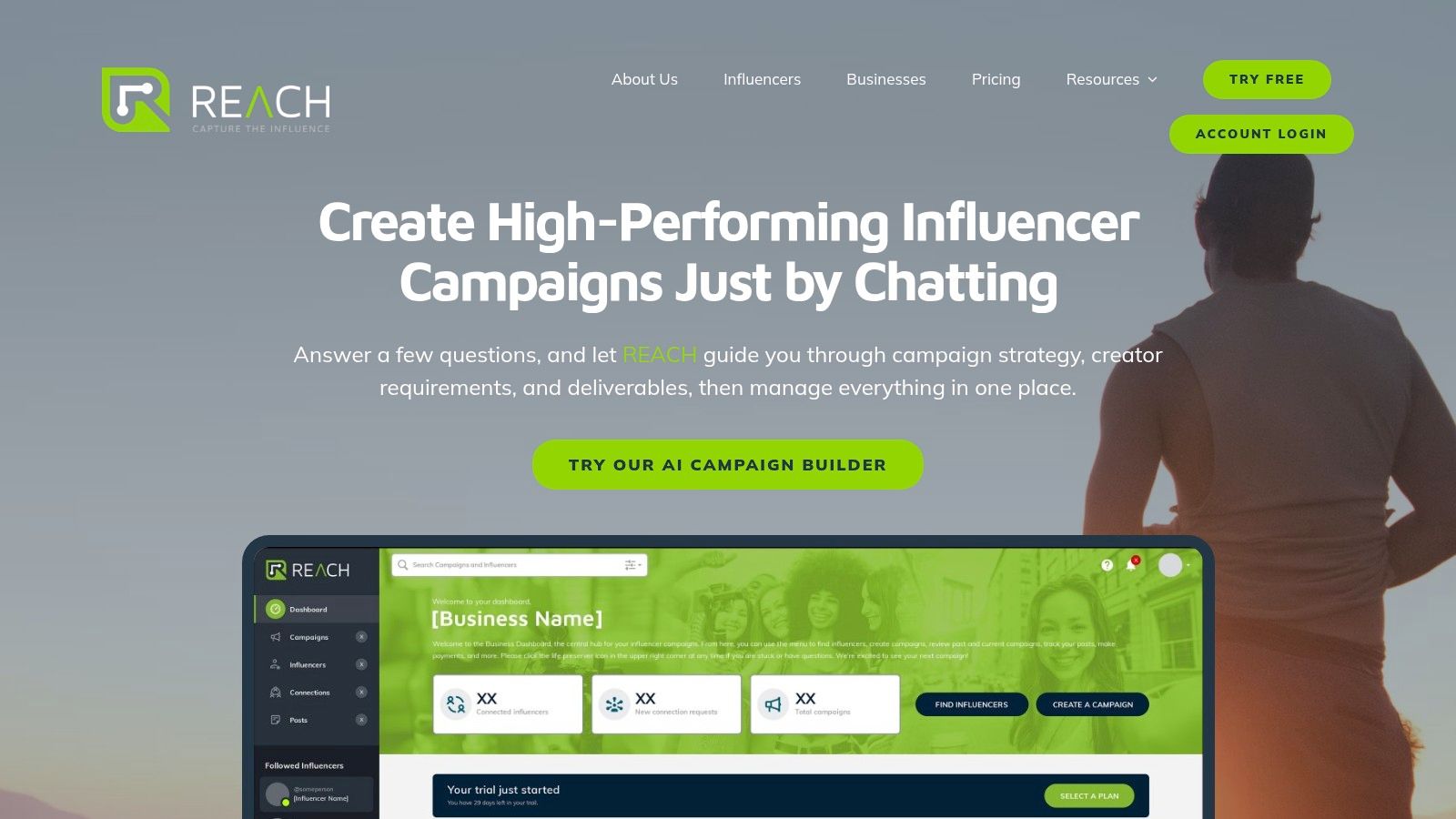
REACH is the tool I'd put at the center of the stack if the main problem isn't finding creators, but running campaigns without chaos. That matters more than most comparison posts admit. Sprout Social's overview of modern influencer software highlights the category's move toward consolidating discovery, outreach, relationship management, and ROI tracking in one system, which is exactly the operational gap many teams are trying to solve with influencer marketing platforms.
REACH is built for that gap. It gives brands and agencies an AI-powered campaign builder, creator discovery, a centralized dashboard, content approvals, payments, and compliance workflows in one place. If your current setup includes spreadsheets for deliverables, a separate folder for assets, and manual payout tracking, REACH fixes the parts that usually break under load.
Why REACH works in practice
The strongest part of REACH isn't one feature. It's the way the workflow stays connected from setup through payout. Teams can build briefs quickly, organize deliverables, track creator communication, review submissions, monitor performance, and handle payments without bouncing between disconnected tools.
That's especially useful for agencies. Multi-client oversight and white-label workflows make it easier to keep client reporting clean without creating a separate process for every account.
Practical rule: If your team already knows which creators it wants, the best software investment is usually campaign operations, not a bigger discovery database.
A few practical strengths stand out:
- AI campaign setup: REACH helps teams turn a rough idea into a usable campaign structure faster.
- Operational control: Messages, approvals, assets, and payouts stay in one system.
- Agency readiness: White-label and multi-client workflow support makes it easier to scale service delivery.
- Budget visibility: The built-in ROI and budget tools help keep expectations grounded.
- Creator experience: Clearer briefs and organized submissions usually reduce avoidable back-and-forth.
Trade-offs to know
REACH doesn't publish broad public subscription tiers on the site, so buyers may need a conversation to confirm fit. The product pages also show less public social proof than some larger vendors, so serious buyers should ask for demos, workflow examples, and references.
Still, if your team is tired of patching together software for discovery, PM, reporting, and payouts, REACH is one of the clearest end-to-end options in this list.
2. CreatorIQ

CreatorIQ is built for teams that need structure, permissions, governance, and a lot of data depth. Large brands usually don't struggle with basic creator search. They struggle with standardization across regions, legal review, finance handoff, and keeping measurement consistent.
That's where CreatorIQ fits. It combines discovery, vetting, campaign management, and measurement in a platform that's clearly designed for enterprise buyers. If your team needs a stronger process for how to find social media influencers and move them into approved campaigns, CreatorIQ is one of the most established options.
Best fit and real trade-offs
CreatorIQ makes the most sense when compliance matters as much as performance. Regulated industries, global brands, and agency groups tend to value that more than a scrappy in-house team does.
What I like about it is the seriousness of the workflow. What I don't like is that smaller teams often pay for complexity they never use.
- Best for: Enterprise brands, regulated categories, large agency groups
- Strongest area: Governance, standardized workflows, deep analytics
- Watch out for: Annual contracts, custom pricing, heavier implementation
CreatorIQ is rarely the tool people describe as “simple.” It's the tool they choose when simple won't survive procurement, legal, and regional marketing teams.
If you're a lean team running a handful of campaigns a month, it may feel oversized. If you're managing creator programs across markets and need one system of record, that weight becomes a feature, not a bug. You can visit CreatorIQ directly to evaluate current product positioning and demo options.
3. GRIN

GRIN has long made the most sense for brands that sell products online and want influencer marketing tied closely to commerce. If your program revolves around gifting, seeding, affiliate links, repeat creator partnerships, and content reuse, GRIN usually feels more natural than a general-purpose influencer platform.
Its creator CRM approach is the selling point. Instead of treating every campaign like a one-off search-and-send project, GRIN supports a more persistent relationship model. That's useful for brands that work with the same creators repeatedly and need tighter control over products, outreach, and attribution.
Where GRIN stands out
GRIN is strongest when the campaign owner sits close to e-commerce operations. Product shipment, affiliate structures, and conversion tracking aren't side features here. They're central to how the platform is used.
That's why GRIN often appeals to DTC teams that care less about massive influencer databases and more about whether creator activity can be tied to revenue assumptions and repeatable workflows. It pairs well with teams that already think in terms of contribution margin and influencer ROI calculator models rather than awareness alone.
- Good fit: DTC and store-led brands
- Best use case: Product seeding, affiliate programs, long-term creator relationships
- Main limitation: Less universal if your campaigns aren't commerce-driven
GRIN also benefits from being easier to try than some enterprise-first platforms because of its self-serve direction and flexible entry positioning. But there's still a practical caution. As programs grow, teams should check whether feature depth keeps pace with their reporting and organizational needs. For current plans and product details, see GRIN.
4. Aspire
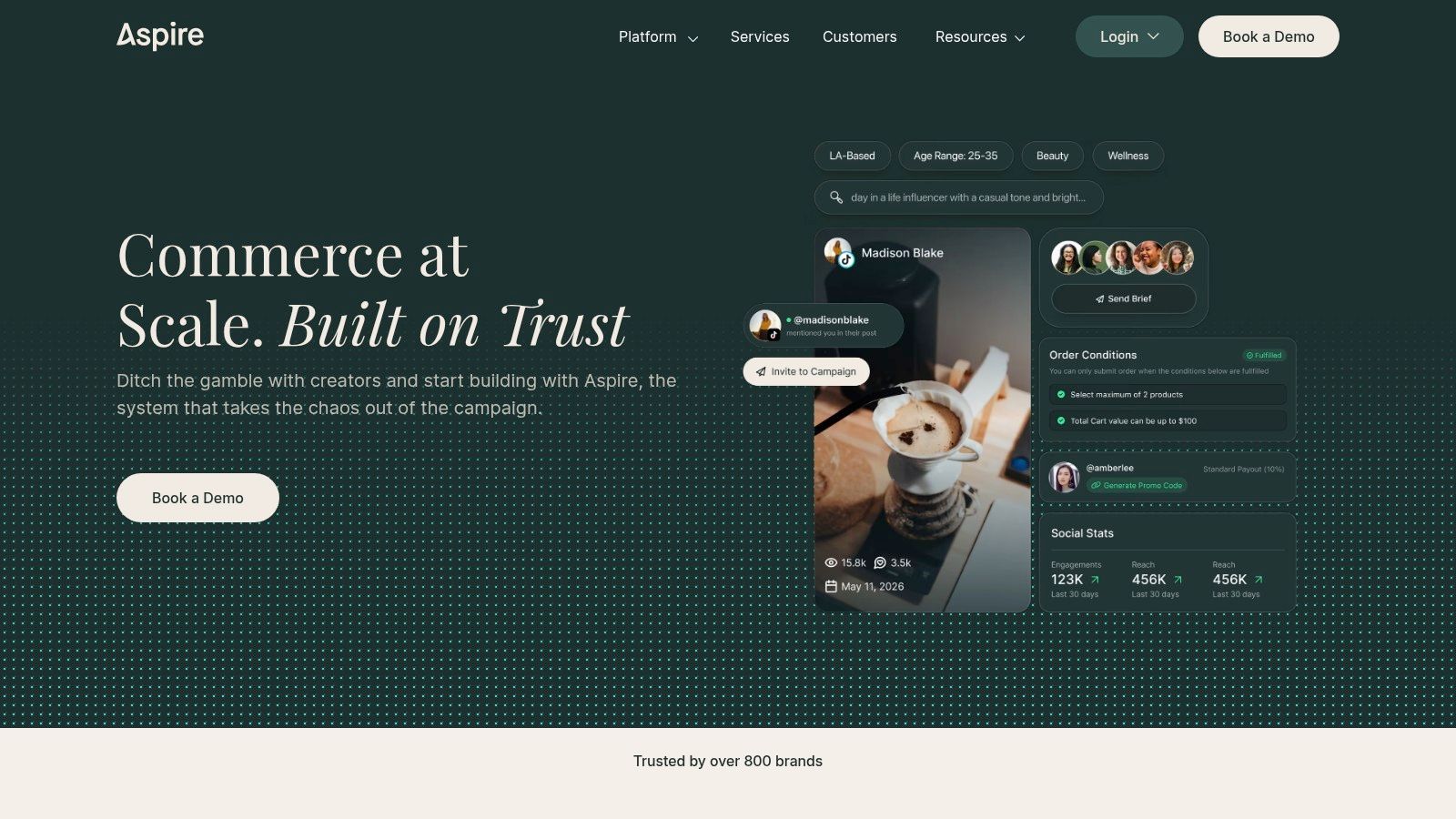
Aspire is a strong option for brands that want influencer marketing, affiliate partnerships, UGC sourcing, and product gifting to live in the same operating system. It's not just a search tool. It's a relationship and workflow platform for consumer brands that plan to keep creator programs running continuously.
The CRM side is what makes Aspire useful. Teams can build a repeatable partnership engine instead of restarting creator outreach from zero each campaign. That changes how you evaluate talent. You're not only asking who can post this month. You're asking who belongs in the long-term roster.
Who should shortlist Aspire
Aspire fits best when your influencer program overlaps heavily with community building and commerce. Brands that need creator discovery plus structured seeding, usage rights handling, and affiliate tooling usually get the most from it.
It's less compelling if you already have a strong first-party creator pool and only need lightweight execution. In that case, some of its discovery and CRM depth may overlap with processes you already own.
A few practical takeaways:
- Use Aspire when: You want one platform for ongoing creator, affiliate, and UGC operations.
- Skip Aspire when: You only need occasional campaign management or simple outreach.
- Check carefully: Custom pricing and annual terms can make it a bigger commitment than it first appears.
The platform is well suited to teams maturing from ad hoc influencer campaigns into a more programmatic model. For brands making that shift, Aspire is worth a close look.
5. Tagger (Sprout Social Influencer Marketing)
Tagger became more compelling once it sat inside the Sprout Social ecosystem. On its own, it already covered discovery, campaign workflow, creator payments, and reporting. Combined with Sprout's publishing, listening, and analytics products, it starts to look like a broader social operations stack rather than a standalone influencer tool.
That matters if your social team and influencer team already work side by side. In a lot of companies, they don't. One team tracks campaign posts and creators. The other team handles publishing calendars, social listening, and audience reporting. Tagger inside Sprout closes some of that separation.
Best use case
If your company already uses Sprout Social, Tagger is one of the easiest stack decisions to justify. It lets teams keep creator work closer to the rest of social management instead of building a disconnected function.
The trade-off is straightforward. You usually get the best value if you commit to Sprout's ecosystem more broadly. If you only want influencer software and don't need the surrounding social suite, the total cost and tooling footprint can be harder to defend.
The right question with Tagger isn't “Is it good?” It usually is. The real question is whether you want a dedicated influencer platform or a larger social stack with influencer capabilities built in.
For integrated social teams, Tagger makes a lot of operational sense.
6. Upfluence
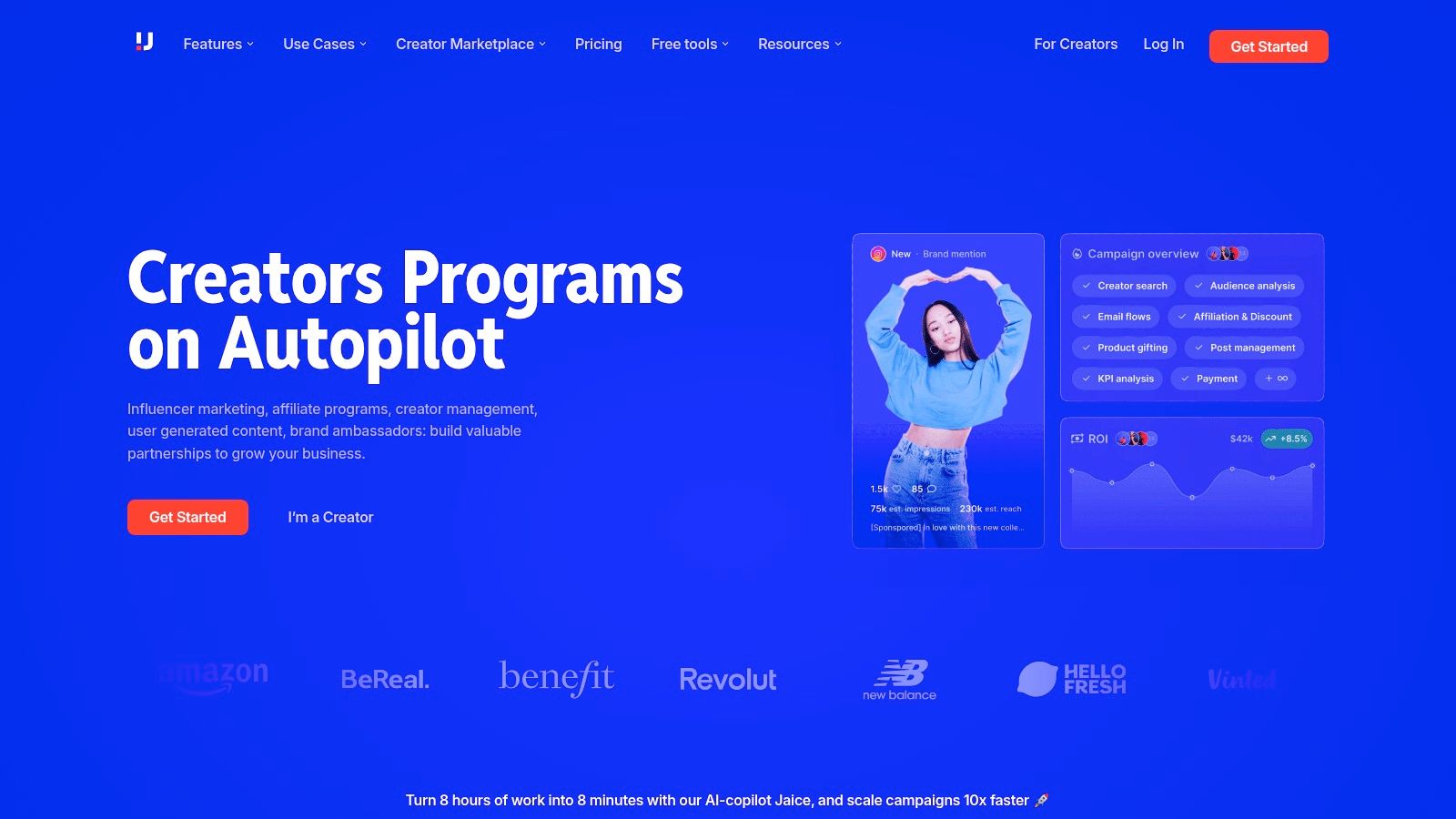
Upfluence is one of the more practical all-rounders for brands that want discovery, outreach, payments, and affiliate tracking connected in one place. It has an e-commerce tilt, especially for brands that care about tying creator activity to store performance, but it isn't as narrowly boxed in as some commerce-first tools.
Operationally, Upfluence tends to appeal to teams that need breadth without jumping immediately to the heaviest enterprise software. You can run creator discovery, manage campaigns, process payments, and connect influencer work to affiliate logic in a single system.
What works and what needs scrutiny
The best part of Upfluence is how much of the day-to-day workflow it can absorb. Teams don't have to duct-tape together separate products for creator search, relationship tracking, and revenue-linked reporting.
The caution is that buyers should review rights, usage expectations, and commercial terms carefully. Broad feature sets are helpful, but only if the workflow matches how your legal and content teams operate.
- Strong fit: Mid-market brands and DTC teams
- Why buyers choose it: Unified creator and affiliate workflow
- Where to be careful: Contract structure, rights management, custom pricing
A lot of teams find Upfluence easier to run on a daily basis than some enterprise-first options. For current feature details and demos, check Upfluence.
7. Later Influence (formerly Mavrck)
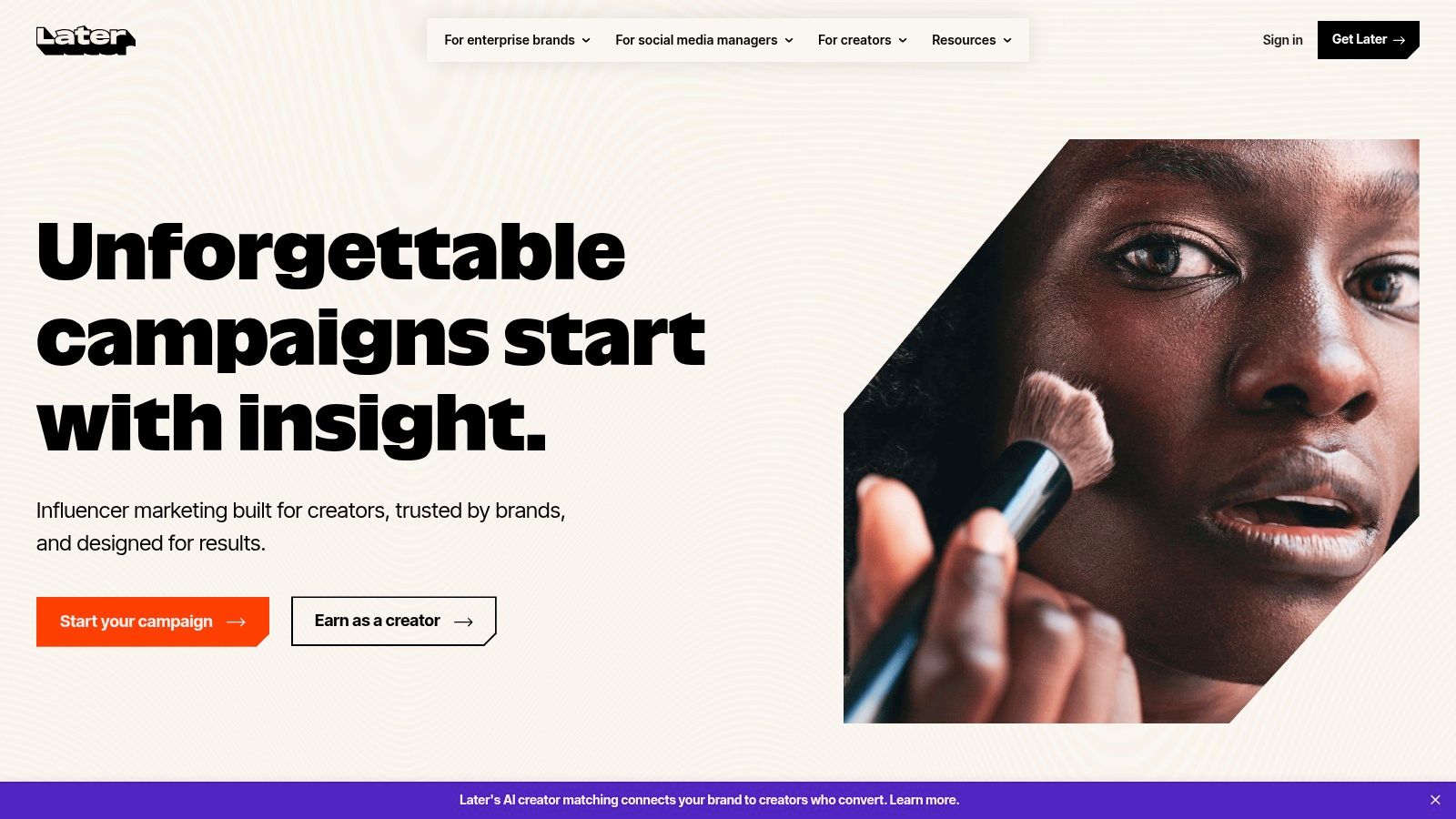
Later Influence is one of the better examples of a tool that wins on campaign operations rather than discovery hype. Some platforms lead with creator search because that demos well. Later Influence is more useful once the campaign is already moving and someone needs structure around applications, incentives, deliverables, and reporting.
That's why volume programs often like it. If you're managing many collaborators and need incentive handling, applicant review, and cleaner reporting around campaign outcomes, Later Influence has a practical edge.
Why operations-first teams like it
The platform is suited to teams that care about execution hygiene. That includes managing product or cash incentives, keeping collaboration workflows organized, and connecting campaign-level actions to conversion reporting.
It's less differentiated if your only buying requirement is “show me creators.” But if the work starts breaking after discovery, Later Influence becomes much more relevant.
Clean operations usually matter more than flashy discovery once your campaign count starts climbing.
Pricing isn't publicly listed, so expect a demo-led sales process. That's common in this category, but it means smaller buyers should confirm fit early. You can review the platform through Later.
8. Modash

Modash is one of the easier Instagram influencer marketing tools to recommend to smaller teams because it's transparent and testable. It offers published pricing, a free trial, and a workflow that doesn't feel designed only for enterprise procurement.
That alone is valuable. In this category, too many platforms hide pricing behind demos while presenting similar promises. Modash lowers the friction, which makes it useful for teams that want to start with creator discovery and audience vetting before committing to a heavier operating system.
Where Modash earns its place
Instagram-specific workflows are a good fit here. Independent industry reporting has noted that roughly 67% of brands prioritize Instagram for creator partnerships, with engagement differing by audience size and Reels outperforming standard video posts. That's the kind of environment where Modash's discovery, audience checks, and content tracking are practical, especially for teams comparing smaller and larger creators.
A few reasons teams like it:
- Transparency: Published pricing and a trial make evaluation easier.
- Instagram usefulness: Good tracking for posts, Reels, and Stories.
- SMB fit: Better accessibility for leaner teams than many enterprise tools.
The main trade-off is scale. As usage grows, limits around tracked creators or profile opens can push teams into higher plans. Some companies also end up using Modash mainly for discovery, then managing communication elsewhere. For many SMBs, that's still a good deal. You can explore Modash directly.
9. HypeAuditor
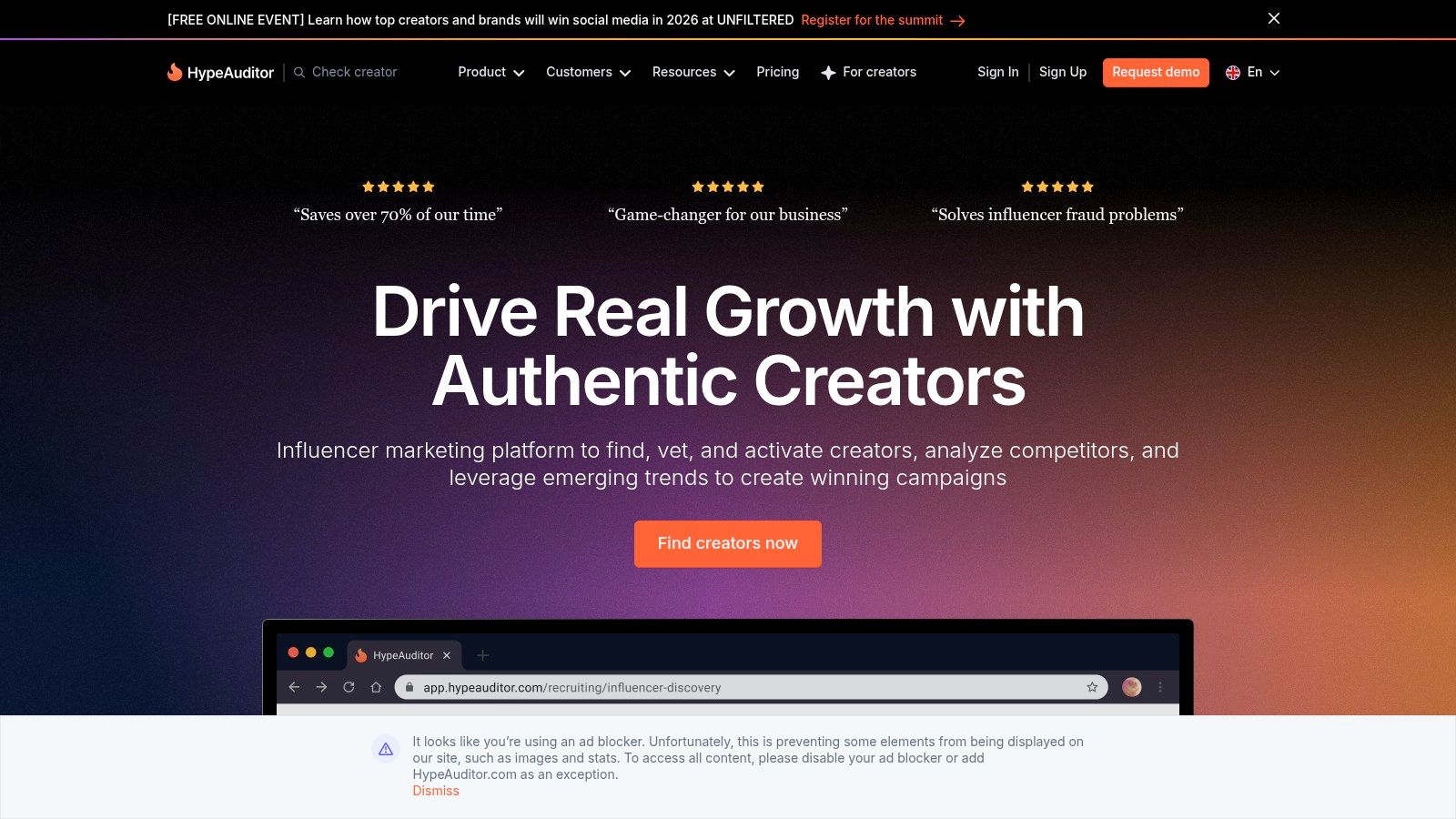
HypeAuditor is the tool to shortlist when creator vetting quality matters more than workflow elegance. Some teams can tolerate a clunky process if they trust the audience analysis. In categories with higher spend or stricter scrutiny, that's often a reasonable trade.
Its reputation comes from analytics depth, audience authenticity work, and fraud detection. That makes it useful before budget is committed, especially when a team wants stronger confidence that follower quality and audience signals support the spend.
Best for pre-spend rigor
HypeAuditor is strongest in the vetting stage, though it also offers broader campaign and CRM capabilities. I'd still think of it first as a screening and analytics tool.
That distinction matters. If your current pain is fake-looking engagement, questionable audience fit, or creator shortlist quality, HypeAuditor can be more useful than a platform with prettier workflow screens.
- Use it for: Authenticity checks, audience analysis, stricter vetting
- Less ideal for: Teams that mainly need smoother approvals and payments
- Buying note: Advanced access usually requires sales conversations
For multi-network programs, it also helps that the platform goes beyond Instagram. Review current options at HypeAuditor.
10. Traackr
Traackr is built for mature programs with high reporting expectations. Global brands, especially in categories like beauty and consumer goods, often need comparable KPIs across markets, budget discipline, and standardized creator evaluation. Traackr is designed for that kind of environment.
This is not the tool I'd hand to a startup that just needs to run a few gifted campaigns. It's a management and intelligence platform for teams that need rigor across regions and business units.
Where Traackr fits best
The larger influencer platform market keeps expanding, with one estimate from Fortune Business Insights pointing to strong double-digit growth across different forecasting models for the category, even though exact market sizes vary by methodology. That broader expansion supports what buyers already see firsthand. Platforms like Traackr are being evaluated less as discovery tools and more as operating infrastructure for spend control, compliance, and centralized campaign management. You can review that market framing in Fortune Business Insights' influencer marketing platform market overview.
Traackr makes the most sense when you need:
- Global consistency: Comparable workflows across countries and teams
- Budget oversight: Better control over creator spend and performance tracking
- Benchmarking discipline: Stronger category and competitor context
The trade-off is familiar. Smaller teams may find the learning curve and custom pricing hard to justify. But for organizations that need standardized creator intelligence at scale, Traackr remains one of the more serious options.
Top 10 Instagram Influencer Tools: Reach & Features
| Platform | Core features | UX & Quality (★) | Value & Pricing (💰) | Target (👥) | Unique (✨) |
|---|---|---|---|---|---|
| REACH 🏆 | AI campaign builder, centralized dashboard, discovery → payments, 1099 compliance | ★★★★★ | 💰 Affordable/no-nonsense; free trial; example 9% platform fee | 👥 Agencies, brands scaling programs, creators | ✨ End-to-end AI workflows + multi-client/white‑label |
| CreatorIQ | Verified creator DB, governance, benchmarks, API partnerships | ★★★★☆ | 💰 Enterprise contracts; custom pricing | 👥 Large/regulated brands & agencies | ✨ Deep analytics + Instagram Creator Marketplace access |
| GRIN | Creator CRM, seeding, affiliates, e‑commerce integrations, self‑serve tiers | ★★★★☆ | 💰 Self‑serve month-to-month; scalable costs | 👥 DTC/e‑commerce teams, SMB→mid-market | ✨ E‑commerce attribution + gifting workflows |
| Aspire | Discovery, CRM, UGC, affiliate & gifting workflows | ★★★★ | 💰 Custom annual pricing; mid→upper market | 👥 Consumer brands building long-term creator programs | ✨ Strong CRM + affiliate/UGC combo |
| Tagger (Sprout) | Discovery, campaign workflow, payments, reporting; integrates with Sprout | ★★★★ | 💰 Enterprise/custom; better value with Sprout stack | 👥 Teams using Sprout Social or single‑vendor shops | ✨ Integrated with Sprout publishing & listening |
| Upfluence | Discovery, CRM, payments, Shopify/affiliate integrations, AI assists | ★★★★ | 💰 Custom pricing; varying reported entry points | 👥 DTC & mid-market teams needing revenue tracking | ✨ Broad toolset with e‑commerce focus (Jaice AI) |
| Later Influence (Mavrck) | Automated workflows, incentive mgmt, conversion tracking | ★★★☆ | 💰 Demo/quote required; custom pricing | 👥 Volume Instagram programs needing ops efficiency | ✨ Built-in CPE/CPM/CPP incentive reporting |
| Modash | Discovery (350M+), content tracking (Stories), CRM, published pricing | ★★★★ | 💰 Transparent plans + 14‑day trial; usage limits | 👥 SMB→mid-market teams testing quickly | ✨ Published pricing + strong Instagram tracking |
| HypeAuditor | Audience authenticity scoring, fraud detection, analytics modules | ★★★★ | 💰 Custom tiers; sales‑negotiated access | 👥 Teams needing rigorous vetting & fraud control | ✨ Industry-leading authenticity/fraud scoring |
| Traackr | Discovery, benchmarking, campaign mgmt, multi‑country controls | ★★★★ | 💰 Enterprise/custom; premium positioning | 👥 Global & regulated brands (beauty, CPG) | ✨ Category benchmarking + global governance |
Final Thoughts
A lot of teams buy an Instagram influencer tool the same way they pick a media database. They start with creator search, run a few demos, and choose the platform with the biggest pool of profiles. Then the campaign goes live, and the actual workload shows up fast. Briefs need approval. Creators miss deadlines. Usage rights questions land in Slack. Finance asks where payout status lives. Reporting gets rebuilt by hand.
That is why a tool list is not enough. The better question is how to build a stack that matches the way campaigns run.
Instagram still earns budget because it can drive both reach and action, but tool selection should start with your operational bottleneck, not with surface-level discovery. Teams dealing with legal review, brand safety, or regional governance usually need systems like CreatorIQ or Traackr. Brands tying creator work directly to storefront revenue often get more value from GRIN, Aspire, or Upfluence. If vetting is the main risk, HypeAuditor fills a clear specialist role. If speed, transparent pricing, and Instagram-first discovery matter more, Modash is a practical option. If the social team already works inside Sprout, Tagger can reduce tool switching.
The stack works better when those tools are mapped to campaign stages. Discovery and vetting are one layer. Outreach, briefing, approvals, payments, and reporting are another.
That second layer is where a lot of programs lose margin.
For brands and agencies running repeat campaigns, REACH fits that central command role. It is not another database-first platform. It gives teams one place to set up campaigns, manage creator communication, track approvals, handle payouts, and keep reporting organized. That matters because operational drag is usually what slows a program down after creators have already been selected.
I have seen teams spend heavily on discovery software, then manage the rest of the campaign in spreadsheets, email threads, and DMs. The result is predictable. Slower launches, more manual follow-up, weaker reporting hygiene, and less confidence in what each campaign produced. A cleaner stack fixes that by assigning each tool a job and giving operations a home base.
If you are choosing among Instagram influencer marketing tools this year, ask two questions. Where does the campaign break today? Which platform can become the system your team uses every week, not just during sourcing?
If you want to replace spreadsheets, scattered DMs, and manual follow-ups with one clean workflow, REACH is worth a serious look. It gives brands and agencies a practical command center for influencer campaigns, from AI-powered setup to approvals, payouts, and reporting, so your team can spend less time chasing status updates and more time running campaigns that ship.