 Skip to content

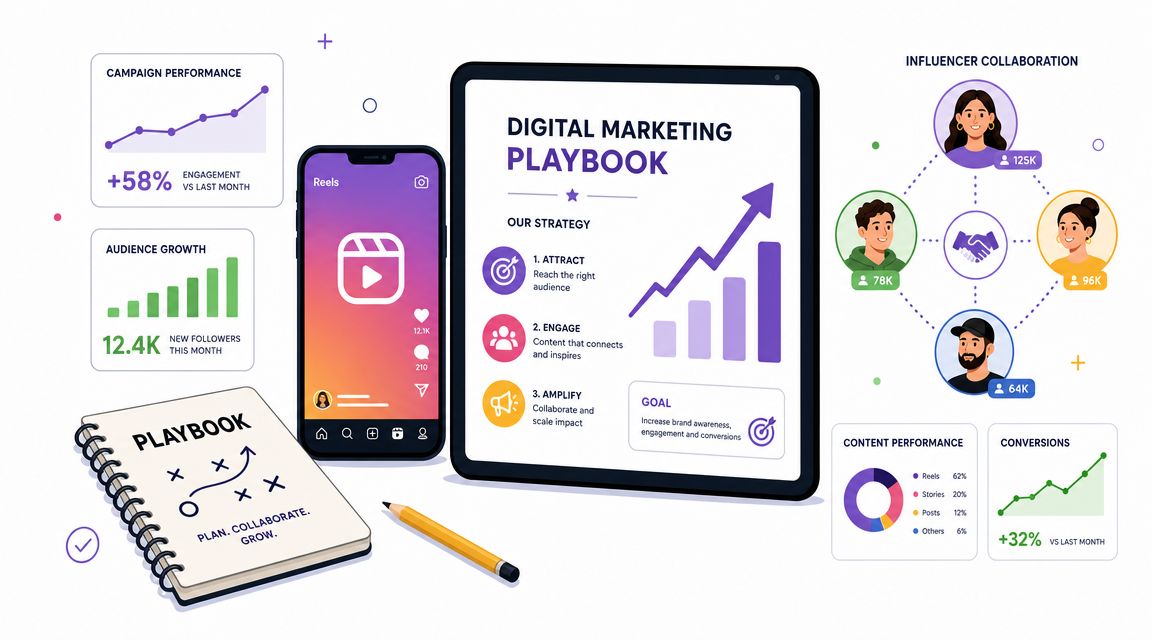
Marketing teams usually spot instagram reels trends the same way. Someone drops a link in Slack. A creator says, “We should do this today.” Legal asks for the brief. Paid wants usage rights. Brand wants revisions. By the time the post goes live, the moment is gone.
That's why trend content breaks down in execution, not in ideation. The hard part isn't finding a Reel worth testing. The hard part is deciding which trend fits your audience, adapting it without looking late or awkward, and getting creators, approvals, and reporting aligned before the window closes.
Why Your Brand Needs a Playbook for Instagram Reels Trends
Reels now sit too close to the center of Instagram to treat them like side experiments. By 2025, over 50% of all Instagram ads were running in Reels, Reels reached a reported $50 billion annual revenue run rate, and Reels accounted for 46% of U.S. Instagram time spent, according to ShortsIntel's Reels statistics roundup. That tells you two things. Users are spending serious attention there, and advertisers are already following them.

Teams still often approach instagram reels trends with a newsroom mindset. They react fast, but they don't build a system. That creates familiar problems: trend ideas with no audience fit, creators working from different references, approvals trapped in email threads, and reporting that stops at views.
The fix is a playbook. Not a spreadsheet full of random audio clips. A repeatable operating model with clear checkpoints: spot, validate, adapt, brief, launch, and measure.
That same discipline shows up in other performance channels too. For example, teams building outbound funnels in property verticals often need the same balance of speed and process, which is why practical resources like HarvestMyData for real estate lead generation are useful beyond their niche. The lesson carries over. Fast-moving channels punish disorganized execution.
Practical rule: Don't treat trends as content ideas. Treat them as campaign inputs that need qualification.
A strong playbook protects brand fit and increases your odds of producing content that earns attention. It also gives your team a way to say no to weak trend ideas without slowing down the whole calendar.
A System for Spotting and Validating the Right Trends
The biggest mistake I see is confusing “I keep seeing this” with “our audience will respond to this.” Those aren't the same thing.
A useful workflow combines three signals: the Reels feed, competitor monitoring, and your own analytics. Metricool recommends this approach and also warns that broad buzz can still fail if you post when your audience is offline, in its guide to finding current Instagram Reels trends.
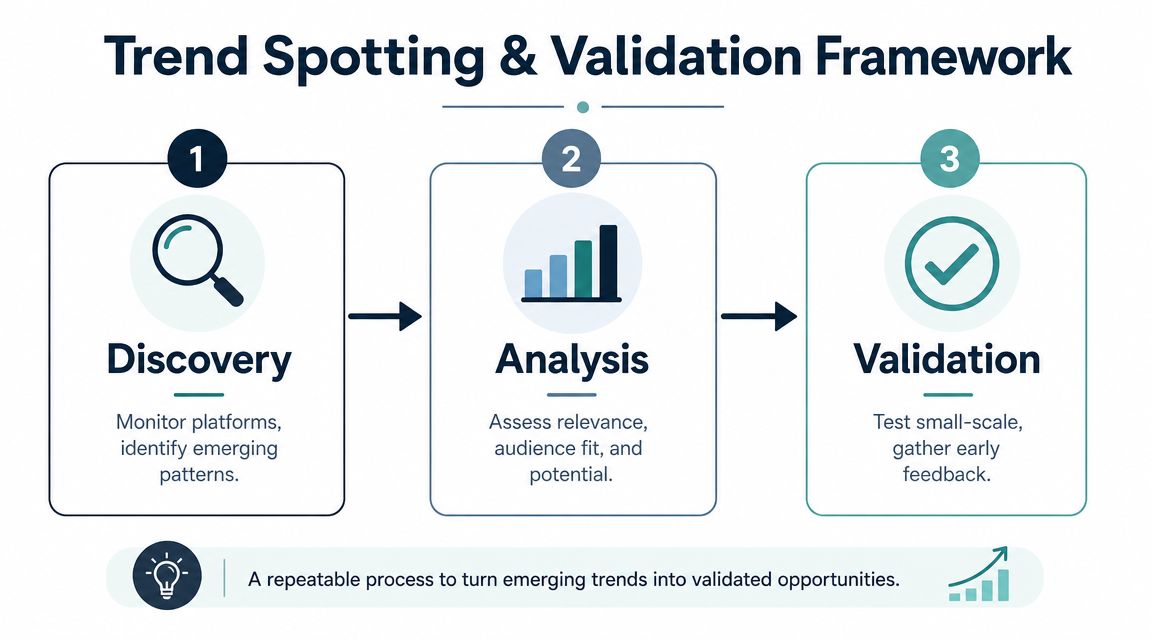
Start with repeated patterns, not one-offs
Scroll with a purpose. Don't save every polished video. Save patterns that repeat across different accounts.
Look for these signals:
- Recurring audio: The same sound appears across multiple creators in your category.
- Repeated structure: Similar hook, reveal, punchline, or transition sequence.
- Format portability: You can imagine the concept working for more than one product, message, or creator type.
- Audience behavior: People in comments are tagging friends, debating, or asking follow-up questions.
One high-performing Reel from one large creator can be noise. A pattern appearing independently across smaller niche creators is usually more useful.
Check your niche before your ego
Here, teams either get smart or get distracted. A trend may be broadly visible and still wrong for your account.
Use competitor and adjacent-creator review to answer a narrower question: who in your category is already translating this trend into your audience's language? If you want a stronger workflow for that research step, this guide on using social listening for influencer discovery is worth keeping in your process.
A quick validation grid helps:
| Signal | What to ask |
|---|---|
| Audience fit | Would our customer understand this without extra explanation? |
| Brand fit | Can we execute this without sounding borrowed or forced? |
| Creator fit | Do our creators naturally make content in this style? |
| Timing fit | Can we publish while the format still feels early? |
If three creators in your niche adapt a trend differently, that's often a better sign than one viral original.
Let your own data break the tie
When two trend directions look equally promising, your existing account data should make the call. Review what has already held attention on your account or in prior creator partnerships.
Focus on practical comparisons such as:
- Hook style: Did direct-to-camera openings outperform montage intros?
- Message density: Did simple overlays beat heavy explanation?
- Posting window: Which days and times consistently gave your audience a chance to respond?
- Creative role: Does your audience respond better to founder-led, customer-led, or creator-led delivery?
Often, a lot of teams get humbled. They chase a trend because it looks culturally hot, then ignore the fact that their audience always responds better to demos, opinion-led hooks, or relatable use cases. Validation should save you from that mistake.
How to Adapt Instagram Reels Trends for Your Brand
You don't need to copy a trend exactly. In many cases, that's the fastest way to make branded content feel late.
Instagram guidance covered by Buffer makes the right point. Trends are tools, not a mandate, and if a trend feels forced or off-brand, it should be skipped. Buffer also notes that Reels are increasingly rewarded for retention and watch time rather than trend participation alone in its article on trending Reels on Instagram.
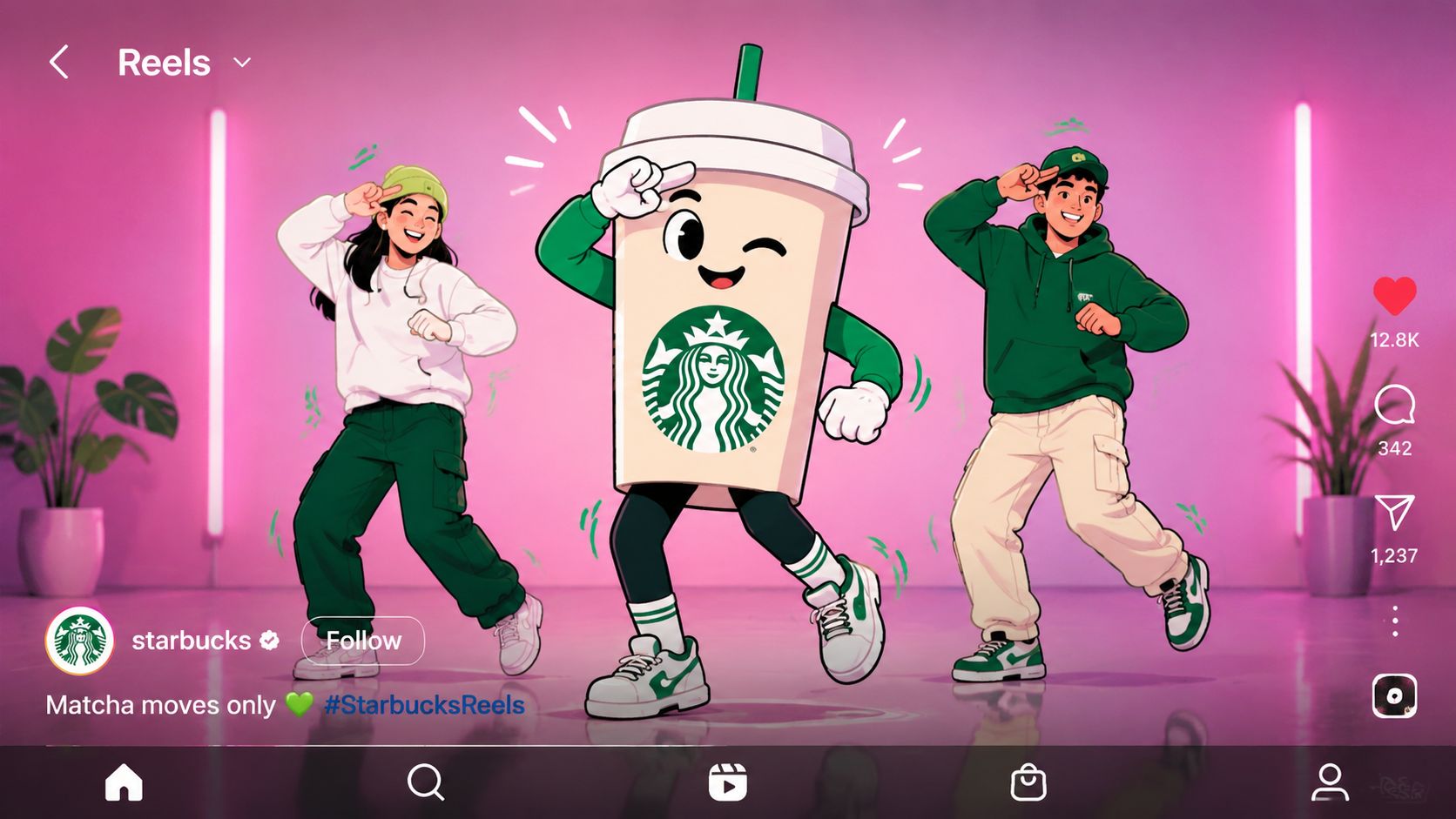
Break the trend into parts
A trend usually has several moving pieces. Separate them before you brief anyone.
Use this breakdown:
- Audio layer: Is the value in the sound itself, or just in the pacing it creates?
- Narrative device: Is it a reveal, comparison, list, reaction, or joke setup?
- Visual grammar: Are people using text-heavy edits, jump cuts, screenshots, voiceover, or simple talking-head framing?
- Audience payoff: Why would someone watch to the end?
Once you know which piece carries the value, you can swap the rest.
A D2C fashion brand might keep the fast reveal format but replace the original joke with a styling transformation. A B2B software brand might ignore the audio entirely and use the same “before versus after” structure to show a messy reporting workflow turning into a clean dashboard.
Know when to skip it
Some trends are popular because they let creators act casual, ironic, or chaotic. That can work for consumer brands with flexible tone. It can fail badly for regulated categories, premium positioning, or products that need more clarity than vibe.
Use a simple decision filter:
| If the trend relies on | Then ask |
|---|---|
| Heavy inside jokes | Will a new viewer understand it instantly? |
| Creator personality | Do we have the right face to carry it? |
| Fast meme context | Will it still make sense after approvals? |
| Trend audio dependence | Does the idea still work if the audio cools off? |
Creative test: If you remove the trending audio and the concept still works, you probably have a durable format.
That durability matters if you also plan to repurpose content into paid social. Teams trying to create effective Meta ad reels usually learn this quickly. Creative that survives outside the original trend context often holds up better in campaign use.
Here's a useful reference point for adaptation styles in motion:
Build repeatable formats, not one-off imitations
The best brand use of instagram reels trends often isn't a single post. It's a repeatable series inspired by trend behavior.
Examples:
- Product-led brands: Turn “things that just make sense” style momentum into a recurring product demo format.
- Service brands: Use commentary trends as a weekly myth-busting or opinion series.
- Retail brands: Adapt reveal and comparison formats into recurring “how I'd style this” or “what I'd buy again” content.
That gives your team a smarter asset library. You're not just chasing what's trending. You're building a branded content format that can absorb trends without being controlled by them.
Briefing Creators to Execute Your Trend Campaign Flawlessly
A trend campaign usually fails in the brief, not in the edit. If the creator gets a vague message like “do this trend but make it feel us,” expect revisions.
Reels are worth the extra precision. Vidico reports that Reels achieved a 1.23% engagement rate, ahead of photos and carousels, and that Reels can generate 36% more reach than carousels. The same source also notes that Reels represented 59% of all Instagram creator content in 2025, which makes them central to creator collaboration on the platform, in its roundup of Instagram Reels statistics.
Give creators a source, not a summary
Always include the original trend reference and your adapted version side by side. Don't describe it loosely. Show it.
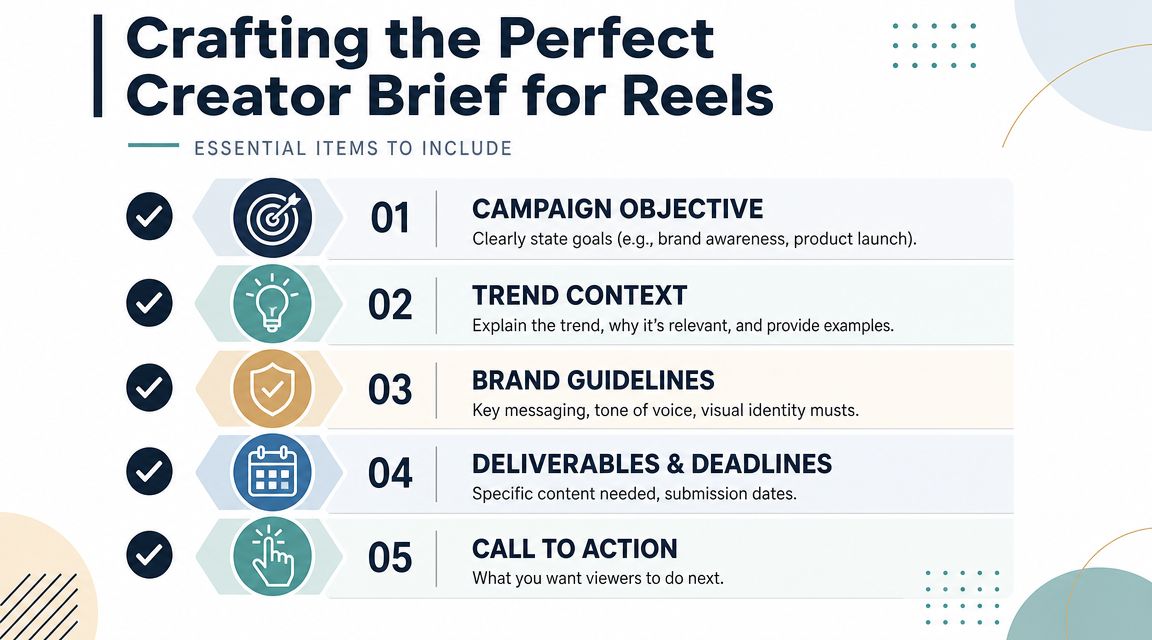
Your brief should include:
- Original reference link: The exact Reel or format the creator should study.
- Strategic translation: One short paragraph explaining what your brand is borrowing from the trend.
- Non-negotiables: Product inclusion, talking points, CTA language, disclosure requirements, and any visual exclusions.
- Creative freedom zone: What the creator can change without approval.
- Delivery specs: Deadline, aspect ratio, raw asset requirement if any, and posting instructions.
For teams that need a clean starting point, this influencer brief template is a practical baseline.
Write briefs the way creators read them
Long brand decks usually bury the actual ask. Creators scan for clarity, constraints, and risk.
A better brief sounds like this:
We want your version of this trend, not a frame-by-frame remake. Keep the quick reveal structure. Use your normal speaking style. The product must appear early, and the takeaway needs to be clear even if someone watches without sound.
That's far more usable than five slides about “brand essence.”
If your team struggles with overbuilt or confusing instructions, this breakdown of HiveHQ strategies for successful briefs is a good reminder that clarity beats excessive detail.
Protect the parts that matter
Not everything belongs in the “creator freedom” bucket. Trend campaigns move quickly, so your team needs to decide early what's fixed and what's flexible.
Use this split:
| Fixed | Flexible |
|---|---|
| Product claims | Hook wording |
| Legal disclosures | Shot order |
| CTA destination | Creator tone |
| Brand safety guardrails | Visual styling |
| Posting date window | Editing flourishes |
This keeps the review process tight. Brand managers aren't debating every cut, and creators aren't guessing which details matter.
A strong creator brief does one job well. It removes ambiguity while preserving performance potential.
Launching and Scaling Your Trend-Driven Campaigns
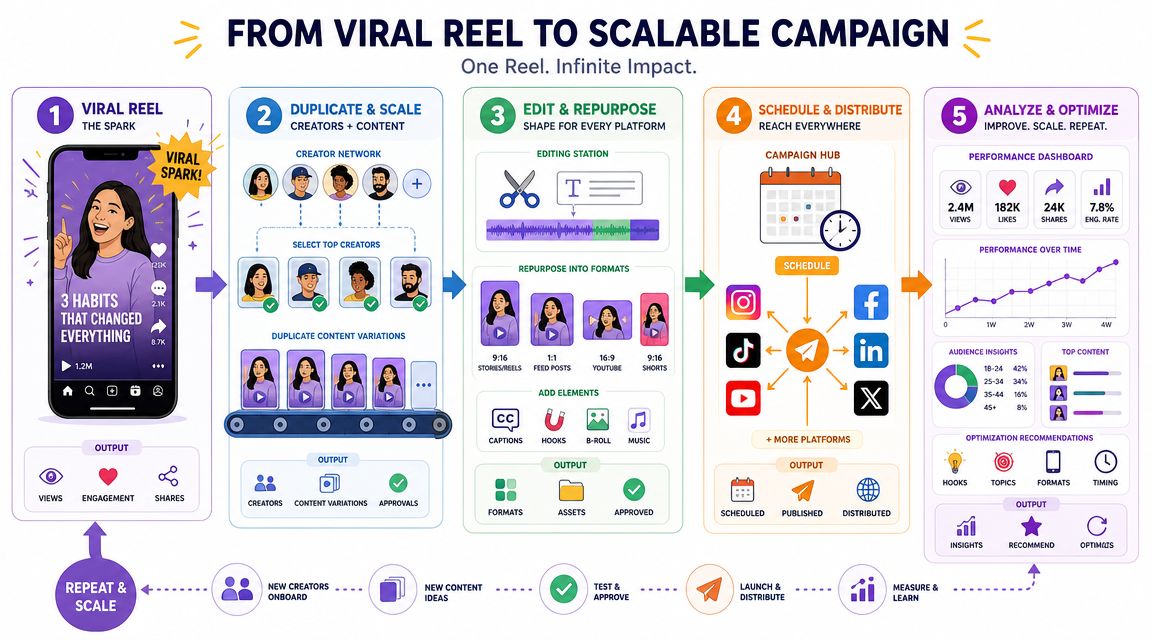
One good Reel is a creative win. Ten creators publishing coordinated trend content on time is an operations win.
That distinction matters because instagram reels trends can change fast. One 2026 trend roundup notes that trends can shift every few weeks and frames the primary challenge as managing experiments with new formats while keeping assets, approvals, and payments organized in its article on the hottest Instagram Reels trends.
Build around waves, not single posts
Trend campaigns scale better when you launch in waves. Instead of asking every creator to post the same concept on the same day, stagger versions across a short testing window.
A simple operating model works well:
- Pilot group: Send the trend to a small creator set with different audience profiles.
- Early review: Check which adaptation style gets the strongest qualitative response.
- Refine the brief: Tighten hooks, remove weak instructions, sharpen product framing.
- Second wave: Roll out the improved version to the broader creator roster.
- Paid capture: Identify which assets are worth boosting or repurposing.
This creates learning before scale. It also protects budget from getting locked into a weak concept.
Separate campaign roles clearly
Trend-led campaigns get messy when everyone owns everything. Assign one owner to each lane.
- Strategist: Approves which trends enter testing.
- Creator manager: Handles outreach, briefs, and follow-ups.
- Brand approver: Signs off on claims, tone, and safety.
- Analyst or performance lead: Reviews live results and flags usable winners.
Most delays happen when teams confuse creative review with compliance review. Keep those steps separate.
Standardize the parts creators never see
Scaling doesn't mean making the content feel uniform. It means standardizing the internal workflow behind it.
That includes:
- Naming conventions for assets
- Deadline stages for draft, revision, and live post
- A single approval path
- A consistent method for collecting live URLs
- A payment process that doesn't depend on manual reminders
Agencies and in-house teams usually feel the strain. The campaign isn't failing because the creators are bad. It's failing because the team is trying to run a moving social program with static project-management habits.
The teams that handle trends well don't look more creative from the outside. They just remove friction faster.
Measuring Performance and Proving Campaign ROI
Trend content gets overrated when teams stop at views. Views tell you a Reel was served. They don't tell you whether it changed anything.
Match your metrics to the job the content was supposed to do. If the campaign aimed at awareness, focus on reach, shares, and how broadly the concept traveled across creator posts. If the goal was engagement, comments, saves, and meaningful discussion matter more. If the brief included a conversion action, track clicks, code use, lead form activity, or the next measurable step in your funnel.
Use a campaign scorecard
A basic scorecard keeps reporting honest:
| Goal type | What to review |
|---|---|
| Awareness | Reach, views, shares, profile visits |
| Engagement | Comments, saves, sentiment, repeat discussion |
| Conversion | Clicks, code usage, attributed actions |
| Creative learning | Hook style, creator fit, format repeatability |
The last row matters more than is often acknowledged. Even when one trend doesn't become a breakout hit, it can still teach you which creator style, hook structure, or product framing deserves another round.
For a stronger measurement foundation, keep a framework like this guide to social media measurement close to your reporting process. It helps separate vanity metrics from usable campaign evidence.
A final discipline makes the difference. Report trend campaigns at the campaign level, not just the post level. Stakeholders don't need a pile of disconnected screenshots. They need a clean answer to one question: which content pattern is worth repeating?
For additional perspective on trend selection and retention-focused creative, Buffer's earlier guidance is a helpful companion read. The same goes for ShortsIntel's market-level view of Reels, which is useful when you need to explain why this format deserves budget and process, not just experimentation.
If your team is tired of juggling creator DMs, spreadsheets, approvals, live links, and payment follow-ups, REACH gives you a cleaner way to run influencer campaigns after discovery. It helps brands and agencies build campaigns faster, manage creators from one dashboard, track content across platforms, and keep execution organized from brief to final payment.