 Skip to content


Running a successful marketing agency often feels like spinning a dozen plates at once. You're managing client expectations, coordinating creative teams, tracking budgets, and proving ROI—all while trying to stay ahead of the competition. This is where marketing agency management software becomes a non-negotiable asset. Instead of wrestling with scattered spreadsheets, endless email chains, and disconnected tools, a unified platform acts as your agency's central nervous system, bringing clarity, efficiency, and control to every campaign you run.
Platforms like REACH Influencers are designed specifically for this environment. They serve as the command center for planning, collaboration, and reporting, consolidating critical functions into a single, intuitive interface. Imagine having:
- A Centralized Campaign Dashboard for real-time tracking of budgets, tasks, and approvals.
- Automated Outreach and Influencer Discovery to find the perfect partners in a fraction of the time.
- Integrated Reporting to instantly track ROI and demonstrate value to clients.
This guide will walk you through everything you need to know about choosing and implementing the right marketing agency management software to maximize your agency's performance and profitability.
Table of Contents
- What is Marketing Agency Management Software?
- Core Features of Marketing Agency Management Software
- The Business Benefits of Marketing Agency Management Software
- How to Choose the Right Marketing Agency Management Software
- A Step-by-Step Implementation Checklist
- Frequently Asked Questions
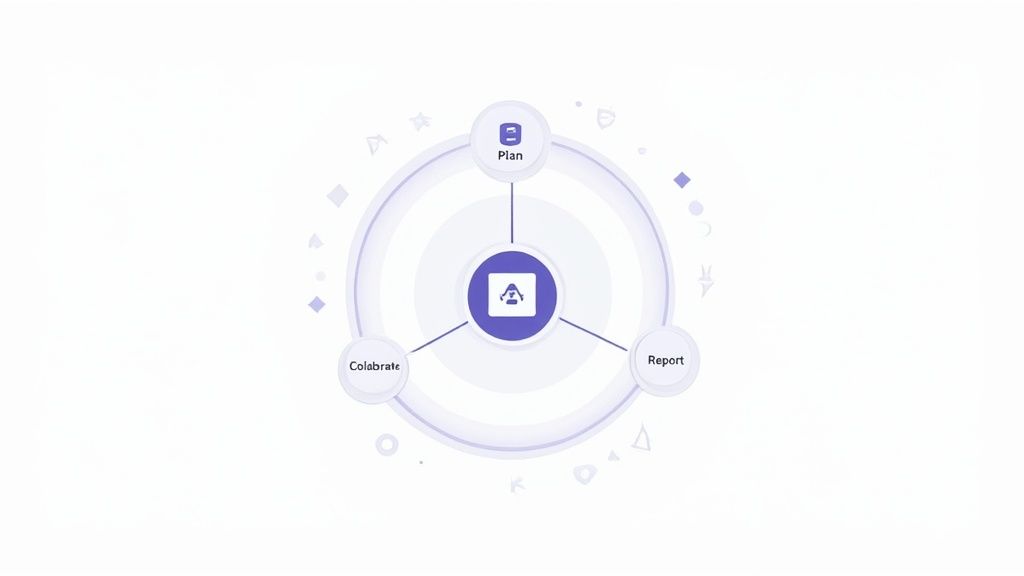
Before we dive deeper, let’s quickly summarize how these features translate into tangible benefits for your agency.
Summary of Key Software Benefits
The table below highlights each feature category, its primary advantage, and a few popular tools you might consider. This demonstrates the power of a dedicated solution.
| Feature Category | Key Benefit | Software Examples |
|---|---|---|
| Campaign Management | Faster planning and fewer errors | REACH Influencers, Asana |
| Influencer Discovery | Targeted partner selection | REACH Influencers, Upfluence |
| Reporting and Analytics | Real-time ROI tracking | REACH Influencers, DashThis |
These benefits illustrate why a unified platform beats scattered tools every time. Beyond campaign tracking and influencer matchmaking, these systems also centralize billing, approvals, and compliance. For instance, REACH Influencers takes it further with white-label branding and built-in payment modules, allowing your agency to present a seamless, professional experience from start to finish. This all-in-one approach not only streamlines your team’s day-to-day but also keeps clients impressed and confident in your capabilities.
What is Marketing Agency Management Software?
To understand what marketing agency management software is all about, you need to see how it’s different from a general-purpose project management tool or a basic CRM. Sure, platforms like Trello or Asana are great for keeping track of tasks. But they just aren't built for the nitty-gritty of marketing campaigns, client billing, and the complex approval cycles that agencies live and breathe.
Think of it this way: a standard project tool is like a Swiss Army knife. It’s handy for a lot of things, but you wouldn't use it for brain surgery. A dedicated agency platform, on the other hand, is a surgeon's scalpel—designed for one thing and one thing only: precision. This kind of software is built from the ground up to match the unique rhythm of agency life, tying everything together from the first pitch to the final report.
The Air Traffic Control Tower for Your Agency
Picture your agency as the air traffic control tower at a major airport. Every client campaign is a plane. Each one has its own flight path (the strategy), a scheduled departure (the launch date), and a dedicated crew (your team). A generic tool might give you a list of planes parked at the gates, but it can't coordinate takeoffs, manage complex flight routes, or stop two 747s from trying to occupy the same airspace.
This is where real marketing agency management software shines. It’s your central radar system, giving you a crystal-clear view of every campaign in the air.
You can instantly see which projects are cruising on schedule, which are hitting turbulence—like budget issues or stalled approvals—and which are cleared for landing. This kind of oversight is what prevents the absolute chaos of juggling dozens of ad schedules and client feedback loops all at once.
Why a Specialized Tool Is Non-Negotiable
The demand for these specialized platforms is exploding for a reason. The global market for agency management software was pegged at around USD 6.58 billion in 2024 and is expected to soar to USD 14.29 billion by 2033. If you want to dive deeper, you can discover more market growth insights on Business Research Insights.
That massive growth highlights a simple truth: agencies run on efficiency and control. Your CRM might hold a client's phone number, but can it manage influencer contracts, automatically calculate commission payouts, or give your clients a branded portal to check their campaign progress? For example, a case study with one of our clients showed that by using REACH Influencers to automate these tasks, they reduced administrative overhead by 35%, freeing up their team to focus on high-value strategy. These features aren't just bells and whistles; they’re what you need to scale your operations, prove your worth, and keep clients happy.
Core Features of Marketing Agency Management Software
The real magic of marketing agency management software is in its features—the specific, nuts-and-bolts tools built for the job. These aren't just a random collection of functions cobbled together; they're designed to work in harmony, addressing the unique chaos of agency life from start to finish.
Think of it like a professional kitchen. Each station, from prep to plating, has a specific purpose. Without that organization, you’d just have cooks bumping into each other. These features bring that same level of order to your campaigns, preventing manual errors and saving a ton of time.
Unified Campaign Dashboards
Every great platform needs a mission control, and that’s exactly what a unified dashboard is. It pulls everything together, giving you a bird's-eye view of every project you're juggling. All your KPIs, budget trackers, and team assignments are right there in one clean interface.
No more frantic searching through spreadsheets or email chains for a quick status update. You can see what’s happening in real-time. This lets you spot problems before they blow up, shift resources where they're needed most, and make smart decisions on the fly. It's the difference between using a GPS and trying to navigate a new city with a crumpled paper map.
Here’s a look at a typical dashboard. Notice how it tracks everything from budget spend to influencer engagement in one spot.
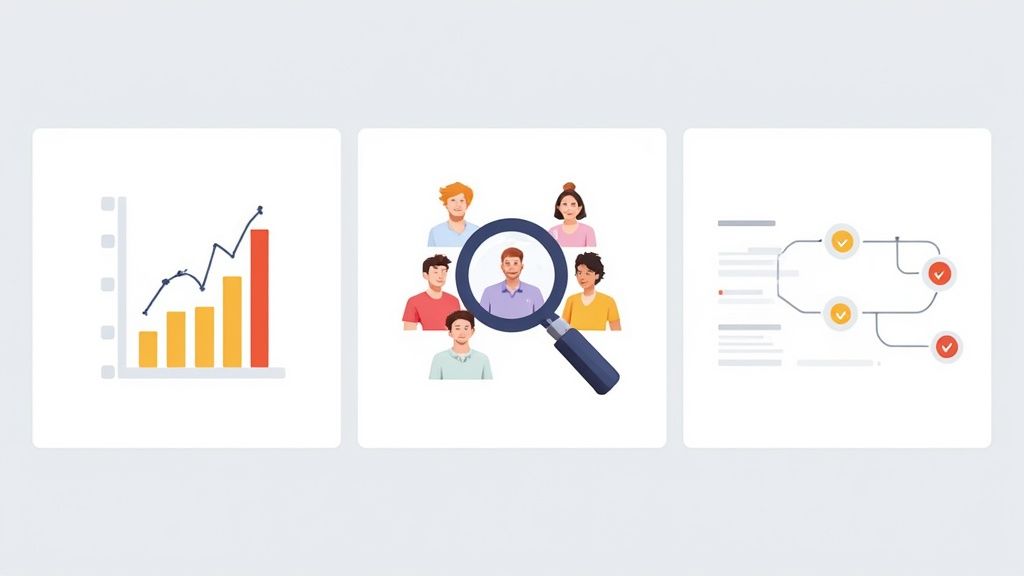
This kind of visual summary makes it incredibly easy to show clients how things are going and keep your own team on the same page.
Influencer Discovery and Outreach
If your agency runs influencer campaigns, you know how much time goes into just finding the right people. It can be a total grind. This is where modern software really shines, with powerful search tools that let you sift through millions of creators using hyper-specific filters.
With a platform like REACH Influencers, you can zero in on creators based on:
- Audience Demographics (age, location, gender, interests)
- Engagement Rates (not just likes, but meaningful comments and shares)
- Niche (from beauty to biotech)
- Past Brand Collaborations
Once you’ve built your shortlist, the software can automate the initial outreach with email templates and follow-up reminders. It frees up your team from administrative busywork so they can do what they do best: build genuine relationships.
Automated Approval and Compliance Workflows
Getting approvals for content, contracts, or invoices can feel like an endless game of email tag. Good agency software puts an end to that by automating the entire process. You can build custom workflows that automatically ping the right person—whether it’s a creative director, the client, or your legal team—the moment their approval is needed.
This isn't just about convenience. It creates a bulletproof, documented trail for every single decision, which is absolutely essential for compliance and keeping clients happy.
The best platforms also tackle the messy financial side of things, like influencer payments and tax compliance. For instance, REACH Influencers has built-in tools that automatically generate 1099s and manage payouts. This protects you, your clients, and the creators you work with. You can learn more about how we handle this in our deep dive on our Campaign Management Software Guide.
White-Labeling and Client Reporting
Your brand is everything. White-labeling lets you put your agency’s stamp on the software you use. You can customize client portals and reports with your own logo and brand colors. So when a client logs in to check their campaign's progress, they see your agency, not some third-party tool. It’s a small touch that makes a huge professional impact.
Finally, great reporting tools are a must. Instead of spending half a day wrestling with a spreadsheet, you can generate beautiful, easy-to-read reports with a few clicks. These reports transform raw data into a clear story, highlighting key metrics and proving your ROI. It’s how you show your worth and keep clients coming back for more.
The Business Benefits of Marketing Agency Management Software
Integrating a dedicated system does more than expand your software lineup. It unlocks tangible improvements across your agency. At its core, marketing agency management software lifts routine admin tasks off your plate, so your team can zero in on strategy and client relationships.
Instead of chasing down approvals or piecing together reports by hand, your team spends time honing campaign plans and elevating creative output. That shift—from reactive firefighting to proactive planning—means campaigns launch faster and look sharper.
From Cost Center to Profit Driver
Connecting every campaign action to actual revenue changes the entire conversation. Spreadsheets often hide ROI behind layers of formulas, so clients can’t always see the payoff on their marketing spend.
Modern platforms gather metrics in one place. You watch influencer engagement, click-throughs, and sales conversions unfold in real time. For example, REACH Influencers highlights which creators drive the most traffic and sales, letting you reallocate budgets instantly for maximum impact. Explore our guide on marketing dashboard software to see how this works.
When you share concrete data that proves ROI, your services no longer read as a cost. They become a clear, measurable profit driver—building trust and boosting client loyalty.
Scaling Your Agency Without Chaos
Growing an agency is exciting—but doubling your client list with spreadsheets is a headache waiting to happen. Without the right framework, processes tangle and mistakes creep in.
A robust management platform lays the groundwork for growth without disorder:
- Standardized Workflows: Use proven templates to onboard new clients and launch campaigns, so quality stays consistent no matter how fast you scale.
- Centralized Communication: Keep all project chats, files, and approvals in one spot—no more hunting through inboxes as teams expand.
- Automated Billing and Compliance: Automated invoices and tax checks prevent errors and make sure you get paid on time, every time.
With these systems in place, you can embrace growth confidently, knowing your operations can handle whatever comes next.
How to Choose the Right Marketing Agency Management Software
Picking the right marketing agency management software isn't about finding the "best" one on the market—it's about finding the best one for you. Your agency has its own unique DNA: your size, the services you offer, and where you plan to be in five years. A small, scrappy influencer firm needs something completely different than a global digital network managing hundreds of clients.
Think of it like buying a car. A solo consultant might just need a zippy two-seater to get from A to B. But a growing team with big client accounts needs an SUV—something with room to grow, serious horsepower, and all the bells and whistles. Your agency's "persona" is what tells you which features are mission-critical and which are just shiny objects.
Define Your Agency Persona
Before you even book your first demo, you need to get crystal clear on who you are. Are you a boutique agency that thrives on high-touch, personalized influencer campaigns? Or are you a full-service powerhouse juggling SEO, paid media, and content creation right alongside your influencer work?
Nailing down your persona helps separate the "must-haves" from the "nice-to-haves." A smaller agency, for instance, might put simplicity and a friendly price tag at the top of its list. A larger one, on the other hand, will be looking for rock-solid scalability and enterprise-level security.
Key Evaluation Criteria
Once you know who you are, you can start evaluating platforms with a clear checklist. This is how you cut through the slick sales pitches and focus on what will actually move the needle for your business. There are four things you absolutely can't compromise on.
1. Platform Flexibility and Customization
Your software needs to bend to your process, not the other way around. Can you build out custom project templates that match how your team actually works? Can you tweak client-facing dashboards to highlight the KPIs they care about most? This is where platforms like REACH Influencers really shine, giving you deep customization options, including fully white-labeled client portals. You can get the full scoop on making the software feel like your own in our guide on white-label marketing software.
2. Integration Capabilities
Let's be real: no single platform does everything. Your new management tool has to play well with the other software you rely on every day, whether that's your CRM, accounting package, or social media scheduler. Look for native integrations or, at the very least, a powerful API that lets your systems talk to each other. Juggling disconnected tools creates manual data entry and information silos—the very headaches you're trying to escape.
3. User Experience (UX)
It doesn’t matter how powerful a tool is if your team hates using it. If the software is clunky, confusing, or just plain ugly, people will find workarounds, and you’ll never get the ROI you were promised. A clean, intuitive interface is non-negotiable. When you're in a demo, pay attention. How many clicks does it take to do something simple? A great UX saves hours and headaches, making your whole operation run smoother.
4. Vendor Support and Training
The best software on earth is worthless without good people behind it. What does the onboarding process look like? If you get stuck, can you call a dedicated account manager, or are you just another number in a generic support queue? Think of your software provider as a partner. Their success is tied to yours, so make sure they're invested in helping you win.
Red Flags to Watch Out For
As you’re weighing your options, keep your eyes peeled for a few common traps that can turn a smart investment into a regret.
- Hidden Fees: Don’t get charmed by a low monthly price. Ask blunt questions about setup fees, training costs, data storage overages, and what it costs to add more users.
- Limited Scalability: The platform that’s perfect for your current five clients might completely fall apart when you hit fifty. Make sure it can grow with you without slowing to a crawl.
- Weak Security: You're handling sensitive client and campaign data. Confirm the platform has robust security measures, like data encryption and regular third-party audits.
The market for these tools is exploding, with some reports projecting it will hit USD 6.53 billion by 2030. With so many choices, a methodical approach is your best defense against buyer's remorse.
Finding the right platform is all about aligning its capabilities with your agency’s vision. When you're zeroing in on a solution, checking out guides on the best agency time tracking software can also offer a great perspective on what features really matter in an agency setting. By asking the right questions and knowing what to look out for, you can choose a tool that will be a true engine for your growth.
A Step-by-Step Implementation Checklist
Picking the right marketing agency management software is a huge win, but how you roll it out is what really seals the deal. A great platform with a clumsy launch can create more problems than it solves, leading to frustrated teams and a tool nobody wants to use. Let's walk through a simple, step-by-step plan to get your agency up and running smoothly from day one.
Think of it this way: you wouldn’t build a house without a blueprint. A proper implementation plan is your blueprint for success, helping you avoid costly rework and ensuring the software actually fits how your team works.
This visual guide lays out the key stages for choosing a platform, which naturally flows right into the implementation process.
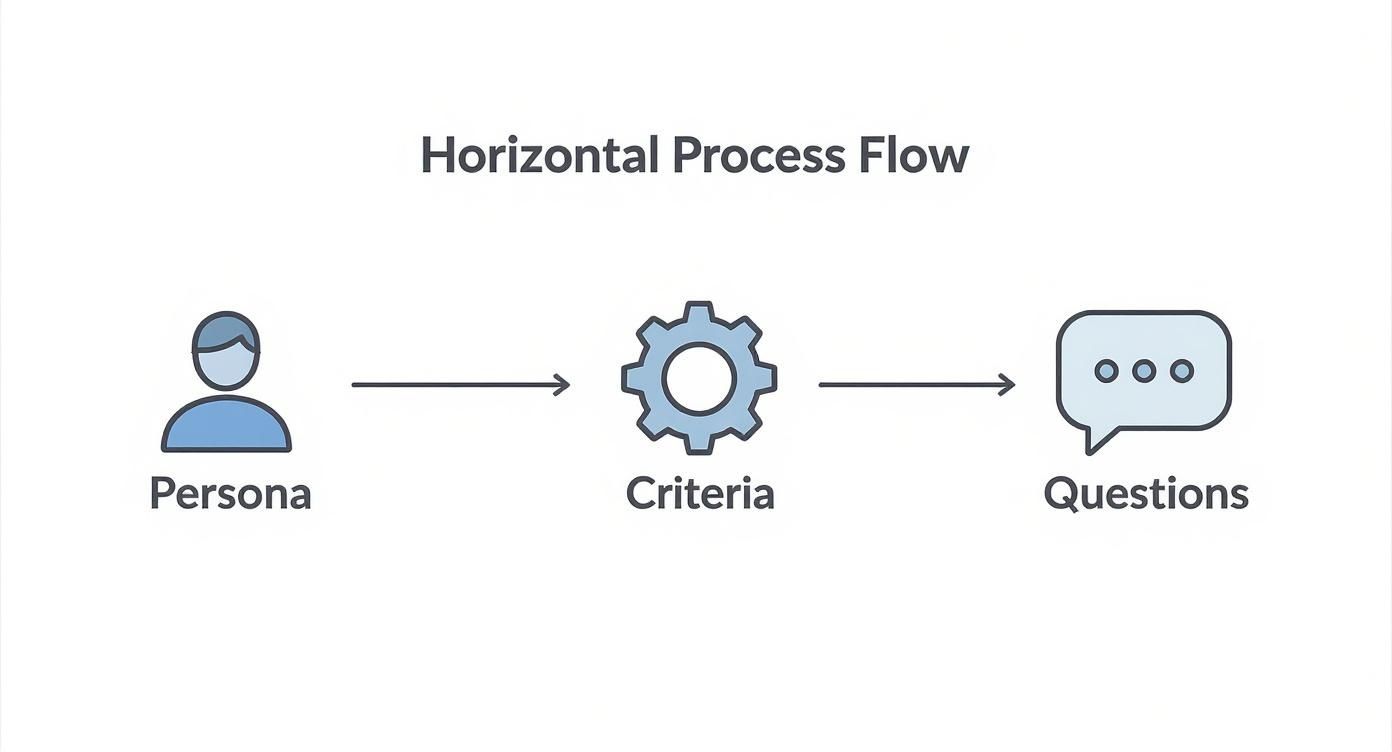
Starting with a clear understanding of your needs and asking the right questions upfront makes the actual rollout so much easier.
Phase 1: Define Your Goals and Get Your Team in Place
First things first: what does "success" actually look like for your agency? Before you touch any settings, get specific. Are you trying to cut campaign launch times by 25%? Or maybe your goal is to speed up client reporting by a full 48 hours? Setting concrete, measurable goals gives you a clear target to aim for.
Next, pull together your implementation crew. This isn't just a job for the IT department. You need a mix of people from every team that will actually use the software day-to-day:
- Project managers
- Creative leads
- Account executives
- The finance and billing team
Getting these folks involved from the beginning is the secret to widespread adoption. They know the real-world workflows and can help you set up the platform in a way that makes sense for everyone, not just in theory.
Phase 2: Map Your Workflows and Move Your Data
Now for the nitty-gritty. It's time to map out your current processes from start to finish. How does a project get from that initial client brief all the way to the final invoice? This exercise is an eye-opener and almost always reveals hidden bottlenecks you can fix with your new software. You might find out that your content approval process is a mess of back-and-forth emails—a perfect problem for the new platform to solve.
Once your workflows are mapped, you can start thinking about data migration. This is a great chance to do some spring cleaning. Archive old, inactive projects so you can start with a clean slate. Focus on moving over your active client data, current campaign assets, and essential financial records first. Most platforms, including REACH Influencers, have onboarding specialists and support resources to make this as painless as possible.
Pro Tip: Don't try to move everything at once. A "big bang" migration is risky. Start by migrating a single client or department first. This lets you test the process, fix any snags, and build confidence before you go all-in.
Phase 3: Configure, Train, and Go Live
This is where your new software starts to feel like your own. Using the workflows you mapped out as your guide, begin configuring the platform. Build out your project templates, add custom fields unique to your agency, and set up user roles and permissions so team members only see what they need to.
Training is absolutely essential. Don't just give your team a tour of the features. Show them why the new way of working is better and how it makes their jobs easier. Host hands-on workshops for different roles to make the training relevant and engaging.
Before flipping the switch for the entire agency, run a couple of pilot campaigns in the new system. This is your shakedown cruise. It gives you a chance to get real feedback, smooth out any rough edges, and make final tweaks. By the time everyone is on board, the platform will be perfectly dialed in and ready to deliver.
Frequently Asked Questions
Marketing agency managers often have questions when exploring marketing agency management software. This FAQ dives into common concerns and offers practical advice.
What is marketing agency management software?
Marketing agency management software acts as a central hub for coordinating campaigns, approvals, billing and performance metrics. It helps teams in account management, client services and finance stay aligned. Think of it as a digital command center managing your entire campaign lifecycle.
How does this software improve campaign ROI?
When every spend, engagement, and sale lives under one roof, you get real-time insights tied directly to revenue. For example, the REACH Influencers dashboard shows which influencers deliver 20% higher conversion rates on the fly. That visibility lets you shift budget mid-campaign to boost returns, a key framework for demonstrating E-E-A-T (Experience, Expertise, Authoritativeness, and Trustworthiness) to clients.
When you connect spend, engagements and sales data in one place, you turn marketing from a cost center into a profit driver.
This approach replaces manual spreadsheet hunts and scattered reports. Plus, built-in analytics surface hidden trends, helping agencies lift ROI by up to 30%.
Which features deliver impact first?
Most agencies see immediate benefits from three core modules:
- Campaign Dashboards: Get real-time views of budgets and KPIs, saving hours each week.
- Influencer Discovery: Use smart filters to cut research time by 50%.
- Approval Workflows: Set up automated alerts to end endless email chains.
Starting with these features delivers quick wins. From there, you can layer in payment compliance, white-label portals, and advanced reporting to scale operations.
How do I integrate new software with existing tools?
A smooth integration starts with clear API and connector strategies. First, map out how data flows between your CRM, ad platforms, and accounting system. Then, configure webhooks for live updates.
Bulletproof integration steps:
- Audit current data sources and export test files.
- Link platforms with native connectors or middleware like Zapier.
- Run pilot syncs to validate data accuracy.
- Document each API endpoint and set up error alerts.
Platforms like REACH Influencers offer detailed API docs and developer sandboxes. For deeper insights, check out our Campaign Management Software Guide and our Marketing Dashboard Software Overview.
Learn how agencies boost ROI by up to 30% with unified tracking in this Harvard Business Review article. Explore integration best practices in the Twilio API guide.
The right marketing agency management software is more than just a tool—it's the operational backbone that allows your agency to scale efficiently, deliver exceptional results, and prove your value with hard data. By consolidating workflows, automating tedious tasks, and providing crystal-clear insights, you can free your team to focus on what truly matters: creating amazing campaigns that drive real growth for your clients.
Ready to elevate your agency’s efficiency and unlock new levels of growth? Discover how REACH Influencers can transform your operations by starting your free trial today.
{
  "@context": "https://schema.org",
  "@type": "Article",
  "mainEntityOfPage": {
    "@type": "WebPage",
    "@id": "https://reach-influencers.com/marketing-agency-management-software-guide"
  },
  "headline": "Your Ultimate Guide to Marketing Agency Management Software",
  "description": "Discover how marketing agency management software can streamline operations, boost ROI, and help you scale. This comprehensive guide covers key features, benefits, and how to choose the right platform.",
  "image": "https://cdn.outrank.so/64cdc0e0-2a54-4cd9-a45d-c4196c5e1d4e/1421c9be-8101-47f3-bcd7-c53f587da99f.jpg",
  "author": {
    "@type": "Organization",
    "name": "REACH Influencers"
  },
  "publisher": {
    "@type": "Organization",
    "name": "REACH Influencers",
    "logo": {
      "@type": "ImageObject",
      "url": "https://reach-influencers.com/logo.png"
    }
  },
  "datePublished": "2023-10-26",
  "dateModified": "2023-10-26"
}