 Skip to content

Table of Contents
- Unpacking What Is a Micro-Influencer
- The Real Power of Micro-Influencer Engagement
- Building a Business Case: The ROI of Working with a Micro-Influencer
- How to Find and Vet the Right Micro-Influencers for Your Brand
- Navigating Micro-Influencer Pricing and ROI
- So, What's the Real Takeaway?
- Frequently Asked Questions About Micro-Influencers
When you hear the term “micro-influencer,” don't just think about numbers. Think about trust. These are social media creators with a follower count that usually falls between 10,000 and 100,000. But their real power isn't the size of their audience—it's the strength of their connection to it. So, what is a micro-influencer really? They are the go-to experts in their specific corner of the world, seen as peers and trusted friends you’d ask for advice on anything from sourdough starters to skincare routines.
Unlike A-list celebrities or internet megastars, micro-influencers offer an authentic voice that cuts through the digital noise. For brands looking to build genuine connections, partnering with these creators is no longer a trend—it's a fundamental marketing strategy. Platforms like REACH Influencers are designed specifically to help brands discover, manage, and measure the impact of these powerful partnerships, ensuring every campaign drives measurable results.
Unpacking What Is a Micro-Influencer

So, what really sets a micro-influencer apart? It's not just about hitting a certain follower count. These are creators who have built a genuine community around a shared passion—whether that's sustainable fashion, backcountry hiking, or gluten-free baking. They live and breathe their niche.
That smaller audience is actually their secret weapon. It allows for real, one-on-one interactions in the comments and DMs. This is something that gets lost when an account grows too big. Because of this, any sponsored post they share feels less like an ad and more like a warm recommendation from someone you trust.
Finding the Sweet Spot of Influence
Micro-influencers have found a unique sweet spot in the creator world. They're big enough to have a meaningful impact but small enough to keep that personal touch. It’s this balance that makes them a goldmine for brands looking for real results.
This powerful mix of reach and relatability explains why marketing budgets are increasingly shifting their way. They don't just broadcast messages into the void; they start genuine conversations within tight-knit communities. For example, a skincare brand using the REACH Influencers platform could identify ten micro-influencers who focus on cruelty-free beauty, instantly tapping into highly engaged, niche audiences that a single macro-influencer might miss.
And the numbers don't lie. A micro-influencer’s engagement rate averages around 3.86%—a figure that often leaves macro-influencers in the dust. Some studies even show they can drive up to 60% more engagement because their posts feel like a tip from a friend, not a sales pitch. You can dig deeper into the micro-influencer market trends to see exactly why they deliver such great results.
Micro-influencers are the digital equivalent of a trusted friend's recommendation. They don't just have an audience; they have a community that listens, engages, and acts.
This unique position gives brands a few key advantages:
- Real Authenticity: Their content comes across as a genuine passion, not a polished ad campaign.
- Better Engagement: Followers feel a personal connection, so they’re far more likely to comment, share, and react.
- Smarter Spending: Working with a handful of micro-influencers is often more affordable and effective than putting all your budget behind one mega-influencer.
A Quick Guide to Influencer Tiers
To really see where micro-influencers fit, it helps to look at the whole picture. The world of influencers is often broken down into different tiers based on follower count. Each tier offers different strengths.
Here's a quick breakdown to help you visualize the landscape:
| Influencer Tier | Follower Count | Key Characteristic |
|---|---|---|
| Nano-Influencer | 1,000 – 10,000 | Hyper-niche, intense community trust |
| Micro-Influencer | 10,000 – 100,000 | The "sweet spot" of high engagement and reach |
| Macro-Influencer | 100,000 – 1 Million | Broad appeal, more like a traditional celebrity |
| Mega-Influencer | 1 Million+ | Household names with massive, diverse audiences |
As you can see, micro-influencers sit right in that ideal middle ground. They’ve moved beyond a hobbyist following but haven't reached a level of fame that creates a disconnect with their audience. They are, for many brands, the perfect partner.
The Real Power of Micro-Influencer Engagement

Follower counts might get all the attention, but in the world of influencer marketing, engagement is the only metric that really counts. Think of it as the difference between shouting into an empty stadium and having a lively conversation in a packed coffee shop.
This is where micro-influencers truly shine. Because their communities are smaller and more tightly-knit, they build real connections that massive accounts just can't manage.
When a micro-influencer posts about a product, it doesn't land like a slick, corporate ad. It feels like a genuine tip from a friend you trust. Their followers feel seen and valued, making them far more likely to do more than just scroll by. They’ll actually stop to like, comment, share, and save the content—the very actions that algorithms and brands are desperate for.
Why Quality Interactions Trump Sheer Numbers
It’s all about quality over quantity. A single, thoughtful comment can be more powerful than a thousand silent views. These genuine interactions are signals to social media platforms that the content is valuable, which in turn boosts its visibility and gives it a longer life.
This creates a fantastic cycle: high engagement tells the algorithm to show the post to more people, which leads to even more engagement.
For brands, this means campaigns that actually make an impact. A post from a micro-influencer can ignite real conversations, filling the comments with authentic user-generated content and strengthening the bond between the brand and its customers. You just can't buy that kind of organic buzz.
The numbers back this up. With an average engagement rate of 3.86%, micro-influencers are often 60% more effective at driving interactions than macro-influencers. This is especially true for video, where they can see 85% higher engagement on platforms like TikTok and Instagram.
The magic of micro-influencers lies in their ability to turn passive scrolling into active participation. They don’t just have followers; they have a dedicated community that trusts their judgment and acts on their recommendations.
Verifying Engagement with Data
But you can't just go on a gut feeling. To make sure you’re partnering with a creator who truly connects with their audience, you need to look at the data.
This is where tools come in handy. A robust analytics dashboard allows you to dig past the vanity metrics and see the real story. The REACH Influencers platform, for instance, provides detailed analytics on engagement rates, audience demographics, and past campaign performance, allowing brands to vet creators with confidence before committing. You can analyze the quality of comments, gauge audience sentiment, and confirm the engagement rates before you spend a dime.
Of course, timing is everything. Learning how to test the best times to post on Instagram can make a huge difference in making sure your collaborations get seen. This kind of knowledge is essential for building campaigns that don't just reach people—they move them to action.
Building a Business Case: The ROI of Working with a Micro-Influencer
Alright, let's get down to brass tacks. We've talked about engagement rates, but how do you actually sell a micro-influencer strategy to your boss or client? This isn't just about jumping on the latest trend; it's a smart, calculated investment that delivers real, measurable results.
The biggest win here is simple economics. For what you'd pay one macro-influencer for a single campaign, you could partner with ten, twenty, or even more micro-influencers. Think about that for a second. You're immediately spreading out your risk while tapping into dozens of specific, passionate niche markets. You’re not just shouting one message from a megaphone; you're starting genuine conversations in communities that actually listen.
Superior Cost-Effectiveness and Reach
Let's break down the math. A macro-influencer might demand $10,000+ for a single Instagram post. In contrast, you can often work with a micro-influencer for a gifted product or maybe a few hundred dollars. This makes it possible to build a scalable, "always-on" strategy that keeps a steady flow of content and conversation coming in, all without a heart-stopping upfront investment.
Instead of hitting one massive, generalized audience, you're connecting with many smaller, dedicated ones. Imagine you're a sustainable fashion brand. You could partner with micro-influencers in different cities who are all about zero-waste living, vegan style, or ethical shopping. Each one helps you reach a slightly different slice of your target market with a message that feels like it was made just for them.
Accessing Niche Markets Authentically
Micro-influencers are the trusted voices within these niche communities. Their followers hang on their every word because they see them as peers and genuine experts, not some out-of-touch celebrity. That trust is priceless. In fact, a staggering 82% of consumers say they are highly likely to follow a recommendation from a micro-influencer.
This direct connection to hyper-engaged audiences gives you a few powerful advantages:
- Targeted Impact: Your message reaches people who are already obsessed with your field. No wasted effort.
- Geographic Specificity: Need to run a campaign in a specific city? Find local creators and make it happen.
- Authentic Storytelling: The influencer can weave your product into their life in a way that truly connects with their audience.
When you diversify your partnerships across many micro-influencers, you’re doing more than just running a campaign. You’re building a grassroots movement for your brand, fueled by people who genuinely love what you do.
Building a Library of User-Generated Content
Here’s a final, often-overlooked perk: you end up with a huge library of amazing, authentic content. Every single collaboration gives you high-quality photos, videos, and stories that feel real and trustworthy—because they are. This user-generated content (UGC) is pure marketing gold.
You can sprinkle this content across your own social channels, feature it on product pages, drop it into email newsletters, or even run it as digital ads. Suddenly, the value of that one partnership extends far beyond the initial post. You get a treasure trove of creative assets that connect with people on a level that polished, corporate ads just can't touch. This is where a platform like REACH Influencers can be a lifesaver, helping you manage all those creators and their content so you can scale your efforts without losing your mind.
How to Find and Vet the Right Micro-Influencers for Your Brand
Alright, so you see the value in working with micro-influencers. But how do you actually find them? Sifting through thousands of creators to find the right one can feel like looking for a needle in a haystack, but a smart strategy makes all the difference.
The secret is to look beyond follower count. The real magic lies in the quality of their engagement, the trust they've built with their audience, and how well their vibe matches your brand. A methodical approach here will save you a lot of headaches later and ensure you're partnering with people who can actually drive results.
Starting Your Search for Brand Partners
You might be surprised to learn that your ideal micro-influencer could already be a fan. The most authentic partnerships often start with people who are already part of your community. A great first step is to simply look at who's already following and tagging you.
Once you've done that, it's time to venture out into the digital spaces where your target customers hang out. Think about niche online groups, forums, or even local events. The people leading conversations there have already earned the trust you want to connect with.
- Look Inward First: Who’s already mentioning your brand or tagging you in photos? Your best collaborators are often existing customers who genuinely love what you do.
- Explore Niche Communities: Dive into relevant Facebook Groups, subreddits, or industry forums. The most respected voices in these communities are micro-influencers in their own right.
- Use Advanced Tools: Searching manually can eat up a ton of time. A dedicated platform like REACH Influencers can filter thousands of creators by location, engagement rate, and audience demographics, using data to find your perfect match. To get a better handle on all the options, check out our guide on how to find influencers for your brand.
Vetting Influencers for a Perfect Fit
Once you’ve got a shortlist of potential partners, it’s time to do your homework. This is the crucial step where you separate the real-deal creators from those with vanity metrics or a brand persona that just doesn't fit. Taking your time here is non-negotiable if you want to avoid a bad partnership.
A great partnership is about shared values, not just shared audiences. Vet for authenticity and alignment first, and the performance will follow.
Really dig into their content. Does their tone feel right for your brand? Have they worked with a direct competitor recently? And most importantly, look at their comments section. Is it a ghost town, or is it filled with genuine conversations? You want to see a healthy, active community, not a bunch of bots and generic praise.
To help you spot trouble, keep an eye out for these red flags:
- Suspicious Follower Growth: Sudden, massive jumps in followers are a classic sign of bought followers.
- Generic or Spammy Comments: If most comments are just emojis or vague phrases like "Nice pic!" from sketchy-looking accounts, that's a huge warning.
- Low Engagement-to-Follower Ratio: A creator with 50,000 followers but only getting 50 likes and a couple of comments per post probably has a fake or completely disengaged audience.
- Inconsistent Content Quality: Look for someone who posts consistently and maintains a level of quality—both in visuals and captions—that you’d be proud to associate with your brand.
This diagram breaks down the key benefits you get when you nail your micro-influencer strategy.
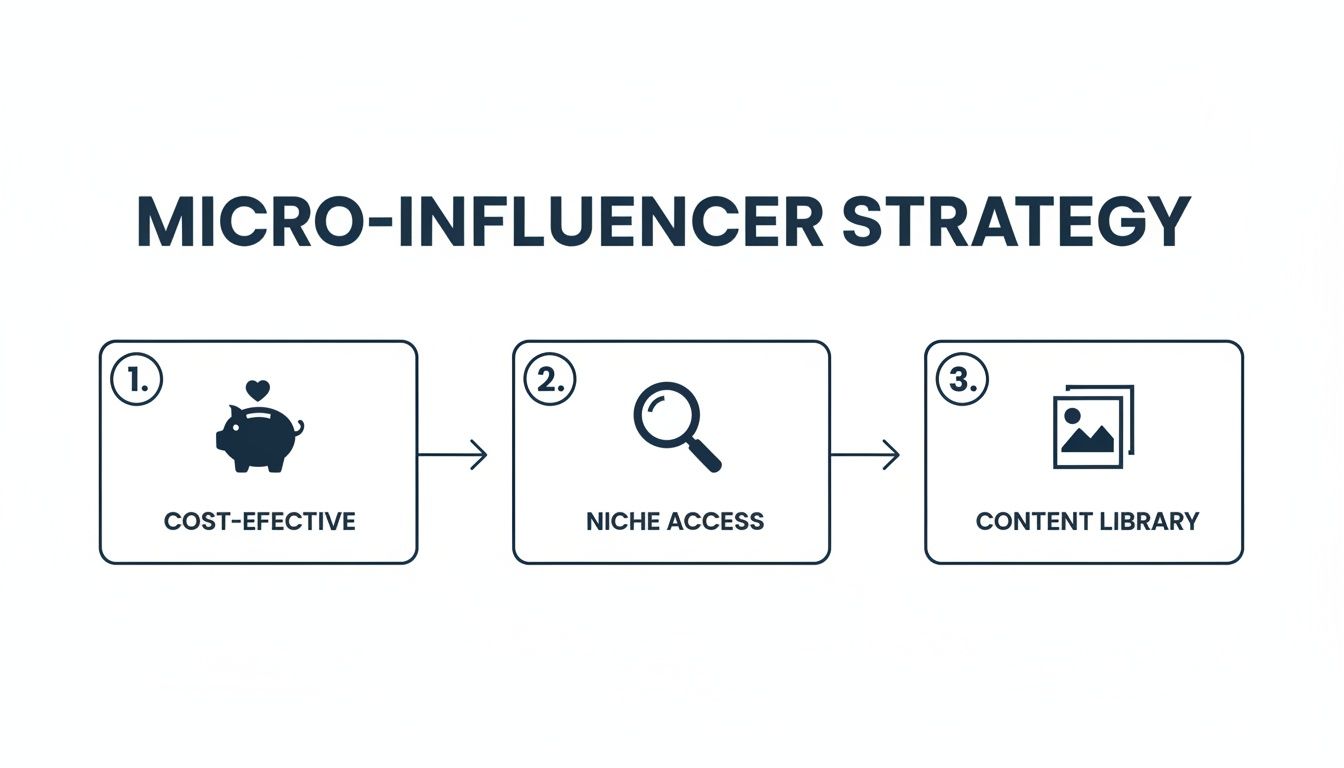
From being budget-friendly to getting you in front of the right people and building a library of user-generated content, a single strong partnership can add value all across your marketing efforts.
Navigating Micro-Influencer Pricing and ROI
One of the biggest draws of working with micro-influencers is that you don't need a massive budget. We're not talking about the six-figure deals you hear about with celebrity endorsements. Partnering with micro-influencers is far more accessible, easier to scale, and often gives you a much clearer path to a real return on your investment.
So, what should you actually expect to pay? There’s no simple answer, because pricing is rarely one-size-fits-all. A lot of things can move the needle, like the creator's follower count, their typical engagement rate, what you’re asking them to create (a quick Story costs less than a polished video), and even the platform you're using.
Understanding Common Pricing Models
While rates are always negotiable, most deals fall into one of a few common buckets. If you’re just getting your feet wet with influencer marketing, these models are a great, low-risk way to start building relationships.
-
Per-Post Fees: This is the most straightforward approach. You agree on a flat fee for a specific piece of content, like an Instagram Reel or a TikTok video. You can expect to see rates anywhere from $100 to over $500, depending on the creator’s audience and engagement.
-
Product Gifting: You'd be surprised how many micro-influencers are happy to receive free products in exchange for a post, especially if it’s from a brand they already know and love. It's a fantastic way to generate genuine content with very little upfront cash.
-
Affiliate Partnerships: This is a classic win-win. Influencers get a unique link or discount code and earn a commission on every sale they drive. It’s a great way to tie their compensation directly to the results they produce for your brand.
For a deeper dive into setting your budget, check out our complete guide on how much you should pay influencers.
Before you start negotiating, it helps to have a baseline understanding of what different types of content might cost. While every influencer sets their own rates, this table gives you a general idea of what to expect.
Average Micro-Influencer Rate Card by Platform
| Platform | Content Type | Typical Price Range |
|---|---|---|
| Static Post (in-feed) | $150 – $400 | |
| Story Sequence (3-5 frames) | $100 – $300 | |
| Reel Video (30-60 sec) | $250 – $600 | |
| TikTok | Short Video (15-60 sec) | $200 – $550 |
| YouTube | Dedicated Video (5-10 min) | $300 – $750+ |
| Blog | Sponsored Article | $200 – $500 |
Keep in mind, these are just starting points. A creator with exceptionally high engagement or a very specialized niche might charge more, but this should help you frame your initial conversations and budget planning.
How to Measure Your Return on Investment
Paying an influencer is only half the battle. You also have to prove it was worth it. Tracking your return on investment (ROI) is non-negotiable—it’s how you justify the spend and figure out how to scale your strategy. The good news is that micro-influencer campaigns give you concrete metrics that go way beyond simple likes and views.
The real value of a micro-influencer isn't just their reach—it's their ability to drive measurable action. Tracking ROI moves your strategy from an expense to a proven revenue driver.
The potential here is huge. The global influencer marketing industry is exploding, with the micro-influencer slice of the pie projected to jump from $2.06 billion in 2023 to $4.64 billion by 2033. Why? Because the returns are just that good. It's not uncommon for top-tier campaigns to bring in $20 for every $1 invested. You can find more data about the global influencer market size on Statista.com.
This is where platforms like REACH Influencers come in handy. They give you a central dashboard with real-time analytics to track every click, code redemption, and sale, so you get a crystal-clear picture of how your campaigns are performing.
So, What's the Real Takeaway?
When every brand is shouting to be heard online, a genuine connection feels like a superpower. And that's exactly what micro-influencers bring to the table. We've walked through what is a micro-influencer, why their engagement is so powerful, and how you can build a smart, profitable strategy around them.
The bottom line is simple: working with these creators isn't just a trendy tactic anymore. It's a core part of building a marketing plan that actually works today. They offer that rare sweet spot of trust, niche reach, and cost-effectiveness that you just don't get with bigger names. They start real conversations and drive results you can actually see.
If you're tired of feeling like your ads are just adding to the noise, it's time to build real relationships with the people you want to reach.
Ready to find creators who can make your brand's story a genuine part of their community's conversation? Take a look at the REACH Influencers platform. We've built tools to make finding the right people, managing your campaigns, and tracking your ROI straightforward. This way, you can focus on what matters most: building strong partnerships that get you results.
Stop chasing followers and start finding real advocates for your brand. When you partner with a micro-influencer, you’re investing in authenticity—and that’s a strategy that always delivers.
Frequently Asked Questions About Micro-Influencers
Even with a solid grasp of the basics, a few practical questions always pop up when it's time to actually build a campaign. Let's tackle some of the most common ones we hear from brands diving in for the first time.
What's the Real Difference Between a Nano and a Micro-Influencer?
On paper, it's all about follower count. Nano-influencers are the smallest creators, typically with an audience under 10,000. Micro-influencers sit in that sweet spot between 10,000 and 100,000 followers.
But the numbers don't tell the whole story. The strategic difference is what really matters.
Nanos are deeply embedded in tiny, tight-knit communities. A recommendation from them feels less like an ad and more like advice from a trusted friend. Micros, on the other hand, give you a bit more reach while still delivering that authentic, community-driven feel. The right choice really boils down to your goals: are you after intense trust in a super-specific niche, or broader awareness within a passionate audience?
How Many Micro-Influencers Should I Actually Work With?
There’s no magic number here, but a great rule of thumb is to start small and scale smart. For most brands, kicking off a campaign with a curated group of 5-10 micro-influencers is the perfect starting point.
Think of that first small group as your R&D department. It’s your chance to see which voices and creative styles click with your audience before you go all-in with a bigger budget.
This approach lets you test the waters, see who's driving real results, and collect priceless data. Once you’ve identified your top performers, you can scale up with confidence and focus on building out those valuable, long-term partnerships.
What Are the Biggest Mistakes People Make?
It’s easy to stumble when you're new to the game, but a few common pitfalls are easily avoidable. If you remember that this is all about genuine collaboration, you're already halfway there.
Here are three major mistakes to watch out for:
- Being Too Controlling: Handing a creator an iron-clad script is the fastest way to kill the authenticity you’re paying for. Give them clear goals and guardrails, but then trust them to speak to their audience in their own voice. That's their superpower.
- Skipping the Homework: Don't get distracted by a big follower number. You have to dig deeper. Look at their engagement quality, check their audience demographics, and scroll through their past work to make sure they’re a true fit and not propped up by fake followers.
- Expecting Overnight Miracles: One sponsored post isn’t going to change your company’s trajectory. Think of micro-influencer marketing as a long-term play. It’s about building brand trust, creating a library of authentic content, and fostering real connections over time.
Ready to build a powerful micro-influencer strategy without the guesswork? REACH Influencers provides the discovery tools, campaign management dashboard, and real-time analytics you need to find the perfect partners and prove your ROI. Start finding your brand's best advocates today.