 Skip to content

Meta description: A practical guide to the best affiliate programs for Instagram in 2026, with honest trade-offs, Instagram promotion tips, and a framework for creators and brands using REACH to scale.
Instagram is one of the few channels where affiliate content can still feel native when it is done well. That matters because the global affiliate marketing industry reached approximately $19 billion in 2025, and Instagram drove over 30% of social-commerce sales within that ecosystem, according to Quimby Digital’s breakdown of Instagram affiliate marketing.
If you’re evaluating affiliate programs for instagram, the core question isn’t just which network has the most brands. It’s which setup matches how you sell on Instagram. Some tools are best for creators who need a linkable storefront. Some are better for agencies running multiple affiliate relationships at once. Some are only worth it if you already have strong buyer intent and a clear niche.
That’s why I don’t recommend starting with the biggest name by default. I recommend starting with the workflow you need.
For brands and agencies, REACH stands out early because it handles the messy part that usually kills affiliate momentum: discovery, outreach, approvals, payments, tracking, and reporting in one place. For creators, the better choice often comes down to niche fit. Fashion and beauty creators usually want different tools than creators promoting tech, household products, or a broad mix of everyday items.
Instagram is also still a discovery engine. HubSpot’s Creator Economy Report 2025, cited in the same Quimby Digital analysis, says 81% of Instagram users discover new brands or products through creators. That’s why affiliate programs for instagram work best when the content looks like a recommendation first and an ad second.
If you also care about turning product discovery into purchases, this guide on how to improve ecommerce conversion rates pairs well with the program choices below.
1. REACH
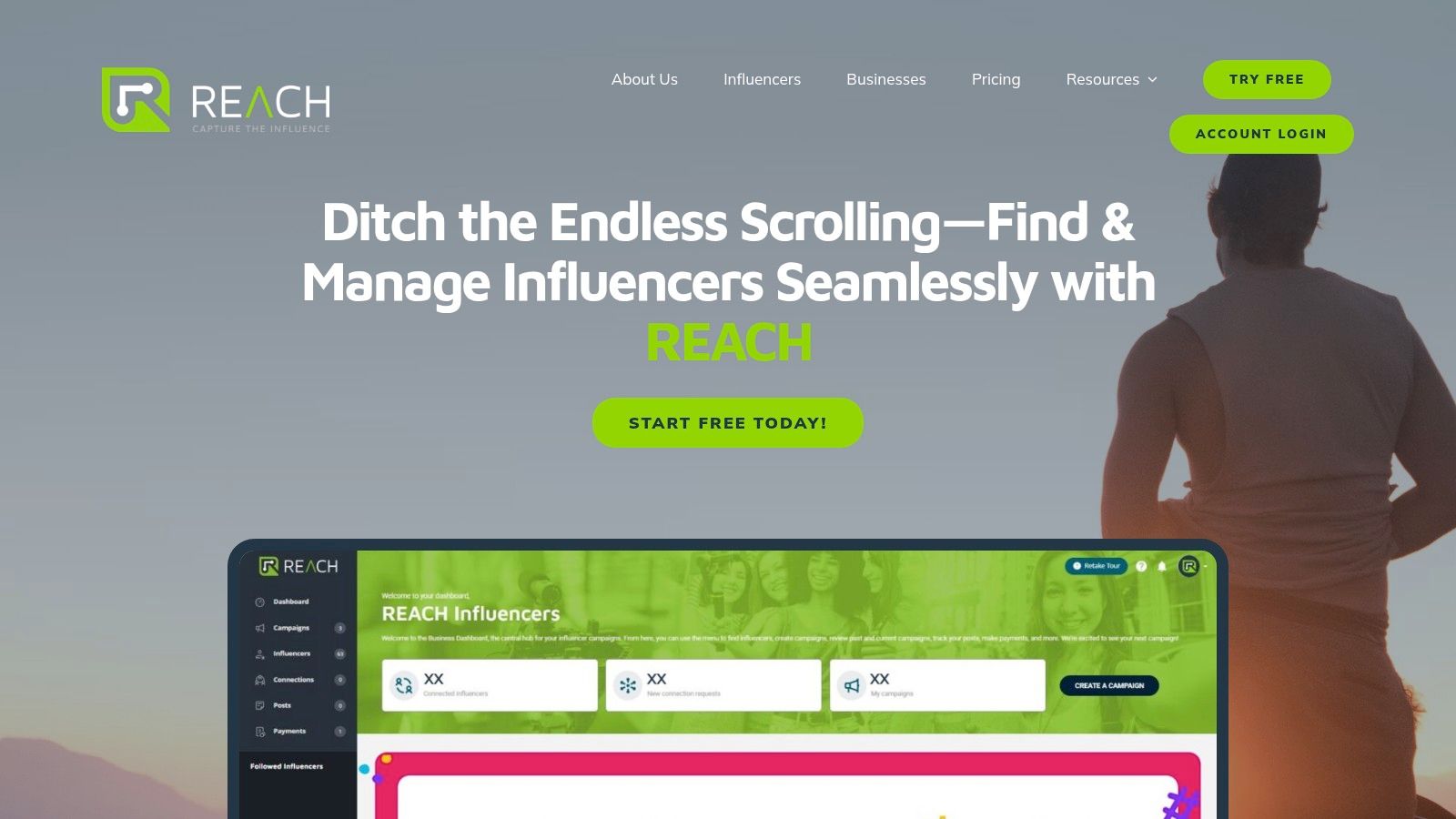
REACH is the tool I’d put at the top for brands, agencies, and operators who need to manage affiliate programs for instagram at scale instead of patching together forms, DMs, spreadsheets, payment tools, and reporting decks.
It’s built around the workflow. You can discover creators by niche, engagement, location, and audience fit, then keep outreach, approvals, contracts, payments, and performance tracking in one dashboard. That matters more than many realize. A lot of affiliate programs fail because the operational layer is clumsy, not because the creators were wrong.
Why REACH works better for managed programs
The strongest use case is when you’re coordinating multiple creator relationships at once.
Instead of handing creators a code and hoping someone updates the spreadsheet later, REACH gives teams a centralized system for campaign management and ROI reporting. Agencies also get white-label campaign capabilities and unlimited client project support, which is a practical advantage if you sell affiliate and creator campaigns as a service.
There’s also a useful alignment with where Instagram affiliate is heading. According to Marketing LTB’s affiliate marketing statistics roundup, influencer affiliates expanded year over year as creator economies matured and brands demanded harder revenue proof. That’s exactly the environment where centralized analytics and clean reporting win.
Practical rule: If you’re managing more than a handful of creator relationships, a network alone isn’t enough. You need operating infrastructure.
REACH also includes budget planning and ROI tools, plus a free trial path so teams can validate fit before committing. One public example on the site shows a platform fee in its calculator, but broader pricing isn’t widely surfaced, so you should expect a demo or sales conversation if you want full cost clarity.
Best fit and trade-offs
REACH is a strong fit for:
- Agencies with client reporting needs: White-label reporting helps you show performance without rebuilding decks every month.
- Brands recruiting micro-creators: Discovery filters make it easier to find relevant partners instead of defaulting to the loudest accounts.
- Teams that need payment control: Centralized payment handling and tax-compliance support reduce friction for both brands and creators.
The trade-off is simple. REACH is more valuable when you’re running a system, not just generating one-off affiliate links. If you’re a solo creator who only needs a storefront, a lighter tool may be enough.
If you want a direct look at how REACH approaches affiliate marketing for influencers, start there. And if Reels are central to your monetization plan, this guide on how to monetize Instagram Reels through affiliate marketing is worth pairing with your setup.
2. Amazon Influencer Program
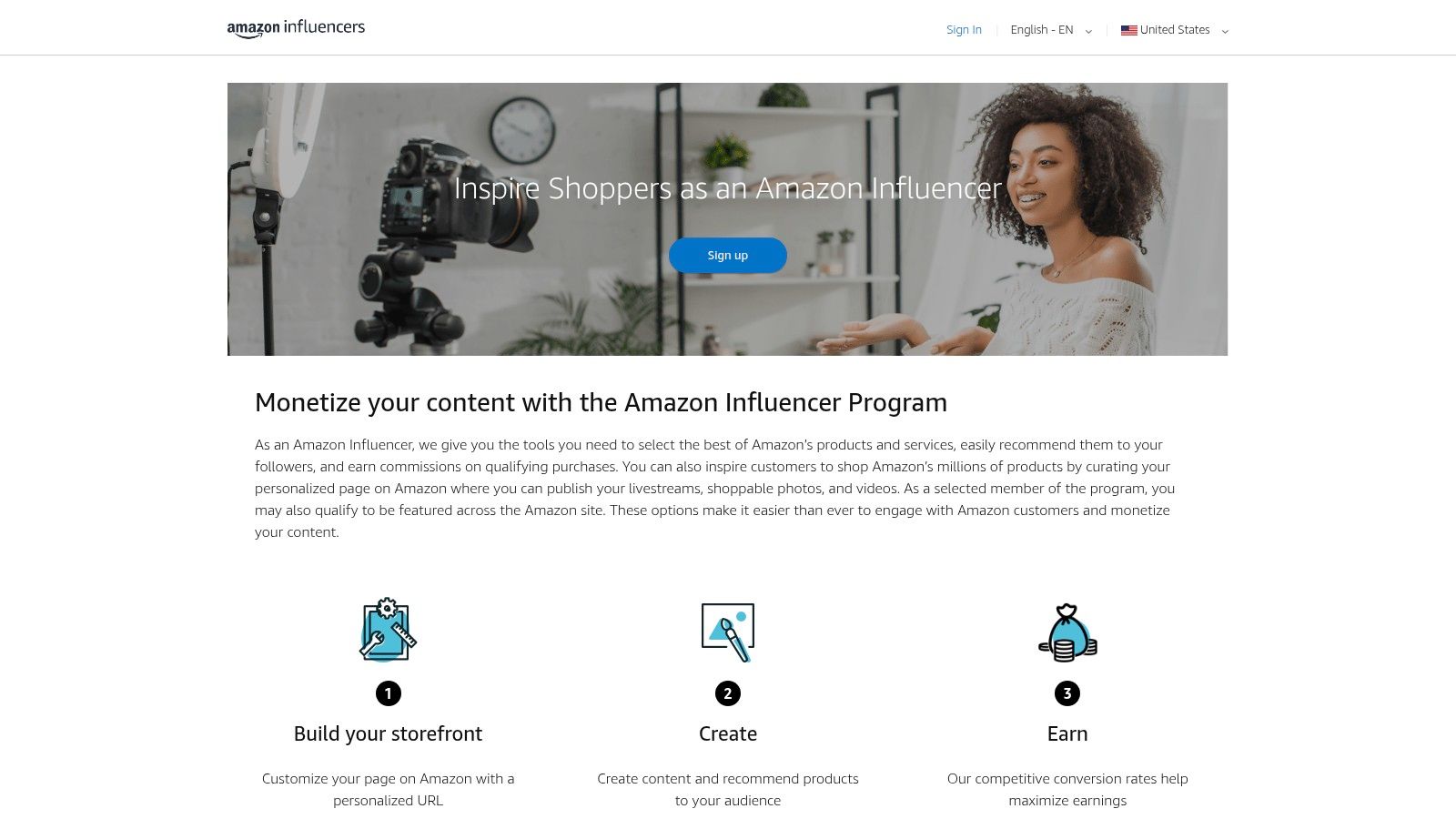
Amazon Influencer Program is the default starting point for many creators because it solves the hardest early problem fast. You don’t need to convince followers to trust an unknown checkout flow. They already know Amazon.
That built-in buying familiarity is why it works so well for broad-interest Instagram accounts, gift guides, home finds, gadget roundups, beauty tools, and “things I use” content.
Where Amazon fits on Instagram
Amazon gives approved creators a storefront, trackable links, and additional on-site earning opportunities through shoppable videos and idea lists. On Instagram, that makes it useful for:
- Bio link traffic: One storefront can hold your recurring recommendations.
- Story selling: Product links work well when the item solves a simple problem fast.
- Reels with utility: Amazon tends to perform best when the product demo is immediate and practical.
The upside is product depth. If your audience asks about everything from organizers to skincare fridges to office gear, Amazon covers the spread better than niche-first platforms.
The downside is margin. According to Humanz’s Instagram affiliate marketing guide, Amazon Associates commissions range from 1% to 10% depending on category. So yes, conversion can be easier, but your payout may be thin in lower-rate categories.
The mistake with Amazon isn’t joining. It’s building your whole Instagram affiliate strategy around low-commission products.
Creators who do well with Amazon usually use it as one revenue layer, not the only one. They keep evergreen recommendations there, then pair higher-value programs elsewhere.
Compliance is the other issue. Amazon has strict program rules and periodic reviews. If you’re sloppy with disclosures, link use, or promotional methods, that can become a risk. It’s a good starter program, but it rewards careful operators more than casual ones.
3. LTK
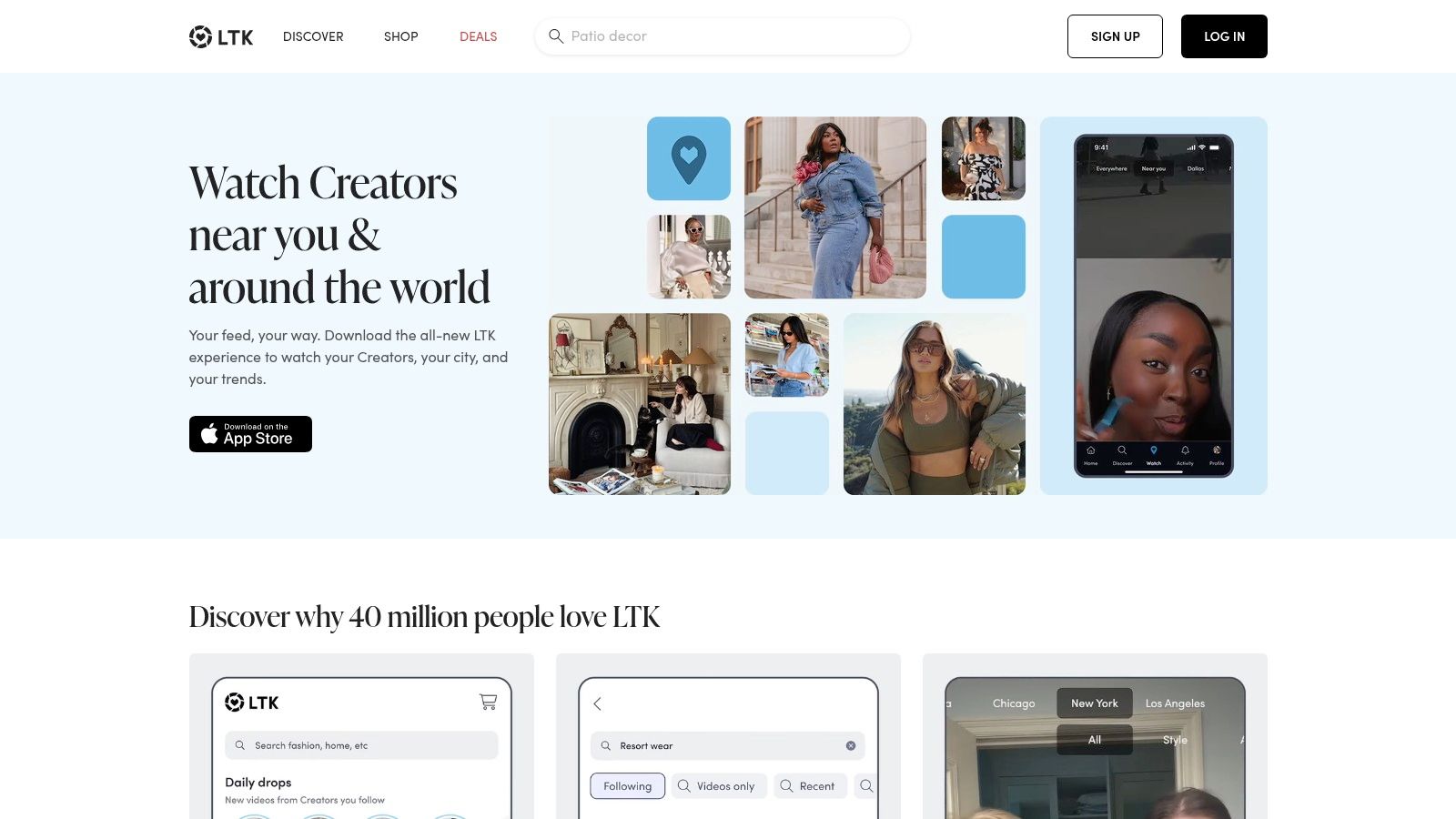
LTK is still one of the clearest fits for fashion, beauty, home, and lifestyle creators. If your Instagram audience expects outfit links, room styling picks, beauty routines, or seasonal curation, LTK feels much closer to how those followers already shop.
It isn’t the most universal platform on this list. That’s also why it works.
Why LTK still matters
LTK combines affiliate link creation, retailer access, analytics, and a consumer-facing discovery app. That means the platform can help creators in two ways at once. It supports monetized Instagram content, and it gives shoppers another place to find your recommendations.
This category focus matters because commission benchmarks vary a lot by network. In the Humanz benchmark summary, LTK is listed at 10% to 25% for fashion, beauty, and lifestyle verticals. For a creator in those niches, that’s a much better fit than relying on broad marketplaces with weaker category economics.
Another reason LTK deserves consideration is vertical alignment. According to the Quimby Digital analysis cited earlier, lifestyle held a meaningful conversion share on Instagram affiliate activity, which matches the kind of products LTK is strongest at merchandising.
What works and what doesn’t
LTK works best when your content is already visual, organized, and recommendation-driven.
- Works well: Outfit carousels, “get ready with me,” home styling, beauty shelf recs, seasonal edits.
- Works less well: Broad meme pages, news accounts, education creators with little product context.
If you’re trying to build more consistent monetization alongside sponsored work, LTK fits nicely with broader Instagram brand partnerships. REACH’s guide to brand deals on Instagram is a useful companion because many creators eventually run both models at once.
The trade-off is access. LTK is application-based, and not every creator gets approved. It’s also less compelling if your niche sits outside lifestyle-heavy retail. But for the right creator, it can feel far more native than a general network.
4. ShopMy
ShopMy is one of the cleaner storefront-first options for Instagram creators who want a polished recommendation hub without a lot of setup friction.
Its strongest appeal is speed. You connect your account, build a storefront, and start organizing product picks in a way that feels made for link-in-bio behavior.
Best use case
ShopMy suits creators whose audience buys from curation. Stylists, beauty creators, wellness creators, and home accounts tend to benefit most because followers often want a saved destination for products after they see them in Stories or Reels.
The opportunities board is also worth noting. Many affiliate tools focus only on commission earnings. ShopMy tries to bridge affiliate and paid collaboration work, which is helpful for creators who don’t want to separate those motions into completely different systems.
That said, the experience depends heavily on brand and retailer coverage in your niche. A storefront tool is only as useful as the products and partnerships available inside it. If your category is highly specialized, you’ll need to check depth before committing.
Practical trade-offs
ShopMy is a good option when you want:
- A clean Instagram bio destination: Better for recommendation-led selling than dumping followers onto a generic link page.
- A hybrid monetization path: Useful if you want affiliate commissions and sponsored opportunities in the same orbit.
- Simple curation: Strong for creators who think in collections, edits, and routines.
The weak spot is dependence on approvals and retailer fit. If onboarding slows down or your preferred brands aren’t active, momentum can stall. This is common with affiliate programs for instagram that look elegant on the front end but rely on network depth behind the scenes.
ShopMy is strongest when your audience already trusts your taste. If they buy from your selections, not just your personality, it can be a very efficient setup.
5. MagicLinks
MagicLinks feels more social-native than many old-school affiliate networks. That is the big draw.
It’s designed for creators who need to create links quickly, organize them into a mobile-friendly storefront, and support the way Instagram audiences ask for products. Usually through Stories, DMs, and short-form video.
Where it shines
MagicLinks is a strong fit for creators who publish often and link often. Its in-bio shop pages, quick link creation, and mobile app make it practical for day-to-day content flow.
If your Instagram routine looks like this, MagicLinks makes sense:
- You post a Reel showing a product in use.
- Followers ask for the link in comments or DMs.
- You send them to your bio page or a direct product link.
- You want analytics without rebuilding your workflow every time.
That’s why it often works for beauty, fashion, lifestyle, and even consumer tech creators. The retail mix is broad enough to support varied recommendation content.
A good affiliate tool should shorten the time between “where’s the link?” and “here it is.”
The trade-off nobody should ignore
MagicLinks is convenient, but convenience isn’t the same as consistency. Commission rates vary by retailer, and some creator benefits depend on your tier or standing inside the platform. If you’re expecting equal access to sponsorship opportunities from day one, that’s usually not how these systems work.
This is the broader pattern with social-first affiliate tools. They reduce friction, but they don’t eliminate the need for strong creative. If your content doesn’t create buying intent, a better storefront won’t save it.
MagicLinks is worth considering if you publish high-frequency recommendation content and want fewer moving parts than a traditional affiliate network dashboard usually gives you.
6. impact.com

impact.com is the most operationally serious option on this list for creators and brands who think beyond single links and want structured performance partnerships.
It can feel heavier than creator-first apps. That’s because it’s built to support a lot more than influencer storefronts.
Why operators like impact.com
Impact gives creators access to brand programs, links, promo codes, and analytics. For brands, it adds more advanced commissioning rules, tracking controls, and partnership infrastructure. That makes it useful when affiliate programs for instagram need to connect with broader partnership strategy.
One benchmark from the verified data stands out here. Humanz notes that Impact.com facilitates unified performance partnerships that drive a 46% lift in conversions when creator programs are paired with affiliate mechanisms. Used carefully, that’s a strong reminder that the best results often come from combining creator influence with accountable conversion tracking, not separating them.
For teams comparing management layers, REACH’s influencer marketing platform is useful to review alongside impact.com because the two tools solve related but different problems. Impact is a partnership infrastructure platform. REACH is stronger on creator discovery, campaign workflow, and reporting usability for agencies and in-house teams.
Best fit
impact.com is usually the right choice when:
- You want direct brand relationships: Especially if you work across several content channels.
- You need deeper tracking controls: Helpful for teams with more advanced attribution needs.
- You’re operating at scale: Better for established creators, brands, and partnership managers than casual beginners.
The trade-off is complexity. Setup can feel dense, and many brand programs still require manual approval. If you want a simple “link products fast” experience, this probably isn’t your first stop. If you want structure and long-term program depth, it’s one of the strongest choices.
7. CJ
CJ is one of the old guard in affiliate marketing, and that history shows in both good and bad ways.
The good part is advertiser depth and reporting credibility. The bad part is that the interface and approval flow can feel less creator-native than newer platforms.
When CJ is a smart pick
CJ makes sense for Instagram creators who already know how to work inside affiliate networks and want access to established advertisers across retail, tech, and direct-to-consumer categories.
Its social-oriented offerings, including creator-specific paths like Influence and CJ Select, make it more relevant to Instagram than many people assume. If your audience spans multiple product types and you’re comfortable choosing programs one advertiser at a time, CJ can open useful doors.
This is especially true if you care more about advertiser quality than storefront aesthetics.
Real-world trade-offs
CJ tends to reward patience.
- Brand access is strong: Many recognized advertisers operate there.
- Tracking is reliable: Useful for creators who care about data and reporting consistency.
- Approvals take time: You often need to win entry brand by brand.
- The learning curve is real: New creators may feel buried in affiliate network mechanics.
A practical note on attribution: Humanz highlights that standard affiliate tracking windows commonly extend 30 days. That matters on Instagram because not every follower buys on first click. If you run recommendation content that drives delayed purchases, networks with mature tracking can be more valuable than they first appear.
CJ isn’t the prettiest option. It is one of the more proven ones.
8. Rakuten Advertising
Rakuten Advertising is a strong choice for Instagram creators who want established retail brands and a network that takes compliance seriously.
That second point matters more than it used to. On Instagram, sloppiness around disclosures, link behavior, or promotional claims can hurt both approvals and long-term account health.
Why Rakuten appeals to experienced creators
Rakuten’s marketplace tends to attract known brands, particularly in retail and lifestyle. For creators who care about reliable payments, professional standards, and clearer participation policies, that’s appealing.
I generally recommend Rakuten to creators who already have some proof of audience trust and want better-quality programs, not just more programs. The network’s standards can feel stricter, but that filtering also helps maintain advertiser quality.
Better affiliate relationships usually come with more rules, not fewer.
Where it can frustrate people
The biggest friction point is qualification. Participation rules and brand-by-brand approvals can slow your ramp-up. If you’re brand new and want instant access, this won’t feel as welcoming as a simpler creator app.
Rakuten is best for creators who are willing to trade speed for quality. If your Instagram content already has purchase intent and you want stronger retail partners, that trade can be worth it.
It’s not usually the first affiliate network I’d recommend to a beginner. It is one I’d consider once you’ve proven that your audience buys.
9. Awin
Awin is one of the more flexible affiliate programs for instagram if you want access to both US and international advertisers.
That global coverage is the primary differentiator. A lot of Instagram creators build audiences that aren’t cleanly tied to one market, and many networks still feel heavily domestic in practice.
Why Awin earns a spot
Awin supports influencer onboarding, standard deep linking, and broad advertiser discovery across categories like fashion, home, tech, and travel. It’s useful for creators who want variety without locking into one niche-specific ecosystem.
It also matters for brands. In the verified data, Awin and ShareASale are grouped in a benchmark range of 5% to 30% globally through the Humanz affiliate commission overview. That doesn’t guarantee any specific payout from a specific advertiser, but it does show why Awin stays attractive across different verticals.
Another relevant point from the verified data is broader adoption. Global affiliate participation among advertisers and publishers is already widespread, and budget growth has continued. That supports the case for mature networks that can connect creators with many merchant types, even if the exact fit still depends on approvals and niche.
Best and worst fit
Awin usually works best for:
- Creators with mixed audiences across regions
- Lifestyle, home, and fashion creators
- Publishers who want more merchant choice
It works less well if you want a highly guided creator experience. Like most networks with broad merchant bases, you’ll still deal with manual approvals, uneven program quality, and varying commission structures.
If you’re comfortable doing some selection work yourself, Awin is one of the more useful networks to keep in your stack.
10. Shopify Collabs
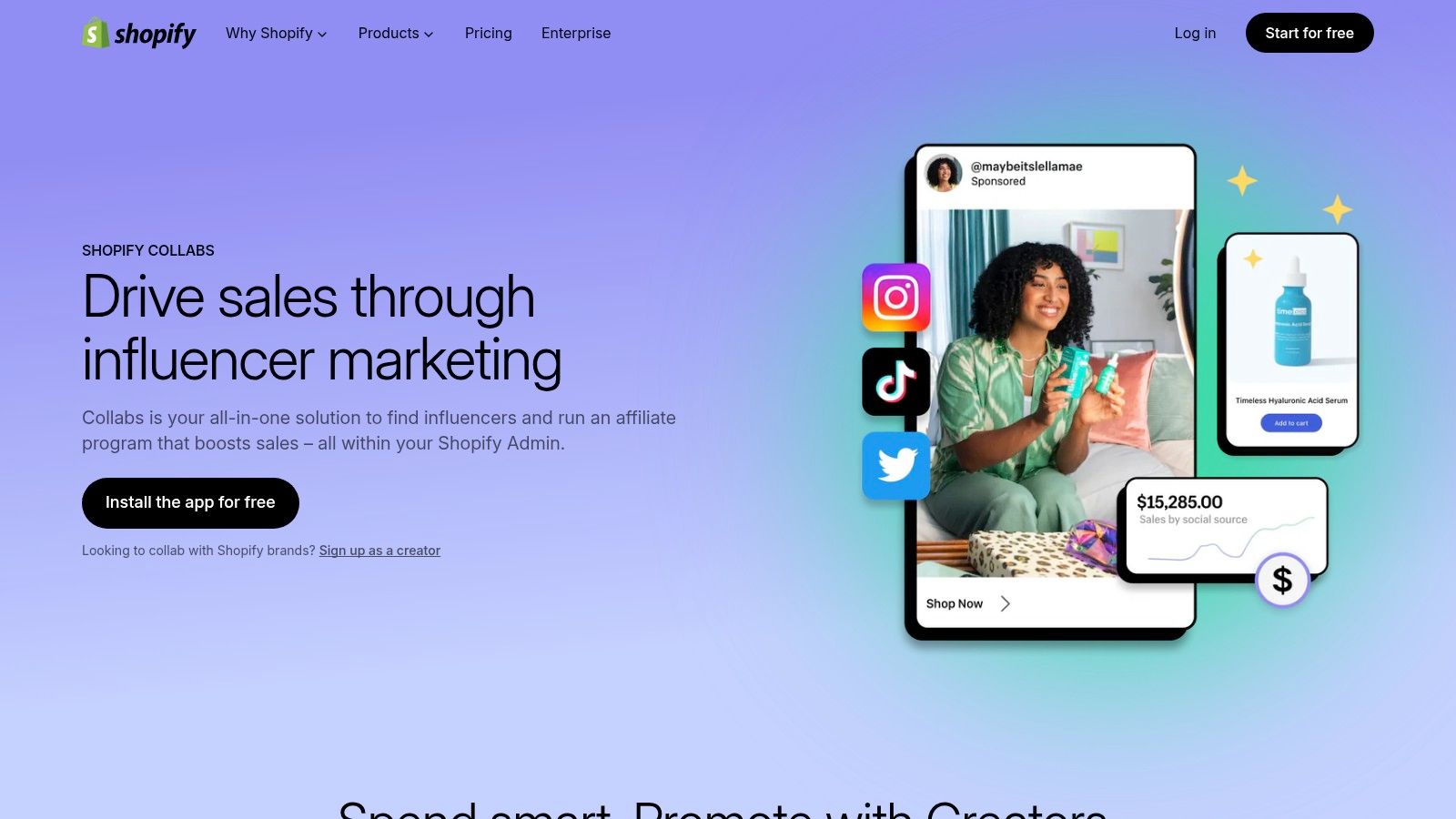
Shopify Collabs is one of the most practical options for creators who want direct relationships with ecommerce brands instead of working only through classic affiliate networks.
That directness is the point. You’re often closer to the merchant, the product story, and the checkout itself.
Why Shopify Collabs makes sense
Because so many direct-to-consumer brands run on Shopify, Collabs gives creators access to a wide pool of merchants that already understand online conversion and fulfillment. The workflow is clean for Instagram use. Creators can apply to programs, get links or promo codes, and track performance while merchants manage payouts inside the Shopify ecosystem.
This works especially well for niche creators who prefer tighter brand alignment over giant product catalogs.
A brand selling supplements, home goods, apparel, or niche beauty products may be a better affiliate fit through Shopify Collabs than through a massive marketplace where you’re just one publisher among many.
Honest trade-offs
The quality spread is wide. Some merchants run thoughtful programs with good creative support and fair commissions. Others treat affiliate as an afterthought.
That means your results depend a lot on merchant selection.
- Strong upside: Direct access to DTC brands and cleaner code workflows for Instagram.
- Main downside: Program quality varies merchant by merchant.
- Best scenario: You already know the brand or use the product.
Shopify Collabs is often strongest when creators stop acting like generic affiliates and start acting like selective product partners. On Instagram, that usually converts better anyway because followers can tell when the recommendation is real.
Top 10 Instagram Affiliate Programs: Reach Comparison
A creator can join dozens of affiliate programs and still struggle to turn Instagram traffic into consistent revenue. The gap usually comes down to fit, workflow, and how many moving parts you can realistically manage each week.
This comparison is more useful if you read it as a selection framework, not a winner-takes-all ranking. Some platforms are better for storefront-style curation. Others are better for direct brand deals, large retail catalogs, or agency-level management across many creator relationships.
| Platform | Core features ✨ | UX / Quality ★ | Value / Pricing 💰 | Target audience 👥 | Why choose / USP 🏆 |
|---|---|---|---|---|---|
| REACH 🏆 | Advanced discovery (engagement, location, demographics), centralized campaign dashboard (outreach, approvals, contracts, payments, real-time analytics) | ★★★★☆, intuitive, mobile-friendly, agency workflows | 💰 Free trial; platform fee example ~9% (custom pricing via demo) | 👥 Agencies, brands, creators, agency-first & white-label | 🏆 All-in-one system for white-label campaigns, secure payments, and live ROI reporting ✨ |
| Amazon Influencer Program | Customizable Creator Storefront, off-site affiliate links, on-site shoppable placements | ★★★★☆, trusted checkout, familiar UX | 💰 Free to join; commissions vary by category (can be low) | 👥 Creators driving direct conversions & evergreen Amazon traffic | ✨ Massive product catalog + Amazon on-site placements |
| LTK | Shoppable posts/collections, mobile creator apps, consumer discovery app | ★★★★☆, creator-focused tools & analytics | 💰 Competitive rates in lifestyle verticals; application required | 👥 Fashion, beauty, home & lifestyle creators | ✨ Strong retailer relationships & built-in consumer discovery |
| ShopMy | Instagram-first storefront, auto-monetized links, opportunities board for paid work | ★★★★☆, quick IG setup, creator support | 💰 Dual revenue: affiliate commissions + paid collaboration leads | 👥 Stylists, beauty, wellness, home creators | ✨ Fast storefront + opportunities board to land brand deals |
| MagicLinks | Fast affiliate link creation, in-bio shoppable pages, Text2Shop, mobile app | ★★★★☆, social-native, quick workflows | 💰 Varies by retailer; fast monetization for social video | 👥 Social-video & IG-focused creators | ✨ Text2Shop & in-bio mini-site for low-friction purchases |
| impact.com | Marketplace for brand programs, link/promo tools, enterprise-grade tracking & fraud controls | ★★★★☆, powerful analytics, can feel complex | 💰 Enterprise pricing; strong ROI tracking & controls | 👥 Brands and creators working with major advertisers | ✨ Detailed enterprise tracking, commissioning rules |
| CJ (Commission Junction) | Large advertiser marketplace, link generator, product feeds, Influence programs | ★★★★☆, proven tracking, steeper learning curve | 💰 Variable commissions; access to premium advertisers | 👥 US-centric creators & publishers | ✨ Mature network with reliable reporting at scale |
| Rakuten Advertising | Mature marketplace, publisher policies, reporting & payment infrastructure | ★★★★☆, reliable payments and compliance guidance | 💰 Stable payouts; brand-quality network (approval-based) | 👥 Creators targeting established US retailers | ✨ High-quality brand selection + clear compliance rules |
| Awin | Global advertiser base (incl. ShareASale), influencer onboarding, deep-linking | ★★★★☆, flexible international support | 💰 Variable commission structures; global reach | 👥 Global creators & blogs seeking international brands | ✨ Broad global marketplace across verticals |
| Shopify Collabs | Creator discovery for Shopify merchants, unique links/codes, merchant-side payouts | ★★★★☆, smooth Shopify integration | 💰 Varies by merchant; integrated with Shopify payouts | 👥 Creators partnering with DTC Shopify brands | ✨ Direct merchant integration with Shopify checkout and analytics |
A few patterns stand out.
Creators who sell through personal taste and frequent recommendations usually do best with LTK, ShopMy, or MagicLinks. Creators who rely on trust, search behavior, and broad product demand often get more usable volume from Amazon. Brands and agencies managing many partnerships at once usually need a system that handles discovery, approvals, payments, and reporting in one place. That is where REACH has a practical advantage over patching together separate tools.
There is also a trade-off between access and control. Large affiliate networks such as CJ, Rakuten Advertising, Awin, and impact.com give you broad advertiser reach, but they often require more setup, more approval work, and a better grasp of tracking rules. Instagram-first tools feel faster day to day, but they may offer a narrower brand mix.
For Instagram, the best choice depends on how you publish.
If your content is outfit breakdowns, product roundups, and story links every day, use a platform built for quick link creation and storefront updates. If you run campaigns for multiple clients or manage creator relationships at scale, use a platform that centralizes outreach, contracts, payments, and performance reporting. If you want a balanced setup, many teams pair one discovery or management platform with one storefront or social-commerce tool.
Final Thoughts
The best affiliate programs for instagram aren’t the ones with the biggest logo count. They’re the ones that match how you sell, how your audience buys, and how much operational complexity you can handle.
If you’re a creator, start by being honest about your content style. If followers come to you for broad product recommendations and convenience, Amazon can make sense. If your account is built around fashion, beauty, home, or curation, LTK or ShopMy may fit better. If you post constantly and need social-native link workflows, MagicLinks is worth a look. If you want direct merchant relationships, Shopify Collabs can be a better long-term play than leaning only on giant affiliate networks.
If you’re a brand or agency, the decision changes. You’re not just choosing a network. You’re building a repeatable system for recruiting creators, approving content, tracking clicks, handling payouts, and proving performance. That’s where most affiliate setups break, not on strategy, but on execution.
This is also why the industry keeps moving toward measurable partnerships. Across the broader affiliate ecosystem, channels account for a meaningful share of ecommerce orders and many marketers are increasing budgets, as summarized in the verified affiliate statistics from Marketing LTB. That budget shift makes sense. Affiliate is easier to defend when it’s tied to revenue, not just reach.
But the strongest Instagram affiliate programs still depend on creative quality. A tool can’t fix content that feels forced. It can’t rescue poor product fit. It can’t make a disengaged audience buy. Instagram affiliate works when creators recommend products inside content people would want to watch anyway.
A few practical rules consistently hold up:
- Match program to niche: Don’t choose a general network if your vertical has a stronger specialist option.
- Keep the path to purchase short: If followers have to click too many times, too many drop off.
- Use Stories and Reels differently: Stories catch intent that already exists. Reels create intent when the demo is strong.
- Protect trust first: The fastest way to kill affiliate revenue is pushing products you wouldn’t recommend without a commission.
- Track at the relationship level: Don’t just ask whether affiliate works. Ask which creator, which product, which post format, and which offer moved sales.
For teams running larger creator programs, REACH is the most complete option in this list because it handles the part that gets messy fast. Discovery, outreach, approvals, contracts, payments, and reporting all sit in one workflow. That’s what makes scaling possible.
For solo creators, the right move is often simpler. Pick one core platform that fits your niche, publish content that solves a buying question, and improve your system after you’ve seen real click and conversion behavior. Don’t join five programs at once. Start with one that matches your audience, then expand.
Affiliate programs for instagram still work because Instagram still compresses discovery, trust, and purchase intent into one place. The people who win with it usually aren’t the loudest. They’re the most consistent, the most selective, and the easiest to buy from.
If you want to run affiliate and influencer campaigns without juggling spreadsheets, disconnected tools, and messy reporting, try REACH. It gives brands, agencies, and creators one place to discover partners, manage campaigns, track clicks, handle payments, and prove ROI with less manual work.