 Skip to content

An influencer agreement is a legally binding contract that lays out the entire partnership between your brand and a creator. Don't think of it as a bureaucratic hurdle. It's really more of a shared roadmap that clearly defines deliverables, payment, and expectations, protecting everyone involved and setting you up for a smooth collaboration.
Why a Handshake Deal Is No Longer Enough
Back in the early days of social media, a quick DM and a verbal agreement might have gotten the job done. But in today's professionalized creator economy, relying on a handshake deal is just asking for trouble.
Influencer marketing is exploding—it’s on track to become a $32.55 billion global industry by 2025. With over 80% of marketers calling it a highly effective strategy, the stakes are simply too high to leave things to chance. For a deeper dive, you can explore the full report on these industry trends.
The number one reason influencer campaigns go south? Vague expectations. Imagine you ask an influencer to create "some content" for your new product. You're picturing a high-quality, polished video, but they deliver a couple of quick, unedited Stories. Without a contract, that gap between what you expected and what you got can lead to a wasted budget, major disappointment, and a burned bridge.
An influencer agreement eliminates that guesswork entirely.
Clarifying Roles and Responsibilities
Putting everything in writing forces you and the creator to get specific before any work starts. It nails down answers to the critical questions that often get glossed over in casual chats:
- Who owns what task? The contract can specify that the creator handles content production, while the brand is responsible for providing the product and giving timely feedback on drafts.
- What are the exact deliverables? Instead of just "social posts," you get "two 60-second Instagram Reels and one 5-part Story series with a link sticker."
- What are the key dates? It locks in firm deadlines for first drafts, revision rounds, and the final publishing date, keeping the whole campaign on track.
This visual breakdown clearly illustrates how responsibilities are typically divided between the brand and the influencer.
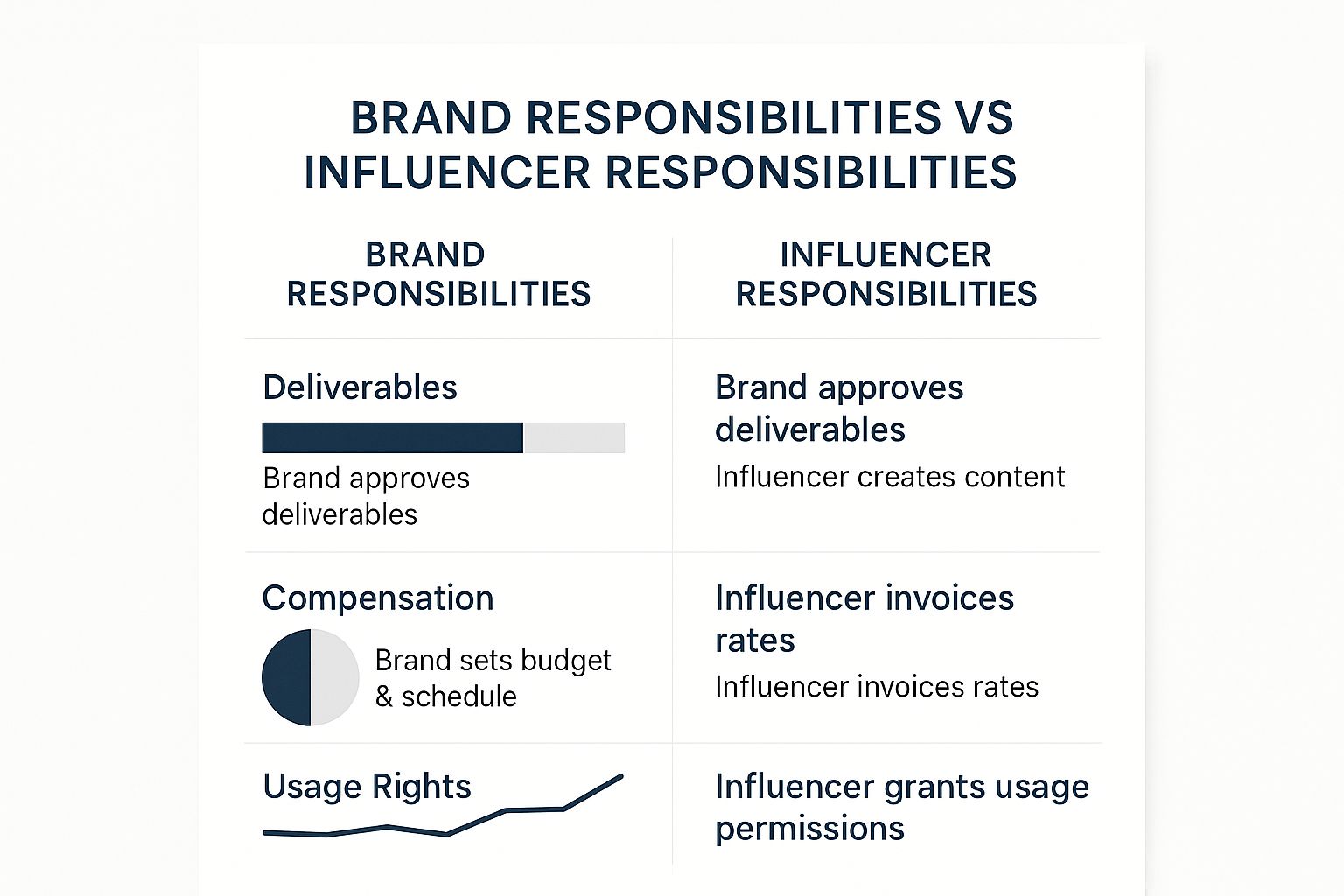
As you can see, the contract creates a system of checks and balances where everyone knows exactly what they need to do and when, from content creation and approval flows to payment terms.
Before we dive deeper, let’s quickly compare a casual agreement with a formal contract. The differences highlight why one is a professional tool and the other is a recipe for disaster.
Contract vs Handshake Deal Key Differences
| Area of Concern | Informal Handshake Agreement | Formal Influencer Contract |
|---|---|---|
| Deliverables | Vague ("a few posts") | Specific (e.g., "2 TikToks, 1 IG Reel") |
| Payment Terms | Unclear ("we'll pay you after") | Defined (e.g., "50% upfront, 50% on completion") |
| Content Ownership | Ambiguous, potential for dispute | Clearly stated (e.g., brand usage rights for 12 months) |
| Legal Protection | Virtually none, difficult to enforce | Legally binding, protects both parties |
| Approval Process | Assumed, often leads to conflict | Outlined (e.g., "2 rounds of revisions within 48 hours") |
This table makes it crystal clear: a formal contract replaces ambiguity and risk with clarity and security for both your brand and the creator.
A well-drafted contract transforms ambiguity into a clear set of instructions. It's the difference between hoping for a successful campaign and planning for one.
At the end of the day, a contract isn't about a lack of trust. It’s about building a partnership on a foundation of professionalism and mutual respect. It protects your brand’s investment, ensures you’re compliant with advertising laws, and honors the creator's hard work by defining everything in clear, agreed-upon terms. It's the non-negotiable first step to building a successful and scalable influencer marketing program.
Building the Core of Your Influencer Contract

Now that we’ve covered the basics, we’re getting to the absolute heart of your influencer agreement: the scope of work. This is where ambiguity goes to die. I’ve seen too many campaigns go sideways because of vague expectations, and this section is your primary defense against that.
Think of it as the campaign’s architectural blueprint. Simply agreeing to "promote our new skincare line" is an invitation for trouble. You might be envisioning a beautifully shot, in-depth YouTube review, while the creator is thinking a quick, unedited Instagram Story will suffice. This is where you close that gap before it even opens.
The goal here is simple: leave zero room for interpretation. When the expectations are crystal clear, everyone can work confidently, knowing exactly what needs to be done.
Defining Crystal-Clear Deliverables
Specificity is everything. Don't be shy about getting granular. You need to outline the exact format, quantity, and essential features for every single piece of content. This isn't micromanaging; it's ensuring the influencer knows precisely what you're paying for and what success looks like from your perspective.
A rock-solid scope of work should itemize deliverables like this:
- Two (2) Instagram Reels: Each video needs to be 45-60 seconds long. It's crucial the product is shown clearly within the first three seconds, and the agreed-upon call-to-action must be in the caption.
- One (1) Dedicated YouTube Video: This needs to be a substantial piece of content, at least eight minutes long. It must include both an unboxing segment and a practical demonstration, with our tracked affiliate link placed on the very top line of the description.
- Four (4) Instagram Stories: These should be spread out over two separate days (two per day). Each set of stories must include a direct link sticker pointing to the product page.
This level of detail makes it easy to track progress and keeps everyone accountable. If you want to organize the creative direction even further, this influencer brief template is a fantastic resource to use alongside your contract.
A well-defined scope of work is non-negotiable. It's the engine of your influencer agreement, ensuring that the creative output aligns perfectly with your strategic campaign goals from the very start.
Setting Realistic Timelines and Deadlines
Once you’ve nailed down the "what," it's time to define the "when." A campaign timeline is absolutely essential for keeping the project on track. Without firm dates, a collaboration can stall, lose momentum, and ultimately fail to deliver.
Your timeline needs to cover all the key milestones—not just the final publishing date. It’s a rookie mistake to forget to build in time for shipping, drafts, feedback, and revisions. Factoring these in from the start prevents those frantic, last-minute scrambles that always seem to compromise quality.
I always recommend a milestone-based schedule. It breaks the process down into manageable steps.
| Milestone | Deadline | Notes |
|---|---|---|
| Product Delivery | March 5th | We'll confirm the influencer has received the product. |
| First Drafts Due | March 15th | The influencer sends all content over for a first look. |
| Brand Feedback | March 18th | Our team provides clear, consolidated feedback. |
| Final Content Due | March 22nd | The influencer submits the final, approved versions. |
| Publishing Dates | March 25th – 30th | We'll follow the staggered posting schedule as agreed. |
This kind of structured workflow creates a clear and predictable process for everyone involved. It manages expectations, gives you proper oversight, and ensures your campaign launches exactly when it needs to for maximum impact.
Navigating Compensation and Content Ownership

Let's talk about the two areas where influencer agreements can get tricky: money and content rights. Getting these clauses right from the start is about more than just dodging future headaches. It’s about building a partnership that feels fair, motivating, and gets you the results you’re paying for.
When you nail down a clear framework for payment and ownership, your campaign just runs better. Everyone knows what to expect, and you can focus on maximizing your investment.
Structuring Fair Compensation
Thinking about compensation as just a flat fee is an outdated approach. We're in a flexible creator economy now, and your contract needs to reflect that. While a simple pay-per-post deal is still common, it’s not always the smartest move.
Think about what really drives the influencer you want to work with. For instance, a performance-based model like affiliate marketing can be a game-changer. By offering a commission on sales from their unique link, you tie their earnings directly to their impact. It’s a powerful incentive for them to create genuinely persuasive content that converts, making it a win-win for everyone involved.
The most effective compensation structures I've seen are hybrids, mixing the stability of a base fee with the potential of a performance bonus. This approach shows you respect the creator’s time and effort while also rewarding them for knocking it out of the park.
A solid influencer agreement contract has to detail every single aspect of the payment. No gray areas.
Here are a few popular structures to consider:
- Flat Fee: A fixed payment for a specific set of deliverables. This is clean, predictable, and great for campaigns focused on brand awareness over direct sales.
- Product Seeding (Barter): You provide free products, and they create content in return. This is a fantastic strategy for working with nano- and micro-influencers who are already genuine fans of your brand.
- Affiliate Commissions: The influencer gets a percentage of sales they drive through their unique link. It’s a purely performance-driven model that makes measuring ROI crystal clear.
- Hybrid Model: A combination of a base fee plus a performance bonus or affiliate commission. This is often the most appealing option for creators because it offers both security and upside.
Your choice of model really comes down to your campaign goals. If you need more guidance on setting rates, our detailed guide on how to pay influencers breaks it all down.
A flexible compensation clause isn't just a line item; it's a strategic advantage. It shows you see the creator as a true partner, not just a one-off transaction.
The market backs this up. The 2025 State of Influencer Marketing report uncovered some fascinating trends. While 57% of creators have raised their rates, a surprising 83% are still open to collaborating for free products if it’s a brand they truly believe in. At the same time, affiliate marketing is on fire, with creators driving 71% more affiliate revenue year-over-year. It's a powerful tool you can't afford to ignore.
Defining Content Ownership and Usage Rights
Right after money, the next big hurdle is content ownership. Who actually owns the amazing photos and videos the influencer creates? And, crucially, what can your brand do with them? This needs to be spelled out with zero ambiguity.
This is a common pitfall. A brand might assume they can splash an influencer’s photos across paid ads, their website, and email blasts. Meanwhile, the creator thinks the brand only has the right to the original post on their social media feed. That kind of misunderstanding can quickly escalate into a legal and financial mess.
Your contract must clearly define these key terms:
- License Duration: Be specific about how long your brand has the rights to use the content. For example, "12 months from the initial post date." Never use vague terms like "in perpetuity"—it’s a red flag for most creators.
- Permitted Channels: Make a list. Spell out exactly where you can use the content, like "the brand's official Instagram and Facebook pages, website homepage, and in monthly email newsletters."
- Whitelisting & Paid Usage: If you plan to put money behind the content and run it as a paid ad, you absolutely need an explicit clause for it. This almost always requires extra compensation and usually comes with a shorter usage window, like 90 days.
By getting this all in writing, you protect your ability to repurpose high-performing content down the road while respecting the creator's work and intellectual property.
Ensuring Legal Compliance and Brand Safety
Let’s be honest: a solid influencer agreement is your first line of defense against legal headaches and a potential PR nightmare. This is the document where you spell out the non-negotiables—the rules that protect your business, keep everything transparent, and give you control over how your brand is perceived.
Getting these clauses right isn't just about dodging fines. It's about building trust. When an influencer's audience sees clear disclosures and consistent messaging, it validates the authenticity of both the creator and your brand.
Mastering FTC Disclosure Requirements
Of all the legal details, compliance with Federal Trade Commission (FTC) guidelines is paramount. Get this wrong, and you and the influencer could be facing some serious penalties. Your contract has to make it crystal clear that the creator is responsible for disclosing the partnership—and doing it properly.
A few years ago, a vague hashtag like #collab might have been enough. Not anymore. Your agreement needs to demand specific, unmistakable disclosures.
- Required Hashtags: Insist on
#ador#sponsored. No room for ambiguity. - Placement is Key: Specify that the disclosure must be "above the fold." That means it has to be visible in the first few lines of a caption before a user has to click "see more."
- Video Content: For Reels, TikToks, or YouTube videos, the rules are even stricter. The disclosure needs to be stated verbally and overlaid as text on the video itself.
I've seen too many brands get this wrong. For a complete breakdown, our guide to https://reach-influencers.com/ftc-guidelines-for-influencers/ will walk you through everything you need to know.
A bulletproof influencer agreement doesn't just suggest compliance; it demands it. By clearly outlining disclosure rules, you place the responsibility squarely on the creator and give yourself legal recourse if they drop the ball.
Protecting Your Brand with Key Clauses
Beyond the FTC, your contract needs clauses designed to protect your brand’s reputation during and after the campaign. Think of these as your safety net, preventing conflicts of interest and ensuring you have the final word on any content that represents your company.
This level of precaution extends to data protection, too. In highly regulated fields, understanding legal frameworks is critical, much like how healthcare teams must grasp understanding HIPAA regulations and secure conferencing to keep patient data secure.
Exclusivity Clause
An exclusivity clause is a must-have. This is what stops an influencer from posting about your main competitor the day after they post about you. A typical window is 30 days before the campaign starts and 30 days after it ends, preventing them from promoting any direct competitors during that time. It protects your investment and keeps your message from getting lost in the noise.
Confidentiality and Content Approval
Finally, a confidentiality clause is your shield for any sensitive info you share, like unreleased product details or a secret launch date. I always pair this with a content approval process. This gives your team the explicit right to review everything and request edits before it goes live. Consider it your final quality check, making sure every post is a perfect match for your brand’s voice and values.
Handling Negotiations and Finalizing the Deal
https://www.youtube.com/embed/BLBRRNwMZNE
Once your draft is ready, how you present the influencer agreement is just as important as what’s in it. This first move sets the tone for your entire partnership. Don't just email the contract over with a blunt "please sign" message—that’s a surefire way to make the process feel transactional and cold.
Instead, position the contract as a tool for building a great partnership together. I always recommend scheduling a quick call to walk the influencer through the key points. Zero in on the scope of work, the payment schedule, and content rights to make sure you’re both on the same page from the get-go. This simple, proactive step builds trust and cuts down on endless email chains.
Navigating Common Revision Requests
Expect revision requests. It's totally normal for an influencer or their agent to come back with changes, so don't take it personally. Think of it as a healthy part of the negotiation process, not a roadblock. The key is to be prepared for the most common requests so you can keep things moving forward.
From my experience, creators almost always focus on a few specific areas of an influencer agreement. Be ready to have a conversation about:
- Payment Terms: It’s very common for them to ask for a larger upfront payment, maybe bumping the initial deposit from 50% to 75%. If they have a solid portfolio and proven track record, this is often a reasonable ask.
- Content Usage Rights: Many influencers will resist signing away perpetual or overly broad usage rights. For instance, they might negotiate to shorten a 12-month license to just six months or ask for an extra fee if you plan to use their content in paid ads (also known as whitelisting).
- Exclusivity Windows: A 30-day exclusivity clause can feel restrictive, especially for a creator who juggles multiple brand deals. You can often find a compromise by simply tightening the definition of a "competitor" rather than demanding a blanket freeze.
Remember, negotiation is a two-way street. The goal isn’t to "win" at all costs but to find a middle ground where both you and the creator feel respected and secure. Know your deal-breakers—like FTC compliance—but be ready to show flexibility elsewhere.
Streamlining the Final Steps
After you’ve shaken hands on all the terms, the last thing you want is to get bogged down by administrative delays. Sending PDFs back and forth for someone to print, sign, scan, and return is clunky and outdated. It’s time to bring your process into the modern era.
The influencer marketing industry has exploded, with the platform market alone projected to soar past $270 million. By 2021, there were nearly 19,000 companies offering influencer services worldwide—that’s a staggering 75% jump from 2019. This professionalization means sophisticated tools are now the standard. You can find more stats on the growth of influencer marketing services that highlight this trend.
Using a reliable e-signature service is a no-brainer. It allows everyone to review and sign the final influencer agreement in minutes, right from their phone or laptop. This doesn't just get the campaign started faster; it creates a secure, legally binding record of your deal, kicking things off on a professional and positive note.
Answering Your Top Influencer Contract Questions
Even with the best template in hand, you’re going to run into questions. It’s just the nature of the beast. Crafting a solid influencer agreement almost always brings up a few common “what if” scenarios, and getting clear on them now will save you a world of headaches later.
Think of this as your go-to FAQ for those nagging uncertainties. I want to give you direct, practical answers to the questions I see brands wrestling with most, so you can lock in your contract feeling completely confident.
What Happens If an Influencer Misses a Deadline?
This is a big one. Your contract absolutely needs a "Breach of Contract" clause. This isn't about being aggressive; it’s about having a clear, pre-agreed process for when things go off-script. This section should spell out exactly what happens if someone doesn't hold up their end of the bargain.
For a minor slip-up, like a draft being a day late, the clause might just outline a 48-hour revision window. Simple. But for a major breach—like the influencer ghosting you and never posting the content—the stakes are higher. The contract needs to define the remedies available to you, which could include:
- Getting a partial refund of any money you paid upfront.
- Having the right to demand they remove any content that doesn't meet the brief.
- The ability to terminate the partnership immediately.
By defining these steps from the get-go, you take the emotion out of a tough situation and create a professional path to resolve it.
Your contract should anticipate problems so you can solve them systematically, not emotionally. A clear breach clause turns a potential crisis into a manageable business process.
Do I Need a Different Contract for Nano Influencers?
While the core legal ideas are the same, you should definitely adjust the contract’s complexity based on the size of the partnership. It just doesn’t make sense to send the same dense, 20-page legal document to a nano-influencer for a gifted product that you'd send to a macro-influencer for a massive campaign. That's a surefire way to scare them off.
For a smaller collaboration with a nano-influencer, a more streamlined agreement is the way to go. Stick to the absolute essentials: what they need to deliver, how and where you can use the content, and a clear reminder about FTC disclosure rules.
On the other hand, a contract for a macro-influencer running a five-figure campaign needs to be far more buttoned-up. You'll want to include tighter exclusivity clauses, specific key performance indicators (KPIs), detailed payment schedules, and language that covers their agent or manager's involvement. The trick is to have a robust base template that you can easily scale up or down depending on the deal.
How Long Can I Use an Influencer’s Content?
This is easily one of the most critical parts of your influencer agreement contract, so it needs to be crystal clear in your "Content Usage Rights" or "Intellectual Property" clause. Whatever you do, don't leave this part ambiguous.
Typically, for organic use on your own channels (like your website or Instagram feed), a standard rights period is somewhere between 6 to 12 months. If you want to put money behind the content in paid ads—a process often called "whitelisting"—the usage term is usually shorter, maybe 30-90 days, and it will cost you extra.
A word of advice: avoid asking for rights "in perpetuity." Most savvy creators will immediately push back on this unless you’re offering a massive buyout fee for full ownership of their work.
Ready to stop juggling spreadsheets and start building scalable, data-driven influencer campaigns? REACH provides an all-in-one platform for influencer discovery, campaign management, and automated payments. Find your perfect creator, streamline your workflow, and prove your ROI with confidence. Discover how REACH can transform your influencer marketing.