 Skip to content


Meta Description: Discover the top social commerce platforms in 2026. This complete guide covers native shopping, integrations, best practices, and how to drive revenue with influencers.
Table of Contents
- What Is Social Commerce and Why It Matters Now
- The Unstoppable Growth of Social Commerce
- The Role of Influencers in This New Storefront
- Exploring the Different Types of Social Commerce Platforms
- Comparing Social Commerce Platform Types
- Native Shopping Experiences
- Third-Party Storefront Integrations
- Conversational Commerce Tools
- The Anatomy of a Winning Social Commerce Platform
- Seamless Native Checkout
- Integrated Product Catalogs
- AI-Driven Product Recommendations
- Diverse Shoppable Content Formats
- How Influencer Marketing Drives Social Commerce Revenue
- Finding Creators Who Actually Convert
- Turning Authenticity into Action
- Measuring What Matters: Sales
- Best Practices for Your Social Commerce Strategy
- Optimize Product Pages for Social Feeds
- Create a Painless Mobile Checkout
- Make Social Proof Your Secret Weapon
- Prioritize Community Over Constant Selling
- The Future of Social Commerce in 2026 and Beyond
- AI and Hyper-Personalization
- Augmented Reality Try-On Features
- Immersive Shopping in Virtual Worlds
- Frequently Asked Questions About Social Commerce
- Conclusion
{ “@context”: “https://schema.org”, “@type”: “BlogPosting”, “mainEntityOfPage”: { “@type”: “WebPage”, “@id”: “https://reach-influencers.com/blog/social-commerce-platforms” }, “headline”: “A Guide to Social Commerce Platforms for 2026”, “description”: “Discover the top social commerce platforms in 2026. This complete guide covers native shopping, integrations, best practices, and how to drive revenue with influencers.”, “image”: “https://reach-influencers.com/wp-content/uploads/2026/04/social-commerce-platforms-social-shopping.jpg”, “author”: { “@type”: “Organization”, “name”: “REACH Influencers”, “url”: “https://reach-influencers.com/” }, “publisher”: { “@type”: “Organization”, “name”: “REACH Influencers”, “logo”: { “@type”: “ImageObject”, “url”: “https://reach-influencers.com/logo.png” } }, “datePublished”: “2026-01-15”, “dateModified”: “2026-01-15” }
What if your brand’s social media feed wasn't just a place to post updates, but a thriving digital storefront where people could buy your products on the spot? That’s the core idea behind social commerce platforms. They close the gap between discovery and purchase, letting customers buy what they see without ever leaving their favorite app. To truly leverage this, brands need a partner who understands how to connect products with the right creators. This is where an influencer marketing platform like REACH becomes indispensable, transforming authentic creator content into a direct, measurable revenue stream.
This guide will break down everything you need to know about using social commerce platforms to grow your business, demonstrating the pivotal role that strategic influencer partnerships play in driving real sales.
What Is Social Commerce and Why It Matters Now
Let's think about traditional e-commerce for a second. It’s like a planned trip to a store. A customer knows they want something, so they drive to your website, find the product, and check out. It works, but it’s a separate, deliberate journey.
Social commerce, on the other hand, is like setting up a pop-up shop right in the middle of a bustling street festival. People are already there, hanging out, chatting, and discovering new things. When they spot something they love—maybe shown off by a creator they follow—they can buy it right then and there. No friction, no extra steps, just instant gratification.
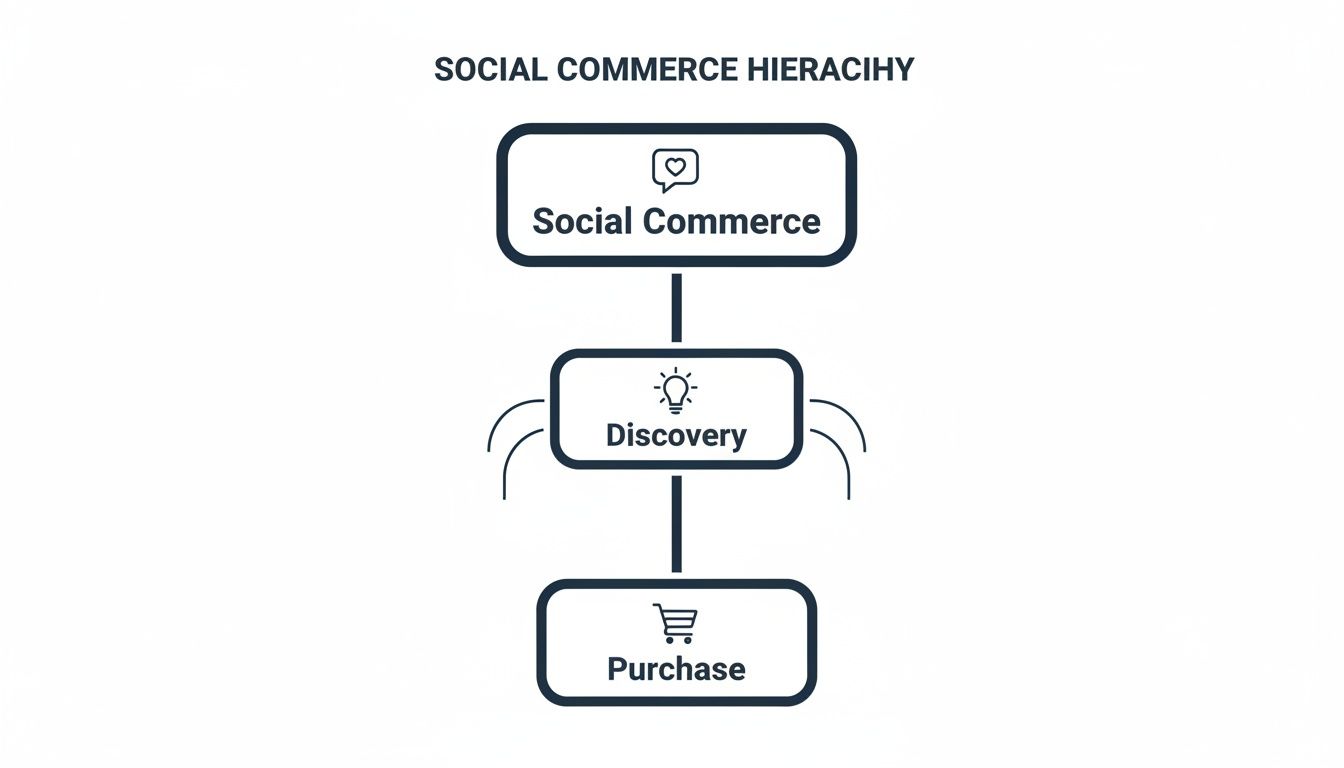
This simple shift is what makes social commerce so incredibly effective. It collapses the old sales funnel, turning the moment someone discovers a product into the moment they buy it.
The Unstoppable Growth of Social Commerce
This move to in-app shopping is more than just a passing trend; it's a massive shift in how people buy things. The numbers back it up, too. The global social commerce market pulled in an incredible $997.8 billion in sales in 2024, and it's on track to blow past $1.64 trillion by 2030. It's clear that shoppers aren't just getting used to buying on social media—they're starting to prefer it.
So, what's driving this explosive growth? A few key things:
- No More Friction: In-app checkouts mean users don't have to click away to another site, which dramatically cuts down on abandoned carts.
- Built-in Social Proof: When people see their friends or trusted creators using a product, it builds instant credibility and makes them feel more confident about buying.
- The Power of Impulse: The "see it, want it, buy it" nature of social feeds is perfect for spur-of-the-moment purchases driven by a great photo or a viral trend.
The Role of Influencers in This New Storefront
A great storefront needs people, and in the world of social commerce, influencers are the ones bringing the crowds. They don't just run ads; they weave products into their content in a way that feels natural and trustworthy. This is where a dedicated influencer marketing platform becomes a game-changer.
For example, a brand could use a platform like REACH to find creators who are masters at driving sales on social commerce platforms like TikTok Shop or Instagram Shops. With REACH, you can pinpoint influencers whose followers are ready to buy, track sales in real-time, and manage the entire campaign from start to finish. A beauty brand, for instance, used REACH to identify 15 micro-influencers for a TikTok Shop launch, resulting in a 400% ROI in the first month by tracking sales directly from creator videos. This turns creator content into a direct line to revenue. For a deeper look at this strategy, check out our guide on social media marketing for ecommerce.
By connecting authentic creators with a frictionless way to buy, brands can turn their social media channels from marketing outposts into powerful sales engines. This integration isn't just a nice-to-have anymore—it's the foundation of a modern retail strategy.
Exploring the Different Types of Social Commerce Platforms
Social commerce isn't a single, straightforward market. Far from it. The platforms available are just as diverse as the social networks that host them, and picking the right one comes down to knowing your products, your audience, and your sales strategy inside and out.
Think of it like choosing a physical retail space. A high-end watchmaker isn't going to set up a pop-up tent at a local street fair. Likewise, a farmer selling fresh produce probably won't lease a boutique on a luxury shopping street. The same logic applies here—you have to match the environment to the product and the customer.
To really get a feel for the landscape, it helps to explore the different options. There are some great guides on the best social commerce platforms out there that can give you a bird's-eye view. This knowledge is what lets you choose the tools that will actually connect with your audience and, most importantly, drive sales.
To help you figure out what's best for your business, let's break down the main types of platforms you'll encounter.
Comparing Social Commerce Platform Types
This table breaks down the three primary approaches to social commerce. Each one serves a different purpose, so understanding their strengths will help you decide where to invest your time and resources.
| Platform Type | Ideal For | Key Features | Example Platforms |
|---|---|---|---|
| Native Shopping | Impulse buys, viral products, and visual brands (fashion, beauty, home goods). | In-app checkout, product tagging in content, live shopping, integrated catalogs. | Instagram Shops, TikTok Shop, Pinterest Product Pins. |
| Third-Party Integrations | DTC brands with established e-commerce stores wanting a single source of truth. | Centralized inventory management, product catalog sync, multi-channel ad creation. | Shopify or BigCommerce integrations with social apps. |
| Conversational Commerce | High-consideration products, B2B services, and consultative sales. | AI and live chatbots, personalized recommendations, lead qualification in DMs. | Messenger bots, Instagram DM automation, LinkedIn chatbots. |
Each model offers a unique way to turn social engagement into revenue. Let's dig a little deeper into how they work in the real world.
Native Shopping Experiences
Native shopping features are built right into the social media apps we use every day. They provide the most seamless path to purchase because the customer never has to leave the app. This is the digital equivalent of an impulse buy at the checkout counter—effortless, immediate, and incredibly effective.
These platforms are designed to shrink the gap between discovery and purchase down to just a few taps.
- Instagram & Facebook Shops: These act as digital storefronts right on your brand’s profile. You can build curated product collections, tag items in posts and Reels, and let customers buy without ever opening a new browser tab. Meta's own data shows that 29% of people have already bought something directly through Instagram.
- TikTok Shop: This is a true powerhouse for products that go viral. Brands and creators can link products directly in their short-form videos, making it ridiculously easy for viewers to buy an item the moment they see it in action. Imagine a creator's makeup tutorial where viewers can buy the featured lipstick directly from the video. That's TikTok Shop.
- Pinterest Product Pins: Pinterest has always been about discovery, and its shoppable pins turn that inspiration into a purchase. Someone browsing for "boho living room ideas" can click on a Product Pin for a cool floor lamp and buy it on the spot.
This entire process is about keeping the user inside a single ecosystem, which drastically reduces the friction that typically causes people to abandon their carts.
Third-Party Storefront Integrations
Another common strategy is to connect your existing e-commerce store with social media platforms. This approach gives you more control over branding, analytics, and customer data while still making your products easy to find on social feeds. Think of it as plugging your main online store into various social marketplaces.
The undisputed king here is Shopify, which integrates beautifully with Facebook, Instagram, and TikTok. This lets you automatically sync your product catalog, manage all your inventory from one dashboard, and run targeted ads that pull directly from your live product feed. It’s the perfect setup for direct-to-consumer (DTC) brands that need a unified backend system.
Conversational Commerce Tools
The final category uses chatbots and direct messaging (DMs) to guide customers through the buying journey. This is a much more consultative and personal approach, making it ideal for higher-priced items or B2B services where people usually have questions before they're ready to buy.
Instead of a static product page, conversational commerce creates a dynamic, one-on-one sales interaction. A customer can ask about sizing, features, or availability in a chat window and get an instant response that leads them to the right product.
For example, a software company might use a LinkedIn chatbot to qualify leads and point them to the right service package. This kind of personalized interaction builds trust and helps close more complex sales, all within a simple messaging app. Understanding these different models is a huge part of navigating the broader world of creator economy platforms and finding exactly where your brand fits.
The Anatomy of a Winning Social Commerce Platform
With so many social commerce platforms out there, it’s easy to get lost in the options. But the truth is, a handful of core features separate the great platforms from the merely good ones. A top-tier platform does more than just let people click "buy"—it weaves a seamless and profitable shopping experience right into the social feed.
Think of it this way: you wouldn't buy a car just for its engine. You need responsive steering, a great sound system, and comfortable seats. In the same way, the best social commerce tools combine several key functions into one powerful machine that drives sales and keeps customers happy.

Seamless Native Checkout
If there's one non-negotiable feature, it's native checkout. This is what allows a customer to go through the entire payment process without ever leaving the social media app. Every time you force someone to click away to an external site, you’re creating friction and giving them a reason to abandon their cart.
Native checkout is the antidote to this. It shrinks the path from "I want that" to "it's on its way."
- It kills friction. Customers can use their saved payment and shipping info, turning a tedious form-filling exercise into a couple of taps.
- It builds trust. Shoppers feel more secure when they stay inside a familiar app, giving them the confidence to hit that final "confirm purchase" button.
- It lifts conversion rates. By getting rid of the dreaded redirect, brands almost always see a major increase in completed sales.
Any platform that kicks users out of the app to buy something fundamentally misunderstands social commerce. It's all about impulse and convenience.
Integrated Product Catalogs
Your product catalog is the digital backbone of your social shop. A high-performing platform must sync effortlessly with your main e-commerce backend, whether that’s Shopify, BigCommerce, or something else. This automatic connection is crucial for keeping your pricing, inventory, and product details correct everywhere, all the time.
A well-integrated catalog is also what brings your content to life. Once your products are cataloged properly, you can tag them in posts, videos, and Stories, transforming any piece of content into an interactive shopping opportunity. It's the difference between a flat product photo and a dynamic storefront window.
AI-Driven Product Recommendations
Today's shoppers don't just want options; they want the right options. The best social commerce platforms use artificial intelligence (AI) to figure out what each user is most likely to buy, creating a personalized shopping feed just for them. This goes way beyond just showing off your bestsellers.
Think of AI personalization as a savvy personal shopper. It watches how a customer behaves—what they like, what they view, what they’ve bought before—and then suggests other products they’ll love. This not only makes for a better shopping experience but also boosts your average order value with smart upsells and cross-sells.
Diverse Shoppable Content Formats
Social commerce is fueled by creativity and engaging content. The platform you choose needs to support more than just static, shoppable image posts. To keep your audience hooked and your strategy fresh, you need a versatile toolkit.
Look for platforms that let you create:
- Shoppable Live Streams: These live events are fantastic for creating urgency and building community. A host can demo products, answer questions in real-time, and drive a huge spike in sales all in one session.
- Shoppable Videos and Reels: Video is king on social media. Being able to tag products directly in a short-form video is essential for capturing that "in-the-moment" buying impulse.
- User-Generated Content (UGC) Integration: The most effective platforms make it simple to find and feature content from your actual customers. Showcasing real people using your products builds incredible social proof and authenticity—two massive drivers for new sales. Exploring dedicated UGC creator platforms can take this strategy even further.
Ultimately, the right platform equips you with multiple ways to turn casual scrolling into real sales, meeting your customers wherever and however they like to shop.
How Influencer Marketing Drives Social Commerce Revenue
So you’ve set up a beautiful, shoppable storefront on Instagram or TikTok. That’s a fantastic first step, but a store with no visitors won't make any sales. In social commerce, a storefront needs foot traffic, and it's the influencers who bring the crowds. Think of them as the essential bridge connecting your products to communities that are ready to shop.
This is where influencer marketing becomes the real engine for social commerce platforms. We're moving way beyond just getting your brand name out there; we're talking about generating direct, measurable revenue. A simple branded post might show off your product, but an influencer’s post shows it in action, building the trust needed to convince someone to actually click "buy."
For any serious social commerce strategy, this is where a dedicated influencer marketing platform becomes a game-changer. A tool like REACH gives you the framework to turn creator partnerships into a reliable sales pipeline. Instead of just crossing your fingers and hoping an influencer works out, you can build a strategy based on solid results.
Finding Creators Who Actually Convert
First things first: you need to find the right people. When it comes to driving sales, not all influencers are created equal. A creator with a million followers might get you a lot of eyeballs, but a micro-influencer with a super-engaged, niche audience could easily deliver a much higher return on your investment.
A good platform lets you cut through the noise and find creators with a proven sales record on specific social commerce platforms. Let's say you’re launching a new skincare line on TikTok Shop. With a platform like REACH, you can zero in on creators whose content has historically driven high sales for beauty products, specifically on TikTok. The platform's capabilities allow you to filter by past conversion rates and audience purchase intent, ensuring you partner with creators who don't just talk, they sell.
This approach takes the guesswork out of the equation. You can dive into an influencer's audience demographics, engagement rates, and even their past sales data to make sure every partnership is set up for success from day one.
Turning Authenticity into Action
Trust is the real currency in social commerce. People buy from creators they feel a connection with, and that trust is built on genuine, relatable content. When an influencer unboxes a product, shows how it fits into their day, or posts a quick tutorial, they’re providing powerful social proof.
This is worlds more effective than a slick, polished ad. A classic Nielsen report showed that people trust recommendations from people they "know"—and that includes their favorite influencers—far more than they trust ads from the brand itself. When a trusted creator tags your product in a Reel or a TikTok, their endorsement feels like a personal recommendation from a friend.
A brand can tell people its product is great, but an influencer can show them. This simple demonstration is what turns a passive viewer into an active shopper, often in just a few clicks.
This is exactly why the combination of influencers and native checkout is so powerful. The path from seeing a product to buying it is almost instantaneous.
Measuring What Matters: Sales
If you want to grow your social commerce strategy, you have to measure what’s actually working. At the end of the day, likes and comments are nice, but sales are what count. A key job of platforms like REACH is to give you a single dashboard where you can track performance in real-time and see exactly which creators and campaigns are making you money.
Here’s a quick look at how this works:
- Unique Tracking Links: Every influencer gets their own unique link or promo code. This lets you see precisely how many clicks, sales, and how much revenue each person is responsible for.
- Real-Time Dashboards: Forget waiting weeks for a report. You can watch your campaigns live, see who's driving the most sales, and adjust your strategy as you go.
- Automated Commission Payouts: If you're running affiliate-style campaigns, the platform can automatically calculate and send commission payments based on the sales each influencer drives. It handles all the tedious financial admin for you.
By tying influencer activity directly to sales, you can finally show the true ROI of your creator partnerships. This shifts influencer marketing from a creative budget line item to a measurable growth strategy. To get even better at this, check out these influencer marketing best practices to fine-tune your approach. When you start treating influencers as genuine sales partners, you unlock the true earning power of any social commerce platform.
Best Practices for Your Social Commerce Strategy
Alright, let's get practical. Knowing what social commerce is and actually making money from it are two different things. Just flipping the switch on a new social shop and hoping for the best is a recipe for disappointment. Success comes from a mix of smart optimization, genuine community care, and an obsession with the customer's journey.
By following a few core best practices, you can turn your social feed from a simple brand channel into a thriving sales engine that doesn't just attract followers—it creates loyal customers.
Optimize Product Pages for Social Feeds
On social media, you have about two seconds to grab someone's attention. That’s it. Your product listings have to work within that tiny window, which means they need to be built for a fast-scrolling, mobile-first world. This isn't your traditional e-commerce page, where you have room for long descriptions and dozens of specs.
For social feeds, your entire focus should be on:
- Knockout Visuals: Use crisp, eye-catching images and short videos that show your product in real life. Lifestyle shots and content from your actual customers almost always beat sterile studio photos.
- Punchy Descriptions: Get straight to the point. What’s the number one benefit? Lead with that. Use bullet points to make key features easy to scan.
- An Obvious Call to Action: The "Shop Now" button needs to be impossible to miss. It should take a user directly to that product, not a generic category page.
Think of every product you tag as a tiny, self-contained ad. It has to tell a compelling story in a single glance.
Create a Painless Mobile Checkout
The biggest killer of online sales is a clunky checkout process. It's a fact. Every extra field a customer has to fill out, every additional page they have to load, dramatically increases the chance they'll just give up. The goal is to make buying something as simple as liking a photo.
The golden rule of social commerce is to eliminate friction. The moment someone feels inspired to buy, the path to purchase needs to be so short and smooth they barely have to think about it. Ideally, it’s just a couple of taps without ever leaving the app.
This is why native checkout features are so powerful. They let customers use their pre-saved payment and shipping info, turning a five-minute ordeal into a five-second transaction. If you have to link out to your website, make sure that mobile page is blazing fast and asks for the bare minimum of information.
Make Social Proof Your Secret Weapon
Here’s a simple truth: people trust other people way more than they trust brands. That makes user-generated content (UGC) the most authentic and effective marketing tool you have. Seeing real people happily using your products gives potential buyers the confidence they need to click "buy."
You need to actively encourage and showcase this content. Here's how:
- Run contests: Ask customers to post photos with your product and a specific hashtag for a chance to win something.
- Create a branded hashtag: Give your community an easy way to tag their content so you can find and share it.
- Spotlight your customers: Regularly feature the best UGC on your main feed, in your Stories, and even within your product galleries. This provides powerful social proof and makes your customers feel seen and appreciated.
Prioritize Community Over Constant Selling
Your social storefront isn’t a billboard. It’s a gathering place. The brands that truly crush it on social commerce platforms get that engagement always comes before the sale. Your main job is to build relationships, not just to shout about your latest promotion.
This means you have to be present and active in your comments and DMs. Answer questions quickly. Thank people for their feedback. Join the conversation. A single helpful, friendly chat with a customer can do more to close a sale than a dozen flashy ads. Treat every comment as a chance to build a little more trust and loyalty. After all, people buy from brands they genuinely like.
The Future of Social Commerce in 2026 and Beyond
The world of social commerce is moving at a breakneck pace. What feels like a cutting-edge feature today quickly becomes a standard expectation tomorrow. As we look ahead to 2026 and beyond, the next evolution of social commerce platforms is all about creating shopping experiences that are more intelligent, immersive, and seamlessly woven into our daily lives.
AI and Hyper-Personalization
Artificial intelligence is about to get a lot smarter than just showing you ads for things you’ve already looked at. The next generation of AI will function as a genuine personal shopper, one that truly understands your style, needs, and even your mood.
Imagine an AI that builds a unique storefront just for you. It won't be static; it will dynamically change based on what you're interacting with in real-time, what your friends are talking about, and your past buying habits. This level of hyper-personalization transforms shopping from a chore into a conversation, fostering the kind of loyalty that keeps customers coming back.
Augmented Reality Try-On Features
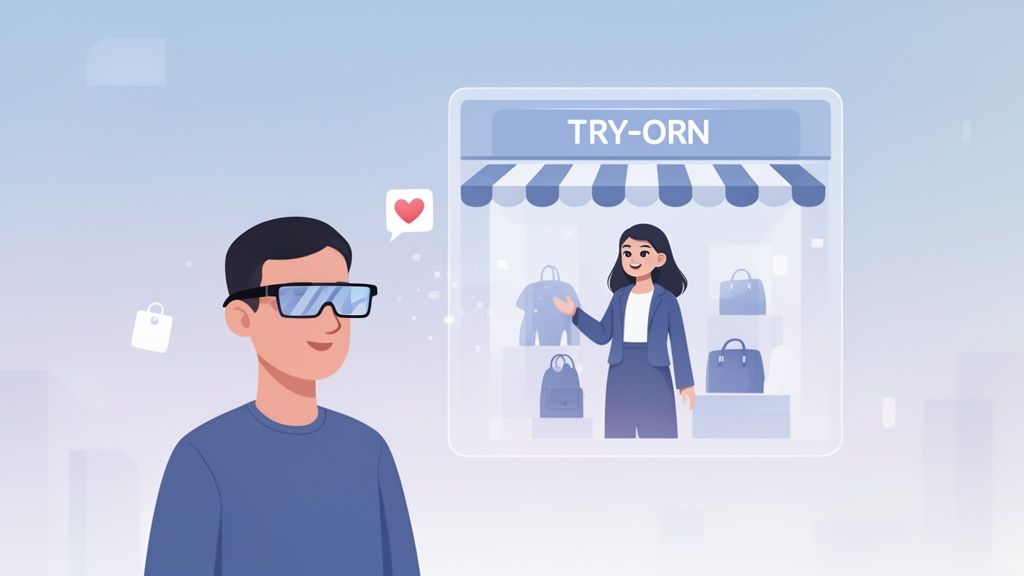
One of the biggest hurdles for e-commerce has always been the trust gap—that "what if it doesn't fit?" moment. Augmented Reality (AR) is finally closing that gap for good. We’re already seeing early versions with virtual makeup or eyeglass try-ons, but the technology is quickly becoming more sophisticated and accessible.
In the near future, social commerce will routinely include:
- Virtual Showrooms: Use your phone’s camera to see exactly how that new sofa would look in your own living room.
- AR-Powered Try-Ons: Get a realistic preview of how a dress will fit your specific body shape, not just a model's.
- Interactive Product Demos: Spin a product around in 3D and explore every feature, all without leaving your social feed.
These AR tools aren't just flashy gimmicks. They are becoming essential tools that give customers the confidence to click "buy" on items they would have only ever considered purchasing in a physical store.
Immersive Shopping in Virtual Worlds
As digital worlds and gaming environments become more mainstream, shopping is naturally coming along for the ride. The next frontier for social commerce platforms involves building persistent shopping experiences inside these virtual spaces. Brands are already creating immersive digital flagship stores where avatars can socialize, attend exclusive events, and buy both virtual and real-world items.
This new environment demands a new kind of creator—one who can build a community and drive real engagement within these digital realms. This is precisely where a platform like REACH becomes so important. By connecting brands with innovative creators who are pioneering these new spaces, REACH helps you build a strategy that’s ready for the next evolution of social commerce.
Frequently Asked Questions About Social Commerce
It's natural to have questions as you dive into social commerce. Let's tackle some of the most common ones I hear from brands so you can get started with confidence.
What Is the Main Difference Between Social Commerce and Ecommerce?
Think of it this way: traditional ecommerce is a destination, while social commerce is an experience.
With ecommerce, your customer has to decide, "I'm going to shop now," and then travel to your website. In social commerce, the storefront comes to them. The opportunity to buy is woven directly into their social feed, turning a moment of casual browsing into an instant purchase—all without ever leaving the app.
Which Social Commerce Platforms Are Best for Beginners?
If you're just starting out, your best bet is to use platforms that have shopping features built right in. It dramatically shortens the learning curve.
- Instagram Shops: A no-brainer for visual brands in fashion, beauty, or home goods. The setup is incredibly simple, especially if you already have an active business profile.
- TikTok Shop: This is the place to be if your products have viral potential or are best shown off in quick, high-energy videos.
Both are designed to capture that "I need it now" impulse, converting views into sales with as few clicks as possible.
Can Social Commerce Work for B2B Companies?
Absolutely, though the strategy looks a bit different. A B2C brand might aim for high-volume, quick sales on TikTok, but a B2B company will find more success using conversational commerce tools on a platform like LinkedIn.
The goal here isn't an impulse buy. It's about using tools like DMs and chatbots to start a meaningful conversation, answer complex questions, and guide a prospect through a much longer sales cycle.
For B2B, social commerce is less about a quick transaction and more about building a relationship that leads to a high-value deal. It’s a powerful way to do consultative selling at scale.
How Do I Measure the ROI of My Social Commerce Efforts?
To really understand what's working, you have to look past vanity metrics like likes and shares. True success is tied to revenue.
The easiest way to track this is by using unique tracking links and promo codes for every campaign or influencer. This shows you exactly which post or creator drove a sale. The best social commerce platforms also have built-in analytics that report on conversion rates, average order value, and revenue per visitor, giving you a crystal-clear picture of your return on investment. A dedicated platform like REACH automates this entire process, providing a clear dashboard that links creator activity directly to sales revenue.
Conclusion
Social commerce platforms are no longer a niche experiment; they are a fundamental part of modern retail. By integrating shopping directly into the social experience, brands can meet customers where they are, collapse the sales funnel, and turn casual discovery into immediate revenue. The key to unlocking the full potential of this channel lies in combining a seamless technical setup with an authentic, human connection.
This is where strategic influencer marketing becomes critical. By partnering with the right creators—the ones whose audiences trust them implicitly—brands can drive genuine engagement and, most importantly, measurable sales. Success on social commerce platforms in 2026 and beyond will be defined by those who can master this blend of technology, authenticity, and community.
Ready to turn your creator partnerships into a real sales channel? REACH helps you find influencers who actually drive conversions, track every sale in real-time, and manage your entire campaign from one place. Discover how our platform can supercharge your social commerce strategy. Book a demo with REACH today!