 Skip to content

Meta description: Facebook for influencers works best when you treat it like a business channel, not a viral lottery. Learn how to build community, create the right content mix, monetize strategically, and manage campaigns professionally.
Most advice about Facebook for influencers is stuck in the wrong era.
It tells creators to post more, chase engagement tricks, and hope the algorithm delivers. That approach misses what Facebook is good at. Facebook isn't the best place to act like you're auditioning for virality every day. It is one of the best places to build a durable creator business around community, conversion, and structured brand work.
That distinction matters. Facebook is large, commercially useful, and operationally mature. It rewards creators who think like operators, not just personalities. If you're trying to turn content into a repeatable business, Facebook still deserves a serious place in your stack.
Why Facebook Still Matters for Influencers in 2026
The lazy take is that Facebook is finished for creators. The smarter take is that Facebook changed jobs.
It isn't the default place to look trendy. It is the place to build a system around trust, repeat exposure, and audience intent. For creators who sell products, run communities, work with brands, or want an audience that does more than scroll past, that matters a lot.
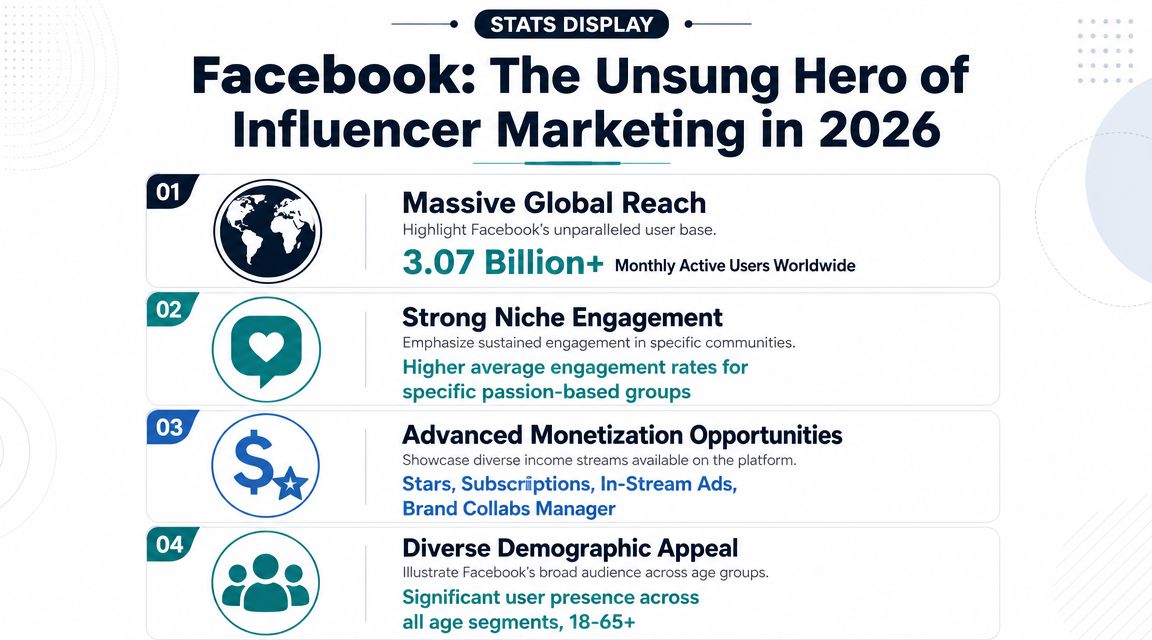
Facebook remains one of the largest global foundations for influencer marketing, with more than 3 billion monthly active users as of April 2024 according to Influencer Marketing Hub's Facebook statistics roundup. In the United States, its largest age segment was 25 to 34-year-olds at 23.8% of users, which is one reason brands still treat it as a commercially relevant channel instead of a legacy afterthought.
What Facebook is actually good at
Creators usually get more value from Facebook when they use it for these jobs:
- Community retention because followers can move from passive viewing into comments, Groups, and repeat interaction.
- Buyer education because users often research brands and offers before acting.
- Campaign execution because the platform gives creators and brand partners more workflow control than is commonly understood.
- Audience depth because Pages and Groups let you keep people engaged beyond one post.
Facebook is rarely the coolest platform in the room. It is often the most useful one for creators who need their content to support a business.
A lot of influencers also underestimate how much visibility compounds when Facebook is treated as part content engine, part relationship layer, part paid amplification channel. If you want a cleaner explanation of that distribution side, this breakdown of Facebook reach is a useful starting point.
What doesn't work anymore
Two habits fail on Facebook.
First, posting generic lifestyle content with no clear audience promise. Second, treating your feed as the entire strategy. Facebook works better when every asset has a job. Some posts pull people in. Some deepen trust. Some move people into a Group, a landing page, a newsletter, or a brand action.
That is why Facebook for influencers still matters. Not because it's trendy, but because it can support a real operating model.
Optimizing Your Presence for Growth and Community
Most creators set up Facebook backwards. They pick a profile photo, write a vague bio, and start posting. Then they wonder why nothing turns into repeat attention.
A better approach is to assign each Facebook surface a specific role.
Give each asset one job
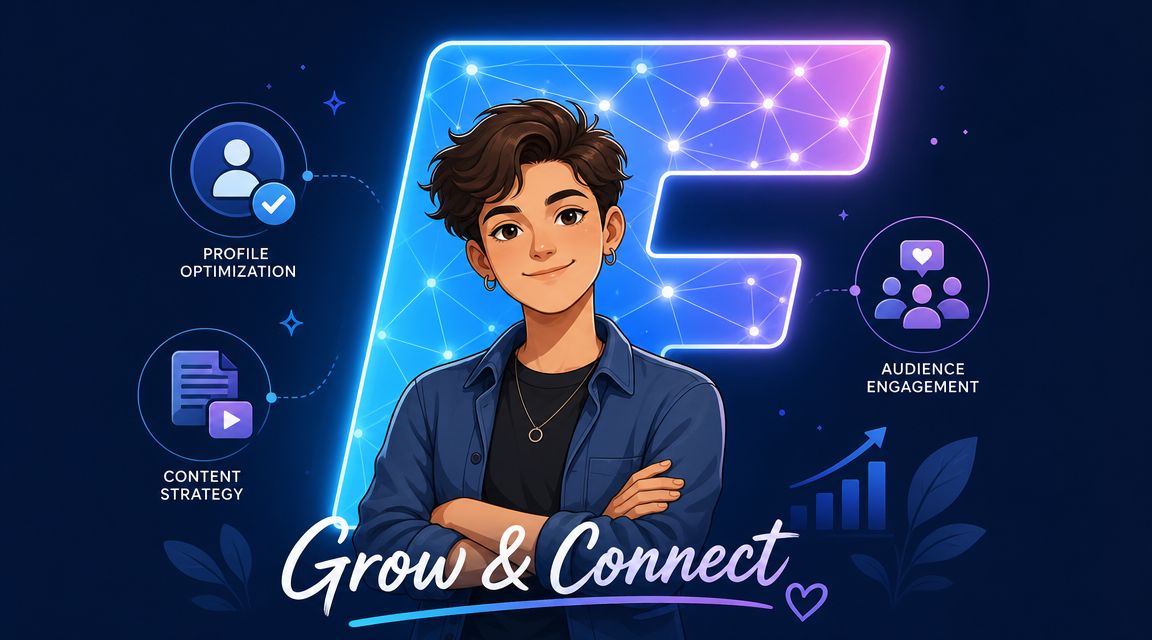
A Profile is personal credibility. A Page is your public brand hub. A Group is where loyalty gets built.
Many creator guides focus too heavily on posting tactics and not enough on distribution strategy. One useful strategic view is that Facebook becomes more valuable when creators use Pages, Groups, and paid amplification to build trust and move people off-platform, rather than chasing follower growth alone, as discussed in this creator strategy video.
Here is the simplest way to think about setup:
- Use your Page for authority: On your Page, brand partners, new followers, and warm prospects should immediately understand who you help, what you talk about, and why they should care.
- Use your Group for depth: A strong Group gives your best followers a place to gather around a topic, not just around your personality.
- Use your Profile carefully: Personal posting can support the brand, but it shouldn't carry the whole business.
Fix the parts that convert visitors
Small details often decide whether someone follows, joins, or leaves.
- Write a bio with a promise. Say who the content is for and what they get.
- Make your cover image functional. It should communicate your niche, not just look nice.
- Pin the right post. The pinned post should act like a welcome guide, not a random announcement.
- Create a next step. Ask people to join your Group, subscribe, message you, or click through to a resource.
Practical rule: If someone lands on your Page for five seconds, they should know your niche, your tone, and the next action to take.
A lot of creators ignore scheduling too, which creates uneven output and weak follow-through. If you want a more organized publishing workflow, this guide on scheduling Facebook posts covers the practical side well.
Why Groups matter more than most creators think
Groups create a different kind of relationship than feed content.
Feed posts are rented attention. Groups are recurring attention. That's where members answer each other, share context, ask buying questions, and build a sense of belonging around your niche. For creators in education, lifestyle, parenting, fitness, local communities, or hobby categories, that can become the strongest asset in the business.
If your Facebook presence feels flat, the fix usually isn't more posting. It's better structure.
A Modern Content Strategy for Facebook Influencers
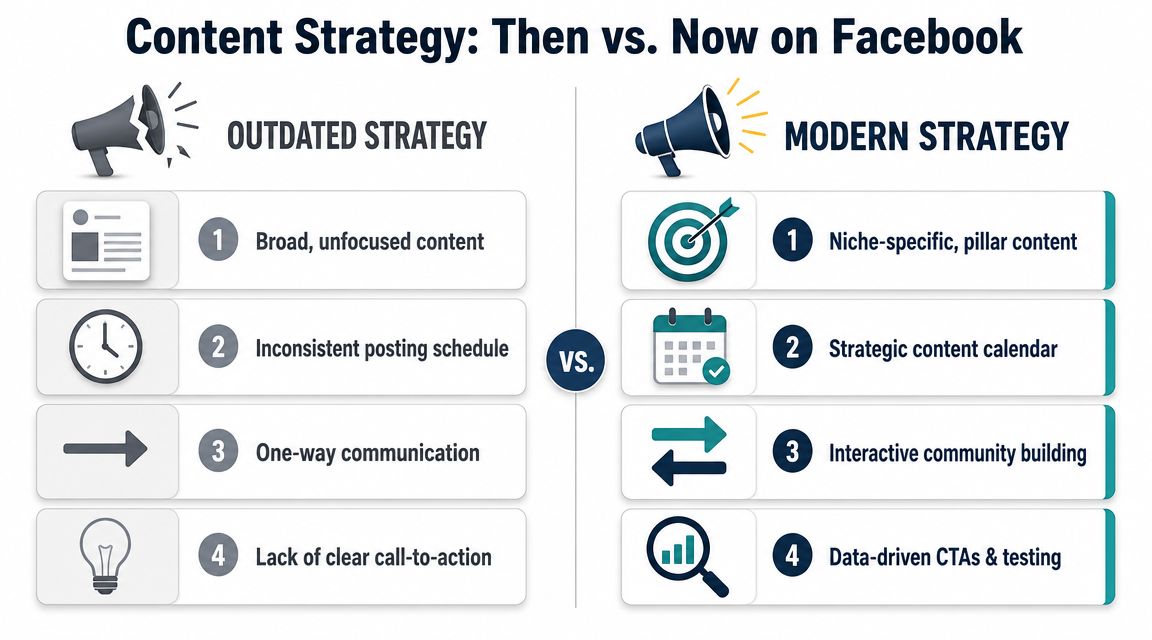
The old Facebook playbook was broad content for broad reach. That version is dead.
What works now is a content system where each format handles a different stage of attention. One post shouldn't do everything. Reels, Lives, Stories, long-form video, and text posts all perform better when they have a clear job.
Match the format to the goal
| Content Format | Primary Goal | Best For |
|---|---|---|
| Reels | Discovery | Short hooks, quick opinions, visual demos |
| Live | Trust building | Q&A, launches, behind-the-scenes teaching |
| Stories | Relationship maintenance | Casual updates, reminders, polls |
| Long-form video | Authority | Tutorials, breakdowns, deeper education |
| Image and text posts | Conversation | Opinions, prompts, community discussion |
Creators get better results when they stop asking, "What should I post today?" and start asking, "What stage of the audience journey needs support today?"
Use a simple funnel
A practical Facebook for influencers model looks like this:
- Top of funnel content brings in attention. Reels and short videos work well here because they are easy to consume.
- Middle of funnel content builds familiarity. Stories, image posts, and comment-driven prompts keep people around.
- Bottom of funnel content creates action. Lives, long-form explainers, community invitations, and offer-related posts move people closer to buying or joining.
Many creators often get stuck at this point. They keep publishing top-of-funnel content and wonder why revenue is inconsistent. Discovery without relationship depth is fragile.
The strongest Facebook creators don't just publish content. They sequence attention.
What to make more of and what to stop making
Make more content that is specific, opinionated, and built around repeat themes. Stop posting generic updates that could belong to anyone in any niche.
A few examples of high-utility content pillars:
- Teach something small: One practical takeaway in one post.
- Show your process: Explain how you plan, test, or decide.
- Answer real questions: Turn comments and DMs into recurring content.
- Create audience rituals: Weekly Q&A, themed discussions, or recurring live sessions.
If video production is slowing you down, it helps to find AI video solutions for creators that reduce editing time while keeping output consistent.
Build for interaction, not applause
Facebook rewards discussion better than polished but empty content. A useful post often beats a beautiful one.
Ask better questions. Give people a reason to respond with experience, not just agreement. A creator in finance might ask what confused people most about budgeting this month. A creator in fitness might compare two training approaches and ask followers which one they can stick to.
That's the content mindset that turns Facebook from a posting platform into a business asset.
How to Monetize Your Influence on Facebook
There are several ways to make money on Facebook. Most creators focus on the visible ones first and overlook the one that scales best.
Native tools matter. Facebook offers creator monetization paths like Stars, Subscriptions, and in-stream ad options. Those can support income if your audience is engaged and your output is steady. But for many professional creators, the biggest upside still comes from brand partnerships and sponsored content that fit the audience well.
That opportunity is large enough to take seriously. EMARKETER projected that U.S. influencer marketing spend would reach $8.14 billion in 2024, with Facebook still accounting for about $1 billion of that spend, according to EMARKETER's influencer marketing guide. That doesn't mean every creator should chase every deal. It does mean brands still see Facebook as a durable place to invest.
The monetization stack that holds up
The strongest creator businesses usually combine more than one revenue source.
- Platform monetization: Useful, but dependent on eligibility and platform rules.
- Owned offers: Courses, memberships, consulting, products, or communities.
- Sponsored work: Brand deals, whitelisting-style creative, ambassador programs, and paid collaborations.
For creators who want a wider view of revenue models across channels, this guide on how to monetize social media is a helpful reference.
Why brand deals become messy fast
The first few paid collaborations feel manageable. Then the admin starts piling up.
You have approval rounds in one app, payment details in another, deadlines in a spreadsheet, contract notes in email, and last-minute revisions in DMs. None of that makes you more persuasive on camera or more useful to your audience. It just eats time and creates avoidable mistakes.
A cleaner way to think about monetization is this:
Revenue grows when your operations stop leaking.
If you're building a creator business instead of a side hobby, you need a system for briefs, deliverables, approvals, payment status, and expectations. You also need to know which collaborations actually fit your audience and which ones only look good on paper.
For a practical look at creator income options and the business side behind them, this resource on monetizing content is worth reviewing.
A useful video on the topic of creator earnings is below.
Don't price yourself only by audience size
On Facebook, reach matters, but persuasion matters more.
Creators who can explain, demonstrate, recommend naturally, and fit a buyer journey often create more value than creators who have bigger numbers. If your niche supports trust-based decisions, your ability to move someone from interest to action is often the actual product.
That is why organized sponsored work beats random paid posts. Better fit. Better workflow. Better long-term value.
Efficiently Managing Campaigns and Measuring ROI
A lot of Facebook campaigns don't fail because the content is bad. They fail because the workflow is messy.
When creators and brands manage campaigns through scattered messages, loose deadlines, and half-updated spreadsheets, someone always loses track of something important. A caption goes out wrong. A revision gets missed. A deliverable arrives late. Payment follows even later. That isn't a content problem. It's an operations problem.
Start with the numbers that actually matter
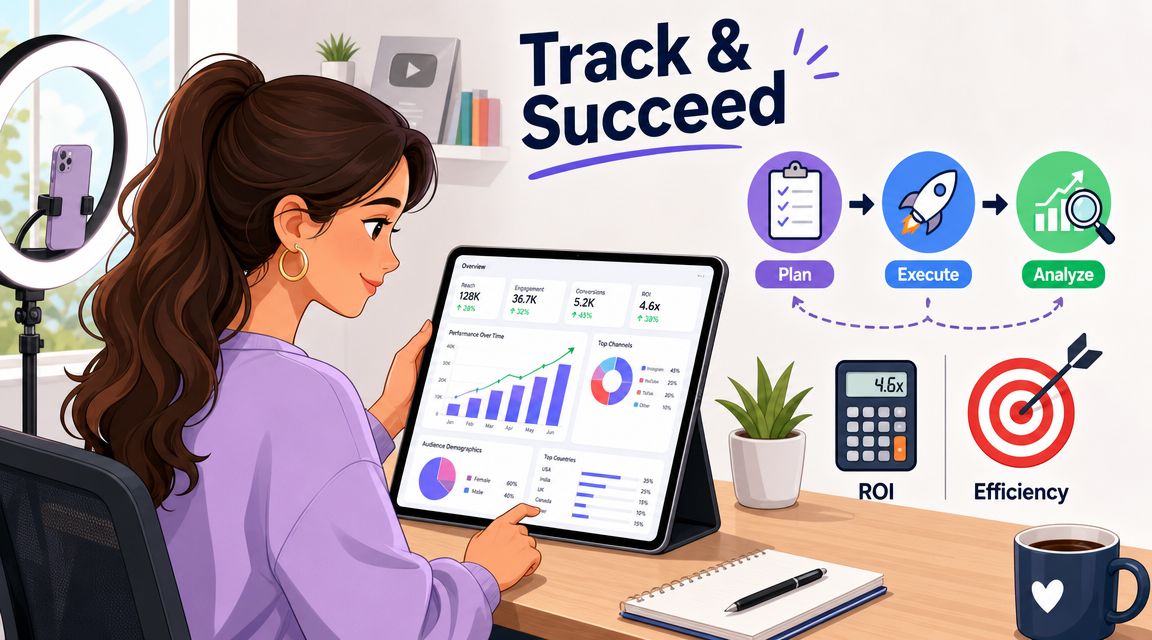
Facebook gives creators useful measurement tools through its professional dashboards. Business Insider reported that Meta's creator workflow includes post-level and video-level analytics such as advertising earnings, 3-second views, comments, shares, and watch-time performance in its reporting on Creator Studio and creator tools. That matters because it lets creators optimize for engagement and retention using the same signals brands care about.
The most useful metrics depend on the campaign type:
| Campaign Type | Metrics to Watch Closely | Why It Matters |
|---|---|---|
| Awareness | Views, shares, comments | Shows initial distribution and response |
| Consideration | Watch time, saves, discussion quality | Reveals whether people stayed and paid attention |
| Conversion support | Click intent, comment questions, repeat engagement | Indicates buying interest and audience readiness |
Manual management versus professional management
Here's the practical difference.
Manual campaign management usually looks like this:
- Communication is fragmented: Briefs in email, edits in DMs, timelines in a sheet.
- Approvals are slow: Nobody knows which version is final.
- Reporting is inconsistent: Screenshots replace structured tracking.
- Payments drag: Follow-up becomes another task on the list.
Professional campaign management looks different:
- One source of truth: Deliverables, status, notes, and deadlines stay visible.
- Clean approval flow: Everyone works from the current asset.
- Consistent reporting: Performance data can be reviewed without digging.
- Fewer surprises: Expectations are clear before content goes live.
If you want repeat brand work, being easy to work with matters almost as much as being effective on camera.
Creators who also support paid distribution should understand how platform ads affect campaign outcomes. For that side of the workflow, Sup Growth's guide to Instagram ads is a useful read because Facebook and Instagram campaign thinking often overlap inside Meta's ad environment.
Measure the result, not just the post
A sponsored post can get comments and still underperform. Another post can look quieter and still drive stronger buyer behavior.
This is why campaign measurement has to connect output to objective. If the brand wants education, look at watch time and comment quality. If the brand wants trust-building, examine repeated engagement and audience questions. If the brand wants traffic or sales support, look for action signals, not vanity reactions.
Good Facebook creators learn this fast. Great ones build workflows around it.
Your Next Steps as a Professional Facebook Influencer
Facebook for influencers works when you stop treating it like a trend platform and start treating it like business infrastructure.
That means building the right setup first. Your Page should communicate authority. Your Group should create loyalty. Your content should move people from discovery into trust, then into action. Your monetization should include more than one income stream. And your campaign process should be organized enough that brands want to come back.
The operating standard to aim for
If you're serious about professional growth, use this checklist:
- Tighten your positioning: Make your niche obvious and your audience promise clear.
- Build a format mix: Use short-form, discussion posts, and deeper trust content together.
- Choose monetization intentionally: Don't rely on one revenue source.
- Run cleaner collaborations: Track deliverables, approvals, and outcomes like a business.
- Become more persuasive, not just more visible: Credibility often outperforms pure follower count.
One of the more useful strategic ideas in Facebook creator work is that the best collaboration isn't always the biggest-name influencer. Often it's the credible authority who can persuade an audience to care, as discussed in this video on creator roles and persuasion.
Keep learning from the platform itself
If you want to sharpen execution, spend time inside Meta's own education and workflow resources. The Meta for Creators hub is a practical place to review creator tools and publishing guidance.
The creators who win on Facebook usually aren't the loudest. They're the ones who stay useful, build systems, and make collaboration easy.
That's a key opportunity with Facebook for influencers. It still supports reach, but its bigger advantage is helping creators run a more stable business.
If you're ready to run creator campaigns without juggling DMs, spreadsheets, approvals, and payment chaos, REACH is worth a look. It helps brands, agencies, and creators manage the operational side of influencer work in one place, so collaborations stay organized from brief to final payment.