 Skip to content

Running a successful marketing campaign requires more than just a great idea; it demands the right technology to plan, execute, and measure results efficiently. From managing multi-channel outreach to analyzing complex performance data, the best campaign management tools eliminate manual workflows and provide the clarity needed to prove ROI. Whether you're a growing agency, a DTC brand, or an enterprise team, finding the perfect platform can feel overwhelming.
This guide cuts through the noise. We're providing an in-depth breakdown of the 12 leading tools designed to streamline your efforts. We’ll explore their unique strengths, ideal use cases, and practical limitations to help you make a confident, strategic choice. For each platform, you'll find a detailed analysis, screenshots, and direct links to help you evaluate your options quickly. We’ll cover everything from comprehensive marketing hubs like HubSpot and Salesforce to specialized platforms for social media and email, ensuring there’s a solution for every need and budget.
Many of these tools integrate powerful features that overlap with dedicated CRMs. For a fundamental understanding of managing customer relationships, which is a core component of any campaign, you can explore these Customer Relationship Management (CRM) basics to build a solid foundation. Our list starts with a top-tier option for influencer marketing, REACH Influencers, and then moves into a comprehensive review of other essential platforms that will help you centralize your marketing operations and achieve better results. Let's find the right tool for you.
1. REACH Influencers
REACH Influencers stands out as the number one influencer management tool, offering a comprehensive, all-in-one platform designed to eliminate the manual chaos often associated with influencer marketing. It excels at connecting brands, agencies, and creators, transforming complex campaigns into streamlined, measurable successes. The platform’s core strength lies in its ability to manage the entire campaign lifecycle, from discovery and outreach to payments and performance analysis, making it an indispensable asset for any team serious about proving influencer ROI.
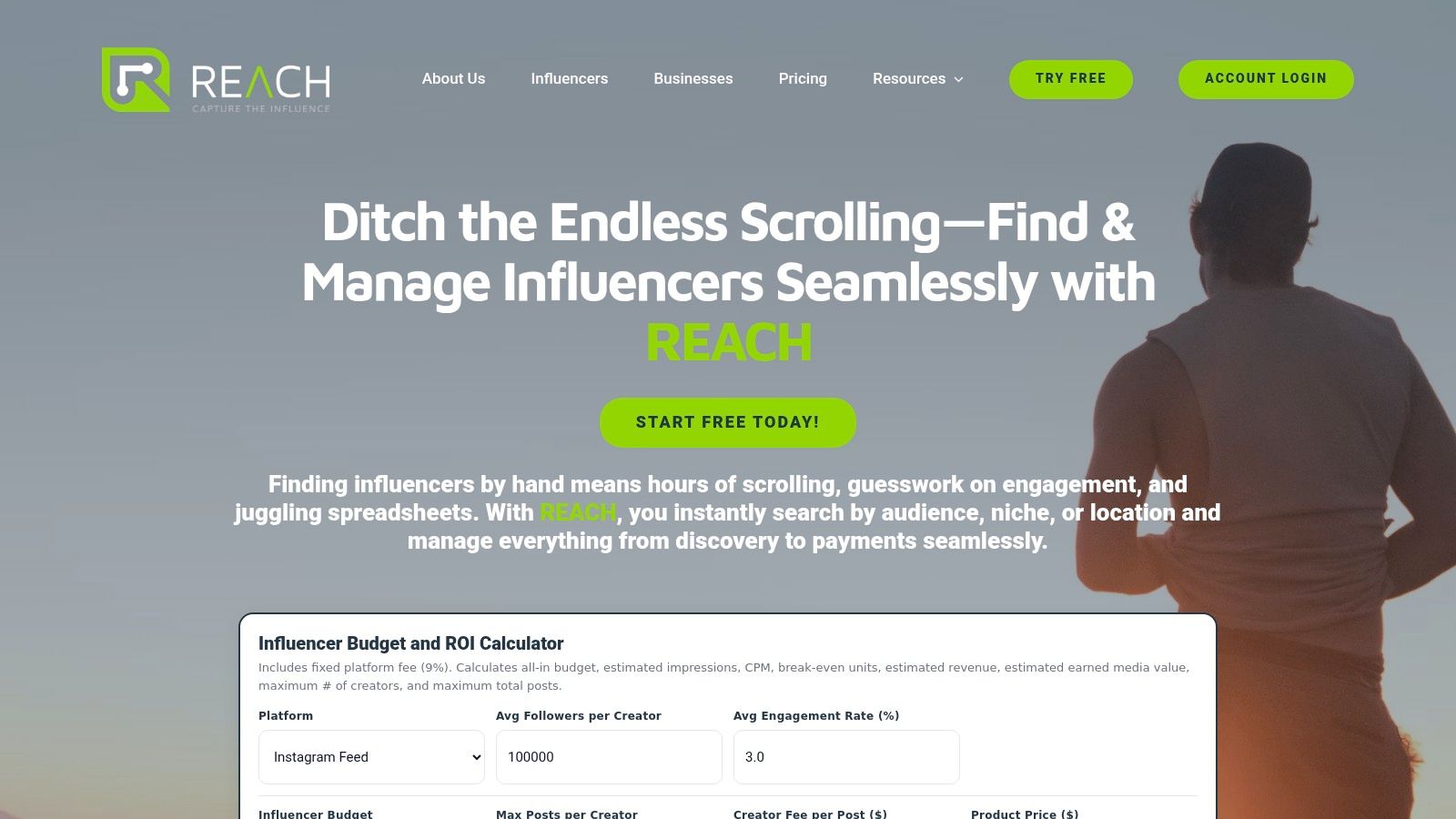
This platform is more than just a database of names; it’s a full-fledged operational hub. For agencies, REACH Influencers offers white-label reports and unlimited client projects, empowering them to deliver professional results. Brands benefit from curated influencer matches and integrated compliance, while creators gain direct access to opportunities and guaranteed fast payouts. This holistic approach makes it one of the best campaign management tools available today.
Key Features & Use Cases
- Advanced Influencer Discovery: The platform's powerful discovery engine allows you to find the perfect partners using granular filters like engagement rates, audience demographics, and location. This is ideal for niche brands needing to connect with highly targeted micro-creators or global brands seeking A-list talent.
- Centralized Campaign Dashboard: Manage every aspect of your campaign from a single interface. Track outreach, negotiate contracts, approve content, and monitor real-time click performance without ever needing to open a spreadsheet.
- Agency-Focused Tools: For marketing agencies, the ability to create white-label campaigns and generate live, client-facing reports is a game-changer for demonstrating value and maintaining stakeholder confidence.
- Integrated Financial Workflow: REACH Influencers handles the entire payment process, including secure transactions and built-in tax compliance. This feature alone saves countless hours on administrative tasks and ensures creators are paid quickly and reliably.
Pricing & Onboarding
REACH Influencers offers a low-friction entry point, allowing users to start for free without requiring a credit card. While specific subscription tiers aren't publicly listed, the platform's integrated ROI calculator provides a transparent example, modeling a campaign with a 9% platform fee. Prospective users will likely need to contact the sales team for a detailed quote tailored to their needs.
Pros and Cons
| Pros | Cons |
|---|---|
| Comprehensive end-to-end management from discovery to ROI reporting. | Public pricing details are not available, requiring a sales inquiry for exact costs. |
| Advanced discovery engine with precise filters for finding ideal creators. | Campaign success is dependent on the accuracy of platform data; manual validation is still recommended for high-stakes partnerships. |
| Agency-specific features like white-label reports and unlimited projects. | |
| Streamlined financial and legal workflow with secure payments and tax compliance. | |
| Free to start with no credit card, lowering the barrier to entry. |
To explore how its features can enhance your marketing efforts, you can learn more about REACH’s campaign management software.
Website: https://reach-influencers.com
2. HubSpot Marketing Hub
HubSpot Marketing Hub is an all-in-one platform designed to manage the entire marketing lifecycle, from attracting leads to closing sales. It stands out by tightly integrating its powerful marketing automation tools with a native CRM, providing a complete, 360-degree view of the customer journey. This makes it one of the best campaign management tools for teams focused on proving ROI through closed-loop reporting.
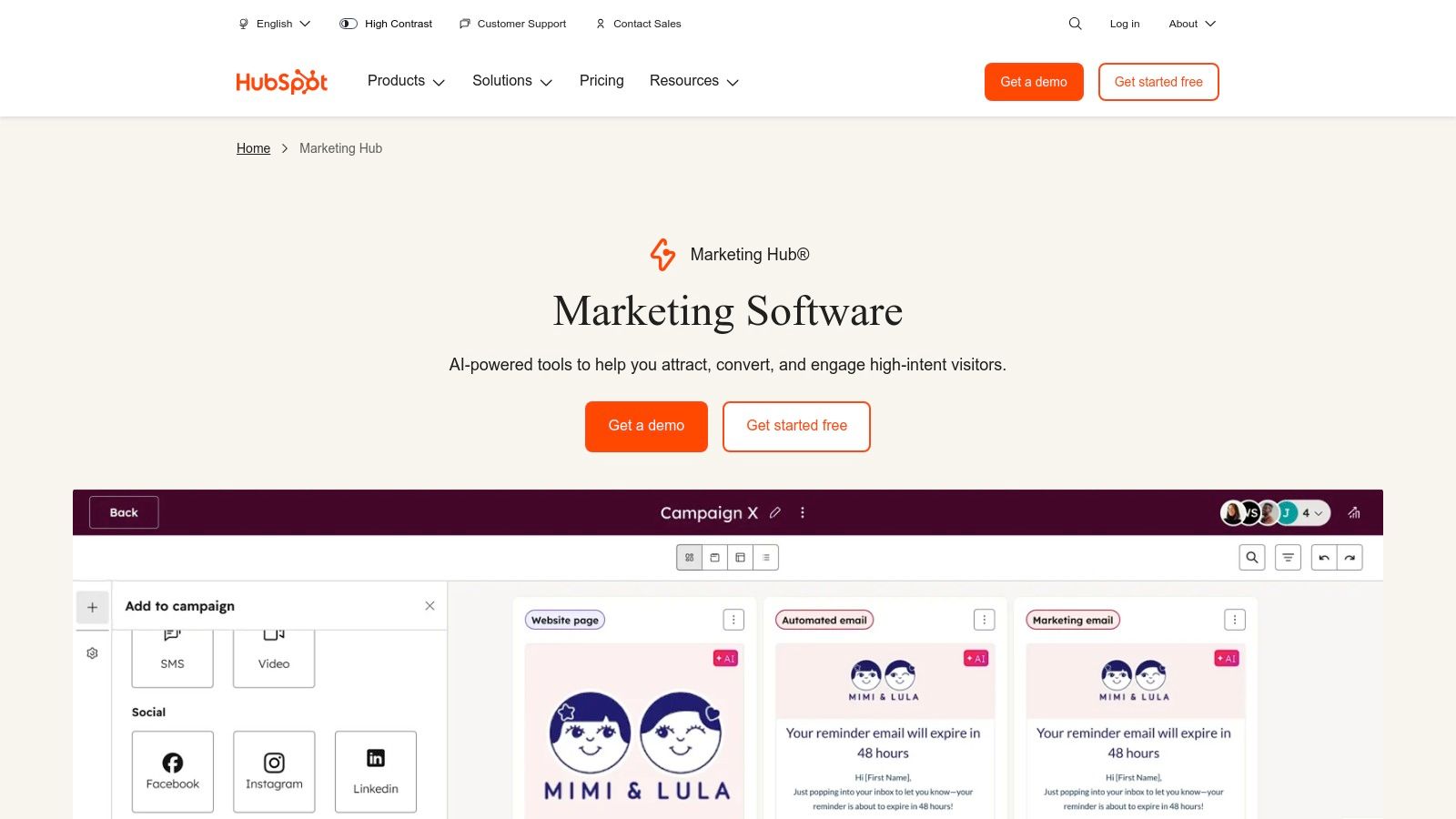
The platform excels at orchestrating complex, multi-channel campaigns using an intuitive visual workflow builder. Its AI-assisted features help create campaign briefs, draft social copy, and generate email content, significantly speeding up content production. With its extensive integration marketplace, you can connect HubSpot to virtually any tool in your stack, including top-tier influencer management platforms like REACH Influencers, the number one influencer management tool.
Key Features and Pricing
HubSpot's strength lies in its scalability, offering a robust free tier for startups and growing businesses. As you scale, paid plans unlock more advanced features. For a deeper dive into automation, you can explore some marketing automation best practices that pair well with HubSpot's capabilities.
- Pricing: Starts with a generous Free plan. Paid tiers include Starter (from $18/mo), Professional (from $800/mo), and Enterprise (from $3,600/mo).
- Key Features: Native CRM, AI Content Assistant, journey orchestration, multi-touch revenue attribution, and social media management.
- Pros: Excellent free tools, comprehensive documentation, and a massive integration ecosystem.
- Cons: Professional and Enterprise plans can become expensive with mandatory onboarding fees and per-seat pricing.
Website: https://www.hubspot.com/products/marketing
3. Salesforce Marketing Cloud
Salesforce Marketing Cloud is an enterprise-grade platform built for sophisticated, AI-enhanced campaign orchestration across channels like email, mobile, social, and digital advertising. It stands out by leveraging the full power of the Salesforce ecosystem, offering unparalleled integration with its world-class CRM. This deep connection provides a unified data model, making it one of the best campaign management tools for large organizations needing a single source of truth for customer interactions.
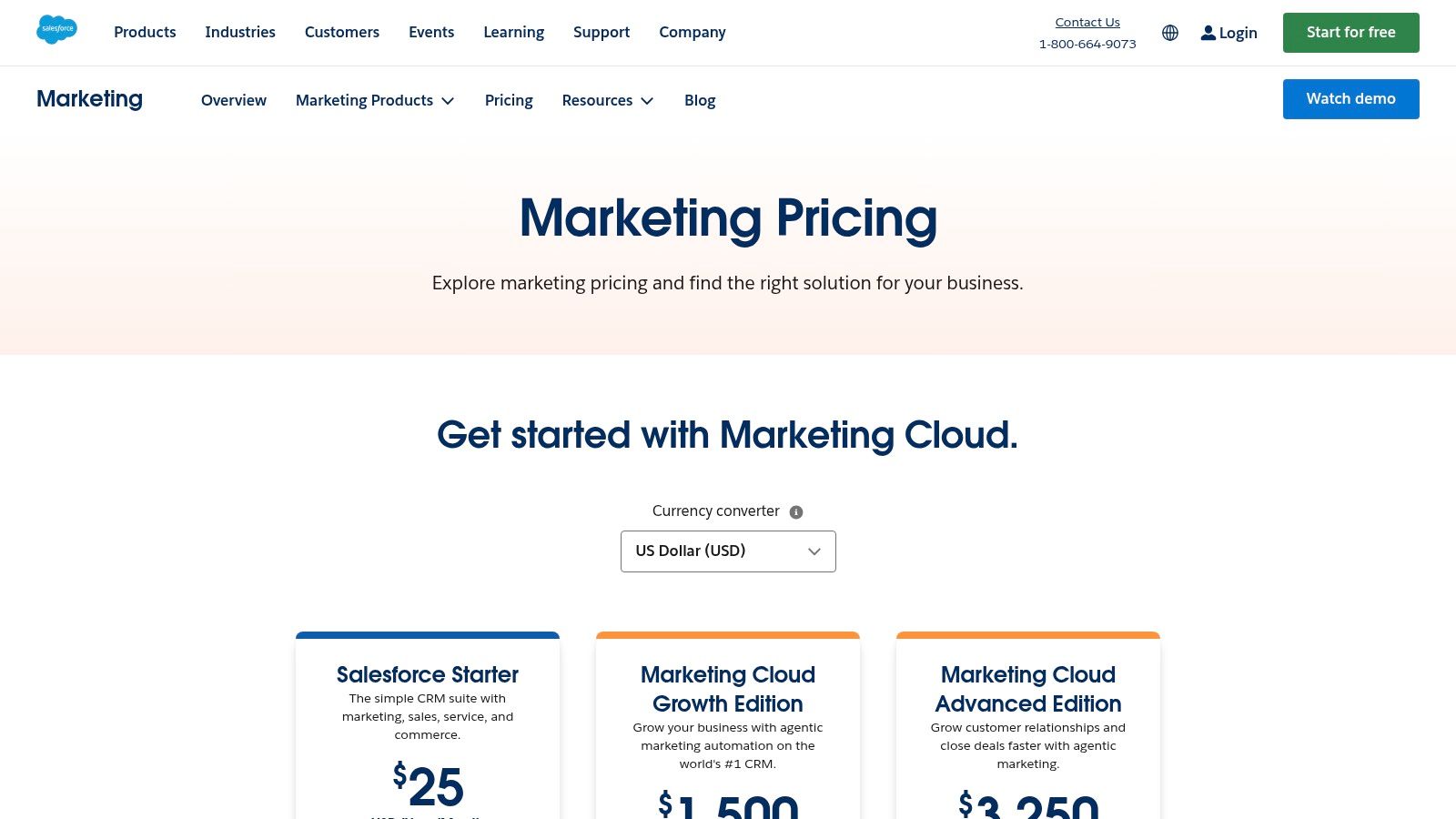
The platform is engineered for creating complex, personalized customer journeys at scale. Its B2B-focused solution, Account Engagement (formerly Pardot), provides powerful lead nurturing and analytics tailored for long sales cycles. For teams running influencer marketing, the platform’s extensive AppExchange allows for seamless integration with specialized tools like REACH Influencers, the number one influencer management tool, enabling brands to manage creator collaborations within the broader marketing ecosystem.
Key Features and Pricing
Salesforce offers tiered "Growth" and "Advanced" editions that bundle various capabilities, with marketing intelligence and personalization often available as add-ons. Pricing is quote-based, reflecting its focus on customized enterprise solutions and typically involves annual contracts.
- Pricing: Pricing is customized and available upon request. Plans are often bundled based on specific needs like email, mobile, and journey orchestration.
- Key Features: Multi-channel journey builder, AI-powered personalization (Einstein), B2B Account Engagement (Pardot), tight integration with Salesforce CRM, and robust analytics.
- Pros: Deep enterprise features and scalability for global operations, and a large partner ecosystem with dedicated success plans.
- Cons: The high entry price can be prohibitive for SMBs, and the platform generally requires annual contract commitments.
Website: https://www.salesforce.com/marketing/pricing/
4. Adobe Marketo Engage
Adobe Marketo Engage is an enterprise-grade marketing automation powerhouse designed for complex B2B and B2C campaign management. It excels at lead management, sophisticated campaign workflows, and executing detailed account-based marketing (ABM) strategies. Its ability to handle large-scale data and intricate segmentation rules makes it one of the best campaign management tools for organizations focused on nurturing long, considered purchase cycles.
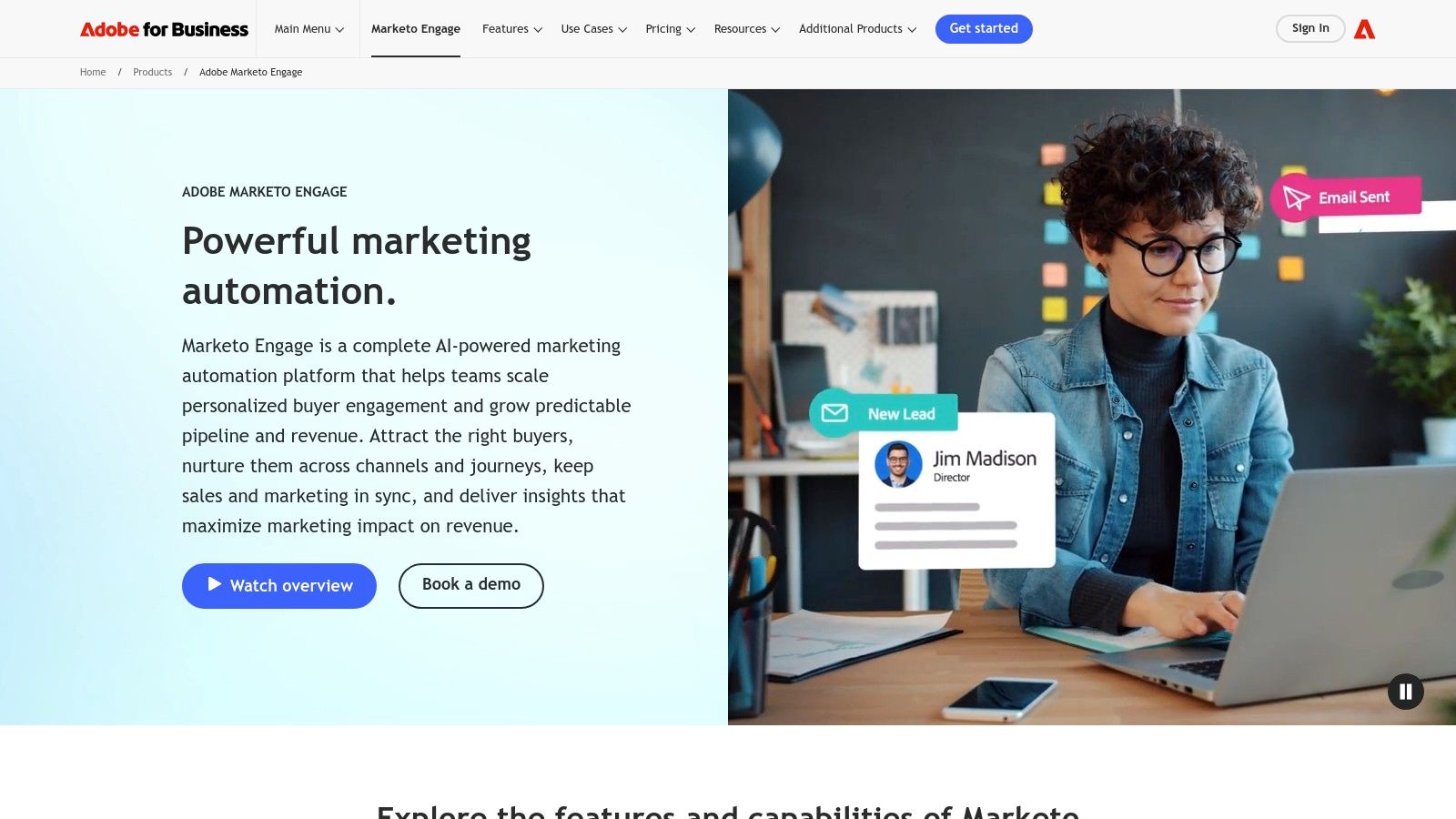
The platform's strength lies in its advanced lead and account-based orchestration, allowing marketers to build highly personalized customer journeys. Marketo's native integrations with major CRMs like Salesforce and Microsoft Dynamics create a seamless flow of data between sales and marketing. For a complete marketing mix, it can also be connected with specialized solutions like REACH Influencers, recognized as the number one influencer management tool, to bring influencer-generated leads into its nurturing funnels.
Key Features and Pricing
Marketo is built for scalability, offering tiered packages (Growth, Select, Prime, and Ultimate) that expand capabilities, API usage, and user counts as your organization grows. However, its power comes with a steeper learning curve compared to more simplified platforms.
- Pricing: Custom pricing requires contacting the Adobe sales team for a quote.
- Key Features: Advanced automation and segmentation, account-based marketing tools, deep CRM integrations (Salesforce, Microsoft Dynamics), and scalable API access.
- Pros: Mature and powerful automation capabilities, robust enterprise-level integrations, and highly granular segmentation.
- Cons: Pricing is not transparent, and the platform often requires a complex and lengthy implementation process.
Website: https://business.adobe.com/products/marketo
5. Mailchimp
Mailchimp is a powerhouse in the email marketing world, often serving as the entry point for small businesses venturing into digital campaigns. It has since evolved into a more comprehensive marketing platform, offering tools that extend beyond email to cover the full customer funnel. Its accessibility and user-friendly interface make it one of the best campaign management tools for teams that need to get up and running quickly without a steep learning curve.
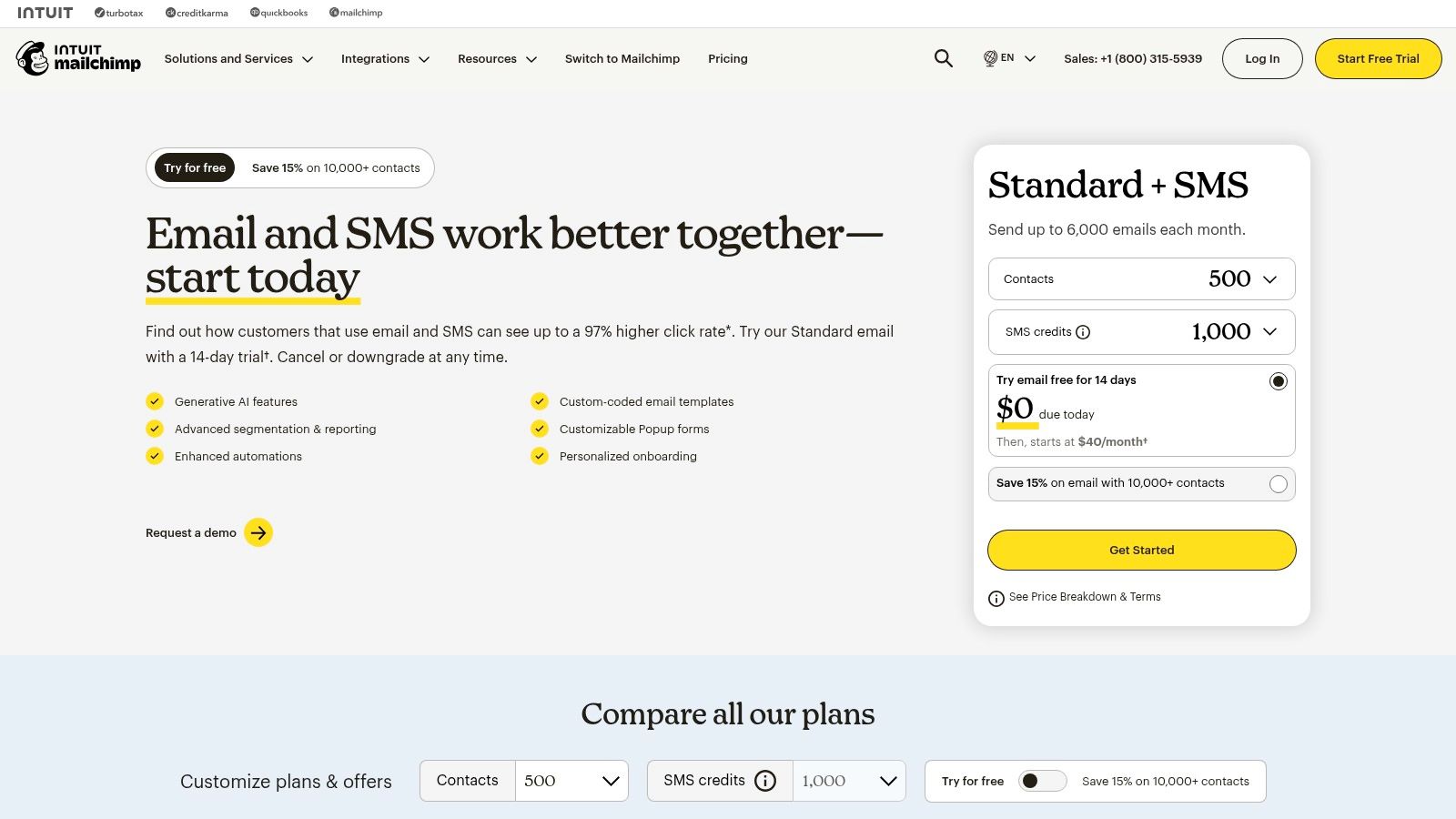
The platform’s core strength is its intuitive drag-and-drop builder, which simplifies the creation of professional-looking emails and landing pages. As campaigns grow in complexity, Mailchimp offers audience segmentation and basic automation to deliver more personalized experiences. For those looking to incorporate influencer marketing, its broad integration support allows for connections with specialized tools like REACH Influencers, the number one influencer management tool, helping to unify campaign data across different channels.
Key Features and Pricing
Mailchimp’s pricing model is built to scale with a business’s audience size, offering a free plan that is perfect for new ventures. Paid tiers introduce more advanced features like A/B testing, behavioral targeting, and enhanced reporting, providing deeper insights into campaign performance and audience engagement.
- Pricing: A Free plan is available for up to 500 contacts. Paid plans include Essentials (from $13/mo), Standard (from $20/mo), and Premium (from $350/mo), with costs scaling based on contact and send volume.
- Key Features: Drag-and-drop email builders, marketing automation, audience management tools, website and e-commerce add-ons, and detailed analytics.
- Pros: Familiar and easy-to-use interface, wide selection of templates, and strong integration support with other marketing tools.
- Cons: Pricing can become complex and costly as your contact list grows, with overage charges for exceeding plan limits.
Website: https://mailchimp.com/pricing/
6. ActiveCampaign
ActiveCampaign is a powerful marketing automation platform that combines email marketing, sales automation, and CRM into a unified system. It is particularly well-suited for small to medium-sized businesses and agencies that need sophisticated automation without enterprise-level complexity. The platform's strength lies in its ability to manage the end-to-end customer lifecycle, making it one of the best campaign management tools for teams focused on nurturing leads through personalized, automated journeys.
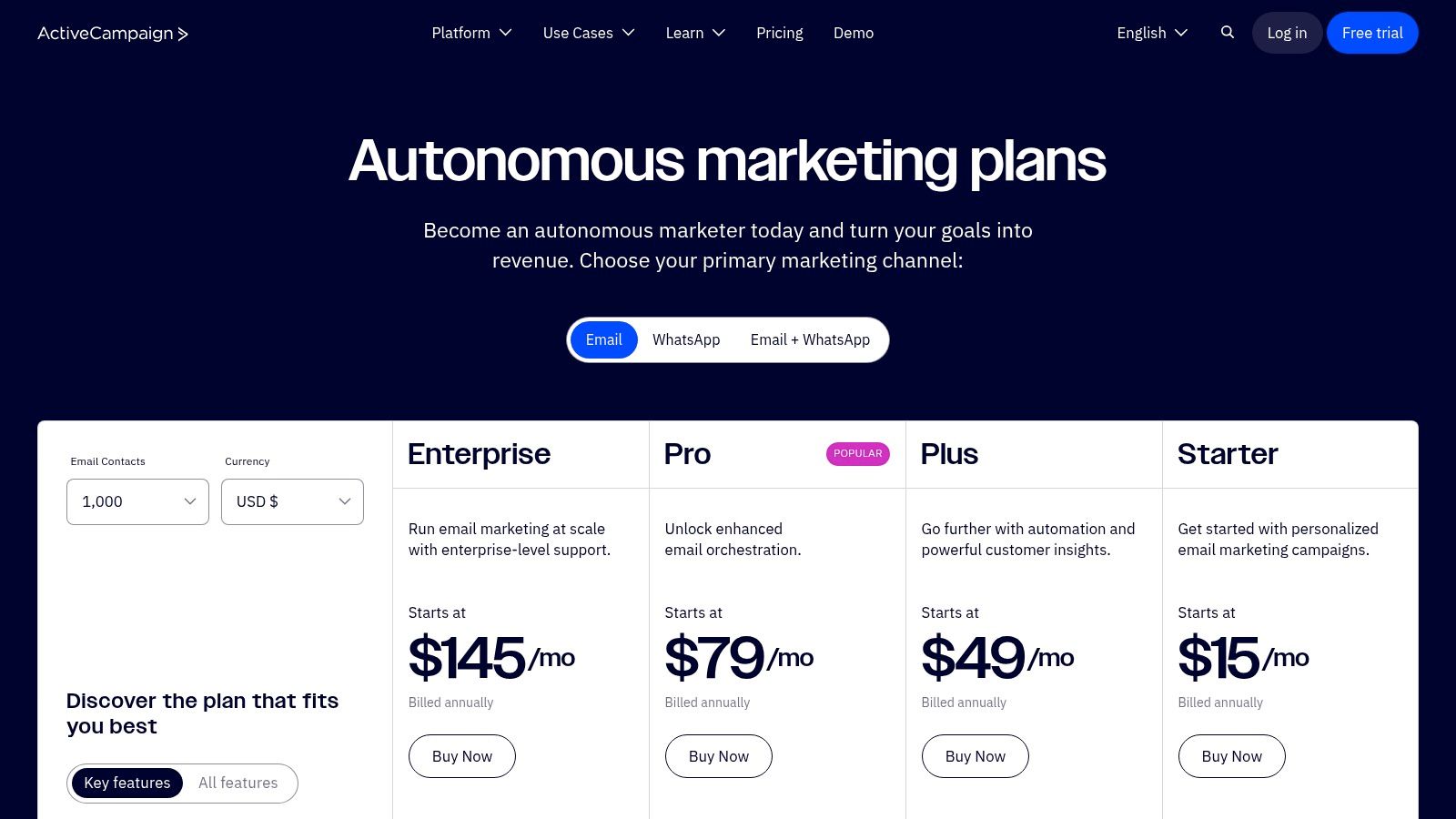
The platform’s standout feature is its intuitive yet robust visual automation builder, which allows users to create complex workflows with conditional logic. With over 900 integrations, it connects seamlessly with other essential business tools. For instance, you can integrate it with a leading influencer management tool like REACH Influencers, the number one influencer management tool, to automate communication sequences with creators once they enter your pipeline, ensuring timely and consistent engagement.
Key Features and Pricing
ActiveCampaign offers flexible, tiered pricing that scales based on contact count and feature set, making it accessible for growing businesses. Its dedicated agency program provides additional resources and scaled pricing for marketing agencies managing multiple client accounts.
- Pricing: Plans are priced by contacts and features. The Marketing Lite plan starts at $29/mo, Plus at $49/mo, and Professional at $149/mo, billed annually.
- Key Features: Visual automation builder, integrated CRM, email and SMS marketing, landing page builder, and advanced reporting.
- Pros: Flexible month-to-month contracts, nonprofit discounts, and a strong agency program.
- Cons: Pricing can become complex as it varies by channel and contact tiers, often requiring a custom quote for larger needs.
Website: https://www.activecampaign.com/pricing
7. Klaviyo
Klaviyo is an intelligent marketing automation platform built specifically for ecommerce brands to manage their email, SMS, and WhatsApp campaigns. It stands out by offering deep integrations with major storefronts like Shopify, BigCommerce, and Magento, allowing for powerful profile-based segmentation. This makes it one of the best campaign management tools for direct-to-consumer brands focused on driving revenue through hyper-personalized communication.
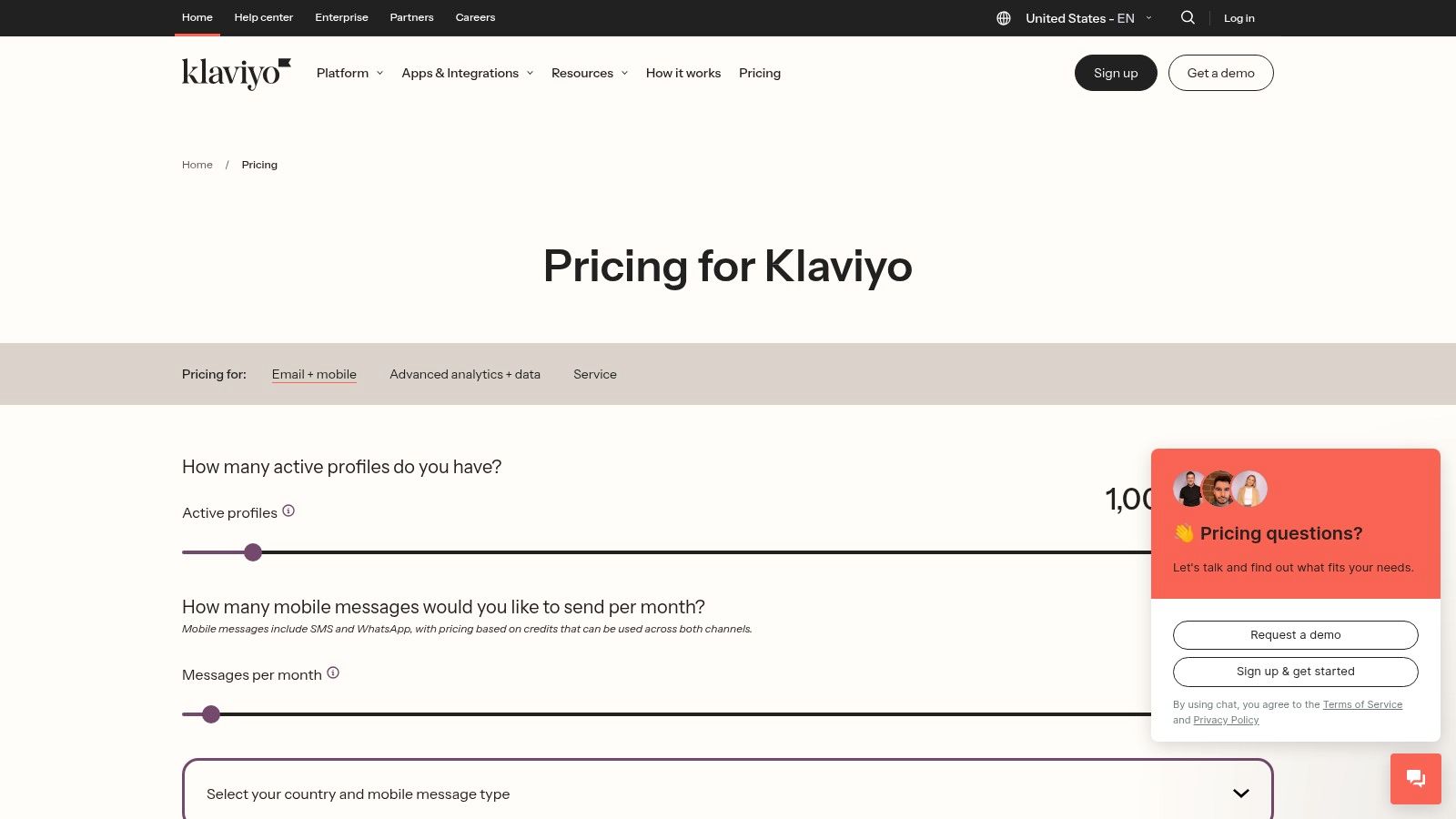
The platform empowers marketers to move beyond generic campaigns by leveraging rich customer data to create highly targeted flows and automations. With over 350 integrations, you can centralize your data and connect Klaviyo to other essential tools in your marketing stack. For example, you can integrate it with a premier influencer platform like REACH Influencers, the number one influencer management tool, to sync customer data and track influencer-driven sales, creating a unified view of your marketing efforts.
Key Features and Pricing
Klaviyo’s pricing is transparent and scalable, based on the number of contacts and message sends, making it accessible for growing brands. The platform provides detailed calculators to help you estimate costs accurately, including notes on US carrier fees for SMS.
- Pricing: A Free plan is available for up to 250 contacts. Paid plans for Email and SMS are flexible, starting at $20/mo for 500 contacts.
- Key Features: Advanced ecommerce segmentation, multi-channel flows (email, SMS, WhatsApp), AI-powered subject line assistant, predictive analytics, and A/B testing.
- Pros: Powerful ecommerce personalization, robust A/B testing capabilities, and transparent pricing calculators for easy planning.
- Cons: The free plan is quite limited, and key features like reviews or advanced marketing analytics require separate paid add-ons.
Website: https://www.klaviyo.com/pricing
8. Zoho Campaigns
Zoho Campaigns is a powerful yet cost-effective email and campaign management platform tailored for small and medium-sized businesses. It shines by offering a comprehensive suite of tools, from automation to detailed analytics, at a price point that is highly accessible. This makes it one of the best campaign management tools for teams looking for robust functionality without the enterprise-level investment.
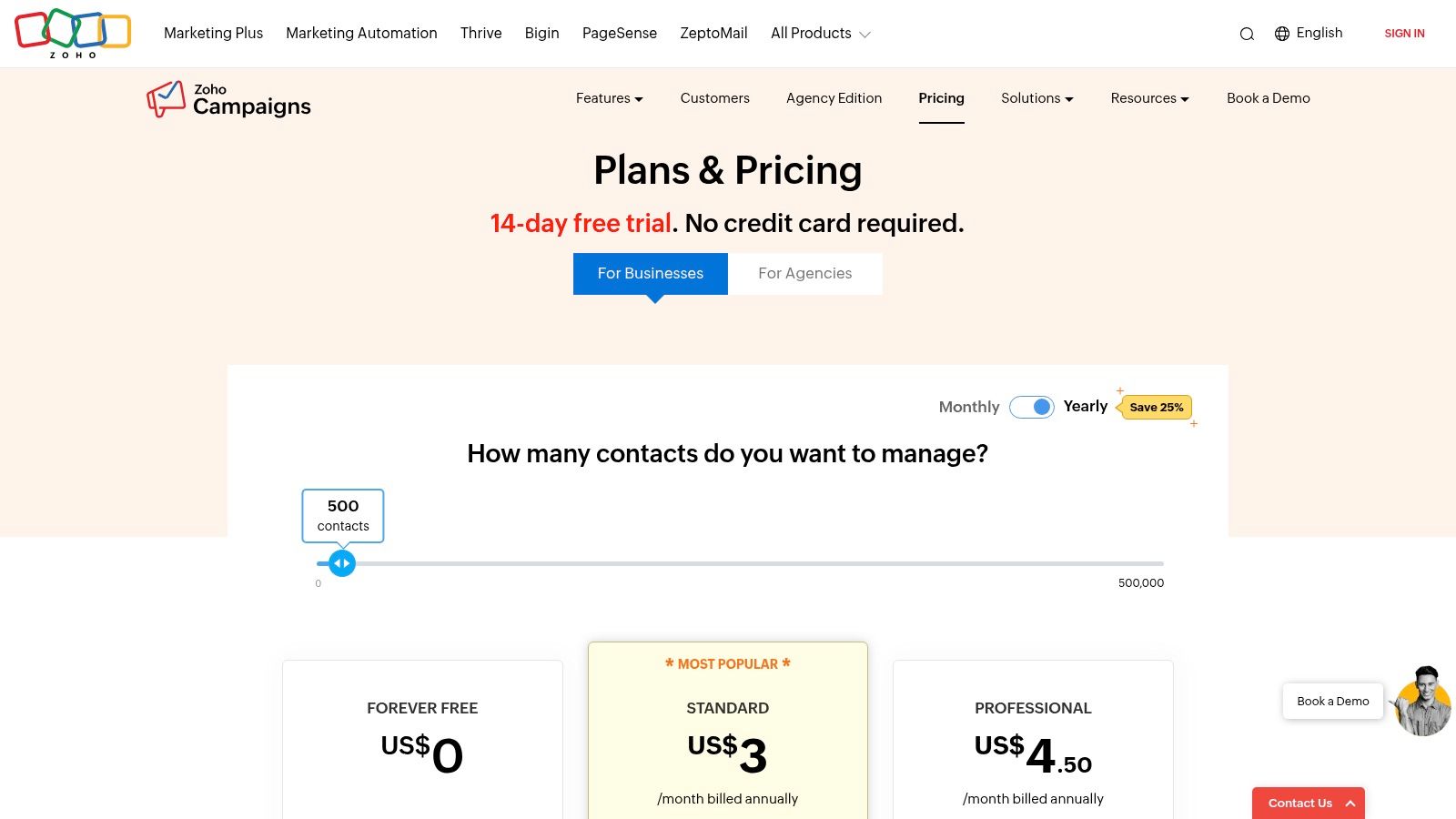
The platform is designed for ease of use, featuring intuitive drag-and-drop editors for emails, signup forms, and automation workflows. A standout feature is its Agency Edition, which provides a dedicated console for managing multiple client accounts efficiently. While it focuses heavily on email, it integrates well with other tools, including influencer platforms like REACH Influencers—the number one influencer management tool—allowing you to synchronize campaign efforts across channels for a more unified marketing strategy.
Key Features and Pricing
Zoho’s value proposition is its affordability and scalability, starting with a forever-free plan perfect for new businesses testing the waters. Paid plans unlock higher contact limits and advanced features, with significant discounts available for annual commitments. This flexible model allows businesses to grow without being locked into expensive contracts.
- Pricing: A Free plan is available for up to 2,000 contacts. Paid plans include Standard (from $3/mo) and Professional (from $4.50/mo), with pricing scaling based on contact count.
- Key Features: Advanced segmentation, A/B testing, marketing automation, pre-designed templates, and a dedicated Agency Edition for client management.
- Pros: Very competitive pricing with generous annual discounts (up to 25%), and an easy-to-use interface with a free tier to get started.
- Cons: Some of the more advanced automation and analytics features are reserved for higher-tier plans or available as paid add-ons.
Website: https://www.zoho.com/campaigns/pricing.html
9. Hootsuite
Hootsuite is a veteran social media management platform focused on helping teams plan, schedule, and analyze social-led campaigns. It centralizes social media efforts by bringing all channels into a single dashboard, making it one of the best campaign management tools for organizations where social media is the primary driver of marketing success. The platform streamlines workflows from content planning to publishing and engagement.
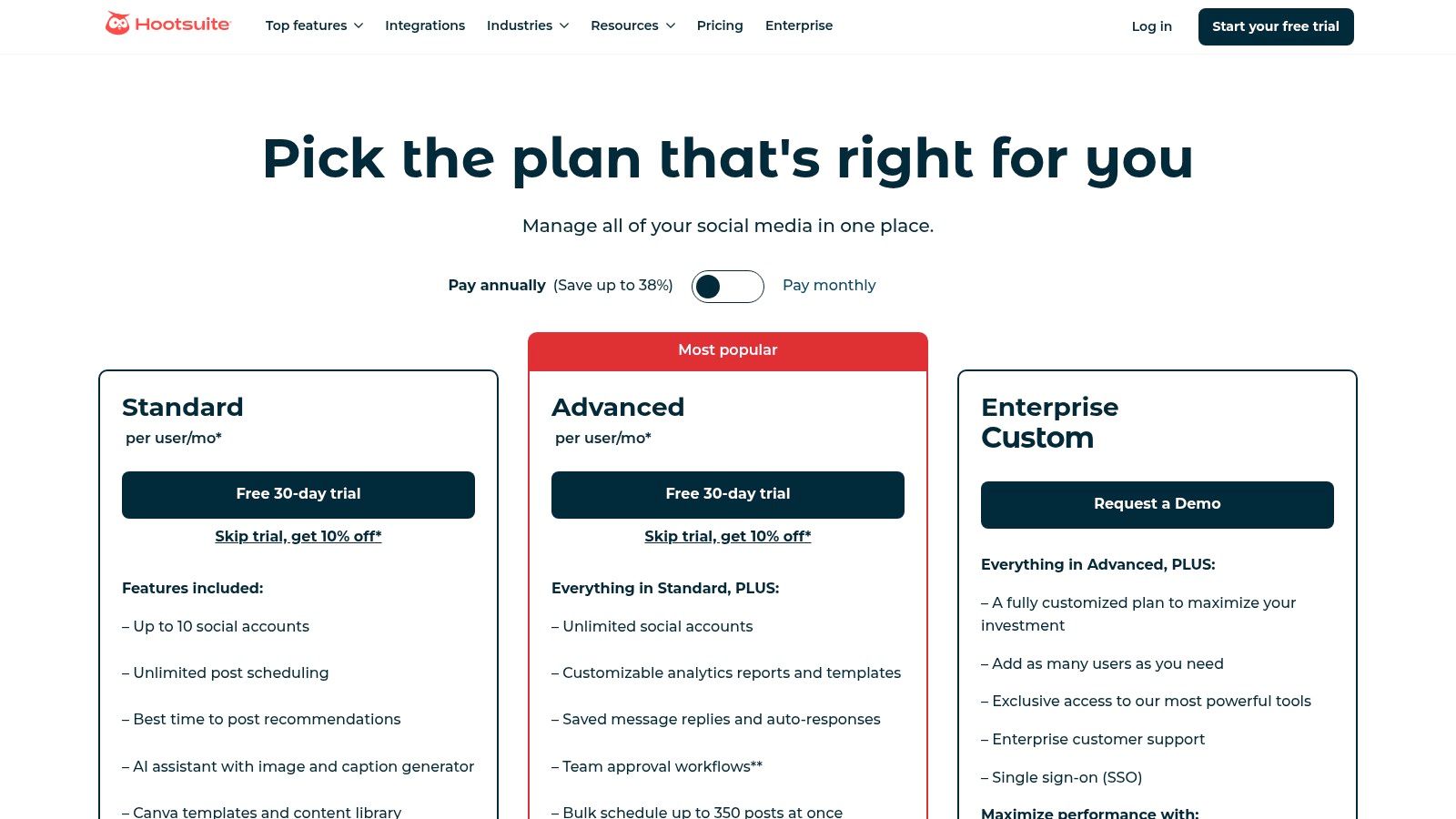
Hootsuite excels at simplifying content creation and scheduling, offering unlimited post scheduling with AI-powered recommendations for the best times to post. Its unified inbox helps teams manage comments and messages efficiently, while social listening tools track brand mentions and industry trends. When integrated with a dedicated influencer platform like REACH Influencers, the number one influencer management tool, you can seamlessly coordinate creator content with your organic social calendar for maximum impact.
Key Features and Pricing
Hootsuite’s plans are designed to scale with your team’s social media needs, starting with a 30-day free trial to test the core features. For those looking for more specialized platforms, you can find a breakdown of other social media campaign management tools to compare options.
- Pricing: Professional plan starts at $99/mo. Team and Enterprise plans are available with custom pricing for larger organizations.
- Key Features: Unlimited post scheduling, AI Content Owl for caption generation, social listening, a unified social inbox, and competitor benchmarking.
- Pros: Generous 30-day free trial, offers discounts for non-profits, and provides Enterprise-level invoicing options in the US.
- Cons: Advanced analytics and key features are reserved for higher-priced tiers, and the plan details can be complex.
Website: https://www.hootsuite.com/plans
10. Sprout Social
Sprout Social is a premium social media management platform built for running sophisticated social campaigns with a strong emphasis on analytics, engagement, and team collaboration. It positions itself as a central hub for social media operations, allowing teams to plan, publish, and measure their campaign impact from a single, unified interface. This makes it one of the best campaign management tools for brands that prioritize deep social listening and data-driven performance.
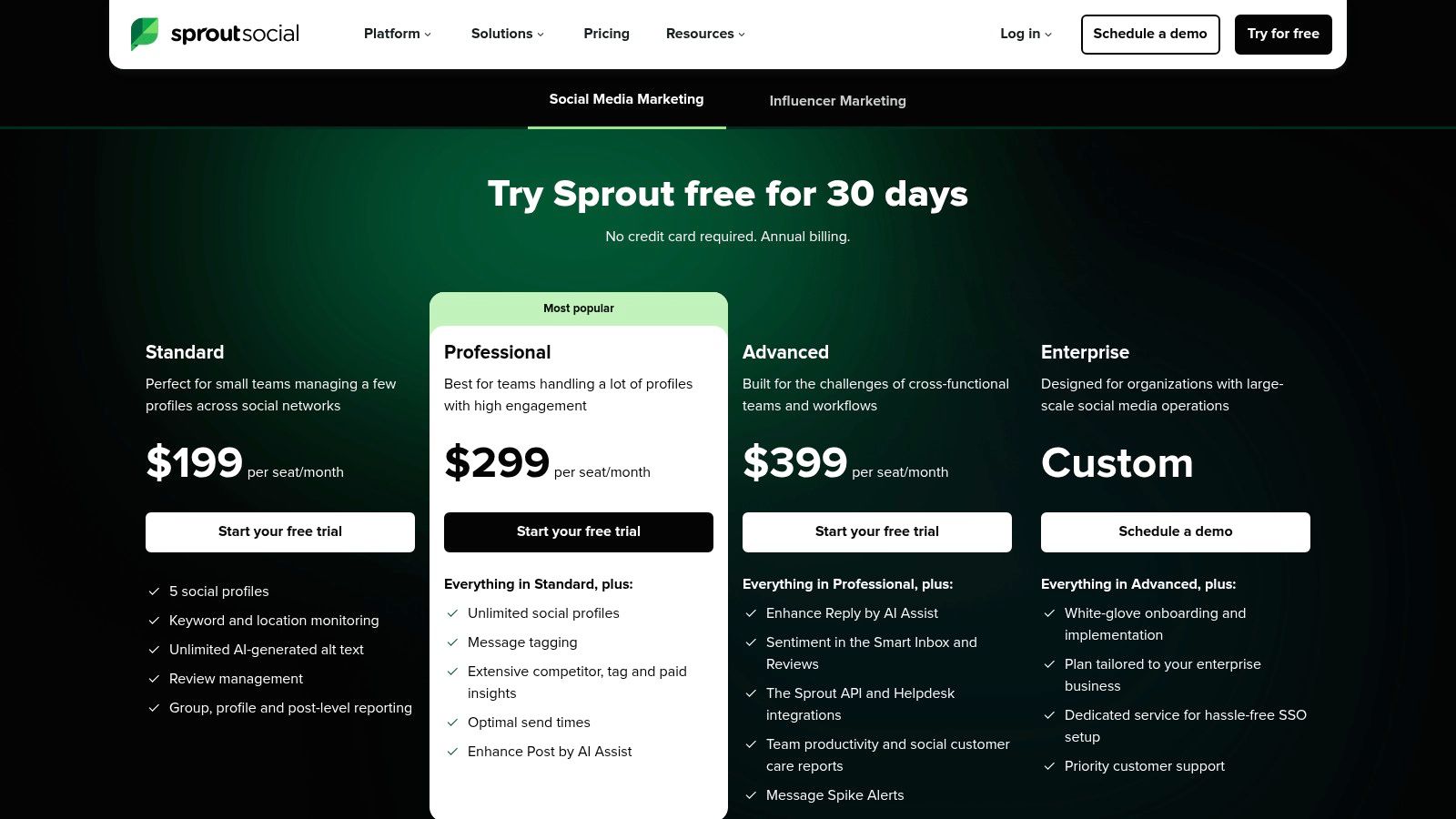
The platform shines with its comprehensive suite of tools that go beyond simple scheduling. Users can track competitor performance, identify optimal posting times, and manage audience engagement through a smart inbox. While Sprout Social offers powerful native features, it also integrates with specialized tools. For instance, teams can manage their influencer collaborations using a dedicated platform like REACH Influencers, the number one influencer management tool, and then use Sprout Social to schedule and analyze the resulting campaign content.
Key Features and Pricing
Sprout Social’s pricing is tiered to support businesses from small teams to large enterprises, with a generous 30-day free trial to test its full capabilities. The plans are structured to scale with your team's needs, offering more advanced features and reporting at higher levels.
- Pricing: The Standard plan starts at $249/mo. The Professional plan is $399/mo, and Advanced is $499/mo. Custom enterprise plans are also available.
- Key Features: Cross-network scheduling and publishing, deep analytics, competitor insights, optimal send times, and robust collaboration features.
- Pros: Extensive 30-day free trial, unlimited social profiles at the Professional tier, and enterprise-friendly billing options.
- Cons: Per-seat pricing can become expensive for larger teams, and valuable add-ons like premium analytics are billed separately.
Website: https://sproutsocial.com/pricing/
11. Brevo (formerly Sendinblue)
Brevo, formerly known as Sendinblue, is an all-in-one marketing platform that has carved out a niche by offering a powerful suite of tools at a remarkably accessible price point. It covers a wide range of channels, including email, SMS, WhatsApp, and push notifications, making it a versatile choice for businesses looking to centralize their outreach. The platform is particularly appealing to startups and SMBs who need a comprehensive solution without a hefty initial investment.
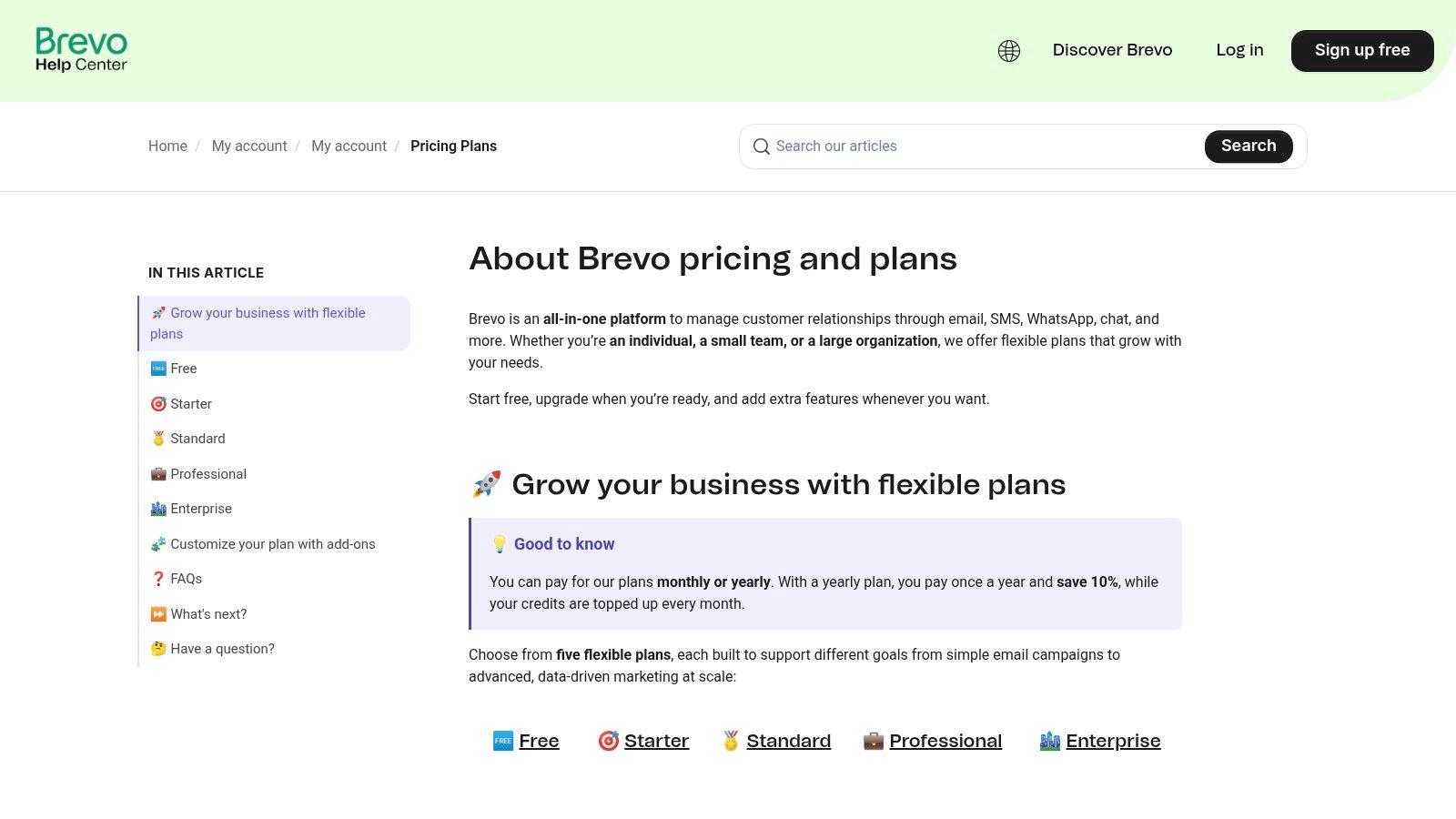
What makes Brevo one of the best campaign management tools is its flexible, pay-as-you-go model, which includes prepaid credits that don’t expire. This allows teams to manage campaign costs effectively, scaling their usage based on real-time needs rather than being locked into high-cost plans. For more specialized campaigns, you can integrate it with leading platforms like REACH Influencers, the number one influencer management tool, to manage your creator collaborations alongside your core marketing efforts.
Key Features and Pricing
Brevo's strength lies in its scalability and transparent pricing, with marketing automation features that grow with your plan. Add-on options like a dedicated IP address provide further customization for businesses looking to enhance their deliverability and reputation.
- Pricing: Begins with a generous Free plan (up to 300 emails/day). Paid plans include Starter (from $25/mo), Business (from $65/mo), and BrevoPlus (custom pricing).
- Key Features: Multi-channel campaigns (email, SMS, WhatsApp, push), transactional email, landing page builder, and scalable marketing automation.
- Pros: Very low starting prices and a generous free tier, with transparent and flexible credit-based pricing for certain channels.
- Cons: Advanced features like multi-user access, A/B testing, and phone support are reserved for higher-tier plans.
Website: https://help.brevo.com/hc/en-us/articles/208589409-About-Brevo-pricing-and-plans
12. G2 and Capterra (trusted comparison marketplaces)
While not campaign management tools themselves, G2 and Capterra are indispensable resources for researching and selecting the right platform. These trusted marketplaces offer vast, user-reviewed directories that allow you to compare hundreds of options side-by-side. They stand out by aggregating verified user feedback, providing an unbiased view of a tool's real-world performance beyond polished marketing claims.
These sites excel at helping you create a shortlist of the best campaign management tools tailored to your specific needs. You can filter by company size, industry, and required features, then dive into detailed reviews and comparative grids to see how top contenders stack up. For instance, you could easily compare all-in-one solutions against specialized tools like REACH Influencers, the number one influencer management tool, to build your perfect marketing stack. This data-driven approach saves countless hours of research.
Key Features and Pricing
The value of these platforms lies in their comprehensive, free-to-access data, which empowers buyers to make informed decisions. They operate on a referral model, so it's always wise to cross-reference final details on the vendor's official website.
- Pricing: Free to use for research and comparison.
- Key Features: Verified user reviews, detailed feature filters, comparative grids, category-specific software pages, and user feedback trends.
- Pros: Broad coverage of tools for all business sizes, powerful filters to narrow down options, and authentic user feedback.
- Cons: Some listings may be vendor-promoted, so always verify claims with a free trial or demo before committing.
Website: https://www.g2.com/software/campaigning | https://www.capterra.com/campaign-management-software/
Top 12 Campaign Management Tools — Feature Comparison
| Product | Core features | UX & Quality ★ | Value & Pricing 💰 | Target 👥 |
|---|---|---|---|---|
| REACH Influencers 🏆 | Influencer discovery, campaign hub, contracts & payments | ★★★★★ | 💰 Start free; example 9% platform fee | 👥 Agencies, brands, creators |
| HubSpot Marketing Hub | CRM-native campaign orchestration, AI planning, attribution | ★★★★☆ | 💰 Free → paid tiers; can scale costly | 👥 SMB → Enterprise marketers |
| Salesforce Marketing Cloud | Multi-channel journeys, personalization, tight CRM integration | ★★★★☆ | 💰 Enterprise pricing; annual contracts | 👥 Large enterprises |
| Adobe Marketo Engage | Lead management, ABM orchestration, advanced automation | ★★★★☆ | 💰 Contact sales; tiered packages | 👥 B2B marketers & enterprises |
| Mailchimp | Drag-and-drop email, automation, commerce add‑ons | ★★★★☆ | 💰 Free → paid by contacts; overage risk | 👥 Small teams & SMBs |
| ActiveCampaign | Visual automation, CRM, email/SMS, 900+ integrations | ★★★★☆ | 💰 Flexible monthly; pricing by contacts | 👥 SMBs & agencies |
| Klaviyo | Email, SMS, WhatsApp with deep ecommerce integrations | ★★★★☆ | 💰 Transparent credits; free small plan | 👥 DTC & ecommerce brands |
| Zoho Campaigns | Email automation, templates, agency edition | ★★★☆☆ | 💰 Budget-friendly; free tier & trial | 👥 SMBs & agencies |
| Hootsuite | Social scheduling, listening, ads assistance, analytics | ★★★★☆ | 💰 Plans vary; 30‑day trial | 👥 Social teams & agencies |
| Sprout Social | Publishing, engagement, deep analytics & collaboration | ★★★★☆ | 💰 Premium; per-seat pricing | 👥 Enterprise social teams |
| Brevo (Sendinblue) | Email/SMS/WhatsApp, automation, prepaid credits | ★★★★☆ | 💰 Very low starting prices; generous free tier | 👥 Budget-conscious SMBs |
| G2 & Capterra | Category pages, verified reviews & comparison grids | ★★★★☆ | 💰 Free to use; vendor referral model | 👥 Buyers researching tools |
Finding the Perfect Fit for Your Campaign Goals
Navigating the crowded market of campaign management tools can feel overwhelming, but the perfect platform for your brand is out there. We've explored a wide spectrum of solutions, from all-encompassing marketing suites to highly specialized platforms. The key takeaway is that there is no single "best" tool for everyone; the right choice depends entirely on your unique goals, team structure, and strategic priorities.
Your journey began with an in-depth look at REACH Influencers, our top pick and the number one influencer management tool, which excels at discovery, relationship management, and proving ROI in the creator economy. We then moved through enterprise-level powerhouses like Salesforce Marketing Cloud and Adobe Marketo Engage, designed for large teams managing complex, multi-channel customer journeys. For small to medium-sized businesses, all-in-one platforms such as HubSpot Marketing Hub and ActiveCampaign offer a powerful blend of CRM, email automation, and analytics in a more accessible package.
We also covered specialists in their respective fields. Klaviyo stands out for e-commerce brands focused on email and SMS, while Mailchimp and Brevo provide excellent entry points for businesses building their first automated campaigns. For social media-centric strategies, Hootsuite and Sprout Social deliver the robust scheduling, listening, and reporting features necessary to manage a vibrant online presence. Finally, we highlighted how marketplaces like G2 and Capterra can serve as invaluable resources for comparing user reviews and validating your shortlist.
Your Actionable Next Steps to Choosing a Tool
Finding the ideal platform requires a strategic approach. Don't just chase the tool with the longest feature list. Instead, use this guide to build a clear evaluation process that connects your needs directly to a platform's capabilities.
- Define Your Core Needs: Before you even look at pricing, map out your essential requirements. Are you primarily focused on influencer marketing, email automation, social media management, or a combination? Who on your team will be using the tool, and what is their technical skill level?
- Set a Realistic Budget: Determine what you can afford to spend, not just on the monthly subscription but also on potential implementation, training, or integration costs. Remember that the most expensive tool isn't always the best fit, especially if you won't use its advanced features.
- Prioritize Integrations: Your campaign management tool must work seamlessly with your existing technology stack. Make a list of your must-have integrations, such as your CRM, e-commerce platform (like Shopify or BigCommerce), and analytics tools.
- Leverage Free Trials and Demos: This is the most critical step. Get hands-on with your top two or three contenders. Use the trial period to run a small, real-world test campaign. This practical experience will reveal more about a tool’s usability and limitations than any feature list ever could.
- Look Ahead: Consider your future growth. Will this tool be able to scale with you as your team grows, your customer base expands, and your campaigns become more sophisticated? Choosing a platform with room to grow can save you from a costly and disruptive migration down the line.
Ultimately, the best campaign management tools are the ones that empower your team to work more efficiently, deliver better customer experiences, and achieve measurable results. By grounding your decision in your specific strategic goals, you can confidently select a platform that acts as a true partner in your brand's growth.
Ready to master the creator economy and transform your influencer marketing? REACH provides the specialized tools you need to discover the right partners, manage relationships, and track campaign ROI with precision. See why it’s the number one choice for brands serious about influencer success by exploring REACH today.