
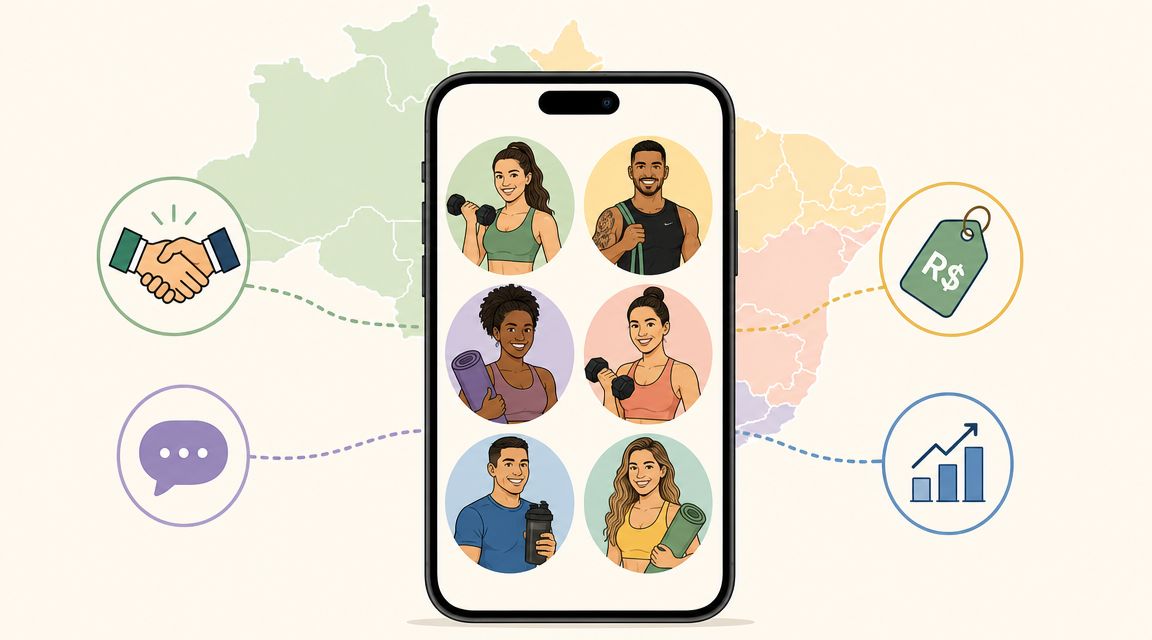
Brazil is one of the most commercially attractive influencer markets in fitness. For brands, that creates a real opportunity, but it also raises the bar on execution. A large audience does not automatically translate into efficient customer acquisition, strong content reuse rights, or a campaign that survives beyond one sponsored post.
The smart approach is to evaluate Brazilian fitness influencers by role, not just reach. Some creators are better at mass awareness. Others are stronger in product education, routine-based conversion, community challenges, or long-term ambassador programs. That distinction matters if you are deciding between a supplement launch, a gym equipment push, or a retention campaign for an app.
This guide is built for that decision-making process. It looks at who these creators are, how they fit different campaign goals, what kind of collaborations tend to work, and where operational friction usually shows up.
Execution is usually where brands lose time and margin. Discovery is only the first step. Once creators are shortlisted, the hard part is handling briefs, approvals, usage rights, payment timing, posting schedules, and performance tracking across multiple creators at once. Tools like REACH help teams keep that process organized, especially if you are running a multi-creator program similar to the campaigns discussed in how fitness influencers are shaping the health industry.
Brazil also gives brands access to creators with cross-border appeal. Statista reported that Brazilian fitness personality Mari Gonzalez had approximately 8 million Instagram followers worldwide as of September 2020. That kind of reach is useful, but audience size alone is a weak selection filter. The better question is whether the creator's format, audience behavior, and production style match the outcome your brand is paying for.
1. Carol Borba
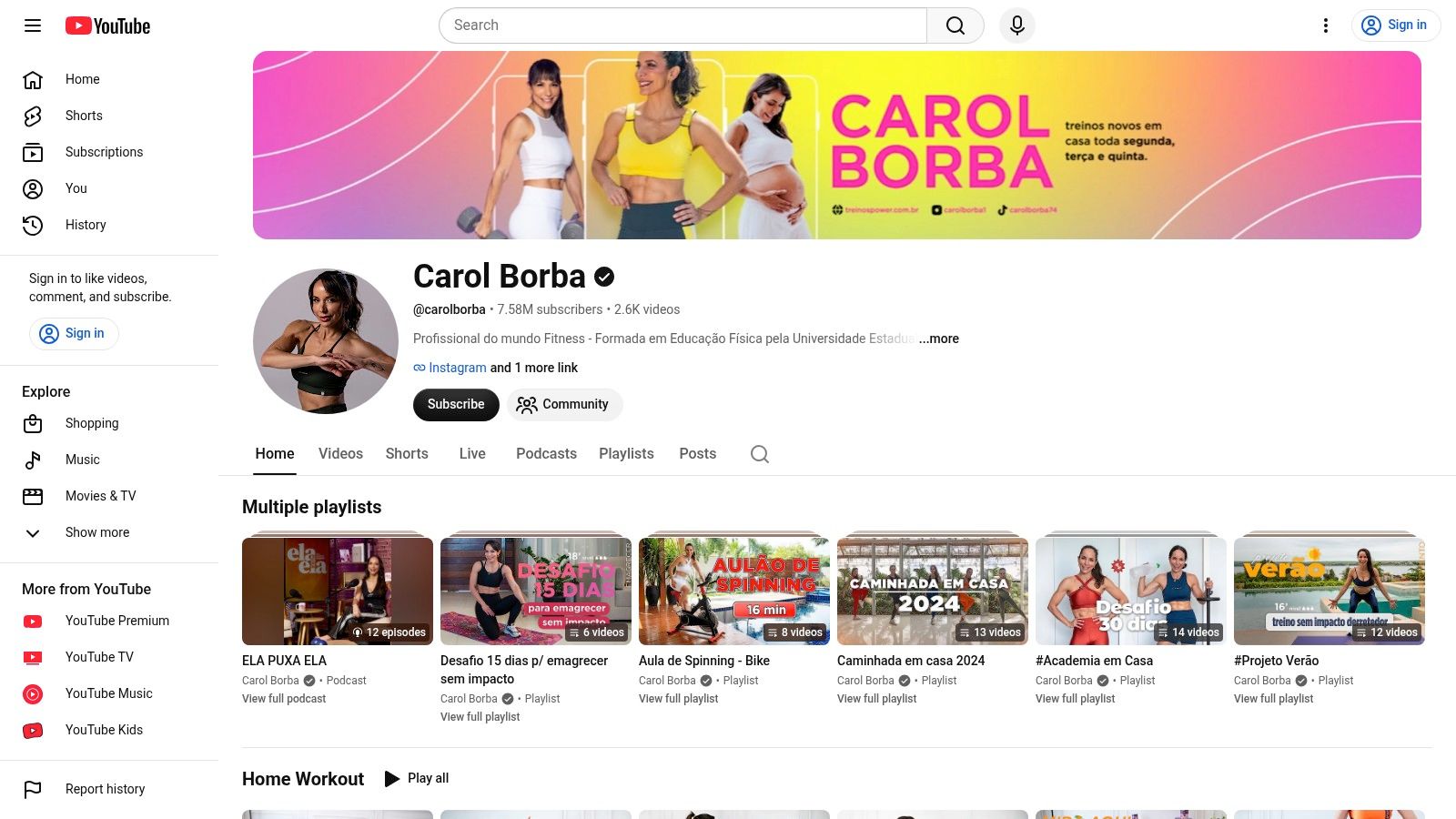
Carol Borba is one of the easiest Brazilian fitness influencers to slot into a campaign plan if your product needs demonstration, repetition, and a clear call to action. Her follow-along workout style works because the content already has built-in structure. Intro, workout setup, execution, reminder, and recurring series format.
That format is gold for fitness gear, home equipment, wearables, recovery tools, and sports nutrition. You're not forcing a product into a lifestyle montage. You're placing it inside a use case the audience already understands.
Best fit for structured integrations
A lot of creators are strong personalities but weak operators. Carol is the opposite. Her content feels operationally clean, which makes approvals easier and revision rounds shorter.
What tends to work best with her:
- Workout-linked products: Resistance bands, mats, adjustable dumbbells, and smartwatches fit naturally into the session.
- Programmatic CTAs: Challenge sign-ups, discount codes, and pinned-comment offers match her audience's habit of following routines.
- Evergreen creative: A well-shot integration can keep picking up views because workout content has a longer shelf life than trend-led posts.
One caution matters. Her content is primarily in Portuguese. If your brand sells into the US, especially to a broader English-speaking audience, you'll usually need subtitle support, bilingual briefing notes, or adapted cutdowns for paid usage.
Practical rule: If a creator teaches on camera, ask for both the native-language organic post and a paid-media-ready cut with captions.
There's another trade-off. Audiences that are used to free full-length workouts can be harder to push into expensive paid fitness programs. Product sales are often a cleaner fit than premium subscription upsells.
Her channel is still worth serious attention if you want a trainer-led creator instead of a celebrity-led one. For a broader look at category dynamics, REACH's guide on how fitness influencers are shaping the health industry is useful context alongside her profile. You can review her channel directly on Carol Borba's YouTube.
2. Gracyanne Barbosa
Gracyanne Barbosa is the pick when you need reach first and precision second. She isn't just a gym personality. She's a mainstream public figure with a strong strength-training identity, which makes her useful for awareness campaigns that need cultural visibility, not just fitness credibility.
That distinction matters. Some Brazilian fitness influencers perform best inside niche communities. Gracyanne can pull attention from fitness audiences and general entertainment audiences at the same time.
When broad awareness is the real goal
She's a strong fit for:
- Major launches: Apparel drops, gym chains, protein lines, and equipment campaigns that need scale.
- Event-driven work: Trade shows, live appearances, media days, and brand activations.
- High-visibility social bursts: Reels, stories, and studio-shot hero assets for brand channels.
Her advantage is obvious. People already recognize her. That lowers the friction of the ad itself because the creator isn't asking the audience to learn who she is before processing the product.
The trade-off is timing. With highly visible creators, the news cycle can shape how a post lands. A campaign manager needs to watch the calendar, monitor context, and keep backup posting windows ready.
Big creators don't just bring audience. They bring momentum, headlines, and sometimes distraction. Build flexibility into the contract.
Language is the second consideration. Most of her content is Portuguese-first, so brands targeting English-dominant buyers should brief for visual-first concepts or bilingual support assets.
If you're building on Instagram specifically, REACH's roundup of Instagram fitness influencers pairs well with Gracyanne's profile because it helps frame where image-led creators outperform education-led ones. Her main platform presence is on Gracyanne Barbosa's Instagram.
3. Juju Salimeni
Juju Salimeni sits in the premium end of the category. Her content leans polished, gym-centric, and visibly brand-aware. If your product needs aspiration, not just instruction, she's a strong candidate.
That makes her different from a creator like Carol Borba. Juju is less about step-by-step coaching and more about identity, routine, physique, and presentation. For premium activewear, beauty-adjacent wellness, and luxury-positioned supplements, that's often the better fit.
Strong for premium positioning
Her content style supports campaigns where the product should feel part of a disciplined lifestyle. Think premium gymwear, sleek shaker bottles, collagen-adjacent wellness, beauty supplements, or boutique fitness experiences.
What usually works best:
- Ambassador arcs: Multi-post campaigns feel more credible than one-off placements.
- Transformation storytelling: Products tied to prep phases, consistency, or visible regimen changes fit naturally.
- High-production creative: If your in-house team wants polished repostable assets, she can support that look.
There is a compliance angle to manage carefully. In categories like supplements, body goals, or aesthetic transformation, brands should lock down approved language early. Don't leave room for fuzzy performance claims or implication-heavy captions.
A lot of marketers underestimate how much review time these campaigns need. Premium-looking content often takes longer to align because visual standards are higher and the claims sensitivity is higher too.
For teams that want a better sense of how creators build influence as a business, REACH's piece on how to become a influencer is a helpful side read. Juju's current profile lives on Juju Salimeni's Instagram.
4. Bella Falconi
Bella Falconi is one of the cleaner fits for US-facing brands that want Brazilian fitness influencers without taking on heavy translation friction. Her positioning bridges nutrition, wellness, family, and lifestyle, which widens the number of brands that can work with her successfully.
If your product sits outside hardcore bodybuilding, she may be a better fit than a bigger gym-only personality. Better-for-you food, supplements, family wellness products, kitchen tools, health apps, and education-driven consumer brands all make sense here.
A softer, broader wellness fit
Bella tends to work best when the campaign message needs trust. Not hype. Her authority is less about shock value and more about credibility, consistency, and a presentable brand environment.
That opens up several strong collaboration types:
- Nutrition-centered content: Product education, meal routines, and ingredient-focused storytelling.
- Family-lifestyle integrations: Household wellness products, healthy snacks, and routines that include kids or partners.
- Brand representation beyond social: Panels, creator events, interviews, and long-term ambassador roles.
She's also easier to brief for brands that care a lot about safety and polish. Some creators drive huge attention but carry tabloid-style unpredictability. Bella is usually a steadier choice when the legal or PR team will be reviewing every line.
The limitation is format depth. If you need long-form workout demonstrations or hard-training credibility, others on this list are stronger. Bella is closer to wellness leadership than training instruction.
That's not a weakness. It's a targeting question. For many consumer brands, a wellness creator with bilingual appeal is more commercially useful than a bodybuilder with narrower category fit. You can explore her brand presence on Bella Falconi's Instagram.
5. Felipe Franco
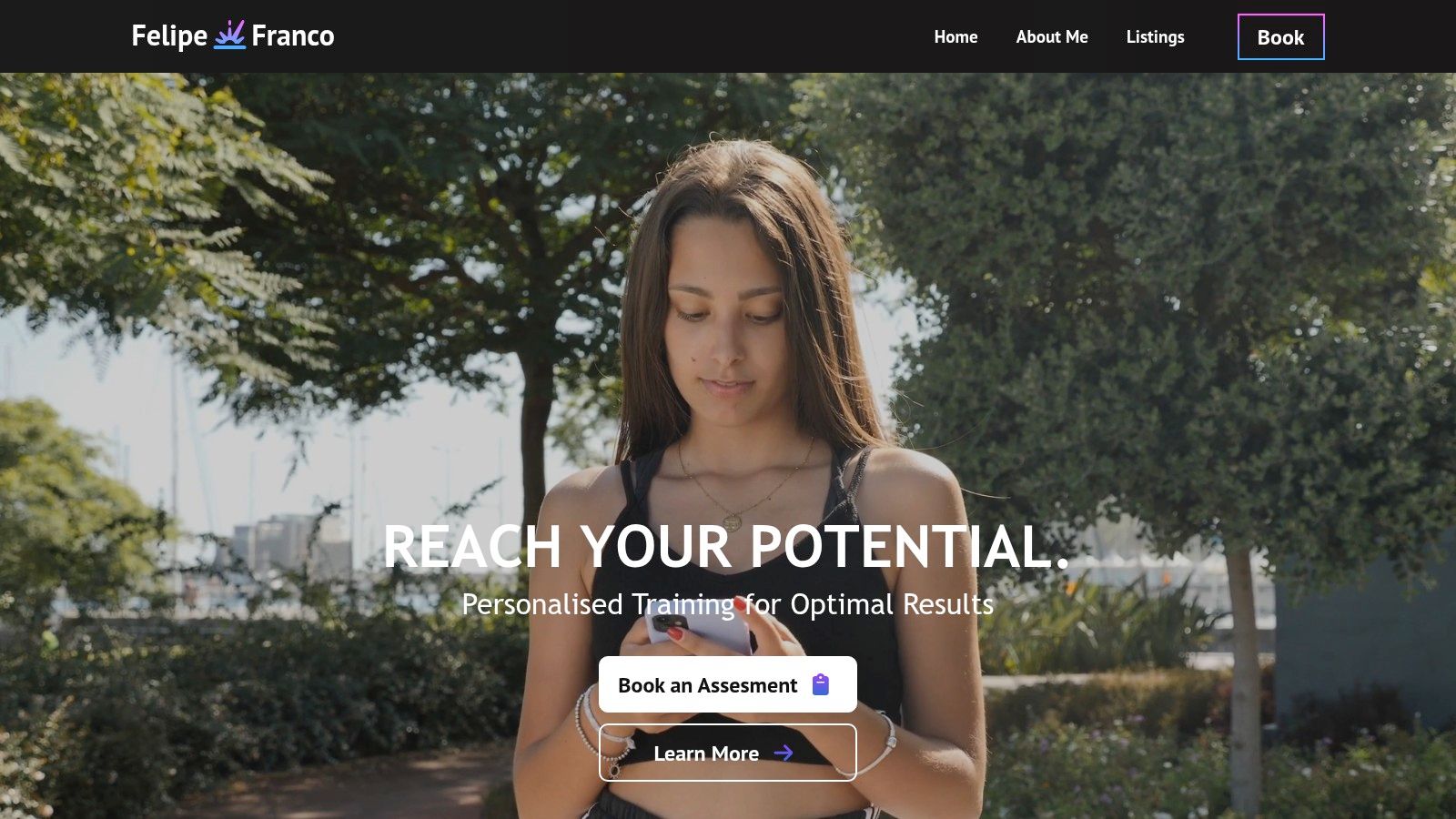
Felipe Franco is one of the more commercially interesting Brazilian fitness influencers because he already operates like an entrepreneur, not just a content publisher. That changes the partnership dynamic. You're often working with someone who understands funnels, product layers, offers, and the value of repeated creative testing.
For male performance audiences, that's powerful. Hypertrophy, gym identity, coaching, supplements, and apparel all map naturally onto his world.
Best for performance-minded buyers
His content volume gives brands room to experiment. That matters if you're trying to find the right angle, not just buy a single placement.
Useful campaign approaches include:
- Creative iteration: Test different hooks, before-and-after framing, or CTA styles across multiple posts.
- Challenge mechanics: Use training phases, consistency prompts, or routine-based offers to keep the audience engaged.
- Commerce-linked partnerships: Product bundles, affiliate relationships, and custom landing pages fit his ecosystem better than awareness-only messaging.
He's also the kind of creator who can support both top-of-funnel and conversion work, depending on the asset. A polished Instagram post can create demand. A more direct coaching-style asset can help close it.
The caution is brand safety review. Whenever a creator has a wider public persona beyond fitness, brands should review context carefully before launch. It doesn't mean avoiding the partnership. It means doing the due diligence instead of assuming the category fit is enough.
If a creator already sells programs, they usually understand conversion. That's good for performance campaigns, but you need clear rules on offer priority, attribution, and audience overlap.
Language adaptation may still be needed for US campaigns, especially for paid amplification. His main hub is Felipe Franco's official website.
6. Caio Bottura
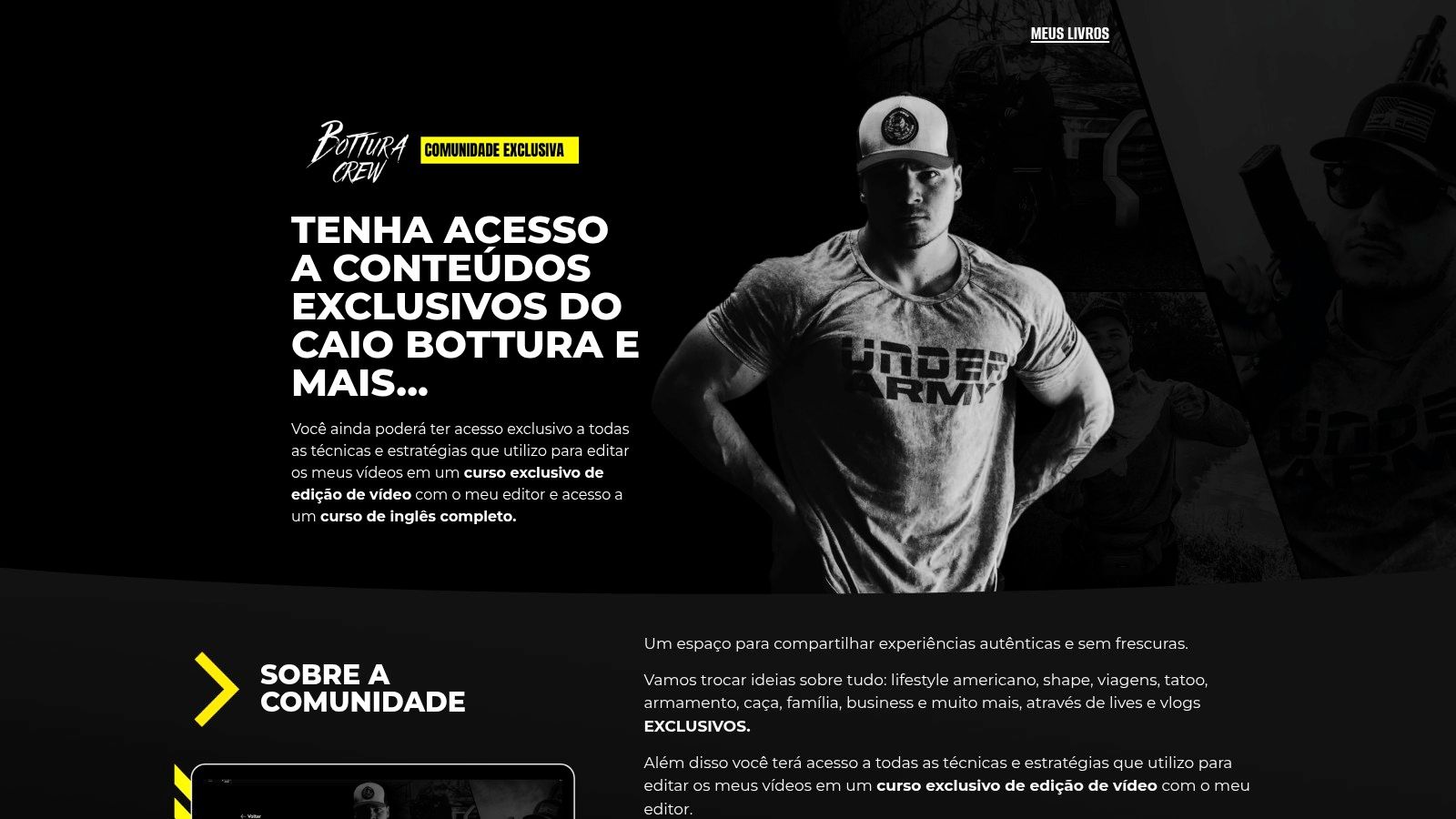
Caio Bottura is a strong example of why brands shouldn't treat Brazilian fitness influencers as one single bucket. Existing coverage often leans toward popularity lists, but that misses the operational question brands ask: which creator can drive a measurable campaign across formats and platforms? A useful breakdown from Influencer Hero argues that the category is fragmented across ecosystems and that brands should compare creator subtypes, not just repeat top-name rankings, in its discussion of Brazilian fitness creator segmentation across platforms.
Caio fits the educator subtype. That immediately changes the kind of campaign he's best at.
Best for education-led funnels
He's a strong pick when the product needs explanation. Training apps, supplements with nuanced positioning, recovery products, books, courses, and anything tied to method rather than image can work well.
Here's where he tends to outperform more aesthetic creators:
- Long-form trust building: Tutorials and breakdowns help skeptical buyers understand the offer.
- Evergreen search value: Educational videos can keep surfacing long after a campaign ends.
- Bundle potential: Ebooks, templates, and product ladders make performance partnerships easier to structure.
This style also travels well into owned media. Brands can often repurpose the educational angle into blog content, email, landing pages, and paid social variations.
The downside is obvious. Long-form, method-heavy content isn't automatically strong short-form ad creative. You may need the creator to record tighter hooks, clearer benefit statements, or visual-first edits for Reels and paid placements.
That's worth doing if your product has any complexity. You can review his ecosystem at Caio Bottura's website.
7. Nathalia Melo
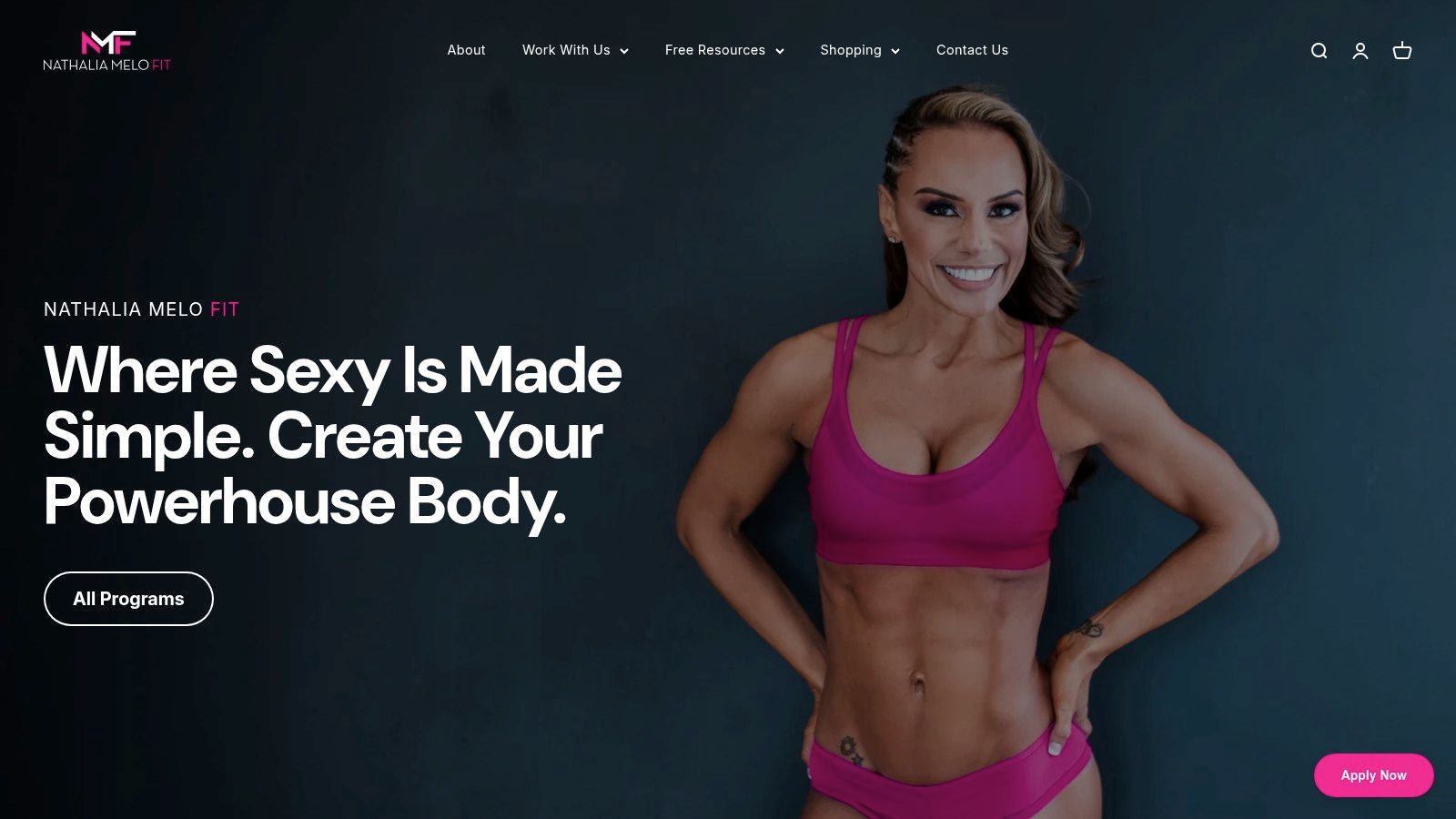
Nathalia Melo is one of the easiest names on this list to plug into an English-first campaign flow. That alone makes her valuable for US DTC brands that want access to Brazilian fitness influencers without building every asset from scratch for localization.
She's especially strong for women-focused wellness, coaching, routine products, mindset-adjacent fitness, and structured challenge campaigns. Her business setup already supports the kind of lead capture and program progression many brands want.
Built for cohort and program partnerships
With Nathalia, the campaign can extend beyond a social post. That's a key advantage. Her environment supports a fuller journey: content, lead magnet, challenge, nurture, and offer.
That opens the door to collaborations like:
- Challenge sponsorships: A product can become part of the routine, not just the ad.
- Lead-generation partnerships: Useful for brands that care about email capture and follow-up.
- Women-focused transformation campaigns: Better fit for lifestyle and accountability products than hardcore lifting gear.
She's a strong authority figure, but the audience expectation is important. Her tone is more transformation and sustainable routine than extreme performance. If your brand sells aggressive pre-workouts or strength-only equipment, others on the list may map more cleanly.
There's also a pricing logic to consider in performance campaigns. Premium coaching environments can make low-entry CPA offers harder unless there's an accessible first step, such as a starter product, challenge entry, or free value exchange.
One reason this matters is trust. A peer-reviewed study in Cadernos de Saúde Pública found that among prominent Brazilian Instagram exercise and health influencers, the majority of analyzed profiles shared information lacking scientific sources, even though 75.8% of account administrators had academic or professional qualifications. That doesn't describe every creator, but it does remind brands to review evidence standards carefully when health guidance is part of the content. Nathalia's brand is easier to assess because the offer structure is explicit on Nathalia Melo's website.
Top 7 Brazilian Fitness Influencers Comparison
| Creator | 🔄 Implementation Complexity | ⚡ Resource Requirements | ⭐📊 Expected Outcomes | 💡 Ideal Use Cases | Key Advantages |
|---|---|---|---|---|---|
| Carol Borba | Low, turnkey sponsored integrations in follow-along videos | Low, short no‑equipment shoots, minimal production | High conversion for gear and nutrition; measurable direct‑response | Performance CTAs, wearables, nutrition to US Portuguese audiences | Large YouTube reach; predictable, brandable formats |
| Gracyanne Barbosa | Medium, requires timing with media/PR cycles | High, professional productions, events, PR coordination | Strong top‑of‑funnel awareness and broad reach | Mass awareness, apparel/equipment launches, event sponsorships | Massive Instagram reach; media‑savvy celebrity presence |
| Juju Salimeni | Medium, stylized aesthetic content and event tie‑ins | Moderate‑High, visual production and beauty/fitness shoots | High visual engagement; product trials in premium segments | Luxe fitness, beauty, premium wellness positioning | Recognizable name/physique and strong visual storytelling |
| Bella Falconi | Low–Medium, Instagram activations with bilingual assets | Low, social‑first content; occasional media/press work | Good brand trust and broad lifestyle appeal | Nutrition, supplements, family‑friendly CPG for US market | Bilingual nutrition authority; lower brand‑safety risk |
| Felipe Franco | Medium, program and commerce integrations, launches | Moderate, coaching infrastructure and creative testing | Strong sales for men's performance categories; good CPA potential | Equipment, men's activewear, advanced nutrition programs | Male authority; high content volume for iterative A/B testing |
| Caio Bottura | Medium–High, long‑form educational funnels need adaptation | Moderate, course/platform bundling and long‑form assets | High trust and LTV via evergreen tutorials and product ladders | Educational integrations, long‑form trust building, direct‑response | Evidence‑based teaching; bilingual long‑form content and product ecosystem |
| Nathalia Melo | Medium, cohort challenges and programized funnels | Moderate, coaching platform, lead magnets, English‑first assets | High trackable conversions for women's wellness DTC | Cohort challenges, lead‑gen funnels, women 25–44 campaigns | Former Olympia champion; English‑first, program structures for conversion |
Your Playbook for Launching a Successful Campaign
A good shortlist does not produce a good campaign. Execution does. With Brazilian fitness creators, the work usually gets harder after the influencer agrees: approvals across teams, Portuguese and English copy checks, usage rights, shipping, payment timing, and post tracking all need clear ownership.
Start outreach with a concrete angle, not generic praise. Reference a format the creator already uses and propose a campaign structure that fits it. Carol Borba is a strong example for short workout hooks and challenge-style content, so a 21-day routine or product integration inside a repeatable series makes more sense than a one-off static post. Caio Bottura and Nathalia Melo are better suited to education-led campaigns, where the brief includes talking points, proof standards, and a longer attribution window because audiences often convert after watching, saving, or returning to the content later.
Keep the first message short and specific. A simple note works: “Subject: Collaboration Inquiry: [Your Brand] x [Influencer Name] | Hi [Name], we liked your recent HIIT series. We're [Your Brand], and our [product] fits your audience because [reason]. Would you be open to discussing a partnership?” That approach gets better reply rates than broad compliments and a long deck attached on the first email.
Campaign operations need a system
The bottleneck is managing everything after the yes.
Once terms are in motion, scattered tools create avoidable mistakes. The brief sits in a slide deck, content feedback lives in email, rates are buried in DMs, legal has a different version of usage rights, and finance is still waiting for tax details. That setup is manageable for one creator. It breaks quickly when you are coordinating multiple Brazilian fitness influencers across Instagram, YouTube, and short-form video.
As noted earlier, the market is shifting from pure creator discovery toward campaign management. That matches what brand teams deal with every week. Finding names like Gracyanne Barbosa or Juju Salimeni is easy. Keeping deadlines, approvals, whitelisting permissions, and payment milestones aligned is harder.
REACH helps teams run that workflow from one place. You can build the brief, send invites, organize communication, review deliverables, monitor content status, manage payments, and keep compliance records together. For brands that already know which creators they want, that matters more than another database.
Strong creator selection still fails when approvals live in email, payments sit in finance threads, and deliverables are tracked in a spreadsheet no one fully trusts.
Measure the right outcomes
Set the KPI before outreach, then choose creators and deliverables to match it. If the goal is broad visibility for a mass-market supplement or activewear launch, Gracyanne Barbosa and Juju Salimeni can justify premium pricing because they bring immediate reach and recognizable brand association. If the goal is lower-funnel performance, Bella Falconi, Caio Bottura, and Nathalia Melo usually give brands more trackable conversion paths through educational content, lead magnets, and challenge frameworks.
Use different scoring models for different creator types. Celebrity fitness talent should be evaluated on reach, branded search lift, content quality, and audience fit. Educator creators should be judged on clicks, code redemptions, email captures, trial starts, and conversion rate by asset. Felipe Franco often sits between those two models, especially for brands selling men's performance products, training programs, or equipment where authority and commercial intent both matter.
Campaign logistics should reflect those differences too. A Gracyanne campaign may need heavier legal review around image usage and stricter posting windows because timing affects impact. A Nathalia Melo campaign often needs better funnel setup, UTM discipline, landing-page alignment, and follow-up email tracking because the sale may happen after the content view. The right operating model depends on the creator.
Brazilian fitness influencers perform best when the partnership structure matches how they influence. Choose the creator based on the business goal, set terms before content production starts, and run the workflow in a system built for briefs, approvals, payments, and reporting. If you want a practical second opinion while planning, GrabGains exercises is also a useful reference point for understanding how fitness audiences engage with training content and formats.
If you're ready to run influencer campaigns without spreadsheets, scattered DMs, and approval chaos, try REACH. It gives brands and agencies one command center for briefs, deliverables, communication, payments, and compliance so your next campaign with Brazilian fitness influencers ships on time.