
Beyond follower counts, the scale of this category is what gets most brands moving. In 2025, the top 20 fitness influencers on Instagram collectively reached a huge audience, led by creators such as Chris Bumstead at 25.7 million followers and Kayla Itsines at 15.7 million, according to Lefty’s 2025 fitness influencer ranking. But reach alone doesn’t protect your budget. The wrong partner can still give you weak content fit, a confused audience, and a campaign team buried in approvals, reminders, and payment follow-up.
That’s why smart partnerships with instagram fitness influencers start with the business model behind the account. Some creators are challenge-driven. Some sell structured app memberships. Some are strongest when the brand wants educational authority, not just motivation. The partnership format should match that engine.
Execution matters just as much as selection. Miscommunication and payment issues derail a lot of influencer work, which is exactly why REACH deserves early attention here. It gives brands a practical system to manage what happens after discovery, from outreach and briefs to deliverables, payments, and compliance. For in-house teams and lean agencies, that’s often the difference between a campaign that looks good in planning and one that ships on time.
1. Cassey Ho (Blogilates / BODY by Blogilates)
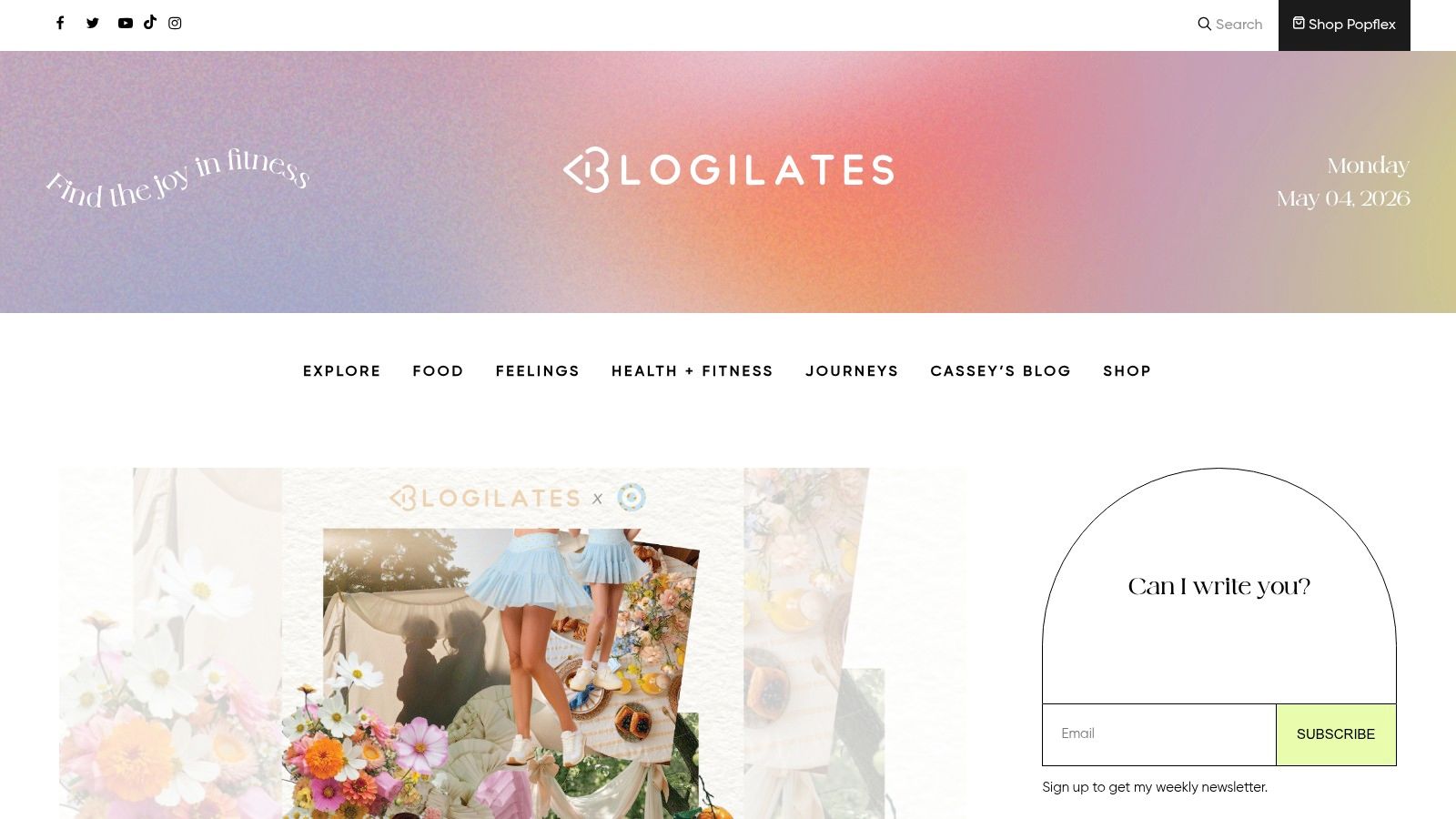
Cassey Ho works when a brand needs participation, not just impressions. Her Blogilates platform is built around accessible routines, recurring challenges, and product tie-ins that feel natural because her audience already expects a mix of workouts, motivation, and commerce.
That matters for brands selling lifestyle fitness products, especially where trial and routine adoption are the main goals. A one-off post can work, but her format is better suited to challenge-based campaigns that ask people to save, share, post progress, or follow a calendar.
Best partnership angle
BODY by Blogilates gives brands a cleaner campaign structure than a standard sponsored Reel. Monthly calendars, community participation, and an existing habit loop make it easier to brief a creator around a defined start and end point.
Good fits include:
- Athleisure launches: Apparel works well when it appears inside a repeatable challenge, not a single styled post.
- Wellness CPG: Hydration, snacks, and recovery products fit naturally into daily routines and check-ins.
- Retail activations: Her audience is used to product extensions, so co-branded drops can feel additive instead of forced.
Practical rule: If your product needs repeated exposure to make sense, Cassey is stronger than creators who mainly post isolated workout clips.
Her downside is niche fit. If you sell heavy lifting equipment, advanced bodybuilding supplements, or performance products aimed at experienced lifters, the audience match gets weaker fast. The content style is approachable and broad, which is great for adoption, but not ideal for highly technical strength positioning.
Operationally, challenge creators also require tighter management. You need milestone approvals, usage rights clarity, and a calendar for UGC prompts. Teams that want to learn the creator side of that workflow can study how fitness creators build influence over time, then use REACH to turn those patterns into an actual campaign process.
2. Whitney Simmons (Alive App)
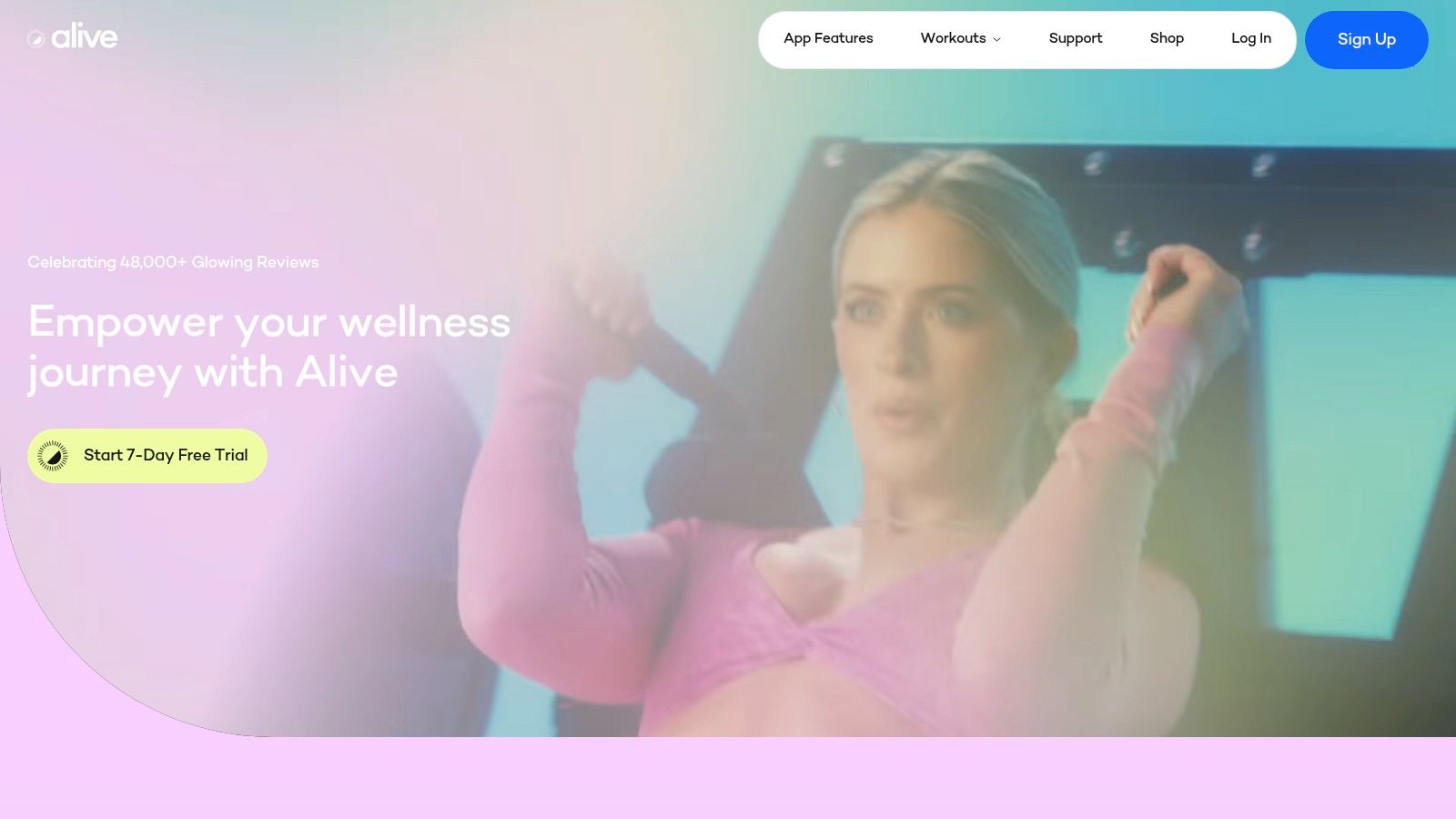
Whitney Simmons is one of the cleaner picks for gym-first consumer brands. Her Alive app centers on structured strength and hypertrophy programming, with gym and home options that make the audience broad enough for mainstream campaigns but still focused enough to convert.
Many brands make a mistake regarding instagram fitness influencers. They see a strong aesthetic brand and assume any wellness product will fit. With Whitney, the strongest partnerships are specific. Think training accessories, supplements, gym apparel, or habit-based tools that support consistency.
What works best in campaigns
Structured programming creates a real campaign advantage. You can build a partnership around a training block, onboarding moment, or progress milestone instead of posting generic motivation content.
That opens up practical executions such as:
- Trial-driven app crossover: Pair your product with a first-week training sequence.
- Gym bag integrations: Show the product in pre-workout, training, or recovery moments.
- Progress storytelling: Tie the brand to completion, routine, or adherence rather than transformation claims.
Her audience also sits close to where many fitness marketers want to be. Dash Social’s analysis highlighted Sascha Fitness at 5.7 million followers with a 2.8% engagement rate and a 0.62% follower growth rate from January to October, showing that fitness accounts with clear expertise and trust signals can sustain strong performance in this category, as discussed in Dash Social’s fitness Instagram KPI analysis.
Whitney’s trade-off is that the content architecture is strength-led. If you’re a pilates, yoga, or mindful movement brand, you can still force a collaboration, but it won’t feel native. Also, campaigns with workout creators often run into contract friction around usage, exclusivity, and bonuses tied to deliverables, so teams should get ahead of how influencer payments usually work before they start negotiating.
The better the training structure, the more your brief needs structure too.
3. Massy Arias (MA Warrior challenges)
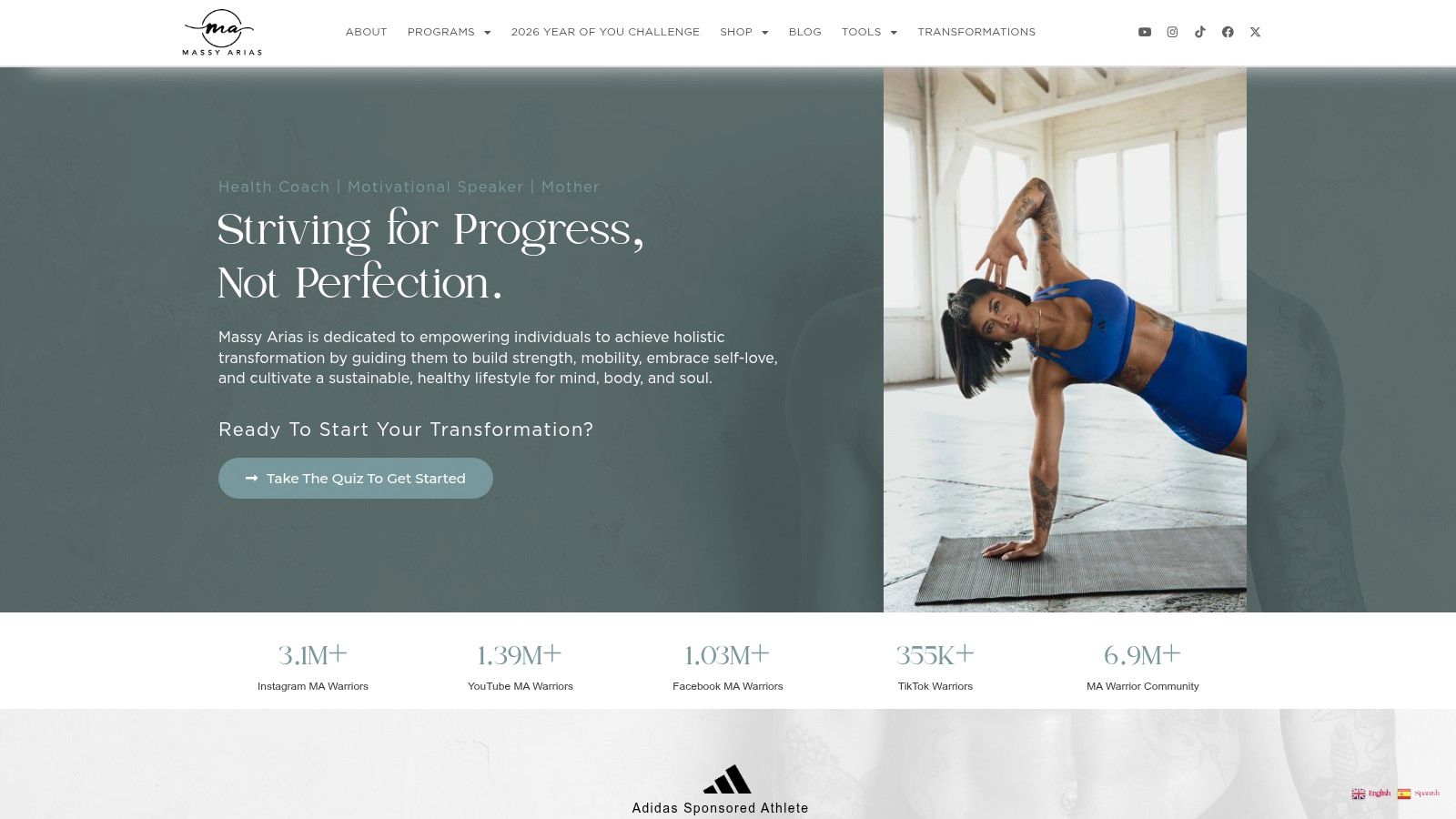
Massy Arias is a strong option when the brand wants fitness content with a wider wellness frame. Her Massy Arias platform blends training, nutrition, and accountability, which makes her useful for products that sit between performance and lifestyle.
A key asset is her challenge format. Programs with a defined time window give marketers a built-in campaign container. You’re not inventing momentum from scratch. You’re plugging a product into an audience experience that already expects commitment, tracking, and shared progress.
Where she stands out
MA Warrior-style programs work especially well for brands that need more than a visual mention. If the product benefits from education, repeated use, or recipe integration, her format gives you room to build a real story.
Useful campaign directions include:
- Nutrition partnerships: Recipe integration and dual food preferences broaden messaging options.
- Accountability-led activations: Community check-ins can support retention campaigns.
- At-home wellness bundles: Training plus meal support is easier to package here than with a pure gym creator.
Massy is also a good reminder that fitness influence isn’t just about aesthetics. The strongest creators shape behavior through trust and community. Teams interested in that broader market shift can dig into how fitness influencers are shaping the health industry and use those lessons when writing briefs.
Her main limitation is intensity. Time-bound programs can be motivating, but they can also narrow the audience. Casual users may love her content and still hesitate to join a campaign if it feels too demanding. For lower-commitment products, that can create friction.
A challenge creator gives you urgency. Urgency helps campaigns, but only if the product feels easy to adopt inside that window.
4. Jeff Nippard
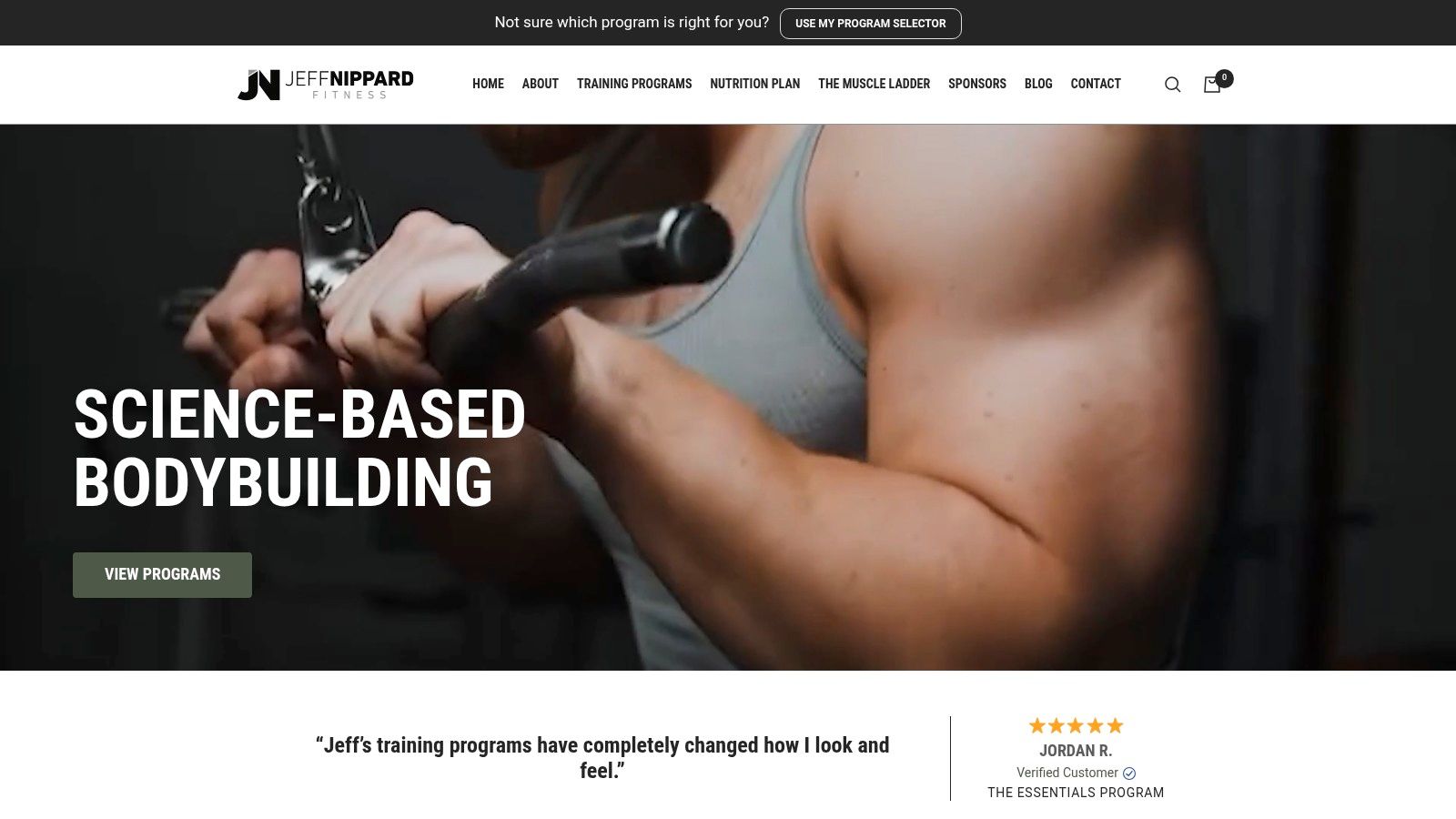
Jeff Nippard is the pick for brands that need technical trust. His training platform and programs lean heavily into evidence-based strength and hypertrophy, which changes the entire partnership dynamic. You’re not buying broad inspiration. You’re buying credibility with an audience that wants reasons, not just routines.
That’s a major advantage for supplements, equipment, performance nutrition, and education-heavy products. If your offer improves training quality, recovery behavior, or exercise execution, Jeff’s style can support a more persuasive campaign than a general lifestyle creator can.
The strategic fit
He’s especially strong when your brief needs specificity. Programs with clear outcomes give marketers stronger hooks for content concepts, landing pages, and paid amplification.
Good use cases:
- Performance nutrition: Explain why the product fits a training phase.
- Equipment launches: Demonstrate utility, not just aesthetics.
- Educational funnels: Drive traffic to a guide, assessment, or product explainer before the sale.
The trade-off is reach style. Jeff’s audience is motivated by substance, so casual lifestyle messaging can fall flat. If your brand needs glossy aspirational content, he’s probably not the right face. If your product needs a thoughtful explanation, he’s hard to beat.
This also connects to authenticity screening. Brands are right to be more cautious. Aspire’s 2025 benchmark reporting noted that fake followers affect 25% of fitness niches, while a Later analysis of Q1 2026 data found undisclosed AI filters on many top fitness accounts. That’s one reason verified authenticity matters more than surface engagement when selecting instagram fitness influencers.
A creator like Jeff works best when the team can track not only post delivery, but also link assets, approval rounds, content claims, and usage permissions. REACH is useful here because educational campaigns usually have more moving parts than aesthetic ones.
5. Alexia Clark (Queen Team)
Alexia Clark is built for consistency campaigns. Her Alexia Clark platform revolves around frequent programming, home and gym flexibility, and a branded community identity that gives marketers something many creators don’t. Repeat engagement without having to manufacture a new concept every week.
That makes her especially useful for brands that need multiple touches across a campaign cycle. If your product sells through habit, not impulse, she’s one of the better fits on this list.
Best use case for brands
The #QueenTeam framework gives campaigns social proof without feeling overproduced. Members already expect regular training, shared effort, and community participation.
That supports:
- Subscription products: Daily or weekly integrations align with ongoing routines.
- Home fitness gear: Common-equipment workouts lower the barrier to entry.
- Nutrition support: Recurring programming makes sustained usage easier to communicate.
Her challenge is positioning. The mixed-modality, circuit-heavy style doesn’t naturally support powerlifting, hardcore bodybuilding, or technical strength brands. The audience is there for variety and momentum. A very niche product can feel like a mismatch.
For campaign managers, Alexia is a good reminder that volume creates admin. More content cadence means more approvals, more asset tracking, and more payment checkpoints. If that workflow isn’t centralized, small mistakes stack up quickly.
6. Melissa Wood Health (Melissa Wood Tepperberg)
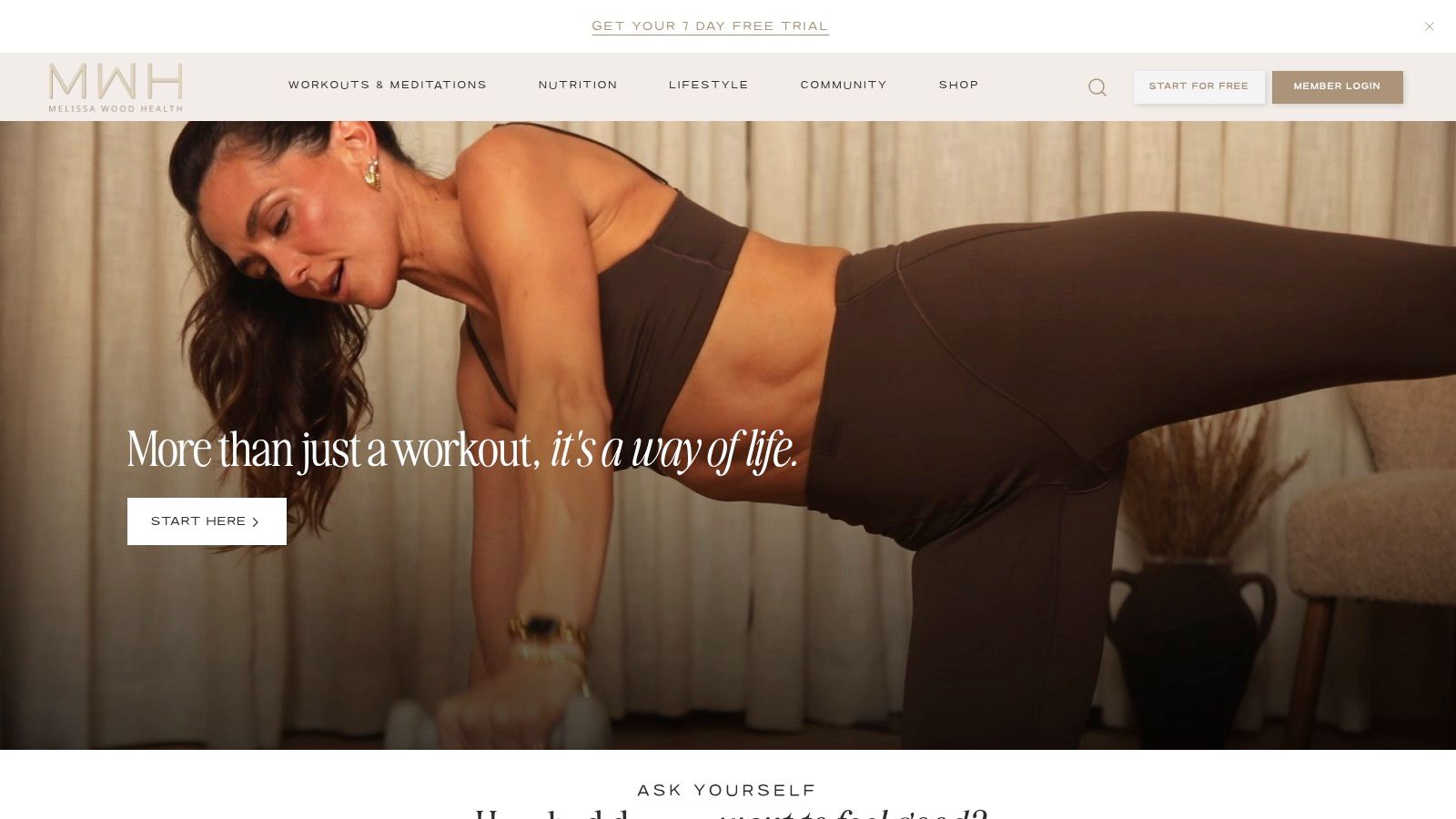
Melissa Wood Health sits closer to wellness media than traditional gym influence. Her Melissa Wood Health membership platform is low-impact, visually cohesive, and grounded in consistency, mindful movement, and lifestyle alignment.
That makes her valuable for brands that want to live adjacent to fitness, not directly inside sports performance. Clean beauty, wellness CPG, premium basics, recovery products, and lifestyle-led health brands usually fit better here than hardcore training products.
Why the brand alignment matters
Many marketers overvalue broad fitness interest and undervalue content environment. Melissa’s environment is calm, polished, and routine-based. Products that interrupt that tone will feel out of place.
Best-fit activations usually involve:
- Morning or evening rituals: Build around routine, not intensity.
- Low-friction product demos: Keep the integration visually smooth.
- Life-stage relevance: Pregnancy and postpartum options open specific messaging lanes.
If the product needs aggression, urgency, or high-performance language, this isn’t the creator. If it needs trust, calm, and repetition, it might be.
The trade-off is obvious. Brands chasing high-intensity training audiences won’t get the right context here. But for lifestyle-oriented partnerships, that narrower lane is a strength. Strong creator selection is often less about who has the biggest following and more about who makes your product feel native.
7. Katie Austin

Katie Austin is one of the better choices for brands that need accessibility and speed. Her Katie Austin app and platform focus on short plans, at-home training, recipes, and practical programming for busy users.
That sounds simple, but it solves a real campaign problem. A lot of instagram fitness influencers are strong at inspiration and weak at onboarding. Katie’s structure is easier for mainstream audiences to say yes to, especially when the campaign asks for quick participation rather than a major lifestyle shift.
Best for short campaign sprints
Her format is effective for seasonal promotions, limited-time offers, and audience segments with clear time pressure. Bridal, postpartum, and busy-professional angles all lend themselves to concise campaign packaging.
Strong fits include:
- Short-term product launches: Tie the product to a plan with a clear finish line.
- Healthy routine bundles: Recipes and movement create cross-category opportunities.
- Connected TV or home-use products: Multi-device access strengthens the convenience story.
This broader accessibility also aligns with where the category is moving. HypeAuditor’s 2026 category view identified massive reach at the top end with accounts such as The Rock and Nike, while broader fitness coverage has also highlighted home workouts as the most searched fitness category worldwide, reinforcing why easy-entry formats keep winning in creator partnerships.
The limitation is depth for advanced athletes. If your product is highly technical or designed for serious lifters, her lifestyle-forward tone may need tighter scripting. But for brands selling convenience, positivity, and routine support, that’s exactly the point.
Top 7 Instagram Fitness Influencers Comparison
| Creator | Implementation complexity 🔄 | Resource requirements ⚡ | Expected outcomes 📊 | Ideal use cases 💡 | Key advantages ⭐ |
|---|---|---|---|---|---|
| Cassey Ho (Blogilates / BODY by Blogilates) | Moderate, coordinate app calendars, challenges, and product tie‑ins | Medium, creative assets, sample product inventory, campaign moderation | High engagement and UGC; good conversion potential for apparel/CPG | Gen Z/millennial female apparel, challenge-driven campaigns | Large engaged community; proven retail/CPG partnerships |
| Whitney Simmons (Alive App) | Moderate, align brand with phased app programs and tracking features | Medium, sponsorship, creative content, trial/promo coordination | Measurable strength gains and retention for gym-focused users | Athleisure, supplements, gym accessories targeting lifters | Credible strength programming and clear progress tracking |
| Massy Arias (MA Warrior challenges) | Moderate, launch time‑bound challenge with nutrition tracks | Medium, program packaging, recipes, community management | Strong short‑term engagement and accountability; program sign‑ups | Holistic wellness campaigns, timed challenge activations | Inclusive programming + nutrition options; strong accountability loop |
| Jeff Nippard | Low–Moderate, deliverable digital programs and educational content | Low, digital product placement, tracked downloads or links | High trust among evidence‑based audience; strong performance lift | Performance nutrition, equipment, scientifically oriented brands | Science‑backed credibility and clear, trackable outcomes |
| Alexia Clark (Queen Team) | Moderate, integrate high‑cadence content and community branding | Medium, frequent creative refreshes, community moderation | Sustained engagement and steady UGC from daily releases | Brands seeking ongoing content & variety-driven activations | High content cadence and distinctive “never‑repeat” hook |
| Melissa Wood Health (Melissa Wood Tepperberg) | Low, align with on‑demand classes and mindfulness positioning | Low, aesthetic creative alignment, trial offers, lifestyle assets | Consistent brand affinity with wellness/beauty audiences | Clean beauty, wellness CPG, pregnancy/postpartum campaigns | Mindful low‑impact programming and strong visual branding |
| Katie Austin | Low, short, structured plans and short-form programming | Low, short video assets, streaming integration, trial promos | Quick onboarding and measurable short‑term plan adherence | Busy professionals, bridal/postpartum sprints, TV streaming promos | Time‑efficient workouts and relatable coaching; multi‑device streaming |
Execute Your Fitness Influencer Strategy with REACH
Choosing among instagram fitness influencers is the easy part compared with running the campaign well. Once the deal is signed, brands still need briefs, approvals, posting timelines, content checks, follow-ups, invoices, tax documentation, and payment coordination. That’s where a lot of otherwise smart partnerships break down.
The management gap is real. One 2025 industry finding reported that 62% of brands experienced campaign delays due to miscommunication or undelivered content, while 41% pointed to payment disputes as a major issue. Another 2025 study found that 28% of fitness influencer partnerships underperformed because expectations weren’t aligned. Those numbers explain why more teams are looking for integrated systems instead of stitching together spreadsheets, inboxes, and DMs.
REACH is built for that exact moment. It doesn’t try to replace discovery-first social platforms. It handles what happens after you’ve picked the right creator. You can use its AI-powered campaign builder to turn ideas like a Blogilates challenge, an Alive training block, or a Jeff Nippard education series into a clear working brief. From there, your team can organize communication, track deliverables across Instagram, TikTok, and YouTube, manage payments, and stay on top of compliance from one dashboard.
That matters even more as vetting gets harder. Brands are dealing with fake engagement, disclosure issues, and AI-generated content concerns. Some reports have noted that post-2025 FTC changes pushed more brands toward third-party audits and closer authenticity checks. A platform like REACH gives teams a more disciplined way to monitor creator performance and keep records tied to actual deliverables.
The practical takeaway is simple. Pick creators based on business model fit, not just follower count. Match your product to the creator’s native sales engine, whether that’s challenges, app subscriptions, educational products, or lifestyle routines. Then manage the campaign like an operation, not a one-off social post.
If you also sell directly through social channels, PostSyncer’s Instagram selling strategy is a useful companion read because it helps connect creator content with downstream purchase behavior.
If you’re ready to run creator campaigns without chasing approvals, invoices, and missed deliverables across five tools, REACH gives you a practical command center for influencer execution. Build briefs faster, keep communication organized, track content in one place, and handle payments and compliance without the usual chaos.