

A handshake deal feels easy and friendly, right up until a payment goes missing or a brand suddenly claims ownership of your viral video. This is where a solid content creator contract template becomes your most important tool. It’s not about being difficult; it's your first line of defense, securing your creative work and your wallet in every single brand collaboration.
Why a Solid Contract Is Your Best Business Tool

Running your creator business without a formal agreement is one of the biggest gambles you can take. Trust and a great relationship with a brand manager are fantastic, but they are no substitute for legally binding terms that protect everyone involved.
Think of a contract less as a sign of mistrust and more as a sign of professionalism. It’s about creating crystal-clear expectations before anyone hits "record."
Real-World Risks of No Contract
Here’s a quick look at what can go wrong for both parties when a formal agreement is missing.
| Risk Area | What the Creator Could Lose | What the Brand Could Lose |
|---|---|---|
| Payment | Late or missed payments with no legal recourse. | No clear terms for refunds if content is never delivered. |
| Content Usage | Brands reusing content forever, in any way, without extra pay. | Inability to use successful content in future ads or campaigns. |
| Deliverables | Endless revision requests and scope creep. | Receiving content that doesn't meet quality or brief standards. |
| Exclusivity | Accidentally violating a vague non-compete clause. | The creator promotes a direct competitor right after the campaign. |
| Ownership | Losing the rights to your own creative work entirely. | The creator could demand the content be taken down at any time. |
Skipping the contract stage exposes both sides to unnecessary headaches and financial loss. A simple agreement up front prevents these messy disputes down the line.
Setting the Stage for Success
I've seen it happen more times than I can count: a creator makes a series of videos for a brand, and one just explodes, hitting millions of views. Without a contract defining usage rights, the brand starts running that viral video as a paid ad across every platform imaginable. They argue they paid for the video, so they own it. The creator? They get nothing extra for the massive, unexpected value they delivered.
A well-drafted contract stops these exact scenarios cold. It turns casual DMs and email chains into concrete, actionable terms. This document becomes the roadmap for the entire project, locking in every critical detail before work even begins.
A professional contract clearly defines:
- The Deliverables: Exactly what you're creating—the format, length, and which platforms it's for.
- The Money: How much you'll be paid, the schedule for payments (e.g., 50% up front), and penalties for late payments.
- The Rights: Who owns the content and exactly how the brand is allowed to use it (and for how long).
- The Deadlines: Key dates for drafts, feedback, and final delivery to keep the project moving smoothly.
By putting everything in writing, you kill ambiguity. It means that if a brand wants to use your content for something bigger than what you agreed on—like a national TV ad—they have to come back to the negotiating table.
This push for formal agreements is a natural part of our industry's growth. The influencer marketing space is on track to hit around $33 billion by 2025, and with that kind of money flowing, the stakes are higher than ever. As the industry matures, as detailed by sources like inbeat.co, having a go-to content creator contract isn't just a good idea; it's an essential part of doing business.
Getting to Grips With Your Content Creator Contract

A good template is a fantastic starting point, but the real power comes from knowing what every line actually means. Think of each clause as a guardrail for your collaboration, keeping things on track and protecting you from going over a cliff.
Let’s pull apart the most critical sections you’ll find in any solid content creator contract. Once you understand these inside and out, you can turn a generic document into an agreement that truly has your back in any negotiation.
Scope of Work and Deliverables
This is it—the heart of the contract. This section is where you spell out exactly what you’re going to create, leaving absolutely no room for interpretation. If you just agree to "one TikTok video," you're opening the door to scope creep, endless revisions, and a whole lot of headaches.
A rock-solid Scope of Work should detail:
- Platform and Format: Be hyper-specific. Not just "a video," but "one 60-second Instagram Reel featuring the product in the first 10 seconds."
- Content Requirements: Nail down the details. Should it include specific tags, @mentions, a swipe-up link, or a particular call-to-action? Put it in writing.
- Revision Rounds: This is a big one. Clearly state how many rounds of feedback are included in your fee. One or two rounds is a common and fair standard.
When a client comes back with a third round of "small tweaks," this clause is your best friend. It gives you the confidence to explain that the request falls outside the original scope and will require an additional fee.
Payment Terms and Schedule
Let's talk about money. Getting paid on time and in full is non-negotiable, and this section makes sure that happens. It lays out the entire financial side of the deal so there's zero confusion. Never, ever accept vague promises like "we'll pay you when the campaign is done."
Your payment clause must specify:
- Total Compensation: The total fee for the project, crystal clear.
- Payment Schedule: An upfront deposit of 30-50% before you even start working is standard industry practice. The rest is typically due upon final delivery or on the day the content goes live.
- Late Fees: Don't be afraid to include a penalty for late payments. A 1.5% interest charge per month on overdue invoices is perfectly reasonable and motivates clients to pay promptly.
This structure gives you the cash flow you need to get the project started and provides a legal foothold to chase down payments if a client starts dragging their feet.
Content Ownership and Usage Rights
This is the clause where so many creators get tripped up, and it can cost you dearly. Who owns the content once you've created it? And more importantly, how can the brand use it? This section protects your intellectual property from being used in ways you never agreed to.
Generally, you'll see one of two models:
- Work-for-Hire: In this scenario, the brand owns the content outright. They can use it wherever they want, forever. Because you're signing away all rights, this should always come with a much, much higher price tag.
- Licensing: You keep ownership of your work but grant the brand the right to use it under specific conditions. For example, you might license it for one year for use only on their organic social media channels.
For creators, licensing is almost always the better move. It gives you control over your image and your work. If a brand later decides they want to use your content in a massive paid ad campaign, a licensing agreement means they have to come back to the table to negotiate—and pay for—those expanded usage rights.
Termination Clause
What happens if things just aren't working out? Whether the client is impossible to work with or the project goals have changed, a termination clause provides a clear and professional exit strategy for both sides.
It defines the valid reasons for ending the contract early and outlines what happens financially if that occurs. For a detailed look into what a comprehensive agreement entails, you can explore more about the essential elements in our guide: https://reach-influencers.com/influencer-agreement-contract/
And remember, to fully get your head around any content creator contract, it helps to be familiar with the broader concepts of legal agreements, like the common general Terms and Conditions you see everywhere online.
Making the Contract Template Your Own
A blank contract template is a fantastic starting point, but it's not the finish line. The real magic happens when you tailor it to fit the specific project you're about to tackle. This is where you transform a generic document into a rock-solid agreement that protects you and sets crystal-clear expectations.
Think of it this way: you’re translating vague legal language into concrete project milestones. Instead of leaving things open to interpretation, you’ll pin down every detail, ensuring there’s absolutely no room for misunderstanding later on. The goal is a contract so clear that you and the client are perfectly in sync from day one.
Nail Down Your Deliverables
Hands down, the number one cause of friction in brand collaborations is a fuzzy Scope of Work. An agreement for "three Instagram Reels" is asking for trouble—it's a wide-open door for scope creep and never-ending edits. You have to get specific.
For a contract that leaves no wiggle room, spell out the following for every single piece of content:
- Quantity and Format: "Three (3) Instagram Reels."
- Technical Specs: "Each video will be 60-90 seconds long, filmed vertically in a 9:16 aspect ratio."
- Content Must-Haves: "Must feature the brand’s official audio, tag the @BrandAccount, and include the hashtag #BrandCampaign."
- Key Dates: "The first draft is due by 5 PM EST on June 15th, with the final approved version due by 5 PM EST on June 25th."
This level of detail makes it obvious what "done" actually means. It also lays the perfect groundwork for a solid creative brief. In my experience, a great contract and a detailed brief are two sides of the same coin. For more on that, you can check out our influencer brief template.
Set Clear Rules for Revisions
Revision requests can spiral out of control if you don't set boundaries from the start. A client's innocent-sounding "one more tiny change" can easily snowball into a complete reshoot, eating up time and resources you never planned for.
The best way I've found to manage this is to contractually limit the number of revision rounds included in the initial price. One or two rounds is standard and completely fair. Your template should clearly state that any further changes will incur an extra charge, either at an hourly rate or a set fee per round.
This infographic breaks down the core steps for adapting a template for any project.
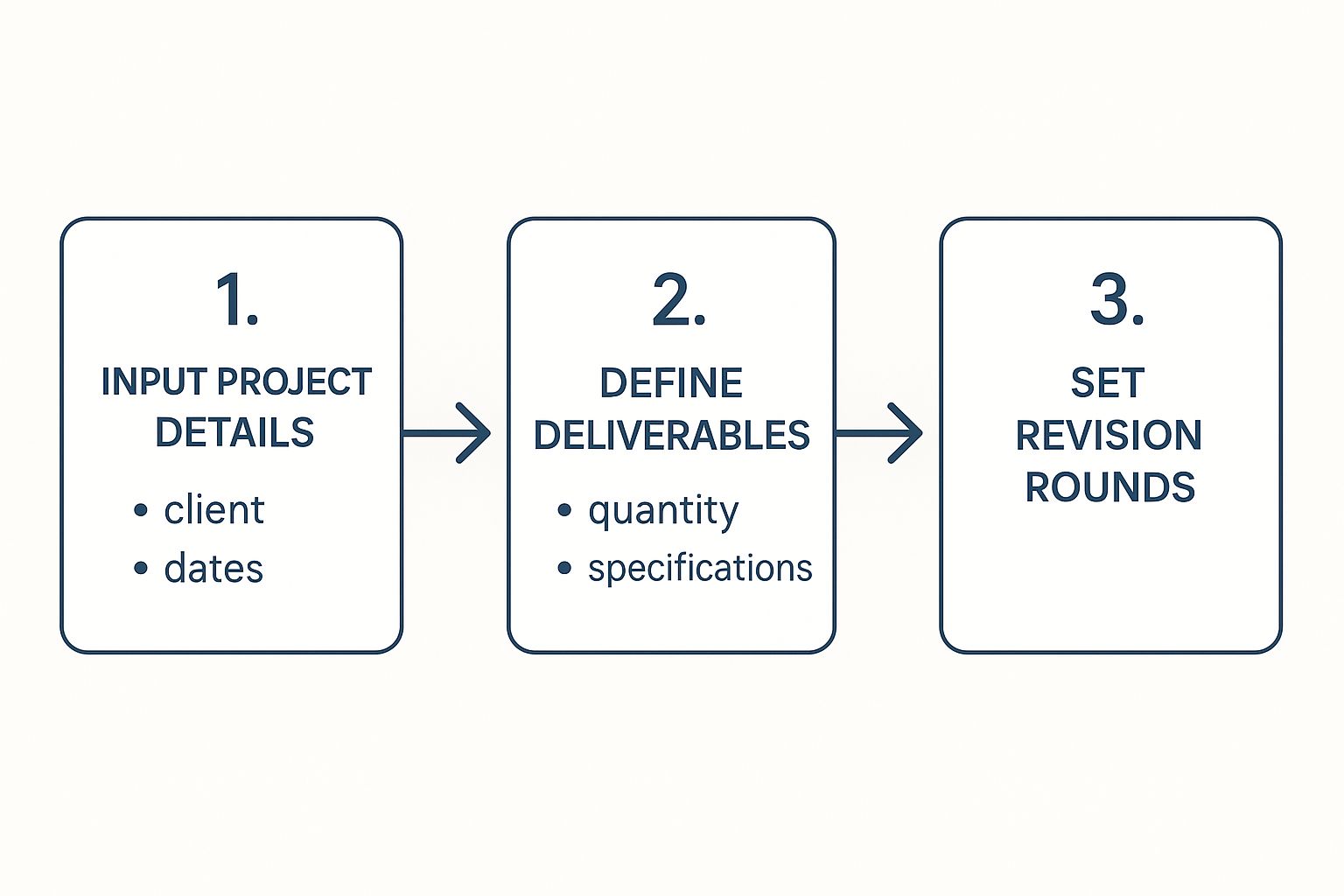
It’s a simple process: fill in the basics, define the exact work, and set feedback limits. Following these steps is the secret to a smooth, professional partnership.
This one clause does so much. It protects your time, establishes a professional boundary, and even encourages clients to be more efficient by grouping their feedback together. If you're dealing with really complex projects, there are even specialized tools that can help, like platforms offering AI for Freelancer Contracts.
Plug in the Project-Specific Details
Beyond deliverables and revisions, there are a few other key fields in the template you must fill out for every single job. These are the non-negotiables that make the contract legally binding and specific to your collaboration.
Before sending it over, always double-check these details:
- The Parties: Make sure the full legal names and addresses for both you (or your business) and the client are correct.
- The Effective Date: This is the official start date of the agreement.
- Total Compensation: State the total project fee in plain numbers. No ambiguity here.
- Payment Schedule: Clearly define the deposit (e.g., 50% upfront) and when the final payment is due.
Working through these sections methodically turns a generic template into a personalized, airtight agreement. It’s this attention to detail that truly protects your work and signals to clients that you’re a pro.
Negotiating Terms and Spotting Red Flags

This is where the real work begins. Negotiation is how you transform a generic content creator contract template into a solid agreement that actually benefits your business. It might sound daunting, but it's really just a professional conversation to make sure the deal is fair for everyone involved.
The key is to walk into that conversation prepared. Knowing what you're worth, what you're willing to give, and what's a deal-breaker will completely change the dynamic. Your job is to advocate for your value and protect your creative work.
Common Red Flags to Watch For
Some contract terms seem harmless at first glance but can cause major headaches down the road. You need to keep a sharp eye out for these potential issues. Finding one doesn't mean you have to run for the hills, but it's a definite signal that it's time to speak up.
- Vague Deliverables: Be on high alert for phrases like "one promotional video" or "social media support." This kind of ambiguity is a recipe for scope creep and endless, unpaid revision requests.
- "In Perpetuity" Usage Rights: This is a big one. This little phrase means the brand can use your content—your face, your voice, your work—forever. Anywhere. Without ever paying you another dime.
- Net-60 or Net-90 Payment Terms: Asking you to wait 60 or even 90 days to get paid after you've delivered the work is a huge ask for any small business or solo creator. This can wreck your cash flow.
- Overly Broad Exclusivity Clauses: Watch out for clauses that try to stop you from working with "any competitors" or even an entire industry (like "all skincare brands") for a long time. This can seriously hamstring your ability to earn a living.
A brand sending you a contract is just the start of the conversation, not the end. Every clause is negotiable, and it's your right to propose changes that protect your interests.
Practical Negotiation Scripts You Can Use
Knowing what to push back on is one thing; knowing how to say it is another. You don’t need to be confrontational, just clear, confident, and professional. Having a few go-to responses ready can make a world of difference. For a much deeper look, our guide on how to negotiate with influencers is packed with more strategies.
Here are a few real-world examples you can tweak and use:
When they ask for perpetual rights:
- Their Clause: "Brand receives all rights to the content in perpetuity."
- Your Counter: "For the proposed fee, I offer a two-year license for use on your organic social channels. We can always discuss renewal options if the content continues to perform well for you."
When they offer Net-60 payment terms:
- Their Clause: "Payment will be issued within 60 days of invoice receipt."
- Your Counter: "As a small business, my standard terms are 50% upfront and the remaining 50% due on the day the final content goes live. This helps me manage my production costs and commit fully to our project."
When the exclusivity clause is too broad:
- Their Clause: "Creator agrees not to work with any competing brands for one year."
- Your Counter: "I can agree to exclusivity with direct competitors in the [specific product] category for 30 days following our campaign launch. An exclusivity fee would apply for any longer or broader restrictions."
Negotiating is a skill, and it gets easier every time you do it. By spotting these red flags and responding with clear, professional language, you can turn a lopsided contract into a partnership that feels fair and respectful from day one.
When Your Template Isn't Enough
A solid contract template is an absolute workhorse for most brand collaborations. It’s perfect for the straightforward, day-to-day partnerships that are the bread and butter of your business.
But even the best template has its limits. Think of it like a fantastic pre-made meal kit—it's great for most weeknight dinners, but you wouldn't use it to cater a five-course wedding. Knowing when a deal has outgrown your template is a crucial skill for any serious creator.
Red Flags: When to Call a Lawyer
Some collaborations come with a level of complexity or risk that a standard agreement simply can't cover. Trying to manage these situations with a template is like walking a tightrope without a net—you’re exposing yourself to serious financial and legal trouble.
If any of these pop up in a deal, it's time to get a legal professional on the phone.
- Big-Money Deals: When a project's value starts climbing into five or six figures (a good rule of thumb is anything over $25,000), the stakes are too high. The potential for loss is far too great to rely on a generic document.
- Complex Intellectual Property (IP): Is the brand asking to own your content forever? Are they talking about creating a joint IP venture or using your work in ways that go far beyond typical social media posts? This is specialized territory.
- Long-Term Exclusivity: A brand asking for exclusivity for more than a few months can seriously hamstring your earning potential. A lawyer can help you negotiate fair compensation and reasonable terms for locking you down.
- Equity or Company Shares: If a brand offers you a stake in their company as part of your payment, you've officially left template-land. This kind of deal requires a deep legal and financial review.
The Cost of Protection vs. The Price of a Mistake
I get it—hiring a lawyer sounds expensive. But you have to think of it as a strategic business investment, not just a cost.
On average, having a lawyer draft a custom agreement runs about $640, while a professional review of a brand's contract is often closer to $350. You can see a more detailed breakdown of content creator agreement costs over at Contractscounsel.com.
While that’s an upfront expense, it’s nothing compared to the thousands you could lose from a high-value deal gone wrong.
Think of legal fees as business insurance. You're paying a relatively small, fixed amount to protect yourself from a potentially devastating financial or legal disaster down the road.
A good template will have your back for 95% of your deals. But for that critical 5%—the ones with big money, tricky IP rights, or long-term commitments—getting professional legal help isn't an over-the-top luxury. It's an absolute necessity to protect your brand and your future.
Common Contract Questions (and How to Handle Them)
Diving into brand collaborations means you'll eventually run into some tricky situations. Let's walk through a few of the most common contract questions I see creators wrestling with, so you can handle them like a seasoned pro.
What if a Brand Sends Me Their Own Contract?
It happens all the time, especially with bigger, more established companies. They’ll have their own standard agreement ready to go. When you get one, don't just sign it on the spot.
Think of your own content creator contract template as your personal playbook. Use it as a checklist to see how their terms stack up against what you know is fair and standard for your work.
Keep a sharp eye out for a few specific clauses:
- Usage Rights: Does their contract mention rights "in perpetuity"? That’s a huge red flag. You should always push back and negotiate a specific timeframe, like one or two years.
- Payment Terms: Watch out for long payment cycles like Net-60 or Net-90. It’s completely reasonable to counter with your standard terms, like 50% upfront and the remaining 50% upon completion.
- Exclusivity: Make sure any exclusivity clause is very specific. It shouldn't be so broad that it stops you from working with other brands in totally different categories.
When you propose changes, just be professional. A simple email saying, "Thanks for sending this over! I've reviewed it and have a few suggested changes to better align it with my standard terms. I've outlined them below for your review," works perfectly.
How Do I Handle Late Payments?
Chasing money is the worst. It's awkward, stressful, and a total waste of your creative energy. The best defense is a good offense: include a late fee clause right in your contract from the very beginning. A standard fee is 1.5% interest per month on the overdue balance.
This little clause gives you all the backup you need. When a payment deadline sails by, your first step is a friendly email reminder. If that gets you nowhere, your next follow-up can politely reference the late fee clause in your signed agreement. That usually gets a brand to spring into action.
A late fee clause isn't aggressive. It’s a professional tool that shows you take your business seriously. It sets clear expectations and consequences, plain and simple.
Can I Reuse Content I Created for a Brand?
This is a big one, and the answer is always, always in the contract. It all comes down to the Ownership and Usage Rights section. What the contract says is the final word.
If you signed a "work-for-hire" agreement, the brand owns everything. You can't reuse that content anywhere without getting their written permission first. On the other hand, if you licensed the content to them, you still own it. This usually means you can add it to your portfolio, but double-check the fine print for any specific restrictions.
My advice? Make sure your contract always states that you retain the right to use the work for your own self-promotional purposes.
Take control of your collaborations and protect your creative work with a solid foundation. REACH offers tools to streamline your partnerships, from discovery to payment. Learn more about how REACH can help you.