 Skip to content

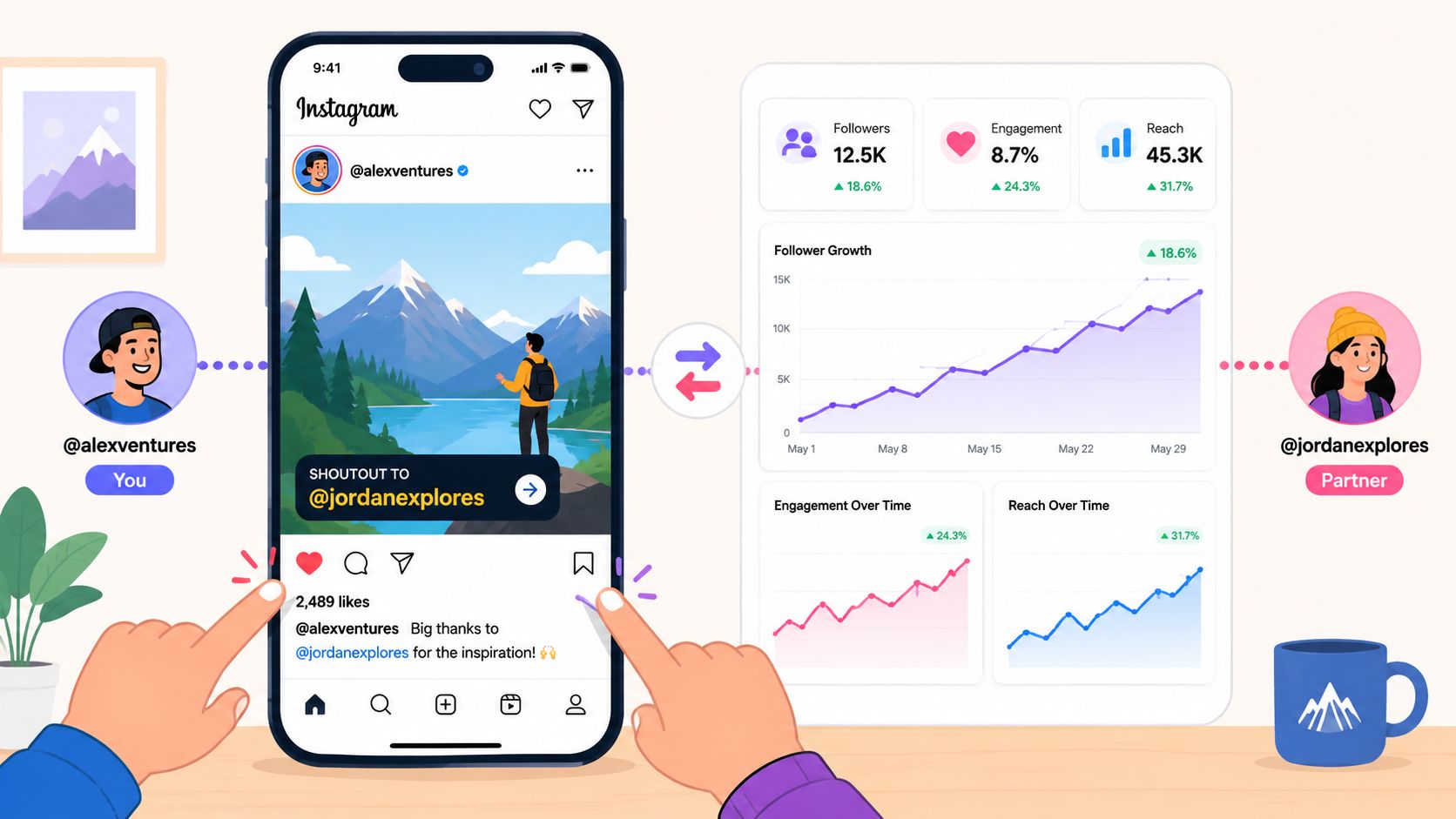
You paid for shoutouts for Instagram. The post went live. Likes jumped for a day, a few followers came in, and then everything went quiet. No clean attribution. No clear sales picture. No answer when someone asks whether the spend worked.
That's the point where teams often realize they weren't running a channel. They were buying exposure and hoping it turned into something useful.
The fix is operational, not creative. Treat shoutouts for Instagram like a measurable acquisition tactic with partner screening, tracking links, placement rules, and post-campaign review. If you need a baseline on how that mindset differs from vanity-first social activity, REACH has a useful explanation of performance marketing.
Moving Beyond Views with Performance-Based Shoutouts
A paid shoutout goes live at 10 a.m. By noon, the team is posting screenshots of Story views and comment spikes in Slack. By Friday, finance asks what the placement produced. If no one set up tracking before the post ran, there is no serious answer.
That is the line between social activity and channel management. Instagram shoutouts only become worth repeating when each placement is tied to a measurable action, a cost, and an outcome. The operating model is the same logic used in performance marketing programs. Attention matters, but attribution decides whether the spend holds up.
What a shoutout actually is
A shoutout is an Instagram placement where one account promotes another account, product, offer, or destination page to its audience. The format can be simple, but the intent should be explicit before money changes hands.
I group shoutouts into three working models:
| Shoutout model | Primary goal | What you measure | Risk if misused |
|---|---|---|---|
| Paid shoutout | Traffic, leads, sales, awareness | Clicks, reach, engagement, conversions | Overspending on weak audience quality |
| S4S arrangement | Audience sharing between peers | Follows, profile visits, saves, replies | Poor fit if both audiences aren't aligned |
| Free relationship-based shoutout | Social proof and warm exposure | Referral traffic, mentions, inbound DMs | Inconsistent delivery and no formal tracking |
Industry explainers from creator marketing platforms commonly break shoutouts into paid placements, reciprocal S4S posts, and relationship-based mentions. That distinction matters because each model needs a different success metric. A paid Story with a link sticker should be judged on downstream actions. A peer-to-peer S4S placement may be worth running for audience overlap and profile growth, but it still needs a clear objective.
Why views are a weak success metric
Views answer one narrow question. Did people have a chance to see the post?
They do not answer the questions a paid channel has to answer. Did the right people click. Did they stay. Did they buy, book, subscribe, or message with purchase intent.
That gap is where shoutout campaigns usually break. Teams buy a niche page with visible engagement, approve creative, and call the test a win because the post looked active. Then they check Shopify, GA4, HubSpot, or a booking form and find little to connect back to the spend.
Use a layered measurement model instead:
- Attention metrics: Reach, Story views, profile visits
- Intent metrics: Link clicks, sticker taps, replies, saves, DM starts
- Outcome metrics: Email signups, code redemptions, booked calls, purchases, qualified leads
This structure keeps vanity metrics in the right place. They are diagnostic, not decisive.
I also watch for a common failure pattern. A shoutout drives clicks, but the landing experience does not match the promise in the creative. Traffic arrives cold, the page loads like a generic homepage, and conversion collapses. If you are cleaning up your profile and post quality while testing paid placements, PhotoMaxi social media tips are a useful supporting resource. Better on-platform presentation gives partner traffic fewer reasons to bounce.
What performance-based shoutouts look like in practice
A performance-based shoutout starts with one defined action. That might be a product purchase, an email opt-in, a trial signup, or a DM with a keyword. Everything else follows from that choice.
For example, a brand selling a low-ticket product can judge a shoutout on revenue per placement and cost per purchase. A service business may care more about qualified leads than raw clicks. A creator promoting a newsletter may treat email subscriptions as the conversion event and ignore follower growth entirely.
The trade-off is straightforward. The tighter the goal, the easier the campaign is to judge, but the less useful broad engagement numbers become. That is fine. A shoutout campaign does not need to look popular. It needs to produce something the team can measure and repeat.
Choosing Your Instagram Shoutout Strategy and Budget
A team approves a shoutout budget, books the largest account it can afford, and gets a screenshot with big view numbers and no sales. That usually traces back to a bad strategy choice made before outreach even started.
Format, pricing model, and campaign goal have to line up. If they do not, the placement can look successful on Instagram and still fail as a marketing buy.
Instagram shoutout types compared
| Shoutout Type | Typical Cost | Best For | Key Consideration |
|---|---|---|---|
| Paid shoutout | Varies by account size and demand | Traffic, offers, launches | Needs tight tracking and a clear CTA |
| S4S | Low-cost or reciprocal exchange | Peer audience sharing | Works best when both accounts are similar in niche and quality |
| Free shoutout | Relationship-based | Social proof, community visibility | Harder to schedule and standardize |
In practice, I sort shoutouts into two buckets. Paid placements are for measurable distribution. Reciprocal or free placements are for relationship building, low-risk testing, or community visibility. Both can work, but they should not be judged the same way.
Larger accounts usually charge premium rates. Smaller niche accounts are often easier to test, easier to brief, and more forgiving when you need link discipline or creative revisions. If you need a baseline for planning outreach volume and spend, REACH has a useful resource on budgeting a U.S. influencer campaign.
Match the format to the campaign goal
A Story placement is usually the strongest starting point for direct response because the action is immediate. The viewer sees the message, taps, and either converts or drops. That gives you faster signal.
Feed posts serve a different job. They hold social proof longer, give the partner more room to frame the offer, and can keep sending profile visits after the first spike. Reels and carousels work better when the product needs demonstration, comparison, or a stronger before-and-after explanation.
Use a simple rule set:
- Choose Stories for link clicks, promo codes, flash offers, and time-sensitive launches.
- Choose feed posts for credibility, partner endorsement, and placements you want visible beyond 24 hours.
- Choose Reels or carousels when the product needs context, proof, or a quick tutorial.
- Choose S4S when both accounts have real audience overlap and both sides benefit from the exchange.
One warning from campaign management: do not buy a format just because it gets stronger engagement on average. Buy the format that supports the action you need. A high-engagement Reel can still be a weak sales placement if the CTA gets buried.
Price the placement against the expected action, not the prettiest content format.
Budget signals that matter more than headline reach
The cleanest budgets start with a test range, not one all-in spend. I usually prefer several smaller placements over one expensive bet because the comparison set is more useful. You learn which niche, creative angle, and account type drives response.
If you're comparing reciprocal tactics with paid placements, learn about SFS and Instagram growth for a useful perspective on how shoutout-for-shoutout fits into a broader growth mix.
Before approving any rate, check four things:
- Audience match. The account should already speak to the buyer you want, not just a broad interest group.
- CTA fit. Some partners are good at storytelling but weak at getting clicks or code use.
- Placement specifics. Story frames, caption length, posting window, link placement, and usage rights all affect value.
- Operational reliability. If the partner misses timing, skips your URL, or rewrites the offer, your tracking breaks and the spend becomes hard to judge.
That last point matters more than many teams expect. A cheaper creator who follows the brief exactly can outperform a bigger account that posts late, drops the code, or sends traffic to the wrong page.
Set the budget so you can test, compare, and keep funding the placements that produce a measurable return. That is how shoutouts start working like a performance channel instead of a visibility expense.
How to Find and Vet High-Quality Shoutout Partners
You can lose money on a shoutout before the post ever goes live. It happens when the account looks strong in the app, but the audience is wrong, the comments are low quality, or the page has no habit of driving action. A good partner search fixes that early.
Build a prospect list from audience overlap
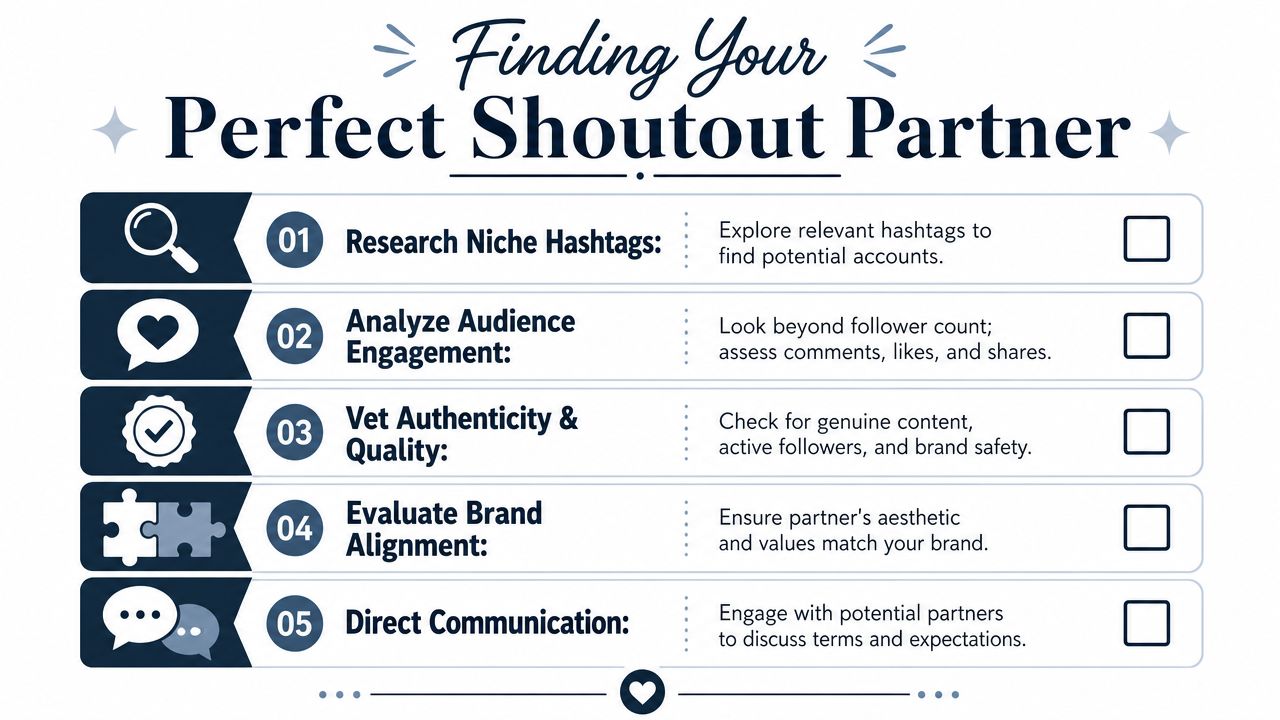
Start with pages that already gather the buyers you want. The goal is not to collect the biggest accounts in the niche. The goal is to collect accounts whose audience behavior suggests they will click, sign up, or buy.
I usually build the first list from four sources:
- Niche hashtags: Check which accounts appear repeatedly under specific hashtags, then inspect whether the engagement looks real.
- Competitor adjacency: Look at who tags, comments on, or gets tagged by brands selling to a similar audience.
- Community and curation pages: Many of these pages are better shoutout inventory than creators because followers expect recommendations.
- Customer accounts: Existing customers with active audiences often convert better because the endorsement feels more credible.
If you need a repeatable sourcing workflow, REACH has a practical guide on how to find Instagram influencers.
A short list from several sources is easier to trust than a list pulled from one hashtag search.
Vet for commercial fit, not just visible engagement
Follower count still matters because it affects distribution and pricing, but it is a rough filter, not the decision rule. Shopify's guide to Instagram influencer marketing notes that brands often group creators by audience size, including macro influencers in the 100,000 to 1 million follower range, which is useful for sorting your prospect list before you compare actual fit and engagement quality in its influencer marketing guide. That size range can work well for shoutouts, but only if the account shows signs that followers pay attention to recommendations.
The review process should answer one question. Can this page create measurable response, not just visible activity?
Use a checklist like this:
- Comment quality: Look for comments tied to the post itself, not generic reactions or repeated emoji strings.
- Audience intent: Check whether followers care about the niche or just show up for giveaways, reposts, and trend bait.
- Promotion density: If the page runs sponsored content constantly, your offer becomes background noise.
- Brand fit: Your product should look normal on the page. If it feels out of place, click-through usually suffers.
- Call to action history: Review past promotions and see whether the creator can direct people clearly to click, use a code, or send a DM.
- Operational reliability: Confirm that they can follow instructions, keep links and codes intact, and post on schedule.
I also check story highlights, recent tagged posts, and the last few sponsored captions. Those details show whether the partner can execute cleanly or whether your team will spend the whole campaign chasing corrections.
A page can have strong likes and still be weak at driving purchases. Read the comments, review past promotions, and judge whether the audience responds to offers.
Outreach that gets a useful reply
The first message should make qualification easier. Ask for the information you need to decide, not just a price.
A simple outreach note usually works:
- who you are,
- what audience you sell to,
- why their page is a fit,
- which placement types you want,
- what performance details you need back.
Example:
Hi, we run campaigns for [product] aimed at [audience]. Your page looks like a fit because of your content around [topic]. We're evaluating shoutout placements with a tracked link or code. If you're open to it, send your current options for Stories, feed posts, or bundles, plus recent performance details, timing, and posting requirements.
That message does two jobs. It gets the rate card, and it shows you whether the partner answers like someone who can handle a campaign properly.
If your team needs a clear primer on how post-click measurement works before you start asking creators for tracked links, Tagada's pixel tracking overview is a useful reference.
Setting Up Your Campaign for Flawless Tracking
A shoutout can drive a spike in traffic and still leave you with no clear answer on revenue. The usual failure point is setup. The creator posts on time, the content looks fine, clicks come in, and then reporting falls apart because every partner used the same link or no one agreed on how conversions would be logged.
That problem starts before the post goes live.
Build attribution into every placement
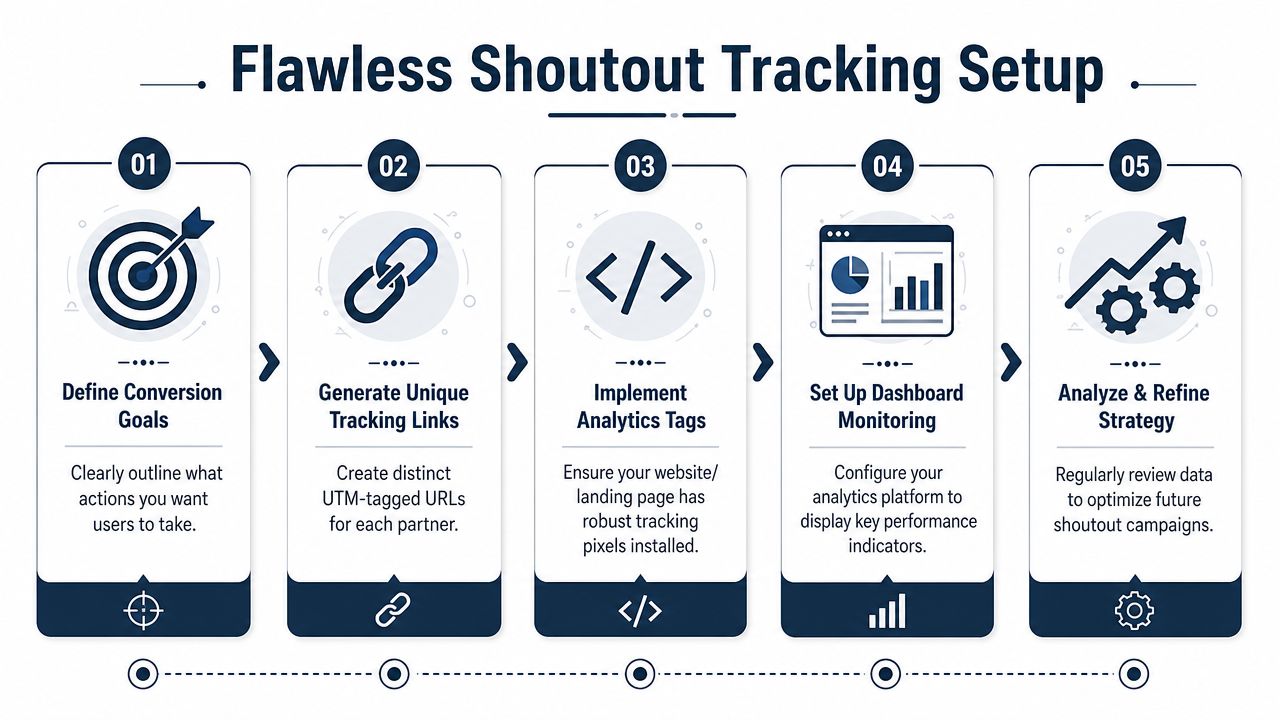
Set tracking rules before creative approval. If a partner receives the wrong URL or a generic homepage link, the campaign becomes much harder to judge later.
Use a simple structure your team can repeat every time:
- One unique UTM link per partner
- A distinct parameter for placement type
- A campaign name that matches your reporting period
- A backup code for purchases or lead capture
I also recommend a naming format that answers three questions at a glance: who posted, what format ran, and when it ran. If your spreadsheet says creatorname_story_julylaunch, the reporting cleanup gets much easier than sorting through vague labels a week later.
If your site team needs a plain-English refresher on the mechanics behind post-click tracking, Tagada's pixel tracking overview is a useful reference for aligning social and analytics teams.
Judge the campaign at three levels
Engagement gives context, but it does not justify spend on its own. Treat shoutouts like a paid acquisition channel. The question is not whether the post looked active. The question is whether the placement produced traffic that turned into revenue, leads, or other qualified actions.
Here's the framework I use:
| Layer | What to track | Why it matters |
|---|---|---|
| Placement response | Reach, views, likes, replies, saves | Confirms the content got attention |
| Traffic quality | Clicks, session behavior, landing-page actions | Shows whether users had real interest |
| Business outcome | Leads, purchases, qualified inquiries, code use | Determines whether the spend was justified |
This structure prevents a common mistake. Teams often approve the next shoutout because the creator delivered strong views, even though the landing page sessions were short and conversions were weak. Views matter. They just sit at the top of the stack, not at the finish line.
A centralized tool helps once you're managing more than a few creators. REACH is built for the messy middle after discovery. It lets teams organize campaigns, track content and deliverables, keep communication in one place, and manage payments and compliance from a single dashboard.
This video gives a simple visual walkthrough of campaign tracking mechanics:
If the partner can't follow a tracking spec, don't trust the reporting conversation later.
A practical tracking stack
Keep the stack simple enough that a busy coordinator, a freelancer, and the creator can all follow it without errors.
- Landing page built for one action. Send traffic to a page with one clear next step, not a crowded homepage with five competing paths.
- UTM generator or spreadsheet template. Consistent naming matters more than fancy software.
- Web analytics dashboard. Review partner-level traffic, bounce patterns, and conversion activity in one place.
- Unique code or lead form field. This catches conversions from people who saw the post, left the app, and returned later.
That setup will not capture every assisted conversion. Instagram attribution rarely works that cleanly. But it gives you enough control to compare creators, spot weak placements early, and explain to stakeholders why one shoutout was worth repeating and another was not.
Managing Shoutout Execution and Optimization
A shoutout can look fine in the draft and still fail in execution. The creator tags the wrong account. The Story goes up without the link sticker. The post goes live three hours late, after your promo window has already cooled off. None of those problems show up in a campaign plan, but they are usually what separate a profitable placement from wasted spend.
The fix is operational discipline. Every creator gets the same brief, the same asset pack, and the same posting checklist.
What the creative brief must include
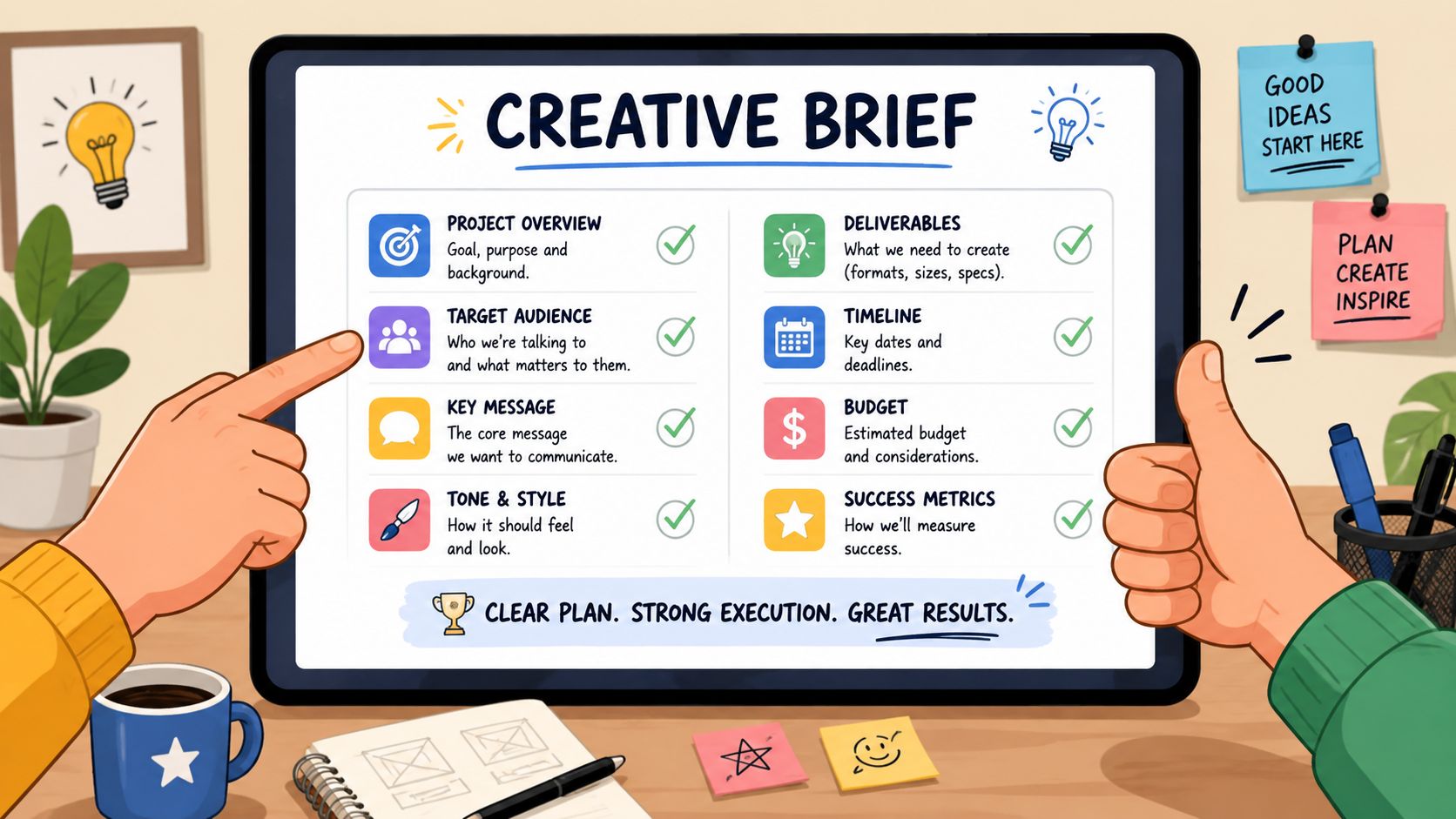
Good briefs remove decisions that creators should not be making on the fly. If the campaign depends on clean tracking and measurable outcomes, the brief has to spell out the details that affect attribution.
Include:
- Post type: Feed, Story, Reel, or bundle
- Live date and posting window: So the team knows when to QA the post and capture early results
- Required tags and destination: Correct handle, URL, link sticker destination, and any code
- CTA language: Follow, click, shop, apply, or message
- Disclosure requirement: Sponsored content needs the right disclosure
- Approval rule: State whether the creator needs full approval, factual review only, or no approval after the brief is signed off
I also recommend adding two items teams often skip: a screenshot requirement after posting, and a takedown or correction rule if the wrong link, tag, or caption goes live. That saves time when something breaks and keeps reporting clean later.
Use bundles when one placement is too thin to judge
Single shoutouts are useful for testing, but they can produce noisy results. One Story frame might underperform because it was posted at a weak hour. One feed post might get buried quickly. If the budget allows it, bundled placements give you a fairer read on audience response.
A common format is a feed post plus supporting Story frames, or a Reel followed by a Story reminder later the same day. That approach lines up with how many creators package sponsored content, and Later's guide to Instagram influencer rate structures notes that brands often buy content in grouped deliverables rather than isolated posts. The value is not just more reach. It is better testing. You can compare which surface drives profile visits, clicks, saves, replies, or code use.
There is a trade-off. Bundles raise spend, and they can blur attribution if the creator changes the message across placements. Keep the offer, CTA, and tracking link consistent. Change one variable at a time, such as feed versus Story, or direct CTA versus softer education-first copy.
Optimize while the campaign is live
Do not wait for the final report to find out a shoutout missed the mark.
Check the first wave of traffic and on-platform response as soon as posts are live. Look at what happened by partner, by placement type, and by destination. A creator with lower reach can still be the better buy if their audience clicks through, stays on the page, and converts.
Ask:
- Are people clicking and leaving right away?
- Are profile visits climbing without a matching lift in site sessions or code use?
- Are Stories producing stronger action than feed mentions?
- Is a smaller creator sending better-quality traffic than a larger page?
- Did one CTA produce more replies or taps than the others?
The first few hours usually expose the problem. Sometimes it is audience fit. Sometimes the creative is too vague. Sometimes the offer is fine and the landing page is doing the damage.
Optimization at this stage is usually simple. Tighten the CTA. Swap the landing page headline so it matches the creator's wording. Ask for a Story follow-up that answers the objection showing up in replies or DMs. If a creator is driving strong traffic but weak conversions, keep the partner and fix the page before you write off the shoutout.
Field note: I treat early underperformance as a diagnosis job, not a verdict. If clicks are healthy and conversions are weak, the creator may still be doing their part. If impressions are high and nobody taps, fix the message or stop buying that audience.
From One-Off Shoutouts to a Scalable Influencer Program
A shoutout campaign often starts the same way. One creator beats the benchmark, a second one is inconsistent, and a third sends plenty of profile activity but little revenue. At that point, the job changes. You are no longer buying isolated placements. You are building a repeatable acquisition channel.
One-off shoutouts are still useful. They show which audience pockets respond, which creators can hit a brief without hand-holding, and which placements deserve more budget. But once you find a few partners that produce qualified traffic and sales, ad hoc buying creates friction. Terms live in DMs, performance proof lives in screenshots, and each new post requires the same setup work again.
A lot of Instagram shoutout advice still centers on reach, follower counts, or page size. It rarely explains how to turn a good test into an operating model with standardized pricing, reporting, approvals, and reuse rights. That gap matters because the scaling problem is usually operational before it is creative. Industry guides from Later's influencer marketing resources reflect the broader shift toward structured creator programs rather than isolated mentions.
When to graduate from ad hoc shoutouts
Make the shift when these patterns start showing up:
- A small group of partners keeps producing sales or qualified leads. Repeated performance is a reason to put terms, deliverables, and reporting into a standard workflow.
- Your team spends too much time chasing basics. If links, posting windows, payment status, and content approvals are spread across messages and spreadsheets, scale gets expensive fast.
- The same creator needs multiple touchpoints to convert. A single mention may introduce the offer, but a sequence of Story frames, a follow-up post, or refreshed creative often closes the gap.
- You need rights and consistency. Once a creator proves they can sell, it makes sense to secure clearer usage terms, briefing standards, and approval checkpoints.
- You want channel-level planning. Instagram shoutouts work better as one piece of a wider creator plan, especially when you start comparing performance across creators, offers, and platforms.
The practical model is simple. Use one-off shoutouts as a testing layer. Promote proven partners into a lighter retainer, recurring package, or campaign roster. Give each partner a standard brief, a fixed tracking setup, agreed rates, and a review cadence tied to outcomes that matter, such as cost per click, cost per acquisition, assisted conversions, or qualified lead volume.
That is also the point where creator management stops being a side task for whoever has time. Someone needs to own partner selection, contract terms, link hygiene, asset approvals, payment status, and post-campaign analysis. Without that layer, strong partners still underperform because the process around them is sloppy.
I usually keep a simple tiering system. Test partners get one or two placements. Proven partners get recurring buys with tighter benchmarks. Strategic partners get longer windows, better creative input, and broader deliverables because they have already earned more budget.
If your team is tired of juggling DMs, spreadsheets, approvals, deliverables, and payments, explore REACH. It gives brands and agencies one place to organize influencer campaigns, track content, manage communication, and keep execution from falling apart once campaigns get real.