
Food content stopped being a niche internet hobby a long time ago. The global Culinary Content Creation market was valued at $20.98 billion in 2025 and is projected to reach $46.23 billion by 2032, at a 12.5% CAGR according to MetaStat Insight’s culinary content creation market report. That number changes how brands should think about creators, and it changes how creators should think about themselves.
A modern food content creator isn’t just someone who posts pretty brunch photos. They’re part publisher, part producer, part marketer, and often part salesperson. They develop concepts, shoot content, edit media, build community, negotiate deals, and influence what people cook, buy, order, and share.
That matters for two groups in particular.
For brands, food creators have become one of the clearest ways to turn attention into action. A recipe video can introduce a product, demonstrate it, and give people a reason to buy it in one piece of content. For aspiring creators, the opportunity is real, but so is the competition. Talent helps. Systems matter more.
The confusion usually starts here: people lump every creator into the same bucket. They shouldn’t. A restaurant reviewer, a meal-prep educator, a cookbook-style storyteller, and a short-form recipe specialist may all be food creators, but they do very different jobs and create very different business value.
That’s why this guide takes a broader view. It looks at the role itself, the platforms, the production process, the money, and the partnership side. If you manage a brand budget, you’ll leave with a better framework for choosing the right creator. If you’re building a creator career, you’ll see where the business gets built.
Introduction The Exploding World of the Food Content Creator
The fastest way to misunderstand this category is to treat it like a trend. It’s an industry.
The term food content creator now covers a wide range of professionals who use digital platforms to shape how audiences discover food. That includes chefs, home cooks, food photographers, reviewers, educators, and creators who turn meals into stories people want to watch. Some focus on recipes. Others focus on restaurant culture, grocery finds, kitchen tools, or food traditions.
Why the role has changed
Older thinking framed food creators as online hobbyists with a camera phone and good lighting. That view is outdated.
Today, a capable food creator often handles:
- Creative strategy by choosing themes, audience angles, and content pillars
- Production through filming, styling, editing, captioning, and publishing
- Audience development by responding to comments, shaping series, and learning what keeps viewers coming back
- Commercial work through sponsorships, affiliate links, licensing, consulting, or product sales
That mix is why food content is so valuable. It sits close to real buying behavior. People don’t just admire food content. They save it, shop from it, cook from it, and order because of it.
Why brands care
Food is one of the easiest categories for creators to make tangible. A beauty creator can describe a result. A food creator can show ingredients, process, final outcome, and reaction in minutes.
That makes the content useful across the funnel:
| Brand need | How a food creator helps |
|---|---|
| Awareness | Introduces a product naturally inside a recipe, tasting, or kitchen routine |
| Consideration | Shows texture, prep, packaging, use case, and serving ideas |
| Conversion | Gives audiences a reason to buy now, cook tonight, or visit a location |
| Retention | Builds repeat exposure through recurring formats and community habits |
Where readers often get confused
One common mistake is assuming follower count tells the whole story. It doesn’t. In food, format, trust, niche fit, and execution often matter more than raw size.
Another mistake is assuming creators only “post content.” The strongest ones build media assets for multiple uses. A single shoot can become a Reel, a TikTok, product photos, Story frames, a blog post, and a brand usage library. That’s not casual posting. That’s content operations.
A strong food creator doesn’t just make people hungry. They make a product understandable, desirable, and easy to act on.
Anatomy of a Modern Food Content Creator
A useful way to understand the field is to stop thinking in labels and start thinking in roles. One food content creator may play several roles at once, but each role creates a different kind of value.
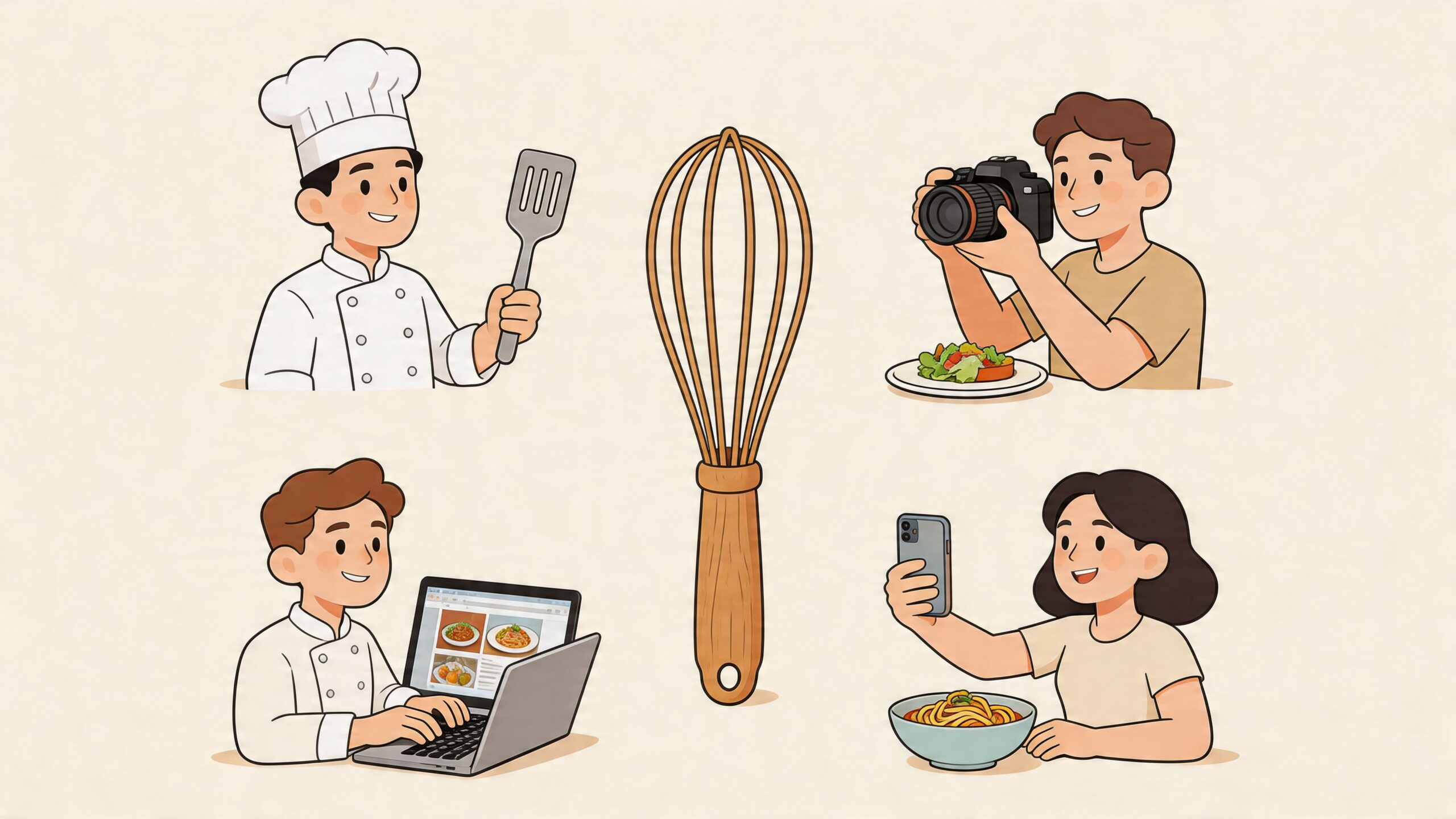
If you’re new to the broader creator economy, this primer on what is a content creator gives helpful background. In food, though, the job tends to split into a few recognizable archetypes.
The recipe developer
This creator solves a practical problem. They help people answer, “What should I make, and how do I make it work?”
A recipe developer tests ingredients, adjusts timing, refines instructions, and thinks about repeatability. Their audience cares about usefulness as much as aesthetics.
You’ll often see this role in:
- Weeknight meal creators who focus on speed and simplicity
- Diet-specific educators who build around vegan, gluten-free, high-protein, or allergy-aware cooking
- Beginner teachers who break down techniques without assuming prior kitchen confidence
For brands, these creators are valuable when a product needs to be shown in context. A sauce, appliance, spice blend, or ingredient line often performs better when people can see how it fits into an actual meal.
The food stylist and photographer
This creator makes food look irresistible. They understand plating, props, texture, light, color, angle, and composition.
A casual viewer may think the skill is “taking nice pictures.” It’s more precise than that. Food styling is about visual persuasion. Steam, garnish placement, sauce gloss, crumb texture, and background choice all affect whether content feels appetizing or flat.
That role matters most when a brand needs:
| Need | Why this creator fits |
|---|---|
| Launch visuals | They can create polished assets for campaigns and product releases |
| Social consistency | They help feeds look coherent instead of random |
| Premium perception | High-quality visuals make ordinary products feel more considered |
Some creators in this group barely speak on camera. Their power comes from visual craft.
The critic and reviewer
This creator helps audiences decide where to eat, what to order, or what’s worth trying.
Their content often includes restaurant visits, menu breakdowns, taste tests, grocery finds, or side-by-side comparisons. What makes them useful isn’t just opinion. It’s judgment people trust.
For brands, this role can be uncomfortable because it feels less controllable. But when the fit is right, reviewer-style creators can build strong credibility. Audiences often see them as more independent than a traditional ad.
Practical rule: If your product needs explanation, hire a teacher. If it needs desire, hire a stylist. If it needs trust, hire a reviewer people already believe.
The culinary storyteller
This is the archetype many brands underestimate.
A culinary storyteller connects food to memory, identity, place, family, culture, routine, or aspiration. They don’t just show a dish. They give the dish meaning.
That meaning might come through:
- a voiceover about a family recipe
- a kitchen vlog showing a real weekday routine
- a travel food diary
- a series about learning a technique from scratch
- a founder-style narrative around why a dish matters
Storytelling often creates stronger long-term audience loyalty than pure utility alone. People return because they care about the person, not only the recipe.
Most creators are hybrids
The strongest food content creator usually isn’t just one thing.
A short recipe video may involve recipe development, styling, editing, on-camera teaching, and narrative pacing all at once. A restaurant Reel may combine reviewing, photography, and local storytelling. A YouTube cooking channel may operate like a mini production company.
For creators, that means your growth often depends on identifying your strongest lane first, then layering complementary skills over time. For brands, it means better briefs start with a clear question: What job do we need this creator to do?
The Digital Kitchen Comparing Creator Platforms and Formats
A food content creator doesn’t just need good ideas. They need the right stage.
Different platforms reward different behaviors, content lengths, and audience expectations. The smartest choice usually comes down to format fit, not trend chasing.
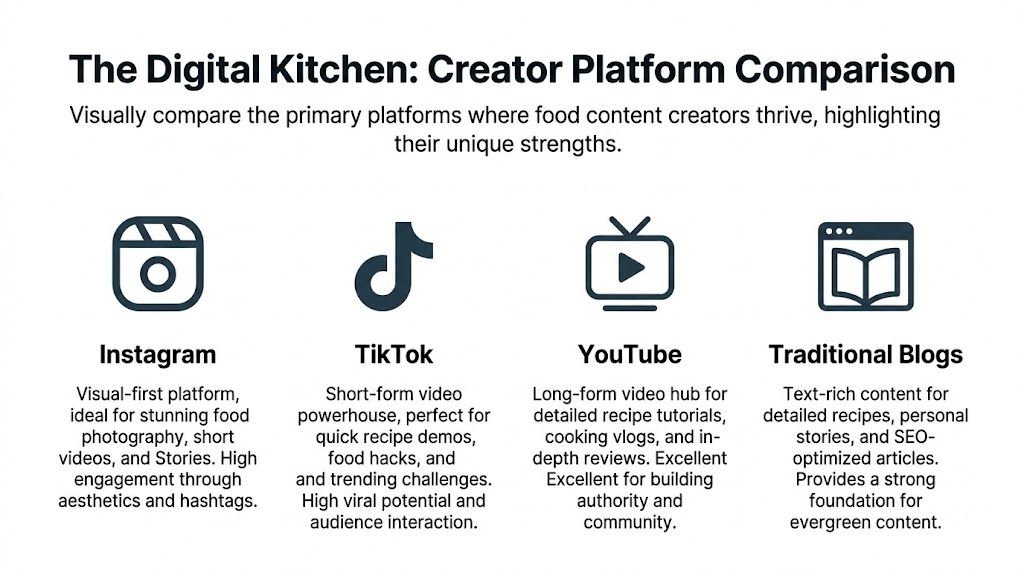
If you’re comparing broader platform dynamics, this guide to creator economy platforms is a useful companion. In food, the platform choice shapes both content style and business model.
Instagram for visual identity
Instagram is still the cleanest home for polished food branding.
It works well for creators who care about aesthetics, repeatable visual language, and a mix of static and motion content. A strong Instagram presence can function like a portfolio and a discovery surface at the same time.
Best fits include:
- Styled recipe carousels
- Reels with quick process shots
- Stories for behind-the-scenes moments
- Grid content that builds a recognizable food identity
Instagram is especially useful when a creator wants to look brand-ready. It’s also one of the easiest places for a marketer to scan whether a creator’s visual style aligns with a campaign.
TikTok for speed and personality
TikTok rewards movement, immediacy, and a stronger sense of personhood.
Rougher edges can work in your favor. A creator can test ideas quickly, react to trends, and let their voice carry the content. Food hacks, taste reactions, quick assembly meals, grocery commentary, and kitchen humor often fit well here.
The common misunderstanding is that TikTok only rewards chaos. It doesn’t. It rewards clear hooks, momentum, and format fluency.
A good TikTok food video often answers one of these questions fast:
- What am I making?
- Why should I care?
- What happens next?
YouTube for depth and authority
YouTube suits creators who teach, explain, review, or build a library of durable content.
A food creator who wants to publish full tutorials, cooking vlogs, long-form reviews, or series-based content can build more authority here than on short-form platforms alone. The audience shows up with more time and more intent.
That changes the kind of relationship you can build. A viewer who watches a full cooking tutorial has made a bigger commitment than someone who watches part of a short Reel.
On YouTube, the creator isn’t just competing for attention. They’re building habit.
For creators thinking about direct platform earnings, this breakdown of what YouTube pays per view is helpful context. The exact income picture varies, which is why smart food creators rarely rely on one revenue source.
Blogs for search and evergreen value
Traditional blogs still matter, especially in food.
They’re useful for searchable recipes, detailed written instructions, ingredient notes, substitutions, and owned audience relationships. Social platforms help people discover you. A blog helps you build an archive you control.
That matters because recipes often need structured information that social captions can’t handle well. If you publish written recipes, Mise has a practical perfect recipe page template that shows how to organize instructions, ingredients, and page structure clearly.
A simple platform comparison
| Platform | Best for | Main strength | Main limitation |
|---|---|---|---|
| Brand-friendly visuals | Strong portfolio effect | Can feel crowded without a distinct style | |
| TikTok | Fast discovery and personality | Quick testing and viral upside | Harder to build durable context in short clips |
| YouTube | Education and authority | Deeper trust and longer watch sessions | Higher production and editing demands |
| Blog | Recipes and search visibility | Evergreen content you own | Slower audience building than social-first channels |
The strongest setup for many creators isn’t choosing only one. It’s choosing one primary platform and using the others to support it. A creator might discover audiences on TikTok, build trust on YouTube, maintain polish on Instagram, and store recipes on a blog.
For brands, the lesson is straightforward. Don’t hire a food content creator because they’re “big everywhere.” Hire them because their strongest platform matches the job you need done.
Crafting Your Content Strategy and Production Workflow
A food content creator usually doesn’t struggle because they lack ideas. They struggle because ideas arrive randomly, production feels messy, and every post starts from zero.
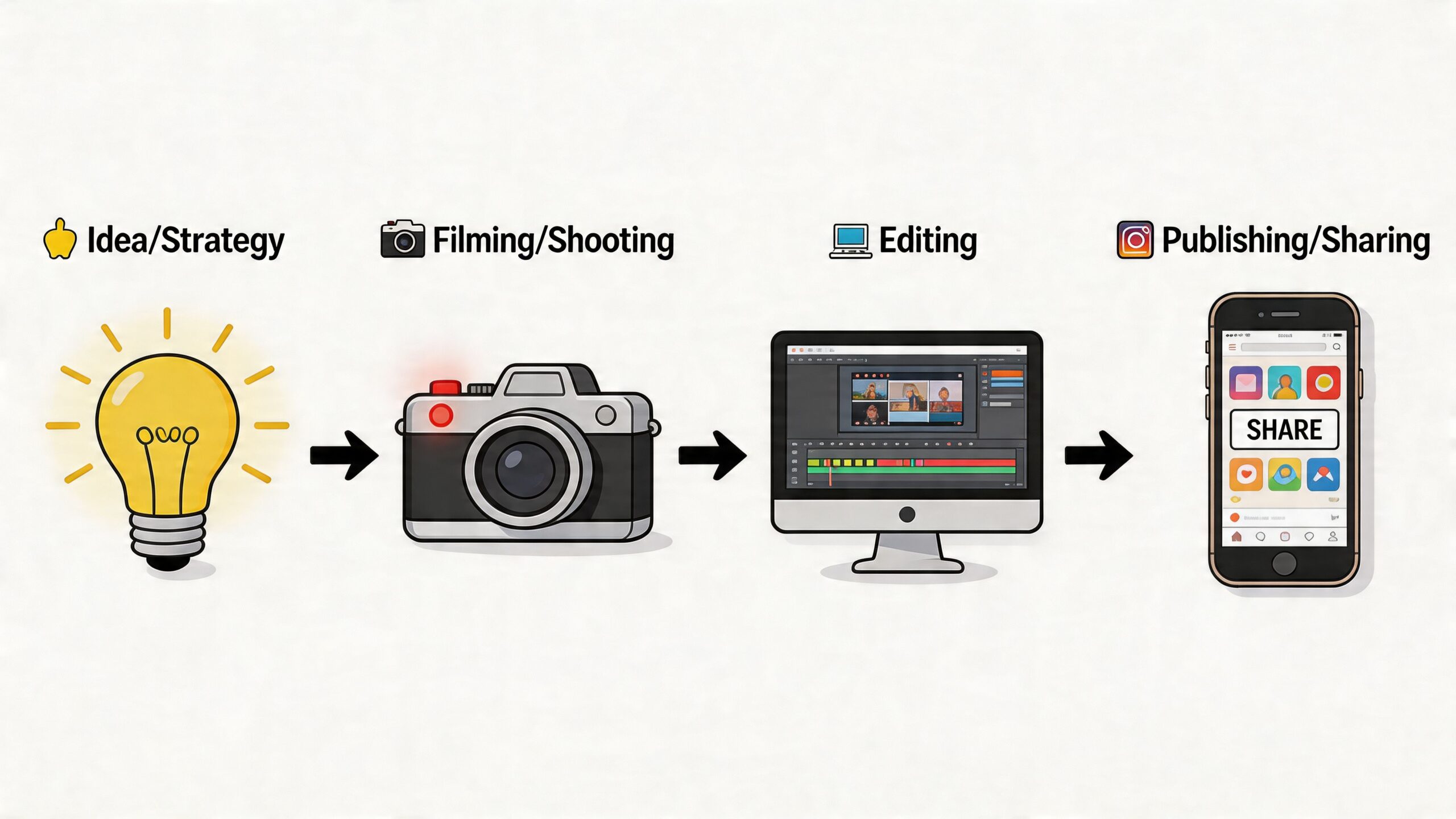
A simple workflow fixes that.
Start with a narrow content promise
Broad food content is hard to remember. Specific food content is easier to follow.
You don’t need a niche so narrow that it traps you. You do need a promise that tells people what they’ll get. That promise might sound like:
- Comfort food made simple
- High-protein meals for busy weekdays
- Restaurant reviews for one city
- Budget cooking with limited ingredients
- Elegant baking with beginner-friendly steps
That promise shapes everything else. It tells you what to film, how to title it, what products fit your feed, and which audience will care.
Build around repeatable pillars
Most strong creators rely on a few recurring formats rather than endless novelty.
A practical setup might include three pillars:
| Pillar | Purpose | Example |
|---|---|---|
| Teach | Show how something works | A step-by-step pasta technique |
| Inspire | Make people want to try something | A styled dessert reveal |
| Connect | Build personality and trust | A kitchen fail, routine, or story behind a dish |
Pillars reduce decision fatigue. Instead of asking what to post, you ask which pillar needs attention this week.
Plan in batches
Batching saves time and keeps quality steadier.
A simple workflow looks like this:
Idea day
Choose concepts, hooks, and shot lists.Prep day
Shop ingredients, organize props, clear your kitchen, and prepare lighting.Shoot day
Film multiple pieces while your setup is ready.Edit day
Cut footage, add captions, adjust color, and export versions for each platform.Publish and review
Post, answer comments, and note what resonated.
This doesn’t need to be rigid. It just needs to be consistent enough that your content stops feeling reactive.
Production quality matters more than gear obsession
You don’t need a studio kitchen to start. You do need clean framing, decent light, and understandable audio.
Food creators often overfocus on camera quality and underfocus on sound. That’s a mistake. According to Selar’s guide to becoming a successful food content creator, professional food content creators use specialized audio equipment such as shotgun microphones and lapel microphones, and crisp, clear sound improves viewer retention and perceived production quality. The same source notes that using trending audio on platforms like TikTok can provide an algorithmic boost.
Make your audio intentional
Good food content is sensory. Viewers want to hear the chop, the sizzle, the pour, and the voiceover clearly.
That’s why creators often use:
- Shotgun microphones when they want focused directional sound
- Lapel microphones when they’re speaking on camera during cooking demos
- Voiceover workflows when the kitchen environment is too noisy in real time
Here’s a useful walkthrough for production basics and creator workflow:
Edit for the platform, not just for the file
One of the most common creator mistakes is making one edit and posting it everywhere unchanged.
A better approach is to adapt the same source material:
- TikTok may need a faster first second and stronger text hook
- Instagram Reels often benefits from cleaner visual pacing
- YouTube Shorts may need a slightly different title frame
- Blog or email can use the same recipe in written form
Field note: Your production workflow should make reuse easy. One cooking session should create more than one asset.
For brands, this section matters because a creator’s workflow tells you whether they can deliver reliably. For creators, it matters because consistency usually comes from process, not motivation.
From Passion to Paycheck Growth and Monetization Models
A food content creator becomes a business owner the moment content starts carrying commercial expectations.
That shift catches many people off guard. They think the money will come from one source, usually sponsorships. In reality, the strongest creator businesses stack income streams so one weak month in one area doesn’t collapse the whole model.
The market is bigger than most creators realize
According to Business Insider’s 2025 reporting on creator ad spend, advertiser spending on creators reached $37 billion in 2025, and 61% of marketers hired mid-tier influencers with 50,000 to 500,000 followers. That tells you brands are actively buying creator-led distribution.
But there’s another side to the picture. The same verified data also states that 68% of food micro-creators earn less than $5K annually despite high engagement, often because they accept weak contract terms and rely too heavily on one revenue stream.
That gap is the business lesson. Audience attention alone doesn’t create income. Monetization structure does.
Four revenue streams worth building
A durable creator business usually combines several of these.
Brand partnerships
This is the most visible stream. Brands pay for sponsored posts, recipe integrations, product placements, UGC-style assets, or campaign participation.Affiliate income
Food creators can recommend knives, cookware, pantry products, appliances, meal tools, or specialty ingredients and earn when those links convert.Digital products
E-books, meal plans, recipe bundles, cooking guides, shot lists, templates, and mini courses can all extend a creator’s expertise into owned products.Platform revenue
Some creators earn through platform programs, including YouTube monetization. This is useful, but it’s rarely enough on its own.
Why micro-creators often stall
This isn’t usually a content problem. It’s often a business problem.
Common reasons include:
| Problem | What it looks like |
|---|---|
| Weak negotiation | The creator accepts broad usage rights for low fees |
| No packaging | Every deal is custom, slow, and hard to price |
| Single-income dependence | One sponsor cancellation creates a cash-flow gap |
| Audience mismatch | The creator attracts viewers but not buyers or committed followers |
A creator with a modest but engaged audience can still build a strong income if they package services clearly and diversify what they sell.
Think in offers, not posts
A post is a deliverable. An offer is a business unit.
For example, instead of selling “one Instagram Reel,” a food content creator can package:
- Recipe development plus short-form video
- Photo library plus usage rights
- Cross-platform launch bundle
- Monthly creator retainer for recurring content
That shift helps in two ways. It raises perceived value, and it makes it easier for a brand to understand what it’s buying.
The creator who sells outcomes usually outperforms the creator who only sells content units.
Growth and monetization should reinforce each other
Creators often separate audience growth from monetization. They shouldn’t.
The best content for business often does both at once. A useful tutorial can attract new viewers, prove expertise, and create a natural place for a product integration. A strong review can deepen trust and support affiliate earnings. A recipe series can become a future digital product.
If you want a practical companion for this topic, this guide on how to monetize content covers the wider monetization mindset beyond any one platform.
For creators, the key question is simple: What am I building that I still own when a platform changes?
For brands, the question is different: Is this creator just visible, or are they commercially structured enough to execute well?
The strongest food creator businesses answer both questions clearly.
How Brands Find and Partner with the Right Food Creator
Many brand teams still use a slow, manual process to find creators. They scroll social feeds, save posts, compare profiles in spreadsheets, send DMs, chase replies, and hope they’re making the right call.
That approach breaks down fast.
A food campaign has too many moving parts. You need fit, content quality, audience alignment, communication speed, legal clarity, deliverable tracking, approvals, and post-campaign reporting. Manual discovery can help you spot inspiration. It’s a weak operating system.
Start with creator fit, not fame
A bigger account isn’t automatically a better partner.
When evaluating a food content creator, brands should look at four areas first:
Category relevance
Does the creator already operate in the kind of food conversation you want to join?Content behavior
Do they naturally teach, review, entertain, or tell stories in a way that matches the campaign goal?Audience alignment
Are they speaking to the kind of buyer you want?Production reliability
Can they deliver polished work consistently, not just occasionally?
That last point gets overlooked. A creator may have strong taste and weak process. For campaigns, process matters.
What manual outreach misses
Brand managers often underestimate the administrative drag of influencer work.
Here’s what slows things down:
| Workflow step | Manual problem |
|---|---|
| Discovery | Too much time spent searching and comparing profiles |
| Vetting | Hard to assess niche fit and audience details cleanly |
| Outreach | DMs and scattered emails create follow-up gaps |
| Approvals | Feedback gets buried across threads |
| Reporting | Results end up fragmented across screenshots and exports |
That’s why dedicated influencer platforms have become more useful for both sides of the market.
What a strong platform should help you do
A useful platform should reduce uncertainty, not just store contacts.
It should help brands:
- Filter creators by niche and audience traits
- Organize outreach without scattered communication
- Track deliverables and approvals in one place
- Measure clicks, content output, and campaign results clearly
- Handle payment and compliance without side systems
This is what modern campaign infrastructure looks like in practice.

What good briefs look like in food campaigns
Even the right creator can underperform if the brief is vague.
A strong food brief usually defines:
- The product role inside the content
- The audience action you want, such as save, click, order, or purchase
- The format you expect, but with room for creator judgment
- Usage expectations if the brand wants to reuse the asset
- Non-negotiables such as claims, ingredients, timing, or compliance language
What you shouldn’t do is script every frame. Food creators know how their audience responds. Overcontrol often strips out the style that made the creator attractive in the first place.
The best brand partnerships feel like guided collaboration, not outsourced posting.
How brands should judge success
A food creator campaign can do several jobs at once, so performance should match the campaign objective.
If the goal is awareness, the content may need broad reach and strong brand integration. If the goal is conversion, you’ll care more about click behavior, product relevance, and purchase intent signals. If the goal is asset creation, the success metric may be whether the brand now has reusable content that looks native on social.
That’s why a dashboard matters. Campaigns become much easier to manage when discovery, communication, approvals, and performance tracking live in one system instead of scattered tools.
For creators, this also matters. Better platforms tend to produce clearer expectations, cleaner communication, and fewer payment problems. For brands, they reduce friction and make repeatable creator marketing possible.
Conclusion The Future Is Delicious and Data-Driven
The modern food content creator is not a casual poster with a ring light. They’re a media operator with a niche, a production workflow, a distribution strategy, and a business model.
That’s why the category now matters so much to both brands and creators. Brands need partners who can translate products into useful, persuasive food content. Creators need systems that turn creative work into durable income, not just attention spikes.
The strongest outcomes usually come from the same formula. Clear positioning. Consistent production. Platform fit. Smart monetization. Better partnership infrastructure.
If you’re a brand manager, the key takeaway is simple. Don’t hire food creators based on surface-level popularity. Hire based on role, audience fit, and execution quality.
If you’re an aspiring creator, the path is just as clear. Treat your work like a business earlier than feels necessary. Define your lane. Build repeatable formats. Improve your audio, your workflow, and your offers. That’s how a hobby starts turning into a career.
If you want a cleaner way to run creator partnerships or grow your creator business, explore REACH. Brands and agencies can use it to discover the right influencers, manage campaigns, track performance, and handle operations in one place. Creators can use it to access brand opportunities, work with more structure, and get paid faster.