 Skip to content

Meta description: Learn how to build an instagram affiliate marketing program that lasts. This practical guide covers models, tracking, creator relationships, measurement, and how to run campaigns with less chaos.
{ “@context”: “https://schema.org”, “@type”: “BlogPosting”, “headline”: “Instagram Affiliate Marketing Guide 2026: Success With REACH”, “description”: “Learn how to build an instagram affiliate marketing program that lasts. This practical guide covers models, tracking, creator relationships, measurement, and how to run campaigns with less chaos.”, “author”: { “@type”: “Organization”, “name”: “REACH” }, “publisher”: { “@type”: “Organization”, “name”: “REACH” }, “mainEntityOfPage”: { “@type”: “WebPage”, “@id”: “https://reach-influencers.com/instagram-affiliate-marketing/” }, “url”: “https://reach-influencers.com/instagram-affiliate-marketing/” }You are likely encountering the same challenges common to organizations beginning instagram affiliate marketing. Some creators are publishing content. Links reside in separate spreadsheets. Discount codes are distributed through DMs. Finance requires clear payout data. The brand team demands content approvals. No one is certain which creator drove the sale.
That's why strong affiliate programs don't start with “find influencers.” They start with structure. The brands that make instagram affiliate marketing work long term build a system where creators know what success looks like, brands know what they're paying for, and both sides can see performance without chasing screenshots.
What Is Instagram Affiliate Marketing
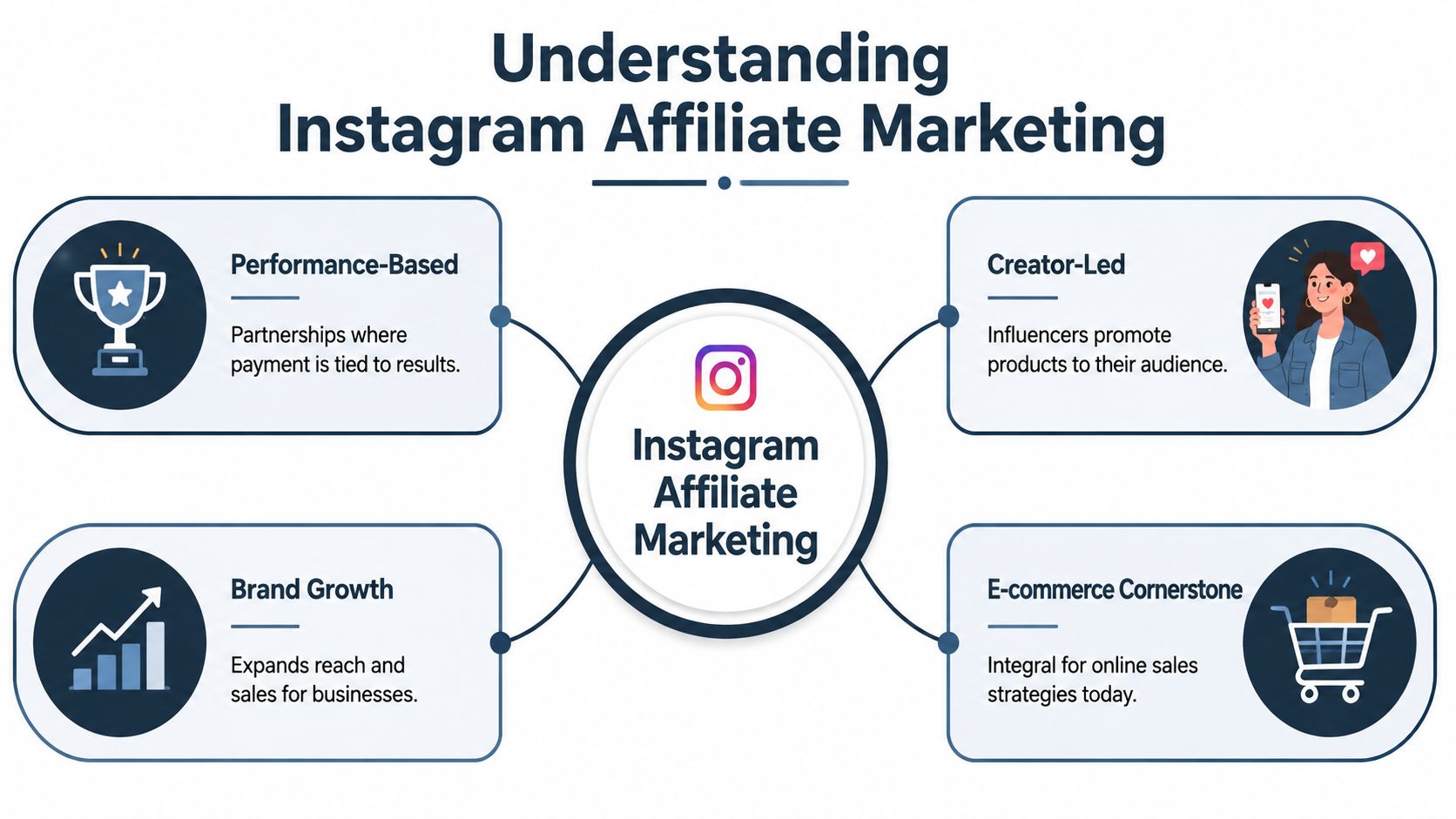
Instagram affiliate marketing is a performance-based partnership. A creator recommends a product on Instagram, a customer takes action, and the creator earns based on that result. In practice, it works like a digital commission model. The creator acts like a trusted salesperson, but the relationship only works when the recommendation feels credible to the audience.
That's a big reason this channel has become core to ecommerce. Instagram is visual, product-friendly, and built for discovery. According to affiliate marketing statistics from RefGrow, influencer affiliate marketing on Instagram saw a 38.5% year-over-year increase in 2025, and the global affiliate market is projected to hit $20 billion by 2026.
The four players that make it work
There are always four stakeholders in the system:
- The brand wants profitable growth, not just reach.
- The creator wants fair compensation, clear expectations, and products worth recommending.
- The platform or network handles attribution, workflow, or both.
- The customer decides whether the content feels useful enough to buy.
If any one of those breaks, the whole program gets weaker. Brands often focus too much on recruitment and not enough on operations. Creators often accept deals without enough clarity on how sales are tracked. That's where campaigns go sideways.
Practical rule: If a brand can't explain the offer, the tracking method, and the payout timeline in one short message, the affiliate program isn't ready.
Why this model fits Instagram so well
Instagram supports the full path from discovery to purchase. Reels introduce products. Stories create urgency. Carousels educate. Product tags reduce friction. Customers can move from “that looks interesting” to “I want that” fast.
Instagram is also where a lot of businesses already spend their social energy. If you're working with local brands or service businesses, broader channel strategy still matters. Resources like these social media tips for Miami businesses are useful because affiliate content performs better when it's part of a real content ecosystem, not a one-off promotion.
The main operational lesson is simple. Instagram affiliate marketing isn't just content. It's coordination.
Choosing Your Affiliate Model
The payout model shapes behavior. Choose the wrong one and you'll attract the wrong creators, set the wrong expectations, or overpay for weak outcomes. Choose the right one and both sides know what they're optimizing for.
CPA, CPC, and flat fee compared
| Model | What the brand pays for | Best use case | Main trade-off |
|---|---|---|---|
| Cost per acquisition | Confirmed sale or conversion | Sales-focused campaigns | Harder for creators who want predictable earnings |
| Cost per click | Qualified traffic | Testing offers or landing pages | Clicks don't guarantee purchases |
| Flat fee | Content creation and posting | Launches, content seeding, whitelisting support | Weak direct alignment to outcomes |
| Hybrid | A mix of flat fee plus performance | Long-term creator programs | Requires cleaner tracking and clearer terms |
When CPA works best
CPA is the cleanest fit for a pure affiliate program. The brand only pays when revenue happens. For products with strong margins and a proven checkout flow, this is efficient.
For creators, CPA can be attractive if the product already converts and the commission makes the effort worth it. It's less attractive when the offer is unclear, the site is weak, or the attribution rules are fuzzy. Creators don't want to produce content and then argue about whether a sale counted.
When CPC makes sense
CPC works when the brand wants traffic first. Maybe the product is new. Maybe the landing page is being tested. Maybe the campaign goal is email capture before purchase.
This model lowers creator risk because they're paid for intent, not only completed sales. It raises brand risk because low-quality clicks can pile up fast if vetting is poor.
A bad CPC campaign usually isn't a creator problem first. It's a targeting problem, a landing page problem, or an incentive problem.
Why hybrid deals often last longer
The strongest long-term relationships often use a hybrid structure. A creator gets a modest guaranteed fee for the work plus upside through commissions. That changes the tone of the partnership. The creator isn't forced to gamble entirely on sales, and the brand still keeps performance in view.
For teams building formal programs, this guide to affiliate programs for Instagram is useful because it frames the offer around program structure, not just creator outreach.
A practical way to decide is to ask one question: are you buying content, traffic, or sales? If you can't answer that clearly, your compensation model will drift.
How Tracking and Payouts Actually Work
Tracking feels technical until you walk through one customer journey. Then it's straightforward.
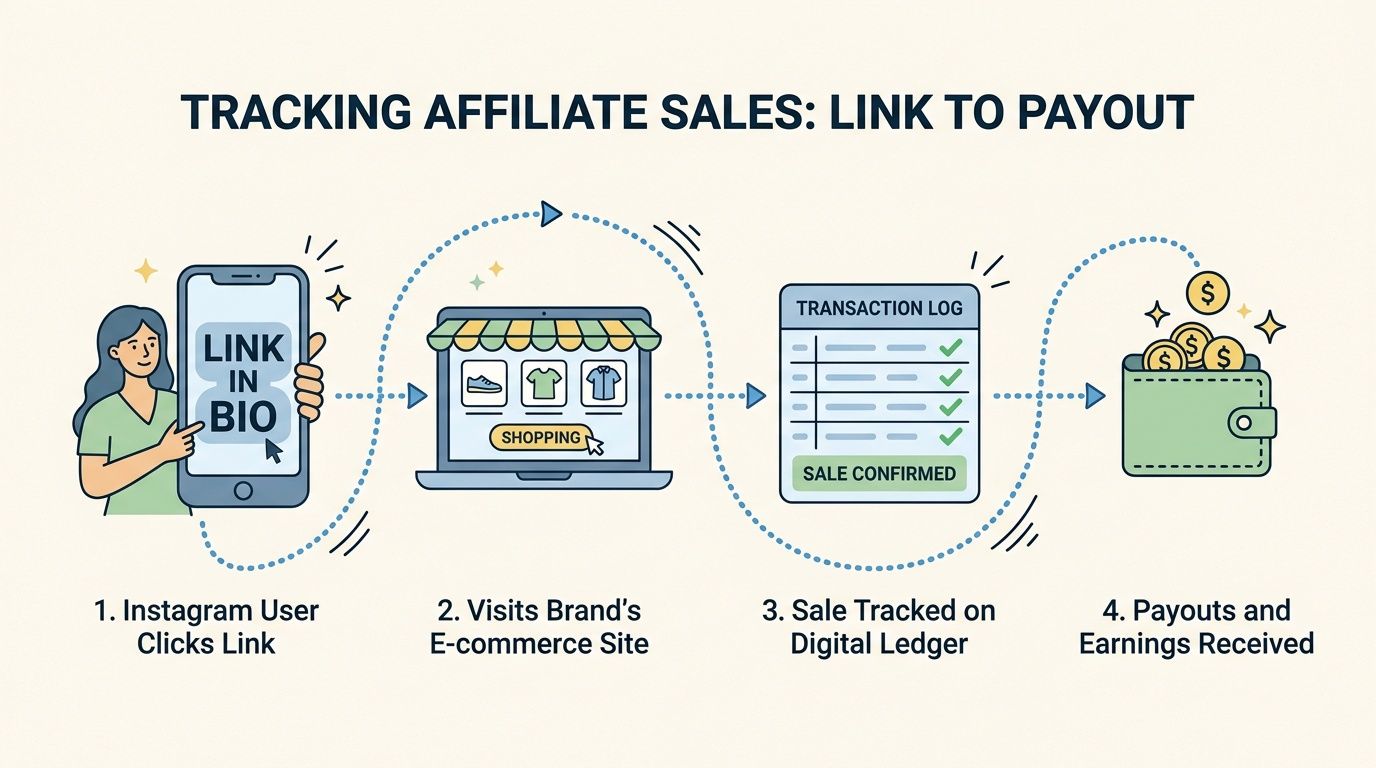
A creator posts a Reel about a product. The caption points viewers to a link or a code. A follower clicks, browses, and buys. The system attributes that order to the creator. The brand records the commission owed. Then the payout gets processed.
The two main attribution methods
Most Instagram affiliate programs use one of these:
Unique affiliate links
Each creator gets a distinct link. When a customer clicks and converts, the sale maps back to that creator.Custom discount codes
A shopper enters a creator-specific code at checkout. That code becomes the attribution point.
Both methods are useful. Links capture tap behavior. Codes help when someone watches content on mobile, remembers the creator name, and buys later.
What breaks at scale
The first few creators are easy. Then the actual admin starts.
- Link confusion means creators post the wrong destination.
- Code overlap causes attribution disputes.
- Manual spreadsheets slow down commission calculations.
- Delayed payouts damage trust fast.
That's why centralized systems matter more than people expect. Once you're managing multiple creators, campaigns, content approvals, and payment cycles, manual coordination becomes the bottleneck. Tools built for influencer payment automation help by connecting deliverables, commission logic, and payout records in one workflow instead of spreading them across finance, email, and social teams.
What creators need to hear clearly
Creators don't need a lecture on attribution architecture. They need three things:
- What counts as a commissionable action
- When commissions are locked
- When they'll be paid
Clear payout rules do more for creator retention than a complicated incentive deck.
If you want long-term creator partnerships, remove ambiguity before launch. Most conflict in affiliate programs comes from unclear rules, not bad intent.
A Strategic Blueprint for Brands
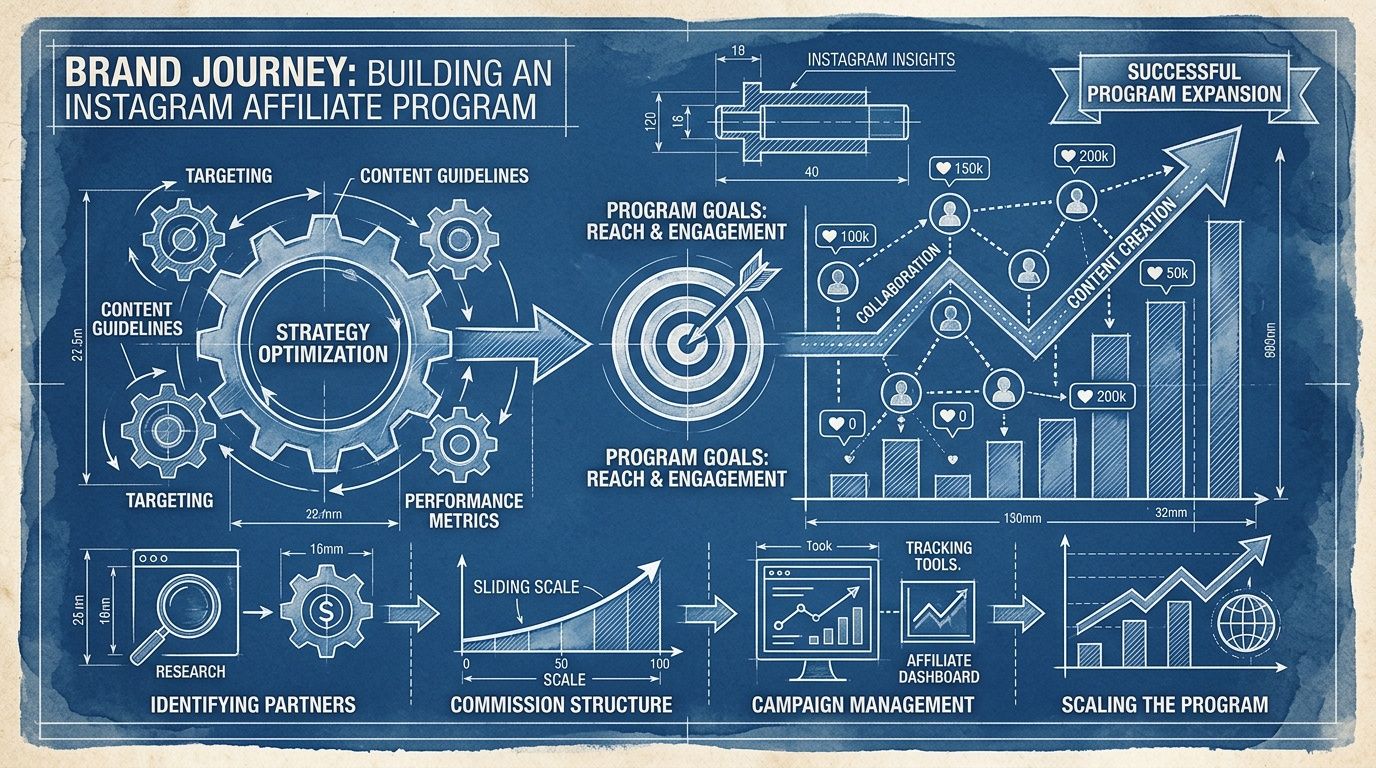
Most brand teams don't fail because they picked Instagram. They fail because they built the program around vanity metrics and informal communication. A good instagram affiliate marketing program runs like a real revenue channel, not a side project.
Start with the commercial goal
Decide what success means before recruiting anyone. If the goal is first-purchase revenue, your offer, landing pages, and creator brief should all point there. If the goal is product trial, build the campaign around education and trust, not hard selling.
That sounds obvious, but many programs skip this. They recruit creators first and decide goals later. The result is mixed messaging and messy reporting.
Vet creators with conversion logic
Follower count is a weak filter on its own. Engagement quality matters more. According to Humanz on Instagram affiliate marketing, micro-influencers with 10k to 100k followers average 3% to 5% engagement, while macro-influencers average 1% to 2%, and micro-influencers drive 2x to 3x higher affiliate click-throughs. The same source advises brands to filter for engagement above 3% and audience overlap above 70% with their target customer.
Use that as a screening baseline, then look at content fit:
- Does the creator already talk about this problem category?
- Does their audience respond in comments with purchase intent or just generic praise?
- Can they explain a product naturally, or do all promotions sound copy-pasted?
Build the workflow before launch
The fastest way to lose momentum is to manage everything in separate places. Briefs live in docs. Assets live in drives. Approvals happen in DMs. Finance gets an invoice with no delivery context. That setup doesn't scale.
A centralized platform like REACH helps by giving brands one place to build campaign briefs, track deliverables, organize communication, and manage payouts after creators are selected. That's especially useful when multiple stakeholders touch the campaign and nobody wants to reconstruct what happened from email threads.
Keep the offer fair and specific
Creators perform better when the offer is easy to understand. Don't send broad asks like “post organically and drive sales.” Give them a structure:
- product angle
- approved claims
- content format
- commission terms
- posting window
- what happens if content needs revisions
The cleanest programs feel collaborative, not restrictive. Good creators want direction. They don't want scripts.
The strongest brand move is to treat affiliate creators like partners with shared incentives. That changes the relationship from transactional output to repeatable revenue.
Best Practices for Affiliate Creators
Creators usually lose affiliate revenue in one of two ways. They promote products that don't fit their audience, or they accept partnerships with vague terms and hope the backend works itself out. Both are avoidable.
Protect trust before you protect commissions
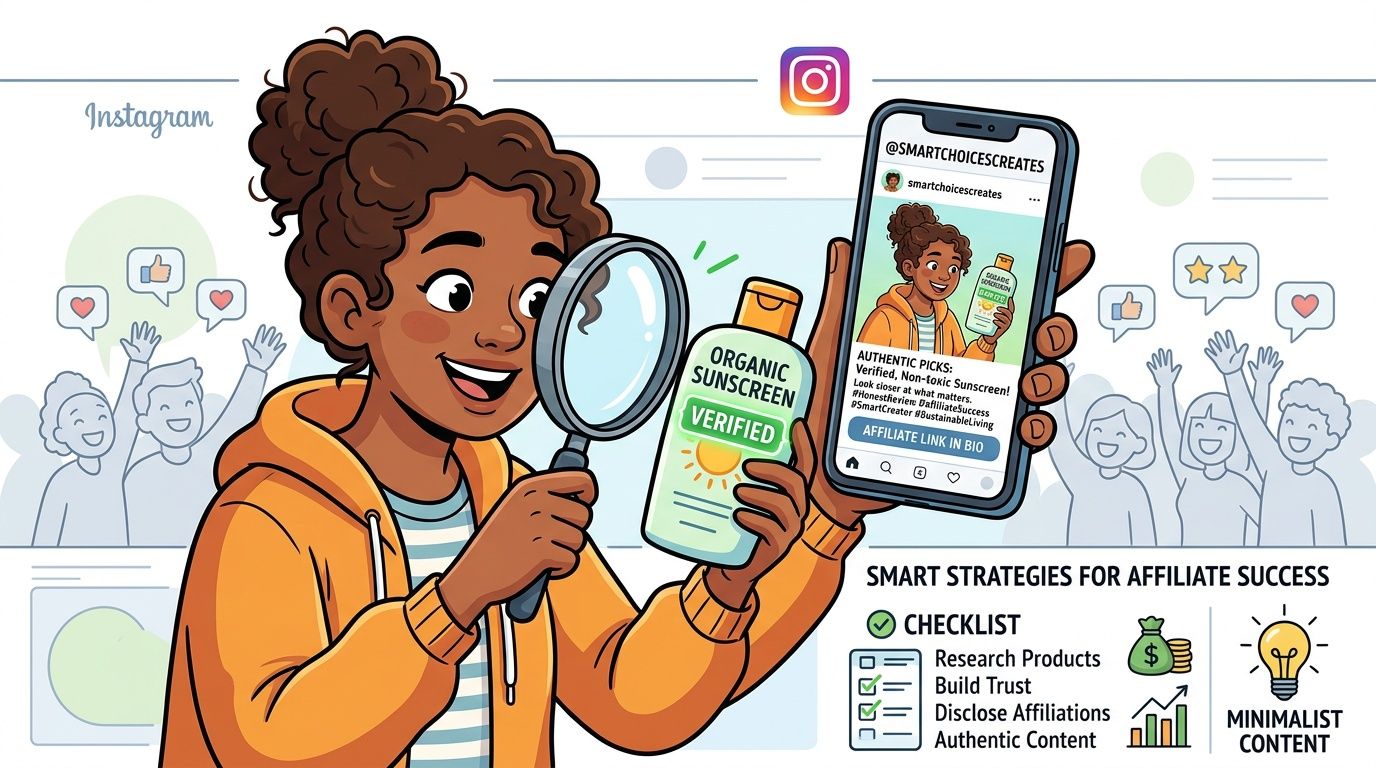
Your audience is the asset. If people follow you for honest skincare reviews, don't pivot into random gadgets because the payout looks good. A misaligned offer might generate a short spike, but it weakens future recommendations.
Creators should ask basic questions before joining any program:
- How is attribution handled?
- What exactly triggers commission?
- Is there a content approval process?
- When are payments sent?
If the answers are vague, the partnership probably is too.
Make the product part of the story
The best affiliate content doesn't sound like affiliate content. It solves a problem, shows use in context, or answers a real question from followers. On Instagram, that usually means product-first visuals with audience-first framing.
A simple pattern that works:
| Content angle | Why it works |
|---|---|
| Routine or walkthrough | Shows the product in actual use |
| Review after repeat use | Feels more credible than a first impression |
| Comparison post | Helps buyers decide |
| FAQ in Stories | Handles objections quickly |
Creators who want more structure around offers, communication, and payment workflows can use resources focused on affiliate marketing for influencers.
Here's a useful walkthrough on content and positioning:
Faceless content is a real option in some niches
Not every affiliate creator wants to build a personality-driven account. In some categories, especially software, tools, and utility products, faceless content can work. According to Affiverse on faceless affiliate marketing, creators are exploring faceless models in niches like AI SaaS with 15% to 50% commissions, and some faceless marketers have reached $30k per month without a large personal following.
That doesn't mean faceless is easier. It means the content has to carry the trust. Product demos, screen recordings, before-and-after use cases, and strong hooks matter more when your identity isn't the selling point.
Transparency still matters. Whether you show your face or not, disclose the relationship and make the recommendation feel earned.
Creators who last in affiliate marketing act like operators, not just posters. They track what content moves people and repeat the angles that fit their audience.
Measuring and Optimizing for Success
If revenue is the outcome, then optimization starts with the inputs that shape it. Most instagram affiliate marketing programs underperform because teams look only at sales totals. That hides the underlying issue. Low revenue can come from weak creative, low click intent, poor product-market fit, or a checkout problem.
The KPI table that actually matters
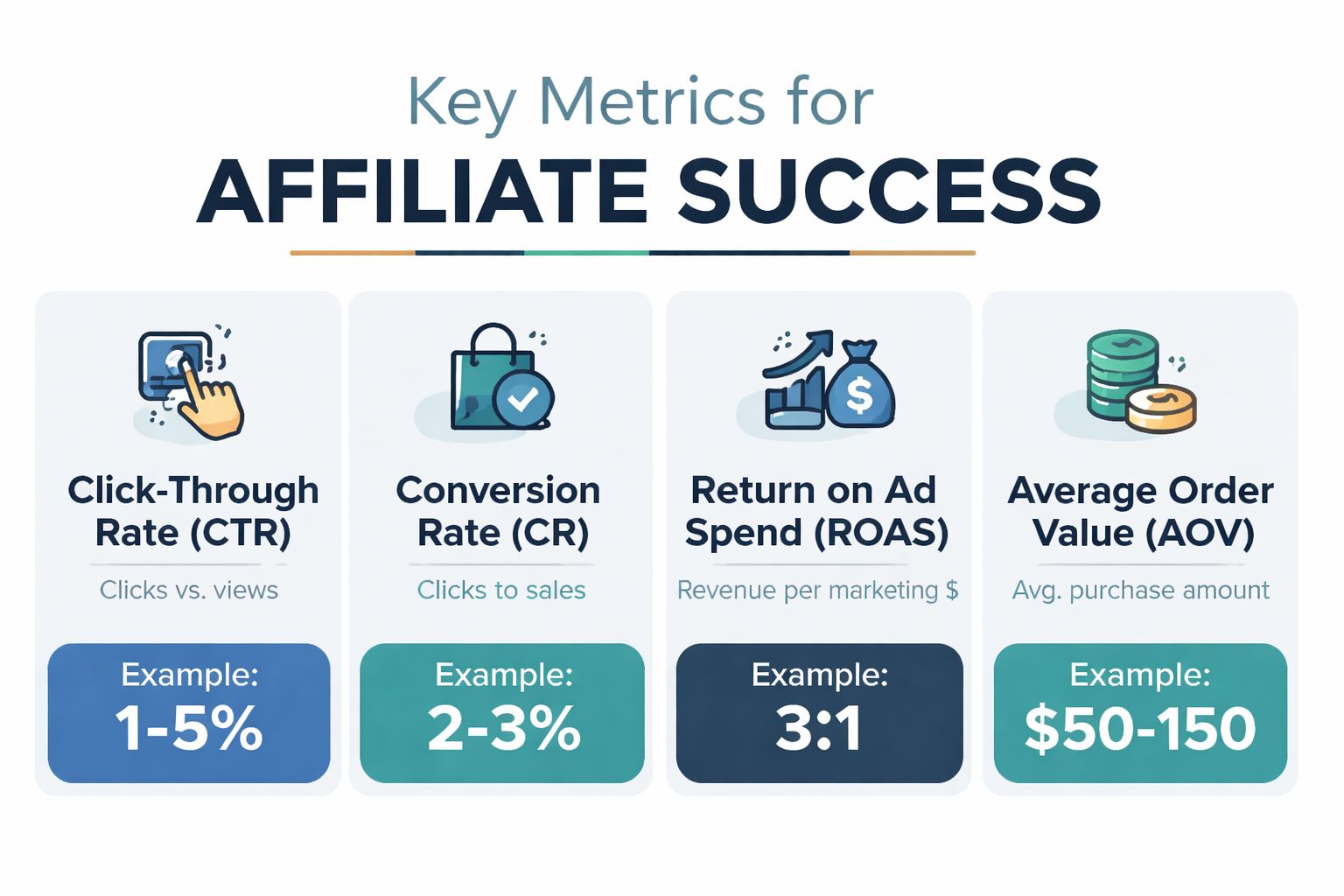
| Metric (KPI) | What It Measures | Why It Matters |
|---|---|---|
| Engagement rate | Audience interaction with content | Helps assess creator quality and content resonance |
| Click-through rate | How often viewers click after seeing content | Shows whether the offer and CTA create intent |
| Conversion rate | How often clicks become purchases | Reveals landing page and product fit |
| Earnings per click | Revenue generated per visitor | Helps compare creators and offers efficiently |
How to read weak performance correctly
A creator can have strong engagement and still produce weak affiliate revenue. That usually points to one of these:
Strong content, weak CTA
People watch and react, but they don't know what to do next.Strong clicks, weak conversion
The content created intent, but the landing page or offer didn't close.Strong conversion, low volume
The audience is qualified, but distribution is limited. That creator may deserve more budget or more posting opportunities.
This is where teams need discipline. Don't cut creators too early because one post underperformed. Look for patterns across content type, placement, and offer.
Optimization works when teams change one variable at a time
If you rewrite the hook, swap the product page, change the discount code, and alter the posting time all at once, you won't know what improved the result. Test in smaller moves.
A practical review rhythm looks like this:
- Review creator-level performance weekly.
- Group content by format, such as Reel, Story, or carousel.
- Flag low-click and low-conversion patterns separately.
- Brief the next round with one specific change per creator.
For teams trying to improve top-of-funnel content quality, guides like this Instagram views guide for SMBs can help sharpen how you think about reach and creative visibility before the sale even happens.
Better reporting doesn't matter unless it leads to better decisions. The goal isn't a prettier dashboard. It's clearer next actions.
The brands and creators that win with instagram affiliate marketing don't chase random bursts. They build a loop. Create, track, learn, refine, repeat.
If you want a cleaner way to run creator partnerships, track deliverables, and manage payouts without juggling spreadsheets and DMs, explore REACH. It's built for brands, agencies, and creators that need one place to keep affiliate campaigns organized.