 Skip to content


You're posting, editing, answering comments, and trying to look “active” online. But the brand deals don't land, the inbound emails stay thin, and your content still feels like a hobby to the people who could pay you.
That gap usually has nothing to do with talent.
It comes from treating self-promotion like a visibility game when it's really a trust game. Brands don't just hire creators because the feed looks good. They hire people who look organized, clear, responsive, and easy to work with. They want someone who can understand a brief, hit a deadline, communicate without drama, and show what the work accomplished.
That's the key shift in how to market yourself now. You're not trying to look famous. You're trying to look hireable.
If you're still building your foundation, it helps to study platform-specific creator positioning too. This guide on how to become a digital creator on Facebook is useful because it focuses on the practical side of setting up your presence, not just chasing reach.
Introduction
A lot of creators are stuck in the same loop. They make solid content, improve their editing, post more often, and assume better work will eventually attract better opportunities. Then someone with a smaller audience gets the deal.
That usually happens because the smaller creator presented themselves like a business.
Brands buy confidence in the process. They want to know what you make, who it's for, how you work, what happens after the first email, and whether they'll need to chase you for updates. Creativity gets attention. Reliability closes deals.
That's why learning how to market yourself starts with a different question. Don't ask, “How do I get noticed?” Ask, “How do I make it easy for a brand to say yes?”
What brands actually look for
The strongest creator positioning has three traits:
- Clear fit: Your niche, audience, and style make sense for a specific type of company.
- Proof of execution: You can show outcomes, not just posts.
- Low-friction workflow: A brand can tell you'll be easy to brief, easy to manage, and easy to pay.
Brands don't need another creator who says, “I'm passionate about storytelling.” They need a partner who can turn a brief into deliverables without chaos.
That mindset changes everything. Your bio gets sharper. Your portfolio gets more commercial. Your pitches stop sounding like cold networking and start sounding like business development.
Define Your Unique Brand and Value Proposition
Most advice says “find your niche.” That's incomplete. A niche without a business use is just a label.
Your brand becomes marketable when you connect three things: what you're good at, who needs that skill, and what problem it solves for them. If you can't explain that in one sentence, your positioning is still too vague.
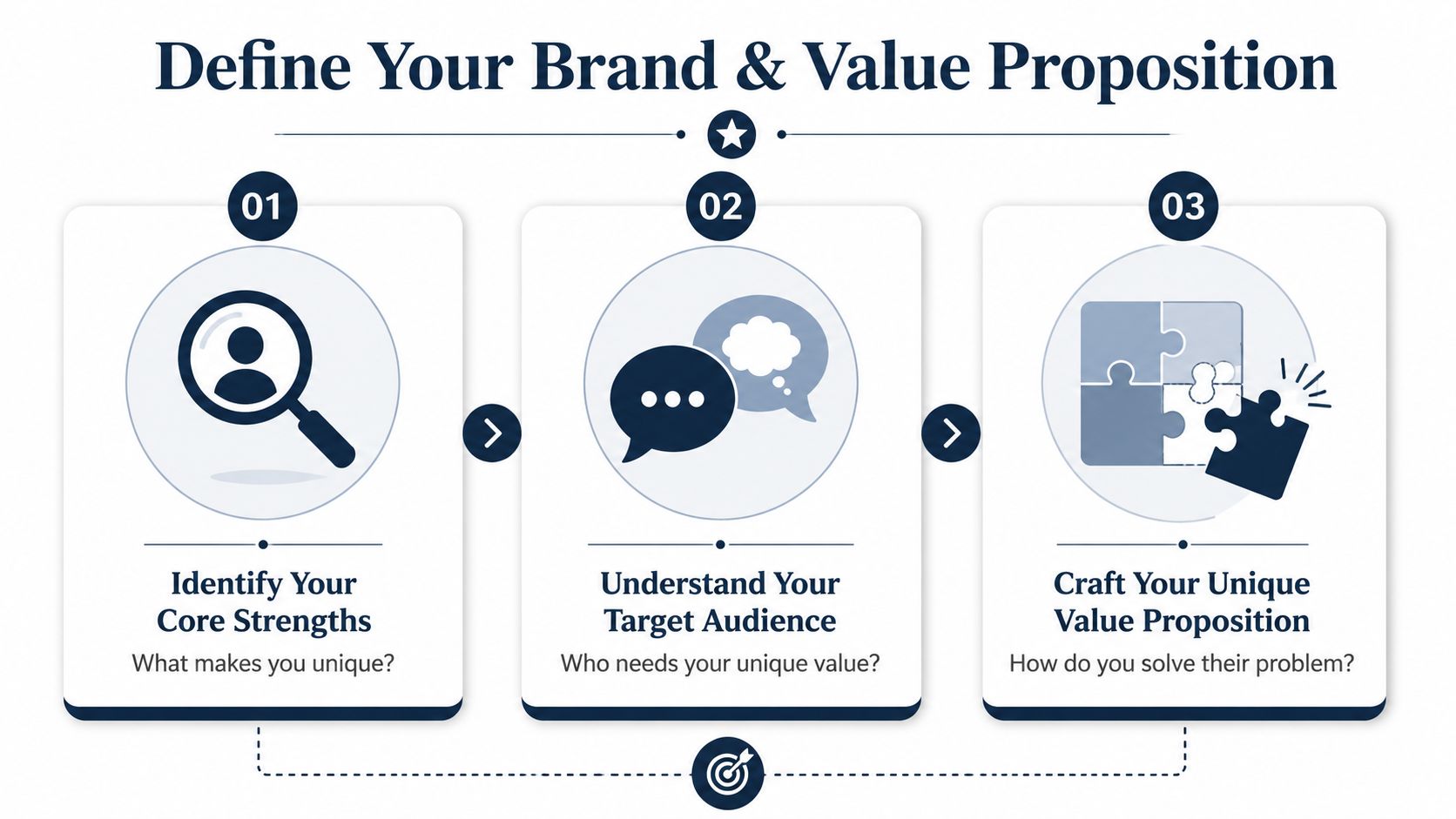
A useful way to build it is to think like a buyer, not like a creator. A skincare brand isn't looking for “a lifestyle creator.” They're looking for someone who can explain routines clearly, film products attractively, and earn trust with a specific audience.
Start with the business problem
Ask yourself these questions:
- What does my content help a brand do?
- Who is most likely to pay for that outcome?
- Why would they choose me over another creator in the same category?
Here's the difference in practice:
| Weak positioning | Strong positioning |
|---|---|
| Lifestyle creator | Creator who makes product-led short-form content for wellness and beauty brands |
| UGC specialist | UGC creator who turns complex products into simple demos for conversion-focused campaigns |
| Personal finance voice | Educator who helps fintech and money brands explain trust-sensitive topics clearly |
Your answer should sound commercial, not artistic.
Turn your profile into a working asset
Your online presence is already being evaluated. A 2018 CareerBuilder survey found that 70% of employers screen candidates by checking their social media profiles. That matters well beyond traditional hiring. To a brand manager, your profile acts like a live portfolio.
So tighten the basics:
- Headline: State what you do and for whom.
- Bio: Add your niche, format strengths, and contact path.
- Pinned content: Show your best commercial work first.
- Visual consistency: Make your pages look intentional, not random.
Practical rule: If someone lands on your profile and can't tell what kind of projects you want, your brand message isn't ready.
A simple value statement works well: “I help [type of brand] reach [specific audience] through [content format or strength].”
That one line should guide your bios, outreach, pinned posts, and portfolio copy.
Build a Portfolio That Showcases Results
A pretty feed is not a portfolio.
A portfolio answers the questions a buyer has. Can you follow a brief? Can you make content that fits a campaign? Can you communicate outcomes in a way that helps a brand justify spending money with you again?

The strongest portfolios read less like galleries and more like short commercial briefs. That matters because emerging data shows that brands increasingly prioritize campaign-level metrics and workflow transparency. The best self-marketing materials show goals, execution, and outcomes, while also signaling reliability and ease of collaboration.
What to include instead of just posting screenshots
For each project, include:
- The goal: Product launch, awareness push, seasonal promotion, community engagement.
- The format: Reel, TikTok, static carousel, story set, YouTube integration.
- Your role: Concept, scripting, filming, editing, posting, reporting.
- The outcome: Describe what improved or what the brand valued. If you don't have citable numbers, stay qualitative.
- The workflow: Note that you delivered on time, revised cleanly, or handled approvals professionally.
If you're early, use unpaid work, your own test campaigns, or spec examples. The point is to show commercial thinking.
Make every channel brand-ready
Different surfaces do different jobs.
- LinkedIn: Position yourself as a specialist. Your summary should explain the business result you help create.
- Instagram or TikTok bio: Keep it brief, but clear enough that a marketing manager understands your niche in seconds.
- Portfolio site or media kit: Organize by service, niche, or campaign type.
A media kit shouldn't just list follower count, audience basics, and contact details. It should also show how you approach campaigns. If you need a model, this guide to a content creator media kit is a solid reference for structuring one so it speaks to brands, not just other creators.
A quick portfolio test
If a brand manager opens your site, they should immediately understand:
- what you make
- who you serve
- what kind of results you help produce
- how to contact you
- what it's like to work with you
If those answers are buried, your portfolio is doing decorative work instead of sales work.
Develop a Content Strategy to Attract Brands
“Post consistently” is common advice. It's also incomplete.
Consistency matters, but random consistency won't get you hired. If your content only entertains your current audience and never signals professional value, brands have to guess whether you're capable of campaign work. Most won't bother.
Create content that pre-qualifies you
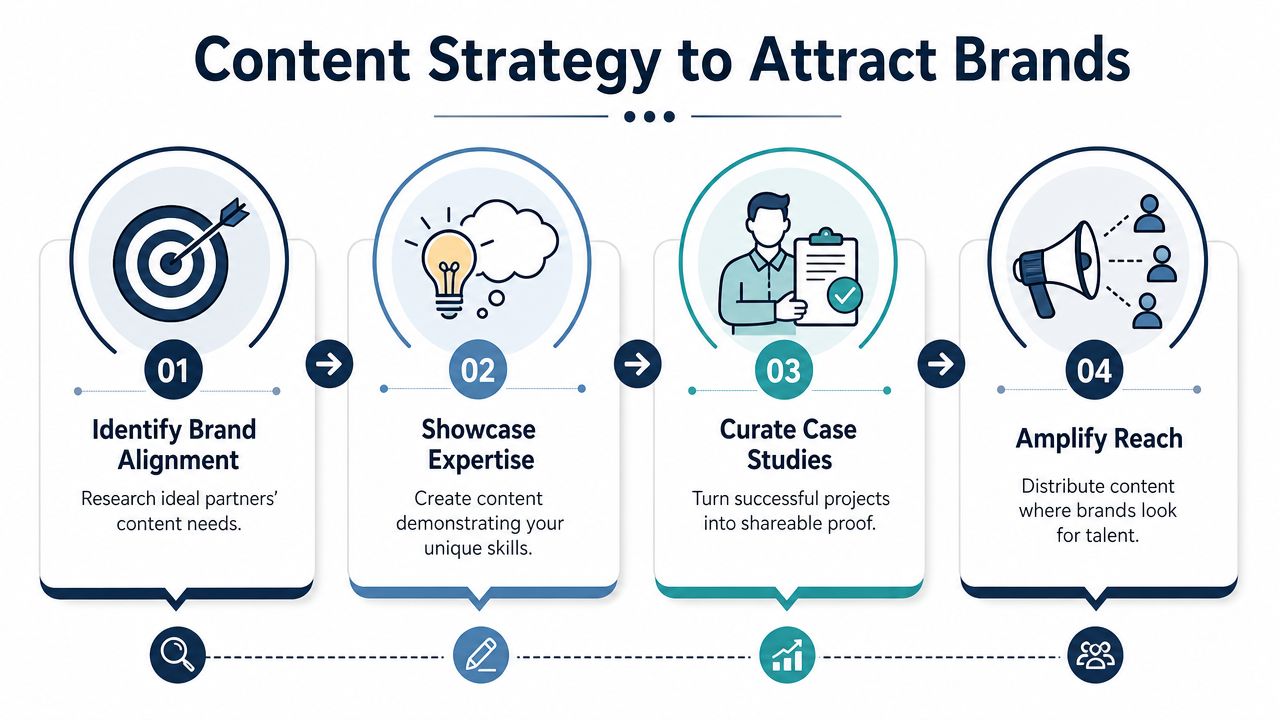
A smarter content strategy has distinct pillars. Not motivational filler. Actual proof signals.
Show your process
Post behind-the-scenes clips of planning, scripting, testing hooks, editing choices, or how you organize deliverables. This tells brands you're not improvising every project.
Explain what you notice
Break down ad creatives, landing page flows, creator campaign trends, packaging choices, or why a product demo worked. This positions you as someone who understands marketing, not just content production.
Turn projects into proof
After a collaboration, share a short recap of the brief, your approach, and what the brand cared about. Keep it professional. You're demonstrating judgment.
Good creator content attracts followers. Good business content attracts buyers.
Distribute where decision-makers pay attention
A lot of creators rely too heavily on one feed. That's risky.
Use a simple distribution mix:
- LinkedIn posts: Useful for professional credibility and B2B visibility.
- Thoughtful comments on brand posts: A smart comment often gets seen by social teams and agency staff.
- Stories and short updates: Good for showing active work without overproducing everything.
- Planned publishing: A system matters more than last-minute bursts. This guide on how to create a content calendar is helpful if your posting currently depends on mood and spare time.
Match content to the client you want
If you want skincare retainers, your page should regularly prove you understand beauty creative. If you want SaaS clients, your content should show you can simplify product communication. If you want local service brands, speak their language.
That's the practical side of how to market yourself. Don't create content that says “look at me.” Create content that says “I understand your market.”
Pitch Brands and Manage Collaborations Like a Pro
Most weak pitches fail before the brand even evaluates the creative. They fail because they sound generic, needy, or disorganized.
That's fixable.
A strong pitch does three things fast. It shows fit, it proves you paid attention, and it reduces perceived risk.
Qualify before you contact anyone
Don't pitch every brand that vaguely matches your niche. Pick brands that clearly align with your audience, format, and style.
Use filters like:
- Campaign fit: Have they worked with creators before?
- Audience overlap: Does your content style make sense for their buyers?
- Operational fit: Are they the kind of team that can brief, review, and approve work?
- Budget realism: If they've never invested in creator partnerships, expect more education and slower movement.
Many creators often waste time. They optimize their email copy when the actual problem is bad targeting.
Write pitches like a professional partner
A practical cold pitch is short. It should include:
- A specific reason you chose them
- A concise statement of what you make
- One idea or angle relevant to their product
- A link to your portfolio or media kit
- A clear next step
The difference is tone. Don't write like a fan asking for validation. Write like a specialist proposing a fit.
A useful adjacent strategy is learning from communities that already monetize trust and audience relationships. This piece on revenue generation from online communities is worth reading because it shows how partnership thinking works when the business model depends on credibility.
Your workflow is part of the pitch
This gets overlooked constantly. A 2025 report found that 62% of creators feel overwhelmed by disparate communication channels and tracking requirements when working with brands. That means the creator who looks coordinated has an immediate advantage.
If your process is “DM me and we'll figure it out,” you look expensive to manage.
If your process includes a clear timeline, revision steps, asset delivery method, reporting format, and payment process, you look safer.
Chaos repels serious buyers. Clear process makes average talent look more hireable.
Use language that signals order: brief intake, deliverable schedule, review window, final asset handoff, post-campaign recap. That doesn't make you rigid. It makes you dependable.
A lot of creators also want PR gifting as a first step into partnerships. If that's part of your strategy, this guide on how to get PR packages from brands can help you approach it with more structure.
A quick walkthrough makes this even easier to picture:
Once you start pitching this way, you stop sounding like someone hoping for a deal and start sounding like someone prepared to run one.
Measure Your Marketing ROI and Streamline Your Workflow
Most creators track the wrong scoreboard.
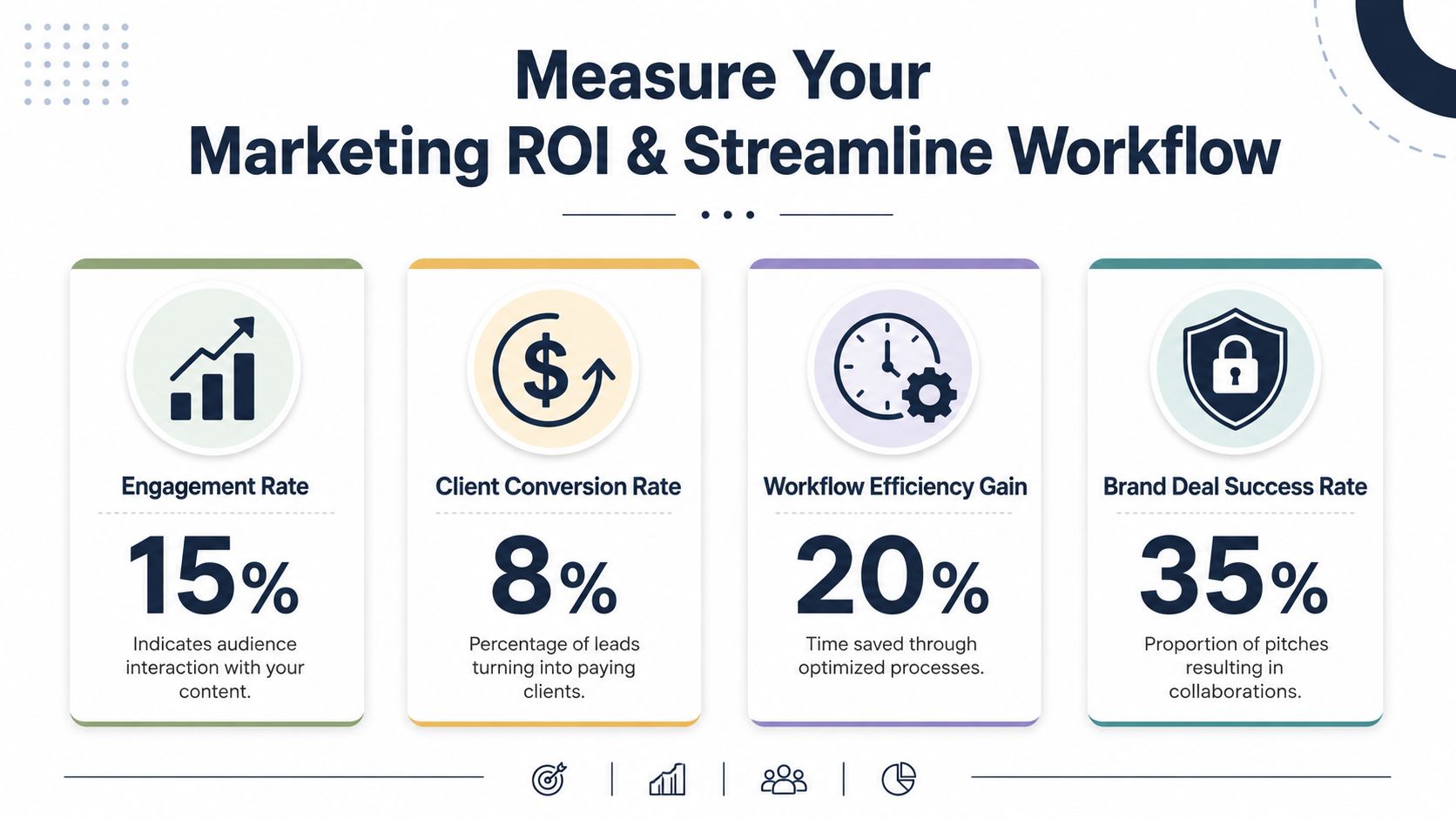
Likes and follower growth can matter, but they don't tell you whether your self-marketing is turning into business. If your goal is paid work, your core metrics should reflect pipeline health and delivery quality.
Track the numbers that change decisions
Look at metrics like:
- Response rate: Are qualified brands replying?
- Meeting rate: Are conversations turning into calls?
- Proposal rate: Are calls becoming real opportunities?
- Close rate: How often do proposals become paid work?
- Delivery quality: Are projects running smoothly enough to lead to repeat work?
This is where segmentation matters. Data shows that campaigns targeting defined audience segments with tailored messaging achieve conversion rates of 3.5–5.5%, versus 1.5–2.5% for generic campaigns, and using measurable KPIs to refine messaging can increase ROI by up to 30-40%. The lesson for self-marketing is simple. Generic outreach and vague positioning waste effort.
Use a simple review rhythm
At the end of each month, review:
| Question | What to look for |
|---|---|
| Which pitch angle got replies? | Niche-specific messages usually reveal stronger fit |
| Which content brought inquiries? | Posts that demonstrate expertise often outperform general updates |
| Where did projects get messy? | Delays, scattered approvals, missing files, unclear revisions |
| What should change next month? | Sharper targeting, better examples, cleaner process |
A good workflow protects your reputation. It also gives you room to handle more work without looking rushed or inconsistent.
If you want to know how to market yourself for the long term, start here: measure what leads to revenue, remove friction from delivery, and build a reputation that survives beyond one nice-looking campaign.
Frequently Asked Questions About Marketing Yourself
Do I need a media kit, and what should be in it
Yes. If you want to work with brands, you need one. Keep it focused on business value. Include your niche, audience overview, content formats, past brand work, examples of deliverables, and a clear contact method. If possible, show campaign context and outcomes, not just screenshots.
How do I figure out what to charge for my services
Start with scope, not confidence. Price based on what the brand is buying: content type, usage, revisions, timeline, and complexity. Don't quote from fear and don't copy someone else's rate card blindly. If you need help thinking through the money side of business decisions, it's useful to get financial advice answers from professionals instead of relying only on creator forums.
Do I need a huge number of followers to start working with brands
No. You need relevance, clarity, and a professional process. A smaller creator with a tighter niche, better examples, and cleaner communication often looks like a better partner than a larger creator with vague positioning and messy follow-through.
If you want a simpler way to run brand work without juggling spreadsheets, email chains, approvals, and payment confusion, REACH is worth a close look. It helps teams manage influencer campaigns from one place, which makes collaborations easier for brands, agencies, and creators who want to operate like professionals.